
Dalit teenager was killed and hanged as she was a witness in the molestation case of her sister-in-law… Sensational case in Ballia
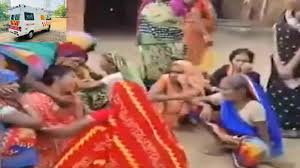
Ballia Teenager Murder Case: A case of death of a Dalit teenager under suspicious circumstances came to light in Ballia. The teenager’s family has alleged gang rape and murder. She was a witness in the molestation case of her sister-in-law. She was killed before giving testimony. Ballia: Cases of crime against women and girls are continuously coming to light in Ballia, Uttar Pradesh. The latest case has come to light from Narhi police station area of Ballia. Sensation spread after the body of a Dalit teenager was found hanging from a noose in a hut here. This incident which happened on Friday took a serious turn on Saturday. In this case, the family alleged murder after gang rape. The family said that the teenager was a witness in an old molestation case. She was killed before giving testimony in the molestation case of her sister-in-law. The family says that she was the main witness in the case of molestation of the girl’s sister-in-law in March 2024 and she was to testify after four-five days. For this reason, the accused raped and killed her with the intention of eliminating her from the way and hung the body with a noose to make it look like a suicide. The body was found when they returned from the field The family of the 13-year-old girl had gone to work in the fields on Friday. When they returned in the evening, they saw that the body of the girl was hanging from a noose in a hut near the house. There was chaos in the village after hearing the screams of the family. As soon as the information was received, the police of Narhi police station and the team of Dial 112 reached the spot and took the body into custody and sent it for post-mortem. Bheem Army’s demonstration As soon as the matter came to light on Saturday, the workers of Bhim Army and other political organizations reached the village and sat on a dharna along with the family. People demonstrated on the road demanding the arrest of the accused. The police pacified the crowd by persuading them. FIR against three named persons On the complaint of the girl’s father, a case has been registered against three youths of the same village under sections of gangrape and murder. Narhi’s SO Nadeem Ahmed Faridi said that the matter is being investigated seriously and the search for the accused is on. As the controversy deepens, pressure has increased on the police and administration. Curated by: Rahul Parashar About the author Senior Digital Content Creator at Navbharat Times Digital. Started in journalism with Prabhat Khabar. Journey from Rashtriya Sahara, Hindustan, Dainik Jagran, Dainik Bhaskar to Times Internet. An attempt to know and learn digital journalism. An attempt to do new experiments every day. Courtesy: Hindi News
Invisible no more: One Dalit woman’s reckoning with India
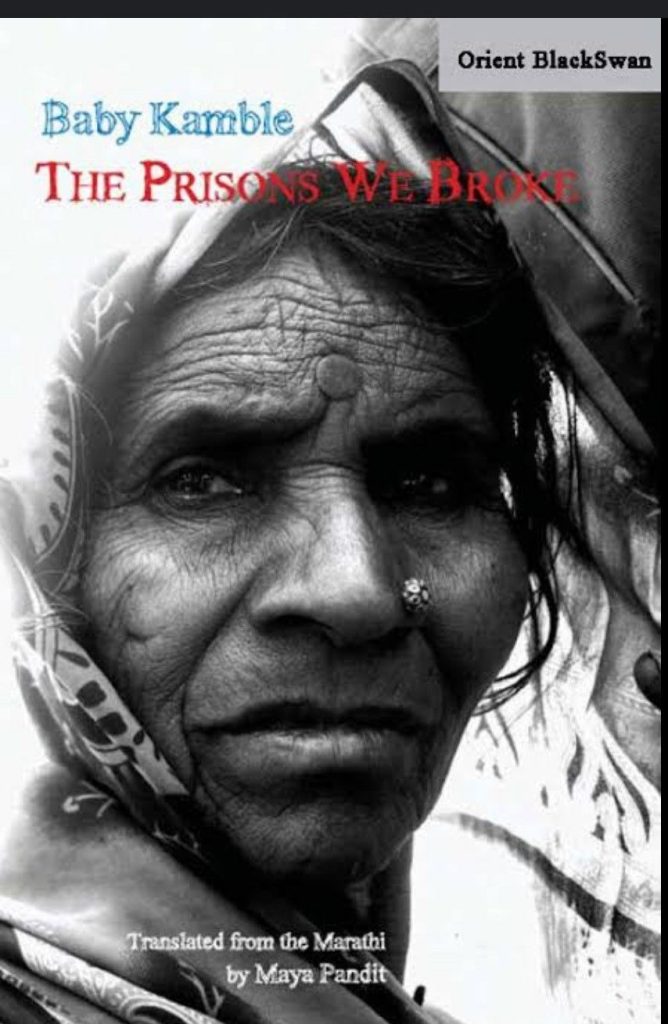
As India’s Prime Minister Narendra Modi concluded his first state visit to Trinidad and Tobago last week (July 3-4), Bookshelf turns its attention to the women whose lives remain far from the glare of diplomatic ceremony—specifically, one Dalit woman whose literary voice has, at last, been restored to India’s bookshelf. In a republic where women are both talismans and casualties of development, Babytai Kamble’s memoir The Prisons We Broke (1986) remains a visceral, necessary reckoning. India is unmistakably global: a nuclear and space power with the world’s fifth-largest economy, a rising voice in G20 diplomacy, and a nation whose digital reach now stretches from the mangrove swamps of the Sundarbans to the arid edges of Rajasthan, from the Himalayan foothills to the beaches of Kanyakumari. Its cities—Bengaluru, Hyderabad, Gurugram—are latticed with flyovers, metro rails, and IT campuses. Its marbled shopping centres are crammed with international brands. Undersea cables thread the coasts of Kerala and Tamil Nadu, feeding the world’s data demand. Expressways cleave through farmland, connecting state capitals to Special Economic Zones. And yet: less than ten per cent of Indians own 77 per cent of the nation’s wealth (Oxfam India, 2023). In 2025, 20 protests occur daily. Seven states—including Jammu and Kashmir, Punjab, Nagaland, Manipur, Assam, Mizoram, and Tripura—signal separatist aspirations. And for the vast majority of India’s women, class, caste, and gender remain overlapping restraints. The tensions that grip India—economic inequality, regional unrest, and daily dissent—are mirrored most acutely in the lives of its women, especially those at the bottom of the caste ladder. To understand Babytai Kamble’s voice, one must understand caste. Though outlawed by India’s 1950 Constitution, caste remains the invisible architecture of Indian society. There are four traditional varnas—Brahmins (priests), Kshatriyas (warriors), Vaishyas (traders), and Shudras (labourers)—but Dalits, formerly called “Untouchables”, fall outside this system altogether. They are often assigned the most stigmatised and dangerous forms of labour and are subject to violent discrimination and social exclusion. India has over 600,000 villages. While its megacities—Mumbai, Delhi, Chennai—are connected to global circuits of capital, fashion, and information, its villages often lack running water, functioning schools, or electricity. The worlds of village and city rarely converge. In the villages, caste still determines one’s job, marriage prospects, and even access to drinking water. Babytai Kamble was born in 1929 in Maharashtra to a Dalit family of the Mahar caste. To understand the force of her life and work, one must understand that Dalits—the so-called “broken people”—have historically been barred from temples, schools, wells, and even the shadow of upper-caste Hindus. They were condemned to “polluting” work: leather tanning, waste removal, corpse disposal. Even today, Dalits face systemic discrimination in education, employment, and justice. Dalit women endure a double marginalisation. They are often victims of caste-based sexual violence, denied political voice, and excluded even from feminist discourse. The 2022 UN Women India report documented that Dalit women suffer higher rates of illiteracy, child marriage, and domestic abuse. Their lives remain largely unrecorded. Kamble broke that silence with her memoir, Jina Amucha (Our Life)/ Translated in English as The Prisons We Broke by Maya Pandit and published by Orient Blackswan (2008), it was among the first autobiographies by a Dalit woman. Kamble wrote not in English or Sanskritised Hindi, but in raw, spoken Marathi. Her story of growing up in Phaltan, a village where menstruating women were sent to cow sheds and Dalits to the margins, is told in searing detail: “We were surrounded by dirt and squalor. The stench of dead animals filled the air. The Brahmins and Marathas walked past us holding their noses, their heads high, like we were invisible.” Kamble describes watching her mother sweep dung from upper-caste homes before being handed stale bread for wages. When her father, a labourer, fell ill, no Brahmin doctor would treat him. The women in her mohalla ( neighbourhood) worked from before dawn until dusk, and were often mocked or assaulted by the men whose homes they scrubbed. Kamble was a follower of B R Ambedkar, the Dalit lawyer and economist who drafted India’s Constitution and converted to Buddhism, rejecting Hindu casteism. Kamble followed him, both spiritually and intellectually. Education, for her, was a form of resistance. She wrote by night, after tending to her children and chores, her fingers aching from the day’s work. “We had no lamp oil. I wrote with the firelight from our chulha (mud stove). I wrote because I had to remember. If I didn’t, who would?” Kamble’s work remained unpublished for decades. She was a school dropout, a woman, a Dalit—three strikes in India’s literary world. But by the 1980s, Marathi Dalit literature had begun to find voice, and Kamble’s work was passed from hand to hand, copied by women who recognised their lives in it. In The Prisons We Broke, Kamble writes: “We were women twice bound. First by men, then by caste. Our wombs birthed labourers for the world that despised us.” This was no lament. It was a ledger of what had been done and by whom. If Kamble’s childhood was spent watching from outside the classroom door, today’s middle- and upper-class Indian girls walk into air-conditioned international schools, toggling between Instagram and exam prep. The gulf is not merely of wealth, but of inherited dignity. Dalit girls still face the possibility of rape on the walk to school. In a 2020 Human Rights Watch report, Dalit students were routinely denied entry to temples, made to clean toilets at school, and barred from dining halls. Meanwhile, India’s privileged women—especially urban professionals—inhabit a different republic. They wear shorts in nightclubs, brunch in rose gardens, and glide through traffic in Pradas and Bentleys along highways and byways built under the ocean. They have destination weddings in Europe, spend weekends in Dubai, summers in Switzerland, and have access to the best education in India and abroad at Ivy League universities. In the villages, privileged women of India will never see that girls their age still walk barefoot to government schools without functioning
Dalit pioneer who stood for equalityJagjivan Ram (April 5, 1908-July 6, 1986)
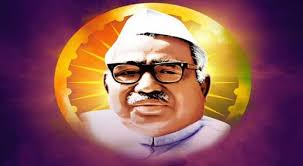
IN the mid-20th century, India’s young democracy found one of its most steadfast champions in Jagjivan Ram-affectionately called Babuji. Born on April 5 at Chandwa village, near Arrah, Bihar, into a Dalit family, he attended high school at Arrah Town School, where he got the opportunity to interact with Madan Mohan Malviya. Young Jagjivan Ram confronted caste discrimination early in life. His defiant act of smashing an ‘untouchables’ water pitcher at his school sparked the end of segregated drinking water there — an early sign of his lifelong fight for equality. In the face of hardship, he achieved academic success and was awarded the Birla scholarship to pursue studies at Banaras Hindu University. At BHU, he mobilised members of the Scheduled Castes to stand up against social discrimination. As a Dalit student, he faced humiliation — he was refused meals in the hostel, local barbers declined to cut his hair, and only occasionally would a Dalit barber come for him. These experiences ultimately led him to leave BHU and complete his graduation at Calcutta University. The discrimination he had encountered at BHU pushed him towards atheism. In 1931, he earned a BSc degree from Calcutta University, where he continued to hold conferences highlighting discrimination and took part in Mahatma Gandhi’s anti-untouchability movement. Article_Author Navya Singh Courtesy : The Tribune Note: This news is originally published on https:/thetribune.com/ and is for use by the non-military/non-commercial community, especially those in the human rights sector.
Congress’s biggest weapons in the field to defend Rahul-Sonia Gandhi.. Will they be able to escape money laundering charges
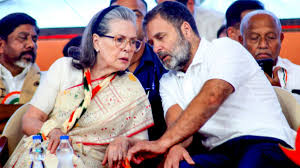
National Herald Case: Senior advocate Abhishek Manu Singhvi said in the court that the allegation leveled by the Enforcement Directorate on Rahul Gandhi and Sonia Gandhi in the National Herald case is very strange. According to him, this is a case of money laundering in which there is neither any property, nor has the property been used. New Delhi: Senior advocate Abhishek Manu Singhvi has taken the lead on behalf of Sonia Gandhi and Rahul Gandhi in the National Herald case related to Congress. He described the allegations of money laundering leveled by the Enforcement Directorate (ED) on senior Congress leaders in the court on Friday as a strange case. He said that this is a case of money laundering in which there is no property, no use or display of property. Singhvi said this when he was starting the argument on behalf of the defense in the National Herald case. Singhvi’s response to ED’s allegations The ED has alleged that the Gandhi family has a 76 percent stake in Young Indian (YI). Young Indian is accused of usurping the property of Associated Journals Limited (AJL) in exchange for a loan of ₹ 90 crore. Singhvi, while responding to these allegations, said that all this was done to make AJL debt free. He also said that the court does not have the right to hear this case. Abhishek Manu Singhvi gave these arguments in the court Senior advocate Abhishek Manu Singhvi, while responding to the allegations of ED, said that this step was taken to make AJL debt free. Every company has the right under the law to eliminate its debt. Singhvi said every company does this. They transfer their debt from one unit to another. This makes the company debt free. He said that Young Indian is a non-profit company. This means that it cannot give dividends, allowances, salary or bonus to anyone. ED said – this is a classic case of money laundering ED said in the court that this is a classic case of money laundering. The agency also alleged that Young Indian was used to usurp AJL’s assets worth ₹2,000 crore. AJL publishes the National Herald newspaper. The federal agency filed a prosecution complaint (equivalent to a chargesheet) in a local court on April 9 against Sonia Gandhi, Rahul Gandhi, Suman Dubey, Sam Pitroda, M/s Young India, M/s Dotex Merchandise and Sunil Bhandari. What will be the court’s decision now? The court will decide to take cognizance of the chargesheet only after hearing the arguments of the agency and the accused. Abhishek Manu Singhvi said that ED’s claim that Young Indian usurped the assets of Associated Journals Limited (AJL) is wrong. He said that YI had helped AJL to become debt free. Young Indian is a non-profit company, so it cannot give profit to anyone. Curated by: Ruchir Shukla Ruchir Shukla has been associated with Navbharat Times Online since February 2020. First worked in a news agency, then after TV journalism, entered digital media. Has been working in digital media for almost 10 years. Has a special interest in all kinds of news like politics, crime, positive. Courtesy : Hindi News
Bulandshahr News: Poor Dalit’s plea to PM Modi.. Government, get an engine worth 17 crores installed.
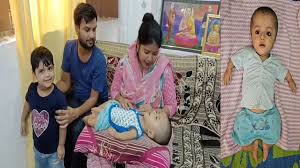
Bulandshahr News: Osteogenesis Imperfection Type-B is a disease. Which has no cure in India. Only an engine worth 17 crores from abroad can give life to Duggu. Bulandshahr News: For the poor, the government has made treatment facilities available under Ayushman Yojana for treatment up to Rs 5 lakh. For major treatment, there is a facility of treatment on the recommendation of MP MLA from CM and PM Relief Fund. But how can this disease be treated, how can the 17 crores engine be given to the innocent Duggu of Syana so that he can get well, can stand and walk on his own, can read and write with his hands. Duggu’s parents claim that their innocent son has a disease called “Osteogenesis Imperfection Type-B”. Which has no cure in India. Only an engine worth 17 crores from abroad can give life to Duggu. That’s why Now, Duggu’s Dalit parents have appealed to PM Modi and CM Yogi to get their son treated as well. Is there no treatment for Osteogenesis Imperfecta Type-B in India? Actually, auto driver Akash Gautam, who lives in Syana of Bulandshahr district, has two sons. The younger son Duggu is 3 years and 10 months old. He is suffering from a fatal disease called Osteogenesis Imperfecta type B. It is said that in this disease, the bones of the child do not develop, and due to this disease, the bones of the child become weak, that is why Duggu can neither sit nor stand. It is as if the hands and legs are hanging from the joints. Innocent Duggu seems mentally ill, he understands the questions and answers them properly. But he cannot stand on his own. Duggu cannot go to school due to his illness. But he still has to face the Prime Minister of the country, the CM of UP, the Constitution. The names of the creator Baba Saheb Bhimrao Ambedkar and Savitri Bai Phule who lit the flame of women’s education are well known. Not only this, innocent Duggu has appealed to PM Modi that the government should also get him treated, so that he can also stand on his own feet and grow up to serve the society and the nation. Duggu’s father even sold his auto to test the treatment of his son, now along with the treatment of Duggu, the crisis of daily bread has also started to arise for the family. Although Mukesh manages to arrange for two meals a day by driving an e-rickshaw, but he is disappointed about the treatment of his son. According to Akash, when Duggu was born, he had difficulty in breathing, after keeping him on oxygen for about 2 hours continuously, Duggu regained breath. A wave of happiness ran in the family. The father told that during that time he was crying more than other newborns. Three days later, when the family saw Duggu, marks of injury were visible on his body. When he was more than one and a half years old, Duggu started speaking but he was still not able to sit. Since then till today he is neither able to sit nor stand. Both the parents are illiterate, so no one in the world tells them about Duggu’s disease or its treatment. However, they have met many people who claimed that Duggu’s treatment is possible but its cost is in crores. Now you can understand how Akash, an auto driver living in a one room house under Pradhan Mantri Awas Yojana, will be able to get his son treated. Courtesy: Sandeep Tayal, Hindi News
Aurangabad Bench directs FIR in Dalit law student’s custodial death case
Bombay High Court observes prima facie custodial torture; orders Parbhani police to register case within a week In a significant development in the case concerning the alleged custodial death of 35-year-old Dalit law student Somnath Suryawanshi, the Aurangabad Bench of the Bombay High Court on Friday (July 4, 2025) directed the Parbhani police to register a First Information Report (FIR) within a week, noting prima facie evidence of custodial torture and violation of fundamental rights. A Division Bench comprising Justice Vibha Kankanwadi and Justice Sanjay A. Deshmukh passed the interim order in response to a petition filed by Mr. Suryawanshi’s 61-year-old mother, Vijayabai Vyankat Suryawanshi. The petitioner alleged that her son was subjected to brutal torture during his illegal detention following a protest in Parbhani on December 11, 2024, and that authorities subsequently attempted to cover up his death as a cardiac incident. Mr. Suryawanshi, a final-year law student and a member of a Scheduled Caste family from Latur, was reportedly arrested while filming a protest against the desecration of a replica of the Constitution near a statue of Dr. B.R. Ambedkar. The petition alleged that despite the peaceful nature of the demonstration, he and several others were picked up during an indiscriminate police crackdown, subjected to custodial assault, and denied timely medical attention. The petition stated, “In the videos, it could be seen that Somnath was carrying the book of the Constitution of India and recording the incident in the protest. His arrest was illegal and then he was subjected to inhuman atrocities. He as well as other persons were produced before the Magistrate on 12.12.2024. The others were also subjected to brutality and their injuries were visible, swollen, however, they were afraid to speak to the Magistrate due to the threats those were given. The Court had granted police custody of two days. Further brutal assault was given to Somnath. His situation had worsened when he was again produced before the Magistrate on 14.12.2024. Thereafter, his custody was transferred to Magisterial custody. Around 6.49 a.m. suddenly Somnath died on 15.12.2024, while in judicial custody.” It was further submitted that police claimed Mr. Suryawanshi had complained of chest pain prior to his death. “The police had then informed around 9.00 a.m. of 15.12.2024 that whether Somnath was her son and what his caste is. It was then informed to her that Somnath passed away due to heart attack. In the post-mortem primary reasons were assigned by the concerned Doctor as ‘shock due to multiple injuries’,” the petition stated. The petitioner also alleged that on reaching Parbhani, she was taken by Police Officer Ashok Ghorband to the Inspector General of Police, where she was informed that Somnath’s brothers could be offered police jobs and was advised to perform the last rites in Latur instead of Parbhani. She further claimed she was offered ₹50 lakh to refrain from filing a complaint. She declined, demanding that her son’s death be acknowledged as custodial murder and not classified as death by natural causes. The court noted that the post-mortem, conducted by a seven-member medical team, had recorded 24 visible injuries and concluded that the cause of death was “shock following multiple injuries”. A judicial inquiry under Section 196 of the Bhartiya Nagrik Suraksha Sanhita (BNSS) also reportedly found gross human rights violations and directly linked the death to custodial assault. “This Court cannot remain a mute spectator when constitutional rights of a person in custody are prima facie violated,” the Bench observed, criticising the State for failing to register a cognisable offence despite substantial evidence from the post-mortem, inquest report, and the magistrate’s findings. The Bench further questioned the delay by the CID in acting on the findings and expressed concern over the credibility of the internal inquiry, which bypassed the autopsy doctors and instead sought a second opinion from J.J. Hospital, Mumbai. The court has directed that an FIR be registered based on the petitioner’s complaint dated December 18, 2024, and that the investigation be handed over to a Deputy Superintendent of Police. The prior order restraining CID officer D.B. Talpe from submitting a final report has been vacated following this direction. While passing only an interim order with respect to the FIR, the court has kept the remaining prayers – including demands for the suspension of officers involved and the framing of custodial death guidelines – pending for further hearing on July 30. Courtesy : Purnima Sah, The Hindu Note: This news is originally published on https:/thehindu.com/ and is for use by the non-military/non-commercial community, especially those in the human rights sector.
‘We want eggs, that too on credit’… Dalit family refused, goons chased and beat them; one in critical condition

In Sultanpur, UP, a Dalit family was brutally attacked in Firihiri village of Karaundikala police station area for not giving eggs on credit. People named Suraj Bhan Yadav and Vivek Yadav beat many people with sticks and injured them. The video of the incident is going viral on social media. In Sultanpur, Uttar Pradesh, in Firihiri village of Karaundikala police station area, goons attacked people of Dalit community and beat them with sticks for not giving eggs on credit. When local BJP MLA Rajesh Gautam came to know about the case, he reached among the victims and assured them of justice. Police have registered a case in this matter after receiving complaints from both sides. Actually, this case is of Firihiri village of Karaundikala police station area. Dalit Shiva, a resident of this village, runs an egg shop. It is alleged that on Wednesday, Suraj Bhan Yadav and Vivek Yadav of the village reached his shop and started asking for eggs on credit. When Shiva refused, everyone got furious and started beating him. During this, when people there intervened, Suraj Bhan Yadav and Vivek Yadav called other family members and associates. Dalit family beaten with sticks After which the family members of Suraj Bhan Yadav and Vivek Yadav arrived with sticks and beat up Shiva and his family members. About half a dozen people including a woman were injured in this fight. Everyone was taken to the hospital for treatment, where seeing Dheeraj’s condition critical, the doctors referred him to Lucknow. During the fight, the people present at the spot made a video and made it viral on social media. BJP MLA assured to get justice In the video, it can be seen how the family members of Suraj Bhan Yadav and Vivek Yadav are brutally beating Shiva and his family members. The family members of Suraj Bhan Yadav and Vivek Yadav together beat the victim Shiva and his family members with sticks. Despite the video coming out, the police have registered a case against both the parties. When Kadipur MLA Rajesh Gautam came to know about the harassment of Dalits, he reached among the victims and took stock of the entire incident. He also assured the victim families that the case will be investigated impartially and justice will be provided. (Input- Vishnu Kumar/Sultanpur) Courtesy: Hindi News
New twist in Prayagraj’s Kerala story, girl told- preparations were on to send her to Saudi Sheikh
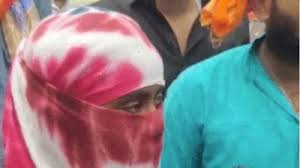
The girl has claimed that the training center in Kerala where she was kept was going to get lakhs of rupees from the Saudi Sheikh. Investigation has revealed that preparations were underway to send the victim Dalit girl to Saudi Arabia on a work visa. A new twist has come in the case of taking a Dalit girl from Prayagraj to Kerala and converting her religion. The victim girl has told the police that the gang that trapped her had given her training in Islamic ways and preparations were on to take her to Saudi. She was going to get lakhs of rupees from the Sheikh The girl has claimed that the training center in Kerala where she was kept was going to get lakhs of rupees from the Saudi Sheikh. Investigation has revealed that preparations were underway to send the victim Dalit girl to Saudi Arabia on a work visa. This victim Dalit girl had earlier alleged that she was trapped and taken to Kerala and her religion was converted there. Police interrogated for five hours ATS has also joined the investigation of the case of taking this girl from Prayagraj to Kerala and allegedly converting her religion. Police interrogated this girl for five hours. Meanwhile, Prayagraj Police is investigating this network of Kerala. Was being taught the ways of living like Muslims This girl has told that in the training center of Kerala, she was being taught the ways of living like Muslims and was not allowed to go out without wearing a hijab. This girl has claimed that this network of Kerala brings girls from Uttar Pradesh to Kerala and gives them training and then sends them to Saudi Arabia. In this case, the police have arrested two people so far and the rest can also be arrested. The side of the arrested people in this case has not yet come to the fore. It is also not yet known how many girls have been taken from UP to Kerala and sent to Saudi Arabia or Gulf countries. Courtesy : Krishna Rai, Hindi News
INTERVIEW | I want PMK in DMK alliance to strengthen Dalit-OBC unity: TNCC chief Selvaperunthagai
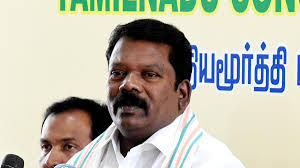
BJP is trying to divide people through the Murugan conference in Madurai and similar moves; it’s dangerous but will fail, said the TNCC president. In an interview with TNIE’s S Kumaresan and Pon Vasanth B A, Tamil Nadu Congress Committee president K Selvaperunthagai says that while VCK president Thol Thirumavalavan, who is opposed to PMK joining the DMK-led alliance, can decide what is good for his party, the DMK president and leader of the alliance Chief Minister MK Stalin can decide who can be welcomed into the alliance. He also spoke about the AIADMK-BJP alliance and the long-term measures he is implementing to strengthen the TNCC at the grassroots level. Your recent meeting with PMK founder Dr S Ramadoss raised eyebrows. Later, you said you would welcome PMK joining the DMK-led alliance for the 2026 Assembly elections. As I said earlier, my meeting with Dr Ramadoss was purely a courtesy call. But if you ask how there could be no politics, then yes, both of us are politicians and I am a leader of a party. We would have discussed everything. However, only DMK president and Chief Minister MK Stalin, the leader of our alliance in Tamil Nadu, is in a position to decide on the alliance. The DMK president has said many times that the present alliance is not merely an electoral formation, but an ideological alliance with a united voice on key issues like federalism and secularism. Would the inclusion of PMK, which sided with the BJP even in 2024 Lok Sabha elections, be organic? Has PMK not been part of the DMK alliance in 2006 and 2011? When it comes to politics, we can never say things are permanent. Parties are contesting from different platforms at different times. VCK president Thol Thirumavalavan has been vocal about their reluctance and has even said the VCK would leave if PMK entered the alliance. Would your suggestion not put your existing long-standing ally in a difficult spot? Thirumavalavan has every right to decide for his party, whether to be in the alliance or not and how to face the election. At the same time, the DMK president has the right to decide on who can be included or not. We should acknowledge that VCK, PMK and Congress were part of the DMK alliance in the 2011 Assembly elections. But the chasm between the VCK and PMK widened only after that, with the riots in Dharmapuri (2012) and Marakkanam (2013) and PMK accusing Scheduled Caste youths of enacting “nadaga kathal” (fake love) and even forming a coalition of caste organisations against inter-caste marriages… In their (VCK) perspective, it is right. But from a broader perspective, even if you look at global politics, Japan is an ally of the US even though the latter dropped two nuclear bombs in Japan (during World War II). Importantly, Babasaheb Dr Ambedkar, who both VCK and I consider as our leader, advocated for Dalits and Other Backward Classes (OBCs) to unite to capture political power even way back in 1936 when he launched the Independent Labour Party (ILP). He was against the sharpening of contradictions between the two. He reiterated the same on April 25, 1948 at a conference in the United Provinces (now Uttar Pradesh). Leave the two parties (VCK and PMK) aside. The Adi Dravidars (SC) and OBCs should be united is my perspective and desire. Besides this long-term goal, do you think PMK is needed in the DMK-led alliance for it to win the 2026 elections? The CM will decide whether they are needed or not. I am not in a position to say that. Today, we have VCK and PMK. What about 25, 50 or 100 years down the line? I am talking for the future generations of the two communities. At the same time, I want to emphasise that the present INDI alliance remains strong and intact. How do you see the BJP’s political mobilisation in Tamil Nadu? They are trying to divide people through the Murugan conference (held last month in Madurai) and such initiatives. It is dangerous, but will not succeed. Will the AIADMK-BJP alliance be able to put up a tough fight? I have been saying that their alliance is full of contradictions. How did the AIADMK join the alliance after saying that they would never ally with the BJP, citing criticisms levelled against their late leaders J Jayalalithaa and MGR. The party cadre won’t accept it. Former AIADMK ministers were sitting idle when Periyar (Periyar EV Ramasamy) and Anna (CN Annadurai) were insulted at the recent Murugan conference. They are also differing about the idea of coalition government. As the state president of a national party, what is your take on the demand for coalition governments in Tamil Nadu? As state president, I cannot decide on such policy matters. Only the All India Congress Committee can decide (on power sharing, seat sharing). They will discuss with the DMK and decide during elections. Though the AIADMK-BJP alliance has contradictions in your view, they are trying to rally around allegations of corruption and deteriorating law and order against the DMK government. Won’t it resonate with the people? It will not. Look at the statistics and compare the present situation with the number of murders, custodial deaths, and riots that happened during the previous AIADMK regime. They have definitely come down. However, such incidents should be completely avoided in my view. Law and order situation should be improved further. Custodial deaths should never happen. The government cannot become complacent because the numbers have come down. There is a perception that Congress is not strongly taking up protests on issues of public importance, unlike your other allies, like the CPM, in Tamil Nadu’s context… We are continuously protesting on important issues. Which issue have we ignored? In the recent custodial death (in Sivaganga), we have issued a strong statement. We supported the workers of Samsung India in their protest and urged the state government to find a solution. You can
Dalit sanitation workers allege caste abuse by Melpathi panchayat president in TN
The four workers – Muniyammal, K Athilakshmi, S Nagaraj, and P Govindaraj – collect household waste in the village. VILLUPURAM: The Tamil Nadu government has directed the Villupuram SP to inquire into allegations of caste-based discrimination against four Dalit sanitation workers in Melpathi village. The directive from the deputy secretary (Home Department) follows a petition submitted to the chief minister’s special cell. G Muniyammal (47), one of the workers, alleged that she and three others were forced to clean human faeces with bare hands and subjected to repeated caste-based abuse by Melpathi panchayat president R Manivel and a few Caste Hindu members. They also accused local police officers of coercing the workers into withdrawing the complaint. The four workers – Muniyammal, K Athilakshmi, S Nagaraj, and P Govindaraj – collect household waste in the village. Following the attack on a Dalit family by the caste Hindus allegedly for entering the Shri Dharmaraja Draupathi Amman Temple on April 7, 2023, the workers said they are being humiliated publicly and unfairly blamed for the temple dispute. The workers stated that the discrimination, verbal abuse, and physical intimidation from the panchayat president has become unbearable over the past two years. “We were mocked, threatened, and assigned demeaning tasks. We were told not to enter certain streets and they made us feel like we didn’t belong here. We were even forced to clean human faeces with bare hands,” Muniyammal told TNIE. “They even forced us to sign blank papers that were later fabricated to claim that we have withdrawn the complaint.” Despite repeated appeals to panchayat officials, including vice president Selvam, and sanitation supervisor Kavitha, no action has been taken, the workers said in the complaint. On May 25, they lodged a complaint against Manivel at the Valavanur police station. The next day, a fact-finding team of revenue officials visited the village. But official sources confirmed that the sanitation workers were subsequently reassigned to Dalit localities, barring them from working in Caste Hindu areas. “They told us we wouldn’t face trouble if we stopped working there,” said Athilakshmi. “Four officers in plain clothes came to my house shortly after we filed the complaint (in May) and asked me to sign some papers. I refused initially, but they insisted it was just a formality to change my work location. So, I signed. Only later did I realise that my complaint had been withdrawn,” said Muniyammal. Furthermore, the workers alleged that they were coerced into signing a statement indicating they no longer wished to pursue a case against Manivel, who allegedly tried to assault Adhilakshmi while on duty. In an appeal to the chief minister, the collector and the SP, the workers have demanded action against Manivel under the SC/ST (Prevention of Atrocities) Act and departmental action against police personnel who allegedly sided with the panchayat president. Acting on it, the deputy secretary (Home Department) issued a directive to the Villupuram SP to take appropriate action. However, Villupuram SP P Saravanan told TNIE that the workers had withdrawn the complaint with the knowledge of the Koliyanur Block Development Officer. “Since the complaint was withdrawn, no further action was initiated,” he said. Courtesy : Krithika Srinivasan, TNIE Note: This news is originally published on https:/thenewindianexpress.com/ and is for use by the non-military/non-commercial community, especially those in the human rights sector.