
Retired JNU professor reveals – 200 years of privilege is the secret of success of ‘upper castes’
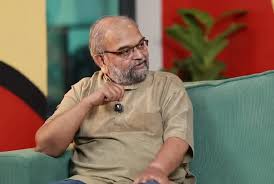
In an interview with Kunal Kamra, Professor Deshpande exposed the ‘merit’ of upper castes, told how caste gave land to his grandfather, job to his father and ‘merit’ to him New Delhi: Retired sociologist Professor Satish Deshpande of Jawaharlal Nehru University (JNU) has made a shocking revelation on the caste system in India. He told how people of upper castes attribute their success to “merit”, while in reality it is the result of caste privileges received for hundreds of years. In comedian-commentator Kunal Kamra’s podcast ‘Nope’, sociologist Professor Satish Deshpande exposed the fundamental contradiction in an explosive discussion on India’s caste system where on the one hand the Constitution declared caste to be abolished, but in practice it is still deeply ingrained in every layer of Indian society. Professor Deshpande explained with the example of his own family how upper caste privileges are transmitted for generations. He said, “My grandfather got 200 acres of land during the Peshwa rule as a Brahmin. If he had been from some other caste, he would not have got this land. After independence, the land reforms reduced it, but my father was made an engineer by selling the same land.” This admission breaks the myth that the success of upper castes is purely a result of individual merit. Deshpande candidly said, “My grandfather was not very smart. So when the new laws came after independence, a lot of land was lost from him. But whatever was left, some of that land was sold and my father and one of my uncles were made engineers and doctors. So I am the son of an engineer, so I think what do I have to do with caste? I am an embodiment of merit, but how did I get merit? How did I go to expensive schools and good colleges? Because my father was an engineer. How did my father become an engineer? Because my grandfather had land. Why did my grandfather have land? Because his caste was so and so. If he belonged to some other caste, he would not have had any land and I would not be sitting here. But by the time my generation came, this language of merit became so strong that people like me really started believing that whatever they are is only and only because of merit, it has nothing to do with caste. The oppressed have to wear their caste like a badge; the privileged have the privilege to forget it. Professor Satish Deshpande Deshpande first rejected the narrative that caste was a colonial creation. He acknowledged that British rule certainly fostered caste divisions for administrative control but he insisted that caste was and is an indigenous hierarchical system. “We can blame the British for many things, but caste is not one of them”. The Constitution of India after independence formally abolished caste discrimination and declared the country a casteless republic, Deshpande said. But the same Constitution also introduced reservations, recognising that centuries of oppression required redress. This dual policy of outlawing caste while simultaneously institutionalising caste-based quotas created a fundamental tension that India has yet to resolve. The illusion of merit and the invisibility of privilege The most striking point Deshpande raised was how upper caste Indians often deny caste by claiming that their success is entirely merit-based. He explained this with a personal example: his grandfather, a Brahmin, Caste-based privileges under the Peshwa regime meant that the peasants owned substantial land. Even the land they lost after land reforms funded his father’s education, which in turn enabled his own advancement. He acknowledged, “I am where I am because of generations of caste privilege. Yet my education and social status allow me to pretend that caste doesn’t affect me.” He argued that this selective blindness is a luxury only of the privileged. For the underprivileged castes, caste is an inescapable reality – a marker of identity that they have to constantly produce in order to demand their rights. “The oppressed have to wear their caste like a badge; the privileged have the privilege of forgetting it.” Deshpande said, “There has been a huge rift in caste. Those who have benefited the most from caste feel that caste today means only lower caste. People like us have nothing to do with caste. And on the other hand, those who belong to these so-called lower castes feel that without raising the slogan of no caste, we will not get anything. So one section has become hyper visible. Their caste has become hyper visible. They will not get anything without caste. And another section’s caste has become invisible, so because of this, dialogue has become impossible. Those who have suffered the most from caste have had to raise the flag of caste every time. Regarding casteism, which is deeply ingrained in society, Prof Deshpande said, “How can we abolish the institution that governs everyday life? This question has always put us in a dilemma – a shame and hesitation that we have expressed in different ways. It is a suppressed truth that has remained in our subconscious. After independence, the first thing we did was to declare the abolition of caste in the Constitution. But the same caste system forced us to accept that a large section of the country has been suppressed for centuries – not only socially but also morally and legally. As compensation for this historical injustice, we created the system of reservation. The contradiction here is clear: on the one hand the Constitution declares the end of caste, that now we are a republic, caste distinctions have ended, while on the other hand it makes special provisions for some castes. Superficially this seems progressive, but it reflects a double mentality – the desire to abolish caste and at the same time the need for historical compensation. He says that the foundation for this was laid by the Poona Pact of 1932, when after Gandhiji’s fast, reservation was accepted within the Hindu electorate instead of a separate
Karnataka: Rajanna’s sacking threatens ‘pro-Dalit’ stance of Congress, credibility of Siddaramaiah
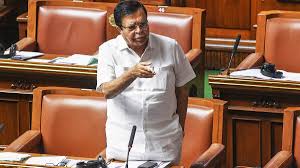
The sacking of Karnataka cooperation minister K.N. Rajanna, a Scheduled Caste leader, has plunged the Siddaramaiah government into a political crisis The sacking of Karnataka cooperation minister K.N. Rajanna, a Scheduled Caste leader from Tumakuru, on the first day of the monsoon session of the state legislature, has the Siddaramaiah government on the back foot as the BJP claimed that the Congress party is showing its “true anti-Dalit” face. The saffron party dubbed the removal of two Dalit ministers—B Nagendra over allegations of corruption in the Valmiki Corporation scam and now Rajanna for refusing to toe the line of the party on the vote theft charges—as “Dalit victimisation”. Chief Minister Siddaramaiah removing Rajanna, one of his close aides, from the cabinet on Monday, reportedly following orders from the party high command, has raised questions over Siddaramaiah’s own position and the stifling of Dalit voices within the party. While Rajanna’s unceremonious removal from the cabinet is being attributed to his recent comments on the voter fraud that directly challenged LOP in Parliament Rahul Gandhi’s claims and narrative on the “vote theft”, Rajanna’s alleging a “conspiracy” against him for his sacking, has put the government and the party in a tight spot. “When was the voter list made? It was made when we (Congress) were in power. What’s the point of discussing it now? It is true that there have been illegalities and we should be ashamed as they took place right before our eyes. We should have examined when the draft electoral rolls were out. There has been voter fraud in Mahadevapura like duplicate voting, bulk voters in a single address. But it was our responsibility as the party and the government to file objections to the draft rolls,” Rajanna had responded on the voter fraud issue, even as the Congress party had launched a national-level “Vote Chori” campaign, squarely accusing the Election Commission of “colluding” with the ruling BJP at the Centre for the vote. After his sacking, Rajanna told the media that there was a “conspiracy” against him and he would reveal everything at an appropriate time. “There has been a misunderstanding, and I will explain it to Rahul Gandhi and K.C. Venugopal. It is the party’s decision and we cannot question it,” said Rajanna, even as his son and MLC Rajendra turned emotional and rushed to meet the chief minister after the sacking was made official by the governor’s office on Monday evening. BJP trains guns on state govt On Tuesday, LOP in Assembly MLA R. Ashok said, “Rajanna has been punished for speaking the truth and busting Rahul Gandhi’s false narrative.” State BJP president B.Y. Vijayendra alleged that the Congress constantly tried to silence the Dalit leaders in the party. “In Congress, truth is treated as a threat, especially when it comes from a leader of a marginalised community whose voice they have long tried to silence. The pattern is clear. In the case of ST Welfare Minister Nagendra, funds earmarked for the development of the community were siphoned off to finance Congress’s election expenses. Instead of holding the CM and DCM D.K. Shivakumar accountable, the blame was placed entirely on Nagendra, and the matter was quietly closed,” said Vijayendra. Referring to the Congress leadership stalling the Dalit ministers’ dinner meeting organised by Home Minister G. Parameshwara recently, Vijayendra accused the Congress high command of “dictating” what the SC/ST ministers could do or not do. “Even when SC/ST MLAs and ministers gather informally for a meal, the high command dictates that such meetings cannot happen without their physical presence, as though leaders from these communities cannot meet independently. This is the true face of Congress—anti-Dalit, anti-ST, anti-democratic and anti-truth,” mocked the BJP leader. The BJP further said Siddaramaiah, who claims to champion the ‘Ahinda’ (minorities, dalit and backward classes) stands exposed. “This has exposed the hollow claims of Siddaramaiah as he has never defended the Ahinda when targeted. Instead, he bows to the diktats of the Delhi High Command to safeguard his own position as the chief minister,” alleged Vijayendra. Interestingly, Congress MLC B.K. Hariprasad, an OBC leader and a vocal critic of Siddaramaiah, said, “When you are in politics, one has to face conspiracies, especially if you are from the SC, ST or OBC communities. This is a lesson for Rajanna. But I am sure he will not remain mum. I have known him since his Youth Congress days.” BJP leader from Valmiki (ST) community B. Sriramulu said Rajanna was dropped from the cabinet for his “straight forward” and “harsh” words. “The CM dropping him from the cabinet, yielding to pressure from some invisible hands, is an insult to the Valmiki community,” he said. In June 2024, Nagendra was forced to resign from the cabinet after the Valmiki Corporation scam—misappropriation (diversion) of Rs 187 crore allegedly to fund the Telangana assembly polls—was exposed. Nagendra was arrested by the Enforcement Directorate in July under money laundering charges and released on bail in October. The BJP has claimed that Nagendra was made the fall guy though the alleged scam was about the diversion of funds for elections. The opposition parties had demanded the chief minister, who is the finance minister, to resign. Following the Stadium stampede incident that claimed 11 lives, the BJP had strongly condemned the suspension of then Bengaluru police commissioner B. Dayananda (also belonging to ST community), and accused the Siddaramaiah government of making the top cops the political “scapegoats”, even as the citizens, retired cops, and Dalit organisations expressed their dismay over the suspension of an efficient and upright officer. Congress: A divided house The removal of both Nagendra and Rajanna from the cabinet, against Siddaramaiah’s will, has exposed the widening rift between the warring factions in the ruling party. The Shivakumar faction seems to have an upper hand. The high command not only stopped the various events organised by Siddaramaiah loyalists meant to bolster the image of the CM, but also stalled the implementation of the old caste survey (Kantharaj Commission report)
Decades on, 41 Dalit families in Dharamsala await land ownership rights

As many as 41 Dalit families belonging to the Balmiki community in Dharamsala are still awaiting proprietary rights to the residential plots they have inhabited for several decades. These plots were originally allotted to them in the 1960s by Partap Singh Kairon, the then Chief Minister of the undivided Punjab. However, after the reorganisation of states and the formation of Himachal Pradesh in 1966, the new state government failed to address their longstanding demand for ownership rights. The families have been living on government land bearing ‘’khasra’’ number 3362/1013, measuring 5,113.87 square metres. Over the years, they have constructed permanent (pucca) houses on the land, and some of them are now of the second generation. Despite this, they do not hold any legal title to the land. The issue was recently taken up with Himachal Pradesh Chief Minister Sukhvinder Singh Sukhu by Devinder Jaggi, former Mayor of Dharamsala, who urged the government to grant ownership rights to the Balmiki families, who have now lived on the land for over 60 years. “I have urged the Chief Minister to resolve this decades-old issue and grant ownership rights. It will provide permanent housing security to these families and mark a landmark step towards social justice for the Balmiki community in the hill state,” said Jaggi. In response, the Chief Minister has directed the District Magistrate of Kangra, Hemraj Bairwa to look into the matter and take appropriate action. Speaking to The Tribune, Bairwa confirmed that the issue had recently come to his attention. “This is a long-pending matter. I have taken it up with the government and am hopeful that proprietary rights will soon be granted to the current occupants of these residential plots,” he said. Bairwa has forwarded his recommendations to the Additional Chief Secretary and Finance Commissioner (Revenue) for approval of land regularisation and expansion of the Dalit colonies. Article_Author Kulwinder Sandhu Courtesy : The Tribune Note: This news is originally published on https:/thetribune.com/bha and is used purely for non-profit/non-commercial purposes, especially human rights.
Attack on Dalit family in Mainpuri: In land dispute, miscreants pelted stones, three including a woman injured; demand for police action
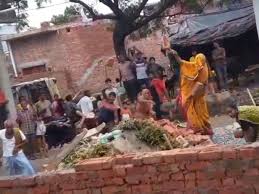
In Mainpuri’s Karhal police station area, a land dispute took the form of caste violence. The incident took place on August 11, when some miscreants in village Ustan tried to close the road by filling the foundation in front of a Dalit family’s house. Radha Devi Balmiki told in her complaint to the SP that when she protested, Raju, Bablu, Bunty, Avnish and Ramsevak Shakya attacked her family with bricks and stones. In this attack, her daughter Kavita suffered serious head injury. Her husband and daughter-in-law Mona were also injured. The accused abused the victim’s family using caste-related language and threatened that they would not let their family live in the village. The victim’s family alleges that the police station did not take any action on their complaint. The video of the incident is going viral on social media. When they appealed to the SP for justice, he assured them of action. The victim’s family said that they did not want any fight but theirs was the only house in the village and the Shakya community was in majority. Ashish Kumar Courtesy : Hindi News
Dalit Basti’s drain broken: Dirty water spread on roads in Khamaria of Saughat, people facing problems in movement
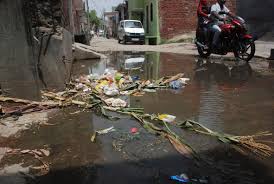
People are troubled due to broken drain in Dalit Basti of Gram Panchayat Khamaria located in Saughat of Basti district. Dirty water is spreading on roads from the drain. This is obstructing movement. Local residents Nagendra Kumar, Suchit Kumar, Mahesh Kumar, Sanyam, Sundar and Dhoop Chand said that water is not able to drain out from the broken drain. This has created a situation of waterlogging in the area. Dirty water is spreading due to this. This can cause health problems. Local people have demanded the Gram Panchayat administration to get the drain repaired. They say that their daily routine is getting affected due to this problem. A quick solution is being demanded from the administration. Arun Kumar, Gandharia Faiz Courtesy: Hindi News
MP: Caste discrimination against Kanwariyas in Shivpuri, case registered against 6 accused under SC-ST Act
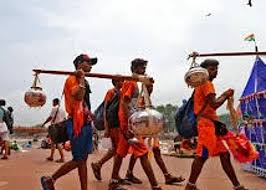
According to the victims, during the dispute, Hari Singh and Saidpal snatched the Kanwar from the hands of priest Rakesh Pandit and threw it on the ground. Meanwhile, all the accused threatened the Kanwariyas that if they complained about the incident to the police, they would be killed. Bhopal. A religious dispute has taken a serious turn in Richhai village of Khaniadhana police station area of Shivpuri district of Madhya Pradesh, when the youth of Jatav community were stopped from offering water from Kanwar in the Shiva temple of the village. In the incident, allegations of using caste-specific abuses, snatching and throwing Kanwar and threatening to kill have come to light. Police have registered a case against six people in the case under various sections including SC/ST Act. Know what is the matter? This case is of August 6. Victim Jeetu Jatav and his companions had set out on the Kanwar Yatra after taking water from the famous temple of Aurchha. They returned to the village at around 10 am and at around 1 pm reached the Shiv temple located in the courtyard of the Peepal Wale Bade Baba temple of the village. To offer water, they called priest Rakesh Pandit from Kanjwaha village and started preparations for the puja. Meanwhile, Karan Singh alias Sedar Singh Bundela, Kispal Singh Bundela, Hari Singh Bundela, Saidpal Bundela, Manju Bundela and Narayan Singh Bundela of the village reached the spot. It is alleged that these people used casteist words and said that “we will not let the Kanwad of Jatavs be offered in this temple”. After this, they abused and stopped the Kanwadis from offering water. Snatched the Kanwad and threw it away, threatened to kill According to the victims, during the dispute, Hari Singh and Saidpal snatched the Kanwad from the hands of priest Rakesh Pandit and threw it on the ground. Meanwhile, all the accused threatened the Kanwadis that if they complained about the incident to the police, they would be killed. On getting information about the incident, District Panchayat member Siyaram Lodhi reached the spot. He discussed with the villagers and informed the police. After this, Khaniyadhana police station reached the spot and registered a case. According to the Khaniyadhana police station in-charge, a case has been registered against six named accused under IPC sections 294 (abuse), 506 (criminal intimidation), 295A (hurting religious sentiments), 34 (crime committed with common intention) and Scheduled Castes and Scheduled Tribes (Prevention of Atrocities) Act. Police say that in view of the seriousness of the case, the search for the accused has been started and arrests will be made soon. Ankit Pachauri Courtesy: Hindi News
Dalits are doing the work doctors reject—‘No postmortem without a safai karmachari’
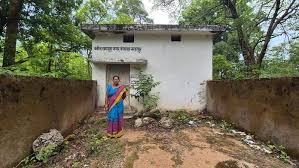
Thousands of Dalit sanitation workers across India are forced to perform autopsies in place of doctors. ‘This practice is even worse than manual scavenging.’ Delhi/Narharpur/Dharwad: Hidden in the forests of Chhattisgarh’s Narharpur is a small cement structure with black Hindi letters on the wall: Naveen Shav Griha, a house for the dead. More than 1,200 postmortems have been conducted here in the last 20 years. The person cutting open the bodies is Santoshi Durga, a sanitation worker. Her qualification is not an MBBS but her caste. There’s no running water or electricity in the dingy room. Just a worn-down cement slab and a paltry selection of knives. The town’s residents say the murda ghar is haunted, cursed. By extension, they look at 42-year-old Durga with suspicion. But to them it’s only natural that the distasteful job of dealing with the dead is relegated to a Dalit. “Townspeople say the mortuary is not auspicious, it is scary. So, they pressurised the hospital to make the mortuary outside the town,” said Durga, who works for the Narharpur Community Health Centre as a badli worker, a substitute or proxy. Sometimes, badlis sweep roads or clean drains for government safai karamcharis who don’t want to get their hands dirty. And sometimes, badlis like Durga fill in for squeamish doctors. For this, they don’t even get the pay or benefits of a permanent sanitation employee. The doctor never touches the body, he just keeps making notes. I have complete experience now. I know how to cut open the body and break open the skull. I open the body from the trachea to the navel. I show the doctor where the bones are broken, where injuries have been sustained -Santoshi Durga, contract sanitation worker Across India—whether in Narharpur or Gurugram, Dharwad or Delhi—thousands of Dalit sanitation workers are forced to perform autopsies. Called “cutters” by the medical fraternity, they get no formal training, protective gear, recognition, or additional compensation. Despite government regulations requiring an MBBS degree as the basic requirement to conduct autopsies, physicians at large do not want to go near decomposing bodies, much less handle the organs. They may supervise from a distance, but the dissection is left to sanitation workers, who are nearly always Dalit. The role is passed down generationally, turning risky medical labour into an inherited caste-based duty. The system continues to reinforce and strengthen age-old, stubborn notions of pure and impure, and lack of dignity is still ascribed to some jobs in modern India. “This practice is even worse than manual scavenging,” said Bezwada Wilson, convenor of the Safai Karmachari Andolan. Dalit sanitation workers doing postmortems Contract worker Rakesh Rajak at the postmortem room in Komal Dev District Hospital, Kanker. He has been conducting autopsies for around 15 years | Photo: Shubhangi Misra | ThePrint Not only are sanitation workers engaging in a hazardous, traumatising job without prior consent, they’re also stuck in tenuous contract work, forced to labour all seven days of the week. They depend on tips from relatives of the dead to meet their basic needs. Durga is no stranger to the murda ghar. She learnt the job of dissections from her father, who drank himself to death to cope with the pressures of the work. “My father used to conduct autopsies here earlier, but he used to get drunk and do it. I wanted to prove to him that this work can be done without alcohol. I learnt the ropes alongside him,” she said. Yet though the practice is rampant in government hospitals, the work is either invisible or it brings ignominy. Or both. “No postmortem in this country happens without a safai karmachari,” said Bhim Basfore, member of Assam’s Safai Karmachari Aayog and the son of a postmortem worker himself. “Nobody wants to do this work, and so it is handed over to the sanitation workers. Sanitation workers do three types of jobs: working on the roads, manual scavenging, and cutting dead bodies. There is a lack of awareness about the third.” Caste disguised as contingency A hammer and a couple of blades kept neatly in a black bag, along with aprons, masks, and gloves are the only tools at Durga’s disposal for her autopsy work. She doesn’t even know what bone saws, rib shears, or specialised autopsy knives are. Her kit is kept in a far corner of Narharpur Community Health Centre and is labelled with khatra (hazardous) warnings. If further testing is needed, she transports body parts back to the hospital in a basic plastic container. “Here is the box I keep organs in,” she said, pulling out a blue-lidded Pearlpet box, which she washes and reuses. Durga is the one doctors and even police call when a decaying body is found, or the victim of a murder or suicide has to be examined. She has to work with whatever she gets. The bodies might be infested with maggots, bloated, or mangled beyond recognition. The sight and stench can be unbearable. She says the state provides her hepatitis shots every quarter. Usually, bodies are brought to the mortuary in a van, with the doctor and Durga travelling together to carry out the work. “The doctor never touches the body, he just keeps making notes,” she said. “I have complete experience now. I know how to cut open the body and break open the skull. I open the body from the trachea to the navel. I show the doctor where the bones are broken, where injuries have been sustained.” The people I cut open visit me in my dreams. Earlier I was scared of them. Now I have made my peace with it, but it is still difficult to fall asleep at night – Sanitation worker in Gurugram Calling on sanitation workers for mortuary work is just the normal division of labour here. It even happens in Raipur, according to Naharpur block medical officer Bhupendra Kumar. “The autopsies always happen under the supervision of doctors. We are always present there,” he said. A
Dalit left groups to start protest from August 11 seeking immediate implementation of Nagamohan Das panel report on internal quota
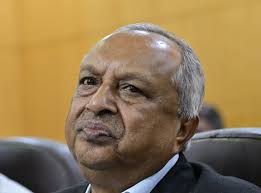
Amid pressure on the Karnataka government to hand over the H.N. Nagamohan Das Commission report on internal reservation to a Cabinet sub-committee to study it, several Dalit organisations, under the banner of Federation for Social Justice for Scheduled Castes, will start their indefinite protest from Monday morning, seeking immediate implementation of the report. Amid pressure on the Karnataka government to hand over the H.N. Nagamohan Das Commission report on internal reservation to a Cabinet sub-committee to study it, several Dalit organisations, under the banner of Federation for Social Justice for Scheduled Castes, will start their indefinite protest from Monday morning, seeking immediate implementation of the report. The government has postponed a decision on the committee report to the next Cabinet, asking Ministers to study the report before initiating the discussion. Dalit right not happy While the Dalit right (Holeyas) is understood to be unhappy with the report’s findings, and have pointed out at their reduced population and flaws in distribution of internal reservation, the Dalit left (Madigas) and other groups have welcomed the report and have sought immediate implementation. The commission has sliced the 17% reservation matrix with 6% given to the Dalit left and 5% to the Dalit right, besides 4% to touchable groups, As much as 1% each has been given to microscopic communities and those who have identified themselves as AD, AK, and AA. Sources in the Dalit left groups said that the report should not have the same fate as the A.J. Sadashiva Commission report submitted earlier but not implemented. If there are flaws, it could be rectified and implemented, sources said. “Every community will work to protect its interest and it was expected also. But government should not yield to such pressure to stall the implementation.” CM should take a stand Basavaraj Kowthal, convener of Federation for Social Justice for Scheduled Castes, said that they will not withdraw their protest unless the government issues an order to this effect. “Chief Minister Siddaramaiah has to take a stand. If he goes on seeking consent from all caste groups, there will be no end to it. The report prepared after a scientific survey and robust data collection should not be wasted. Our demand for internal reservation has been three decades old and the Supreme Court has cleared it. The survey has been done according to the Supreme Court order. Not only have the caste numbers been considered, but also the extent of backwardness. We will not abandon the protest site until the government takes the report to its logical end,” he said. H.N. Nagamohan Das. Courtesy : The Hindu Note: This news is originally published on https:/thehindu.com/bha and is used purely for non-profit/non-commercial purposes, especially human rights.
Third Pride rally held in Agartala, organisers say government needs to create more awareness about transgender rights

Sneha Gupta Roy of Swabhiman – Tripura LGBTQIA+ Collective says transgender protection cells were being formed in different districts of the state. Swabhiman – Tripura LGBTQIA+ Collective organised the third Pride rally of the state on Saturday. Swabhiman, the first registered queer society in the state, had also taken out Tripura’s first Pride rally in September 2022. On Saturday, the rally started from the Umakanta Academy grounds and ended at the same spot after traversing important locations in Agartala. Speaking to reporters, Sneha Gupta Roy, one of the rally organisers, said, “We have held Pride rallies in the past. We had a gap of a year in between; this is our third Pride. Pride rallies are held in all states. Members of the queer community and our supporters joined the rally.” “Our message in this Pride is that we are equally a part of this society like everyone else. We face the same problems others do. So, we have tried to portray problems of different sections of society, including environmental pollution, and women’s education…” Gupta Roy added. Gupta Roy, who is a member of the Tripura Transgender Board, said transgender protection cells were being formed in different districts. “Once these cells are formed, it will be easier for LGBTQIA+ persons to be involved in discussions (with the government) about our issues,” she added. Swabhiman leader Gupta Roy also commented that the Indian society was still “backward” and there was a need for the government to create greater awareness on transgender rights. Saturday’s rally was joined by hundreds of lesbian, gay, bisexual, transgender, and other queer individuals waving rainbow flags and placards. Written by Debraj Deb Courtesy : TOI Note: This news is originally published on https:/timesofindia.com/bha and is used purely for non-profit/non-commercial purposes, especially human rights.
Deadly attack on Dalit youth: Goons attacked due to old enmity, youth injured due to head injury
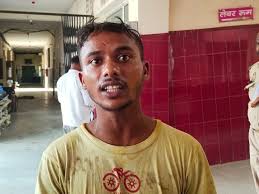
A Dalit youth was attacked by goons late Friday night in Pasia Bazaar of Raebareli district. The youth has suffered serious head injury in this attack due to old enmity. The victim Abhishek somehow saved his life by running away and recognized the attackers. He immediately informed the police about the incident. The police reached the spot and brought the injured youth to the police station. Abhishek told that he is a resident of Pasia Bazaar village and he has a bicycle store there. The accused also has a hotel in the same village. There is an old enmity between the two. According to the victim, the accused had beaten him last year too, a case of which was registered in Unchahar police station. Abhishek alleged that the accused and his companion attacked him with a potato sowing hoe. On the other hand, Vipin says that he has no quarrel with the accused. He alleged that the accused is trying to implicate him in a false case and is taking advantage of his belonging to the Scheduled Caste. On this matter, Unchahar Kotwali in-charge Sanjay Kumar said that a case of assault has come to light. Complaints have been received from both the parties. At present, the police have challaned both the parties under section 151. The matter is being investigated and further legal action will be taken after the investigation. Doctors have refused to do a normal medical after seeing the injury on the youth’s head, from which the severity of the injury can be estimated. Mehtab Ahmed | Dinshah Gaura, Courtesy: Hindi News