
Blocked Drains, Denied Dignity: Dalit Family in UP Faces Caste-Based Discrimination

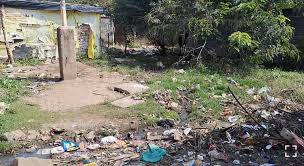
The root of the problem lies in a discriminatory practice: while drainage water from upper-caste households flows freely into the village pond, the drain serving the Dalit community is deliberately blocked, forcing the filth to accumulate near their homes. Firozabad- Despite constitutional safeguards and stringent laws like the SC/ST (Prevention of Atrocities) Act, 1989, caste-based discrimination continues to manifest in insidious ways. For Dr. Pardeep Kumar, a PhD holder in Mathematics from Dayalbagh University, Agra, the battle is not just against systemic neglect but also against the silent atrocities inflicted by caste prejudice in his own village. A resident of Gadora village in Firozabad district, Dr. Kumar, who is specially abled, lives with his family in conditions worse than urban slums, surrounded by stagnant, sewage-filled water that floods their home during rains. The root of the problem lies in a discriminatory practice: while drainage water from upper-caste households flows freely into the village pond, the drain serving the Dalit community is deliberately blocked, forcing the filth to accumulate near their homes. In Gadora village, Firozabad district, drainage water from upper-caste households flows freely into the village pond. However, the drain serving the Dalit community is intentionally blocked, forcing sewage to accumulate near Dr. Kumar’s home. During monsoons, the stagnant water floods his house, mixing with waste and buffalo dung dumped by an upper-caste neighbor. The filth has turned the area into a breeding ground for mosquitoes, leading to severe health consequences. Dr. Kumar’s mother and niece recently suffered from dengue, a direct result of the unhygienic conditions. Despite multiple complaints to local authorities and the Uttar Pradesh government, no action has been taken. “This is not just about dirty water, it’s about dignity,” says Dr. Kumar. “Even with education and awareness, we are denied basic rights because of our caste.” Academicians and activists highlight that while violent caste crimes grab headlines, systemic neglect—such as denying proper drainage—is an equally brutal form of oppression. “These silent atrocities reinforce untouchability,” says Dr. Krishan Kumar, a scholar on Dalit issues. “Authorities must recognize such discrimination and act under the SC/ST Act.” The case also exposes the failure of schemes like Swachh Bharat Mission, which promise sanitation for all but remain inaccessible to marginalized communities. Local officials claim the matter is “under review,” but villagers allege caste bias is delaying justice. Legal experts stress that such cases warrant immediate intervention under anti-atrocity laws. As Dr. Kumar’s family waits for justice, their plight indicates a harsh truth: caste still dictates who gets dignity, and who is denied even the most basic rights. — ✍️ Dr. Krishan Kumar Courtesy : The Mooknayak Note: This news is originally published on https:/themooknayak.com/bha and is used purely for non-profit/non-commercial purposes, especially human rights.
Clean City, Dirty Truth: The Invisible Suffering of Bhopal’s Sanitation Workers Behind the 7-Star Swachh Bharat Glory
Sanitation workers employed under the Bhopal Municipal Corporation, who risk their lives and health in one of the most physically demanding public roles, are being paid on minimum wages and on temporary basis. Bhopal- On 17th July 2025, Bhopal , the capital of Madhya Pradesh was declared the second cleanest city in India in the Swachh Survekshan 2024-25 rankings, in the category of municipalities with populations above 10 lakhs. The city also achieved the status of a 7-Star Garbage Free City and was certified as a Water Plus City under the Swachh Bharat Mission. But while the city celebrates these achievements, the lives of those who made this success possible remain trapped in neglect, poverty, and exploitation. Behind every clean street and every garbage-free locality are thousands of sanitation workers, most of whom belong to historically oppressed castes, working in dangerous, dehumanising conditions. Despite being essential to the city’s public health and image, their rights are being exploited by the very Municipal corporation and are treated as disposable. The wife of the sanitation worker doing kitchen chores. The wife of the sanitation worker doing kitchen chores. Pragya Sharma/The Mooknayak “We are human too, but nobody seems to care about our condition.” This was the quiet pain in the voice of a sanitation worker I met in Sargam Basti, a slum in Bhopal that many safai workers, call home. He did not want to be named, but his words carried the weight of generations of injustice. “The Bhopal Municipal Corporation pays me ₹8,200 per month. I have three small children who go to school. My wife manages the household. We need milk, sometimes medicine, school fees . How are we supposed to manage everything with this amount?” There was no anger in his voice. Just exhaustion. The exhaustion of someone who rises at 4 a.m. every day to clean the city yet cannot afford to fix the leaking roof of his jhuggi. He added, “Sometimes I wonder , even if my children study hard and get educated, will their life be any different from mine? But then I think, maybe their fate can change. That hope is what gets me out of bed every morning.” Sanitation workers, many of whom are hired on contract, are denied basic facilities , no health insurance, no safety gear, no permanent employment status, and no social security. In another home nearby, a woman shared her family’s daily struggles: “My husband works in the municipal corporation as a sanitation worker. He earns approx. ₹10,000 a month, but that’s not enough to run the house. I have to go to two or three houses every day to wash dishes and clean floors. We both work from morning to evening, yet we still can’t make ends meet.” “We’re always in debt. Sometimes it’s school fees, sometimes medicine, sometimes basic groceries. There’s always something.” These are not isolated stories. There are hundreds of families like theirs, living in slum areas (jhuggi-bastis)around Bhopal. Ironically, they clean the city every day but live in places with no proper sanitation, surrounded by garbage, open drains, and the very unhygienic conditions they are hired to remove from public view. Their suffering is undocumented and unacknowledged. The house of a sanitation worker from inside. The house of a sanitation worker from inside.Pragya Sharma/The Mooknayak Workers Who Clean the City but Are Denied a Life of Dignity The Swachh Bharat Mission, despite its visible outcomes in city like Bhopal, has failed to protect the rights and welfare of the very people implementing it on the ground. Sanitation workers, many of whom are hired on contract, are denied basic facilities , no health insurance, no safety gear, no permanent employment status, and no social security. The BMC continues to employ them at minimum wages, sometimes through third-party contractors. These are not just labour issues , they are structural caste injustices. The fact that the majority of these workers come from Dalit communities is not a coincidence. It reflects a deeply rooted caste division of labour, where certain communities are still forced into degrading work with no safety net, no voice, and no visibility. The roof of the workers house they called home. The roof of the workers house they called home. Pragya Sharma/The Mooknayak Wages Below Legal Minimums The injustice becomes even more stark when we compare their earnings to the Collector Rate, the minimum wage set by the District Collector for daily wage laborers in Madhya Pradesh. These rates, revised in April 2025, are meant to act as a benchmark for fair wages. According to the revised rates: Skilled workers: ₹570.93 per day or ₹12,294/month Highly skilled workers: ₹633.43 per day or ₹13,919/month Despite this, sanitation workers employed under the Bhopal Municipal Corporation, who risk their lives and health in one of the most physically demanding public roles, are being paid on minimum wages and on temporary basis. According to the Urban Administration and Development Department and the provisions under the Municipal Corporation and Municipal Council Acts, there is a clear mention of providing special financial allowances to sanitation workers. However, in practice, no such special allowance is given by the municipal corporations. This is despite the fact that sanitation workers carry out the most hazardous and lowest-paid work, putting their health and future at risk to fulfill the responsibility of keeping cities clean. This isn’t just a legal failure. It’s a moral one. Many of these workers are kept on temporary contracts without any form of health insurance, paid leave, or job security. Several suffer from occupational illnesses like skin diseases, respiratory issues, tuberculosis, and injuries from unsafe waste-handling practices. But because they remain undocumented or informal workers, no health surveys or welfare policies reach them. Ironically, while the Swachh Bharat Mission mandates regular audits and rankings of cleanliness infrastructure, there is no nationwide mechanism to track the conditions or health of sanitation workers. Their labour remains essential, but invisible. The fact that the majority of these workers come from Dalit communities is
Bombay High Court orders SIT probe into custodial death of Dalit law student
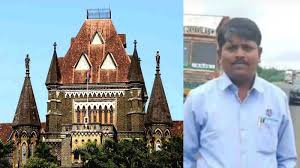
The Aurangabad Bench of the Bombay High Court dissolves earlier inquiry panel; says constitutional rights “prima facie violated” in Somnath Suryawanshi case. In the custodial death case of Somnath Suryawanshi, the Aurangabad Bench of the Bombay High Court has directed the Maharashtra Director General of Police (DGP) to set up a Special Investigation Team (SIT) within one week. The court orally passed the order on August 14, 2025. A Division Bench comprising Justice Vibha Kankanwadi and Justice Sanjay A. Deshmukh observed that the Inquiry Committee earlier appointed by the Maharashtra Government will be dissolved, and all documents related to the 35-year-old Dalit law student Suryawanshi’s custodial death will now be handed over to the new SIT. Magisterial probe holds cops responsible for custodial death of Parbhani protester “If the petitioner, Vijayabai Venkata Suryawanshi, has any objections to the members of the SIT, she may register them before the court,” the Bench observed. Advocate Hitendra Gandhi representing Ms. Suryawanshi, told The Hindu, “The High Court’s direction to constitute a SIT in the custodial death case of Somnath Suryawanshi is a significant step forward, we hope the SIT will conduct a fair and thorough investigation to deliver justice that has long been denied. This order restores faith that the truth cannot be buried, and accountability will have to follow.” On July 4, 2025, the court directed the Parbhani police to register a First Information Report (FIR) within a week, noting prima facie evidence of custodial torture and violation of fundamental rights. The Bench passed the interim order in response to a petition filed by Mr. Suryawanshi’s 61-year-old mother, Vijayabai Vyankat Suryawanshi. The petitioner alleged that her son was subjected to brutal torture during his illegal detention following a protest in Parbhani on December 11, 2024, and that authorities subsequently attempted to cover up his death as a cardiac incident. Mr. Suryawanshi, a final-year law student and a member of a Scheduled Caste family from Latur, was reportedly arrested while filming a protest against the desecration of a replica of the Constitution near a statue of Dr. B.R. Ambedkar. The petition alleged that despite the peaceful nature of the demonstration, he and several others were picked up during an indiscriminate police crackdown, subjected to custodial assault, and denied timely medical attention. On July 30, 2025, the Supreme Court dismissed a petition filed by the Maharashtra government challenging a Bombay High Court order directing the police to register a FIR. Mr. Suryawanshi, a final-year law student and a member of a Scheduled Caste family from Latur, was reportedly arrested while filming a protest against the desecration of a replica of the Constitution near a statue of Dr. B.R. Ambedkar. The petition alleged that despite the peaceful nature of the demonstration, he and several others were picked up during an indiscriminate police crackdown, subjected to custodial assault, and denied timely medical attention. The petition stated, “In the videos, it could be seen that Somnath was carrying the book of the Constitution of India and recording the incident in the protest. His arrest was illegal and then he was subjected to inhuman atrocities. He as well as other persons were produced before the Magistrate on 12.12.2024. The others were also subjected to brutality and their injuries were visible, swollen, however, they were afraid to speak to the Magistrate due to the threats those were given.” It further said that the Court had granted police custody of two days. “Further brutal assault was given to Somnath. His situation worsened when he was again produced before the Magistrate on 14.12.2024. Thereafter, his custody was transferred to Magisterial custody. Around 6.49 a.m. suddenly Somnath died on 15.12.2024, while in judicial custody,” the petition read. It was further submitted that police claimed Mr. Suryawanshi had complained of chest pain prior to his death. The petitioner also alleged that on reaching Parbhani, she was taken by Police Officer Ashok Ghorband to the Inspector General of Police, where she was informed that Somnath’s brothers could be offered police jobs and was advised to perform the last rites in Latur instead of Parbhani. She further claimed she was offered ₹50 lakh to refrain from filing a complaint. She declined, demanding that her son’s death be acknowledged as custodial murder and not classified as death by natural causes. The court noted that the post-mortem, conducted by a seven-member medical team, had recorded 24 visible injuries and concluded that the cause of death was “shock following multiple injuries”. A judicial inquiry under Section 196 of the Bhartiya Nagrik Suraksha Sanhita (BNSS) also reportedly found gross human rights violations and directly linked the death to custodial assault. “This Court cannot remain a mute spectator when constitutional rights of a person in custody are prima facie violated,” the Bench observed, criticising the State for failing to register a cognisable offence despite substantial evidence from the post-mortem, inquest report, and the magistrate’s findings. The Bench further questioned the delay by the CID in acting on the findings and expressed concern over the credibility of the internal inquiry, which bypassed the autopsy doctors and instead sought a second opinion from J.J. Hospital, Mumbai. The court directed that an FIR be registered based on the petitioner’s complaint dated December 18, 2024, and that the investigation be handed over to a Deputy Superintendent of Police. The prior order restraining CID officer D.B. Talpe from submitting a final report has been vacated following this direction. Purnima Sah Courtesy : The Hindu Note: This news is originally published on https:/thehindu.com/bha and is used purely for non-profit/non-commercial purposes, especially human rights.
The Dalit Leader Who Chose Pakistan, Became Law Minister, Then Returned To India: Jogendra Nath Mandal’s Story

Know the untold story of Jogendra Nath Mandal, a prominent Dalit leader who became Pakistan’s first Law Minister, only to return to India after Jinnah’s death amid rising religious extremism. With India marking its 79th Independence Day, the tale of Jogendra Nath Mandal, the eminent Dalit leader who opted for Pakistan over India during Partition, presents a heart-wrenching and lesser-known page from the history of the subcontinent. Disillusioned with India’s social order and initially attracted by the promises of Muhammad Ali Jinnah, Mandal became the first Law Minister of Pakistan. But his expectations were thwarted as religiosity did a rapid turnaround, eventually forcing him back to India. Born into a farmer’s family belonging to the Namasudra community (a Dalit group) from Barisal, British India, Jogendra Nath Mandal overcame odds to seek education, eventually graduating with a law degree in 1934. Far from practicing law, he spent his life fighting against injustice and striving for the betterment of Dalits. Mandal’s political life started with Barisal municipal elections, where he worked relentlessly to enhance the lives of marginalized people. During the 1937 provincial election, he defeated the Congress district committee president and secured the Bakarganj North-East assembly seat as an independent candidate. Under the initial influence of Subhas Chandra Bose, Mandal was eventually drawn towards the Muslim League when Bose quit Congress. Mandal was also highly impressed by Dr. B.R. Ambedkar. Mandal was pivotal in making Ambedkar win the 1946 Constituent Assembly polls from Bengal when Ambedkar lost from Bombay. Mandal was a member of the Constituent Assembly himself and played a significant role in formulating the Indian Constitution through his deliberations and suggestions to Ambedkar. Influenced By Jinnah, Warned By Ambedkar In the 1946 riots, Jogendra Nath Mandal went through East Bengal, advising Dalits not to retaliate against Muslims but to consider both groups as victims of oppression by Hindu upper castes. It was then that he sided with the Muslim League and became a close associate of Muhammad Ali Jinnah. Although he was not the first to favor India’s partition, he eventually became convinced that the condition of Dalits would never change in an upper-caste dominated Hindu-majority country and Pakistan could provide a better alternative. In October 1946, Jinnah selected Mandal as one of the five representatives of the Muslim League in the interim Indian government. When Mandal opted to immigrate to Pakistan after Jinnah’s assurances, he was cautioned by his peer and India’s leading Dalit leader, Dr. B.R. Ambedkar. However, influenced by Jinnah, Mandal opted for Pakistan. Pakistan’s First Law Minister And Later Disillusionment On Partition, Jogendra Nath Mandal shifted to Pakistan and became its Constituent Assembly member and temporary chairman. Jinnah assigned him the responsibility of chairing the first session of the Constituent Assembly of Pakistan. By a stroke of fate, while Dr. Ambedkar was made India’s first Law Minister, Jogendra Nath Mandal was made Pakistan’s first Law Minister and Labour Minister. Yet, Mandal’s dreams started to fall apart soon after Jinnah’s demise in September 1948. He saw firsthand the worst kind of discrimination inflicted upon Dalits and was shook to the core by the growing violence against Hindus in Pakistan. His political stock declined sharply after Jinnah’s death. Even though he made sincere appeals to Pakistan’s first Prime Minister, Liaquat Ali Khan, regarding the issues faced by Hindus and Dalits, his appeals came to naught. Mandal had dreamed about Pakistan being a country where Dalit emancipation could bloom, but the open discrimination against Hindu minorities crushed all his dreams. Religious extremists started oppressing Hindus, and Mandal felt more and more alone in Pakistani politics. The Painful Return To India A chain of events following the death of Jinnah disillusioned Mandal, who felt that there was no one remaining in the government that would ensure promises to minorities were kept. He witnessed the emergence of people who were bent on putting religion into the state. Things became so tough for Mandal in Pakistan that he was forced to escape. In 1950, Pakistan enacted the controversial ‘Objectives Resolution,’ which was favored by nearly all Muslim members of the Constituent Assembly (with the exception of Mian Iftikharuddin) but opposed by nearly all minority members. Even one of the minority members had the following to say: If Jinnah were alive, this resolution would never have been passed.” Mandal stayed in Prime Minister Liaquat Ali Khan’s cabinet until 1950, even grumbling all along about atrocities committed on Dalits in East Pakistan. Jogendra Nath Mandal eventually put in his resignation on October 8, 1950. In his letter of resignation, he showed deep despair regarding the future of the minorities and listed the reasons why he had lost faith. He mentioned hundreds of Dalit killings in Bengal by the army, police, and Muslim League activists, which hurt him deeply and totally severed his attachment to Pakistan. Upon resigning from the Pakistani government, Mandal’s re-entry into India, or more precisely West Bengal, caused a political commotion. He migrated to India in 1950. Ironically, in India too he was suspicious of his own kind because of his Pakistani background. Though he had been a close confidant of Dr. Ambedkar, India’s leading Dalit leader prior to Partition, Mandal now had no political backing. He spent his later years in a highly backward section of Calcutta until his death in 1968. Mandal tried to revive his political life by repairing his Congress connections, running elections in North Calcutta in 1952 and 1957, a Dalit reserved constituency, but lost both times. He died in 1968 from a heart attack while he was crossing a river by a boat. The reason for his death is still uncertain since no post-mortem was carried out. Stay informed on all the latest news, real-time breaking news updates, and follow all the important headlines in india news andworld News on Zee News. Written By Nitin Kumar Courtesy : Zee News Note: This news is originally published on https:/zeenews.com/bha and is used purely for non-profit/non-commercial purposes, especially human rights.
Jharkhand High Court Raps BIT Mesra Over Dalit Student’s Death, Grants ₹20 Lakh To Kin, Issues Guidelines To Prevent Ragging In Colleges
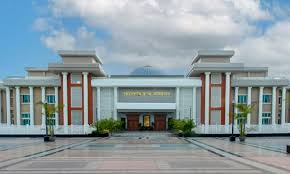
The Jharkhand High Court has awarded Rs.20 Lakh as compensation to be paid by BIT Mesra, Polytechnic College, to the parents of a 3rd semester student, who was allegedly subjected to casteist slurs in the name of Harijan/Dalit and multiple violent assaults leading to his death. Terming the incident as a “brutal assault”, Justice Sanjay Prasad came down heavily on the College over their negligent attitude and poor administration, including their failure to maintain required discipline which resulted in the tragic death of the student The court also pulled up the college for not building a proper boundary wall, failing to keep operational CCTV cameras, giving false information to parents of the deceased that he had consumed excessive alcohol in order to conceal the incident, and their abject failure to provide proper medical treatment to the deceased in the College Dispensary. It said, “Article 21 is the Right to Live is a fundamental right guaranteed under the Constitution of India and this right to live cannot be taken away by the negligence and administrative failure of the concerned College Authorities or State Authorities concerned and there should not be any gap or casual approach.” The Court also issued preventive guidelines to be adopted by Government and Private College Authorities in order to prevent ragging and assaulting of students: Tie up with good government and private hospitals with ambulance facilitates; Establish dispensaries in all schools and colleges with one male and female doctor, equipped with necessary kits and medicines; All engineering and technical institutions to have at least two male and female doctors with proper first aid kits; Maintenance of necessary security personnel with functional CCTV cameras inside and outside the classrooms and at the main doors of hostels; Establishment of a grievance cell to monitor students and to maintain coordination between needy students and college administration; Creation of website or portal for redressal of grievances of students and parents; and, Preparation of Standard Operation Procedure to maintain security system for movement of students. It further said: “… this Court directs the Principal Secretary, Higher Technical Education, Govt. of Jharkhand and Director General of Police, Govt. of Jharkhand to prepare a comprehensive SOP for the entire Engineering and Medical Colleges and all the Technical Institutes imparting Graduate Degree and Post-Graduate Degree and Diploma to the students to prepare SOP by keeping medical dispensaries/medical hospital in the College premises near the hostel so that they may be able to get the timely treatment in case of emergency or need of an hour or for any other medical exigency or requirement”. The court further directed the authorities to prepare SOP for the entire Technical Institutes, Medical, Engineering and Technical Institutes, MBA Colleges imparting education, with hostel facilities having over 1000 boys. The court directed the authorities to impress upon the Deemed Universities like BIT MESRA and others to have tie-up with the local administration and the reputed Government Hospitals as well as private Hospitals in the State or the concerned Districts where such Colleges are situated and running. Background It is alleged that the deceased student was “brutally assaulted” inside the college premises and later outside by a mob of 10–15 individuals with belts, shoes, and kicks in November 2024. It was alleged that he later became unconscious and the college authorities informed his family that he was unwell due to excessive wine consumption and allowed them to take him home. However, his condition worsened the following day and he subsequently passed away while receiving treatment. Based on witness statements and confessional records, four accused— who were current and former students of the college, were booked under BNS Section 103 (murder) r/w 3(5) (common intention) . They were also booked under provisions of the Scheduled Caste and Scheduled Tribe (Prevention of Atrocities) Act for intentionally abusing and insulting a member of Scheduled Caste in public. The accused moved the High Court in separate appeals challenging the trail court’s orders rejecting their bail pleas. At the outset, the Court noted that the College Administration had misled the parents of the deceased in order to conceal the assault committed by the appellants and had also refrained from naming any doctor for treating the deceased at the medical dispensary. It said the College authorities have remained negligent and they have shown no control over the administration in the College and even the boundary wall of the College is not so satisfactorily constructed in the College, as not only the students of the College but also the staff and security personnels of the College are able to scale the boundary wall of the College campus. At some place, it shows that they have left the place insecure for the movement of the students and anti- social elements at risk.” “Had the University Authorities had taken prompt action and pay medical attention towards the treatment of deceased Raja Paswan, his life could have been saved. But, as a result of their sheer negligence and neutral approach, they let off their hands by sending the student with their parents instead of taking them to the good Government Hospital with the mature faculty and security personnels of the College. Hence, the College administration shall remain cautious in future,” the Court added. The court was told that the college had taken several steps in the aftermath of the incident, the Court however said that it was not “fully sufficient” noting that the SOP by the college did not establish hospital/clinic having at least two male, two female doctors when over 1000 students are residing at the hostels of BIT MESRA campus. It further remarked”This Court further finds that there are several instances of commission of suicide by the students in premium institutions like IITs, NITs, AIIMS and various Engineering and Technical Colleges and despite the guideline issued by the UGC and the Hon’ble Supreme Court, the College Administration have not been able to curb the menace of harassment and ragging meted out to the students by the fellow senior students
Internal quota: Congress’ Dalit leaders resolve to amicably settle issue
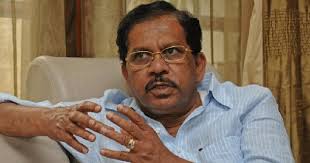
After the session proceedings On Wednesday, the leaders met at Home Minister Parameshwara’s residence to iron out differences that have arisen after the Das Commission decided to divide the 17% reservation for SCs amongst five sub-categories. Bengaluru: Ahead of the special Cabinet meeting on Saturday (August 16) to decide on the Nagamohan Das Commission report on internal reservation for Scheduled Castes (SCs), Dalit ministers and MLAs of the ruling Congress on Wednesday decided to amicably resolve the issue After the session proceedings on Wednesday, the leaders met at Home Minister Parameshwara’s residence to iron out differences that have arisen after the Das Commission decided to divide the 17 per cent reservation for SCs amongst five sub-categories. Since the SC (Left) / Madiga community has been allotted 6 per cent, the SC (Right)/ Holeya (5 per cent) and the Bhovi, Banjara, Korma and Korcha/ ‘touchable’ communities (4.5 per cent) are said to be unsatisfied with the proposals. According to sources, everyone has agreed that no community has to suffer. Social Welfare Minister Dr HC Mahadevappa, Food and Civil Supplies Minister KH Muniyappa, Backward Classes Welfare Minister Shivaraj Tangadagi attended the meeting. IT/BT Minister Priyank Kharge and RB Thimmapur were not present but are said to have conveyed that they will stand by the majority’s decision. Sujay B M Courtesy : DH Note: This news is originally published on https:/deccanherald.com/bha and is used purely for non-profit/non-commercial purposes, especially human rights.
Adoor Gopalakrishnan’s Casteist Speech At Kerala Film Policy Conclave Interrupted; Faces Backlash From Dalit Filmmakers
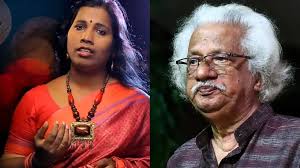
Renowned Dalit singer Pushpavathi Poypadathu slammed Adoor Gopalakrishnan’s controversial remarks during his speech. The two-day Kerala Film Policy Conclave hosted by the Kerala state government on August 2-3 to brainstorm regulatory policies for the state’s film industry ended in a fiasco when veteran filmmaker Adoor Gopalakrishnan criticised the government incentive programmes for filmmakers from Scheduled Castes and Scheduled Tribes (SC/ST) and women filmmakers. Gopalakrishnan’s remarks drew instant censure from Malayalam musician and composer Pushpavathi Poypadathu. The incident has drawn Kerala film industry personnel into a protracted division along caste and gender lines. Dalit human rights activist Dinu Veyil filed a complaint against the filmmaker for promoting ill will against SC/ST communities under Section 3(1)(u) of the SC/ST (Prevention of Atrocities) Act. Gopalakrishnan’s remarks have displayed the full force of patriarchal and Savarna attitudes that contaminate the Kerala film industry. Dalit filmmakers need “intensive training with experts”. Addressing nearly 500 film delegates from around the country and the world at the Legislative Assembly complex in Thiruvananthapuram, Gopalakrishnan, in his concluding remarks at the conclave on August 3rd, insisted that the state’s current incentive programme is badly in need of reform, with many issues plaguing it, including corruption in the use of funds. At the 13-minute mark of his speech, for nearly three minutes, Gopalakrishnan expounded on the shortcomings of both the Kerala State Film Development Corporation (KSFDC) incentive for SC/ST filmmakers and Dalit filmmakers themselves: ‘In my lifetime I have not made a film for two crores. At the same time, the government gives 1.5 crores to scheduled castes and scheduled tribes to make films. I told the esteemed minister that this will lead the way to corruption. The esteemed finance minister knows this. But no changes have been made. Also, when they are selected, I have an important recommendation to make. For these people from the scheduled castes . . . they should be given at least three months of intensive training on how to make films. Someone approaches (the state) with interest in filmmaking. Sending them away by telling them, “Go make a film,” is no way to encourage them. So, they should be given three months of training under experts. They should be taught everything, including how to budget for a film. . . These are public funds. This is tax revenue taken from the public. There are numerous very important issues in our lives that need to be funded. . . Yes, you must provide training to them. Reduce the amount from 1.5 crores for one person to fifty lakhs each for three people.’ Regarding KSFDC initiatives for women filmmakers, Gopalakrishnan reiterated his recommendations: ‘The funding for women is the same. Don’t give money just because somebody is a woman. A woman should also be given training. It is very important that we have women film directors. We have one or two, and they are good. But if we want new directors like them to come forward, they must understand the difficulties of making films.’ “Women filmmakers must understand the difficulties of making films.” KSFDC, founded in 1975, started funding initiatives for women filmmakers forty-four years later in 2019-2020, followed by funding directors from the Dalit communities in 2020-21. Under the scheme, KSFDC awards 1.5 crores each to two filmmakers from each category. The applicants go through several rounds of evaluation, workshops, and interviews conducted by a panel of expert judges appointed by KSFDC. Gopalakrishnan expounded on the shortcomings of the incentive for SC/ST filmmakers: For these people from the scheduled castes . . . they should be given at least three months of intensive training on how to make films. Someone approaches (the state) with interest in filmmaking. Sending them away by telling them, “Go make a film,” is no way to encourage them. So, they should be given three months of training under experts. They should be taught everything, including how to budget for a film‘ So far, ten films produced by KSFDC have been released and/or are slated to be released under this scheme, which include Nishiddho (Forbidden, Dir. Tara Ramanujan, 2022), Divorce (Dir. Mini I. G., 2023), and B 32 Muthal 44 Vare (From B 32 to B 44, Dir. Shruthi Sharanyam, 2023), and comprise directors from Dalit communities. Nishiddho won the Kerala State Film Award for Best Feature Film in 2022 with an international premiere at the Frankfurt Independent Film Festival, while B 32 Muthal 44 Vare won the Best Director Award in the Women/Transgender category in 2023, and Victoria won the FIPRESCI award for Best Malayalam Film by a debut director in 2024. While Gopalakrishnan’s comments garnered some applause, audience response displayed several conclave attendees looking puzzled at these casteist and sexist remarks. At the outset of the public backlash against the filmmaker, the activist body Women in Cinema Collective (WCC) strongly condemned the filmmaker for his remarks: At the Kerala Film Policy Conclave and in the days that followed, Adoor Gopalakrishnan once again exposed his upper-caste, caste, and gender-biased perspective to the public through his comments on the filmmaking experiences of new female and Dalit directors in Malayalam cinema. During his speech, Adoor has undoubtedly confirmed his patriarchal and anti-Dalit stance by making derogatory statements about renowned singer Pushpavathi, who is also the vice-chairperson of the Sangeetha Nataka Akademi, who reacted against it. WCC strongly condemns Adoor’s approach and stance.’ “Who is she? Who has empowered her?” In the aftermath of the incident, in an interview given to a prominent Malayalam news channel, Adoor Gopalakrishnan defended his remarks. He insisted that he was ‘speaking for’ the Dalit community and not against it. It appears that Gopalakrishnan has appropriated the right to ‘speak for’ the Dalit community to himself. He has no tolerance for voices from inside the Dalit community, as evidenced by his hostile and unprofessional tirade against Pushpavathi Poypadathu for ‘interrupting’ him during his speech. Referring to Pushpavathi Poypadathu at various times as ‘girl’, ‘that woman’, and ‘some woman off the street’, Gopalakrishnan barked at the interviewer: Pushpavathi
The plight of drains in Khamaria Dalit Basti: Dirty water accumulated on the roads, danger of diseases, repair not done even after complaint
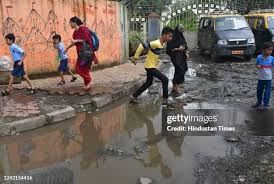
Residents are troubled by broken and clogged drains in village panchayat Khamaria Dalit Basti of Basti Saughat. Dirty water is accumulating on the roads. This is affecting the movement of people. Local residents Shyam Sundar, Dhoop Chand, Shailendra Bahadur, Suchit Kumar and Harilal said that this problem is very old. They have complained several times for the repair of drains. But no action has been taken by the administration. Dirty water coming out of broken drains is entering the nearby houses. This is spoiling the cleanliness of the entire area. Pedestrians are facing problems. The risk of diseases has also increased due to the accumulation of dirty water. Local people have demanded immediate action from the administration. They say that if the drains are not repaired soon, the situation may worsen. Arun Kumar Courtesy: Hindi News
Dalit youth beaten up again in Gujarat for keeping beard and moustache, police searching for accused

Gujarat Dalit Man Assault News: Once again a case of Dalit youth being beaten up for keeping beard and moustache has come to light in Gujarat. It is alleged that some upper caste people beat up a 27-year-old Dalit in Junagadh district. The police have started investigating the entire matter after receiving the complaint. Dalit youth beaten up in Junagadh for keeping beard and moustache. Ahmedabad/Rajkot: In the month of June, Dalits of Odisha were forced to crawl on the ground. Then those pictures had shamed the whole country. Now in Gujarat, just before Independence Day, an incident of Dalit youth being attacked for keeping beard and moustache has come to light. It is alleged that in a village in Junagadh district, a 27-year-old man was allegedly beaten up by five upper caste people for keeping moustache and beard and was abused with casteist slurs. The incident took place in Vajali village of Visavadar taluka on August 11 and came to light after the victim Sagar Makwana lodged a complaint at the Visavadar police station on Tuesday. When and how did this whole incident happen? According to the information, the victim Sagar Makwana’s father-in-law was seriously injured in the incident. At the Junagadh Civil Hospital, Makwana lodged a named complaint against Shailesh Jebalia, Lalo Bhupat Kathi Darbar and three unidentified persons. According to the complaint received by the police, Makwana, who lives in Manganath Pipli village, was towing his motorcycle after it broke down. While he was towing the bike, Jebalia and Bhupat confronted him and expressed their anger over him having a moustache and beard. The FIR states that they started abusing him on caste lines and warned him not to impersonate upper caste people. When the quarrel escalated and the trio started beating him, Makwana somehow fled to the house of his father-in-law Jeevan Karsan, which was nearby. Police on the lookout for the accused According to the complaint lodged with the police, Karsan suggested that they talk to Jebalia as he lives in the same village and settle the matter. When they reached near Jebalia, Bhupat reached there in a car with three others. The five abused the two men with casteist slurs and then assaulted them. The assailants fled from the spot as locals gathered at the spot. The villagers rushed the two injured to the hospital, where Karsan is said to be in a critical condition. According to Assistant Superintendent of Police (Visavadar) Rohit Kumar, the accused live in the same village where the complainant’s father-in-law lives. A team has been formed to nab them and they will be arrested soon. The victim Makwana is an agricultural labourer. Curated by: Achalendra Katiyar About the author Achalendra Kumar Katiyar is working with Navbharat Times Online. He started his career with DLA newspaper in 2008. He has worked with I Next, Aaj Samaj and Dainik Hindustan in a journey of 17 years. He keeps an eye on every development in Gujarat, Maharashtra and other western states. He has a good understanding of politics. Courtesy : Hindi News
Nails pulled out, third degree given… After being released from jail, three Dalit youths accuse Dewas police, were arrested for breaking the idol
Dewas News: Three Dalit youths were arrested in Dewas for breaking the idol. They have been released on bail. After this, the family has alleged that the police has given third degree. Former minister Arun Yadav has demanded the suspension of the policemen from the DGP. Dewas: Investigation has started into the allegations of assault on three Dalit youths in police custody in Dewas district of Madhya Pradesh. Ravi Ajmeri, Ritesh Ajmeri and Ritesh Sinam have been arrested on August 6. They were accused of breaking religious idols in the industrial area of Dewas. The idols of Lord Ganesha and Goddess were vandalized. The police registered a case and scanned more than 50 CCTV footage. After this, the accused were identified and arrested. Sent to jail after being produced in court At the same time, the accused were produced in court after the arrest and sent to jail. After getting bail, the family members of the accused are making serious allegations against the police. Former Union Minister Arun Yadav is sharing the video and alleging that three innocent Dalit children Ritesh, Ravi and Ritesh were brutally beaten up in Bavadia police station of Dewas. Third degree torture was done. Even the nails were pulled out. Arun Yadav has said that when there is no evidence then why such inhuman torture? Demand to suspend policemen Along with this, Arun Yadav has demanded that DGP Sir, immediately suspend the guilty policemen, set up a high-level inquiry and give justice to the Dalit children. At the same time, the family has alleged that three youths were severely beaten and tortured in police custody, which also includes the allegation of pulling out nails. Dewas SP Puneet Gehlot, while talking to an English newspaper, said that an independent investigation has been ordered. Gehlot said that the allegation is that the police have tortured them. While they were produced in the court after the medical test. After bail, they are claiming assault. The SP said that the arrest was made on the basis of solid evidence. At the same time, the police department has started investigating these allegations. The SP said that an impartial investigation will be conducted. Edited by: Muneshwar Kumar About the author Muneshwar Kumar is the Principal Correspondent at Navbharat Times Online. Has 14 years of experience in journalism. Has special interest in politics, crime, current affairs and off-beat news of Madhya Pradesh. Also has experience of ground reporting in many elections. I have been associated with Navbharat Times Online since 2020. Courtesy: Hindi News