
“RSS policy of Nitish-BJP”: Tejashwi Yadav accuses NDA of “anti-Dalit” approach in Bihar
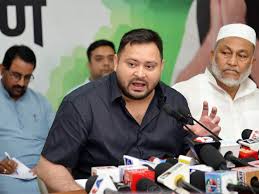
Patna (Bihar) [India], September 28 (ANI): Bihar’s Leader of Opposition and RJD leader, Tejashwii Yadav, accused the JDU-BJP government of anti-Dalit policies on Sunday, claiming that the Scheduled Caste population has a lower participation rate in the government and professional sectors. Sharing the glimpses from the ‘Pataliputra Dalit Conference’ by the National Confederation of Dalit and Adivasi Organisations (NACDAOR), Tejashwi launched a sharp attack against Chief Minister Nitish Kumar and the BJP, accusing them of an RSS-like policy. The RJD leader wrote on X, “Participated in the ‘Pataliputra Dalit Conference’ organised by the National Confederation of Dalit and Adivasi Organisations (NACDAOR). For 20 years, the RSS policy of the Nitish-BJP double-engine government has led to anti-Dalit policies, due to which, despite the population of Scheduled Castes in Bihar being more than 21.3 per cent, the participation of Dalits in government and professional sectors has been limited to just 1.13 per cent.” Further, Tejashwi Yadav claimed that there are caste inequalities in education, land rights, and employment. “Due to the continuous exploitation of Dalits, their condition is pitiable. In the current social structure, significant inequalities persist in areas such as education, land rights, and employment. Only 0.015 per cent of the total Scheduled Caste population are doctors and only 0.1 per cent are engineers,” he wrote. He accused the government of not allocating appropriate funds for the students from the Scheduled Tribes and the Scheduled Castes. He wrote, “The Bihar government is using the funds allocated under the Scheduled Tribe and Scheduled Caste sub-plan for other purposes, as a result of which these sections receive no direct benefit. When it comes to schemes for scholarships, progress, advancement, and improvement for Dalit students, this anti-Dalit government starts making excuses of a shortage of funds.” He also slammed Union Ministers Chirag Paswan and Jitan Ram Manjhi for their alleged silence over the exploitation of the Dalit community. “Chirag Paswan and Jitan Ram Manjhi, who call themselves Dalit leaders, have maintained complete silence on the exploitation of Dalits after getting a share in power,” the X post read. Tejashwi’s remarks come ahead of the Bihar Legislative Assembly elections later this year, as Mahagathbandhan, led by Congress and RJD, is gearing up to challenge the ruling NDA, which comprises BJP and JD(U). (ANI) The article has been published through a syndicated feed. Except for the headline, the content has been published verbatim. Liability lies with original publisher. Written By: TSG Syndication Courtesy : The Sunday guardian Note: This news is originally published on https:/thesundayguardian.com/bha and is used purely for non-profit/non-commercial purposes, especially human rights
Water freezer in Dalit settlement out of order for several months: Kesampur villagers yearn for cold water, village headman assures speedy repair
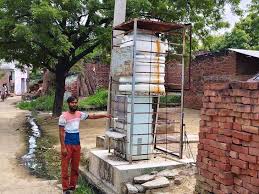
The water freezer installed in the Dalit settlement of Pasaipur village, Bhagya Nagar block of Kesampur, has been out of order for several months. This has caused problems for villagers seeking cold water. Villagers stated that they have complained to the village headman several times, but it has not been repaired yet. The out-of-order water freezer is preventing people from getting cold water in the scorching heat. Villagers Shailendra, Arvind Master, Afsar, Ramdas, Rizwan, and Ram Ratan, along with others, have demanded immediate repairs from village headman Rajesh Pal. They have warned that if repairs are not completed soon, they will submit a petition to the District Magistrate. Villager Rajesh Pal stated that the mechanic was unwell, which delayed the repairs. He assured that the water freezer will be repaired within a day or two, providing relief to the villagers. The village head also appealed to the villagers not to waste water and not to leave taps open. Mohammad Zulfikar Ali Khan Courtesy: Hindi News
Attempt to murder Dalit youth: Villagers rescue him in Tiloi; shop overturned, police taking action
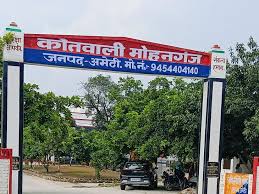
An attempt was made on the life of a Dalit youth in Asni village, Tiloi tehsil, Amethi. The youth’s life was saved by the intervention of villagers. The incident occurred on September 27, 2025, at around 4:30 p.m. The victim, Badri Prasad Kori, filed a written complaint at the Mohanganj police station. Badri Prasad Kori, who runs a puncture shop in the village, stated that a young man from Rani Purva, under the influence of alcohol, came to his shop. The young man hurled casteist slurs at Badri Prasad and also abused the NREGA workers working nearby. When Badri Prasad objected, the young man began kicking and punching him. The attacker snatched a shovel from one of the NREGA workers and attempted to attack Badri Prasad. However, villagers present at the scene intervened and saved Badri Prasad’s life. Upon returning home from the police station, Badri Prasad found that the young man had overturned his puncture shop. Villagers reported that the young man was using casteist slurs and threatening to kill him if he found Kori. The station in-charge stated that a complaint has been received and legal action is being taken. Rajesh Kumar Courtesy: Hindi News
Need to integrate trans-inclusive science in medical education, says study
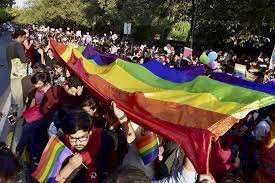
Not only in India, but globally, many medical schools dedicate few to no hours to LGBT health. NEW DELHI: Despite legal protections, Indian medical curricula still lack trans-affirmative competencies, skills essential for providing respectful, evidence-based care to transgender and gender-diverse individuals in the country, a latest study has said. As transgender people in India routinely face discrimination in health care, often encountering prejudice and ignorance from medical providers, the need of the hour is that India’s medical curricula integrate trans-inclusive science early in medical training so that the medical needs of transgender people are met, said the study published in the American journal Advances in Physiology Education. Not only in India, but globally, many medical schools dedicate few to no hours to LGBT health. Concerned by discrimination in healthcare and education, despite the Transgender Persons (Protection of Rights) Act, 2019, which prohibits it, a first-of-its-kind study was conducted, bringing fresh hope – at least for India – if it is incorporated into medical education. In India, the National Medical Commission (NMC), which regulates medical education, has failed to adequately address LGBT health, said Dr Satendra Singh, Director Professor of the Department of Physiology at the University College of Medical Sciences and GTB Hospital, Delhi, and one of the study’s authors. “Unfortunately, the NMC has made repeated U-turns on including LGBTQI content in the Competency-Based Medical Education (CBME) curriculum, first in 2019 and again in 2024,” Dr Singh told this paper. As per the 2011 census, India has 4.88 lakh transgender persons. “It is the first study in India to integrate trans-affirmative competencies into the MBBS physiology curriculum longitudinally,” said Dr Singh, who was recently selected for the prestigious WHO South-East Asia region award for Public Health Champion in the individual category for championing disability inclusion in health systems and medical education. This groundbreaking study’s findings are crucial for the future of medical education in India. “The pilot study tried to integrate trans-affirmative competencies into the MBBS physiology curriculum using a mixed-methods approach,” said the primary author, Kozhikode-based Dr Athul KM. “Using health humanities tools like poetry, trigger films, and Theatre of the Oppressed, the curriculum enhanced student engagement and empathy. The study offers a scalable model for incorporating transgender health into early medical education, bridging curricular gaps and aligning with legal and professional mandates for inclusive health care,” said the study. Dr Prof (Dr) Aqsa Shaikh, Professor of Community Medicine, Hamdard Institute of Medical Sciences and Research, and co-author of the study, said, “Where there is a will there’s a way. Through this pilot study, we have shown that even in the existing packed MBBS curriculum we can provide competencies that our future, global, inclusive doctors would need, when caring for historically marginalized groups.” “From dehumanisation in the old curriculum to human-centered approach in this pilot, we have taken a small step in the right direction for making healthcare accessible for vulnerable individuals and communities,” said Dr Shaikh, who identifies herself as a transgender woman. Delivered over 11 months, the pilot study effectively demonstrated that nearly 17 hours of gender-inclusive education can be embedded without disrupting existing teaching schedules. The study showed a remarkably high response rate of 92.4%, compared to less than 52% in similar studies. “Both facilitators and students expressed enthusiasm, with all facilitators agreeing that the competencies were suitable for first-year medical students and expressing a strong desire to incorporate them into future sessions,” Dr Singh added. The study said that integrating trans-inclusive science early in medical training is not just a curricular improvement: it is a legal, ethical, and professional necessity. “Without it, medical education remains complicit in the marginalization of the very communities it purports to serve,” the study said. Transgender people in India often require specialized care, including hormone replacement therapy (HRT), gender-affirming surgeries, and reproductive health services. However, these services are frequently unavailable or inaccessible, forcing individuals to either go without care or seek unsafe options from unqualified providers. This not only endangers physical health but also perpetuates stigma and marginalization. “Yet, medical education in India continues to emphasize the gender binary. Competencies in physiology, for example, still largely follow this outdated framework. Since physiology is a foundational subject in medicine, it must incorporate the concept of a gender spectrum as a normal physiological reality. Integrating a trans-affirmative physiology curriculum at the preclinical level would ensure a stronger, more inclusive foundation for all future doctors,” Dr Singh added. Kavita Bajeli-Datt Courtesy : TNIE Note: This news is originally published on https:/thenewindianexpress.com/bha and is used purely for non-profit/non-commercial purposes, especially human rights
Akhilesh Yadav and Rahul Gandhi are committing crimes like Jinnah… What did Acharya Pramod Krishnam say about the Bareilly controversy?
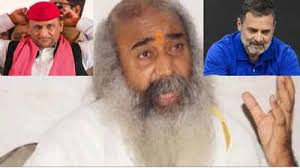
I Love Muhammad Controversy: Following the Bareilly riots, police arrested local Maulana Tauqeer Raja. Acharya responded, “The law is equal for everyone. Whether a Hindu religious leader or a Muslim cleric, we are Indians first and foremost. If anyone breaks the law, action will be taken. No one’s status matters.” Sambhal: Politics has heated up over the recent riots and sloganeering in Bareilly, Uttar Pradesh. Acharya Pramod Krishnam, the head of the Shri Kalki Dham in Anchora Kamboh village in Sambhal district, has reacted sharply to this issue. He also strongly objected to Akhilesh Yadav and Rahul Gandhi’s stance on the current situation. He stated that he too has a deep love for Prophet Muhammad, but this should not be used as a means of street protests or violence. He clearly stated, “Love comes from the heart, not through street protests. This is India, not the Taliban.” The controversy that began with “I Love Mohammad” posters and slogans in Bareilly escalated into violence and vandalism. Acharya responded by saying that anyone who creates a disturbance will be punished. Praising him, he said, “Chief Minister Yogi Adityanath is disciplined. Law and order will not be compromised under his leadership. The police will not sit idly by. Anyone who creates a disturbance will have to pay the price.” He said that there is no need for violence or disruption of peace to show religious love. We also love Prophet Mohammad, but there is no need for a movement for this. Keep love in your heart, not on the streets. After the police lathicharge in Bareilly, Samajwadi Party President Akhilesh Yadav and Congress leader Rahul Gandhi questioned the Yogi government. Acharya retorted, “Akhilesh and Rahul are conspiring to divide the country. They want to divide Hindus and Muslims and, by inciting Muslims, send the message that this country is not theirs. Jinnah committed this crime; they are repeating the same mistake. They must stop.” He warned that this political rhetoric is dangerous to the unity of the country. Indian Muslims are also our citizens. Misguiding them is a serious crime. The law will not tolerate such actions. Acharya also questioned previous governments. He claimed, “In previous governments, recommendations were made to release terrorists. Relatives of terrorists were even given MLA and MP tickets. This is on record. Today, under the leadership of Yogi Adityanath, the rule of law prevails, as the world is witnessing.” Acharya said that India is a democratic country, where justice is guaranteed. “We don’t operate like the Taliban here. We have a judiciary and law and order. If there is a problem, the doors of the Supreme Court and High Court are open.” Chief Minister Yogi Adityanath had warned the rioters that they would be taught a lesson that their seven generations would remember. Acharya expressed support for this, saying, “Yogi’s stance is correct. There should be fear of the law, only then will there be peace.” Acharya said that India is a country of all religions and every citizen has equal rights. We all are citizens of this country. It is our responsibility to keep it peaceful and united. Those who seek to disturb the country, regardless of their religion or party affiliation, must be prosecuted. Edited by: Abhishek Shukla About the Author Abhishek Shukla is a senior journalist at Navbharat Times. He serves as the Senior Digital Content Creator. He has nine years of experience in journalism and has been with Navbharat Times for the last six years. Courtesy: Hindi News
Tejashwi Yadav eyes Nitish Kumar’s special ‘thing’, Rahul Gandhi is also ‘batting’ for the same.
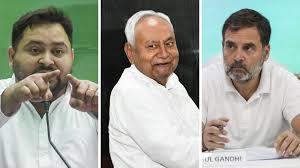
Bihar Vidhansabha Chunav 2025: Ahead of the Bihar Assembly elections, Tejashwi Yadav has expanded his scope of operations, joining forces with Rahul Gandhi. Both are now focusing on the EBC vote bank, along with MY and Dalit voters. Patna: While the NDA government in the poll-bound state of Bihar is making announcements targeting women and other sections of society, the opposition party India Block is focusing its efforts on the Extremely Backward Classes (EBCs) and Scheduled Castes (SCs) to achieve a majority in the upcoming elections. Rahul Gandhi and Tejashwi Yadav eye EBC voters EBCs constitute approximately 36% of Bihar’s electorate, and Scheduled Castes 20%—together, they constitute more than half the electorate. On September 24, the India Block released the Extremely Backward Classes Resolution Resolution, a special manifesto for EBCs, promising to expand reservations to all classes. Rahul Gandhi made a bet during the Adhikar Yatra Congress leader Rahul Gandhi also targeted this class during his recent visit to Bihar, vowing to exceed the 50% reservation limit set by the Supreme Court. RJD leader Tejashwi Yadav expanded his outreach by addressing two dialogue meetings with Scheduled Caste and Extremely Backward Class (EBC) communities. Tejashwi also made his political move On Friday, he met with social activists from both groups and highlighted the opposition’s specific agenda. Addressing the Karpoori Extremely Backward Class Dialogue in Patna on Saturday, he alleged that the Extremely Backward Class had been victims of misgovernance and neglect for two decades under Nitish Kumar’s BJP-supported government. Tejashwi Yadav said, “The Extremely Backward Class will no longer be a vote bank, but a power bank. The Extremely Backward Class will no longer just form the government—they will form their own government.” Edited by: Rishikesh Narayan Singh•Reported by: Kumar Anshuman About the Author Rishikesh Narayan Singh, in-charge of Bihar-Jharkhand for Navbharat Times Digital. A 20-year journey in journalism, from Janmat TV, IBN7, ETV Bihar-Jharkhand, News18 Bihar-Jharkhand, to Times Internet. After starting in the national capital, Delhi, he now works in Bihar. He has a keen interest in national, international, crime, and political news. He is passionate about learning every aspect of digital journalism. Courtesy: Hindi News
India’s biggest state introduces jobs, housing, and health support for trans people
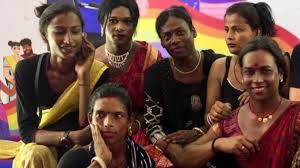
The government of Uttar Pradesh, India’s most populous state, has announced a major policy change to support its transgender population. The state’s flagship youth entrepreneurship initiative, known as the CM Yuva scheme, will now include transgender individuals as eligible participants. The expanded program will offer a range of support, including vocational training, access to interest-free loans, housing assistance, healthcare benefits, and pensions. The state is also setting up 100 dedicated welfare centers across its districts to provide skill-building opportunities in areas such as tailoring, digital literacy, culinary work, and beauty services. Each of Uttar Pradesh’s 75 districts is also expected to reserve two public sector job positions for transgender individuals. This marks a shift toward greater inclusion in employment and public life. “These steps are about giving dignity and opportunity to those who have been marginalized,” said Asim Arun, the state’s Social Welfare Minister. He emphasized that the government aims to bring transgender individuals into the mainstream through economic empowerment and social support. Transgender participants will also gain access to national welfare programs such as Ayushman Bharat for health coverage, the Pradhan Mantri Awas Yojana for housing, and other state-level subsidies and benefits. Officials say efforts are underway to carry out community surveys and awareness campaigns to ensure the program reaches those in need. The CM Yuva scheme was first launched in 2018 to support young entrepreneurs in Uttar Pradesh. It provides interest-free loans of up to ₹5 lakh (about USD 6,000) for small business ventures. To date, more than 40,000 people have benefited from the program. The government has allocated ₹1,000 crore (approximately USD 120 million) for the scheme in the 2024–2025 budget. With this new focus on transgender inclusion, the initiative aims to reduce economic inequality and promote broader participation in public life. Officials hope it will also set an example for other Indian states to follow. This development comes amid a growing national conversation about the rights and recognition of transgender people in India, where legal protections have improved but access to social and economic opportunities remains limited. Korina Estrada Courtesy : Transgenderfeed Note: This news is originally published on https:/transgenderfeed.com/bha and is used purely for non-profit/non-commercial purposes, especially human rights
Transgender doctor wins legal recognition case in India

Dr. Beoncy Laishram, known as the first openly transgender doctor from Northeast India, has won a major court case that allows her academic and medical certificates to finally match her identity. The Manipur High Court ruled in August that her school boards, university, and the state medical council must update her documents with her female name and gender. This means her records will now reflect the same identity already shown on her official IDs, like her Aadhaar and voter card. Dr. Laishram began her gender affirmation journey in 2019, but until now, many institutions refused to change her certificates. Without this recognition, she faced challenges in her professional life and personal dignity. The court said the order is about protecting the rights of transgender people and making sure they have documents that match who they are. Supporters believe this case will set an example for others across the region who are still struggling to update their records. Dr. Laishram first gained attention in 2020 for her role as a frontline doctor during the COVID-19 pandemic. Advocates say this ruling will make it easier for her to work without barriers caused by outdated paperwork. Legal experts also note that this decision could influence schools, universities, and professional bodies across India to make their systems more inclusive. For now, the ruling is seen as an important step toward equality for transgender professionals in the country. Korina Estrada Courtesy : Transgenderfeed Note: This news is originally published on https:/transgenderfeed.com/bha and is used purely for non-profit/non-commercial purposes, especially human rights
Chalavadi Narayanaswamy accuses Karnataka government of ‘diverting’ funds meant for Dalit welfare
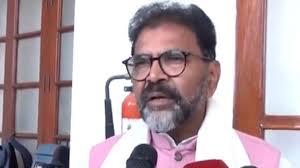
The Bharatiya Janata Party has accused the Congress government of “hoodwinking” Dalits by diverting funds meant for their welfare to other works, including the functioning of the H.N. Nagamohan Das Commission. Addressing a press conference here on Friday, Leader of the Opposition in the Legislative Council Chalavadi Narayanaswamy said the government had earmarked ₹42,000 crore for Dalits’ welfare under Scheduled Castes Sub-Allocation & Tribal-Sub Allocation Act that mandates earmarking funds for the welfare of SC/ST communities in proportion to their population. Of this, ₹21,000 had been diverted to all the departments for taking up various works. Of the remaining ₹21,000 crore, a sum of ₹ 14,000 crore had been diverted to fund guarantee schemes, he alleged. “The remaining amount of ₹7,000 crore has been given to the Social Welfare Department, which had used this for various purposes including organising the International Democracy Day and Constitution Day. These funds have been used even for the functioning of Nagamohan Das Commission that looked into internal reservation among SCs,” he alleged. Much against the claims of the government of providing huge funds for the welfare of Dalits, there were several lapses in providing benefits to Dalit beneficiaries, he alleged. Citing an example, he said earlier, the government used to directly pay the school and college fees of Dalit students. But now, the students were expected to pay their fees and get a reimbursement from the government later, he said. The Hindu Bureau Courtesy : The Hindu Note: This news is originally published on https:/thehindu.com/bha and is used purely for non-profit/non-commercial purposes, especially human rights
The message of a new Dalit party: Preparing to chart a new political course through education and foreign opportunities
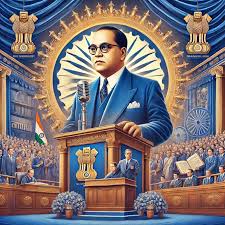
The Dalit Quit India Party is being seen as a symbol of a new political and social direction emerging from education, the support of Indian diaspora, and global opportunities. Dalits want more. Even if they cannot find it in India, they may go to other countries to seek it. This is the message of the Dalit Quit India Party (DQIP), founded by intellectual and Dalit thinker Chandra Bhan Prasad. Although not yet registered as a political party, this group appears to be becoming a force in shaping the direction of Dalit thought. Baba Saheb Bhimrao Ambedkar’s core mantra for Dalits was education. In essence, he advised Dalits to “be educated, organize, fight,” and have self-confidence. Ambedkar was the first untouchable in India to obtain a PhD and study abroad. This is entirely thanks to a scholarship from the Maharaja of Baroda, which allowed him to pursue a law degree and a PhD from Columbia University and the London School of Economics (LSE). Prasad’s initial inspiration came from the farmers’ movement and he also received support from Non-Resident Indians (NRIs). He says that the days when Dalit children were satisfied with a degree from a typical Indian university are over. Now, they must be ambitious and self-confident. Dalits must send their children abroad to study, not just at ordinary universities, but at prestigious institutions like Harvard, Columbia, and the London School of Economics. Children should also be fluent in English and develop skills in science, technology, engineering, and mathematics (STEM), aiming to become faculty members at foreign universities. Their ambitions should be limitless. Prasad’s theoretical basis for this belief is that Dalits lack an elite and, as a result, have no social regulator or agency. Kanshi Ram’s Bahujan Samaj Party (BSP) possessed this potential. However, Kanshi Ram shifted the movement from Ambedkar to Periyar, focusing on the plight of Dalits, even though he himself lived in poverty and deprivation, in order to resonate with his followers. In many parts of India, his BAMCEF devolved into a personality-centered organization of blind followers. Consequently, when someone left the organization, it disintegrated. The final blow was the shift from Bahujan to Sarvajan, which led to the rise of aggressive leaders like Chandrashekhar Azad and his Bhim Army. Prasad also believes that simply acquiring an academic degree from abroad will not suffice, and it is not a solution, as discrimination exists everywhere. According to a 2016 survey of 1,200 individuals of South Asian descent in the United States conducted by Equality Labs (released in 2018), 26 percent reported experiencing physical assault due to their caste, while 59 percent reported experiencing caste-related comments. However, this is the only such survey to date. More than half of those surveyed reported being afraid to identify as Dalit. Some even conceal their caste, while others proudly state it. Kanishka Elupula, a PhD student at Harvard University, told Pulitzer Center researchers during a 2019 project on caste in America, “When I’m at Harvard, I want to be known as an untouchable because I want people to know that.” Cases of caste discrimination have also been filed in US courts, particularly in California, a hub of the technology industry. Various measures have been introduced to address caste issues domestically in India. Maharashtra is the only state that provides scholarships to Dalit students enrolled in foreign universities to cover tuition fees, allowances, and living expenses. A National Council for Affirmative Action was established in 2010 by the Confederation of Indian Industry (CII), chaired by the late J.J. Irani. Based on annual reports, progress on this front is also patchy. There are still no Dalits in the top management levels of any major company, but Dalit matrimony websites are flooded with applications seeking or seeking marriages with individuals employed in multinational companies (MNCs). Dalit-led enterprises, led by the Dalit Indian Chamber of Commerce and Industry (DICCI), are flourishing, and several state governments have changed procurement policies to benefit Dalit contractors. However, it is difficult to predict how politically and socially influential the unification of Dalit Indians in the Indian diaspora can be in the country. After all, the activities of the Indian diaspora have exacerbated many issues. On the other hand, violence against Dalits continues to rise, and National Crime Records Bureau data shows that the conviction rate remains low, at around 25 percent. For Dalits, education and capitalism remain the only paths to progress. Disobedience is the other. Aditi Phadnis Courtesy: Hindi News