
A 12-year-old Dalit boy was locked in a cowshed, then news of his death surfaced… Major questions raised about the silence of political parties!

The Dalit Shoshan Mukti Manch raised serious questions about the silence of the government and political parties, warning of a major movement if the culprits are not immediately arrested. Shimla: The tragic incident of caste-based harassment of a 12-year-old Dalit boy in Limbara village, Rohru, has spread like wildfire throughout the region. The boy was allegedly locked in a cowshed, after which he took his own life by consuming poison. The Dalit Shoshan Mukti Manch has expressed strong objection to this serious incident and demanded immediate and strict action against the culprits. The Dalit Shoshan Mukti Manch strongly condemned the incident and said that the accused should be immediately arrested and the strictest possible action should be taken against them under the Scheduled Castes/Scheduled Tribes (Prevention of Atrocities) Act (SC/ST Act). The Manch also expressed concern about the safety of the victim’s family. They demanded that the victim’s family be given adequate compensation and full protection, so that they are not pressured to withdraw the case or tamper with evidence. Questioning the government’s attitude, the forum stated that the government’s lack of will to effectively implement the SC/ST Act is contributing to the rise in incidents of caste-based atrocities in the state. The forum also expressed deep disappointment over the silence of major political parties like the Congress and BJP on this issue. The forum believes that these parties prioritize vote bank politics over social justice. Suggesting a concrete solution to prevent caste-based atrocities, the forum said that just as awareness campaigns are run against smoking, a comprehensive campaign needs to be launched about the provisions of the SC/ST Act. Jagat Ram, state convener of the Dalit Shoshan Mukti Manch, said, “It is the need of the hour to protect the rights of Dalits and stop their exploitation. We want to ensure that those who commit caste-based atrocities are brought to justice.” He also announced that the Manch would launch a massive mass movement against the increasing caste-based incidents and to uphold the Constitution. Rajan Chaudhary Courtesy: Hindi News
Why did Rahul Gandhi suddenly leave for South America before the Bihar elections? BJP questions secrecy
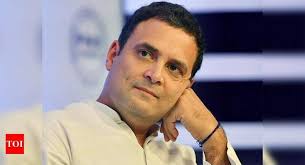
Bihar Election 2025: The BJP has questioned Rahul Gandhi’s sudden departure for a four-nation trip to South America and the secrecy surrounding his schedule. The opposition has dismissed the BJP’s allegations as baseless. Patna: With just days left for the announcement of the Bihar Assembly elections, Congress MP and Leader of the Opposition (LoP) in the Lok Sabha, Rahul Gandhi, has embarked on a trip to South America. Why did Rahul Gandhi leave the heat of Bihar and head to South America just before the elections? On Tuesday, the Bharatiya Janata Party (BJP) questioned his trip, claiming that Rahul Gandhi was “missing.” The BJP accused Rahul Gandhi of maintaining excessive secrecy regarding his trip. However, opposition parties have defended Rahul Gandhi, calling the BJP’s allegations politically motivated and baseless. According to the Congress, Rahul Gandhi will meet leaders, university students, and members of the business community in the four countries during his trip. BJP leader Tuhin Sinha questioned the purpose and secrecy of Rahul Gandhi’s visit. He said, “Rahul Gandhi is a strange leader. He travels to South America to celebrate Navratri instead of participating in the Navratri pujas taking place in the country. If this trip is indeed an official visit, as Congress spokesperson Pawan Khera has claimed, then why the need for so much secrecy? Why hasn’t he shared his South America itinerary yet?” Calling Rahul Gandhi ‘missing’ will create a false impression The opposition immediately reacted to these comments by the BJP and defended the opposition leader. Shiv Sena (UBT) MP Priyanka Chaturvedi rejected the BJP’s claim that Rahul Gandhi is ‘missing.’ She said, “I think it’s wrong to say he’s missing. It’s not right to use the BJP’s narrative on this issue. The Congress has confirmed through its official spokesperson that he is meeting people in South America. Calling him missing will only create a false impression among the public.” Congress leader Rajesh Thakur also defended Rahul Gandhi’s visit. He compared his actions to those of Prime Minister Narendra Modi. Rajesh Thakur said, “He is not shameless like the Prime Minister, who is always focused on elections. Rahul Gandhi goes abroad to meet students and citizens of the country. He engages in meaningful conversations. This is not like Modi, who rushes to election sites for photo ops. BJP leaders are nervous. Their own members, Dilip Jaiswal, Sanjay Jaiswal, and Ashok Chaudhary, are under investigation. Their secrets are being exposed. Therefore, they are trying to divert attention by targeting Rahul Gandhi.” CPI-M called BJP’s comments foolish CPI-M leader Hannan Mollah called the BJP’s comments “foolish.” He said, “Rahul Gandhi’s foreign trip has nothing to do with the Bihar elections. He has been touring Bihar for a long time. He raised important issues like vote rigging and the Nitish Kumar government’s failures. I don’t think the BJP’s criticism should be taken seriously. Those comments are foolish.” Hannan Mollah completely rejected the BJP’s allegations. Rashtriya Janata Dal (RLD) leader Maluk Nagar also reacted to the issue. He said, “When elections are near and leaders travel abroad, they should consider how it affects the perception of the alliance. Congress is the largest party. Rahul Gandhi is its biggest leader. Therefore, these decisions should be carefully considered.” Maluk Nagar questioned the timing of Rahul Gandhi’s trip, but also acknowledged the importance of the Congress and Rahul Gandhi. Rahul Gandhi’s trip to South America was announced on Saturday by Pawan Khera, head of the Congress’s media and publicity department. However, he did not disclose the specific countries Rahul Gandhi will visit. Rahul will meet leaders, students, and business communities in four countries. Pawan Khera posted on X: “Lok Sabha Leader of the Opposition Rahul Gandhi has embarked on a trip to South America. He will interact with leaders, university students, and members of the business community in four countries.” According to the Congress, this is Rahul Gandhi’s first foreign trip in September. The trip aims to deepen democratic, trade, and strategic ties. It builds on historic India-South America cooperation. It also strengthens solidarity among countries in the Global South. During his visit to Brazil and Colombia, Rahul Gandhi is expected to meet university students. He will also hold discussions with presidents and senior leaders to strengthen democratic and strategic ties. The party also stated that Gandhi will interact with business communities to explore new opportunities. This is especially important as India seeks to diversify trade and partnerships amid US tariffs. (Input from IANS) Curated by: Suryakant Pathak About the Author Suryakant Pathak is a consultant at Navbharat Times Online. He has been a journalist for 31 years. He writes news, analysis, and blogs on India’s international relations and political and social developments in India and the world. He began his career as a reporter at Dainik Bhaskar in 1995. Courtesy: Hindi News
Dragged by her hair, verbally abused… Dalit engineering student assaulted at Garba event in Gujarat
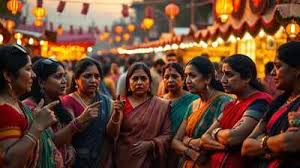
Mahisagar District Superintendent of Police Safin Hasan stated that the Deputy Superintendent of Police of the SC/ST Cell is investigating the matter. Statements of the victim and the accused are being recorded. Mahisagar: A case of assault on a Dalit student at a Garba event has been reported from Mahisagar district, Gujarat. The incident occurred in Bharaudi village, Virpur taluka. Police have registered a case of assault, derogatory behavior, and casteist slurs against the Dalit girl. Police have filed a case against four women involved in the incident. The accused women include Loma Patel, Roshni Patel, Vrishti Patel, and Meena Patel. The matter came to light when 25-year-old female engineer Rinku Vankar filed an FIR. Rinku is a fourth-year student at the Government Engineering College (GEC) in Gandhinagar. What’s in the complaint? In her police complaint, Rinku stated that on Friday night, she had gone with a friend to attend a Garba event in the village. However, the women present there tried to stop them and used abusive language. Loma, Roshni, and Vrishti Patel first scolded her and then used casteist slurs. They allegedly said that these people were not equal to them and could not participate in Garba. Rinku then had the event’s sound system turned off and complained to Praveen Narsingh Thakor, who was present there. Meena Patel then arrived, and the four women attacked Rinku. Dragged by the hair The complaint states that the accused dragged Rinku out by her hair and when she tried to film the incident, she was stopped. Furthermore, she was hurled casteist slurs and threatened with dire consequences if she returned to Garba. Police have registered a case against the accused under sections 115(2) (voluntarily causing hurt), 54 (offence committed in presence of abettor), 351(1) (criminal intimidation), and 352 (intentional insult with intent to provoke breach of peace) of the Indian Penal Code (IPC). Relevant sections of the Scheduled Castes and Scheduled Tribes (Prevention of Atrocities) Act have also been invoked. Curated by: Rahul Mahajan About the Author Rahul Mahajan is the Principal Digital Content Producer at Navbharat Times Online. He has over 12 years of experience in journalism. He has worked with organizations such as ETV and News18 (Digital) during his journalistic career. Courtesy: Hindi News
Major Decision by Pilibhit POCSO Court: 20 Years for Rapist of Dalit Minor, 10 Years for Conspirator

The special POCSO court in Pilibhit has delivered its verdict in a highly controversial 2018 case. The female accomplice who lured the minor to the scene has also been sentenced to 10 years of rigorous imprisonment. Pilibhit/Uttar Pradesh: A special POCSO court has sentenced a 25-year-old man to 20 years of rigorous imprisonment for raping a minor Dalit girl in 2018. Additionally, a 35-year-old woman, a family friend of the victim, has also been sentenced to 10 years of imprisonment under criminal conspiracy (Section 120B of the Indian Penal Code) for luring the girl to the scene. This significant verdict was delivered by Special Judge (POCSO) Geeta Singh on Tuesday evening. The court also imposed a fine of ₹1 lakh on the convicted, Vipin, and ₹50,000 on his accomplice, Kaushalya Devi. What was the entire case? According to the prosecution, the incident occurred on May 18, 2018. At around 2 p.m., Kaushalya Devi took the 15-year-old victim out of her home in a village in Pilibhit district on the pretext of defecation and asked her to keep watch. Vipin, then 18, was already waiting in a sugarcane field. The court was told, “He dragged the girl inside the field and raped her.” The heinous crime came to light when the victim later narrated the entire ordeal to her mother. Subsequently, based on a written complaint from the victim’s father, the police initially registered an FIR under Section 354 (assault with intent to outrage the modesty of a woman) of the Indian Penal Code, as well as relevant provisions of the Protection of Children from Sexual Offences (POCSO) and the SC/ST Act. The Truth Revealed in the Investigation Government Prosecutor Anil Kumar Sharma explained, “The girl did not disclose the rape when filing her written complaint to protect her dignity. However, when the medical examination confirmed the crime, the police added Section 376 (rape) to the FIR. The girl later emphasized this in her court statement under Section 164 of the CrPC.” After collecting all the evidence and witness statements, the police filed a charge sheet on April 3, 2021. Both Vipin and Kaushalya Devi were arrested the day after the incident but were later released on bail. Court’s Final Verdict The judge also ruled that if the accused fail to pay the fine, Vipin’s sentence will be extended by six months and Kaushalya Devi’s sentence will be extended by three months. The court ordered that the entire fine amount be given to the victim. In addition, the District Legal Services Authority has been directed to provide additional financial assistance to the girl under Rule 7 of the POCSO Act. Rajan Chaudhary Courtesy: Hindi News
Tamil Nadu: Dalit children on their way to school stopped by elderly woman brandishing a stick, video sparks outrage

The video shows a shameful scene, Dalit children insulted by calling them “Eliya Sathi” (aliya sathi). Find out what the whole story is. Thanjavur, Tamil Nadu: A shocking and shameful case of caste discrimination, still deeply ingrained in society, has come to light in Thanjavur district, Tamil Nadu. In Kollanagarai village, some Dalit children were allegedly stopped by an elderly woman brandishing a stick and walking on a dirt road. The video of the entire incident has gone viral on social media, sparking widespread anger. The viral video clearly shows a young man walking with some schoolchildren when an elderly woman, armed with a stick, blocks their path. Despite the young man’s efforts to move the stick aside, the woman repeatedly attempts to stop them from moving forward. Insulted by being called “Eliya Sathi” Reacting sharply to the incident, Tamil Nadu Untouchability Eradication Front state president Chellakannu strongly condemned the act. He explained that the elderly woman used the term “Eliya Sathi” to stop the children, which is a highly derogatory term used for Dalits. What is the entire road dispute? Chellakannu, explaining the incident, explained that the road over which the dispute arose is a normal dirt road. It is listed in government records as “Vandi Pathai,” meaning the road is authorized for vehicular traffic. He further said, “Recently, some locals encroached upon this road by planting banana trees. This blocked the children’s direct route to school, forcing them to take a detour of approximately one and a half kilometers around a reservoir. This continued for 18 days, before some young men from the area intervened.” It is reported that this encroachment was reported to the authorities three months ago, after which the Tehsildar intervened and the road was reopened. Police launched an investigation After the video of the incident surfaced, the police administration swung into action. Police have launched a preliminary investigation into the matter, although no FIR has been filed as of the time of writing this report. Rajan Chaudhary Courtesy: Hindi News
Tamil Nadu: Case filed against woman and her family for obstructing Dalit students
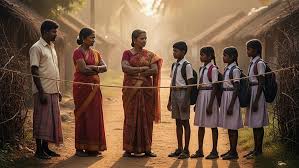
An FIR has been filed against an elderly woman and her family for obstructing Dalit students from using a “public path” in Thanjavur; villagers were forced to walk 1.5 km. Thanjavur, Tamil Nadu: Local police have filed a case against an elderly woman and her family for obstructing Dalit students from using a “public path.” They are accused of allegedly preventing a group of students belonging to the Dalit community from using a nearby public path. The obstruction is visible in the video. The incident occurred on Friday morning in Kollangarai village in Thanjavur taluk. A video that surfaced on social media clearly shows some students wearing school uniforms and carrying school bags walking through a street. An elderly woman, holding a stick in her hand, steps in to stop them. She shouts, warning them not to use that path. Police launch investigation Given the seriousness of the matter, a senior Thanjavur taluk police official confirmed that an FIR has been registered. “An FIR has been registered against the woman and her family members. However, no arrests have been made so far. The investigation is ongoing,” the official told news agency PTI on Saturday. Dispute over ‘vehicle route’ Villagers complained that they were being prevented by family members from using the common path, locally known as ‘vandi pathai’ or ‘vehicle route’. Previously, villagers alleged that they were forced to take a longer route. They had to travel an additional distance of approximately 1.5 kilometers by circling a water body to reach their destination. Rajan Chaudhary Courtesy: Hindi News
Demand for a 1% Separate Quota: Karnataka’s Nomadic, ‘Untouchable’ Communities to Take to the Streets of Delhi on October 2
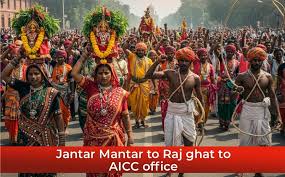
The protest is being organized by the Confederation of Untouchable Nomadic Communities of Karnataka, which represents 59 communities whose traditional livelihoods often still depend on begging, street art, and nomadic labor. New Delhi—Thousands of members of Karnataka’s most disadvantaged communities will gather in the national capital on Gandhi Jayanti to demand the implementation of a separate 1% reservation quota originally recommended by a state-appointed committee. The protest is being organized by the Confederation of Untouchable Nomadic Communities of Karnataka, which represents 59 communities whose traditional livelihoods often still depend on begging, street art, and nomadic labor. This gathering in Delhi is the latest chapter in the fight for reservation within the Scheduled Caste (SC) category in Karnataka. The focus of the controversy is the Karnataka government’s recent internal reservation policy, implemented on August 19th. This policy divided the SC quota into: Category A (SC Left): 6% Category B (SC Right): 6% Category C (Touchable SC): 5% Nomadic communities have been placed in the 5% “Touchable SC” category (Category C). They argue that this contradicts the Justice Nagmohan Das Committee’s recommendation, which specifically recommended creating a separate 1% reservation for them within Category A, ensuring them first priority in government jobs and educational admissions. The communities allege that by placing them in Category C, the state government has effectively deprived them of their legitimate share and priority, forcing them to compete with larger, more influential groups. Frustrated by what they call the “helplessness” of the Karnataka government, led by Chief Minister Siddaramaiah, the communities are now taking their petition to the national opposition. The federation said, “The Delhi mission is a final appeal to the conscience of the nation. This gathering is not just a peaceful delegation; it is a final appeal.” On October 2, the delegation will march to the All India Congress Committee (AICC) office to submit a memorandum to Rahul Gandhi and other Congress leaders. The memorandum will urge them to intervene to ensure the implementation of the separate 1% reservation originally recommended in Karnataka. Geetha Sunil Pillai Courtesy: Hindi News
Rajasthan: ABVP beats Dalit student for not attending Satish Poonia’s event; case filed under SC-ST Act

Kamal Kishore suffered a fractured finger and deep injuries to his ribs and abdomen in the attack. He is currently undergoing treatment at Mathuradas Mathur Hospital in Jodhpur. Upon receiving news of the incident, members of Dalit organizations also reached Bhagat Ki Kothi police station to register their protest. Rajasthan: A Dalit student living in a hostel on the New Campus campus, located in the Bhagat Ki Kothi police station area of Jodhpur, has been assaulted. The victim has filed a report against former student leader Ravindra Singh Banta and others at Bhagat Ki Kothi police station. The incident occurred at the New Campus of Jai Narayan Vyas University in Jodhpur. According to reports, the student suffered severe consequences for not attending a political meeting. Students affiliated with the ABVP assaulted him. The victim has filed a complaint against the accused, which the police have filed under the SC-ST Act. Student leader Ravindra Singh Banta attacked Kamal Kishore, a resident of Jaisalmer, said that he is a final-year B.Sc. student at the New Campus of Jai Narayan Vyas University. This morning, around 10:30 a.m., while he was lying in his hostel room, students affiliated with a party entered the hostel and called everyone to welcome BJP leader Satish Poonia. During this time, many students left the hostel, but for some reason, Kamal Kishore was unable to go. Meanwhile, student leader Ravindra Singh Banta and three or four of his associates attacked Kamal Kishore. Fractured finger and deep injuries to the ribs and abdomen Kamal Kishore suffered a fractured finger and deep injuries to the ribs and abdomen in the attack. The injured Kamal Kishore is currently undergoing treatment at Mathuradas Mathur Hospital in Jodhpur. Upon learning of the incident, members of Dalit organizations also reached Bhagat Ki Kothi police station and lodged a protest. Kamal Kishore says that he had not attended the event due to personal reasons, but was attacked with casteist slurs. A case has been registered under the SC-ST Act. The police calmed the students on the spot and, after receiving the victim’s report, began investigating the matter. Bhagat Ki Kothi police station officer Rajiv Bhadu stated that Kamal Kishore, a final-year BSc student living in the New Campus hostel of Jai Narayan Vyas University, filed a report. He accused former student leader Ravindra Singh Banta and others of assaulting him with casteist slurs. Considering the matter serious, the police have registered a case under the SC-ST Act and initiated further action. Reported by: Arun Harsh, Edited by: Iqbal Khan Courtesy: Hindi News
Congress seeks Basavaraj Patil Yatnal’s apology for offending Dalit women
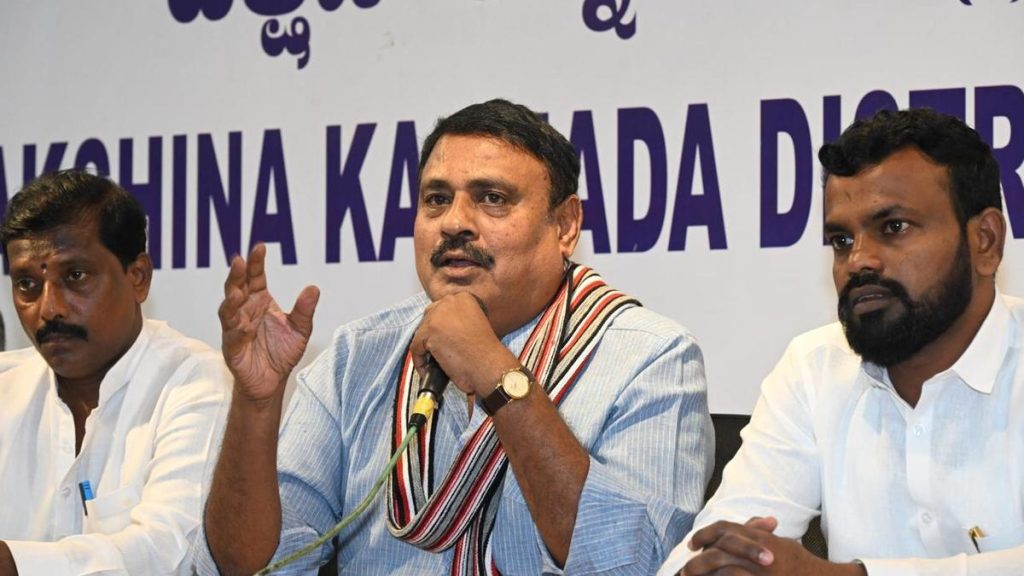
President of Karnataka Pradesh Congress Committee’s SC/ST Cell R. Dharmasena sought an apology from MLA for Vijayapura Basavaraj Patil Yatnal for his statement offending Dalit women. Speaking to reporters here on Sunday, Mr. Dharmasena, a former MLC, said Mr. Yatnal has stated that the right to shower flowers on Goddess Chamundeshwari vested with a ‘Sanatani’ and even an ordinary Dalit woman has no right to shower flowers on the Goddess. Mr. Yatnal’s statement was in the context of State government inviting International Booker Prize winner Banu Mushtaq to launch this year’s Mysuru Dasara in Mysuru. “When there was a lot of criticism over his statement, Mr. Yatnal gave a rejoinder that his statement was wrongly interpreted and that he wanted Dalit woman to inaugurate Mysuru Dasara,” Mr. Dharmasena said. He said that Mr. Yatnal should apologise for his statement, which has hurt many Dalits. If he fails to do, then the SC/ST cell will stage protests at all public functions that will be attended by Mr. Yatnal. Raghava M Courtesy : The Hindu Note: This news is originally published on https:/thehindu.com/bha and is used purely for non-profit/non-commercial purposes, especially human rights
India Must Rethink School Curriculum to Uphold Transgender Rights

The classroom is India’s first frontier in the fight for transgender dignity The Supreme Court’s recent notice on a PIL advocating transgender-inclusive sexuality education has highlighted the need to make education more gender-sensitive and inclusive. The transgender community faces social stigma and exclusion in all aspects of life: social, economic, and political. Therefore, a school curriculum which includes transgender issues can help raise awareness, and, thereby, enable their integration in society. This apex court’s landmark judgment in the National Legal Services Authority v Union of India in 2014 recognised the rights of transgender persons in India to a ‘self-identified gender’, asserting their equality and prohibiting all forms of discrimination against them. The court issued directions to the Union government to ‘take steps to create public awareness’, and ‘take measures to regain their respect and place in society’, including their access to reservations in public education and employment. The court referred to the Yogyakarta Principles (2006), which recognise the need to provide education to eliminate prejudicial or discriminatory attitudes or behaviours pertaining to gender identity or gender expression. Endorsed by UN bodies and regional human rights bodies, these principles have been adopted by national courts in other countries such as Nepal. The Yogyakarta principles were used to provide legal recognition to same sex marriages. The Transgender Persons (Protection of Rights) Act, 2019, which followed this judgment, provides for ‘inclusive education’ where transgender students learn together with other students without fear of discrimination, neglect, harassment, or intimidation. Inclusive education can, however, only be met if schools are safe spaces, with other children and teachers aware and supportive of transgender children. Transgender inclusive sexuality education can provide such awareness to teachers, children, and administrative staff, thus enabling inclusive schools. While the draft National Education Policy (NEP) had mentioned that sex education would be included in secondary school on issues of consent, harassment, respect for women, safety, family planning, and STD prevention, the final NEP removed sex education altogether. The PIL points to the lack of structured or examinable content on gender identity, gender diversity, and the distinction between sex and gender in the NCERT and SCERT curricula. The Supreme Court has asserted the need for sex education in the 2024 judgment of the Society for Enlightenment and Voluntary Action & Anr. v. Union of India. It referred to a decision of the European Court of Human Rights, which asserted young people’s right to sex education on the grounds that sex education is meant to prevent sexual violence and exploitation of children, and to prepare them for social realities. There is evidence on the positive impacts of including such education in the regular school curriculum. A study of Lesbian, Gay, Bisexual and Transgender (LGBT) school students in the United States between Grades 6 and 12, aged 13 to 21, revealed that the majority (68.4%) were not taught topics on LGBT, while 31.6% had discussed LGBT-related topics. More than half of these students reported positive discussions on LGBT topics in courses on History, Social Studies, English, and Health, with the rest reporting negative discussions. Students with LGBT-inclusive curriculum as compared to those without such curriculum, were less likely to hear homophobic remarks, less likely to feel unsafe in school, less likely to miss school, and less than half as likely to have experienced higher levels of victimisation, compared to students in schools without an inclusive curriculum. This reveals the positive impact of a curriculum that includes LGBT-related issues in a positive manner, thus enabling better acceptance of all sexual minorities, including transgender persons. Given these benefits of including transgender-specific education not just in sexuality education but also in the general curriculum, this PIL, if successful, can begin the process of change through education and positively impact the lives of an extremely marginalised community in India. Kaveri Haritas Kaveri Haritas is professor, BITS Law School, Mumbai. (Disclaimer: The views expressed above are the author’s own. They do not necessarily reflect the views of DH.) Courtesy : DH