
Siddaramaiah met Rahul Gandhi in Delhi, now DK Shivakumar is going to meet him. Is something going to happen in Karnataka?
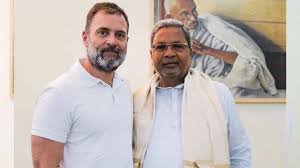
Amidst speculation about a cabinet reshuffle in Karnataka, Chief Minister Siddaramaiah met with Rahul Gandhi, the Leader of the Opposition in the Lok Sabha, in New Delhi. Sources said that Siddaramaiah, along with Energy Minister KJ George, held a 30-minute discussion with Gandhi at former Congress President Sonia Gandhi’s residence. Bengaluru: Karnataka Chief Minister Siddaramaiah met Rahul Gandhi in Delhi. The two held a half-hour discussion at Sonia Gandhi’s residence. Siddaramaiah’s Energy Minister KJ George was also present during the meeting. It is believed that this meeting was about the reshuffle in Karnataka. Siddaramaiah’s two-and-a-half-year term is coming to an end. There is speculation that DK Shivakumar could be replaced as Chief Minister, and that a cabinet reshuffle would give new faces a chance. However, Siddaramaiah dismissed these speculations, stating that the only discussion during their meeting was the Bihar election results. Meanwhile, DK Shivakumar’s statement on this meeting sparked speculation. Siddaramaiah kept this meeting a secret, although the news spread in the media. He did not want his meeting with Rahul Gandhi to become public. Siddaramaiah, who usually shares photos of every meeting, big or small, on social media, did not post a single photo of his meeting with Rahul Gandhi. This sparked all sorts of speculation. Siddaramaiah’s Claim The Karnataka Chief Minister said, “Yes, I met Rahul Gandhi. We only discussed the Bihar elections. He is our leader, so we encouraged him after the Bihar election defeat. He said he was not worried about it. We told him not to lose heart. There was no discussion on a cabinet reshuffle. If I get time, I will meet the Prime Minister on Monday.” What DK Shivakumar Said Reacting to Karnataka Chief Minister Siddaramaiah’s meeting with Congress leader Rahul Gandhi on Saturday, Deputy Chief Minister DK Shivakumar said he was unaware of the meeting. He said, “I am not aware of the Chief Minister’s meeting with Rahul Gandhi. I am not aware of any discussion on a cabinet reshuffle… I don’t know if I will meet (with Rahul Gandhi) on Sunday.” Amid growing curiosity about potential changes in the Karnataka leadership, Shivakumar said, “If you have any questions about leadership changes, talk to the Chief Minister. We have to listen to the party.” Shivakumar further said that the Chief Minister has every right to meet Mallikarjun Kharge, the Home Minister, or the Prime Minister. What is wrong with that? Siddaramaiah’s Claim In addition to statements from various ministers and Congress leaders, Siddaramaiah himself hinted on Tuesday that a cabinet reshuffle was likely, as two positions had become vacant due to the resignations of ministers KN Rajanna and B Nagendra. A source familiar with the meeting said that Rahul Gandhi has given his approval for a reshuffle in the state cabinet. The source added that it is now up to the Chief Minister to decide. Meanwhile, amid discussions of a leadership change, KPCC President DK Shivakumar also arrived in New Delhi on Saturday and is expected to meet with Gandhi and other senior leaders. It is reported that he now wants to include MLAs from his faction in the cabinet expansion. Curated by: Shashi Mishra About the Author Shashi Pandey Mishra is a senior journalist at Navbharat Times Online. She writes stories on politics, crime, health, and the human angle. She also enjoys writing on issues related to women and children. She also writes ground reporting and interesting stories. She has 18 years of experience in journalism. Courtesy: Hindi News
MP: BTP MLA writes to CM, demanding an investigation into the expenditure of ₹1.25 lakh crore from the Tribal Sub-Plan Fund.

The MLA has requested the Chief Minister to prepare a department-wise review report of the expenditure of the TSP Fund over the past three years, to clarify whether the funds have been used in accordance with the intended objectives. Bhopal. Serious questions have been raised regarding the use of the Tribal Sub-Plan (TSP) funds, created for the development of tribal-dominated areas. Kamleshwar Dodiyar, MLA of the Bharat Adivasi Party from the Sailana constituency in Ratlam district, has sent a letter to Chief Minister Dr. Mohan Yadav demanding a high-level investigation and department-wise review of the expenditure incurred under the TSP Fund over the past three years. 1.25 lakh crore spent in three years, but where is the benefit? MLA Dodiyar stated in his letter that the state government has spent approximately ₹1.25 lakh crore under the TSP Fund over the past three financial years. However, the worrying fact is that this amount was primarily spent not through the Tribal Affairs Department but was used by 42 other state departments for their own projects. According to him, out of a total provision of ₹148 lakh crore, actual utilization of ₹125 lakh crore was recorded. Of these, the Energy, Agriculture, and Rural Development departments spent the most. In contrast, expenditure by the Employment, Industry, Tourism, and New Energy departments was negligible, raising questions about the scheme’s objectives. Serious Allegations Regarding Fund Transfer Dodiyar also mentioned in his application that the Water Resources Department transferred ₹355 crore from the TSP to other general items, which is contrary to the spirit of the Tribal Sub-Plan. He stated that when departments use TSP funds for their regular schemes, it raises concerns about how much of the actual benefit has reached the tribal community. Implementation deviates from the original spirit of the scheme MLA Kamleshwar Dodiyar stated clearly that the primary objective of the TSP fund is to develop basic amenities such as education, health, roads, irrigation, electricity, drinking water, employment, and social security in tribal-dominated areas. This fund was specifically created for areas where infrastructure remains weak and people lack easy access to basic entitlements. However, he expressed concern that when this amount is spent on general schemes of various departments, the intended development work in tribal areas remains incomplete. This not only undermines the original objective of the scheme but also adversely impacts the socio-economic empowerment of these communities. Demand for Department-Wise Review and Audit The MLA urged the Chief Minister to prepare a department-wise review report of the expenditure of the TSP fund over the last three years to clarify whether the funds have been used in accordance with the intended objectives. He also demanded that financial audits be conducted against departments that have arbitrarily diverted funds to other items, ensuring transparency in the entire process. The MLA also demanded that departments or officials whose negligence has adversely affected the development of tribal areas be held accountable. He believes that without strict action, the proper utilization of TSP funds cannot be ensured, and its true beneficiaries, the tribal communities, are being deprived. MLA Dodiyar suggested that in future, TSP funds be allocated and spent only through the Tribal Affairs Department, so that the funds can truly be utilized in accordance with the needs of tribal areas. He said that if TSP funds continue to be used for general schemes of other departments, the development of tribal areas will remain limited to paper only. MLA Dodiyar requested Chief Minister Dr. Mohan Yadav to take immediate cognizance of this serious issue and issue necessary instructions. He also said, “An investigation should be conducted into the misuse of TSP funds and I should be informed promptly of the action taken.” Ankit Pachauri Courtesy: Hindi News
Chhattisgarh: This unique museum in Naya Raipur tells the saga of bravery of unsung tribal heroes.
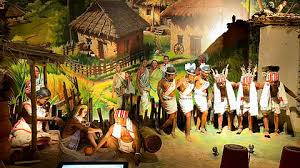
History from 1774 to 1939 comes alive in 16 galleries; the sword of Martyr Veer Narayan Singh and the ‘Adi Vani’ app are the main attractions. Raipur: Whenever the country’s freedom struggle is mentioned, images of great heroes like Bhagat Singh, Chandrashekhar Azad, and Netaji Subhash Chandra Bose come to mind. Their stories inspire millions. However, the contribution of revolutionaries from the tribal community in this struggle was no less, although very few people know about them. To recognize these unsung heroes and make their stories accessible to the public, a very special museum has been created in Naya Raipur, Chhattisgarh. The ‘Shaheed Veer Narayan Singh Memorial and Tribal Freedom Fighter Museum’ is not just a building, but a living document of history. PM Modi inaugurated Located in Sector 24 of Naya Raipur, this sprawling museum spans 9.75 acres. It was inaugurated by Prime Minister Narendra Modi on November 1 of this year. The total cost of this project, designed by the Tribal Welfare Department, was ₹53.13 crore. The museum aims to provide visitors with a holistic experience of the lives and struggles of tribal revolutionaries. Displays include life-size statues depicting key moments of the freedom struggle, historical documents containing execution orders, and weapons used by the rebels. A testimony to the struggle from 1774 to 1939 The museum is divided into 16 galleries, where hundreds of statues narrate the untold stories of the atrocities and resistance faced by tribal communities between 1774 and 1939. Sonmani Bora, Principal Secretary of the Tribal Development Department, said, “The digital experiences here, including the sword used by martyr Veer Narayan Singh against the British, his memorial, and a digital view of the famous Maa Danteshwari Temple in Dantewada, make this museum an unforgettable experience for visitors.” A Wonderful Confluence of Art and Culture The main entrance of the museum is decorated with traditional wood carvings from the Surguja region. The names of 200 tribal freedom fighters are also inscribed, giving visitors a sense of pride even before they enter. A life-size statue of Birsa Munda is installed in the courtyard. It is noteworthy that Birsa Munda’s birth anniversary (November 15) is celebrated nationwide as ‘Tribal Pride Day’. More than a dozen digital screens have been installed in the reception hall, playing animated video stories. Additionally, there is a mini-theater where short films based on the life stories of tribal leaders like Veer Narayan Singh, Gend Singh, Gundadhur, and Ramadhin Gond are shown. A glimpse of various tribes While the reception area is brightly lit, the galleries are dimmed to bring the statues to life. The exhibits showcase the culture, beliefs, arts, and skills of Particularly Backward Tribes (PVTGs) such as the Kamar, Baiga, Abujhmariya, Pahari Korwa, and Birhor. Their sculptures, paintings, and everyday objects are also on display. From the Pages of History: Captain Blunt and Veer Narayan Singh Recalling an interesting historical incident, TRTI Assistant Director Anil Virulkar told the Indian Express, “The museum also features the story of Captain Blunt of the East India Company. When he tried to invade Bastar in 1795, the local tribes—Gond, Koya, Dorla, and Madia—attacked him with their traditional weapons and forced him to retreat.” Another gallery tells the story of Veer Narayan Singh’s rebellion, who raised his voice against the British when they refused to give grain from their warehouses to tribal people struggling with hunger and poverty. Mahatma Gandhi’s visit to Dhamtari is also mentioned here. Connecting through Technology Special arrangements have been made to connect history with modern technology. TRTI Director Hina Netam said, “We have developed an app called ‘Adi Vani’, which offers translations in Gondi and Halbi languages. Additionally, we have created short films and videos in local languages such as Chhattisgarhi, Gondi, and Halbi, which will be shown on the museum’s immersive dome and other digital platforms.” This museum is certainly an enlightening pilgrimage for those who want to understand the incomparable contribution of tribal society to India’s freedom struggle. Rajan Chaudhary Courtesy: Hindi News
Transgender from Indore, MP, raped: 25 lakh rupees defrauded and physically exploited under pressure to change gender

Police are taking this case seriously and investigating from various angles. Financial transactions, bank details, chat records, and medical documents are also being examined. Bhopal. Serious allegations made by a transgender model in Indore, Madhya Pradesh, have raised deep concern within the police department and society. The 23-year-old victim, a resident of Indore and working in the field of modeling and fashion designing, has accused Yuvraj Rajput, a resident of Dewas, of rape, fraud, pressure to change her gender, and extorting 25 lakh rupees. Police have registered an FIR in the case, arrested the accused, and initiated an investigation. First acquaintance, then conversation According to the victim, she met Yuvraj Rajput, a resident of Dewas, some time ago during a family function. A casual introduction at the event led to a social media conversation, and the two remained in constant contact on Instagram. During this conversation, the victim clearly told Yuvraj that she was transgender. According to the victim, Yuvraj did not object to this information at that time, but instead, the conversation and their closeness grew. Reached the house under the pretext of meeting and committed rape According to the details recorded in the FIR, on May 9, 2024, Yuvraj arrived at the victim’s house under the pretext of meeting her. It is alleged that during the meeting, he forcibly had physical relations with her. When she resisted, Yuvraj threatened her and told her that if she liked him and wanted to marry him, she would have to become a woman. The victim claims that from that day on, Yuvraj began continuously exploiting her mentally, physically, and financially. Pressed to undergo gender reassignment surgery, forced her to undergo treatment with a doctor, and extorted money The victim told the police that Yuvraj pressured her to undergo gender reassignment surgery and forced her to undergo treatment with a doctor. He extorted a large sum of money from her in the name of transgender surgery and hormonal treatment. It is alleged that he took approximately 25 lakh rupees from her under the pretext of medical treatment and marriage. Furthermore, the victim stated that Yuvraj used the money to buy a car for himself, which was paid for with her own money. Pressure to have relationships with friends, allegations of drugging and assault The complaint also states that Yuvraj would pressure her into relationships with his friends after drugging her. He would beat and threaten her if she refused. According to the victim, she endured prolonged mental and physical torture, after which she mustered the courage to file a complaint with the police. Accused arrested, molestation cases filed previously Following the incident, police took action and arrested Yuvraj Rajput. Preliminary investigations also revealed that Yuvraj runs a gym in Dewas. According to police records, some young women who visited the gym had previously filed complaints of molestation against him, and a case was registered in that case as well. Cybercrime and economic crimes are also being investigated. Police are taking this case seriously and investigating from various angles. Financial transactions, bank details, chat records, and medical documents are also being examined. Police say the allegations are serious and if concrete evidence is found, additional charges may be added against the accused. Ankit Pachauri Courtesy: Hindi News
Transgender students are not eligible for NCC recruitment! Learn what the Kerala High Court told the Central Government to address this policy gap.
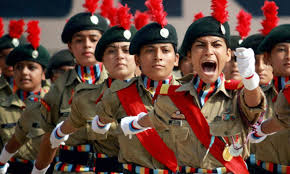
Suggestion to consider establishing an NCC Transgender Division Ernakulam: The Kerala High Court dismissed a petition filed by a 22-year-old transgender student seeking admission to the NCC due to the lack of a provision in the NCC admission rules. However, the court made an important recommendation to the Central Government, stating that transgender students should also be given the opportunity to join the NCC. The High Court directed the Ministry of Defense and the Ministry of Law to seriously consider this issue. The current law does not provide for admission of transgender students into the NCC, which the court emphasized needs to be amended. A bench headed by Justice N. Nagaresh dismissed the petition filed by transgender student Janvin Cleetus, but also directed the Central Government to review the issue and take necessary action. This decision marks a significant turning point in the fight for equal opportunities in public life for the transgender community. What is the whole matter? Janvin Cleetus, a resident of Valiathura, Thiruvananthapuram, applied for admission to the 30(K) Battalion NCC, Calicut. Cleetus possesses a transgender identity card issued by the Thiruvananthapuram District Collector on February 14, 2024, and met all the eligibility criteria and participated in the selection process. However, during the interview, he was informed that he could not be admitted to the NCC due to his gender identity. Advocate Dhanuja M.S., representing the petitioner, argued that this discrimination based on gender identity is a direct violation of Articles 14 (equality before the law), 15 (prohibition of discrimination), 19 (freedom of speech and expression), and 21 (right to life and personal liberty) of the Indian Constitution. The NCC and the central government stated in their response that Section 6 of the NCC Act, 1948, currently provides for the admission of only male and female students as cadets. They argued that NCC training involves physical exercises, sports, and long camps, where cadets are required to live together in field conditions. Therefore, the gender-specific admission policy is designed to ensure the safety and well-being of cadets of different genders. It is true that transgender candidates are disadvantaged in NCC admissions, and ideally, transgender students should also be given the opportunity to enroll in the NCC. Kerala High Court What did the High Court say? The court acknowledged that depriving transgender students of opportunities like the NCC is a matter of concern. The court made important observations in its judgment: “It is true that transgender candidates are disadvantaged in NCC admissions, and ideally, transgender students should also be given the opportunity to enroll in the NCC.” However, the court also stated that there is an “intelligible difference” in treating individuals of different genders differently, given the provisions of the existing law and the nature of the training. The court clarified that creating a transgender division in the NCC would require legislative intervention and a clear policy. Justice Nagaresh said: “The formation of an NCC transgender division would require a minimum/sufficient number of transgender students to constitute a separate division. These are matters of policy that require adequate study, which is the function of the executive. Legislative intervention is also required for their implementation.” Despite dismissing the petition, the High Court suggested a course of action on the issue. The court directed that a copy of its decision be sent to the Secretaries of the Ministry of Defence and the Ministry of Law and Justice, Government of India, “for consideration and necessary action on the issue.” Geetha Sunil Pillai Courtesy: Hindi News
Badaun: Dalit wedding party members attacked with pistols and sticks; police accused of mishandling a serious case as “breach of peace.”
Viral video shows the accused with pistols and sticks, misbehaving with a statue of Ambedkar; police accused of suppressing the SC/ST Act. Badaun: Police performance in Uttar Pradesh’s Badaun district is once again under scrutiny. The police have been accused of “covering up” the serious case of misbehavior and assault on Dalit wedding party members in the Faizganj Behat police station area. The victims claim the accused were armed and used casteist slurs, yet instead of registering a case under the SC/ST Act, the police merely charged them under sections of breach of peace. What is the whole matter? The incident is reported to have occurred late on November 12th. Dharampal Singh, a resident of Mewali village in the Ughaiti police station area, was traveling by car with his family and relatives to attend a wedding. It is alleged that two unidentified individuals overtook his car on the road and forced it to stop. Dharampal Singh stated in his complaint that his car had a statue of Baba Saheb Dr. Bhimrao Ambedkar. Upon seeing this, the accused began using casteist slurs and attempted to attack him with a knife. Hooliganism Caught on Video According to a Dainik Bhaskar report, a video of the incident has also surfaced, exposing the police’s claims. It can be clearly seen in the video that one of the attackers is holding a transparent police-style baton, while the other is seen holding a pistol. Questions about the police’s role It is alleged that the police kept the case on hold for two days. Only when the video of the incident went viral on social media on the night of November 13th and higher officials took cognizance did the local police take action. The police quickly arrested one accused, Neetu, but he was also charged only with breach of peace (Section 151). The other accused remains at large. Weapons not recovered, serious charges missing Surprisingly, despite the weapon visible in the video, the police have not yet recovered either the transparent stick or the pistol. The victim alleges that they filed a complaint under the SC/ST Act, which the police ignored. In this case, Station House Officer Rajkumar Singh confirmed that action has been taken against one accused for breach of peace. However, the police’s intentions are being questioned for ignoring serious charges. Rajan Chaudhary Courtesy: Hindi News
The Forgotten Assam Freedom Fighter Who Fought Untouchability, Marched With Gandhi, Opened Schools For Dalits And Challenged British Rule

Krishna Nath Sharma, a forgotten Assamese freedom fighter, challenged caste barriers long before it was fashionable. In 1934, he opened his namghar to Dalits alongside Gandhi, enduring a decade of social boycott. From fighting Assam’s opium crisis to supporting the Dandi March and opening schools for Dalit children, his life was a relentless struggle for dignity, equality, and justice. Every so often, history surprises us with a character whose bravery is so understated, so disarmingly gentle, that it almost slips through the cracks of our noisy national memory. Assam, with its floodplains, fierce revolutions, tea gardens and unhurried rivers, has produced several such rebels—people who fought with conviction instead of microphones, with defiance rather than spectacle. Among them stands a man who, despite having walked beside Mahatma Gandhi, challenged caste superstition head-on, opened his sacred space to those the world refused to touch, and still somehow remained a footnote. His name was Krishna Nath Sharma, fondly known across his community as Krishna Mama, and his story begins in a simple prayer house tucked away in Jorhat. Picture this: it is 18 April 1934 in Sabaibandha, a quiet neighbourhood in Upper Assam. A namghar—a traditional Assamese prayer hall—breathes gently in the morning air. It is much like any other, except for one extraordinary detail. Mahatma Gandhi is standing at its entrance, ready to walk inside. Beside him stands the owner, Sharma, a man from a conservative Brahmin family, fully aware that what he is about to do will turn his own community against him. Yet his eyes are fixed ahead. Because for him, the opening of this prayer house to Dalits—sweepers, manual scavengers, ordinary people denied dignity—wasn’t merely symbolic. It was a necessary rebellion against a cruel social order. What followed next was a decade of isolation for his family, a lifetime of activism for him, and the opening of a chapter that deserves a place in every history classroom. This is the story of the man who walked the Dandi March, fought opium addiction, opened schools for Dalit children, challenged untouchability, and still died before seeing the freedom he fought for. The Namghar That Became a Battlefield of Beliefs The Sabaibandha namghar might look unassuming to a passing visitor today, but in 1934 it became a site of remarkable dissent. Gandhi had been travelling across India campaigning against untouchability, and Sharma—who had already begun pushing back against caste barriers in Assam—invited him to inaugurate his prayer house Gandhi accepted. And that decision ruffled more feathers than any of them could imagine. When Dalits stepped inside the namghar that day, they crossed not just a doorway, but a century-old threshold of exclusion. Gandhi lauded Sharma’s courage publicly, telling local media (credit: contemporary press reports): “Valiant soldiers like Krishnanath Sharma never care to face any odds. The temple entry movement will lead the rest of India to remove social evils.” But while Gandhi praised him, Sharma’s own community punished him. Ostracised is too mild a word—his family was shunned into social invisibility. At weddings, guests would walk out if he entered. When his wife, Swarnalata Devi, stepped into a temple, women fled as though her presence would contaminate stone. Yet they persevered. Fun fact: Assam had seen efforts toward egalitarian worship before, courtesy of the neo-Vaishnavite movement of Srimanta Sankardev. But never before had a mainstream Brahmin family taken such a bold stand in the early 20th century—making Sharma’s defiance quietly revolutionary. Meet Krishna Mama: Scholar, Lawyer, Rebel in Cotton Khadi Born in 1887, Krishna Nath Sharma was academically gifted. He completed degrees in science and law—an unusual combination in those days—and launched a successful legal career in 1917. But the courtroom couldn’t hold him for long. Gandhi’s arrival on the national stage changed the rhythm of his life. Soon enough, Sharma abandoned his practice, embraced the Gandhian ethos, and joined the freedom movement. His nickname Krishna Mama originated much earlier, during his student years. Friends found his calm maturity and independent thinking far beyond his age. The name stuck, and soon he became “Mama” not just to friends but to entire communities who admired his guidance. His First Fight: Crushing Assam’s Deadly Opium Addiction Before Sharma battled caste prejudice, he fought a quieter war—against the opium crisis devouring Assamese society. Opium, introduced by East India Company soldiers in the 18th century, had become a widespread menace by the early 1900s. Sharma partnered with Kuladhar Chaliha and Rohini Kumar Chaudhuri, two prominent Assamese freedom fighters, gathering data, interviewing addicts, and documenting the scale of the damage. His conviction was crystal clear: “To save a nation from a ruinous habit, no effort should be spared. The only way is total prohibition.” And astonishingly, he succeeded. Through relentless advocacy, public meetings, and political pressure, he helped shape the movement that pushed Assam towards opium prohibition. Fun fact: Assam was one of the earliest regions in India to enforce large-scale opium restrictions—thanks largely to grassroots activists like Sharma. The Gandhi Connection: From Temple Doors to the Dandi Salt Wind Sharma’s activism stretched far beyond his town. When Gandhi began his anti-untouchability drive in 1933—opening temples like the one in Selu, near Wardha—Sharma recognised it as a moment for Assam to step forward. He invited the Mahatma to his namghar. But that wasn’t their only intersection. Sharma also walked with Gandhi during the historic Dandi March. He became deeply involved in promoting khadi, sometimes cycling through villages with bundles of homespun cloth under his arm, urging people to discard British textiles. And even when British officials repeatedly arrested him, he remained unflinching. The 1942 Garlanding Incident: A Moment So Daring It Feels Almost Cinematic One of Sharma’s most remarkable confrontations with colonial authority occurred on 2 October 1942—‘Soldier’s Day’. His mission was bold: persuade Indian soldiers to support the Quit India movement. According to historian Anil Kumar Sharma (credit: Quit India Movement in Assam), Sharma led a massive procession into Jorhat with a garland in his hand. When armed American military personnel blocked them, he
Bihar shattered the nation’s biggest myth, turning it upside down.
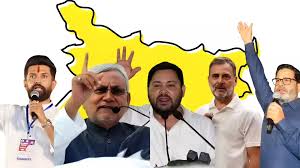
The mandate delivered by Bihar voters shattered the prevailing belief of the past decade and a half that record voter turnout signaled anti-incumbency. However, this time’s results clearly demonstrate that there was no widespread dissatisfaction with the government at the state level. The Bihar election results have surprised everyone this time. Bihar voters delivered a unanimous mandate. The notion that record voter turnout signified anti-incumbency has been shattered over the past decade and a half. The unprecedented 66.91% voter turnout in Bihar has proven this once again. This election result will only have shocked those who lived in a fantasy world or were unaware of the reality despite knowing it. The Congress, under Rahul Gandhi’s leadership, is now unwilling to accept the defeat. It saw vote theft in Maharashtra, Haryana, and even Karnataka, and the same will happen in Bihar. No Mass Discontent: In fact, speaking to people during the election, it was clear that there was no mass discontent at the state level with the Nitish Kumar government. Jan Suraj, which was trying to emerge as a third force, was well-known even in villages, but it lacked direct voter turnout as a party. Women’s turnout, outnumbering men, was a significant indicator of the election results. Lack of Coordination: In coalitional electoral contests, performance depends on how well they speak with one voice and demonstrate consistency on issues, statements, and strategies. The NDA appeared united from day one. Despite minor differences, the NDA publicly announced the seat-sharing arrangement. No public meeting of the Grand Alliance was seen. Everyone fielded their own candidates. There was also a considerable delay in announcing Tejashwi Yadav as the leader. The message that emerged was that they were united only to defeat the BJP, but there was no unity among them. LJP+RLM: The opposition alliance benefited from Chirag Paswan’s rebellion against the LJP (R) in the last election. This time, it is in the NDA. Upendra Kushwaha’s RLM was also in a different alliance last time. Consequently, the NDA brought together leaders with two social bases. On the other hand, there was only Mukesh Sahni’s VIP. Vote theft not an issue: The Congress’s entire strategy was limited to campaigns against vote theft and the Election Commission. No one in Bihar accused anyone of deliberately deleting names from the voter list. Therefore, this was not an issue on the ground, but rather a reaction to it. What will be the result if you campaign by making something that doesn’t exist a major issue? Women’s participation: For whom did women turn out to vote in greater numbers? Women’s participation was 71.6%. A total of 25.1 million women cast their votes, compared to 24.7 million male voters. Women’s turnout was 43.4 million more than men. In 2020, 20.8 million women voted. Compared to this, women’s turnout was 4.3 million more. This didn’t happen without reason. The government under Nitish Kumar’s leadership has done unprecedented work since its inception to bring women into the mainstream of society. Solid Hindutva Support Base: When assessing any election result in India, we must keep in mind that the BJP has a strong support base across the country, based on Hindutva and nationalism. Such BJP voters emerged from all castes in Bihar. There was a time when Bihar was divided between backward and forward castes. This time, too, it seemed as if Bihar was so divided along caste lines that it was now impossible to break free. The election results are a promising sign in this regard. Caste Stiffness Broken: Leaders of all parties should understand that no matter what caste we belong to, we don’t always have a caste-based mindset. From Panchayat to Lok Sabha elections, we work for each other and vote for each other. Inter-caste interactions have also increased significantly. The election results have proven that if gender equality is central to political principles and government policies, and a national spirit is integrated with social justice, development, law and order, and Hindutva, then the majority community can gradually break the caste barrier and move forward. Author: Awadhesh Kumar, Edited by: NBT Desk (The author is a senior journalist and thinker) About the author Whether it’s national, international, sports news, or the inside story of politics, NBT News Desk brings you every news.
Madras HC Seeks Centre’s Reply on Transgender Exclusion in Adoption Rules by Dec 4
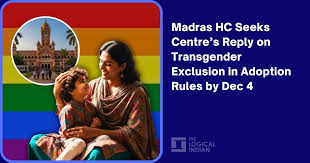
Despite the 2019 law guaranteeing equality, transgender persons in India remain excluded from adoption, prompting the Madras High Court to seek immediate government clarification. The Madras High Court has directed the Union government to clarify why current adoption rules under the Central Adoption Resource Authority (CARA) still exclude transgender persons, despite the 2019 Transgender Persons Act mandating non-discrimination and equal rights. The move follows a petition by a transgender individual challenging the validity of restrictive adoption laws, with the Centre now required to respond by December 4, 2025. This judicial intervention could mark a turning point in legal recognition and the rights of transgender persons to adopt children in India. Judicial Intervention: Challenging Exclusion In a landmark hearing on November 3, 2025, the Madras High Court’s division bench, comprising Chief Justice Manindra Mohan Shrivastava and Justice G. Arul Murugan, asked the central government to provide written clarification as to why CARA guidelines remain untouched by the principles of equality codified in the Transgender Persons (Protection of Rights) Act, 2019. The court’s involvement was prompted by a petition filed by B. Shama, a transgender plaintiff who highlighted the ongoing discrimination in India’s adoption laws-specifically, that CARA’s registration forms on its website exclude transgender individuals from even applying as prospective adoptive parents. Advocate Karthikaa Ashok, representing Shama, argued that CARA’s reference to “male” and “female” should now be interpreted to cover “transgender” applicants as well, reflecting the requirement in the 2019 law for equal treatment. According to the petition, the denial of adoption rights based on gender identity not only violates the 2019 Act but also Articles 14 and 21 of the Indian Constitution, which guarantee equality and life with dignity. During proceedings, the court remarked that CARA functions under the Ministry of Women and Child Development and therefore it is incumbent on the central government to clarify in detail the reasons for the lack of reform. The Additional Solicitor General, A.R.L. Sundaresan, asked for additional time to prepare the government’s reply, resulting in an adjournment of the case to December 4, 2025. Legal Precedents: Barriers and Advocacy This hearing was not the first time the exclusion of transgender persons from adoption had come before the judiciary. In October 2025, Justice M. Dhandapani of the same court dismissed a similar petition by K. Prithika Yashini, India’s first transgender police officer. Justice Dhandapani stated that without explicit legislative amendments, his “hands were tied” since adoption regulations currently classify applicants strictly as male or female, with no mention of non-binary or transgender identities. This legal binary leaves India’s transgender citizens with no official route to adopting under existing frameworks. The recent intervention by the Madras High Court’s division bench moves away from a narrow reading of the law and places the onus on the Union Ministry of Women and Child Development to justify the delay in compliance with Section 8 of the 2019 Act, which explicitly obligates the government to institute transgender-inclusive welfare schemes and rules. Advocates, including Ms. Ashok, have called for an “inclusive interpretation” of existing laws. They underline that parenthood is a fundamental human dignity and that exclusion based on gender is contrary to the spirit of constitutional rights and previous Supreme Court pronouncements, most notably the NALSA judgment establishing equality for transgender persons. National Impact: Law, Families, and Social Change With India’s adoption framework still essentially referencing a binary understanding of gender, the implications extend far beyond legal technicalities. The judiciary’s increasing engagement with the shifting definition of “family” reflects a broader movement in society, where diverse family units are increasingly recognised but not yet enshrined in central legal policy. Recently, the Supreme Court’s split verdict in 2023 around joint adoption by unmarried and queer couples highlighted both progress and persisting barriers within the system. For the transgender community, legal recognition through adoption rights is about more than bureaucracy-it is about dignity, family, and their place in Indian society. Experts caution that continued exclusion keeps “equality trapped in rhetoric,” and that law reform should not lag behind constitutional commitments. The ongoing proceedings and mandated government reply could offer vital clarity and possibly set a precedent affecting thousands seeking to realise their parental aspirations. The Logical Indian’s Perspective The Madras High Court’s proactive intervention reinforces that Indian law must reflect empathy, inclusiveness, and justice. Every citizen, regardless of gender identity, deserves equal opportunity to experience parenthood and familial joy. By amending CARA guidelines and strictly implementing the 2019 Act, the government can move closer to building a truly inclusive society where respect and kindness override stereotypes. Syed Muskan Shafiq Courtesy : TLI Note: This news is originally published on https:/thelogicalindian.com/bha and is used purely for non-profit/non-commercial purposes, especially human rights
A 150-year-old evil tradition was broken after 150 years! A Dalit groom rode a horse for the first time in Rewari, with the wedding procession escorted by police.
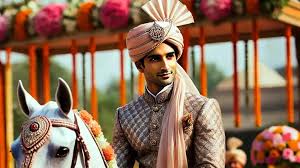
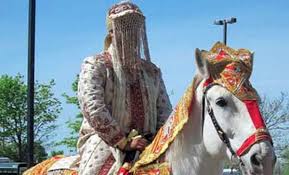
A 150-year-old evil tradition was broken in Khedi Dalu Singh village in Haryana’s Rewari district when a Scheduled Caste groom rode a horse for the first time. However, the family had sought security from the police and administration as a precaution, fearing untoward incidents. The procession proceeded peacefully under the presence of a police force. In Khedi Dalu Singh village, located in the Bawal area of Rewari, Haryana, a Scheduled Caste man’s wedding procession rode a horse for the first time in 150 years. The procession departed on Thursday, November 13th. Police forces from three police stations were deployed, supervised by the DSP. The procession departed from the village for Ateli. According to reports, a horse-riding procession for a young man had never been carried out in this village in history. This evil practice had been prevalent for years. The groom’s family feared an untoward incident. Due to this, they requested police protection. The family expressed gratitude to the police and administration. Ankit, the groom, who works in the Animal Husbandry Department, explained that this evil practice had been prevalent since the village was formed. He said that many people had tried before, but were unsuccessful. Fearing something untoward, the family filed a complaint with the Human Rights Commission, Rewari police, and the administration. The family appealed for protection from the Rewari police, administration, and the National Human Rights Commission. Following this, the wedding procession proceeded peacefully in the presence of police from three police stations and the duty magistrate. Following the incident, the family expressed gratitude to the police and administration. There was no tension in the village. Bawal DSP Surendra Sheoran stated that there was no tension in the village. He stated that police were present as a precaution, and the wedding procession proceeded peacefully. Meanwhile, Nepal Singh, the Sarpanch representative of Khedi Dalu Singh village, stated that there was no tension in the village, nor did anyone protest. He added that everyone in the village wants peace. The family had filed a complaint with the police administration, which led to precautionary measures being taken, and the horse-riding ceremony passed off peacefully. In many areas of Haryana, disputes have previously arisen over Scheduled Caste grooms riding horses, so as a precaution, the horse-riding ceremony was conducted under police protection. Authored by: Manoj Kumar Courtesy: Hindi News