
CPI alleges increase in atrocities against Dalits, adivasi
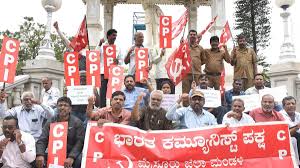
Members of the Communist Party of India (CPI) staged a demonstration in the city on Tuesday against what it called increase in atrocities against Dalits, adivasis, women, and minorities in the country. The protesters attributed the atrocities to the prevailing mindset in the society, which, it said, was shaped by caste discrimination encouraged by the Manusmirti. They regretted that such atrocities continue to take place in the society in the present times long after the country has become democractic. Instead of a reduction in such crime, the atrocities are on the rise, the CPI alleged. Citing statistics from the National Crimes Record Bureau, the CPI said that there were 57,000 recorded cases of atrocities against the Dalits in 2023 while there were 2,835 rape cases in which Dalit women were victims. They said these were only the registered cases while the actual numbers could be much higher. The rise in crime was also attributed to rise in communalism in the country and called for greater unity among the people to fight the scourge. The Hindu Bureau Courtesy : The Hindu Note: This news is originally published on https:/thehindu.com/bha and is used purely for non-profit/non-commercial purposes, especially human rights
CPI stages protest against attacks on dalits, minorities
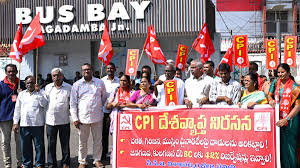
Leaders and activists of the Communist Party of India (CPI), staged a protest on Tuesday, following a call given by the party’s national council, demanding an end to the attacks on dalits, tribals and minorities. They also sought a caste survey and provision of 42% reservation for Backward Classes Addressing the gathering, CPI district secretary Sk. Rahaman alleged that the attacks on dalits and minorities had increased after Narendra Modi became the Prime Minister. He condemned the attacks on dalits, minorities and tribal people in Uttar Pradesh, Manipur, West Bengal and other States. He also deplored the alleged attempts of the Modi government to replace the secular character of the Constitution with ‘Manuvada’. Rahaman said that the ethnic clashes in Manipur had drawn flak from nations across the globe but the Centre and the State government had failed to condemn the attacks. He alleged that the natural resources of the forests were being destroyed and that the tribals were being deprived of their livelihood to benefit corporate companies. He called upon the people to oppose the move of the Centre to exploit the natural resources of the forest areas. Additionally, he condemned the attitude of the TDP-led Alliance government in Andhra Pradesh for failing to initiate action against the police officers responsible for the attack on dalit and minority youth in Tenali, and against the perpetrators of rape of a minor girl and women. He demanded that the Centre and State government put an end to attacks on dalits and minorities failing which the people would teach them a lesson in the next elections. CPI district assistant secretary P. Chandrasekhar, executive members M. Pydiraju, M. Manmadha Rao, CN Kshetrapal Reddy, N. Nagabushanam, MA Begam and K. Satyanjaneya were among those who participated in the protest. Madhu Gopal Courtesy : The Hindu Note: This news is originally published on https:/thehindu.com/bha and is used purely for non-profit/non-commercial purposes, especially human rights
A ruling to restore trans rights

With the Jane Kaushik verdict, the Supreme Court pushes substantive equality and signals hope amid systemic discrimination The judgement of the Supreme Court in Jane Kaushik v Union of India, delivered on October 17, 2025, by a bench consisting of Justices J B Pardiwala and R Mahadevan, is not only the vindication of a transgender woman’s fight against discrimination, but also a much-needed boost to the LGBTQI movement in the country. It appeared that the ruling in Supriyo v Union of India, which rejected marriage equality, dealt a severe blow to the movement towards LGBTQI equality through legal process. However, the decision in Jane Kaushik has reopened a path to justice. The logic and reasoning of the judgement, the important mandatory directions issued to the Union and state governments, as well as the continuing commitment to improving transgender lives, as seen in the constitution of a committee to take forward the constitutional vision of transgender rights, mark Jane Kaushik as a significant intervention by the top court. The petitioner, Jane Kaushik, is a transgender woman who suffered an all-too-common experience of discrimination against the community. Jane’s application for employment as a school teacher was rejected on the grounds of her being transgender. There being no functional mechanism to deal with grievances about discrimination of this nature, she had no choice but to approach the Supreme Court for redress. The Court found that there was discrimination perpetrated by the school in which Jane sought employment, as the institution did not employ her solely because she is transgender. For this act, the Court ordered the school to compensate Jane Kaushik with Rs 50,000. The apex court went beyond the individual petitioner and identified structural reasons for the discrimination suffered by Jane in the inactions of the government of Uttar Pradesh and the Union government, for which they were both ordered to compensate Jane with Rs 50,000 each. A key reason why transgender persons continue to experience discrimination in society lies in the grossly apathetic attitude of both the Union and state governments, which have reduced the Transgender Persons (Protection of Rights) Act 2019 to a dead letter. The Court characterised this State inaction as neither ‘inadvertent or accidental’, but ‘intentional’ and stemming from ‘deep-rooted societal stigma’ which results in a ‘lack of bureaucratic will to effectuate the provisions of the 2019 Act and the 2020 Rules’. It is to be noted that the Act itself comes with flaws. For the Court, ‘the marginalisation of transgender persons is often perpetuated not only by overt acts of discrimination, but also through the silence and gaps in the statute, i.e., the 2019 Act.’ Jane Kaushik suffered discrimination during her application for employment because the state government has not bothered to implement even the flawed Act. This double failure is a form of ‘omissive discrimination’ which is violative of the constitutional guarantee of the equal protection of laws to transgender persons. The Supreme Court has refused to be silent in the face of this discrimination. It has taken constitutional action to both recognise and remedy gaps in the law so as to realise substantive equality, by crafting a series of innovative reliefs. Towards equal opportunity The Court has passed certain mandatory directions to both the Union and the state government to ensure that the Act translates into real protection of the community. Among the important interventions is the direction to state governments to ensure that every establishment (government or private) appoints a complaints officer to deal with grievances raised by transgender persons regarding violations of the Act. The Court, however, recognises that ‘directions’ alone may have a limited impact and has constituted a committee consisting of transgender rights advocates, academics, lawyers, and government officials. The committee has been tasked with the mandate of preparing a comprehensive report that includes the formulation of a ‘viable and comprehensive equal opportunity policy for the transgender community in the arenas of education and employment’. Among the members of the Committee from Karnataka are transgender rights activist Akkai Padmashali, senior advocate Jayna Kothari, and Nithya Rajshekhar from the Centre for Law and Policy Research. The committee must now initiate extensive engagement with the trans community and ensure that the concerns of every section of the community are represented in the committee’s deliberations. It is also up to the LGBTQI rights activists to engage intensively with the committee and ensure that it comes up with recommendations that can help transform the landscape for transgender rights in India. This is an opportunity that must not be missed. Arvind Narrain (The writer is a Bengaluru- based lawyer) Disclaimer: The views expressed above are the author’s own. They do not necessarily reflect the views of DH. Courtesy : DH Note: This news is originally published on https:/deccanherald.com/bha and is used purely for non-profit/non-commercial purposes, especially human rights
Akhilesh Yadav should first lead UP… Imran Masood’s big statement: Rahul Gandhi is no match
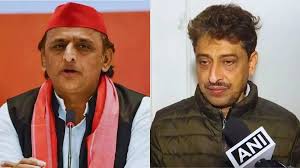
Imran Masood on Akhilesh Yadav: Following the Bihar election results, tensions have escalated among opposition parties. Congress MP Imran Masood has made a significant statement on Akhilesh Yadav. Saharanpur: Congress MP Imran Masood from Saharanpur, Uttar Pradesh, has issued a statement on Akhilesh Yadav’s leadership of the All India Alliance. In fact, following the Bihar Assembly election results, the ongoing tension within the Grand Alliance has now come to the fore. While several constituent parties of the Grand Alliance are reviewing and questioning the leadership after the crushing defeat, Congress MP Imran Masood has also openly expressed his views on this issue. Speaking to the media in Saharanpur on Monday, he made a significant statement regarding Samajwadi Party President Akhilesh Yadav and the alliance leadership. He suggested Akhilesh Yadav lead UP for the 2027 Assembly elections. What did Imran Masood say? Congress MP from Saharanpur, Imran Masood, said that after the Bihar elections, some Samajwadi Party leaders are arguing that Akhilesh Yadav should lead the India Alliance. Responding to this, Imran Masood said that Akhilesh Yadav should first lead Uttar Pradesh. The 2027 elections are coming, so focus on that first. Congress MP Imran Masood also said that no one can match Rahul Gandhi’s leadership. He said that Rahul Gandhi is incomparable, and cannot be compared to anyone. Will Congress split? Following the Bihar results, there have been reports of review and dissatisfaction within the India Alliance. Several parties have raised demands for a review. Responding to this question, Imran Masood said, “I am not the one to make this decision. I am a soldier of the Congress. The decision is for the party to make. My opinion does not matter.” He made it clear that whatever decision the party makes is final, and all leaders must abide by it. Leadership Differences in the Grand Alliance Following the Grand Alliance’s crushing defeat in Bihar, differences over leadership and strategy appear to be growing within the opposition camp. Leaders from different parties are issuing differing statements about the alliance’s direction and future. Imran Masood’s statement indicates that the party is now preparing to respond directly to those questioning the Congress leadership. Curated by: Rahul Parashar About the Author Rahul Parashar is a senior journalist at Navbharat Times Online. He has 20 years of experience in politics, current affairs, development, bureaucracy, education, health, and ground reporting. Early in his career, he covered administration and civic issues. He also learned the ropes of political journalism in Bihar, Jharkhand, and Uttar Pradesh. Courtesy: Hindi News
MP News: Dalit Father-Son Chased, Thrashed At Hospital Over Petty Dispute In Sehore

The confrontation began late at night when one of the accused suddenly appeared in front of his car. After narrowly passing by, accused allegedly slapped him, and soon his associates arrived and began abusing him. Pravesh avoided escalation and went home, but the matter did not end there. Later, Deepak and his friends attacked Pravesh and his father, Hari Singh, in the Bhopal Naka area. Sehore (Madhya Pradesh): A Dalit youth and his father were brutally assaulted at the Sehore District Hospital, in the presence of police personnel. The video of the assault is going viral on social media in which a few miscreants can be seen thrashing a youth and his father. The duo went to the hospital for the treatment after being assaulted by the same group. The accused followed them to the district hospital and attacked them again. According to the victim, identified as Pravesh Parihar, a resident of Ambedkar Nagar Ganj, the confrontation began late at night when one of the accused, Deepak Parmar suddenly appeared in front of his car. Parihar quietly moved from the side. This made Deepak furious. He allegedly slapped him, and soon his associates arrived and began abusing him. Pravesh avoided escalation and went home, but the matter did not end there. Later, Deepak and his friends attacked Pravesh and his father, Hari Singh, in the Bhopal Naka area. When the injured duo reached the District Hospital in Sehore for treatment, Deepak Parmar, Bhanu Rathore and Naveen Rathore reportedly followed them into the hospital. They caught Pravesh and his father and attacked them. The Kotwali police have registered a case under the SC/ST Atrocity Act and other sections. CSP Abhinandana Sharma confirmed that an FIR has been filed, and that the teams have been deployed to trace the absconding accused. Syed Faizan Ali Courtesy : TFPJ Note: This news is originally published on https:/thefreepressjournal.com/bha and is used purely for non-profit/non-commercial purposes, especially human rights
CM Revanth has deep regard for artistes and Dalits: SC Welfare Minister
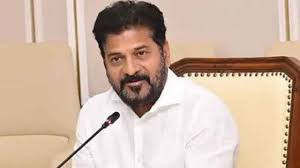
The Minister said the Chief Minister has consistently stood by Dalits, recalling the historic decision on SC categorisation and the recognition extended to artistes Chief Minister A. Revanth Reddy’s personal presence at poet Andesri’s funeral reflected the government’s deep respect for artistes and Dalits, stated Minister for SC, ST and Disabled Welfare Adluri Lakshman Kumar at a preparatory meeting for the condolence programme of Andesri, author of the Telangana State Anthem. “No Chief Minister in the past has accorded such honour to poets and artistes,” he said, adding that the meeting would be organised with dignity befitting the State and in a manner that embodies the spirit of Telangana. The Minister said the Chief Minister has consistently stood by Dalits, recalling the historic decision on SC categorisation and the recognition extended to artistes. He met poets, artistes, Dalit organisations, people’s associations and employees’ unions to plan the programme. Mr. Lakshman Kumar said Andesri’s literary contributions captured the spirit, pride and cultural essence of Telangana, and would continue to guide future generations. The condolence programme will revolve around three themes — Dalit unity, Telangana spirit and honouring artists. The Hindu Bureau Courtesy : The Hindu Note: This news is originally published on https:/thehindu.com/bha and is used purely for non-profit/non-commercial purposes, especially human rights
Stricter measures demanded against untouchability, caste discrimination

The Shoshan Mukti Manch today staged a massive protest outside the premises of Deputy Commissioner’s office against atrocities on the Dalit community, especially rising cases of rapes and murders. The manch demanded that the state government should opt stricter measures to stop untouchability, caste-based discrimination and oppression of Dalits as well as crime against them. Through the Deputy Commissioner, the manch submitted a memorandum to the Chief Minister demanding an end to social evils, while highlighting the issues and demands of the Dalit community. During the protest, Jagat Ram, state co-convener of the manch, alleged that the state was witnessing a significant rise in incidents of untouchability, caste-based discrimination, assaults on Scheduled Castes/Scheduled Tribes, rapes and murders over the past few months. He said in Rohru, a 12-year-old Dalit boy identified as Sikander, was subjected to such an extreme harassment that he was compelled to die by suicide. Also, in one of the schools in Rohru, a Dalit student was stripped naked by a teacher, and beaten and tortured with a stinging nettle. Similarly, in Kullu district’s Sainj Valley, a woman was brutally gang-raped and murdered, he said. During the Kullu Dussehra festival, a government officer was assaulted and humiliated, an incident that brought shame to the entire state, he said. “Cases of physical violence and rape of women by politically influential individuals and their families are on the rise. In Hamirpur, an attempt was made to rape a woman. She was attacked violently, leading to her death in the hospital,” he said. Jagat Ram further stated that the policies of liberalisation, privatisation and globalisation adopted by the state government were rapidly affecting both the nation and the state. “These policies are resulting in attacks on the rights of the common people and withdrawal of their essential facilities, creating widespread public anger. To divert attention from real issues and retain power, the ruling side is inciting divisions among people on the basis of caste and religion,” he claimed. Article_Author Tribune News Service Courtesy : The Tribune Note: This news is originally published on https:/thetribune.com/bha and is used purely for non-profit/non-commercial purposes, especially human rights
Will the India Alliance split in UP after the Bihar election results? Will Rahul and Akhilesh’s paths diverge in 2027?
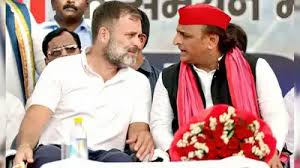
Following the poor performance of the India Alliance in Bihar, questions have arisen. Its impact could be felt in the 2027 UP elections. Discussions are already underway as to whether the India Alliance will break up. Lucknow: Following the landslide victory of the Bharatiya Janata Party (BJP)-led National Democratic Alliance (NDA) in the Bihar Assembly elections, speculation has begun about the future of the “India Alliance,” a group of opposition parties, in view of the 2027 UP Assembly elections. Prime Minister Narendra Modi, calling the Congress “Muslim League” and “Maoist,” has sparked a new debate by saying that “a split in the Congress will soon be seen.” Experts believe that this will spark a debate in UP, and that it will provide a new benchmark for both ruling and opposition party workers seeking future hope. The mental game has already begun. Samajwadi Party (SP) chief Akhilesh Yadav, who was quick to comment on the Bihar election results, called the BJP “not a party, but a fraud” and also acknowledged that there is much to learn from the BJP. Keshav Prasad Maurya took a jab at the opposition. Meanwhile, Uttar Pradesh Deputy Chief Minister Keshav Prasad Maurya, taking a jab at the opposition, said, “After Magadha, now Awadh,” suggesting that the BJP plans to portray the Bihar results as a good omen for Uttar Pradesh. The enthusiasm of NDA leaders in Uttar Pradesh is also at its peak regarding the Bihar election results. The Congress, which has found some new life in UP through its alliance with the SP for the 2024 Lok Sabha elections, is avoiding direct answers to questions about a grand alliance in 2027. Ajay Rai attacks Reacting to Modi’s statement about divisions within the Congress, UP Congress President Ajay Rai, Narendra Modi’s main rival in the Varanasi parliamentary constituency in the Lok Sabha elections, said he should first look at himself. What does he know about the Congress? But beyond claims and counterclaims, the question is being raised: what will be the relationship between the Samajwadi Party (SP) and the Congress, who together won 43 of the state’s 80 Lok Sabha seats in the 2024 Lok Sabha elections, in the 2027 Assembly elections? The fate will depend on the unity of both parties. The entire responsibility of opposition unity in Uttar Pradesh will depend on the unity of these two parties. Apparently, the SP and Congress are currently singing the tune of “all is well.” However, it is also a fact that after the poor results in the 2017 Assembly elections, the relationship between the Congress and the SP broke down, and the two boys (Rahul and Akhilesh) parted ways. Challenging the NDA will not be easy. Since the 2024 Lok Sabha election results, the unity of the Samajwadi Party (SP) and the Congress in Uttar Pradesh has created a new ground for possibilities for the 2027 Assembly elections. Since then, political pundits have begun to see the future of the opposition in the state in 2027. However, they now claim that the recent Bihar election results have sidelined the opposition parties’ Special Intensive Review (SIR) campaign and the issue of “vote theft,” making it difficult to challenge the NDA in Uttar Pradesh. They argue that the Bihar results have dealt a blow to the enthusiasm generated after the Lok Sabha elections. There is no such thing as a shock – Rajendra Chaudhary However, SP’s chief national spokesperson and former Uttar Pradesh government minister Rajendra Chaudhary said that there is no such thing as a shock; they will review the results to see what the reasons are. Chaudhary claimed that the All India Alliance will not be affected and the alliance will remain strong. The SP spokesperson said that they will learn lessons from the Bihar elections and the people of Uttar Pradesh are ready to deal with the rigging of the SIR by the BJP there. Bihar results have alerted us – SP spokesperson It should be noted that the SIR has been launched in Uttar Pradesh, and almost all political parties have alerted their workers to maintain transparency. SP spokesperson Chaudhary also stated that the Bihar results will make their workers more vigilant, more cautious, and work with greater vigor. He claimed that they are going to form a government in Uttar Pradesh in 2027 under the leadership of Akhilesh Yadav. They will perform even better in 2027, as the SP and the All India Alliance have become wary of the BJP’s potential conspiracies. Bhupendra Chaudhary claims victory in 2027 Meanwhile, Bharatiya Janata Party state president Bhupendra Singh Chaudhary attributed the NDA’s landslide victory in the Bihar assembly elections to the excellent development policies of Prime Minister Narendra Modi, including the Antyodaya and Garib Kalyan schemes, and claimed that the National Democratic Alliance will set a new record for victory in Uttar Pradesh in 2027. Edited by: Vivek Mishra About the Author Vivek Kumar Mishra is a Senior Digital Content Producer at Navbharat Times. He focuses on news in Uttar Pradesh and Uttarakhand. He also writes opinion pieces and political analysis. He was born in Barabanki and has worked in several cities across three states. He began his career in print media in 2013. Courtesy: Hindi News
Dalits and Muslims in Bihar
In the 2025 Bihar Assembly elections, the mandate has defied all established traditions and electoral conventions, creating new equations that have created a new chemistry within Bihar’s social structure. This indicates that when the public decides on its own alliances and coalitions, it pushes aside traditional beliefs. This Bihar mandate is shocking in many ways because it has shattered the very assumptions of Bihar’s electoral mathematics, based on which political parties calculate their victory and defeat. For example, in Muslim-dominated areas, this time’s mandate has shattered the Muslim-Yadav alliance, while also completely altering the election results in seats reserved for Scheduled Castes and Scheduled Tribes. Although in Bihar’s past history, the ruling NDA won 206 seats in the 2010 elections, far exceeding the current 202 seats, the social equations were not resolved the way they have been in this election. This time, the public has sent a clear message that it will not accept any other equations in place of good governance and public welfare. In the 2010 elections, Nitish Kumar’s party, the Janata Dal (United), contested 141 seats and won 115. The BJP contested a total of 102 seats and won 91. This time, the BJP and the JDU contested an equal number of seats, winning 101 each, with the BJP winning 89 and the JDU winning 85. However, these seats represented participation from all sections of society. JDU fielded four candidates from the Muslim community, all of whom won, while NDA ally Chirag Paswan’s LJP fielded one Muslim candidate. The Seemanchal region of Bihar is considered a stronghold of Muslim votes, comprising the four districts of Kishanganj, Katihar, Araria, and Purnia. These four districts have 24 seats. It was believed that the Muslim vote bank in Seemanchal would remain unspoiled, but a split occurred, and five candidates from Asiduddin Owaisi’s Ittehad-e-Muslimeen party won from this region. The same number of candidates from this party were victorious in the 2020 elections. The Muslim vote was divided between the opposition Grand Alliance and Ittehad-e-Muslimeen, resulting in the NDA’s greatest victory, with the largest number of its candidates winning from Seemanchal. In Seemanchal, where there was a buzz about consolidation of Muslim votes, Hindu votes consolidated in favor of the NDA without any caste discrimination, resulting in the highest number of victories for this alliance’s candidates. Of the 24 seats in Seemanchal, the NDA secured 14, with the BJP winning seven, the JDU five, and Chirag Paswan’s LJP two. In the opposition Grand Alliance, the Congress secured four, the RJD only one, and Asiduddin Owaisi’s party won five. While it was believed that the Seemanchal region would be more favorable for Lalu Yadav’s RJD party because of the Muslim majority here and the Muslim-Yadav equation being active, the opposite happened. Due to the division of Muslim votes, all four JD(U) Muslim candidates won. Kishanganj district has the highest Muslim voter turnout at over 67 percent, while Katihar has 45 percent, Araria 43 percent, and Purnia 39 percent. The Congress Party’s performance in Seemanchal is considered very poor, although it won four seats. This is despite the region’s Muslims’ goodwill toward Rahul Gandhi. Thus, the NDA’s improved performance in Seemanchal this time compared to 2020, demonstrating that the Grand Alliance’s perceived Muslim bias has not affected it. Similarly, the state’s reserved seats for Dalits have been in a similar state. Of the 40 reserved seats in Bihar, only two are reserved for Scheduled Tribes or Adivasis, while the remaining 38 are for Scheduled Castes. By capturing 34 of these 40 seats, the NDA demonstrated that the opposition Grand Alliance’s caste census strategy failed to work, and that the proponents of social justice, Lalu Prasad Yadav’s party, have only marginalized the Scheduled Castes. Although Lalu Prasad Yadav’s party, the RJD, received the highest number of votes in these 40 seats, with over 22 percent, it failed to win any seats. The Grand Alliance won only four out of 38 seats and one tribal seat. In the previous elections in 2020, the NDA won 21 reserved seats and one tribal seat, while the Grand Alliance won 17 reserved seats and one tribal seat. Given the Grand Alliance’s poor performance in the reserved seats, it can be said that Rahul Gandhi’s Save the Constitution campaign was very weak in these areas. Thus, the NDA defeated the Grand Alliance on all fronts and created new electoral equations while strengthening its concept of public welfare. Aditya Chopra Courtesy: Hindi News
The man who made Dalit voices rise
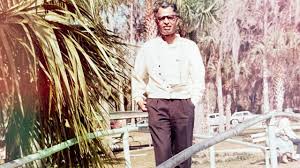
Dr M N Wankhede, on his 100th birth centenary, is remembered for mapping the Dalit vidrohi canon and urging writers to speak out, linking India’s caste struggle with global movements for justice The Ambedkarite thinker, fierce essayist, and mentor of the Dalit rebellious canon is, of course, known in academic circles, but not in the national or regional consciousness. It is to him that the arc of Marathi Dalit writing (and its translations) can be traced. From Baburao Bagul’s Sood (whose foreword he wrote) through Daya Pawar’s Baluta, Laxman Mane’s Upara, Baby Kamble’s Jina Amucha, and Urmila Pawar’s Aaydaan, the genre found its most forceful voice in memoir and autobiography — work that today stands translated in several foreign languages and remains a matter of pride in Maharashtra. Behind this lineage stood Wankhede, who wrote, spoke, and organised around the need for rebellious literature that would name oppression and speak in its own cadence. His years were few, but his impact was decisive: through his essays, speeches, institution-building, travel and study abroad, and his work at Aurangabad’s (now Sambhajinagar) Milind College, he shaped the very definition of rebellion in letters. Dr Wankhede (second row, third from left) and other students travelling to UK with Babasaheb AmbedkarDr Wankhede (second row, third from left) and other students travelling to UK with Babasaheb Ambedkar A new Marathi volume titled Krantdarshi Dr M N Wankhede — which includes the scholar’s select English quotes — edited by senior litterateur Yashwant Manohar, brings together some 60 scholars from across Maharashtra. Manohar excerpts from Wankhede’s speeches, public interviews, and English writings. He, in fact, calls Dr Wankhede “Maharashtra’s Sartre”, whose influence, he notes, has never faded. The collection situates the aesthetics of Dalit literature within a global frame, where Wankhede’s thought carries the existentialism of total revolution, anchored in Dr Ambedkar’s foundational sadvivekvaad — the reasoned humanism that defined his worldview. The volume highlights Wankhede’s profound grasp of Dr Ambedkar’s teachings and his eloquent insistence that Dalits must write fearlessly from their own lived experience. He challenged inherited heroes of history and myth, urging Dalit writers to create their own protagonists — shaped by their time and struggle. For him, the Dalit quest was inseparable from the human one. PM Jawaharlal Nehru and Dr Wankhede (right) in Aurangabad to inaugurate Marathwada UniversityPM Jawaharlal Nehru and Dr Wankhede (right) in Aurangabad to inaugurate Marathwada University Dr Wankhede went to the UK on an Indian government scholarship, and later became a Fulbright scholar in the US, completing his PhD at the University of Florida on “Walt Whitman and Tantrism: A Comparative Study.” There, he witnessed the African American civil rights movement firsthand, profoundly shaping his understanding of social justice and equality. As a scholar of English literature, deeply influenced by Martin Luther King Jr, Langston Hughes, Walt Whitman, and James Baldwin, he urged Dalit youth to pursue education as a tool for transformation. He felt fortunate to have been chosen by Dr Ambedkar to head the English department at Milind College, the institution Ambedkar founded, hoping others would follow this dnyānmārga, enabling them to tell their stories in their own idioms. Returning to Sambhajinagar, he brought insights from the Black Panther movement in the US, transforming Milind College into a crucible of cultural resurgence. Dr Wankhede (seated on the left in the foreground) with former Prime Minister Indira Gandhi Dr Wankhede (seated on the left in the foreground) with former Prime Minister Indira Gandhi As Arjun Dangle, Dalit Panther leader, wrote in the new volume — and reiterated at the Mumbai centenary gathering — “revisiting Dr Wankhede is vital today”, as the values sustaining our welfare state are under threat. In his time, Wankhede urged writers to practise vidroh (rebellion) against the caste establishment. That call resonates till date. Dangle notes that certain figures in history remind us of the need for counter-revolution; Wankhede is one such defining figure. Many writers of the Dalit vidrohi canon remember Dr Wankhede with deep gratitude, acknowledging that much of their own writing owes its inspiration to him. Many hail from Marathwada, especially Milind College, where Wankhede was either their guru or contemporary; a vatvriksha whose canopy sheltered writers, translators, and theatre-cinema-art creators. The volume showcases the Dalit intelligentsia across generations and geographies, including ideologue-thinker Janardan Waghmare (Latur), Hindi translator Aruna Lokhande (Sambhajinagar), educationist Chetana Sonkamble (Kolhapur), and poet-writer Vandana Mahajan from Mumbai. Literary critic and editor of Phule-Ambedkari Vangmaykosh, Dr Mahendra Bhaware, situates Wankhede at the heart of Maharashtra’s cultural renaissance — a force that introduced the revolutionary intensity of African American writing. Tapping into the moral and aesthetic upheaval after the 1956 mass conversion to Buddhism, Wankhede urged Dalits to question all entrenched powers — god and religion included. He institutionalised his ideas through journals such as Asmita, Asmitadarsh, Milind Magazine, and Milind Manuscript Fortnightly, building platforms for new voices. Dalit theatre also took shape under his patronage: he directed Yugyatra, the first Dalit play, performed in Ambedkar’s presence at Sambhajinagar and again before a massive audience at Nagpur’s Dhammadeeksha in 1956. Wankhede’s engagement with Marathi and Indian literary discourse was balanced: never an extremist, he was always open to new ideas. In the preface to Sood, he initially described Dalit literature as Dalit expression fuelled by anger against perpetrators, but later adopted a more nuanced diverse construct. How many public intellectuals are willing to revisit and correct their own definitions? Dr Mangesh Bansod, professor at the University of Mumbai’s Academy of Theatre Arts and an active member of the centenary celebrations, notes that Wankhede was a towering figure who refused to let narrowness or hatred shape the canon he built. He remained in dialogue with scholars of all persuasions, and his engagement with non-Dalit thinkers reflected the intellectual openness highlighted in the Krantdarshi volume through reflections by samavichari such as R G Jadhav, M P Rege, and V L Kulkarni. Renowned reformist writer-critic M B Chitnis — who shared Wankhede’s belief that Dalit literature must be intellectually rigorous yet