
Chaos in Ratlam over stopping a Dalit bride’s Bindoli: Rituals completed under police protection, 5 people booked under the SC-ST Act

“Miscreants said, ‘The Bindoli will not pass through the village,’ police ensured the ceremony was completed under a security cover; Bhim Army raised its voice.” Ratlam. A serious case of social discrimination has come to light in Lakhmakhedi village, Ratlam district, Madhya Pradesh, where an attempt was made to disrupt the happiness of a Dalit family. Some miscreants from the village stopped the bride’s Bindoli (procession) during a wedding ceremony. However, the police acted promptly, ensuring the ceremony was completed in their presence and taking strict action against the accused. What is the whole matter? The incident is reported to have taken place on Monday night. Suresh Kataria, a vegetable vendor, was performing the wedding rituals for his elder daughter. The wedding is scheduled for November 26th. In this connection, the bride’s procession was being taken out around 9:30 pm on Monday night. According to the bride’s father, Suresh Kataria, when the procession reached the homes of members of the Rajput community in the village, some people present there blocked the way. They allegedly threatened and said, “Your procession will not pass through this village.” Allegations of indecent behavior and casteist slurs The victims allege that as the procession approached Bapu Singh’s house, Bapu Singh and Badri Singh came out and began questioning the procession. Kushal Singh, Kuldeep Singh, and Govind Singh Bhanej also arrived. It is alleged that these people began abusing the Dalit family using casteist slurs and blocked the road. The procession was carried out under police protection Upon receiving information about the dispute, Barawad Police Station in-charge Swaraj Dabi immediately arrived at the scene with the police force. They controlled the situation and ensured that the procession was conducted peacefully under police protection. A case has been registered against these five people. Acting swiftly on the complaint, the police have registered a case against five named accused. The accused have been identified as residents of Lakhmakhedi: Bapu Singh (father Parvat Singh Sondhia) Badri Singh (father Bheru Singh) Kushal Singh (father Chander Singh) Kuldeep Singh (father Lal Singh) Govind Singh Bhanej Police have registered a case against all of them under Section 176 of the Indian Penal Code (IPC) and various sections of the SC-ST Act. Bhim Army demands strict action The Bhim Army and the Azad Samaj Party have strongly protested the incident. Former Azad Samaj Party state president Sunil Astey and district president Gopal Vaghela have demanded the administration take the strictest possible action against the accused. Sunil Astey released a video message appealing to the state Chief Minister, Dr. Mohan Yadav, to intervene. He said, “Stopping a Dalit girl’s Binauli horse-drawn carriage at a Dalit wedding in Lakhmakhedi village, Barawad police station, Ratlam, isn’t just rudeness—it’s Manuwadi hooliganism! Those who believe a Dalit girl’s Binauli will be stopped—their thinking will be crushed. Those who disrespect daughters don’t belong in society, but directly in jail. @SP_RATLAM_MP should immediately identify the accused and the police should take immediate action, or there will be a street protest. The Bhim Army team has reached the village. They are standing with the family and the bride for security.” Rajan Chaudhary Courtesy: Hindi News
Telangana: Tension mounts over death of Dalit youth in police custody, RS Praveen Kumar alleges ‘custodial murder’
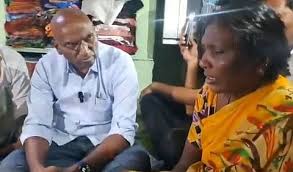
Former IPS officer claims police tortured him to death after 5 days; makes serious allegations against Minister Uttam Kumar Reddy, demands ₹1 crore compensation for family Suryapet/Kodad: The death of a Dalit youth in Telangana’s Suryapet district is heating up. Bharat Rashtra Samithi (BRS) state general secretary and former IPS officer RS Praveen Kumar has leveled serious allegations against the police, calling it a ‘custodial murder’. He alleges that 32-year-old Dalit youth, Karla Rajesh, was brutally tortured at the Chilkur police station, leading to his death. Demands filing of murder case against DSP and police personnel After reaching Kodad on Tuesday and meeting and consoling the victim’s family, Praveen Kumar made strong demands to the government and administration. He demanded that a murder case be immediately registered against DSP Sridhar Reddy and other police officers involved in the case. He also stipulated that a second autopsy be conducted only after the FIR is filed. ‘1 Crore Compensation and a Government Job’ The BRS leader demanded substantial compensation from the state government to secure the future of the deceased’s family. He stated that the government should immediately provide an ex-gratia amount of ₹1 crore to the victim’s family. In addition, compensation should include a double-bedroom house, five acres of cultivable land, and a government job for a family member. Accused Minister and MLA of Protecting the DSP Speaking to the media, Praveen Kumar launched a scathing attack on Civil Supplies Minister Uttam Kumar Reddy and local MLA Padmavati. He alleged that these leaders were protecting DSP Sridhar Reddy, under whose leadership the youth was allegedly tortured. The former IPS officer claimed that the DSP’s transfer and posting were done at the local minister’s behest, “to ensure the plundering continued.” What is the whole matter? RS Praveen Kumar alleged that Rajesh was held in police custody for five days and brutally tortured. He says this was done to cover up the corruption and fraud of ruling party leaders. According to the BRS leader, Rajesh was falsely implicated in a 2022 CMRF check fraud case involving Congress workers. The police pressured Rajesh to name former BRS MLA Mallaiah Yadav and tortured him. In violation of Supreme Court guidelines and Article 21 of the Constitution, Rajesh was denied medical assistance despite his deteriorating health. Taking aim at CM Revanth Reddy Praveen Kumar criticized Chief Minister Revanth Reddy, saying he had completely failed as Home Minister and was protecting criminals. He warned that the BRS, along with other caste organizations and civil society groups, would continue its struggle until Rajesh’s family received justice. Rajan Chaudhary Courtesy: Hindi News
Victory and defeat depend on your thinking…Congress leaders paid tribute to Guru Tegh Bahadur Ji in this way.
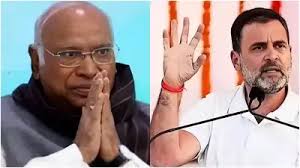
On the occasion of the 350th martyrdom day of Shri Guru Tegh Bahadur Sahib Ji, several prominent leaders, including Congress President Mallikarjun Kharge and Rahul Gandhi, paid tribute. New Delhi: Top Congress leaders remembered Shri Guru Tegh Bahadur Sahib Ji on his 350th martyrdom day. The leaders shared their messages, remembering the sacrifice of the ninth Sikh Guru, known as the “Chadar of India,” and his supreme sacrifice in protecting human values. Victory and defeat depend on your thinking: Kharge Congress National President Mallikarjun Kharge wrote in a post on the social media platform X, “Victory and defeat depend on your thinking. If you accept it, you lose; if you resolve it, you win. My heartfelt tributes to the ninth Guru of Sikhism, ‘Hind ki Chadar’, Dhan-Dhan Shri Guru Teg Bahadur Sahib Ji, on his 350th martyrdom day, who sacrificed everything to protect human values, equality, and principles.” Rahul Gandhi also posted Leader of the Opposition in the Lok Sabha and Congress MP Rahul Gandhi wrote, “My heartfelt tributes to the ninth Guru of Sikhism, ‘Hind ki Chadar’, Shri Guru Teg Bahadur Ji, on his martyrdom day. His ideals, values, sacrifice, and dedication will always be a source of inspiration for humanity.” His lessons will always guide us: Priyanka Gandhi Congress MP Priyanka Gandhi wrote, “Respectful tributes to the ninth Guru of Sikhism, Shri Teg Bahadur Ji, on his martyrdom day. Guru Teg Bahadur Ji showed the world the path by spreading the light of righteousness, humanity, service, sacrifice, love, and unity. His lessons will always guide us all.” Guru Sahib’s teachings show the way: Congress The Congress wrote on its official Twitter handle, “We pay our humble tribute to Guru Teg Bahadur Ji on his martyrdom day. His supreme sacrifice for freedom and humanity and his everlasting teachings show a path for millions of our Sikh brothers and sisters and many more.” Kamal Nath also paid tribute Let us follow in his footsteps to stand against injustice and uphold the values of unity and humanity. Former Madhya Pradesh Chief Minister Kamal Nath wrote in an Instagram post, “Humble tributes to the ninth Guru of Sikhism, Guru Teg Bahadur Ji, on his martyrdom day. His sacrifice will always inspire us to sacrifice everything to protect the truth.” My heartfelt regards.” Edited by: NBT Desk Courtesy: Hindi News
Dalit voices rally behind Kharge for Karnataka CM, write to Sonia
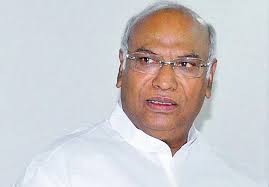
Shivakumar, a prominent Vokkaliga leader credited with bringing Congress to power, is viewed as the frontrunner to succeed Chief Minister Siddaramaiah. BENGALURU: IN a political drama unfolding within the Karnataka Congress, the DK Shivakumar camp is lobbying hard in New Delhi for their leader to occupy the CM’s chair, while he is receiving endorsements from Naga Sadhus. Yet, in the middle of all this, another interesting development has surprised many. A group of Congress leaders is rallying behind AICC president Mallikarjun Kharge, considered by many as a beacon of Dalit empowerment, to occupy the top chair. The high command now has to manage a delicate balancing act — one that could either consolidate the party’s diverse base or fracture it further, handing BJP and JDS an opportunity in the 2028 Assembly elections in the state. In an open letter to former Congress president Sonia Gandhi, influential voices, including KPCC office-bearers, former legislators, journalists, intelligentsia, social activists, and citizens, have made an appeal for Kharge’s appointment as CM. Dated November 22 and circulated widely in Delhi and Bengaluru, the letter states that this leadership vacuum is a historic moment to rectify decades of under-representation of Dalits. The letter laments the absence of a Dalit CM since Karnataka’s formation in 1956, despite “the community’s unwavering loyalty to Congress”. “Kharge stands out as a capable leader for this role. His long experience, integrity, and deep connection with the people of Karnataka make him uniquely suited to guide the state at this moment,” the signatories assert. Shivakumar, a prominent Vokkaliga leader credited with bringing Congress to power, is viewed as the frontrunner to succeed Chief Minister Siddaramaiah. On Saturday, a group of Naga Sadhus visited Shivakumar at his residence, blessing him and urging him to ascend the CM seat. At the heart of this frenzy lies a pivotal question: Has Shivakumar’s surge positioned Kharge as the ultimate winner? As the first Dalit president of Congress in its 139-year history, Kharge has remained above the fray, issuing measured statements on the cabinet reshuffle or change in CM’s post. His recent remark urging party unity amid turmoil was interpreted by some as a subtle rebuke to Shivakumar’s overtures, but it also amplified calls for him to return to state politics as CM. Meanwhile, Shivakumar’s supporters, including a handful of MLAs like HC Balakrishna (Magadi), Nayana Motamma (Mudigere) and other MLAs, flew to Delhi. Sources close to the Shivakumar camp described the meetings as “consultations”. Meanwhile, BJP MP Lahar Singh Siroya lambasted Kharge’s recent comments on the reshuffle, alleging that Congress is suffering from dynastic rot. “Kharge ji is the party president, but who is this high command? This shows there is dynastic politics. He must be considering Rahul Gandhi as the high command,” Siroya remarked. “I hope they find a solution soon, as it is not good for both Congress and the state. Given the current conduct of Congress, it is clear that it will be in a much worse state in the coming elections. I don’t know what is happening in that party, but it is certainly affecting Karnataka,” he said. Former Congress MLC Mohan Kondajji said, “I am not a signatory to the letter, but I am aware of it. My only concern is that Congress should come out as the winner. With Kharge’s tremendous experience, he will be able to take everyone along.” Bansy Kalappa Courtesy : TNIE Note: This news is originally published on https:/thenewindianexpress.com/bha and is used purely for non-profit/non-commercial purposes, especially human rights
RSS must realise that permissions come from constitutional provisions, not from shouting Jai Shri Ram, says Dalit Sangharsha Samiti
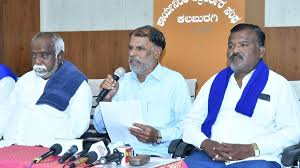
For the first time in its 100-year history, the RSS had to follow the Constitution and the law when its route march was allowed in Chittapur on November 16, 2025, as per court directions Criticising the Rashtriya Swayamsevak Sangh (RSS), the Dalit Sangharsha Samiti alleged that the organisation is consistently working against the spirit of the Indian Constitution and democratic values, but was forced to follow the Constitution during its patha sanchalana (route march) held at Chittapur town in Kalaburagi district of Karnataka on November 16. Addressing a press conference in Kalaburagi on November 24, Samiti State Convener Arjun Bhadre said that, for the first time in its 100-year history, the RSS had to follow the Constitution and the law when its route march was allowed in Chittapur on November 16, 2025, as per court directions. He stated that the organisation must realise that permissions come from constitutional provisions, not from raising slogans such as ‘Jai Shri Ram’. He took exception to RSS chief Mohan Bhagwat’s recent clarification on the organisation’s registration status, accusing him of making disparaging and irresponsible comments that undermined the Constitution. Bhadre said that India’s constitutional framework is built on tolerance, pluralism and equality, but these values are being weakened by communal forces aligned with the RSS, he alleged. Mr. Bhadre said the RSS continues to support caste divisions and spread harmful ideas that threaten social harmony and democracy. “Recently a group of Maoist members in Maharashtra gave up their weapons. They accepted the Constitution and the national flag during a government rehabilitation programme. If armed rebels can follow the Constitution, why can’t the RSS?” The Hindu Bureau Courtesy : The Hindu Note: This news is originally published on https:/thehindu.com/bha and is used purely for non-profit/non-commercial purposes, especially human rights
Comparing Dalits to animals, using terms like “handicapped” and “crutches”: A new Supreme Court report reveals shocking changes in judicial perspectives on caste over 75 years!
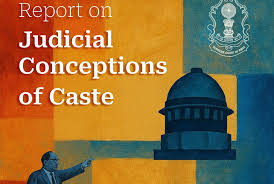
Learn about the highlights of the Supreme Court’s recent report on caste by the Center for Research and Planning. New Delhi: The Center for Research and Planning (CRP), the research arm of the Supreme Court, has released a landmark and comprehensive report on the caste system, the judiciary’s language and thinking toward Dalits and backward classes. The report presents an in-depth analysis of significant Supreme Court judgments delivered by Constitutional Benches consisting of five or more judges. Titled “Judicial Conceptions of Caste,” the report was released three days ago and its primary objective is to sensitize judges, legal researchers, policymakers, and the general public on the issue of caste and to promote the use of inclusive and dignified language. Published in November 2025, this report focuses on decisions of the Constitution Bench of the Supreme Court, covering matters related to affirmative action, personal law, and atrocities. The report is authored by Dr. Anurag Bhaskar (CRP Director), Dr. Farah Ahmed (Professor at Melbourne Law School), Bheemraj Muthu (Doctoral Researcher at Oxford University), and Shubham Kumar (CRP Consultant). The report aims to sensitize the judiciary, legal scholars, policymakers, and civil society about judicial language related to caste, in order to promote inclusive discourse consistent with constitutional values. The report reveals that earlier decisions used terms like “handicap” and “crutch” to describe the Dalit community and even compared them to animals. The 1964 T. Devadasan case used the metaphors of “race horse” and “ordinary horse” to explain reservations. The 1992 Indira Sawhney case described reservations as “a career-long crutch.” These terms are not considered in keeping with constitutional dignity. However, the report also points out that the judiciary’s language has improved over time. Newer judgments acknowledge historical discrimination while emphasizing the rights and dignity of Dalits. The report is divided into three major sections. The first section, “Judicial Discourse on the Caste System,” focuses on judicial discourse on the caste system. It covers subtopics such as the varna system, the relationship between caste and occupation, concepts of the sacred and the profane, the supposedly “auspicious” origins of the caste system, the view of caste as an association, and the presence of caste in various religions. The report finds a clear confusion in the court’s understanding of caste. Some judgments have accepted caste as a rigid, hereditary hierarchy based on notions of purity and pollution. On the other hand, some judgments have portrayed it as primarily a benign occupational system or an autonomous group. These divergent perspectives highlight an unresolved tension between sociological realities and the concept of caste as described in religious texts. The report also cites Justice O. Chinnappa Reddy’s statement that Dalits and backward classes “need assistance, facilities, launches… their needs are their demands. Demands are for rights, not charity.” Convergent Views on Caste in Non-Hindu Religions According to the report, there is a fundamental tension in the judiciary’s understanding of caste: some consider it a religious construct limited to Hinduism, while others recognize it as a social institution that transcends religious boundaries. Justice Kuldip Singh’s minority judgment in the Indira Sawhney case traced caste’s origins to Hinduism, calling it “sui generis” for Hindu orthodoxy, and cited the Rig Veda and Manusmriti as its foundational texts. In contrast, Justice Chinnappa Reddy, Justice Ratnavel Pandian, and Chief Justice K.G. Balakrishnan took a different approach. They recognized that while caste may have originated in Hindu religious ideology, it has long since transcended its religious origins to become a widespread form of socio-economic organization in non-Hindu religions as well. They documented how caste-like hierarchical systems exist among Muslims, Christians, and Sikhs, manifesting through occupational and regional groups. Changes in judicial language toward the Dalit community The second major section of the report, “Judicial Discourse on Oppressed Class People,” focuses on judicial language regarding Dalits and oppressed caste people. This section highlights how judicial language has oscillated between metaphors and descriptions affirming the dignity of Dalit communities and stigmatizing them. Previous judgments have used terms like “handicap” or “crutch” to describe Dalits, and even compared them to animals. For example, in the T. Devadasan case (1964), Justice K. Subba Rao used the metaphors of “racehorse” and “ordinary horse” to explain reservation. In the Indira Sawhney case (1992), Justice B.P. Jeevan Reddy called reservation “a career-long crutch.” According to the report, such language is inconsistent with constitutional dignity and reflects a perspective of individual deficiency rather than structural inequality. However, the report also acknowledges that over time, the Court has distanced itself from such language and has adopted statements recognizing historical discrimination, the socially constructed nature of merit, and the constitutional demand to eliminate caste prejudice. The report also cites Justice O. Chinnappa Reddy’s statement that Dalits and backward classes “need assistance, they need facilities, they need launching… their needs are their demands. Demands are those of right, not charity.” Early judgments such as State of Madras v. Champakam Dorairajan (1951) and T. Devadasan (1964) criticized reservation as discrimination against “meritorious” candidates and a threat to efficiency. However, in later judgments, such as N.M. Thomas (1976) and Indira Sawhney (1992), the Court viewed reservation as a means of constitutional repair and a means of increasing power sharing. Questions on Merit and Efficiency According to the report, judicial decisions questioned the “merit” and “competence” of Dalits and described reservation as a threat to administrative efficiency. In the M.R. Balaji case (1963), the court stated that reservation “is bound to lead to some lowering of standards.” In the N.M. Thomas case (1976), Justice H.R. Khanna warned that reservation would be “clearly detrimental to the ideals of supremacy of merit and efficiency of services.” In the same case, Chief Justice A.N. Ray stated that “efficiency of administration is so paramount that any reservation at the expense of efficiency would be unwise and impermissible.” The report rejects these arguments, stating that such language portrays historically disadvantaged communities as weak rather than competent. However, the court changed this view in subsequent decisions. In the Indira Sawhney case, Justice B.P. Jeevan
Delhi: 153 Dalit families are still searching for the land allotted to them in 1983. Will the wait ever end?
The government’s new proposal to families dreaming of a 120-yard plot near Vasant Kunj: Buy a flat in Narela or pay Rs 17 lakh; find out what the court said. New Delhi: The dreams of 153 landless Dalit families in Rangpuri village, adjacent to Vasant Kunj, a posh area in the national capital, have been entangled in files and court dates for the past four decades. In 1983, these families were allotted 120-square-yard plots each under a central government scheme. But even 42 years later, the reality is that wild Kikar trees have grown on the vacant land, and transporters park their buses and trucks there. A portion of the land acquired by the Delhi government in 2012 for staff quarters remains unbuilt. Meanwhile, the families fighting for their rights remain hopeful for justice. A three-decade-long battle in court This case has been pending in court for over 30 years. Nearly a decade and a half ago, the Delhi High Court made it clear that beneficiaries should receive their dues. Following the Supreme Court’s directive, in 2016, the High Court initiated contempt proceedings against the officials, taking suo motu cognizance. Despite this, the government has now argued in court that the allotted land is unavailable. In lieu of the plots, the government has proposed to provide these 153 families with a small flat (EWS category) in Narela, about 35 kilometers from Rangpuri. If they do not want the flats, they have been given the option of accepting ₹1.7 million as compensation. The High Court is strict on the government’s procrastination. Hearing the case on November 10, a bench of Justices Nitin Vasudev Sambre and Anish Dayal expressed displeasure with the government’s attitude. The court said that the government should not try to “obstruct or nullify” the judicial orders of the Supreme Court and the High Court by resorting to “administrative decisions.” However, the court also advised the petitioners not to adopt an adamant attitude and be prepared to consider the government’s “reasonable proposal.” Meeting with the LG also inconclusive On November 17, senior advocate Sanjay Jain, the Delhi government’s lawyer, informed the court that given the contempt proceedings that had been ongoing for almost a decade, a meeting with the Lieutenant Governor (LG) had been scheduled for November 21, 2025, to resolve the issue. However, sources present at that meeting on Friday say that no concrete results were achieved. How did this entire matter begin? The legal battle began in 1993, when a beneficiary, Nand Kishore (now 67 years old), approached the High Court through his lawyer, Rakesh Saini. He had sought possession of a plot allotted to him in 1983 under the Prime Minister’s Twenty Point Programme (TPP). This scheme was launched by the Indira Gandhi government in 1975 with the aim of providing land to underprivileged and landless families. In 2011, a single bench of the High Court ruled in Nand Kishore’s favor, stating that it was the government’s “legal obligation” and “social responsibility” to provide land for housing to landless residents of Rangpuri village. However, because the allotment did not require prior approval under the Delhi Panchayat Raj Rules, the court directed officials to find alternative land to fulfill the TPP’s purpose. Land Swap and a Game of Promises After the government’s appeal was dismissed in July 2012, the Supreme Court also rejected the government’s petition in January 2013 and threatened contempt proceedings if the High Court order was not implemented. A series of promises and U-turns followed: 2016: The administration told the High Court that it had no land in Rangpuri, but offered 25 bighas and 5 biswas of land in the nearby village of Rajokri. March 2017: The administration changed its stance and said that land had been identified in Kheda Dabar village in Najafgarh. 2018: The administration again backtracked, stating that land from any other village could not be allotted to Rangpuri residents. What is the current situation? In October 2024, the administration informed the High Court that the government had no land available. Under the policy decision, claimants could be given 153 EWS flats measuring approximately 35.50 square meters in Sector G-7, Pocket 4, Narela, or an ex-gratia amount of ₹17 lakh. In March of this year, petitioner Nand Kishore appealed to the court to either cancel the acquisition of land in Malikpur Kohi and Rangpuri, or grant him the 120-yard plot in Rajokri previously mentioned by the administration. The next hearing in this case is scheduled for December 1st, and all eyes are on it. Rajan Chaudhary Courtesy: Hindi News
Were Hindu and Dalit homes demolished in Malavani to “polarize votes”? Mumbai Congress levels serious allegations against BJP

Conspiracy to polarize ahead of BMC elections? Sachin Sawant claims families living there for 25 years were rendered homeless by branding them Rohingyas Mumbai: The Mumbai Congress on Monday leveled serious allegations against the Bharatiya Janata Party (BJP), alleging that the ruling party destroyed the homes of poor families in the Malavani area of Malad for political gain. The Congress claims that in an action taken earlier this month, the homes of several Hindu and Dalit families were demolished on the false accusation that they were Rohingyas or Bangladeshis living illegally in India. Describing the BJP’s claims as fabricated Addressing a press conference on Monday evening, Mumbai Congress chief spokesperson Sachin Sawant said, “The BJP’s allegation that the residents of Malvani are Rohingyas or Bangladeshis is completely fabricated.” To prove his point, Sawant also brought with him victims of Hindu and Dalit families whose homes were razed during the campaign. Sawant alleged that the BJP is attempting to polarize voters in view of the upcoming BMC elections. He said that labeling poor families in Malvani as foreigners is a deliberate conspiracy to target a particular community for political gain in the elections. Actions were carried out on November 3, 4, and 11. It is noteworthy that the Suburban Collectorate carried out demolitions of slums in Malvani on November 3, 4, and 11. The administration claimed that the residents were illegal Rohingya and Bangladeshi immigrants. According to the Congress, this action was taken following instructions from BJP minister Mangal Prabhat Lodha, who is also the co-in-charge guardian minister of Mumbai along with Ashish Shelar. Sawant commented, “Lodha is not the head of the Revenue Department, nor is he the full-time guardian minister, yet he directly ordered officials to demolish the houses.” Allegations of Violation of Supreme Court Rules The Congress leader claimed that this demolition action blatantly violated Supreme Court guidelines. He said, “People were not even given a chance to present their documents. This entire drive should be thoroughly investigated.” The Congress demanded that the officials responsible be immediately suspended and the Governor should dismiss Minister Lodha from the state cabinet. People Living There for 25 Years Sachin Sawant also rejected the BJP’s claim that only “illegal Muslim residents” were evicted during the drive. He pointed out that the homes of Hindus and Dalits living there for the past 25 years were also demolished. Sawant strongly stated, “Denying an opportunity to prove their legitimacy shows that the BJP’s agenda is solely a conspiracy designed to polarize.” The Congress chief spokesperson also alleged that the BJP is specifically targeting Malwani and its MLA, Aslam Shaikh, because he represents a minority community. “As always, they are playing their dirty game of inciting Hindu-Muslim hatred,” he said. Rajan Chaudhary Courtesy: Hindi News
Chhattisgarh: Dalit youth assaulted, beaten in the middle of the road in Dipka, case filed
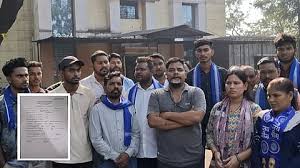
Dalit youth attacked in an Instagram dispute: assaulted with casteist slurs, FIR filed against Kunal Singh Rajput. Chhattisgarh: A serious case of assault against a Dalit youth has come to light in the Dipka police station area of Korba district. The victim alleges that a boy named Kunal Singh Rajput came to kill him. The Dalit youth suffered a serious head injury in the incident. However, in the presence of the Chhattisgarh Bhim Army Ekta Mission, the Dipka police have registered a case against the accused. According to the police, the accused is being interrogated and further action will be taken after the investigation is complete. The incident occurred on November 15th at Azad Chowk in Dipka, when Nitesh Kurre, a resident of Dipka, was going to the market with his wife at 5 pm. Kunal Singh Rajput attacked Nitesh Kurre, causing a head injury and serious injuries. The Dalit youth alleges that the accused, Kunal Singh Rajput, stopped him on the road, began assaulting him, and hurled casteist slurs at him over a social media Instagram chat and an old dispute. Police investigating the case Based on the victim’s complaint, the Dipka police have registered a case under relevant sections of the IPC, including sections 296, 115(2), and 351(2) of the Indian Penal Code, and have begun investigating the matter. Sharvan Kumar Courtesy: Hindi News
Major RPF action at Tatanagar station: 13 tribal minors, including 12 girls, being taken to Tamil Nadu were rescued.

The plan was to make them work as laborers in a Tamil Nadu thread factory; the RPF apprehended them before they could board the Tatanagar-Ernakulam Express. Jamshedpur: The Railway Protection Force (RPF) has achieved a major success in its campaign against human trafficking in Jharkhand. The RPF, acting swiftly at Jamshedpur’s Tatanagar railway station, rescued 13 tribal minors from the clutches of human traffickers. Officials announced on Monday that the rescued children, including 12 girls and one boy, were being taken to Tamil Nadu under the pretext of providing them jobs. They were planning to go to Coimbatore. Tatanagar RPF in-charge Rakesh Mohan stated that the action was based on a strong intelligence report. Senior Divisional Security Commissioner P. Shankar Kutti of the Chakradharpur Division of the South Eastern Railway had provided a tip in this regard. Upon receiving information, the Flying Squad of the Anti-Human Trafficking Unit (AHTU) increased surveillance at the station. An RPF officer said, “These children were rescued from Tatanagar station on Sunday while they were waiting to board the Tatanagar-Ernakulam Express. During interrogation, the minors revealed that they were being taken to work at a yarn manufacturing unit in Salem, Tamil Nadu.” Two brothers arrested Taking action in this case, police arrested two alleged human traffickers. The accused have been identified as Sunil Tatonba and Jampira Tatonba. These two accused are real brothers and residents of Amdiha Panchayat, which falls under the Hatgamharia police station area of West Singhbhum district. On Monday, the RPF handed over all the rescued children and the two arrested accused to the Tatanagar Government Railway Police (GRP) for further legal action. All the children are residents of West Singhbhum. Tatanagar GRP in-charge Jitram Oraon confirmed the case and said that all the rescued minors are between 15 and 17 years old. They are residents of different villages in the Hatgamharia block of West Singhbhum district, Jharkhand. Giving details about the further process, the GRP in-charge said, “All 13 minors have been handed over to the Child Welfare Committee (CWC) in Jamshedpur for care and protection. Before being released to their families in Hatgamharia, these children will be produced in the Jamshedpur Civil Court to record their statements.” Accused Sent to Jail Sunil and Jampira Tatonba, two brothers arrested on charges of trafficking minors, were produced in court, from where they were sent to Ghaghidih Central Jail in judicial custody. This prompt action by the administration saved the children from a bleak future. Rajan Chaudhary Courtesy: Hindi News