
Rajasthan Board’s arbitrary fee hike: Parents of tribal children worried, the board will fill its pockets but poor families will be burdened!
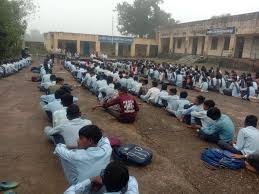
Over 38,000 students in Banswara district alone will be affected by this decision. Over 80% of the district’s population comes from the tribal community, most of whom live below the poverty line. Banswara – A decision by the Rajasthan Board of Secondary Education, Ajmer, has raised concerns among thousands of families in the tribal-dominated district of Banswara. The board has abruptly increased the examination fees for grades 10 and 12, jeopardizing the education of children from poor tribal families. The board has increased the theoretical exam fee from ₹600 to ₹850, and the practical exam fee from ₹100 to ₹200 per subject. This increase will apply to both regular and private students. Virendra Chaudhary, a senior leader of the Rajasthan Teachers’ Union (Siyaram), stated that the Ajmer Board of Secondary Education has declared the fee hike of Rs. 250 for theoretical exams and 100% for practical exams, from Rs. 100 per subject to Rs. 200, as unfair. Over 38,000 students in Banswara district alone will be affected by this decision. Over 80% of the district’s population belongs to the tribal community, with most families living below the poverty line. Most earn a living by working as laborers in Gujarat or neighboring states, making it difficult to even make ends meet. They can barely afford to pay their children’s fees. Local parents are outraged by this decision. Dhirajmal, a parent and former sarpanch of Bhanwar Vod Gram Panchayat, said, “This fee hike is an additional burden for poor tribal families. We are already struggling in this era of inflation. This will adversely impact our children’s education, especially girls’ education.” The looting of children and the hefty bonuses to board employees are unfair. Teacher leader Virendra Chaudhary stated that the Board employees are being given annual bonuses of thousands of rupees by robbing poor tribal students. The Board fails to make timely payments for all tasks, from application forms to fee invoices and other Board work, including evaluation and inspection. It also makes unnecessary 20% deductions for temple expenses, magazines, and other items. He demanded the state government conduct a high-level investigation into the arbitrary ₹35,000 bonus given to Ajmer Board employees and the additional honorarium paid in addition to their salaries. The Rajasthan Teachers’ Association, Siyaram, demanded the inclusion of a chairman and members from the tribal region in the Board’s executive committee and expressed the need for a separate board for the Banswara tribal region. Chaudhary stated that for years, a new executive committee has been formed and, under the influence of the administrator, anti-tribal and anti-student decisions have been taken unilaterally. He stated that, as decided in a meeting chaired by the Education Secretary, starting in the 2026-27 academic year, both regular and private students will now have to pay an examination fee of ₹850, which is a step and a deep conspiracy to financially deprive tribal students across the state from education. Furthermore, the fee for practical exams has been fixed at ₹200. However, this increase is the first since 2017. Currently, ₹600 is charged for regular students, ₹650 for private students, and ₹100 for practical exams. According to board officials, the fee increase has become necessary due to rising expenses on question paper printing, evaluation, and examination center arrangements. Currently, the board earns approximately ₹130 crore from examination fees. While this fee increase will increase this revenue, it will directly impact the pockets of approximately 2 million students across the state. Local students and parents have expressed disagreement with this decision. Student Narayan Lal Charpota said that the cost of coaching and books is already skyrocketing, and now the increase in examination fees will make education even more difficult for ordinary families. Siyaram Sharma, State Administrative President of the Rajasthan Teachers’ Union (Siyaram), said that the board’s decision cannot be considered administratively appropriate. The government should also announce a reimbursement relief scheme for the tribal BPL category so that economically weaker students are not deprived of the examination. 10th and 12th exams to be held from February 12 The Education Department has amended the Shivira Panchang to start the new session early. The exam schedule has been released. A letter in this regard was issued by Education Director Sitaram Jat. According to this, the 10th and 12th grade exams of the Board of Secondary Education will be held between February 12 and March 12. Annual exams for classes 9 and 11 will be held between March 10 and 25, and for classes 5 and 8 before March 12 instead of April 2026. Similarly, annual examinations for classes three and four, as well as six and seven, have been scheduled for March instead of April. The second competency-based assessment has also been scheduled for November instead of December, and the third assessment for March instead of April. The Education Department has begun preparations in the district in accordance with the revised schedule. Preparations are also underway in schools. Geetha Sunil Pillai Courtesy: Hindi News
Lucknow: Dalit research scholar Basant Kannaujiya’s protest continues at BBAU, with the university administration now issuing warnings to supporting students as well!
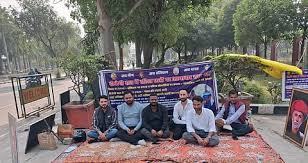
Following Kannaujiya’s expulsion, notices have been sent to students participating in the protest since November 20th. Lucknow – A peaceful protest against the expulsion of Dalit research scholar Basant Kannaujiya has been ongoing at Babasaheb Bhimrao Ambedkar University (BBAU) for over a week. Rejecting the university administration’s allegations of “indiscipline,” Kannaujiya continues to protest on campus to protect his constitutional rights to education and justice. However, the matter has now escalated, with the administration issuing warning notices to students who supported him. Prominent Bahujan activists, including Nagina MP Chandrashekhar Azad, have come out openly in the matter and are demanding the university’s immediate revocation of his expulsion. This incident adds another dark chapter of caste discrimination and administrative tyranny to BBAU’s history. Kannaujiya, a PhD scholar in the Department of History, had been studying at the university for the past 14 years. He was accused of “inciting students, vandalism, and trespassing into the Vice Chancellor’s office” during the alleged unrest on campus on September 17th. The Inquiry Committee and Disciplinary Committee recommended his expulsion based on CCTV footage, student statements, and his past record (which included 14 indiscipline cases, show-cause notices, and FIRs since 2012). Vice-Chancellor Professor Raj Kumar Mittal issued his expulsion order on October 17th, calling his response to the show-cause notice “baseless.” The order also barred him from entering the campus and future admissions. Immediately after his expulsion, Kannaujiya began a peaceful sit-in, within constitutional limits, which has now entered its seventh day. The protest site is near the main gate of the administrative building, where he is demanding student welfare, raising voice against caste discrimination, and the right to education. However, the administration’s response has become increasingly harsh. Notices have been sent to students participating in the protest since November 20th. The most recent case concerns Shivam Kumar, a student in the Department of Information Technology. The university’s Proctor’s Office issued letter number 1084/Proct./BBAU/2025 on November 21st, 2025, warning Shivam for “continued involvement in undisciplined activities.” The letter stated: “It has been found that you, in connivance with outsiders, have been participating in a protest at the main gate of the Administrative Building within the university campus since November 20th, 2025. You have obstructed the movement of teachers, officers, and staff entering and leaving the Administrative Building, and are also involved in creating unrest on the campus. Such actions are a gross violation of the university’s Student Code of Conduct.” The letter further warned: “You are therefore directed to immediately desist from such undisciplined activities and concentrate on your academic work. You may be punished as per university rules for your undisciplined activities.” This notice is not only for participation in the protest, but has also become a form of mental harassment for those expressing support. According to Kannaujiya, similar notices are now being sent to other students who have stood in support of him. Kanaujiya has exposed the administration’s tyranny in his response on social media. He wrote: “Another shameful example of the administration’s dictatorship! In a university with 50% reservation for Dalit students and 51 Dalit professors, Dalit researchers are facing the most caste-based harassment. I was expelled on false charges of indiscipline, and I have been staging a peaceful protest within the constitutional framework to protect my right to justice and education. But now the administration has issued notices to students who simply stood in my support. All department heads have been ordered not to allow any student/researcher to join Basant Kumar Kannaujiya’s protest. This clearly shows that the administration fears dissenting voices and is trying to suppress students with a casteist mindset. Now, another student who supported me has been issued a notice and is being mentally harassed. Is this democracy? Is this a university run in the name of Babasaheb? The truth is that voices against injustice cannot be suppressed with notices. We are on the path of the Constitution, and the struggle will continue.” Meanwhile, the matter has also taken a political turn. Nagina MP Chandrashekhar Azad has openly spoken out in support of Kannaujiya. He said, “Despite the ongoing peaceful protest against the fabricated and false charges of indiscipline leveled against a Dalit research scholar at BBAU (Central University) and the unjust expulsion based on them, the silence of the university administration and the Sanghi-minded Vice Chancellor is a matter of concern. Such silence is not only unethical but also raises serious questions about the democratic and constitutional dignity of a central university. This struggle is not just that of a student, but a struggle to protect identity, restore dignity, safeguard constitutional values, and save the democratic soul of BBAU (Central University). We clarify: “Atrocities on Dalit Research Scholar – Now the country will not tolerate it.” Swami Prasad Maurya, president of his Janata Party, wrote in a post: “Basant Kumar Kanojia, a Dalit research student at Baba Saheb Bhimrao Ambedkar Central University, Lucknow, was expelled on false charges of indiscipline, without any evidence or hearing his side of the story. While the true facts could have been ascertained by reviewing the CCTV footage installed on the university campus, the university administration, afflicted with a casteist mindset, has committed a despicable act of dictatorship and discrimination, which I strongly condemn. Similar discrimination against Dalits, tribals, and backward classes has been perpetrated in the past, sometimes by beheading Shamvuk and sometimes by cutting off Eklavya’s thumb. It is a matter of concern that people with Manuwadi thinking are still doing this, which is unfortunate.” Geetha Sunil Pillai Courtesy: Hindi News
Constitution Month Special | A unique ‘Ambedkar Temple’ in Munger, Bihar, with a 12-foot-tall statue: A retired captain donated land to build it, where the Constitution is the supreme deity!

This year, on Baba Saheb’s birth anniversary, April 14th, a 12-foot-tall ‘Statue of Equality’, imported from Delhi, was dedicated to society. Munger – 185 kilometers from Bihar’s capital, Patna, on the National Highway in Ghorghat, a small village in Munger district, stands a structure completely different from traditional temples. There’s no Hindu deity, no mosque dome, no golden gate of a gurudwara, but only a 12-foot-tall statue of Dr. B.R. Ambedkar, which glows with the first rays of the sun and reminds people, “Educate, Agitate, Organize.” This is not a ‘temple’, but a living symbol of equality, social justice, and the Constitution. Its creator, 80-year-old retired Army Captain Yogal Kishore Paswan, says, “My religion is the Constitution. Babasaheb is like a god to us Dalits.” Tamal Saha of News The Truth (NTT) was on a 185-kilometer journey towards Patna. On the national highway near Munger, he suddenly saw a gigantic figure from a distance. Saha explains in his video that the statue was so impressive that he had to stop the car. Locals told him that it was a temple to Babasaheb, built by retired army officer Captain Yogal Kishore Paswan. 12-foot Ambedkar pillar erected in memory of his wife 80-year-old retired Army officer Captain Paswan said that he was a captain in the AUC (Armed Units Corps) and had traveled throughout India, from Ladakh to every corner. The Captain said that he had built this ‘Statue of Equality’, which is 12 feet tall. A statue this tall probably exists only in Patna, Bihar. Each one is 8-10 feet tall. Captain Paswan explained that in this building, children will study downstairs, and there will be office space upstairs. The lower portion will be an education center, where children will study without any discrimination. The upper portion will be for visitors and guests. At the top, there will be a statue of Babasaheb. When asked why people are building temples, why did you build this one, Captain Paswan replied: “It’s my hobby. I’m a soldier, not a leader who rises with the thought of earning money. I gave all my land in Babasaheb’s name. I have to die, so what will you take away?” Captain Paswan explained that just as the Emperor built the Taj Mahal, this one is also a Taj Mahal for me, which I built in memory of my wife, Maya Devi. The statue of Babasaheb was brought from Delhi. Respect for the Constitution: Babasaheb’s Contribution Captain says emotionally: “Ambedkar Saheb gave the country the Constitution. My granddaughter is a lawyer, and my younger daughter is a lawyer in the Patna High Court. They are all carrying the Constitution with them.” A soldier has no income, but he felt like doing this. He gave away 15-20 feet of land without even asking his son or daughter.” He insists, “Why not worship the Constitution? It’s a deity, equal to God. Baba Saheb is revered all over the world, and he gave us this Constitution, which runs the country. Whether the government is in Delhi or Bihar, it will have to abide by the Constitution, otherwise the people will overthrow them.” In response to a question about why Dalits were once not allowed to enter temples in Bihar, Captain says that here, visitors to the Ambedkar Temple “won’t be asked about their caste. Everyone from a beggar to a rich person can come and talk. Anyone can go inside.” On being asked about religion, Captain says, “I am a Hindu, but I consider Baba Saheb as God because there may be other gods, but he was a living person. What he gave to the country, no leader could give. The Constitution belongs to everyone—Hindus, Muslims, Christians, every caste.” Captain Paswan’s family consists of four daughters and a son who is an assistant manager at the LIC. He says, “I could have sold the land, but I donated it. I am indebted to Babasaheb from my previous life. I must have been stingy, so I gave away my share now.” Currently, construction work is underway, with the plastering of the ground floor remaining, which will be used for the children’s education once it is complete. (Courtesy: This report is based on the original video report by Tamal Saha and Ronnie Sanatra, broadcast by News The Truth (NTT) on November 9, 2025.) Geetha Sunil Pillai Courtesy: Hindi News
Dalit women’s achievements: Tina Dabi wins Barmer a 2 crore water award, Dipna Netrapal makes history at the CAG!
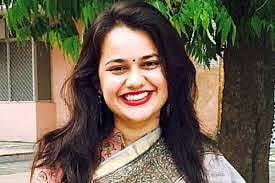
These achievements are not only personal triumphs but also send a strong message against caste- and gender-based discrimination. While one officer is greening the environment, another is strengthening accounting and financial transparency. New Delhi – The stellar performance of Dalit women officers in India’s administrative system is once again in the headlines. Rajasthan’s IAS officer Tina Dabi has made history by securing her district, Barmer, the Jal Sanchay Jan Bhagidari Puraskar (JSJB) for environmental protection, while Bengaluru’s senior IA&AS officer Dipna Netrapal has received the National CAG Award for innovation in GST audit and training reform. Dipna is the first Dalit woman officer to receive these awards. These achievements are not only personal triumphs but also send a strong message against caste- and gender-based discrimination. While one officer is greening the environment, another is strengthening accounting and financial transparency. The arid Barmer district of Rajasthan has won the first Jal Sanchay Jan Bhagidari Puraskar for its outstanding public participation in rainwater harvesting. The district will receive a prize of ₹2 crore for this achievement. District Collector Tina Dabi stated that President Draupadi Murmu will present the award at the sixth National Water Awards ceremony to be held at Vigyan Bhawan in New Delhi on November 18th. Tina Dabi has previously received numerous awards for her meritorious work. IAS Tina Dabi created history in 2015 by securing the first rank in the UPSC Civil Services Examination. At the age of 22, she became the first Dalit woman to achieve this feat in her first attempt. Tina has extensively promoted the construction of traditional ‘tanks’ (underground water tanks) in Barmer. Under the Union Ministry of Jal Shakti’s ‘Catch the Rain’ initiative, the state was divided into five zones and given the target of installing at least 10,000 artificial recharge and water storage structures. Barmer surpassed this target and topped the Northern region, reviving local water sources through thousands of tanks. This initiative by DABI is not only addressing the water crisis but also empowering rural communities, proving to be a milestone in quenching the thirst of the desert region. Meanwhile, Deepna Netrapal, Principal Director of the Regional Training Centre (RTC) and Capacity Building and Knowledge Centre (RCB&KC) in Bengaluru, has been awarded the National CAG Award. She received this award for two key initiatives: innovation and excellence in public accounting and auditing in GST audits, and the transformation of the training setup in Bengaluru. The Comptroller and Auditor General of India launched the scheme of “CAG’s Awards for Innovation and Excellence in Public Audit and Accounting” in 2021 to recognize and reward exceptional and innovative work done by officers and employees of the Indian Accounts Department in the areas of public audit, accounting, entitlements, and support functions. While the CAG Awards Scheme 2021 recognizes exceptional team excellence, which fosters a meritocratic environment, fostering overall qualitative improvement is even more important from an organizational perspective. To this end, in addition to the existing scheme that rewards team efforts toward excellence and exceptional work, a new award category has been instituted in 2022: the award for the “Most Improved Office.” This award category seeks to recognize offices working in the areas of accounting, audit, and training that have demonstrated the greatest improvement in performance during the prescribed evaluation period. Geetha Sunil Pillai Courtesy: Hindi News
Dalit professor dismissed by Tamil Nadu University for studying in reverse order after MA: Who is Professor Senarayaperumal, for whom voices of support are rising from India and the US?
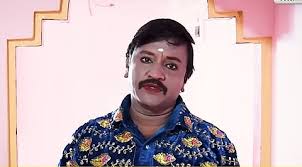
The first scholar from the Arunthathiyar community to receive a doctorate, the High Court ordered his reinstatement, but the university chose to appeal. Chennai – The wounds of hidden casteism in Indian higher education institutions have once again been exposed. The dismissal of Assistant Professor P. Senarayaperumal from Tamil Nadu’s Manonmaniam Sundaranar University (MSU) on the grounds of “academic irregularities” is resonating internationally. This is not limited to India; a petition initiated by the Anti-Caste Collective at Rutgers University in the US has set an example of global solidarity. Thousands of scholars, students, and activists have signed the petition, demanding Professor Senarayaperumal’s immediate reinstatement and strict action against institutionalized casteism. The documentary “Punishing the Professor,” produced by the People’s Archive of Rural India (PARI), has further highlighted this issue, telling the poignant story of the struggle of Dalit scholars. This case is not only the struggle of one individual, but also a reflection of the caste discrimination that persists in the name of merit in Indian public universities. Professor Senrayaperumal belongs to the Arunthathiyar community, one of the most marginalized Dalit communities in Tamil Nadu, who sought to transform their lives through education and art. He is a master of the folk art form called “Raja-Rani Attam.” Professor Senrayaperumal had been working as an assistant professor at Manonmaniam Sundaranar University since 2016 but was dismissed in March 2024. The Madras High Court ordered his reinstatement in June 2024, but the university filed an appeal, thus committing a miscarriage of justice. The case is still pending, and due to financial constraints, the professor has now returned to the stage of the folk drama “Raja-Rani Attam.” How did a Dalit artist become a professor? Senrayaperumal was born in Soolapuram village near Madurai, Tamil Nadu. The harsh caste slavery and poverty of the Arunthathiyar community forced him to drop out of school at the age of 13. Joining the family folk theater troupe, he became a part of the traditional folk drama-dance called “Raja-Rani Attam.” This art form is performed at weddings, festivals, and funerals in rural Tamil Nadu, but artists have historically been victims of caste-based exploitation. Arunthathiyar artists were viewed as sexual objects by audiences from dominant castes, and Senrayaperumal played the role of “Rani” (woman) for 18 years, challenging gender binary and embracing the drag tradition. Balancing performing at night and studying during the day, Senrayaperumal resumed his education through self-study. He completed 8th grade, then an MA and MPhil from Madurai Kamaraj University. Then, in an unusual sequence, he earned a BA, 10th, 12th through the open university system, and finally a PhD in Art History in 2013. In 2016, he was appointed Assistant Professor in the History Department of Manonmaniam Sundaranar University (MSU) under the SC quota. The current Vice Chancellor was also on the selection committee, and all degrees were verified. Over eight years, he mentored 31 research scholars and brought the art of his community to life in the classroom. An excuse for ‘irregularity’ or the cruel face of casteism? The university cited Senrayaperumal’s studies in ‘reverse order’ as the basis for the ‘irregularity’. In March 2024, just before his promotion, he was served a dismissal letter without a hearing. The university’s reasoning was the ‘reverse order’ of education. But this raises questions about the open learning system that the state government itself has created for marginalized students. Hearing the case, the Madurai Bench of the Madras High Court completely rejected the university’s argument. In June 2024, the court ordered his immediate reinstatement, payment of his salary arrears, and all benefits. The court recognized his academic qualifications and educational path as valid. However, the university, which claims to uphold the principles of social justice, refused to obey the High Court’s order and appealed to the Division Bench. This raises a serious question: Are the university administration and the Higher Education Department deliberately trying to exhaust a Dalit scholar by engaging him in a legal battle? Professor Senarayaperumal, now unemployed, is teaching the power of education by helping neighborhood children with their homework. He wants to present his case in court by singing so that the judges can understand Dalit history through folk art. Retired Chief Justice S.M. Muralidhar has promised to represent him pro bono. Raja-Rani Attam: The Living Art of Resistance This struggle is not just about employment, but also about cultural identity. Raja-Rani Attam is a folk tradition from South India that combines dance, drama, mythology, and oral history. It shares similarities with other caste arts such as Oggu Katha, Bahurupiya, and Tamasha. Despite historical exploitation, Professor Senarayaperumal created it as a living record of Dalit knowledge. As the only living scholar of this art form in the world, his dismissal is the destruction of neglected knowledge. The documentary “Punishing the Professor,” produced by the People’s Archive of Rural India (PARI), highlighted this issue, telling the poignant story of the struggle of Dalit scholars. PARI’s 28-minute documentary sparked public outrage. The documentary tells the professor’s story through folk art, exposing institutionalized casteism. Following its release, newspapers like “The Hindu” and “The News Minute” covered the issue. Why is the student community united? Students and young teachers from universities across the country are actively participating in the streets and on social media in support of Professor Senarayaperumal. They believe this issue is not just about one person’s job, but a collective fight against the deeply ingrained casteism in the Indian higher education system. Cases like Rohith Vemula’s and Payal Tadvi’s bear witness to the systematic discrimination faced by Dalit and Adivasi students and teachers in educational institutions. Students are demanding that universities stop concealing casteism under the guise of “merit” and make education inclusive for students from all backgrounds. The Anti-Caste Collective at Rutgers University in the US is garnering support for Professor Senarayaperumal from around the world through an online petition, demanding: Immediate reinstatement: Professor Senarayaperumal should be immediately reinstated, and his back pay and all benefits should be restored, in compliance with
‘Rising from the Dust’ Dalit Stories from Bengal
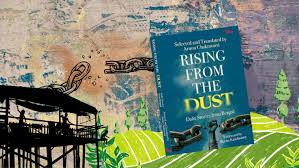
“Let me forget that I was born in the dust; there is no dust within me…” ‘Chandalika’, Rabindranath Tagore In hand is a compilation of twelve short stories from both female and male Dalit caste and non-Dalit writers. Dalits have also been categorized as a ‘Backward Caste’, ‘Untouchables’ and are subject to systematic social exclusion. The collection presents a painstaking perception in the translation from Bangla into English. We have an immensely praise-worthy undertaking by Aruna Chakravarti, a Kolkata Bangali writer and translator residing in New Delhi. As a reviewer, I quote Chakravarti in her ‘Translator’s Note’ in her book: “shakes the reader both intellectually and emotionally.” She has in ‘Rising from the Dust’ achieved both. The first short story ‘Fortress’ written by Manoranjan Byapari, shook me to the core. This is a raw and unsettling read. The ability of the translator to transfer the Bangla text into such impactful English is both evocative and haunting. How to convey desperate nuances? She has selected and translated chilling and compelling writing, painfully profound till the last paragraph. We are reading a masterful handling of the tone and meaning conveying Bangla expressions. Every day expressions in one language do not easily convey the essence and atmospheric content of the written output. Lives are ‘Rising from the Dust’ at times. However, at what cost? Life? Is this salvation? Is heart break or surrender survival? These short stories linger long after the book closes. How do short stories, a form of literature convey in such a short space the intense context of ‘Rising from the Dust’? It is an immensely impactful literature achievement by the writers. Aruna Chakravarti is the recipient of numerous prestigious literary awards; Vaitalik Award, Sahitya Akademi Award and Sarat Puraskar. Her first novel ‘The Inheritors’ was shortlisted for the Commonwealth Writers’ Prize. Her second, ‘Jorasanko’ and its sequel ‘Daughters of Jorasanko’ remain best sellers. In fact, upon a second visit to Rabindranath Tagore’s family home in Kolkata, I was told by a young guide that “the footfall of visitors to Jorasanko has increased immensely since the publication of the above two books.” (I have reviewed both.) ‘Suralakshmi Villa’ received ‘Novel of the year (India 2020) by Indian Bibliography published in The Journal of Commonwealth Literature U.K. ‘The Mendicant Prince’ (2022) is known historically in both Bangladesh and West Bengal. It is inspired by the legendary Bhawal Sannyasi case. (Also have reviewed.) Her translated works include an anthology of songs from Rabindranath Tagore’s ‘Gitabitaan’, Saratchandra Chattopadhyay’s ‘Srikanta’ and Sunil Gangopadhyay’s ‘Those Days, First Light and Primal Woman: Stories.’ The book title is ‘Rising from the Dust’ Dalit Stories from Bengal. And not ‘Risen from the Dust.’ Chakravarti’s book is reflective of the social dictates, the personal sacrifices and even the loss of lives in an environment that despite every initiative of the individual; continues to impact. The selection of stories portrays the patriarchal societies in dominance; the male oriented moral framework. Of the twelve chapters, female lives are particularly characterized. Their livelihood and lives; provide little light in the tough tunnel of existence. Deprivation and exploitation; from birth, through adolescence into adulthood and old age is common. Unheard echoes from a marginally discriminated population remain subject to communal dust. There are two selections of the writings of Mahasweta Devia. In ‘Notes on Contributors’ assembled by Aruna Chakravarti; the author sketch informs us that “Her specialization lies in her studies of Adivasis, Dalits and other marginalized people of India…Her works have been widely translated and she has been the recipient of several prestigious awards in India…One of her novels was shortlisted for the Man Booker Award and she was nominated for the Nobel Prize in 2012.” She was born in 1926 in Dhaka and passed away in Kolkata in 2016. Mahasweta Devia was not a member of the marginalized Dalit caste. I have selected ‘The True Life Story of Uli-Buli’s Mother’ as presentation of the essence and depth of her writings and acute ability of the translator to convey the entirety of the text. Four other presentations highlighting a selective text follow. “Uli-Buli were the twin girls she gave birth to. “Shame on you!” my husband used to say. ‘First one girl, then another; and now two together! I”ll find myself another wife.’ ‘Do that, I would weep and plead. But don’t drive me away. I’ll move out of the house and live in the cowshed with the bull calf…I work in five houses even now, cleaning cowsheds and making dung cakes. I’ll feed myself…I summoned up all my courage and approached the village elders. No land. No roof above my head.’ I wept. ‘Where will I live? I have four daughters.” In response, Uli-Buli’s father says: ‘Why does she give birth to girls?…I’ve heard Dada say that she went prancing to the pond anytime she felt like it. She would eat mussel chachhari on Saturdays! Won’t evil spirits enter such a woman’s body and spoil her womb?” “Twelve greybeards sat with long faces…The decision was reached that husbands would be found for the two older girls…One bridegroom needed a second wife and the other a third. Everything was sold. The house and land, the bull calf, my nose stud and ear-rings…” “I would beg during the day and sleep under the porch at night. And it was from there that my Uli and Buli were stolen…” The twins were a year old and sold to a hospital. Four years later, she comes to know of this happening and searches for her twin daughters for twenty-three years. “Her daughters would have been twenty-four years old today…wouldn’t they?…She doesn’t understand that. She searches her one-year olds. She thinks she will find them someday…She howls and beats her breasts. Swears and curses. Rushes at them. She looks the way she does but she’s really quite young…Perhaps all women with a life story like Uli-Buli’s mother look like her.” *A story to tell and tough to look away. Reviewer* Another entry is ‘Motho’s Daughter’
Attempted rape of Dalit woman, brothers beat her: Khaga’s Hathgaon police accused of inaction
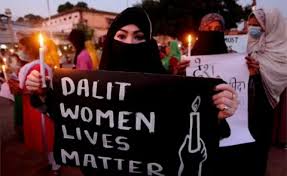
A case of attempted rape and subsequent assault of a Dalit woman has come to light in the Hathgaon police station area of Fatehpur district. The victim has filed a complaint at the police station, but it is alleged that the police have not taken any action in the matter. This incident raises questions about the crime control efforts of Superintendent of Police Anup Kumar Singh. In her complaint, the victim stated that a young man named Harishankar alias Bachaniya Vishwakarma suddenly entered her house while she was bathing. The accused entered the bathroom, grabbed the victim, threw her to the ground, and attempted to rape her. When the victim raised an alarm, Harishankar’s brothers, Rinku Vishwakarma and Pintu Vishwakarma, also entered the house. The two brothers hurled casteist slurs at the victim and assaulted her. They also threatened to kill her if she complained, after which they fled. The victim immediately filed a written complaint at the local police station, but the police merely offered assurances and dismissed the matter. According to sources, a man from the village has been seen actively involved in the incident at the police station, raising questions about the police’s inaction. Meanwhile, the accused, Harishankar alias Bachaniya Vishwakarma, has admitted to being assaulted by his brothers. A video of the incident is also rapidly going viral on social media. When contacted via mobile phone, station in-charge Durgesh Prasad Gupta stated that such a case had not yet come to his attention. It is possible that the victim came to the police station and left after submitting a complaint. The case will be investigated, and if the accused did indeed commit such an act against the woman, the culprits will be identified and strict legal action will be taken. Vikash Trivedi Courtesy: Hindi News
Lord Ram is ‘fictional’… Varanasi court orders Rahul Gandhi to appear in court on December 18th in the statement case.
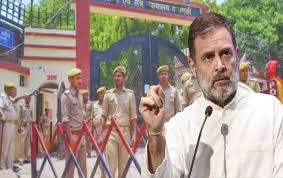
Varanasi Court on Rahul Gandhi: The Varanasi court has ordered Rahul Gandhi to appear in court on December 18th at all costs. The order came in a case alleging that Lord Ram is fictitious. Varanasi: The Varanasi court in Uttar Pradesh has ordered Congress MP Rahul Gandhi to appear in court on December 18th. The hearing in the case filed against the Congress MP has been postponed once again. Rahul Gandhi and his lawyer did not appear in court on Friday, prompting Special Judge, MP-MLA Court, Yajurved Vikram Singh, to refuse to proceed. The next hearing in the case will now be held on December 18th. The court has clearly stated that Rahul Gandhi or his lawyer must appear in court on the next date, only then will the case progress. What is the whole matter? This controversy is related to Rahul Gandhi’s alleged statement, which he made on April 21st during a session with students at Brown University in New York, USA. Petitioner Advocate Harishankar Pandey alleges that Rahul Gandhi, at that event, described Lord Shri Ram as “mythological” and the stories as “fictional.” This statement hurt the sentiments of Hindus. India will not wage war against us… Pakistan is scared, now said this in the name of Trump. Congress and Rahul Gandhi have been continuously commenting on Sanatan symbols. Based on this, Harishankar Pandey filed a complaint against Rahul Gandhi on May 12th. Why is the case dragging on? On May 17th, the Special Chief Judicial Magistrate, MP-MLA Court, dismissed the complaint. Following this, Harishankar Pandey filed a revision petition in the District Judge Court on September 26th. In the revision petition, he challenged the previous decision and demanded action. The court will now first debate the maintainability of the petition. After this, it will be decided whether a case can be filed against Rahul Gandhi. Petitioner’s Serious Allegations Advocate Harishankar Pandey stated that Rahul Gandhi has hurt the nation’s faith by questioning the existence of Lord Ram. He is a “traitor to Ram” and is insulting Hindu society abroad. Therefore, an FIR and a case should be filed against him for his statement. He demanded strict action from the court. What was the original statement? During a session held abroad, Rahul Gandhi was asked what secular politics should be like in the era of Hindu nationalism. In response, Rahul Gandhi stated that India’s great reformers, Buddha, Guru Nanak, Gandhi, and Ambedkar, were compassionate and tolerant without discrimination. The BJP’s viewpoint, however, does not represent Hinduism and is hate-mongering. The petitioner states that in this context, he called Lord Ram mythological and the stories fictional. The court has clarified that without his presence on the next date, the hearing will not be possible. The maintainability of the case will be debated on December 18th. After this, it will be decided whether to proceed against Rahul Gandhi. The case is now being discussed. Curated by: Rahul Parashar About the Author Rahul Parashar is a senior journalist at Navbharat Times Online. He has 20 years of experience in politics, current affairs, development, bureaucracy, education, health, and ground reporting. Early in his career, he covered administration and civic issues. He also learned the ropes of political journalism in Bihar, Jharkhand, and Uttar Pradesh. Courtesy: Hindi News
Kerala University denies PhD approval to Dalit scholar amid caste discrimination row
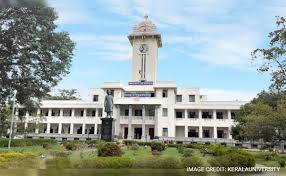
Speaking to TNM, Vipin Vijyan said he had not received any information about the withholding from the University. Prolonging the caste discrimination controversy, the University of Kerala has reportedly withheld the approval of awarding PhD Degree to Dalit scholar Vipin Vijayan while awarding PhD degrees to 64 other candidates. The decision was taken by Vice-Chancellor (in-charge) Mohanan Kunnummal. A PhD degree will be conferred after the candidate successfully completes all requirements, including thesis submission and an open defence. According to reports, the VC approved the PhDs under the syndicate’s consideration, exercising special powers granted under university regulations. The thesis work of 39-year-old Vipin Vijayan, belonging to the Pulaya community, was earlier rejected by CN Vijayakumari, Dean and Head of Kerala University’s Sanskrit department. Vijayakumari is accused of hurling caste-based slurs at the scholar, for which a case is registered against her. Speaking to TNM, Vipin said he had not received any official communication from the University pertaining to this. “I came to know about it from the newspapers. My future course of action will be decided after a detailed inquiry,” he said. On October 15, when Vipin was defending his thesis Vijayakumari disrupted the session, demanding changes in the thesis despite the supervisor’s opposition who validated the arguments made by Vipin in the thesis. According to the scholar, Vijayakumari refused to sign the thesis though both the supervisor and the thesis examining committee chairperson had approved the thesis. During the verbal altercation, Vijayakumari allegedly hurled caste abuses at Vipin. “‘Why do you need a doctorate to add to your name? You have a Pulaya surname, that is enough,’ Vijayakumari told me when I requested her to sign my PhD thesis”, Vipin had told TNM. Reports suggest that after the defence became controversial, the Vice-Chancellor requested the online recording to understand the issues raised during the open defence. However, the research guide responsible for conducting and documenting the open defence reported that no recording was made. Meanwhile, Vipin has filed a complaint against Vijayakumari with the police, the University and the SC/ST commission. The Sreekaryam police has booked Vijayakumari under Sections 3(1)(r) and 3(1)(s) of the Scheduled Castes and Scheduled Tribes (Prevention of Atrocities) Act, which deal with intentionally insulting or abusing a member of the SC/ST community by caste name in public view. Written by:TNM Staff Courtesy : TNM Note: This news is originally published on https:/thenewsminute.com/bha and is used purely for non-profit/non-commercial purposes, especially human rights
Tamil Nadu: Dalit student dies after suffering caste-based discrimination and assault, fights for life for 10 days
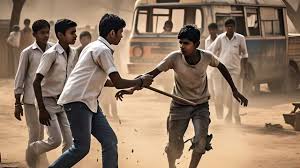
The student attempted suicide after being subjected to caste-based abuse; father questions police investigation, department offers 6 lakh rupees in aid Villupuram: A heartbreaking case of alleged caste-based discrimination has come to light in Villupuram district, Tamil Nadu. An 18-year-old Dalit student, who attempted suicide after being humiliated by caste-based abuse and assault, died in hospital on Tuesday. The deceased student had been battling for life in the ICU for the past 10 days. The deceased has been identified as S. Gajini, a resident of Vadakuchipalayam. He was a first-year history student at the Government Arignar Anna Arts College. What was the full story? According to sources, the incident occurred on November 6th. Gajini was returning home from a hotel. Meanwhile, three men from the Vanniyar community, who were allegedly intoxicated and riding on the same bike, hit Ghazni’s two-wheeler. The collision led to an altercation. It is alleged that upon learning that Ghazni belonged to the Dalit community, they began hurling casteist slurs at him and physically assaulted him. Sources say that when Ghazni’s father tried to intervene, the three accused fled the scene. Horrified by the humiliation, Ghazni took a drastic step. Three days after the incident, Ghazni attempted suicide at his home. His family immediately rescued him and admitted him to the Government Medical College and Hospital in Mundiyambakkam. He was admitted to the Intensive Critical Care Unit (ICU). After 10 days of treatment, he succumbed to his injuries early Tuesday morning. Questions about the police investigation The Villupuram Taluk police have registered a case under the SC/ST Act against three unidentified men based on the complaint. Police sources say the student was unable to confirm the identity of the accused, making it difficult to trace the suspects. However, the family claims that Ghazni had identified at least one of the attackers. “My son is gone, we want justice.” The deceased’s father, P. Semmeneri, has questioned the administration’s actions. He said, “How difficult is it for the police to track the mobile tower signal at the scene? The police are not conducting a proper investigation because my son is no longer alive. We want justice.” He also demanded that Dalit residents on the route to the bus stop be ensured of safety. Compensation announced: Amidst this tragic incident, the District Adi Dravidar Welfare Department has approved a compensation of ₹6 lakh for the victim’s family. The student’s death has left the area in mourning, and the family is pleading for justice. Rajan Chaudhary Courtesy: Hindi News