
Nanded Police Arrest Five in Caste-Related Killing of Dalit Man, Including Partner’s Family

After her partner Saksham Tate was murdered, Aanchal Mamidwar applied vermilion on her forehead and turmeric to his body to symbolise their ‘immortal’ union. New Delhi: After a 20-year-old man hailing from a Dalit community was threatened and killed allegedly by the relatives of his partner on caste grounds in Nanded, Maharashtra, police have arrested five people in connection with the case, including the woman’s parents and her two brothers, per media reports. Police in Nanded’s Itwara invoked provisions of the Bharatiya Nyaya Sanhita pertaining to murder, rioting and criminal conspiracy in addition to sections of the Scheduled Castes and Scheduled Tribes (Prevention of Atrocities) Act and the Arms Act against the accused, the Indian Express reported. After Saksham Tate was killed on November 27, his partner, 21-year-old Aanchal Mamidwar, accused her family of opposing their relationship and planned marriage because they were from different castes. At Tate’s funeral the next day, Aanchal applied vermilion on her forehead and turmeric to his body to symbolise their ‘immortal’ union. She also reportedly called for her accused relatives to be hanged. “We were in love for the past three years but my father opposed our relationship over caste differences. My family often threatened to kill Saksham,” IE quoted Aanchal as saying. Further, she mentioned that she would henceforth stay at Tate’s home. Speaking to PTI, a police officer alleged that Aanchal’s brother Himesh Mamidwar shot Tate in the ribs and hit him with a tile on his head which led to his death. The authorities subsequently arrested Himesh, his brother Sahil Mamidwar and their father Gajanan Mamidwar, the officer said. Mamidwar’s mother Jayashri, another accused in the case, is also in custody, BBC Marathi cited the police as saying. “My father and my brother have killed my Saksham … However, they have lost by killing him, while Saksham has won by dying. Because our love is still alive,” the broadcaster quoted Aanchal as saying. According to IE, the accused told the police that they did not want Aanchal to marry Tate because of his involvement in criminal cases. PTI reported that Tate and Himesh were both history‑sheeters and had been close friends in the past. Aanchal also told mediapersons that she was coerced by her family into filing false complaints of rape and harassment against Tate before she turned 18 but that she withdrew the case when she became an adult. The Wire Staff Courtesy : The Wire Note: This news is originally published on https:/lhewire.com/bha and is used purely for non-profit/non-commercial purposes, especially human rights
Remembering Baba Saheb Ambedkar on Mahaparinirvan Diwas and Dalit Experiences in Indian Academia
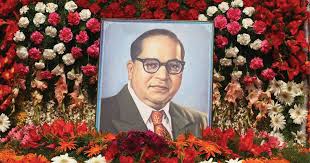
Scholars from Dalit backgrounds may occupy the same lecture halls, but their voices seldom command the same authority or space. Their presence is acknowledged superficially, tolerated, scrutinised, but rarely embraced or trusted fully. On this Mahaparinirvan Diwas, these words echo through our hearts with profound emotion and unshakeable conviction. They are not mere words; they are a testament to the unbreakable bond between a visionary and the millions he liberated. For generations scarred by marginalisation, exclusion, and fierce resistance, Babasaheb is far more than a historical figure, he is the bedrock of our dignity, the master builder of our dreams, and the eternal flame igniting our path toward true humanity. To reflect on Babasaheb today is to feel the weight of gratitude that wells up from the depths of our souls. Our freedom to speak without fear, to educate ourselves without barriers, to walk with our heads held high, to confront injustice head-on, and to dream of a world remade in equality, all these gifts trace back to the courageous path he blazed. His victories were never solitary; they were the collective rising of a people long crushed under oppression. His struggles burned with a fire that refused to dim, not for personal glory, but for the voiceless millions stripped of agency, respect, and basic human worth. In his relentless fight, we found our own strength, our own voice. His legacy endures not as a distant echo from history, but as a powerful, pulsating force alive in our veins. It is the unquenchable fire that warms our spirits in the coldest moments of despair. It is the radiant light that pierces through darkness, guiding us forward. It is the indomitable courage that arms us against the injustices that still linger in our world today. The Long Journey of Equality: Walking the Path He Opened : Babasaheb’s life was nothing short of a revolutionary upheaval. He exposed caste not as a mere social irregularity, but as a deep-seated moral abomination, one that systematically steals dignity from the oppressed while conferring illegitimate superiority on the oppressors. With unwavering clarity, he proclaimed that education is liberation’s most potent weapon. Intellect belongs not to a privileged few but to every human being as an inalienable right. Dignity is never granted from above; it must be seized with fierce determination. For communities that were treated as less than human for centuries, Babasaheb’s rise from pain to great leadership is one of the most inspiring stories of equality today. His life shows that no chain can hold us if we keep fighting. For many from oppressed families, he feels like a close friend. In childhood, when classmates stayed away or did not share food because of caste, his story gave us power to keep going. When society’s contempt tried to crush our spirits, his words became our shield, lifting us to stand taller. When waves of humiliation threatened to drown us, his profound writings became the anchor that held us steady. We do not just remember him in ceremonies. We live his teachings every day. We do not just speak about him. We follow his path. We do not only respect him. We carry his spirit in every fight for justice. The Academia’s Promise and Its Silences Universities proudly declare themselves as enlightened realms of neutrality, progress, and pure objectivity. But for those who carry the scars of caste oppression, these institutions often betray a painful truth: they mirror society’s entrenched hierarchies in disguised forms. The physical campus may appear modern and inclusive, but the invisible hierarchies sting with familiar pain. The vocabulary has changed, yet the exclusionary intent remains intact. Discrimination hides in sophistication, inflicting wounds that cut just as deeply. Scholars from Dalit backgrounds repeatedly confront the same age-old exclusions, now cloaked in academic jargon. The system practices prejudice, It vows equality on paper but fiercely guards inherited hierarchies in practice. This stark contradiction reveals itself most clearly in the politics of knowledge production: whose insights are granted credibility, whose voices are truly heard, and whose lived experiences are dismissed as mere caste-bound anecdotes. Hierarchy in New Forms: The University and the Logic of “Part / Apart” One of the most poignant revelations in higher education is the invisible line drawn between those who are fully “part” of the institution and those kept perpetually “apart.” Some are welcomed wholeheartedly as insiders. Others are granted entry but never true belonging. This silent yet suffocating divide plays out in daily interactions: who receives invitations to exclusive intellectual networks, whose ideas are met with genuine respect, whose critiques are deemed valid and profound, who is afforded patient listening, and who faces hasty dismissal. Here, exclusion transcends physical barriers; it is a profound intellectual apartheid. Scholars from Dalit backgrounds may occupy the same lecture halls, but their voices seldom command the same authority or space. Their presence is acknowledged superficially, tolerated, scrutinised, but rarely embraced or trusted fully. And yet, in the face of this marginalisation, these scholars rise with extraordinary resilience.Their very entry into forbidden spaces shakes the foundations of old power structures. Their bold arguments disturb the complacent authority of the dominant.Their innovative scholarship directly confronts and erodes the unearned prestige long held by privileged castes. By boldly occupying arenas designed to exclude them, they tear down the walls of “apartness,” asserting that true academia must belong to all who dare to think. The Violence of Disbelief: Testimonial Injustice as Everyday Reality Among the cruelest weapons in academic discrimination is testimonial injustice.the deliberate withholding of credibility not because of flawed ideas, but simply because of who dares to voice them.This form of violence does not roar; it whispers poisonously. It does not wound visibly; it slowly erodes confidence from within. It does not bar the door outright; it undermines from the shadows. For scholars from Dalit backgrounds, this injustice strikes repeatedly and predictably.Their passionately researched work is casually dismissed as “too emotional,” even as dominant-caste narratives are exalted as impeccably “scholarly.” Their meticulously constructed theoretical
SRM Uni dismisses Dalit Christian professor targeted by right-wing for anti-war views

Lora Shanthakumar, a Dalit Christian assistant professor, was previously suspended on May 8, after her WhatsApp status warning against the dangers of war, phone number and photo were leaked to right-wing social media handles — leading to targeted online abuse, intimidating phone calls and death threats. Lora Shanthakumar, an assistant professor at Chennai’s SRM University, has been dismissed for expressing anti-war views at the time Operation Sindoor was carried out. SRM’s internal inquiry ‘confirmed’ that she has committed ‘grave misconduct’. Lora, who worked at the university’s Career Development Centre (CDC), was allegedly doxxed by students in May, after she posted a WhatsApp status calling for peace. The termination order accessed by TNM accused her of posting “unethical remarks” on social media against the armed forces and of tagging herself as an assistant professor of SRMIST. “Therefore, she is unfit to continue her job in the institution and is dismissed from service with immediate effect,” the order said. The internal inquiry committee was headed by the Director of Student Affairs at SRMIST, Dr Nisha Ashokan. Deputy Director of Student Affairs, Dr Prince Kalyanasundaram, was the committee’s presenting officer. The inquiry was held at the Kattankulathur SRM campus between July 15 and September 26. The committee submitted its report to the university registrar on October 30. Lora, a Dalit Christian, was first suspended on May 8, after her WhatsApp status, phone number and photo were leaked to right-wing social media handles, leading to targeted online abuse, intimidating phone calls and death threats. She was branded an anti-national and accused of speaking against the Indian Army. Further, she was forced to vacate her home in Chennai and move back to Kallakurichi, where she’s from, to protect herself. The committee’s report Lora shared a series of WhatsApp status messages on May 7, voicing strong opposition to the calls for war during the India–Pakistan conflict. Starting early that morning, she posted quotes, warnings and fact-checks, including a message urging people to recognise the human cost of conflict alongside a George Orwell quote about war propaganda. She also flagged fake social media accounts posing as Indian Army officers and asked others not to amplify them. In total, Lora posted 12 anti-war messages, though only two were circulated publicly. One listed the real-life consequences of war, from economic shutdowns to loss of lives and another criticised the killing of civilians in a strike, calling it cowardice rather than bravery. During the internal inquiry, Lora was charged on 5 counts and a charge memo was issued against her on June 16. The charge memo accused her of posting unethical remarks against India’s armed forces on social media platforms. She was also accused of acting against national interests and lacking patriotism. “Your act amounts to action against the interests of the nation and also disrupts the cordial atmosphere and smooth functioning of the institution and invites legal implications harmful for the reputation of the institution and it amounts to major misconduct.” Further, she was accused of involvement in antisocial activities which are “criminal”, which the committee considered a “major misconduct”. Lora had denied all charges and made it clear that her comments were not against the nation and that they had been misconstrued and misinterpreted. Denying the charge that she had brought disrepute on the university, she clarified that she had not identified herself as a professor of the university in her posts. She stated that the WhatsApp number on which she had posted the status was personal and not linked to the university in any way. She also noted that the remarks in question were not posted on social media but as a personal WhatsApp status that was temporary in nature. The inquiry committee, in its findings, claimed that all five charges were proven and gave identical findings for all the charges. “When the presenting officer conducted the chief examination of Ms S Lora, she confirmed posting in her personal capacity and denied charges 1, 2, 3, 4 and 5, which were read out to her by the presenting officer,” the order said. “Hence, this charge is proof of her posting on social media in her personal capacity. It is not proved by the delinquent employee that she has not officially tagged SRMIST in her capacity as assistant professor. Therefore it is deemed that the entire charge against her is proved.” read the order. The termination order further said that on perusal of all the records and evidence produced during the enquiry proceedings, the enquiry officer has proved all the charges framed against Lora. SRM university has given Lora 30 days to make an appeal to the vice chancellor, who is the appellate authority in this case. Reacting to the development, Lora told TNM that the inquiry was an eyewash and she has been made a scapegoat here. “Until now the university management has not been able to tell me where they saw my WhatsApp status messages posted in the capacity of an assistant professor? When I was placed under suspension, they did not tell me why I was being suspended and the claims made in the charge memo and the screenshots of my messages have no time stamp. There are also no details of where it was taken. The entire accusations are wrong and illegal,” she said. Lora added that the actions of the law officer Ravi, who was also present when she was being questioned by the committee, are absent in the report. “The entire inquiry happened under his control and he was the one who was dictating the terms. I have initiated criminal action against those who targeted me online and none of it has been recorded in this inquiry report,” she added. Meanwhile, sources told TNM that the Maraimalai Nagar police have summoned the registrar Dr S Ponnuswamy of SRM University after Lora filed a petition with the Tamil Nadu Chief Minister’s cell. Written by:Shabbir Ahmed, Edited by:Bharathy Singaravel Courtesy : TNM Note: This news is originally published on https:/lhenewsminute.com/bha and is used
‘Humayun Kabir, who laid the foundation stone of the ‘Babri Masjid’, was targeted by Vijayvargiya, who also taunted Rahul Gandhi – perhaps Putin recognized him!’

Politics in West Bengal has heated up once again. BJP leader Kailash Vijayvargiya has reacted to the statement made by TMC leader Humayun Kabir in the state. Vijayvargiya not only questioned Kabir’s actions but also mocked Rahul Gandhi’s questions regarding Russian President Vladimir Putin’s visit to India. Indore: Politics in West Bengal has heated up once again. BJP leader Kailash Vijayvargiya has reacted to the statement made by TMC leader Humayun Kabir in the state. While speaking to the media, Vijayvargiya questioned Kabir’s actions and also mocked Rahul Gandhi’s questions regarding Russian President Vladimir Putin’s visit to India. Targeting TMC leader Humayun Kabir, Vijayvargiya said that Kabir was once a part of the Bharatiya Janata Party, and he himself had fielded him in the elections. But after joining the TMC, he is making such statements and actions to strengthen his position, which make no sense. Vijayvargiya said that Kabir has no emotional connection with the Babri Masjid, and he is now only making unnecessary moves to show his credibility within the TMC leadership and his community. TMC leaders uncomfortable with Humayun Kabir’s actions Kailash Vijayvargiya said that many TMC leaders are also uncomfortable with Kabir’s activities. Muslim organizations have also registered their protest against his statements. In fact, Humayun Kabir, the MLA expelled from the Trinamool Congress, laid the foundation stone of a mosque named ‘Babri Masjid’ in Murshidabad, West Bengal on Saturday. Vijayvargiya’s sarcasm: Perhaps Putin recognized Rahul During this time, Vijayvargiya was also asked about Rahul Gandhi’s statement in which the Congress leader said that he was not given a chance to meet the Russian President as the leader of the opposition during Putin’s visit to India. To this, Vijayvargiya said that Putin himself decides who he wants to meet, and if he had been interested in meeting Rahul Gandhi, the government would have certainly arranged a formal meeting. He sarcastically remarked that perhaps Putin recognized Rahul Gandhi, and therefore did not express a desire to meet him. Edited by: Chaitanya Soni • Contributed by: Sanjay Kumar About the Author Chaitanya Soni is a Consultant Writer at Navbharat Times Digital (NBT Online). He covers Madhya Pradesh politics, offbeat news, breaking news, current affairs, and unconventional stories. After completing his M.Com and MCJ from Dr. Harisingh Gour University, Sagar, Madhya Pradesh, he has been associated with journalism for about 23 years. Courtesy: Hindi News
The views of Ambedkar that the ‘Champions of Dalits’ don’t want the public to know
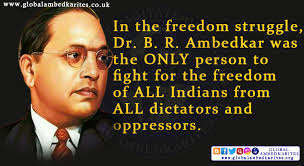
Politicians across the world often prefer to keep the masses ignorant, as it allows them to easily manipulate people. When a leader, like Ambedkar or Patel, emerges from among the common people, their followers frequently begin to idolize him or her. While such admiration is not inherently wrong, the unfortunate reality is that the political successors of these leaders often distort and misuse the legacy of the icon to advance their own agendas. This tendency is clearly visible in our country as well, and in this article, we will examine how the Congress party, leftists, and their allies have deliberately kept people unaware of many of Ambedkar’s actual views, simply because those views do not align with their political narrative. Ambedkar on Abrahamic Religions The Congress, Communists, and certain Dalit (SC – Scheduled Caste) leaders never miss an opportunity to proclaim that Ambedkar despised Hindu Dharma and that he burned the Manusmriti. They portray Manusmriti as the most sacred Hindu Grantha. In truth, it is merely one among many Hindu Granthas and by no means the holiest one. It is beyond the scope of this article to analyze the Manusmriti in detail, but it is sufficient to note here that several misconceptions surround this text. What these leaders conveniently ignore, however, is that Ambedkar was equally outspoken in his criticism of the Abrahamic religions. To illustrate this, I will quote passages from his book Pakistan or The Partition of India, which clearly demonstrate that although Ambedkar was critical of certain social evils within Hindu Dharma, he was by no means an admirer of Islam — contrary to what many of today’s so-called Ambedkarites would have the public believe. In the chapter titled “Social Stagnation,” Ambedkar openly discusses various social ills that plagued Muslim society, such as purdah, talaq, child marriage, and the caste system, without softening his words in any way. Pages 226-227: Take the position of women. It is insisted by Muslims that the legal rights given to Muslim women, ensure them a greater measure of independence than allowed to other Eastern women… the Muslim woman is the most helpless person in the world … her fate is ‘once married, always married’. She cannot escape the marriage tie; however irksome it may be. While she cannot repudiate the marriage, the husband can always do it without having to show any cause. Utter the word ‘Talaq’ and observe continence for three weeks and the woman is cast away. Pages 230-232: The Mohamedans observe not only caste but also untouchability. There can thus be no manner of doubt that the Muslim Society in India is afflicted by the same social evils as afflict the Hindu Society. Indeed, the Muslims have all the social evils of the Hindus and something more. That something more is the compulsory system of purdah for Muslim women. In page 233 he says, “The existence of these evils among the Muslims is distressing enough. But far more distressing is the fact that there is no organised movement of social reforms among the Musalmans of India on a scale sufficient to bring about their eradication … The Hindus have their social evils … and a few of them are actively agitating for their removal. The Muslims on the other hand, do not realise that they are evils and consequently do not agitate for their removal. Indeed, they oppose any change in the existing practices.” Ambedkar’s refusal to convert to Christianity or Islam, despite being offered large-scale inducements by both Christian missionaries and the Nizam of Hyderabad, clearly demonstrates his opposition to the Abrahamic religions. He firmly believed that anyone who converted to either of these faiths would, in effect, cease to be a Bharatiya. Instead, he supported conversion to one of the various Indic religions and encouraged his followers to do the same, stating, “I advise my Dalit brothers to convert to Buddhism and avoid conversion to non-Indic religions.” Ambedkar viewed the Abrahamic religions as a threat to national integration, and this should conclusively settle any doubts regarding his stance on these religions. His views on the RSS and Veer Savarkar Ambedkar not only attended an RSS programme in Pune in 1949 but was also impressed—and pleasantly surprised—by the RSS tradition of not inquiring about a fellow member’s caste. He therefore regarded the RSS as a genuinely nationalistic and non-casteist organization. Furthermore, he appreciated the social reform efforts undertaken by Veer Savarkar and believed that the eradication of the caste system to unite Hindus was essential for the community’s progress. In this regard, he echoed Savarkar’s position (though the topic of Savarkar’s views on Hindutva is a discussion for another day). Savarkar, too, maintained that the caste system was merely a social practice and not synonymous with or intrinsic to Hindu Dharma. Ambedkar wrote a letter to Savarkar when the latter was presiding over a Mahar conference in Ratnagiri and said “I, however, wish to take this opportunity of conveying to you my appreciation of the work you are doing in the field of social reform. If the Untouchables are to be part of the Hindu society, then it is not enough to remove untouchability; for that matter you should destroy ‘Chaturvarna’. I am glad that you are one of the very few leaders who have realised this.” (Source: Veer Savarkar by Dhananjay Keer). Some of his other thoughts Ambedkar urged his fellow SCs to pursue education, as he firmly believed that education was the only path through which the community could overcome poverty and social disadvantage. He was convinced that reservations, something every community now seeks to obtain, should be abolished after a decade. In essence, he had envisioned a time-bound reservation policy, meant as a temporary measure to uplift the underprivileged. Unfortunately, selfish politicians have continued this policy for more than seven decades simply because it serves their vote-bank interests. Ambedkar wanted his people to progress based on merit, not perpetual dependence on reservations. He was also opposed to Article 370, which granted special status
Ambedkar incorporated various Western texts to develop a unique sense of labour in India
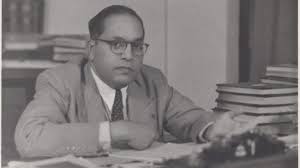
BR Ambedkar valued the Fourteenth Amendment to the US Constitution, which was ratified in 1868. This amendment granted equality to African Americans after the Civil War. In the classic story titled Jenvha mi Jaat Chorli by Marathi writer Baburao Bagul, the central character — Kashinath, a Dalit protagonist — challenges the systemic caste structure by affirming his faith in the Constitution of India. Published in 1963 as part of Bagul’s award-winning collection of short stories of the same name, the story reaffirms Dalits’ faith in their beloved Babasaheb Ambedkar and in the Constitution of India, which he served as the chairperson of the drafting committee and is widely regarded as its chief architect. However, history has been unkind to Ambedkar, whose thinking and actions went far beyond his banal fencing around reservation or Dalit issues alone. We take a look at some of the lesser-known aspects of Ambedkar’s thoughts, including his initiation of new discourses of manuski (humanity and compassion), his pursuit of civic rights through pragmatic law, and his foregrounding of the Indian principles of constitutional morality. The manoos (person) behind Dalit literature Ambedkar played a pivotal role in shaping Dalit literature, drawing inspiration from philosopher John Dewey’s ideas. He emphasised the role of education, social systems, and, primarily, the individual in confronting the systemic inertia that stabilises in favour of dominant classes. This idea became the driving force behind the architecture of Dalit literature, which began with autobiographies, poetry, and short stories, primarily challenging Victorian modernity and traditional methods long regarded as literary standards. Dalit literature comes from the rejection of, and resistance to, the injustices of the caste system. Consider this poem titled Empty Advice by poet Pralhad Chendwankar. This country, which demands. A pot of blood For a swallow of water— How can I call it mine? Though it gives the world The empty advice of peace. Chendwankar’s poem reflects the Dalit struggle for dignity and human rights in India, particularly through the lens of the Constitution. Marathi author Sharankumar Limbale notes in his book Dalit Sahityache Soundarya Shastra. that Ambedkar’s ideas helped awaken the Dalit community’s conscience. This achievement focuses on reclaiming humanism and placing people at the centre. Because of this emphasis on manuski, one of Ambedkar’s beloved words, Dalit literature is unique. It promotes inclusivity and speaks for everyone, not just for Dalits. Dalit literature prompts readers to reevaluate their assumptions and encourages them to delve deeper. It challenges them to move beyond traditional views and engage with the complexities of Dalit society. Engendering the politics of labour The distinctions between labour and work have been recognised since Aristotle, influenced by factors such as space, time, and personal experiences. Labour is often associated with physical effort and subservience, while philosophers such as Karl Marx and Hannah Arendt address this differentiation. In contrast, classical liberals, such as John Locke and Adam Smith, primarily focus on labour without acknowledging work as a distinct concept. Ambedkar (1891-1956), aware of his identity as an untouchable, approached labour and work in the Indian context, incorporating discussions on gender, caste, class, and culture, informed by his education in Deweyan pragmatism and Fabian socialism. Drawing from various texts, including Rousseau’s Social Contract, Marx’s Communist Manifesto, Pope Leo XIII’s Rerum Novarum, and John Stuart Mill’s On Liberty, he developed a unique sense of labour. Ambedkar’s perspective was evident when he contested the 1936 elections for the Bombay Legislative Council as a candidate of the Independent Labour Party (ILP), which he founded. In his party manifesto and campaign speeches, he presented a synthesis of labour, work, and action. His election symbol—a human figure, in contrast to other parties’ materialistic symbols—reflects his ideal of manuski and his view of labour as a form of qualified humanism. Later, in his interventions as a Labour member in the Viceroy’s Executive Council, Ambedkar emerged as an organic intellectual, prioritising principles over rigid traditions and continually undergoing pragmatic transformation. The interplay of law, Labour, and societal morals, along with their tangible and intangible impacts, significantly influenced Ambedkar’s socio-political movement. Ambedkar’s legal acumen Ambedkar’s pivotal role in drafting the Constitution of India needs no discussion today, and rightly, he is called the father of the Indian Constitution. His writings deeply inspire the masses, especially the Bahujan strata of society, and he stands as a symbol of excellence for them to emulate. Increasingly, he is gaining recognition for his work, which is drawing international attention for his championing of human rights and challenging patriarchal narratives of his times and inspiring an array of movements not only in India but across the world. His work provides a framework for social activism against injustices related to gender, race, and ethnicity. Known as the “poor man’s barrister,” Ambedkar valued the Fourteenth Amendment to the US Constitution, which was ratified in 1868. This amendment granted equality to African Americans after the Civil War (1861-1865). It clarifies the phrase “due process of law” when read with the Fifth Amendment. While drafting the Constitution of India, particularly clause 9 of the Advisory Committee on Minorities and Fundamental Rights, this phrase was included: “… Nor shall any State deprive any person of life, liberty, and property without due process of law.” Legal and constitutional expert BN Rau’s meeting with US Supreme Court Justice Felix Frankfurter raised concerns about the separation of powers among the executive, legislature, and judiciary. This separation could lead to the misuse of due process, as mentioned by him during this meeting, in the context of the Lochner vs New York (1905) case. This led to a tussle between the executive and judiciary, as seen in President Franklin D Roosevelt in 1937, whose statements sparked frictions between the two branches of the state. Ambedkar, in his debates in the Constituent Assembly, presented himself as a strong advocate of judicial independence, harmonious working between the executive and judiciary, and caution against executive overreach. (These very principles later came to be held as the basic structure of the constitution). However, he recognised the importance
How ‘Jai Bhim’ Was Born at a 1938 Marathwada Parishad
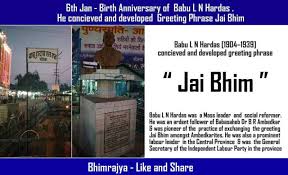
The slogan emerged at the Makranpur Parishad as a unifying Dalit greeting in Ambedkar’s presence. Jai Bhim: These two words have come to symbolise the awakening and empowerment of the Dalit community in independent India, but not many people know how they originated. The phrase was first used at the Makranpur Parishad, a conference held in Makranpur hamlet in Kannad teshil of today’s Chhatrapati Sambhajinagar district in Maharashtra. It also captures the great respect that Dr Bhimrao Ramji Ambedkar is held in. On December 6, 1956, Ambedkar, the primary drafter of the Indian Constitution, passed away. On December 30, 1938, the first Makranpur Parishad was established by Bhausaheb More, the first president of the Scheduled Castes Federation of Marathwada. According to Bhausaheb’s son, Assistant Commissioner of Police Pravin More, Dr Ambedkar spoke at the conference and urged the populace to oppose the princely state of Hyderabad, which at the time ruled over a large portion of central Maharashtra. “When Bhausaheb stood up to speak, he said every community has its own deity, and they greet each other using the name of that deity. Dr Ambedkar showed us the path of progress, and he is like God to us. So henceforth, we should say ‘Jai Bhim’ while meeting each other. The people responded enthusiastically. A resolution accepting ‘Jai Bhim’ as the community’s slogan was also passed,” More told PTI. “My father came in contact with Dr Babasaheb Ambedkar in his early years. Bhausaheb was aware of the atrocities the Nizam state committed on Dalits. He told Ambedkar about these atrocities, including the pressure to convert. Dr Ambedkar was strongly against these atrocities, and he decided to attend the 1938 conference,” he said. Ambedkar was permitted to travel through Hyderabad state but was prohibited from making remarks there due to his opposition to the princely states. Hyderabad and British India were separated by the Shivna River. According to ACP More, Makranpur was selected as the inaugural conference’s location since it was located in British territory, but on the banks of Shivna. The brick stage where Dr Ambedkar spoke at the conference is still in place. In order to sustain Ambedkar’s ideas, the conference is held annually on December 30. This tradition was maintained even in 1972, when Maharashtra went through one of the worst droughts in its history. “My grandmother pledged her jewellery for the conference expenses. People from Khandesh, Vidarbha and Marathwada attended it. Despite a ban imposed by the Nizam’s police, Ambedkar’s followers crossed the river to attend the event,” said ACP More. “This is the 87th year of Makranpur Parishad. We have deliberately retained the venue as it helps spread Ambedkar’s thought in rural areas,” he added. Curated by: Snehal Srivastava Courtesy : Outlook India Note: This news is originally published on https:/outlookindia.com/bha and is used purely for non-profit/non-commercial purposes, especially human rights
Hatred against Love in Annihilate Caste
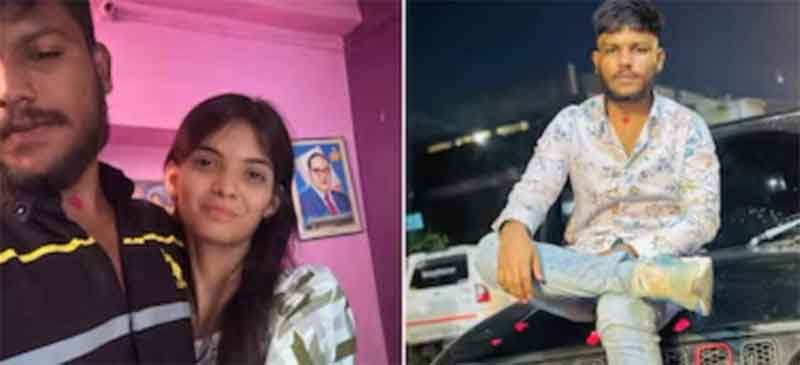
The murder of Saksham Tete, a Dalit, described as ‘jaibhim wallah’ by the family of his girl friend Anchal Mamidwar in Nanded should not surprise any one as the bitter and brutal fact is that we are a highly caste conscious society and any one venturing beyond his or her caste line must be prepared for the repercussion that Saksham faced. So, there is not one single caste or region or identity to be blamed for it. Fact of the matter is we all are proud of our ‘castes’ and any one cross the ‘redline’ actually become unwanted and unaccepted. Baba Saheb Ambedkar had spoken about annihilation of caste but that would mean annihilation of the primitive brahmanical values where ‘jaatis’ have become the sole ‘identity’ and there is no other way to appreciate a person’s achievements except when he or she belong to your jaatis. Every jaati i.e. caste, has an inherent supremacist attitude towards other and that is why Dr Ambedkar explained it as ‘graded inequality’. He does not stop with mere this term. It is important to move further and understand the psychology of the caste supermacism. Dr Ambedkar says, it is asecnding order of reverence and discending order of contempt. Saksham Tete was a Buddhist youth who fell in love with Anchal Mamidwar. In Maharashtra, a Buddhist in Dalit community is predominantly Mahar while Anchal belonged to an SBC or simply special backward Community. The particular jaati of Anchal, it seems was from Padmashali community, whose occupation actually is weaving. According to Anchal, her family was against Saksham because he was ‘jaibhimwallah’. She also said that Saksham was ready to ‘convert’ to ‘Hinduism’. The worst part of this story is that Saksham and Anchal’s relations were well known in the family and they pretended to have accepted their relationship but that was a strategy of the family to get closer to him and one final day they murdered Saksham. The things did not end there, Anchal showed her defiance and married to the corpse of Saksham, put a ‘sindoor’ and demanded that per parents and brothers be hanged to death. Anchal’s act are a defiance but definitely in the height of emotion who has lost her love. Her life is bigger and she must ensure that Saksham get justice but it is also for the elders to ensure that she is empowered economically and get a chance to live her life as per her choice. She has left her parental family now and staying at Saksham’s house and that would be a challenge. Many young girls have done that but the socio cultural economic crisis they face is tremendous. It is a fact that self arranged marriages or so called inter caste or inter religious marriages are not accepted by the Indian society. Whatever the self proclaimed progressive suggests but the bitter fact is inter faith couples face problems not only with the outside acceptence but also among themsleves due to cultural clashes. In the last two decade, Indian middle classes have grown into believing the ‘power’ of ‘traditional values’ and greatness of their caste resulting in unuacceptability of person outside their domain of jaatis. The so called inter caste, inter religious marriages are impossible now. It will only be posssible if we become a society of individuals where none is bothered about who you marry, what you eat and where you dine but that thing is now difficult. Your food habits, your sexuality and jaatis are important aspect today being flaunted everywhere. The gap is increasing. Friendship grows when you learn to appreciate others but we are fast becoming homesick and caste supermacist with strong love and hatred against other. In such cases, our minds dont work rationally and totally function as per the prejudices injected into our minds since childhood. Our political process today has shown that there is no unity among people in terms of their identities and each one of us want to keep a separate identity to make personal gains. So whether the community get something or not, in the name of it, some will gain and they will continue to speak up against individuals who cross the red line. That is the reason why very few speak against such violence. Political parties have rarely spoken against it as it threaten their identity politics. They will only use it when such incidents actually help them in their political games. Unfortunately, not every incident become political to be raised by the political parties. Also important is that annihilation of caste as envisaged by Baba Saheb Ambedkar has been rejected by majority of the Dalit Bahujan communities part of the brahmanical system. The unity among these communities merely politics of their space and nothing beyond. This fact must be kept in minds that communities are not interested to speak about any reforms. They want their share in power and elsewhere. Except that, there is no interest in reforms or looking from with in. The anti caste violence or patriarchical impositon is not just work of the brahmins or Savaranas but OBC community too come out as biggest gate keepers of brahmanical patriarchy. The cases of violence against Dalits from Maharashtra, Telangana, Tamilnadu, Uttar Pradesh, Bihar etc is concern that political unity is possible but jaatis dont want to cross their ‘identity’ line which they consider as ‘sacrocant’ and any crossing of that line is a challenge to caste patriarchy. What should individuals do. Well, young boys and girls should understand very well that the administrative or political set up can not protect them if they cross their line. Sadly, it is a dark reality in our part of the world. They become isolated. The individuals too depend on community and therefore think well before entering into any alliance. You must be prepared to leave your community and migrate to cities. You dont know who will turn out to be your dushman, enemy. It will increase as long as there will glorification of
Bengaluru: Dalit youth dies of ‘third-degree’ torture in custody? Marks found on body, 4 suspended, including inspector
Four suspended, including Viveknagar police station inspector; mother alleges he was beaten in custody; CID to investigate. Bengaluru: The police department has taken major action in the case of a 22-year-old Dalit youth who died in police custody after being allegedly tortured and subsequently admitted to a drug rehabilitation center in Karnataka’s capital, Bengaluru. An official announced on Wednesday that four policemen have been suspended due to allegations of negligence. What is the whole matter? The deceased has been identified as Darshan PG, a resident of Viveknagar, who died under suspicious circumstances on November 26th. Taking action on Tuesday, the department suspended an inspector, a constable, and two other officers attached to the Viveknagar police station with immediate effect. A senior police official confirmed that the entire matter is now being investigated by the CID. Mother Makes Serious Allegations The mother of the deceased, Darshan, has leveled serious allegations against the police. In her complaint, she stated that on November 12th, the police detained her son. She alleged that Darshan had gotten into a fight with neighbors and caused a commotion while under the influence of alcohol. Since Darshan was addicted to alcohol, his mother requested that he be sent to a rehabilitation home instead of jail. According to a police officer, on November 16th, at the mother’s request, Darshan was sent to a de-addiction center on the outskirts of Bengaluru instead of jail. The mother alleges that the police took 7,500 rupees from her and admitted Darshan directly to the center. Subsequently, whenever the mother attempted to meet or speak with her son, she was stopped. Center officials assured her that Darshan was perfectly fine. Injuries found on the body The situation changed when, on November 26th, the family was informed that Darshan had died due to respiratory problems. However, the family members say that there were clear signs of injury on the body. The mother suspects that her son was severely tortured while in police custody, which later led to his death at the rehabilitation center. Legal Action and Sections A senior police officer stated that a case has been registered at the Madannayakanahalli police station based on the mother’s complaint. Four police officers and the owner of the private de-addiction center have been charged under sections 103, 127, and 3 of the Indian Penal Code (IPC), as well as relevant sections of the SC/ST Act. At present, the investigation has been transferred to the CID. The CID team is now closely examining the entire sequence of events, from the arrest to the death at the de-addiction center. Rajan Chaudhary Courtesy: Hindi News
Tamil Nadu: Was the murder of two Dalit youths due to a feud over an ‘intercaste marriage’? The National Commission for SC/ST visited the scene.
Families allege honor killing, demand CB-CID investigation; the Commission inspected the scene. Dharmapuri: The National Commission for SC/ST has begun its investigation into the deaths of two Scheduled Caste (SC) youths near Palacode in Tamil Nadu’s Dharmapuri district. On Wednesday, a team from the Commission visited the area to ascertain the facts surrounding the incident and met with the families of the victims. Families allege murder, demand CB-CID investigation. The Commission’s team included Director Dr. S. Ravi Verma and Senior Investigator S. Lister. Officials met with the families of the deceased youths to hear their side of the story. During the conversation, the grieving families made serious allegations, stating that this was not a normal road accident but a premeditated murder. The families claim that the youths were targeted because of their inter-caste relationships. They have also demanded that the CB-CID investigate the entire matter before the Commission members. Officials Inspect the Site After meeting with the families, the Commission team directly went to the accident site near Chikarthanahalli, where the bodies of the youths were found. The committee members thoroughly inspected the site. Revenue Divisional Officer (RDO) R. Gayatri and senior Dharmapuri police officials were also present with the Commission during the investigation. What is the whole matter? The incident occurred last Wednesday. Two youths—N. Sunil Kumar (19) and R. Murugan (20), residents of Sonampatti village near Palacode, were traveling on a moped towards Palacode. Sunil worked in a private company, while Murugan was a third-year polytechnic student. According to the police report, their moped went out of control and fell into a culvert near Chikarthanahalli, killing both of them. Bodies Accepted After Three Days Following the incident, the families of the deceased refused to accept the bodies, alleging foul play. They even staged protests. However, after a three-day standoff and the completion of the post-mortem, they accepted the bodies from Dharmapuri Medical College Hospital. Police Investigation and Post-mortem Report Meanwhile, the police are maintaining their investigation. They say that both the evidence collected at the scene and the post-mortem report point to it being a ‘road accident.’ The investigation has determined the cause of death to be injuries sustained in the accident. Currently, all eyes are on the case following the Commission’s intervention. Rajan Chaudhary Courtesy: Hindi News