
I too want to become CM: Karnataka Home Minister Dr G Parameshwara
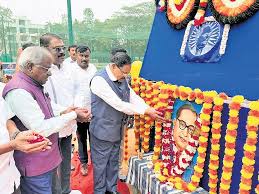
After becoming an MLA and minister, aspiring for the CM’s seat is a natural progression, hinted Parameshwara. BENGALURU: Home Minister Dr G Parameshwara on Thursday expressed his interest in becoming chief minister. “A human being must have aspirations, otherwise he/she will not feel human. Like everyone else, I too have aspirations”, he told reporters. Senior officers in the state home department have been given promotions and the minister was asked would he too get a political promotion. “I have lived as an optimist till now. Everyone has a desire for something to happen in life. If the high command decides, it will happen. It is up to the elders (to make a decision).” After becoming an MLA and minister, aspiring for the CM’s seat is a natural progression, hinted Parameshwara. The 74-year-old politician is a six-time MLA and one-time MLC. He has served as KPCC president for a record eight years (2010-2018). On Thursday he displayed his credentials as a Dalit and follower of Dr BR Ambedkar by attending an event commemorating the Mahars’ victory in Bhima Koregaon battle on January 1, 1818, near Pune in Maharashtra, at Nagasena Grounds near his residence in Bengaluru. According to sources Parameshwara, who has been in the good books of Congress Parliamentary Party (CPP) president Sonia Gandhi, has been silently lobbying for the top post. Some of his supporters, including former Hubballi Dharwad Corporation Mayor Anilkumar Patil, had met Sonia Gandhi in Delhi to submit a petition. Later some others had staged a demonstration outside Indira Bhavan while the Congress Working Committee (CWC) meeting was underway on December 27. Some of the sympathizers of Chief Minister Siddaramaiah, especially AHINDA leaders, have issued a statement that if he has to step down anytime in future Parameshwara should be given the top post and not Deputy Chief Minister DK Shivakumar. Interestingly, a section of Dalit leaders led by Bilikere Raju in Mysuru, Siddaramaiah’s home turf, last Sunday urged that the latter should sacrifice the CM post to a Dalit leader, especially Parameshwara. “Only then we will take part in the AHINDA convention (slated to be held in Mysuru on January 25), otherwise we will skip it”, he warned. Devaraj B Hirehalli Courtesy : TNIE Note: This news is originally published on https:/thenewindianexpress.com/bha and is used purely for non-profit/non-commercial purposes, especially human rights
Dalit dating in India is a choice between dignity and loneliness

Dating apps promised to disrupt the casteist marriage market. Instead, they’ve merely translated social biases into digital language. Let’s call her K. She is 34, single-child, and was ticking her Mr. Perfect checklist—has a larger goal or purpose, well-read, has to settle in her hometown, left-brained, must be a pothead, has high libido. And on top of it all, must be a neo-Buddhist. Oh, and bonus points for body count being in double digits (like her). She wanted all of this, no compromises at all, especially on the neo-Buddhist part. For educated Dalits, the harsh truth is: our dating pool is tiny. After decades of oppression, only a small fraction of Dalit youth have college degrees and job security like their Savarna peers. Even among Dalits, economic and educational uplift is uneven. My grandparents had arranged marriages within our extended clan, often prioritising family connections. Today, we discuss compatibility, but our pool is still largely comprised of members from our own community, and even that community is fracturing. As one essayist, Aashika Shivangi Singh, has noted, even marriage within first and third and fourth generation Dalits can provoke rejection from one’s own kin. In other words, this difference has left its scars even among “oppressed” castes. A shrinking dating pool Dalits carry intergenerational trauma, which can be hard to shake off, and it comes as an unavoidable baggage when it comes to finding a partner. They say, “The child of a broken home often seeks a perfect one, and in doing so, breaks the home they build.” For A, this reflects the anxiety of “getting it right” to avoid her parents’ fate. Her Dad left when she was 18. But her pursuit of ‘the perfect’ can stifle the natural, messy growth of a healthy relationship. And then there’s her checklist, the burden of expectation placed on a partner to be the permanent anchor that the parents failed to be. We often hear that modern love should transcend caste. After all, BR Ambedkar proclaimed, “the real remedy for breaking caste is inter-marriage. Nothing else will serve as the solvent of caste.” But in India, inter-caste unions remain rare; only about 5 per cent of marriages are between different castes. On dating apps, I see why. For every Dalit profile, there are dozens of profiles of young Savarna professionals. In swiping, I matched almost exclusively with Sharmas, Kumars and Chatterjees—upper-caste names that told me their caste before I even saw a picture. In a sense, the upper-caste majority on these apps makes us depend on each other: finding a socially aware partner often means dating within the Dalit/Bahujan community, not out of caste. This is not some romantic ideology of “dating within community” – it’s a quiet survival strategy. This isn’t about a lack of effort on apps. On the surface, dating technology promises openness, even anonymity. But caste filters itself in. As one Dalit writer wryly observed, even though apps don’t show your caste by default, “could it be that these apps are only casting a wider net to have access to people from different castes?” In practice, subtle markers, such as a surname, dialect, or even an English grammar test on a profile, serve as unofficial caste checks. “Many Savarna women,” an analyst notes, will declare themselves “grammar nazis” or post obscure cultural cues to signal they share Savarna upbringing. In short, technology is no match for what generations of social conditioning have normalised. The same caste boundaries that governed hometowns and schools quietly govern our swipes and likes. A big fault-line is generational. I’m a second-generation city dweller: my Dad earned a university degree and got a secure government job. For me, marriage is a choice about compatibility, love, and shared values. But for my parents’ generation (first-generation university-goers), marriage was often seen as proof that we’d escaped our caste past. They believe that if their daughter marries an Ambedkarite engineer, it will show their relatives that caste rules no longer bind us. In practice, this means they still mostly trust proposals within our sub-caste or those who look “respectable”. To them, each match is a statement: “See, our daughter is doing just fine.” This difference shows up in funny ways. I want to discuss relationship compatibility over coffee, but my mother quietly brings up the family’s job background. It’s a tension: elders see marriage as security and social proof, younger Dalits see it as an adventure of choices. Ideologies collide Another tension runs along ideological lines. In my family, we follow Ambedkarite neo-Buddhism, which means equality, rational thought, and rejecting caste rituals. We see ourselves as Buddhists first and caste-freed Dalits second. But many Dalit relatives I know (even if they outwardly call themselves “Buddhist”) still observe certain Hindu traditions: perhaps a puja, or an unshorn thread, or reverence for fasting on Thursdays. These differing worldviews can clash. For example, I’ve talked politics and social reform on dates, quoting Ambedkar or Buddha, only to find the match uncomfortable because I challenge even the smallest ritual they grew up with. Experiences like these remind us how deep caste memory runs, even in our own parents’ generation. The truth is, caste rules both the oppressor and the oppressed. As Dalit writer Suraj Yengde notes, even “in radical or progressive spaces, caste hierarchies continue to persist” in personal relationships. One painting of a Buddhist shrine on my wall might mean hope to me, and hostility to someone else. This ideological gap means our dating choices are often more constrained. I was assigned neo-Buddhist at birth, yet I can’t pretend all my kin left caste behind. In practice, many often screen potential Dalit partners by how seriously they take Ambedkar’s ideals versus caste heritage. And that difference matters: marrying outside one’s Dalit sub-caste can still upset even a Dalit community. Memory and trauma Intergenerational trauma casts a long shadow over Dalit dating. My parents lived through a lack of resources, an illiterate family, the barriers to education, and all that. They
Odisha launches Sweekruti scheme for transgenders welfare and empowerment
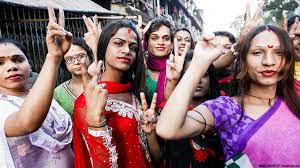
New state initiative provides financial aid, scholarships, skill training, legal support and housing to transgender persons and their families, aiming at social inclusion and dignity BHUBANESWAR: The Odisha government has launched a comprehensive welfare scheme for ensuring social inclusion, dignity and empowerment of transgender persons by addressing long-standing gaps in education, employment, healthcare, housing and legal support. Sources said the scheme Sweekruti, being implemented by the Social Security and Empowerment of Persons with Disabilities (SSEPD) department, has been designed to provide a structured, rights-based framework for the welfare of the transgender community and their families. Odisha, with a total transgender population of around 20,300 (as per the last census), is the first state to give transgender people social welfare benefits aimed at improving their overall socio-economic status. The scheme focuses on a set of key strategies that include financial assistance to parents of transgender children, pre and post-matric scholarships for transgender students, skill upgradation and entrepreneurship development training, strengthening of self-help groups, support for critical healthcare and group insurance, provision of legal aid and counselling. According to a resolution issued by the department, a key feature of the scheme is monthly financial assistance of Rs 1,500 to parents or guardians of transgender children to help them raise their children amid social stigma, discrimination and violence. This support will be provided until the child attains 18 years of age. In order to support education, eligible transgender students from families with an annual income not exceeding Rs 2.4 lakh will receive monthly scholarships ranging from `1,000 to `5,000, depending on the course pursued. Many transgenders are often denied entry into boys’ or girls’ hostels and refused rental housing, forcing them to drop out of education or employment, particularly when they migrate to cities such as Bhubaneswar, Cuttack, Rourkela, Berhampur, Balasore and Sambalpur. Secretary of the department RS Gopalan said Sweekruti will support the setting up of dedicated hostels for transgender persons by colleges, universities, urban local bodies and organisations working with the community. Transgenders will receive a stipend of Rs 3,000 per month for the duration of their studies. “The scheme will help districts set up rehabilitation centres to provide abandoned transgender persons, aged above 18 years and below 60 years, with shelter, basic amenities and capacity-building/skill development training,” he said. Hemant Kumar Rout Courtesy : TNIE Note: This news is originally published on https:/thenewindianexpress.com/bha and is used purely for non-profit/non-commercial purposes, especially human rights
Transgender community takes out procession in Secunderabad: Shri Khatu Shyam Nishan Kalash Yatra organized, people gathered to watch the procession
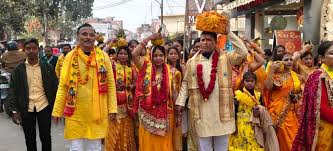
On Thursday afternoon, the Shri Khatu Shyam Nishan Kalash procession was taken out by the transgender community in Secunderabad town. The procession started from the ancient Baldev Temple on GT Road in the town and was led by the prominent Guru Rani Kinnar. Transgenders, dressed in colorful traditional attire, paraded through the town to the beat of drums and other musical instruments. The procession passed through Vijay Dwar, Bada Kabadi Bazaar, and Hanuman Chowk before concluding at the Shiva Temple in Ramwada. Along the route, townspeople showered flowers on the procession. A large number of people gathered to watch the procession. The police administration maintained security arrangements during this time. On this occasion, Guru Rani Kinnar said that this tradition is a symbol of the cultural identity of the transgender community and conveys a message of love and brotherhood in society. She also informed that a night-long vigil (Jagran) would be organized at the Shiva Temple to mark the New Year. Hemant Kumar, Secunderabad Courtesy: Hindi News
‘Mamata Banerjee threatened India’s Home Minister Amit Shah’: BJP’s big accusation
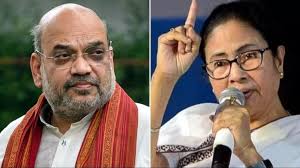
The BJP has accused West Bengal Chief Minister Mamata Banerjee of threatening Union Home Minister Amit Shah. The BJP said that if Mamata thinks she can stop the country’s Home Minister, then she is trying to stop India itself. New Delhi: The BJP has leveled very serious allegations against West Bengal Chief Minister and TMC chief Mamata Banerjee. The party claims that Mamata Banerjee openly used threatening language against Union Home Minister Amit Shah and said that if she wanted, Shah would not be able to step out of his hotel in Kolkata. The BJP alleges that this is not the first time this has happened. The TMC has displayed this kind of dictatorial behavior before. The party claims that democracy is under attack in Bengal and Mamata Banerjee has ruined it. ‘Mamata Banerjee threatened the Home Minister’ BJP MP from Puri, Odisha, and party’s national spokesperson Sambit Patra on Wednesday strongly criticized the West Bengal Chief Minister for allegedly using threatening language against Union Home Minister Amit Shah. Patra alleged that “the way Mamata Banerjee addressed Amit Shah with threatening words… Mamata Banerjee used such words of threat against the Home Minister of India, which are unthinkable.” ‘Said – If we wanted, we wouldn’t let him leave the hotel’ According to the BJP spokesperson, ‘Mamata Banerjee said that you are hiding in the hotel, if we don’t want you to, you cannot take a single step outside the hotel; and you are lucky that we allowed you to leave the hotel… If we wanted, we wouldn’t have let you leave the hotel.’ These are the words of Mamata Banerjee, the Chief Minister of West Bengal, a large state in the country, directed at her own country’s Home Minister, Amit Shah. In fact, on Tuesday, Amit Shah had targeted the TMC government over the issue of infiltrators during a press conference in Kolkata, after which Mamata retaliated against him at a public meeting. ‘TMC killed 300 BJP workers’ The BJP alleges that this is not the first time. Before the last elections, the convoy of BJP National President JP Nadda was also attacked by infiltrators. They have also alleged that TMC goons in West Bengal have killed around 300 BJP workers. Some were hanged, while others were brutally murdered. Meanwhile, 3,000 people who fled their homes are still unable to return. ‘Mamata Banerjee, you are threatening India’ The BJP says that this is the same Bengal about which it was once said, “What Bengal thinks today, India thinks tomorrow.” But Mamata Banerjee and the TMC have brought the state to this condition because of the infiltrators. They said, “Mamata Banerjee’s politics of appeasement has ruined Bengal. And the threat you are giving to the Home Minister, Mamata ji, is not just a threat to the Home Minister, it is a threat to every Indian. If you think that in Bengal you can challenge the country’s Home Minister, you can stop the Home Minister of India, you can prevent him from even stepping out on the road, then you are threatening India.” Written by: Anjan Kumar About the Author Anjan Kumar is an Assistant Editor at Navbharat Times Online. He has over 23 years of experience in electronic and digital media. He is interested in writing on topics related to politics, current affairs, judiciary, defense, foreign affairs, and business. Courtesy: Hindi News
Congress Compares Rahul Gandhi to Lord Ram, BJP Calls it ‘Unforgivable’
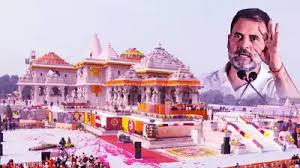
The BJP has reacted strongly to the Congress party comparing Rahul Gandhi to Lord Ram. The BJP called it the height of sycophancy and said that what the Congress has done is unforgivable. Congress Compares Rahul Gandhi to Lord Ram New Delhi: A Congress leader has sparked a major political controversy by comparing Rahul Gandhi to Lord Ram. The BJP has reacted sharply to this act by Maharashtra Congress leader Nana Patole, calling it an ‘unforgivable’ insult to faith. The party also called it the ‘height of sycophancy’. In an interview, Patole compared Rahul Gandhi, the Leader of the Opposition in the Lok Sabha, to Lord Ram, saying that his leader is doing what Lord Ram used to do. ‘An Unforgivable and Serious Insult to Faith’ BJP national spokesperson CR Kesavan strongly attacked Nana Patole’s statement on X (formerly Twitter). He said, “Nana Patole’s comparison of Rahul Gandhi to Lord Ram is an unforgivable and serious insult to the sentiments and faith of millions of Hindu devotees. Nana Patole had earlier disrespectfully demanded the purification of the divine Ram Temple in Ayodhya after Honorable President Droupadi Murmu visited and prayed for the welfare of the country.” ‘Deceitful Mentality Unacceptable’ The BJP spokesperson said that “Nana Patole’s shameful comments and deceitful mentality are completely unacceptable and highly condemnable. Will Nana Patole dare to ask Rahul Gandhi why he mocked the Pran Pratishtha ceremony as a song and dance program, or why Rahul Gandhi has not yet visited the Ayodhya Ram Temple?” ‘Congress Party Shows the Height of Sycophancy’ Another BJP spokesperson, Shehzad Poonawalla, targeted the Congress, saying, “Once again, the Congress party has shown the height of sycophancy. The Congress party says that Rahul Gandhi is like Lord Ram. Recently, they said that Christmas can only be celebrated because of Sonia Gandhi. What kind of sycophancy is this?” And then you are insulting the Hindu faith? This is the same Congress party that said the Ram Temple should not be built. This same Congress called the consecration ceremony of the Ram Temple a song and dance. They are continuously attacking the faith of Hindus.’ ‘Rahul Gandhi is doing the work of Lord Ram’ In fact, a PTI video asked Patole in an interview why Rahul Gandhi has not yet visited the Ayodhya temple, even though it has been built for a long time. To this, Patole said, “Our leader Rahul Gandhi is doing the work of Lord Ram. The work of Lord Ram was to provide justice to the oppressed, the deprived, and the victims. And by traveling across the country, our leader is doing the same work that Lord Ram did. Serving the oppressed and the victims is more important to Rahul ji than going to the temple and having a photo session…” Written by: Anjan Kumar About the Author Anjan Kumar is an Assistant Editor at Navbharat Times Online. He has over 23 years of experience in electronic and digital media. He is interested in writing on topics related to politics, current affairs, judiciary, defense, foreign affairs, and business. Courtesy: Hindi News
Rahul Gandhi faces a major challenge this year, informed by internal party politics and the electoral dynamics in five states.
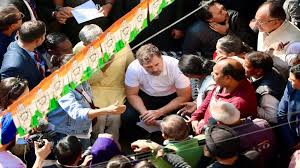
Last year was significant for the BJP in many ways. The party won state after state, and the landslide victory in the Bihar elections at the end of the year has doubled the party’s enthusiasm. Meanwhile, Congress’s losses have raised questions about Rahul Gandhi within the party. New Delhi: Elections are scheduled for this year in Kerala, Assam, West Bengal, Tamil Nadu, and Puducherry (a Union Territory). Political parties in these states face different dynamics and challenges in this new year’s electoral contest. Regardless of the outcome, the results will have no impact on national politics. Nevertheless, there are some things in these election results that people will be eagerly awaiting. Kerala, Tamil Nadu, and Bengal are three states where the lotus has never bloomed. The BJP is putting its full force in Bengal. A victory in any of these states would be significant. Opposition parties also face a significant challenge. Mamata Banerjee is concerned about Bengal, while the Left parties are concerned about Kerala. After a series of defeats, Rahul Gandhi faces a much bigger challenge. The BJP’s biggest challenge in 2026 will be winning the West Bengal Assembly elections. Union Home Minister Amit Shah claimed on December 30 that the BJP will oust the Mamata Banerjee government from power by securing a two-thirds majority in the upcoming elections. The BJP’s chief election strategist attacked the ruling TMC, raising issues of corruption, misgovernance, and infiltration. In the last assembly elections in West Bengal, the BJP emerged as the main opposition party, significantly outpolling the Left and Congress, but political analysts believe the ruling TMC remains a dominant political force in the state. Political analysts believe that both Tamil Nadu and Kerala remain a formidable challenge for the BJP. The BJP made its presence felt in Kerala with its success in the municipal elections and hopes to capitalize on this success in the upcoming assembly elections. It is also looking for a suitable ally in Tamil Nadu, currently ruled by the DMK, to expand its reach in the state. The Assam elections will test the BJP’s position in the Northeast, as it faces challenges from the Congress and regional parties. These state elections truly pose a significant challenge for both the Congress and Rahul Gandhi. After a series of defeats, questions are being raised about Rahul Gandhi within the party. A section within the party now sees a ray of hope in Rahul Gandhi’s sister, Priyanka Gandhi Vadra. Rahul Gandhi also recognizes that he must re-establish his position as the face of the Congress. A victory in Kerala will strengthen Rahul Gandhi’s position. The Assam elections are a test for the Congress, which lost its hold on the state more than a decade ago. The central leadership’s bet on Gaurav Gogoi will also be tested, as the party hopes he has the potential to follow in the footsteps of his late father, Tarun Gogoi. Curated by: Pankaj Singh About the Author Pankaj Singh is an Assistant Editor at Navbharat Times Digital. He has been involved in journalism for over 18 years. He has extensive experience in current affairs, politics, and ground reporting. During this time, he has covered the Delhi Assembly elections, railways, and Lok Sabha elections, as well as political news. Courtesy: Hindi News
Dalit organisations demand capital punishment to guilty in honor killing
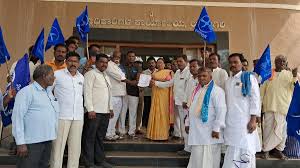
Submitting a memorandum addressed to CM Siddaramaiah, the organisations described the incident as not only an attack on an individual but also an effort to destroy humanity in the name of honor based on caste discrimination. Members of Dalit organisations submitting a memorandum demandng capital punishment for the accused in the Inam Veerapur honour killing case in Yadgir on Tuesday. Members of Dalit organisations submitting a memorandum demandng capital punishment for the accused in the Inam Veerapur honour killing case in Yadgir on Tuesday. | Photo Credit: SPECIAL ARRANGEMENT Karnataka State Dalit Sangharsh Samiti, Karnataka State Dalit Student Union, and the Karnataka State Dalit Women’s Union (Revolutionary) State Committee has strongly condemned the honor killing of a pregnant woman in Inam Veerapur village in Hubballi taluk and demanded that capital punishment be given to the accused involved in the barbaric incident. Submitting a memorandum addressed to Chief Minister Siddaramaiah through the district administration in Yadgir on Tuesday (December 30, 2025), the organisations described the incident that occurred as not only an attack on an individual but also an effort to destroy humanity in the name of honor based on caste discrimination. Deaths most dishonourable “The accused persons named as Prakash Gowda Patil, Preetam Gowda Patil, Arun Gowda Patil, Eerappa, and Mudakappa, who were responsible for this murder, should be sentenced to death. And the remaining accused should be arrested immediately,” Mallikarjun Kranthi, State Organizing Conveyor of Karnataka Rajya Dalit Sangharsh Samiti (Krantikari), who led the demonstrators, has said. “Killing a woman for marrying a Dalit man in the name of honor is an inhuman act and an attempt to disobey the principles of Basaveshwar. The state government should announce ₹50 lakh compensation to Vivekanand and also provide a government job and 4 acres of land,” Mr. Kranti urged the state government. “The government should curb honor killings by imposing the death penalty on the accused, and the remaining accused should be arrested immediately,” Mr. Kranthi added. The Hindu Bureau Courtesy : The Hindu Note: This news is originally published on https:/thehindu.com/bha and is used purely for non-profit/non-commercial purposes, especially human rights
Dotasra slams BJP over Rahul Gandhi’s marriage, asks if commenting on private life is part of RSS’s values?
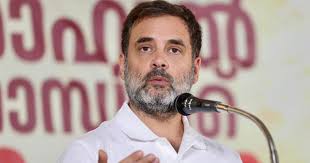
PCC Chief Govind Singh Dotasra has termed Minister Sumit Godara’s statement on Rahul Gandhi’s marriage as ‘low-minded thinking’. He said that the government, which has failed in the name of development, is only making personal comments. Dotasra criticized the government, stating that even the DPR for Yamuna water in the state has not been prepared, and more than 500 schools are in a dilapidated condition. Sikar: Rajasthan Pradesh Congress President Govind Singh Dotasra launched a scathing attack on the state’s Bhajanlal government and Minister Sumit Godara. Retaliating against the statement made regarding Rahul Gandhi’s engagement, Dotasra said that the kind of language used by the government ministers reflects their thinking and values. Questions raised about RSS’s teachings Dotasra asked whether such things are taught in the RSS’s schools. Who will get married and who will not? Who gave you the right to pry into someone’s private life? What kind of language is Minister Sumit Godara using? Are these his values? He questioned Minister Godara’s statement, asking who gave him the right to comment on someone’s private life. Dotasra alleged that the government has no vision for development, which is why such baseless statements are being made. Actually, the previous day, during a public hearing in Jaipur, Minister Sumit Godara, while talking to the media, had said that it is a good thing that Priyanka Gandhi’s son Rehan Vadra Gandhi is getting engaged, but if Rahul Gandhi also gets married, then he too will start behaving properly. DPRs for many schemes have not even been prepared till date Speaking to the media, Dotasra said that the condition of the budget announcements is such that even 10 to 15 percent of the work has not been implemented on the ground. DPRs for many schemes have not even been prepared till date. Regarding the agreements made by the government to bring Yamuna water to Sikar-Jhunjhunu in Shekhawati and the speeches given from time to time by Chief Minister Bhajanlal Sharma and all the ministers of the government, Dotasra said that bringing the water is a long way off; even the Detailed Project Report (DPR) for this scheme has not been prepared yet. More than 500 school buildings in the state are in dilapidated condition Raising questions about the education system, he said that the government is talking about AI-based education, while more than 500 school buildings in the state are in dilapidated condition and there are about 200 schools where there is not even proper seating arrangement. Thousands of schools need immediate repairs The State Congress President said that thousands of schools need immediate repairs. Referring to the Jhalawar accident, Dotasra said that the survey revealed that about Rs 16,000 crore is needed for the repair of school buildings, but even after more than a year, new buildings have not been constructed there. In many places, children are still forced to study sitting under trees. How will AI come without English, the government should explain Questioning the education policy, Dotasra said that on one hand, the government talks about stopping English education and on the other hand, it is claiming to provide AI model education. The government should explain how AI will come without English. He said that basic facilities should be strengthened first, and only then should such big claims be made. Authored by: Pulkit Saxena • Contributed by: Amit Bhardwaj About the author Pulkit Saxena is a Digital Content Producer at Navbharat Times Online. Starting his journalism career in Delhi, he now covers Rajasthan politics, crime, current affairs, and offbeat news. He has been working in the media for about 7 years. Courtesy: Hindi News
Dalits protest against Hubballi honour killing
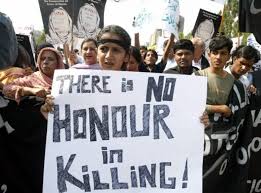
Members of Karnataka Rajya Chalavadi Mahasabha and other organisations took to the streets in Hubballi on Monday against the recent honour killing in Inam Veerapur village in Dharwad district in which a pregnant woman passed away. Protestors condemned the murder of the pregnant woman by her family members who were upset that she married a Dalit. They demanded death penalty for the accused. They walked from Ambedkar Circle to the Tahsildar’s office to express their protest. They said that attacks against Dalits and cases of families killing their women who marry Dalits are increasing and demanded steps to stop such acts. They also demanded compensation to the families of victims. It is unfortunate that in the land of Basavanna, Dalits are not able to live peacefully. Mahasabha president Parameshwar Kale and others were present. The Hindu Bureau Courtesy : The Hindu Note: This news is originally published on https:/thehindu.com/bha and is used purely for non-profit/non-commercial purposes, especially human rights