
Dalit woman murdered in Karnataka! Huge uproar over ‘love jihad’ claims; Rafiq stabbed her after she refused to marry him.

Dalit woman killed in Yellapur: Karnataka police said a 30-year-old Dalit woman was stabbed to death in broad daylight in Yellapur town, Uttara Kannada district. The victim has been identified as Ranjita Bhansod. The body of the accused, Rafiq Imamsaab, was also recovered. Dalit woman killed in Karnataka: A 30-year-old Dalit woman was stabbed to death on the street in Yellapur town, Uttara Kannada district, Karnataka. It is alleged that the murder was committed by an acquaintance. Superintendent of Police (SP) Deepan MN said the body of the accused, Rafiq Imamsaab, was also found hanging from a tree in a forest near Yellapur on Sunday (January 4). The incident has sparked communal tension in the town. Several Hindu organizations called for a shutdown in Yellapur on Sunday, calling the murder a case of ‘love jihad’. The deceased has been identified as Ranjita Bhansod of Kalamma Nagar, Yellapur. According to police, Rafiq, a resident of the same area, was the main accused in the woman’s murder. Police said Rafiq and Ranjita were friends since school. A police officer said, “Preliminary investigation reveals that the accused was pressuring the woman to marry him. When she refused, he allegedly attacked her with a knife in public.” The woman was married 10 years ago Police said on Sunday that the incident occurred on Saturday afternoon when Ranjita was returning home from school. Police said Ranjita had married in Maharashtra about 12 years ago and they have a 10-year-old son. Police said she was living separately from her husband with her family in Yellapur, where she worked as a mid-day meal assistant at a government school. The accused often visited her home for meals, but tensions escalated when she insisted on marriage. However, Ranjitha and her family protested. Following the murder, angry residents and Hindutva activists protested in front of the Yellapur police station, alleging a delay in the arrest of the accused. The attacker also died. Meanwhile, Rafiq’s body was found hanging from a tree in the forest. Police said the circumstances of his death were being investigated. It is being claimed that he committed suicide. Karnataka BJP president B.Y. Vijayendra attended the woman’s funeral. He demanded compensation of ₹50 lakh and two acres of land for the bereaved family. He also announced immediate assistance of ₹5 lakh from the party. Sri Ram Sena chief Pramod Muthalik said, “This is a clear case of ‘love jihad.’ In this, unmarried, widowed, or divorced women are targeted.” Security beefed up In view of the situation, police have tightened security by deploying additional forces in Yellapur and surrounding areas. Vijayendra condemned the incident and alleged that such crimes are recurring due to the inaction of the state government and the Home Department. He alleged, “Whenever such incidents occur, even before the police begin an investigation, the Chief Minister and Home Minister offer clarifications, saying it’s not a case of ‘love jihad.’” Vijayendra demanded a thorough investigation and justice for the victim’s family. The term ‘love jihad’ was coined by right-wing groups. It is used to allege that Muslim men conspire to lure Hindu women into relationships and marriages in order to “convert them to Islam.” AKHILESH NATH TRIPATHI Courtesy: Hindi News
Khaki uniform tarnished in UP! Policeman drugs Dalit woman and rapes her, court delivers justice

Uttar Pradesh News: A shocking incident that shames humanity has come to light from Ambedkar Nagar district. Here, the protector became the predator. A policeman drugged a Dalit woman and raped her. Surprisingly, the landlady also aided the accused in this heinous act. This case has become a topic of discussion in Uttar Pradesh News. Following a court order, the police have registered a case against the accused constable and the landlady. The conspiracy was hatched in a rented house The incident took place in the Jauhardih locality of Akbarpur Kotwali area. The victim, a Dalit student, lived there in a rented house while pursuing her studies. Constable Rajesh Yadav also lived in the same building. It is alleged that the constable obtained the victim’s phone number from the landlady. He started harassing her by sending her lewd messages. One day, Rajesh offered the woman food. When the victim refused, the landlady pressured her to eat it. The food contained a sedative, which caused her to lose consciousness. When she regained consciousness, her world had been shattered When the victim regained consciousness, she was naked. Constable Rajesh was present there. He threatened the woman and started blackmailing her. The accused said that if she told anyone, the consequences would be dire. The constable sexually exploited the woman for several months. When the woman protested, the constable told everything to her husband. After this, her husband also abandoned her. Police finally act after court’s reprimand The victim went from the police station to the SP’s office seeking justice. But the police department did not take any action against its own employee. Finally, the victim approached the court. Now, on the court’s order, the Akbarpur Kotwali police have registered a case against Constable Rajesh Yadav and the landlady. The police have registered a case under the SC/ST Act and sections related to rape and have started an investigation. Poonam Sharma Courtesy: Hindi News
Samajwadi Party chief Akhilesh to focus on Dalit-outreach in UP-polls:Will give tickets even on general seats, know what is the plan
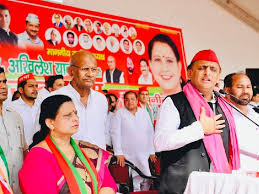
The Samajwadi Party (SP) is preparing to make another major move in Uttar Pradesh politics, with a renewed focus on consolidating Dalit votes. As part of this strategy, the party is considering fielding candidates from the Dalit community on a large scale, even from general (unreserved) assembly seats. What is the thinking behind this move? Is the party conducting surveys on the ground? Which general seats could see Dalit candidates? Whose tickets may be cut to accommodate them? And what electoral equation did SP follow in the 2024 elections? This report looks for answers to these key questions. Why has Samajwadi Party adopted this strategy? In the 2024 Lok Sabha elections, along with strong support from backward classes, a significant section of Dalit voters also backed the Samajwadi Party. This shift has caused concern within the Bahujan Samaj Party (BSP), which is attempting to regain its traditional Dalit vote base in Uttar Pradesh. Over the past few months, BSP chief Mayawati has held several large rallies and organisational meetings to revive the party. Dalits constitute nearly 20 per cent of Uttar Pradesh’s population. While 84 assembly seats are reserved for Scheduled Castes, Dalit votes play a decisive role even in many general constituencies. SP’s strategy is aimed at making inroads into BSP’s core support base. A formula that worked in 2024 In the 2024 general elections, SP chief Akhilesh Yadav campaigned on the PDA slogan — Backward, Dalit and Minority. Under this formula, the party gave tickets to candidates from non-Yadav communities on a significant number of seats. Notably, Dalit candidates were fielded on two general Lok Sabha seats. In Faizabad, considered a BJP stronghold, SP nominated Awadhesh Prasad and went on to win. In Meerut, Sunita Verma was fielded, and the contest between SP and BJP was decided by a very narrow margin. The party is now preparing for the 2027 assembly elections along similar lines. Surveys underway at the ground level SP has deployed multiple survey teams across the state to assess the political mood on the ground. These teams are evaluating which candidates are strong in which areas, identifying general seats where Dalit candidates could be viable, and reviewing the performance of sitting SP MLAs. According to party sources, a recent survey report submitted to Akhilesh Yadav highlighted strong anti-incumbency against an SP MLA. The report also mentioned several general seats in western Uttar Pradesh where the party may consider fielding Dalit candidates. These include constituencies in Bijnor, Saharanpur, Ghaziabad and Hapur districts. Likely reduction in Yadav and Muslim tickets Sources within SP indicate that to accommodate more Dalit candidates, the party may reduce ticket allocations for Yadavs, Muslims and even some upper-caste candidates. In the 2024 Lok Sabha elections, SP largely restricted Yadav tickets to members of the Mulayam Singh Yadav family, all of whom won. The party also cut some Muslim tickets. For example, in Moradabad, sitting MP ST Hasan was denied a ticket, which was instead given to Ruchi Vira, who went on to win the seat. Kurmi community to get greater representation Alongside Dalits, SP is also focusing strongly on the Kurmi vote bank. In the 2024 elections, Kurmi support played a key role in the party’s performance against the BJP. Out of 62 Lok Sabha seats contested by SP, 12 candidates were from the Kurmi community, and seven of them won. Victories came from Kurmi-dominated constituencies such as Ambedkarnagar, Basti, Shravasti, Pratapgarh, Lakhimpur Kheri, Banda and Fatehpur. SP had fielded Kurmi candidates in all these seats. The party plans to replicate this approach in the assembly elections as well. This was also reflected in Akhilesh Yadav’s recent New Year visit to the residence of Pratapgarh MP SP Patel, which sent a clear political message. What party leaders and analysts say Shravasti MP Ram Shiromani Verma said, We are working at the grassroots level. Our workers have reached booth level during the SIR process and helped people. The Kurmi community stood with SP in 2024 and continues to do so. SP has given due respect to our community. In fact, Akhilesh Yadav is receiving support from people across castes and communities. Political analyst Hisam Siddiqui said the strategy draws directly from the success of 2024. Fielding Dalit candidates on general seats sends a strong message of social justice. It could also help address the long-standing Yadav–Dalit friction within SP. However, whether Dalit voters will fully back SP candidates in Yadav-dominated areas can only be assessed once candidates are announced. Senior journalist Virendra Nath Bhatt said SP’s primary aim is to increase its vote share while safeguarding the support it gained in 2024. “When SP formed the government in 2012, it had around 29 per cent vote share. In the 2024 Lok Sabha elections, SP and Congress together secured close to 44 per cent. If SP is able to reach a similar figure in the assembly elections, it will be well placed to form the government.” Syed Yasir Raza | Lucknow Courtesy : Bhaskar English Note: This news is originally published on https:/bhaskarenglish.com/bha and is used purely for non-profit/non-commercial purposes, especially human rights
Jaipal Singh Munda: The great hero of the tribal community, who was proud of being a tribal
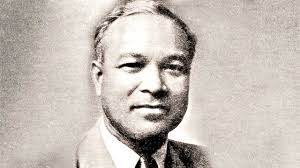
Jaipal Singh Munda was a man of many talents. Along with higher education in England, he also developed an interest in hockey. In the 1928 Amsterdam Olympic Games, he captained the British Indian hockey team. Under his captaincy, the team won the gold medal. In the same year, 1928, he passed the Indian Civil Service examination, becoming the first Indian tribal to do so. He was also quite successful in politics. He formed the Jharkhand Party, which in its very first election saw 4 MPs and 32 MLAs elected in Bihar. The stature that Babasaheb Dr. Ambedkar holds in the Dalit community, if accepted with an open mind instead of controversy, is the same stature that Jaipal Singh Munda holds in the tribal community. Just as Babasaheb Dr. Ambedkar studied at the world’s best universities and came forward to fight for the rights of the underprivileged, Jaipal Singh Munda’s life is more or less a similar example. A major contribution to the facilities that the tribal community enjoys in the country today is due to the tribal leader Jaipal Singh Munda. This is why the grateful tribals respectfully bestow upon him the title of ‘Marang Gomke’. Jaipal Singh Munda was born on January 3, 1903, in Takra Pahantoli, Khunti district, about 18 kilometers south of Ranchi, the capital of Jharkhand (formerly Bihar before 2000). His father’s name was Amru Pahan and his mother’s name was Radhamani. However, Jaipal Singh Munda’s initial name was Pramod Pahan. Jaipal Singh himself wrote in his autobiography: “I don’t know who changed my name and when. It was January 3, 1911, the day my name must have been changed. I must have been 8-10 years old then. My family members called me Pramod, and that was my name until January 3rd. But, on January 3, 1911, when I, holding my father Amru Pahan’s finger, hesitantly arrived at St. Paul’s School in Ranchi, not only was my date of birth changed, but my name was changed as well.” He received his early education at this same St. Paul’s School in Ranchi. The principal there had a special affection for Jaipal Munda. The reason was his sharp intellect. This is why the principal sent Jaipal Munda to England for further education. There he graduated from St. John’s College, Oxford, and also earned an M.A. in Economics. He also became a gold medalist in Economics. Jaipal Singh Munda was a man of many talents. Along with higher education in England, he also developed an interest in hockey. He achieved great success in it. In the 1928 Amsterdam Olympic Games, he captained the British Indian hockey team. Under his captaincy, the team won the gold medal. In 1928, he also passed the Indian Civil Service examination, becoming the first Indian tribal to do so. But during this time, he had to go to the Olympics, due to which he could not complete his training and had to leave the Indian Civil Service midway. In 1934, he served as the principal of a college in Gold Coast (Africa), now Ghana. In 1936, he was also the Foreign Minister of the Bikaner princely state. After that, in 1937, he was the principal of Ramkumar College, Raipur. During this time, he began to think about uplifting his tribal community from backwardness. Amidst all the turmoil, a major change came into his life, and leaving everything behind, he dedicated his life to the upliftment of the tribal community. For this purpose, in 1938, he formed the Adivasi Mahasabha in Bihar (Jharkhand had not yet been created). Its main objective was to integrate the tribal communities into the mainstream. To achieve this, Jaipal Singh Munda first raised the demand for a separate state before the British government, requesting the creation of a Jharkhand state by combining parts of Bihar, Bengal, and the Central Provinces. He continuously struggled for this demand. He believed that creating a separate state for the tribal community would quickly improve their lives. In the 1946 elections to the Constituent Assembly, Jaipal Singh Munda was also elected as a member. What Dr. Ambedkar did for the Dalits by securing their rights in the Constitution, Jaipal Singh Munda did for the tribals. In his very first speech as a member of the Constituent Assembly, he clearly stated: “I stand here to speak on behalf of millions of people, who are the most important people, who are the unsung fighters for freedom, who are the original inhabitants of India, and who are called Backward Tribes, Primitive Tribes, Criminal Tribes, and what not. But I am proud of being a tribal.” He repeatedly opposed the use of the term “Scheduled Tribes” by the Constitution Committee. He wanted the word “Adivasi” to be used in the Constitution. Keeping the interests of the tribals in mind, Dr. Ambedkar included the Fifth Schedule in the Constitution of India, which included the rights and privileges of the tribals. Thus, through the joint efforts of Dr. Ambedkar and Jaipal Singh Munda, 7.5 percent of the seats in the Lok Sabha and State Assemblies were reserved for tribals, along with reservations in education and jobs. In this way, the tribals received special rights in the Constitution. Jaipal Singh Munda founded the Adivasi Labour Federation in 1948. However, to secure political participation for the tribal people, he transformed the All India Adivasi Sabha into the ‘Jharkhand Party’ on January 1, 1950. The Jharkhand Party achieved great success in its very first election, creating a sensation. Four MPs and 32 MLAs were elected from Bihar on the Jharkhand Party ticket. A similar performance was seen in the 1957 elections, where 34 MLAs and 5 MPs were elected. However, there was a decline in the 1962 elections, with only 22 MLAs and 5 MPs elected. After the elections, there was turmoil within the party, which led Jaipal Munda to merge it with the Congress Party in 1963, on the condition that the Congress Party would create a separate Jharkhand state after the
Rights groups seek action after death of 19-year-old Dalit student in Himachal Pradesh college

Dalit rights organisations on Friday demanded the arrest of three senior students and a college professor, and accountability from authorities, following the death of a 19-year-old Dalit female student who they allege was subjected to sustained ragging, sexual harassment and psychological abuse at a government college in Himachal Pradesh. Dalit Adivasi Shakti Adhikar Manch (DASAM) and its women’s collective, Mahila Kaamkaji Manch (MKM), said the student of Government Degree College, Dharamshala, died after enduring months of harassment that was ignored by the college administration and state authorities. In a statement issued on Friday, the groups described the case as a “grave instance of caste- and gender-based institutional violence” and said her suffering was overlooked until it culminated in her death. According to a complaint filed by the girl’s father and a first information report (FIR) registered by police, the girl, who belonged to a Scheduled Caste community, was allegedly subjected to ragging, intimidation, humiliation and physical assault on campus. The FIR names three senior students — Harshita, Aakriti and Komolika — for their alleged role in the abuse. The complaint also names Professor Ashok Kumar, a faculty member at the college, accusing him of sexually inappropriate behaviour and harassment. The allegations include abuse of academic authority and conduct of a sexual nature, the organisations said. DASAM said the alleged actions attract provisions of the Scheduled Castes and Scheduled Tribes (Prevention of Atrocities) Act, 1989, including sections relating to caste-based insult, intimidation and sexual harassment of Dalit women. The FIR also includes offences under the Bharatiya Nyaya Sanhita, such as sexual harassment, causing hurt and criminal intimidation, which the groups say must be read alongside provisions of the SC/ST Act that mandate enhanced punishment for crimes committed with knowledge of a victim’s caste identity. The organisations said the girl had been hospitalised repeatedly and showed signs of severe psychological distress before her death, pointing to what they described as a complete failure of the institution to provide counselling or protection. They said this amounted to a violation of the Mental Healthcare Act, 2017, and of the constitutional right to life with dignity. Holding the college administration responsible, DASAM said provisions of the SC/ST Act that penalise neglect of duty by public servants should be invoked against officials who failed to act on complaints or warning signs. The group also said the girl’s family was entitled to protection, relief and compensation under the law. The alleged ragging also falls under the Himachal Pradesh Educational Institutions (Prohibition of Ragging) Act, 2009, while the accusations against the professor invoke the Sexual Harassment of Women at Workplace (Prevention, Prohibition and Redressal) Act, 2013, the statement said. The organisations demanded the immediate arrest of all accused, noting that anticipatory bail is barred under the SC/ST Act. They also called for the resignation of the college principal and the state’s education minister, the termination of the accused professor, and the expulsion of the three students. In addition, they sought independent inquiries by the National Human Rights Commission and the National Commission for Women, a time-bound judicial probe into institutional responsibility, and compensation and rehabilitation for the girl’s family. Incidents of violence against Dalit women in educational institutions deter others from pursuing higher education and deepen social exclusion, the groups said, calling the case a systemic failure rather than an isolated tragedy. Maktoob Staff Courtesy : Maktoob Media Note: This news is originally published on https:/maktoobmedia.com/bha and is used purely for non-profit/non-commercial purposes, especially human rights
Dalit teenager sexually assaulted in Kannauj after Muslim man hides his identity: Exploited for two years on the pretext of marriage, beaten for refusing religious conversion
In Kannauj, a Muslim youth befriended a minor Dalit girl by concealing his identity. He sexually exploited her for two years on the pretext of marriage. When she turned 18 and asked him to marry her, the youth revealed his Muslim identity and pressured her to convert. When she refused, the youth, along with his family, beat her with a belt. She was admitted to the hospital. The incident took place in a neighborhood of Chhibramau. A Dalit girl from a village in the Talgram police station area had come to live there two years ago to study and prepare for competitive exams. While going to and from college, a Muslim youth befriended her by hiding his identity. He then started pressuring her to meet him. Afterward, he sexually exploited the girl on the pretext of marriage. When the girl turned 18 and asked him to marry her, the youth revealed his true identity. He started pressuring the student to convert to Islam. When she refused, the youth called her to his house on a pretext and beat her with a belt while hurling casteist abuses. The girl’s condition deteriorated. Upon receiving the information, her family took her to the 100-bed hospital, where she was treated. Based on the complaint filed by the girl’s mother, the Chhibramau Kotwali police have registered a case against Aman Siddiqui, Rahees Siddiqui, Haseen, Vishal Siddiqui, Imran, and Muskan, all residents of Sarafan Mohalla. Vikas Awasthi | Kannauj Courtesy: Hindi News
In Lucknow, a Dalit youth was beaten by thugs for sitting on a chair; allegations of caste-based abuse also made.

Lucknow News: In Lucknow, a thug not only used casteist slurs against two Dalit youths sitting on chairs at a shop but also brutally assaulted them when they protested. Sandeep Tiwari, Lucknow: Another shameful case related to caste discrimination and untouchability has come to light in Lucknow, the capital of Uttar Pradesh. In the Sairpur police station area of the BKT region, a Dalit youth and his companion were allegedly brutally beaten by a thug for sitting on chairs. Based on the victim’s complaint, the police have registered a case and started an investigation. Asked to get up from the chair, attacked upon protest The victim, Bablu Kumar Gautam, stated in his complaint to the police that he and his companion, Umesh Kumar Gautam, work at Monu Singh’s shop in Sairpur. On the evening of December 30, 2025, at around 7:40 PM, both were sitting on chairs at the shop. At that time, Amar Singh Yadav, a resident of Tarahiya village, arrived and asked them to get up from the chairs so he could sit down. When Bablu and Umesh protested, the accused became enraged. It is alleged that he insulted them using casteist slurs and started beating them with kicks and punches. Both youths injured in the assault In the assault, Bablu Gautam sustained serious injuries to his left ear, neck, and left eye, while Umesh Kumar sustained injuries to his stomach and chest. After the incident, both injured men were sent for treatment. Accused of being under the influence of alcohol Sairpur Police Station in-charge Manoj Kumar Kori said that the preliminary investigation revealed that the accused, Amar Singh Yadav, was under the influence of alcohol at the time of the incident. When the victim refused to get up from the chair, the accused abused and assaulted him. He said that a case has been registered under relevant sections based on the victim’s complaint, and the matter is being investigated. The police say that strict legal action will be taken against the accused if found guilty. Edited by: Devesh Pandey About the Author Devesh Pandey is a consultant at Navbharat Times Online. He has 8 years of experience working in TV channels and digital media. He has experience and interest in politics and sports. He covered several IPL matches and the World Cup 2023 in Lucknow. Courtesy: Hindi News
Dalit Teenager Stripped and Beaten in Bareilly After Instagram Argument, Video Made, FIR Filed Against 5

The teenager had a minor argument with Mukul Yadav on Instagram a few days ago. Mukul Yadav had then threatened to kill him by January 15th. Since then, the accused were searching for the teenager. RB Lal, Bareilly: In the Bareilly Cantt police station area, goons abducted a Dalit teenager from near his house and took him to a pond near Chanehta, where they stripped him naked and brutally beat him. During the beating, the accused stripped the teenager at gunpoint and knifepoint. The minor’s mother has filed a report against five accused. Police are searching for the accused. Aarti Devi, a resident of Dhobi Mohalla in Sadar Bazar, Cantt police station area, told the police that her husband works as a laborer and she works in a private school. On the night of December 31st, her 16-year-old son was walking near their house. It is alleged that Mukul Yadav, Subhash Yadav alias Eddy, Sultan, Ayush, and Basu, residents of Ahir Mohalla, arrived near his house. They forcibly put her son on a motorcycle and took him to a pond on Chanehta Road. There, the teenager was brutally beaten at gunpoint and knifepoint. The accused beat him, stripped him naked, and beat him again, making a video of the entire incident and circulating it on social media. During this time, the teenager somehow managed to snatch his shorts from the accused and escaped from the spot, saving his life. He reached home and informed his family about the entire incident. Bareilly Superintendent of Police Manush Parik said that based on the complaint of the victim’s mother, the police have registered a case against Mukul Yadav, Subhash Yadav alias Eddy, Sultan, Ayush, and Basu under sections 137(2), 191(2), 115(2), 352, 351(3) of the BNS 2023. It is being discussed that the teenager had a minor argument with Mukul Yadav on Instagram a few days ago. On this, Mukul Yadav had threatened to kill him by January 15. Since then, the accused were searching for the teenager. It is reported that Sultan, the accused in the case of stripping and beating the Dalit teenager and making a video of it, had fired at advocate Rajaram Solanki in the court premises in January last year. Contributed by: RB Lal • Edited by: Alok Bhadauria About the Author Alok Singh Bhadauria is an Assistant News Editor at Navbharat Times. He has been associated with the Times of India Group since 2008. After working at Navbharat Times, Delhi (newspaper), he has been working at NBT Online for the past seven years. Courtesy: Hindi News
Dalit minor girl raped: Police arrest and jail the accused
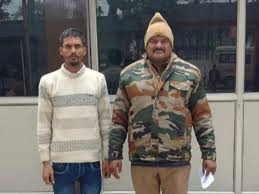
Fatehpur, Barabanki. In Fatehpur, Barabanki, Lallan Singh, son of Rajkishore Singh, has been arrested and sent to jail by the police on charges of raping a Dalit minor girl, threatening to viral a video, and using abusive language. A 16-year-old girl from a village in the Kotwali area had complained to the Superintendent of Police. The girl alleged that about a year ago, when she was returning home from her field, Lallan Singh and another unknown person from the village forcibly took her to the field after covering her mouth. There, Lallan Singh raped her and also made a video of the act. The accused threatened the girl that if she complained to anyone, he would make the video go viral. For a year after this incident, the accused continued to rape her by threatening to viral the video and promising to marry her. On December 23, Lallan Singh called the girl to his house late at night and raped her again. When the girl talked about marriage, the accused choked her and threatened to drive her out of the village. Kotwal Sanjeet Sonkar said that a case has been registered in this matter and the accused has been arrested and sent to jail. Sachin Kumar Courtesy: Hindi News
How India Systematically Excludes Its Transgender Population
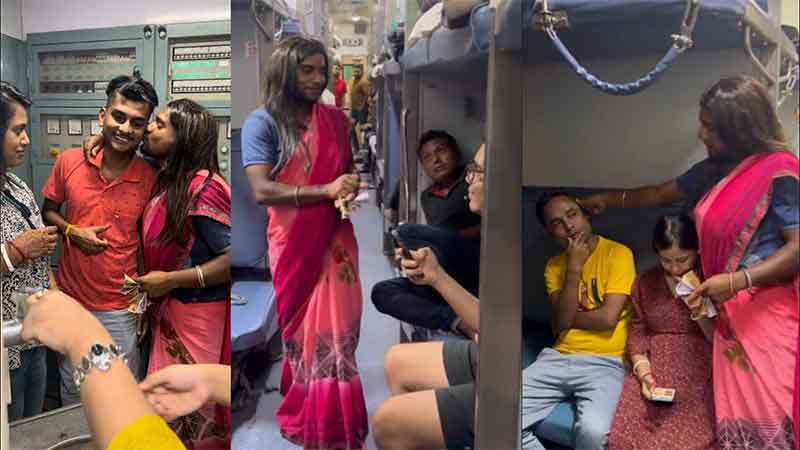
India systematically excludes its transgender population through deep-seated social prejudice, leading to familial rejection, educational dropout, economic marginalization (forcing many into begging or sex work), and barriers in healthcare and housing, despite legal recognitions like the NALSA Supreme Court ruling and the Transgender Persons Act. This exclusion stems from a binary view of gender, cultural stigma, and insufficient implementation of inclusive policies, leaving trans individuals vulnerable to violence, discrimination, and poverty, even as laws offer rights. The Indian Constitution promises equality before law, prohibition of discrimination, and the right to live with dignity. Yet for transgender persons, these guarantees remain largely ornamental. Despite judicial recognition, legislative frameworks, and rhetorical commitments to inclusion, transgender Indians continue to live as citizens without citizenship – visible in census numbers, invisible in policy outcomes, and excluded from the social contract. Their marginalisation is not episodic; it is structural, measurable, and deepened by a stark rural-urban divide. The evidence is unambiguous. According to the National Human Rights Commission, the literacy rate among transgender persons stands at around 56%, nearly twenty percentage points below the national average. Nearly half of all transgender persons never attend school, while many who do are forced to drop out due to relentless bullying, harassment, and institutional hostility. Schools, instead of functioning as sites of social mobility, become early theatres of exclusion. There are few mechanisms for redress, almost no trained counsellors, and little accountability for teachers or administrators who allow discrimination to flourish. This educational exclusion feeds directly into economic dispossession. The NHRC’s findings are staggering: 92% of transgender persons are denied participation in formal economic activity. Even when educated or skilled, they face routine rejection in hiring, promotions, and workplace retention. As a result, nearly 96% are pushed into informal, precarious, or socially stigmatised work — begging, ceremonial performances, sex work, or daily wage labour. Only about 6% have ever accessed formal employment in the private sector or civil society organisations. Income data reinforces the picture: barely 1% earn more than ₹25,000 per month, placing the overwhelming majority far below any threshold of economic security. Housing exclusion compounds this precarity. Transgender persons routinely face discrimination by landlords, are denied rental agreements, or are evicted under social pressure. Many are forced into unsafe shared spaces or community enclaves, while others experience homelessness. Despite being officially enumerated in the Census, transgender persons remain absent from housing policy design. Welfare housing schemes rarely specify transgender beneficiaries, and where state initiatives exist, they are small, urban-focused, and poorly implemented. Health outcomes reveal the human cost of systemic exclusion. HIV prevalence among transgender persons in India is estimated at 3.8%, nearly twenty times the national average. This disparity is not incidental; it reflects forced economic marginalisation, limited access to preventive healthcare, and discrimination within medical institutions themselves. Mental health indicators are even more alarming. Studies suggest that around 31% of transgender persons have attempted suicide, with nearly half doing so before the age of 20. These are not individual pathologies; they are predictable outcomes of sustained social rejection. Judicially, India has acknowledged these injustices. The Supreme Court’s NALSA judgment (2014) recognised transgender persons as a third gender and affirmed their entitlement to fundamental rights, including affirmative action in education and employment. Politically, however, this promise has been diluted. The Transgender Persons (Protection of Rights) Act, 2019 prohibits discrimination but avoids structural remedies. It offers no reservations, weak penalties for violations, and bureaucratic identity certification processes that many transgender persons experience as humiliating and exclusionary. Enforcement remains negligible, and accountability mechanisms are virtually absent. Within this already exclusionary landscape, the rural–urban divide intensifies marginalisation. Urban centres, for all their hostility, provide relative anonymity, access to NGOs, healthcare facilities, legal aid, and occasional employment opportunities. Cities host transgender collectives, shelters, and advocacy networks – uneven and insufficient, but real. Rural India offers almost none of this. Transgender persons in villages face near-total invisibility. Family rejection in rural settings carries harsher consequences, where social surveillance is constant and escape routes limited. Schools, primary health centres, panchayats, and police stations are often deeply uninformed or openly hostile. There are fewer NGOs, no shelters, limited digital access, and virtually no targeted welfare outreach. Documentation barriers – identity cards, residence proof, certificates — further exclude rural transgender persons from schemes that exist largely on paper. This produces a predictable pattern: distress migration. Transgender persons are pushed out of villages into cities, arriving without education, skills, housing, or safety nets. Their subsequent precarity is then moralised and criminalised, rather than understood as the outcome of systematic exclusion. Mainstreaming transgender persons cannot be reduced to symbolic inclusion or occasional welfare schemes. It requires constitutional seriousness. First, the state must honour the Supreme Court’s mandate by introducing reservations in education and public employment, treating transgender persons as a socially and educationally backward class. Second, anti-discrimination provisions must be enforceable, with clear penalties and independent grievance mechanisms. Third, economic inclusion must move beyond skill development to guaranteed job placement, supported by incentives and obligations for employers. Fourth, housing schemes — urban and rural — must explicitly include transgender beneficiaries. Fifth, public healthcare must integrate gender-affirming care and mental health services as standard, not optional, provisions. Equally critical is local governance. Panchayats, ASHA workers, school teachers, police personnel, and district officials must be trained not as benevolent actors, but as constitutional duty-bearers. Without decentralised accountability, rural exclusion will persist regardless of national laws. Finally, data is political. India cannot govern what it refuses to measure adequately. Comprehensive, disaggregated data on education, employment, housing, health, and rural–urban distribution is essential for evidence-based policymaking and democratic accountability. Transgender Indians are not seeking charity or exceptional treatment. They are asking for what the Constitution already guarantees: the right to exist without fear, to learn without humiliation, to work with dignity, and to belong as equal citizens. Until those rights are realised — in villages as much as in cities – their exclusion will remain one of the republic’s most profound moral and political failures. Dr. Ranjan Solomon