
Punjab Congress in damage control mode after Channi’s Dalit representation demand
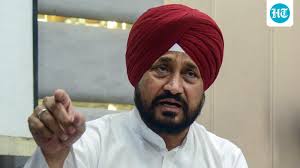
Days after Congress leader and former Punjab Chief Minister Charanjit Singh Channi called for greater Dalit representation in the party, which had brought the internal party discord into public view, the State unit on Tuesday (January 20, 2026) moved into damage control mode. Cracks appear in Punjab Congress over calls for Dalit representation in party by Channi Denying that there was any factionalism in the State Congress, Punjab Congress president Amarinder Singh Raja Warring said the Congress does not practice caste or communal politics, even as he asserted that there may are some minor differences among the leaders. Talking to media persons here during an informal interaction, he said, “Unlike the BJP, the Congress does not believe in polarising and dividing people in the name of caste or religion. Punjab in particular never believed in caste or sectarian divisions.” Responding to a question on factionalism in the Punjab Congress, he said, the party was completely united in the State. He added, “May be there are some minor differences among the leaders which are part of every organisation and even a family. But tell me where our leaders have worked on cross purposes against each other or against the party?” he quipped. He said even though there are 34 assembly seats reserved for the Scheduled Castes in Punjab, in case there are more deserving candidates from the SC community, they can still be accommodated. “If there are fifty deserving SC candidates, they will all get the tickets irrespective of the fact that only 34 are reserved for the SCs”, he said. To a question about the recent remarks made by Mr. Channi, the State president said he would not like to comment on that, pointing out that “Channi was made the Chief Minister after the removal of an upper caste Chief Minister Amarinder Singh and earlier he was made the Congress Legislature Party leader after the removal of an upper caste leader Sunil Jakhar.” “Channi was specially picked up to be the Chief Minister of Punjab in 2021 when no party MLA had supported him. Despite that, every leader and legislator welcomed the party’s decision,” he said. Recently, speaking during a meeting of the party’s SC wing, Mr. Channi stated, “In Punjab, if you accept that there is a 35-38% population of Dalits, which is there, then why are we not getting representation. Punjab Congress president is from upper caste, CLP leader is from upper caste, women wing of Punjab Congress from upper caste, Punjab Congress general secretary is from upper caste? Where do we go? Where will these people go?” said Mr. Channi, who is currently a Lok Sabha MP from Jalandhar. The Hindu Bureau Courtesy : The Hindu Note: This news is originally published on https:/thehindu.com/bha and is used purely for non-profit/non-commercial purposes, especially human rights
Rahul Gandhi will try to persuade the rebellious Bihar Congress MLAs; a meeting will be held on January 23.

Amidst speculations that all six Congress MLAs from Bihar might leave the party, these MLAs have received a summons from Delhi. A meeting will be held with Rahul Gandhi and party president Mallikarjun Kharge at Indira Bhavan in Delhi on January 23. Patna: All six Congress MLAs from Bihar have been summoned to Delhi. This summons is very significant amidst speculations that all six Congress MLAs from Bihar might leave the party. A crucial meeting will be held at Indira Bhavan on January 23 in the presence of Rahul Gandhi and Congress President Mallikarjun Kharge. The main objective of this meeting is to strategize on strengthening the organization in Bihar and to elect the leader of the legislative party. Congress MLAs may switch sides It is noteworthy that for the past month, there have been speculations that Congress MLAs in Bihar might switch sides. Several leaders of the ruling party have claimed that all six Congress MLAs will leave the party. It is also being claimed that the Congress MLAs might join the JDU. These speculations gained further momentum when not a single party MLA attended the Congress’s Dahi-Chura feast on the occasion of Makar Sankranti. Now it is believed that Rahul Gandhi and party president Kharge in Delhi might try to dissuade these MLAs from leaving the party by holding talks with them. The Bihar Congress held a meeting with its MLAs on Monday. In this meeting, Bihar Pradesh Congress Committee in-charge Krishna Allavaru and state president Rajesh Ram met with the chairmen of various party cells, departments, and MLAs to discuss the future strategy. Along with strengthening the organization, the responsibility of ensuring the strong implementation of the MNREGA law in the districts was also assigned. Protest against the rape and murder of a student Meanwhile, the Congress staged a strong protest against the government in Bihar over the rape and murder of a NEET student. The protesting women activists carried bangles for the Home Minister. They also burnt an effigy of Chief Minister Nitish Kumar. Bihar Congress President Rajesh Ram and in-charge Krishna Allavaru also participated in this protest. Krishna Allavaru said, “The police tried their best to suppress the case. An FIR was registered due to public pressure. An SIT has been formed, but the investigation should be conducted properly.” The meeting in Delhi will prove crucial in deciding the Congress party’s future strategy in Bihar. The election of the legislative party leader is expected to give the party a new direction. Plans are being made to work at the grassroots level to strengthen the organization. Emphasis is also being placed on effectively implementing the MNREGA scheme so that common people can benefit from it. Authored by: Suryakant Pathak About the Author Suryakant Pathak is a consultant at Navbharat Times Online. He has been working in journalism for the past 31 years. He writes news, analysis, and blogs on India’s international relations and political and social developments in India and around the world. Courtesy: Hindi News
Bareilly Dalit Attack: Head Shaved, Mustache Cut, and Mud Smeared on Face: Dalit Man Brutalized in Bareilly for Asking for Money
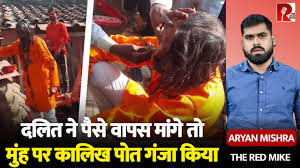
Bareilly Dalit Attack: In Bareilly, Uttar Pradesh, a Dalit man was brutally beaten and humiliated by three local goons for asking for the return of borrowed money. The goons allegedly shaved his head and eyebrows, cut off his mustache, and smeared mud on his face. Bareilly Dalit Attack: In Bareilly, Uttar Pradesh, a Dalit man was brutally beaten and humiliated by three local goons for asking for the return of borrowed money. The goons allegedly shaved his head and eyebrows, cut off his mustache, and smeared mud on his face. In addition, the three men made a video of his humiliation and uploaded it on social media. The incident took place about a month ago. Pappu Diwakar, the victim, had been living at the house of the accused, Chandrasen, in Bareilly for the past few months. In his complaint to the local police, he stated that Chandrasen had borrowed Rs 4.5 lakh from him to buy a tractor. However, when Diwakar asked Chandrasen for the money back, Chandrasen, along with his son Pappu, friend Godhanlal, and several other associates, started verbally abusing him. The three accused allegedly used abusive language against Diwakar and hurled casteist slurs. Furthermore, they attacked Diwakar by shaving his mustache, head, and eyebrows. They recorded every moment of the attack on video and uploaded it on social media. Three Accused Arrested Based on the complaint, the local police took swift action and arrested three people involved in the alleged assault. However, the main accused in the case, Chandrasen, his son Pappu, and Godhanlal, are still absconding. Meanwhile, a separate angle has emerged during the investigation of the attack. Police have learned that several villagers had expressed their anger towards Diwakar, accusing him of practicing black magic. It is alleged that Diwakar misled them by claiming that hidden treasure was buried in their homes and instructed them to dig for it. However, despite spending a considerable amount of money on the excavation, they found nothing, which reportedly led them to attack Diwakar. TRANSLATED BY: ASHWANI KUMAR SRIVASTAVA Courtesy: Hindi News
Bhopal News: Tribals And Dalits Abused, Land Grabbed In Anandpur Dham; Congress

One woman allegedly was forced into sexual relations, and when she complained, the video evidence was deleted, and she was coerced into signing documents. Ahirwar also accused Dham officials of encroaching on Dalit, Tribal, and government land and singled out one member for hooliganism and land grabbing. Bhopal (Madhya Pradesh): Congress has accused Anandpur Dham authorities of sexually abusing tribal and Dalit residents and seizing their land. Pradeep Ahirwar, state president of the Congress Scheduled Caste Cell, made the allegations to media on Monday, citing repeated complaints ignored by local authorities. Earlier on April 11, 2025, Prime Minister Narendra Modi had paid a visit to the Dham and participated in a religious programme. Ahirwar said victims who spoke out faced job termination, threats to their reputation and death threats. One woman allegedly was forced into sexual relations, and when she complained, the video evidence was deleted, and she was coerced into signing documents. Ahirwar also accused Dham officials of encroaching on Dalit, Tribal, and government land and singled out one member for hooliganism and land grabbing. Despite complaints filed with local government and CM Helpline, Ahirwar said no action was taken. Congress demanded a CBI enquiry, warning that local police of Ashoknagar or Guna might be under pressure. Courtesy : TFPJ Note: This news is originally published on https:/thefreepressjournal.com/bha and is used purely for non-profit/non-commercial purposes, especially human rights
Why I think burning Manusmriti, breaking idols are justified acts of Dalit resistance
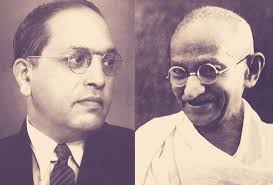
Rajiv Shah, who is among those esteemed journalist friends who have stood by the issues of the Dalit and oppressed communities, has raised a question regarding our 1972 protest in a recent blog, “Would breaking idols, burning books annihilate caste? Recalling a 1972 Dalit protest” (Counterview, January 9, 2026): Why did Dr. Babasaheb Ambedkar feel the need to burn the Manusmriti? Why did Periyar lead a procession crowning the idol of Rama with a garland of footwear? Why did Jyotiba Phule write so harshly against Rama, Krishna, the Gita, and Varnashrama in his book Gulamgiri? And why did we feel the need to break the idol of Krishna? A similar question was asked of Gandhiji during the freedom struggle when he called upon the people to spin the takli (spindle). He was asked: “Will the British leave the country just by spinning yarn? Will walking to Dandi for a fistful of salt bring independence?” In 1935, Dr. Babasaheb Ambedkar declared, “I was born a Hindu because it was not in my hands, but I will not die a Hindu.” Twenty years later, in 1955, along with eight lakh Dalits, he embraced Buddhism. At that time, Dr. Ambedkar administered 22 vows. The initial vows were purposefully negative: – I shall have no faith in Brahma, Vishnu, and Mahesh, nor shall I worship them. – I shall not regard Rama and Krishna as Gods. – I shall not believe in Gauri, Ganpati, or any other gods and goddesses of Hinduism, nor shall I worship them. – I do not believe that God has taken any incarnation. – I shall believe that the propaganda that Buddha was an incarnation of Vishnu is false and mischievous. – I shall not perform Shraddha or Pind-daan. – I shall not follow any rituals or ceremonies that are inconsistent with Buddhism. – I shall not allow any ceremonies to be performed by Brahmins. The question remains: Why did Dr. Ambedkar find it necessary to make people take these negative vows against Hinduism? There is a need to understand the reasons for burning the Manusmriti or breaking idols by reading an interview with Gandhiji conducted by a curious journalist. The answers Gandhiji gave reveal the rigidity of the system we fight: Journalist: We cannot understand why you emphasize Varnadharma. Do you consider current caste distinctions appropriate? What is your definition of Varna? Gandhiji: Varna is the pre-determination of a person’s choice of occupation. Following the ancestral occupation for livelihood is called Varnadharma. Every child naturally follows the father’s Varna. Therefore, Varna is a law of heredity. It was not imposed; it was a law discovered by those responsible for the welfare of the Hindu race. It is an immutable law of nature. Journalist: If a man performs an occupation other than the one he was born into, what is his Varna? Gandhiji: According to Hindu belief, he still belongs to the Varna of his birth. But by not living according to his Varna, he causes his own destruction and falls—he becomes “fallen” (patit). Journalist: If a Shudra performs the work of a Brahmin, does he become fallen? Gandhiji: A Shudra has as much right to knowledge as a Brahmin. But if he tries to earn his “livelihood” through “teaching,” he becomes “fallen” from Varnadharma. A hundred years ago, a carpenter’s son never dreamed of becoming a lawyer. Today he does, because he sees it as an easy way to make money. Journalist: Is a man not free to follow the profession of his choice? Gandhiji: His ancestral calling should be his only choice. There is nobility in it. Today, society has become disorganized. Journalist: If a Shudra possesses all the qualities of a Brahmin, can he be called a Brahmin? Gandhiji: He cannot be called a Brahmin in this birth. It is better for him not to assume a Varna into which he was not born. That is a sign of true humility. Journalist: But you follow the Bhagavad Gita, which says Varna is decided by qualities (Guna) and actions (Karma). Why do you bring in birth? Gandhiji: I follow the Gita because it presents principles and leaves the practice to us. The Gita says Varna follows Guna and Karma, but these are inherited at birth. When Lord Krishna says, “Chaturvarnya maya srishtam” (The four-fold order was created by Me), I interpret that as being by birth. If Varnadharma is not by birth, it has no meaning. Journalist: Do you not see people with qualities different from their families? Gandhiji: That is a difficult question. We don’t know the individual’s entire past. If my father is a trader and I have the qualities of a warrior, I may serve the country as a soldier without pay, but I must satisfy myself by earning my “livelihood” only from trade. I have verified that Gandhiji did not change these views on the Varna system until he died. It is clear: in Hindu scriptures, Varna is birth-based and cannot be changed by action. Education is reserved for Brahmins, arms for Kshatriyas, trade for Vaishyas, and the Shudras (SC/ST/OBC)—who make up 85% of the country—are left with labor and service. Gandhiji even suggests that if a Shudra’s son becomes a doctor, he should still earn his living by his ancestral sweeping work, using his medical knowledge only for free service. Today, we see a resurgence of “Satyug” (Brahminism). Should such a system not be stopped? Inequality and exploitation have been fought globally. Karl Marx showed a path through Das Kapital, yet Marxism struggled in India. I believe if Marx were born in India, his book would have looked different. He would have talked not just about Class struggle, but the intersection of Varna (Caste) and Class. In India, Varna struggle is the primary necessity. Dr. Babasaheb Ambedkar noted that political revolutions are always preceded by religious and social ones—whether it was Luther in Europe, Puritanism in England and America, or Prophet Muhammad in the Arab world. Even in India, the political
Punjab Congress embroiled in Jat Sikh vs. Dalit conflict, BJP sees an opportunity and offers Channi a deal
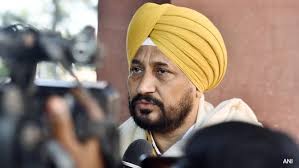
Former CM Channi is known as a prominent leader of the Dalit community in Punjab. The meeting was also attended by Rajendra Gautam, chairman of the Congress’s Scheduled Caste department. Currently, top positions in the Punjab Congress unit are held by Jat Sikh leaders. Internal strife has once again surfaced within the Punjab Congress. The matter is related to the Jat Sikh versus Dalit leadership dispute in the Punjab Congress. The issue escalated when a video of former Chief Minister Charanjit Singh Channi went viral. In the video, which went viral on social media, Channi can be heard demanding representation for Dalits in the party. The MP from Jalandhar also clarified that he did not speak about any particular caste or community and that he was a victim of malicious propaganda on social media. During his address at a meeting of the party’s Scheduled Caste (SC) wing on Saturday, Channi had said, “If you accept that the Dalit population in Punjab is 35 to 38 percent, which it actually is, then why are we not getting proper representation?” What Channi said about Dalits He further added, “The Punjab (Congress) president is from an upper caste, the leader of the legislative party is from an upper caste, the head of the Punjab Congress women’s wing is from an upper caste, the Punjab (Congress) general secretary is from an upper caste? So where do we go? Where will these people go?” Another video of him has also gone viral in which Channi is seen appealing to people not to record videos before he speaks. The Punjab Assembly elections are about two years away and are scheduled for 2027. Channi is known as a prominent leader of the Dalit community in Punjab. The meeting was also attended by Rajendra Gautam, chairman of the Congress’s Scheduled Caste department. However, the truth is that currently, top positions in the Punjab Congress unit are held by Jat Sikh leaders. The president of the Punjab Congress unit is Amarinder Singh Raja Warring and the Leader of the Opposition is Pratap Singh Bajwa. What did former CM Channi say about the controversy? Earlier, when Channi was asked about this, he said, “I didn’t say anything like that in the meeting.” He had called the whole matter propaganda, but now Channi’s speech in the meeting has revealed the truth behind the ongoing Jat Sikh versus Dalit leadership dispute in Punjab Congress. However, the Congress party has also become alert after this matter came to light. According to a party source, this issue is likely to be discussed in the meeting of state-level leaders called by the party high command on January 23. Congress in turmoil, BJP targets the party Amidst this development, BJP leader Kewal Singh Dhillon on Monday urged Channi to join the BJP, saying that he would get due respect in the party. Dhillon said in a post on X, “Channi ji, as a proud Punjabi, I believe that your stance on Dalit representation reflects leadership and secular values. In the Punjab unit of the BJP, you will get respect, dignity and a real opportunity to serve every community. Let’s work together for the future of Punjab.” Mohit Malhotra Courtesy: Hindi News
Raping Dalit woman is…: Congress MLA’s bizarre theory sparks row, BJP reacts
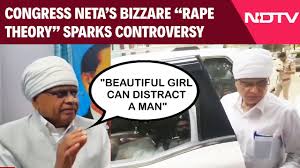
A political controversy has erupted in Madhya Pradesh after Congress MLA Phool Singh Baraiya’s remarks linking rape with religious scriptures sparked widespread outrage. The incident has led to demands for his suspension and expulsion from the party amid sharp criticism from BJP and state leaders. A political storm has erupted in Madhya Pradesh after a video surfaced allegedly showing Congress MLA Phool Singh Baraiya making remarks that appear to link rape with religious scriptures, triggering sharp reactions from across the political spectrum and demands for his suspension and expulsion from the party. The video, which emerged from an interview circulating on social media platforms, shows Baraiya, the Congress legislator from the Bhander Assembly seat, making claims that religious texts offer “spiritual rewards” for sexual violence against women from Scheduled Caste, Scheduled Tribe and Other Backward Class communities. The clip was shared online by the Bharatiya Janata Party, drawing widespread condemnation. In the clip, he is heard saying, “In India, the maximum number of rape cases are among Scheduled Castes, Scheduled Tribes and most OBCs. The theory of rape is that when a man, whatever his state of mind, sees a very beautiful woman while walking on the road, his brain can get disturbed and rape can happen. But among tribals, where are such beautiful women? Among SCs, where are such beautiful women? Among most OBCs, are there such beautiful women? Why does rape happen? Because religious scriptures give such instructions.” He then goes on to invoke religious texts to justify his argument, saying, “I do not want to say anything specific about Hindu religious scriptures, but what I mean is that it is written that when a person does this act, he gets the reward of a pilgrimage. It is written that by having relations with women of certain castes, one gets the spiritual reward of visiting places like Kashi, Prayagraj or Ayodhya. If someone cannot go on a pilgrimage, an option is given to stay at home and get the same reward by forcing himself on their women.” In the same video, Baraiya makes disturbing remarks while referring to sexual violence against infants. “Listen to why rape happens even with four-month-old, ten-month-old or one-year-old babies. Are their organs ready for sex? It happens because it is written that if I rape a girl of this caste, I will get a spiritual reward,” he says. BJP ATTACKS CONGRESS, CALLS REMARKS CRIMINAL The BJP reacted strongly, calling the remarks misogynistic, casteist and criminal. Madhya Pradesh BJP media in-charge Ashish Agrawal shared the video on X and wrote that Baraiya’s words were “not a slip of the tongue but a public display of a sick, perverted and criminal mindset”. “Measuring women on the scale of ‘beauty’ and describing rape of SC-ST women as a ‘pilgrimage reward’ is not a statement, it is an admission of a criminal mentality,” Agrawal said, adding that the comments were an attack on women, Dalits and humanity itself. He demanded immediate action from the Congress leadership, asking whether the party would suspend or expel the MLA or “accept that it stands with an anti-women and anti-Dalit mindset”. CHIEF MINISTER SEEKS EXPULSION Madhya Pradesh Chief Minister Mohan Yadav also condemned the remarks, accusing Baraiya of spreading social hatred. “Phool Singh Baraiya has worked to spread poison in society. Such an MLA should be suspended and expelled from the party so that it is clear he has respect for other sections of society,” Yadav said, adding that he strongly condemned the comments. The Chief Minister urged the Congress leadership to act decisively, especially as senior party leaders were visiting the state. “People of the country want to know what action will be taken,” he said. NATIONAL BJP LEADERS WEIGH IN Senior BJP leader Sambit Patra described the remarks as an insult not only to Sanatan Dharma but to humanity. “He is an MLA holding a constitutional position. Senior Congress leaders were present, yet no one stopped him,” Patra said. He added that the comments hurt the legacy of B R Ambedkar and demanded a response from the Congress leadership. “By evening, the country expects a clear statement and action,” he said. CONGRESS YET TO RESPOND As of Saturday, the Congress had not issued an official response or clarified its stand on the controversy. Baraiya, who has often courted controversy for his statements in the past, has also not publicly addressed the backlash over the video. Ravish Pal Singh Edited By: Sonali Verma Courtesy : India Today Note: This news is originally published on https:/indiatoday.com/bha and is used purely for non-profit/non-commercial purposes, especially human rights
From Short Circuit to Political Signal: Akhilesh Yadav, Mayawati and the Battle for Dalit Votes
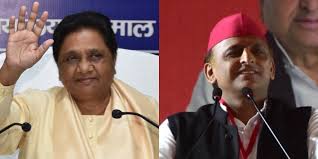
The 2024 general election results indicated that a section of the Dalit population in Uttar Pradesh has begun drifting away from the BJP reportedly due to rising incidents of atrocities and fears surrounding constitutional changes. When smoke suddenly filled the conference hall at the Bahujan Samaj Party’s (BSP’s) Uttar Pradesh headquarters during party chief Mayawati’s 70th birthday press conference due to a short circuit, panic spread among journalists and security personnel present at 12, Mall Avenue in Lucknow. No one was injured, and the incident was quickly brought under control. Within hours, Samajwadi Party (SP) president Akhilesh Yadav demanded a probe into what he described as a serious security lapse. It immediately acquired a political meaning far beyond an electrical fault. His concern, expressed publicly and amplified through social media, triggered a fresh round of political speculation in the politically significant state of Uttar Pradesh. At one level, Akhilesh’s reaction appeared routine and responsible. Mayawati is a former chief minister and a national political figure; any lapse in her security naturally invites questions. But in the deeply layered politics of Uttar Pradesh, few gestures are ever purely administrative. Akhilesh’s intervention was widely read as a calculated political signal, especially aimed at Dalits, for whom Mayawati remains the most recognisable and emotive leader. “The incident itself was minor, but the politics around it is major,” said political analyst Utkarsh Sinha. “Akhilesh Yadav did not need to comment immediately, yet he chose to do so. That choice is political.” Dalits at the centre of Uttar Pradesh’s political equation Dalits constitute nearly 22% of Uttar Pradesh’s population and have historically played a decisive role in shaping the state’s politics. The BSP, under Mayawati’s leadership, formed the government four times, culminating in her landmark 2007 victory when she secured a full majority on her own. That moment marked the peak of Dalit assertion in the state. However, since then, Mayawati’s political graph has steadily declined. She has been out of power for nearly one and a half decade, losing three assembly elections and three Lok Sabha polls since 2012. Today, the BSP has no Member of Parliament in the Lok Sabha and just one MLA in the 403-member Uttar Pradesh assembly. For a party that once ruled India’s most populous state, the fall has been steep. Yet, despite this decline, Mayawati continues to command loyalty among a core section of Dalits, particularly the Jatavs. In the 2024 general elections, the BSP still managed to secure around 9.4% of the vote share in Uttar Pradesh, a figure that underlines her residual influence. “Mayawati may have lost institutional power, but she has not lost symbolic power,” said Syed Qasim, a political commentator based in Lucknow. “For many Dalits, she remains a symbol of dignity and political assertion.” Akhilesh’s 2027 ambition and the search for a broader social coalition Akhilesh’s political ambition is clear: he wants to return to power in Uttar Pradesh in the 2027 assembly elections. The SP has been out of office since 2017, and despite leading the opposition, Akhilesh knows that defeating the Bharatiya Janata Party (BJP) requires expanding beyond the party’s traditional Muslim–Yadav (M–Y) base. In the 2024 general elections, Akhilesh made a conscious attempt to do just that. By popularising the slogan Pichhda, Dalit aur Alpsankhyak (PDA), he tried to stitch together a broader social coalition. The results were striking. The SP jumped from just five Lok Sabha seats in 2019 to 37 seats in 2024, while its INDIA bloc ally Congress won six seats in the state. Political experts widely agree that this surge would not have been possible without support from backward classes, Muslims, and a section of Dalit voters. “The 2024 results showed Akhilesh Yadav’s political maturation,” said Sinha. “He demonstrated that the SP can move beyond its core base. But to sustain this coalition till 2027, Dalits will be crucial.” Mayawati’s strategic distance and Akhilesh’s calculated silence Interestingly, while Akhilesh has been careful in his approach towards Mayawati, the BSP chief has shown little warmth in return. In October 2025, during a rally in Lucknow, Mayawati launched a sharp attack on the SP’s 2012–17 government, accusing it of disrespecting Dalit icons and symbols. Notably, she used comparatively restrained language while referring to the Adityanath-led BJP government, even praising it for maintaining Dalit heritage sites. Akhilesh chose not to respond. His silence was telling. “Akhilesh understands that responding aggressively to Mayawati only helps her consolidate her core voters,” said Sinha. “By staying quiet, he avoids alienating Dalits who still respect her.” This restraint reflects Akhilesh’s broader strategy. Over the years, he has taken several steps to signal his commitment to Dalit issues: forming the Ambedkar Vahini within the SP, installing a statue of Dr B.R. Ambedkar at the party headquarters, and giving prominence to Dalit leaders like Awadhesh Prasad, who won the Ayodhya Lok Sabha seat. “Akhilesh is consciously building an image of inclusivity,” said Sinha. “He wants Dalits to see him not as a rival to Mayawati, but as a leader who respects Dalit aspirations.” The alliance question: Closed door or strategic ambiguity? The memory of the 2019 SP–BSP alliance still looms large. Formed nearly 24 years after the infamous guest house incident, the partnership was historic but short-lived. While it helped the BSP win 10 Lok Sabha seats, it failed to stop the BJP’s dominance and collapsed soon after. Speculation about a future alliance resurfaces periodically, but most experts remain sceptical. Atul Chandra, former editor of The Times of India, offered a blunt assessment. “Alliance with Mayawati is not possible for Akhilesh, as her conditions would be so hard that he will never accept them,” said Chandra. Chandra believes Akhilesh’s current approach is not about reviving an alliance but about consolidating Dalit support independently. “I don’t think Mayawati will join hands with Akhilesh in the next assembly elections, but Akhilesh has certainly sent a strong signal to Dalits about his intent to bring them under his political umbrella,” he said. Mayawati’s cautious politics and the
10 Years Later, Rohith Vemula’s Fight Remains Dalit Students’ Reality
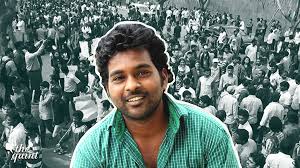
Nothing will change until society and academia decide to preach, propagate, and practice the ideas of Babasaheb. Exactly 10 years ago, Rohith Vemula, a 28-year-old Dalit student and PhD scholar at the University of Hyderabad, died by suicide. Along with him, four other students had been expelled for raising their voices against their suspension, a practice that had become rampant in the university. Their access to the hostel, mess, administrative buildings, and common rooms were revoked—and their scholarships were put on hold. Rohith, along with his friends, protested against this act of injustice in the open, with a photo of Babasaheb Ambedkar by their side. But even in the face of widespread outrage and sustained agitation, the university refused to revoke their expulsion. At last, Rohith could not take it any longer. Nothing will change until society and academia decide to preach, propagate, and practice the ideas of Babasaheb. An Ambedkarite, Rohith was a voice of reason who was vocal on social issues. His death was not merely a personal tragedy, but a case of institutional failure. An Ambedkarite, Rohith was a voice of reason who was vocal on social issues. His death was not merely a personal tragedy, but a case of institutional failure—a fate that has long plagued Dalit students and that of oppressed castes for generations in the ecosphere of Indian educational institutions. For generations, oppressed-caste students have been cornered, harassed, and pushed to breaking point in hostile academic environments. Rohith’s death created much furore and sparked a spate of protests across various educational institutions in India. Students and citizens took to streets in opposition to such instances of caste-discrimination-related deaths—and criticised this very visible act of apartheid. Professors, who were critical of the university’s complicity in driving Rohith to his death, were suspended. Some others resigned in the face of such a brutal case of discrimination. In spite of these acts of defiance and dissent, and much noise and agitation, a crucial question remains: what came of these struggles? What has changed in the decade since Rohith Vemula’s death? What ensued was a deliberate reframing of caste and the discrimination it produces—transforming it from a lived social oppression into a contested political question. Rohith’s life couldn’t incite the support, resources, or opportunities he deserved, but his death was instrumentalised for this. The issue that once centred Rohith soon erased him. He was pushed to the back of a protest that he had started, the repercussions for which he faced alone. The reason for this was his oppressed caste background, one that left him bereft of socio-economic capital and political means to survive the casteist atmosphere of Indian educational institutions. This lack of resources made him vulnerable to attacks on his character and mental health, followed by coercive attempts to delegitimise his identity. Such vilification of marginalised students has long been used to enforce and justify the caste-based notions of purity and pollution, thereby legitimating caste discrimination in educational instructions. A preventable tragedy was deliberately overshadowed by turning it into a political issue, so as to put it to rest. Ten years since Rohith’s death, little has changed in the plight of marginalised students in Indian educational institutions. According to a report in The Wire, between 2019 and 2021, 98 Dalit students died by suicide across various educational institutions in India—a number so jarring it should have awakened the consciousness of the society. But the answer is one of negation. In 2019, Dr Payal Tadvi, a 26-year-old student belonging to a tribal community, died by suicide at the hostel of a government-run hospital in Mumbai. Dr Tadvi was repeatedly harassed by her seniors with caste slurs. The case lingered on with no delivery of justice. Nothing will change until society and academia decide to preach, propagate, and practice the ideas of Babasaheb. Dr Payal Tadvi was repeatedly harassed by her seniors with caste slurs. The case lingered on with no delivery of justice. In January 2025, the Supreme Court of India ordered the University Grants Commission (UGC) to submit a report on the instances of caste discriminations in Indian educational institutions. What came to light was an astonishing fact. In the academic year 2023-24, 1,503 instances of caste discriminations were recorded across 3,522 institutions in India, out of which only 1,426 cases were followed up with further procedures. These figures are but instances that were reported to relevant authorities. Most of such instances go unreported, for fear of inviting the violence of the upper caste communities. The Numbers That Refuse to Disappear Caste is the social structure on which the Indian society rests, shaping all aspects of life, including politics. Much of the politics in India is governed, driven, and affected by its society. It is a sum total of this very dual character of caste that marginalised students don’t have access to resources, privileges, and capital. Although reservation is a constitutional right, it is routinely ignored in elite institutions such as the IITs and IIMs, which have been long regarded as the bastions in the field of science and technology. This isn’t an isolated instance of overrepresentation of upper caste students in Indian educational institutions but an everyday reality of Dalit or Adivasi students, who, despite having secured enough marks, checking off qualification rules, and following due process, have been repeatedly denied admissions in Indian educational spaces for generations together. With these many hurdles, the process of access to educational spaces in India thus in itself become a punishment. In a caste-driven society like India, one’s caste decides who will be able to avail education. It is in this aspect that the marginalised students fall short of, for their disadvantaged caste location puts them up for endless struggles and taunts to get an admission to these prohibited campuses. One needs aesthetic, ideas, language and a refined taste to succeed in Indian academia. Such an ideal situation is only possible in the case of a person who has grown with an excess of resources, for its
Bizarre Indian Tradition: Why do thousands of transgender women marry Lord Aravan and then mourn the very next day?
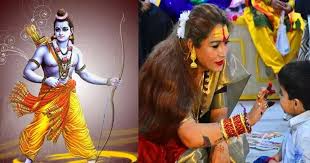
Transgender marriage tradition: Transgender people are a unique part of society, and learning about them is always interesting. They are neither completely male nor completely female. They are present in our festivals, and it is believed that their blessings are very powerful, so one should avoid their negativity or curses. However, their lives and customs are quite different from those of ordinary people, which is why ordinary people know very little about them. Today we will learn some surprising facts about the world of transgender people. The Mystery of Transgender Children A son is born from a man and a daughter from a woman, but if the balance of sperm and egg is equal, a transgender child is born. There have been different beliefs about this in society. Welcoming New Transgender Individuals When a new person joins the transgender community, there is a collective feast and singing and dancing. Several rituals are also performed; this welcome ceremony is a unique way of entering their community. Marriage to Lord Aravan A special festival is celebrated in Tamil Nadu. In this 18-day festival, transgender women (Aravani) marry Lord Koothandavar (Aravan), considering him their husband. The temple priest puts the ‘Thali’ (mangalsutra) on them, and they dress up like brides. This ritual is based on the story from the Mahabharata where Lord Krishna, in the form of Mohini, married Aravan. The Tradition of Mourning (Observing Widowhood) The day after the marriage, Lord Aravan’s sacrifice is commemorated. After his death, the Aravani women mourn like widows. They break their bangles, remove their mangalsutras, and wear white clothes to lament. This tradition brings to life Aravan’s sacrifice and Krishna’s grief in the form of Mohini. The Story of Shikhandi According to ancient beliefs, Shikhandi from the Mahabharata was also considered a transgender person. This is why Arjuna was able to defeat Bhishma in the war. This story shows that transgender people have a history and significance dating back to ancient times. Arjuna and Brihannala In the Mahabharata, when the Pandavas had to spend a year in exile in the forest, Arjuna lived as Brihannala. This story shows that the role of transgender people has been significant not only in society but also in history and epics. Beliefs about Origin According to one belief, eunuchs originated from the shadow of Lord Brahma. According to another belief, they originated from Arishta and Sage Kashyapa. These stories give a glimpse into the mystery and depth of their lives. The Importance of Blessings It is said that the blessings of eunuchs are very powerful. Therefore, it is considered auspicious to invite eunuchs on auspicious occasions such as weddings, birthdays, or housewarming ceremonies. Their presence is considered a symbol of good fortune and happiness for people. By: Shivani Singh Courtesy : Hindi News