
After two years of including transgenders in OBC quota, Rajasthan jobs data shows none selected
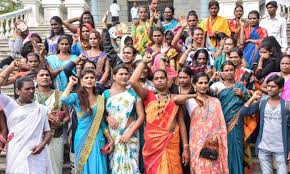
The data submitted by the State to the HC shows that out of 91 transgender applicants in these two years, the maximum of 39 belonged to the General category, 19 to Scheduled Tribes, 22 to OBCs, seven to Scheduled Castes, and four to EWS communities In an ongoing challenge to the classification of transgender persons as a separate “community” within the Other Backward Classes (OBC) list, data from the Rajasthan Government has now shown that in the two years of accommodating transgender people in the reservation matrix in this manner, none of them had been brought into government services. The State government has submitted data to a Bench of the Rajasthan High Court, which is hearing a challenge to this classification of transgender persons. The government had issued a circular adding “transgender” as an entry in its existing list of OBCs in January 2023, arguing that this satisfied the Supreme Court’s directions in the 2014 NALSA case that they should be considered for reservation. Interpreting 2014 verdict The challenge to this classification, filed by transwoman constable Ganga Kumari, argued that such an interpretation of the Supreme Court’s directions in the 2014 judgment would not be correct, stressing that this classification would never be able to account for transgender people who might not be from an OBC community, instead seeking horizontal reservation for transgenders. The data submitted by the Rajasthan government’s Social Justice and Empowerment Department this week showed that the State Public Service Commission and the Staff Selection Board had together advertised nearly 15,000 vacancies from January 2023 onward. Against these, a total of 91 transgender candidates had applied; however, only 22 of them could apply under the category created for transgender people within the vertical quota for OBCs, as only 22 belonged to OBC communities. The data further showed that transgender applicants came from various backgrounds of Scheduled Caste, Scheduled Tribe, Economically Weaker Sections, and the General category communities. Court sought dataset While hearing this case last year, a Bench of Justices Pushpendra Singh Bhati and Anuroop Singh had, in November 2025, asked the Rajasthan government to provide data on how many transgender people, who had been given the benefit of being accommodated in the OBC list, had actually been recruited into government service. In response, the government submitted the above-mentioned dataset. The dataset showed that the maximum number of transgender applicants belonged to the General category, under which 39 candidates had applied. Apart from this, 19 of the transgender applicants belonged to Scheduled Tribes, and seven were from Scheduled Castes, with four candidates falling under EWS category. Advocate Vivek Mathur, leading the representation of the petitioner in the Rajasthan case, told The Hindu, “This data goes to show that it means nothing in the scheme of quotas to include transgender people as an entry in OBC lists, precisely because, as this data showed, trans candidates ended up competing in their respective caste categories. Maybe if these 91 candidates had competed against each other, it would have been likelier for at least some to have been selected.” Ever since the 2014 NALSA judgement, a bone of contention in providing reservation for transgender people has been the direction’s interpretation. The NALSA judgement, in recognising the discrimination faced by the community, directed that they be “treated as” socially and educationally backward for the purpose of reservations. One interpretation of this has been that of Rajasthan, and in another case in Madhya Pradesh, where this was seen as creating an entry within the existing OBC list. And yet, another interpretation of this direction, as argued in courts by activists, is that it calls for treating transgender persons as a separate category on par with socially and educationally backward classes, and not within them, which has been structured as horizontal reservation. In 2023, the Supreme Court declined to entertain a petition seeking a clarification of this point specifically, leaving it open for petitioners to approach courts. But, in separate cases, both the Karnataka High Court (2021) and the Madras High Court (2024) have accepted the arguments for horizontal reservation, enabling a percentage of quotas for transgender people within each existing category of SC, ST, OBC, EWS, and General. Abhinay Lakshman Courtesy : The Hindu Note: This news is originally published on https:/thehindu.com/bha and is used purely for non-profit/non-commercial purposes, especially human rights
‘What’s in a name?’: Rohith Vemula and the enduring caste discrimination in Indian universities
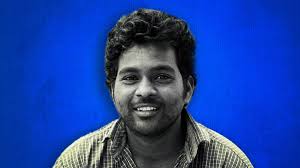
What makes caste discrimination in higher education particularly insidious is that it’s rarely spectacular. Dalit students aren’t always abused openly; more often, they’re quietly diminished. If Rohith Vemula were alive in 2026, he would be around thirty-six years old. One can imagine him as a teacher, a public intellectual, perhaps a scientist or a writer, someone still questioning power, still dreaming, and still believing that knowledge could be a tool for justice. It was ten years ago, on January 17, 2016 that Rohith Vemula was institutionally murdered. His death exposed something far more unsettling: that universities, institutions often celebrated as spaces of reason and modernity, are deeply structured by caste. It underlined that rather than merely reflecting social inequalities beyond their boundaries, universities actively perpetuate them within their classrooms, hostels, evaluation systems, and daily academic activities. Rohith’s death forced into public consciousness what Dalit students had long experienced in silence: that institutions can kill without ever touching the body. When academia mirrors social hierarchies Rohith Vemula’s experience at the University of Hyderabad made visible how institutional failure operates in caste terms. He questioned authority, challenged Brahmanical dominance, and insisted that equality was a right, not a favor. The response was swift and disciplinary: suspension, social boycott, withdrawal of material support, and administrative indifference. The university did not engage with his ideas; it sought to silence his presence. His fellowship was stopped, his access to basic resources denied, and his social world deliberately narrowed. The institution did not pull the trigger, but it created the conditions in which life became unbearable. Rohith’s death thus raised a question that still haunts Indian higher education: what happens when institutions meant to nurture minds instead systematically break them? What makes caste discrimination in higher education particularly insidious is that it is rarely spectacular. Dalit students are not always abused openly; more often, they are quietly diminished. Their ideas are ignored in seminars until echoed by Savarna peers. Their academic labor goes unrecognised, while others receive praise for similar work. They are marked lower in vivas and interviews without explanation and told they lack “clarity,” “rigor,” or “confidence.” Even discrimination has learned to speak the language of civility. The interview and viva systems, far from being neutral instruments of assessment, are structured through deeply embedded biases. They operate on unspoken assumptions about how intelligence should sound, appear, and be performed. Fluency in dominant language registers, familiarity with elite academic culture and specific styles of self-presentation are regarded as indicators of merit, while alternative intellectual expressions are marginalised. In this way, interviews do not merely evaluate candidates; they actively regulate who is deemed academically legitimate, reproducing exclusion through procedure rather than through openly articulated discrimination. Marginalised students, particularly first-generation learners, enter these spaces already marked as out of place. Failure is then framed as individual weakness, never as institutional bias. The myth of merit and the reality of privilege Merit in higher education is commonly framed as a neutral, objective, and caste-free measure of individual ability. This assumption, however, obscures the social conditions under which merit is produced, recognised, and rewarded. Far from being an autonomous attribute, merit is a socially mediated construct that reflects the unequal distribution of social and cultural capital structured by caste hierarchies. According to French sociologist Pierre Bourdieu, intergenerational accumulation of cultural capital, linguistic competence, academic disposition, confidence, and familiarity with institutional norms aligns with dominant caste practices. In the Indian context, this capital is explicitly caste-structured: Savarna students enter educational institutions already equipped with embodied dispositions that institutions mistake for intelligence and competence. Dalit students, often first-generation learners, encounter the university as a culturally alien space where evaluative norms are implicit yet rigid, producing systematic misrecognition rather than neutral assessment. Meritocratic evaluations also erase the role of social capital, including access to mentorship, academic networks, and informal guidance. These resources significantly shape academic performance and institutional navigation but remain invisible within formal assessment frameworks. By ignoring such structural advantages, merit discourse converts inherited privilege into individual achievement and structural exclusion into personal failure. Merit thus functions ideologically by naturalising inequality and moralising hierarchy. Success appears deserved, while exclusion is attributed to lack of effort or ability, absolving institutions of responsibility and delegitimising claims for structural redress. In this sense, merit operates as a technology through which caste privilege reproduces itself under the guise of fairness and modernity. This sustained misrecognition constitutes a form of institutional violence. When exclusion is repeatedly framed as individual inadequacy, humiliation becomes normalised and structural discrimination rendered invisible. Merit, in this formulation, is not the absence of caste but one of its most effective contemporary languages, reproducing hierarchy while disavowing it. From embodiment to institutional murder Institutional murder is not an isolated act of individual cruelty; it is the terminal effect of a prolonged regime of humiliation embedded within institutional life. This regime operates through the everyday normalisation of Brahmanical embodiment and the systematic disembodiment of Dalit students in higher education. Brahmanical embodiment structures the university as a space where savarna aesthetics, taste, comportment, and affect are treated as neutral standards of merit and professionalism. These embodied norms confer automatic legitimacy on Savarna bodies while rendering Dalit bodies culturally and epistemically misaligned with the institution. As a result, Dalit students encounter the university not as a space of recognition but as a site of constant correction, surveillance, and disciplining. This process produces institutional humiliation. Humiliation here is not episodic or interpersonal; it is cumulative and structural. It is enacted through repeated questioning of competence, the delegitimisation of lived experience as knowledge, aesthetic policing of language, dress, and emotion, and the persistent marking of Dalit students as “quota,” “beneficiaries,” or disruptions to academic order. Each instance may appear minor or deniable, but together they constitute a continuous assault on dignity. Institutional humiliation functions through disembodiment. Dalit students are compelled to suppress their histories, affects, and cultural presence to survive academically. Their bodies are present but unrecognised; their voices are audible but unauthoritative. This forced erasure generates
Meira Kumar: How A Dalit Woman Reshaped Indian Politics From The Speaker’s Chair
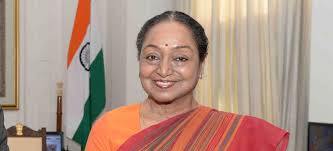
Meira Kumar is a politician and Speaker of the 15th Lok Sabha, who has left her mark on the field of Indian politics. What does it mean to shatter the ceiling when the floor that you stand on has always been irregular? Meira Kumar, India’s first woman Speaker in the Lok Sabha, has shattered political ceilings but also brought her identity of being a Dalit woman as a powerful instrument of advocacy to the heart of politics. Meira Kumar’s life is an adventurous answer to the challenge of representation in justice that can transform the moral geography of the nation. Family background and early years Meira Kumar is a politician and Speaker of the 15th Lok Sabha, who has left her mark on the field of Indian politics. Born in a politically active family with many Dalit leaders and social activists, Meira Kumar’s father Babu Jagjivan Ram was not only a well-known freedom fighter but also Deputy Prime Minister. Her mother, Indrani Devi, was a social worker. Kumar holds B.A. and M.A. in English Literature with LL.B. from the University of Delhi. It is because of Kumar’s parents, particularly her mother’s influence, that she chose to follow the path to justice for everyone. Meira Kumar has been an active social worker since her youth and was associated with various social movements for reforms and human rights. During the famine in the state of Bihar in the year 1967, she was appointed as the Chairperson of National Drought Relief Committee constituted by the Congress and she had also worked towards the establishment of the Family Adoption Scheme, through which drought-affected families would get help from voluntarily contributing households. Through all this, she had gained a good base in the provision of relief before venturing into politics. Career and entry into politics Before entering Politics, Meira Kumar served the Indian Foreign Service for more than a decade, where she was stationed in Spain and the United Kingdom. This job taught her how to negotiate, build bridges between different groups and represent India’s diverse culture to the world. However, she felt a strong pull to work directly on the social issues she cared about at home. She left diplomacy to join politics in 1985, encouraged by her father and by Rajiv Gandhi, the then prime minister of India. She ran in a by-election for a seat in the Lok Sabha from a constituency in Uttar Pradesh state defeating two other Dalit candidates. Being close to the politically powerful Gandhi family and representing the oppressed castes, Kumar’s political career progressed steadily within the Indian National Congress (INC) and she quickly made a name for herself as a strong advocate for human rights and the abolition of the caste system. Meira Kumar is a highly accomplished politician who has been a member of numerous decision-making bodies within the INC, serving twice as its General Secretary. Meira Kumar is a highly accomplished politician who has been a member of numerous decision-making bodies within the INC, serving twice as its General Secretary. She became a member of the Congress Working Committee, the organisation’s highest decision-making body in 1990 and continued it for a decade till 2000. She resigned from the Congress Party in 2000, citing differences with the party leadership but rejoined it after a gap of two years. In 2004 and 2009 she contested and won the Lok Sabha seat from Sasaram in Bihar state, the constituency once represented by her father. Advocacy for social justice During her political career, she has served on various committees, including the Public Accounts Committee and the Joint Committee on the Empowerment of Women as a Member of Parliament. Additionally, she also served as Minister of Social Justice and Empowerment (2004-2009) which deepened her activism against caste exclusion. She challenged private sector reservation opposition and said sustainable growth needs ending Dalit and tribal marginalisation. Her focus shifted from handouts to true empowerment. Appointed as the Minister of Water Resources in the 14th Lok Sabha shortly after her victory in the elections of 2009, in June of the same year, she achieved a tremendous historical feat as the first woman Lok Sabha Speaker. This moment symbolically meant a lot to women in the state of India. During her role as the Speaker, Meira Kumar achieved many milestones to bring gender equality to the politics of India. She started the gender-neutral rules in the House, replacing gendered terms with gender-neutral expressions in the rules of the House. This action brought a remarkable revolution in the setting of the Parliament to be friendly to all its members irrespective of gender. During her term as the Speaker, in 2011, Kumar reduced paper usage by 30% in the Lok Sabha with tablets and also expressed her support to the increasing nationwide protests against violence on women in the nation. She also announced the formation of a Parliamentary Friendship Group to improve relations with the nation of Bhutan. In speeches, Meira Kumar calls for ‘zero tolerance on prejudice‘ and the end of the caste system. In the 2017 presidential election, Kumar secured the United Progressive Alliance’s nomination as their joint candidate for President of India. This was a testament to her widespread respect as a symbol of social justice, secularism and constitutional values as she said, ‘Democratic values, social justice, transparency, freedom of speech, inclusiveness, destruction of caste system, end of poverty — these are part of the ideology which is close to my heart. For this very reason, on the plank of this ideology I will compete.‘ Thus, her 2017 presidential bid stressed destruction of caste barriers and inclusion. ‘Democratic values, social justice, transparency, freedom of speech, inclusiveness, destruction of caste system, end of poverty — these are part of the ideology which is close to my heart. For this very reason, on the plank of this ideology I will compete.‘ – Meira Kumar At her first press conference after being selected as joint candidate for President, with BJP’s Ram Nath Kovind, whose Dalit
Dalit’s Land Encroached Upon by Thugs in Jalalabad: Victim Files Complaint with CO, Investigation Ordered
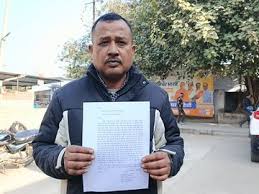
In the Jalalabad tehsil area of Shahjahanpur, a Dalit man’s land has allegedly been forcibly occupied by local strongmen. The victim has filed a complaint with the Circle Officer (CO), who has ordered an investigation into the matter. Rohit Kumar Valmiki, a resident of Barua village in the Madnapur police station area, stated in his application to CO Ajay Kumar Rai that he had purchased 0.401 hectares of land out of a total of 0.535 hectares in plot number 964 in Barua village through a sale deed and was in possession of it. He alleges that a man named Dhirendra Singh, son of Satyapal, fraudulently registered his name on the land. Attempted Forcible Occupation According to Rohit Kumar, recently Dhirendra Singh, along with several accomplices, arrived at his land with a bulldozer and illegal weapons and attempted to forcibly occupy it. When Rohit Kumar and his sons reached the spot and tried to stop them, Dhirendra Singh and his associates allegedly launched a life-threatening attack on them. They also hurled caste-based abuses and threatened to kill them. The victim, Rohit Kumar Valmiki, has appealed to the Circle Officer for justice. Considering the seriousness of the matter, Circle Officer Ajay Kumar Rai has directed the concerned police station to investigate and take necessary action. Ram Niwas Sharma | Jalalabad Courtesy: Hindi News
US SC likely to uphold state bans on transgender athletes in women’s sports

The justices are evaluating claims of sex discrimination lodged by transgender people versus the need for fair competition for women and girls, the main argument made by the states The Supreme Court on Tuesday appeared ready to deal another setback to transgender people and uphold state laws barring transgender girls and women from playing on school athletic teams. The court’s conservative majority, which has repeatedly ruled against transgender Americans in the past year, signaled during more than three hours of arguments it would rule the state bans don’t violate either the Constitution or the federal law known as Title IX, which prohibits sex discrimination in education. More than two dozen Republican-led states have adopted bans on female transgender athletes. Lower courts had ruled for the transgender athletes who challenged laws in Idaho and West Virginia. The legal fight is playing out against the backdrop of a broad effort by President Donald Trump to target transgender Americans, beginning on the first day of his second term and including the ouster of transgender people from the military and declaring that gender is immutable and determined at birth. The justices are evaluating claims of sex discrimination lodged by transgender people versus the need for fair competition for women and girls, the main argument made by the states. Justice Brett Kavanaugh, who coached his daughters in girls basketball, seemed concerned about a ruling that might undo the effects of Title IX, which has produced dramatic growth in girls and women’s sports. Kavanaugh called Title IX an amazing and inspiring success. Some girls and women might lose a medal in a competition with transgender athletes, which Kavanaugh called a harm we can’t sweep aside. The three liberal justices seemed focused on trying to marshal a court majority in support of a narrow ruling that would allow the individual transgender athletes involved in the cases to prevail. A ruling for West Virginia and Idaho would effectively apply to the other two dozen Republican-led states with similar laws. But the justices soon might be asked to decide about the laws in an additional roughly two dozen states, led by Democrats, that allow transgender athletes to compete on the teams that match their gender identity. The outcome also could influence separate legal efforts by the Trump administration and others seeking to bar transgender athletes in states that have continued to allow them to compete. The transgender athletes’ cases In the Idaho case, Lindsay Hecox, 25, sued over the state’s first-in-the-nation ban for the chance to try out for the women’s track and cross-country teams at Boise State University in Idaho. She didn’t make either squad because she was too slow, her lawyer, Kathleen Hartnett, told the court Tuesday, but she competed in club-level soccer and running. Becky Pepper-Jackson, a 15-year-old high school sophomore, was in the courtroom Tuesday. She has been taking puberty-blocking medication, has publicly identified as a girl since age 8 and has been issued a West Virginia birth certificate recognizing her as female. She is the only transgender person who has sought to compete in girls sports in West Virginia. Pepper-Jackson has progressed from a back-of-the-pack cross-country runner in middle school to a statewide third-place finish in the discus in just her first year of high school. Prominent women in sports have weighed in on both sides. Tennis champion Martina Navratilova, swimmers Summer Sanders and Donna de Varona and beach volleyball player Kerri Walsh-Jennings are supporting the state bans. Soccer stars Megan Rapinoe and Becky Sauerbrunn and basketball players Sue Bird and Breanna Stewart back the transgender athletes. In 2020, the Supreme Court ruled LGBTQ people are protected by a landmark federal civil rights law that prohibits sex discrimination in the workplace, finding that sex plays an unmistakable role in employers’ decisions to punish transgender people for traits and behavior they otherwise tolerate. But last year, the six conservative justices declined to apply the same sort of analysis when they upheld state bans on gender-affirming care for transgender minors. Chief Justice John Roberts signaled Tuesday he sees differences between the 2020 case, in which he supported the claims of discrimination, and the current dispute. The states supporting the prohibitions on transgender athletes argue there is no reason to extend the ruling barring workplace discrimination to Title IX. Idaho’s law, state Solicitor General Alan Hurst, said, is necessary for fair competition because, where sports are concerned, men and women are obviously not the same. Lawyers for Pepper-Jackson argue that such distinctions generally make sense, but that their client has none of those advantages because of the unique circumstances of her early transition. In Hecox’s case, her lawyers want the court to dismiss the case because she has forsworn trying to play on women’s teams. NCAA president Charlie Baker told Congress in 2024 that he was aware of only 10 transgender athletes out of more than a half-million students on college teams. But despite the small numbers, the issue has taken on outsize importance. Baker’s NCAA and the US Olympic and Paralympic Committees banned transgender women from women’s sports after Trump, a Republican, signed an executive order aimed at barring their participation. About 2.1 million adults, or 0.8 per cent, and 724,000 people age 13 to 17, or 3.3 per cent, identify as transgender in the US, according to the Williams Institute at the UCLA School of Law. A decision is expected by early summer. (Only the headline and picture of this report may have been reworked by the Business Standard staff; the rest of the content is auto-generated from a syndicated feed.) AP Washington Courtesy : Business Standard Note: This news is originally published on https:/businessstandard.com/bha and is used purely for non-profit/non-commercial purposes, especially human rights
Dalit minor girl abducted, village youth accused: Previously accused of molestation, police register case
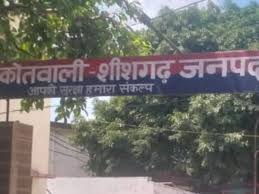
A case of abduction of a minor Dalit girl has come to light from the Sheeshgarh police station area of Bareilly. It is alleged that a young man from the same village lured the girl away. Based on the complaint of the victim’s mother, the police have registered a case against the accused and started an investigation. In her complaint to the police, the woman stated that Ajay (son of Lekhraj) from the village had been harassing her 15-year-old daughter for a long time. He would make obscene comments to her whenever she passed by. A complaint had been filed at the police station earlier regarding this matter, after which the accused had promised not to repeat the mistake and a compromise was reached. The victim’s mother also alleged that Narendra and Chhotu from the village provided protection to the accused Ajay. Ajay would often sit at their house and molest and harass the girl. According to the complaint, on the night of January 10, around 2:00 AM, when the girl’s parents returned from Delhi, their children were asleep. Upon waking up in the morning, they found their minor daughter missing. After questioning the villagers, it was learned that the accused Ajay had lured the girl away. When the victim’s parents went to the accused’s house to inquire, the accused’s family members misbehaved with them and tried to evade the matter. The mother has expressed apprehension that her daughter’s life and honor are both in danger. She has demanded that the police administration recover her daughter safely as soon as possible and take strict action against the accused. Sheeshgarh Police Station Inspector Harendra Singh said that a case has been registered against three people, including the accused youth, based on the victim’s complaint. The girl will be recovered soon. Sunny Goswami | Mirganj Courtesy: Hindi News
Dalit Student Beaten While Returning from School: Dozen Youths Attack with Rods, Sticks, and Belts in Sakaldiha
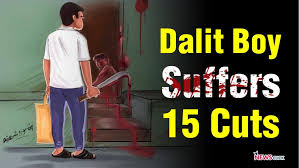
A Dalit minor student was brutally beaten by a dozen youths while returning home from school in the Sakaldiha police station area of Chandauli. The incident occurred around 2:30 PM on Tuesday near the Bhojapur railway crossing. The victim’s father, along with villagers, reached the police station and filed a written complaint against half a dozen youths, including a known history-sheeter. Lakshmi Narayan Gautam, son of Pancham Ram, a resident of Barthi village in Sakaldiha police station area and currently serving in the CRPF, is an 11th-grade student at Dr. Ambedkar School in Bhojapur. On Tuesday, after school was dismissed, as Lakshmi Narayan was returning home, he was surrounded by about a dozen youths near a garden in Bhojapur village on the Bhojapur-Chaturbhujpur road. It is alleged that the attackers, with their faces covered, attacked the student with belts, sticks, and rods, causing him to fall to the ground. Lakshmi Narayan sustained serious injuries to his back and hands, where marks from the sticks, rods, and belts are clearly visible. Fellow students who came to his rescue were also severely beaten by the attackers. The broad daylight assault caused panic in the area, and passersby were terrified. The victim’s father, Pancham Ram, said that his son had recently been in a motorcycle accident in which he broke his arm. He had not yet recovered from that injury when this attack occurred. Pancham Ram has filed a complaint at the police station demanding strict action against the accused. In this regard, Sakaldiha Police Station Officer-in-Charge Dilip Srivastava said that a police team has been dispatched to the spot to apprehend the accused as soon as the information was received. Gyanendra Kumar Singh | Sakaldiha, Chandauli Courtesy: Hindi News
Why the 16-year campaign to rename Marathwada University after BR Ambedkar still matters
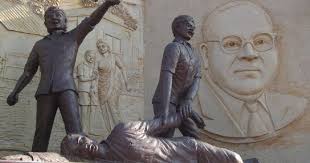
The annual commemoration of the struggle on January 14 enables Dalits to gain a political education from their lives, rather than relying on theoretical models. Why the 16-year campaign to rename Marathwada University after BR Ambedkar still matters The Namantar Shahid Smarak in Aurangabad. | JAIBHIM5, CC BY-SA 4.0 via Wikimedia Commons Standing on the Indora Bridge in Nagpur, one can catch a glimpse of the Namantar Shahid Smarak – a memorial to 27 Dalit activists who were killed during the 16-year Namantar Andolan that started in 1978 to have Marathwada University renamed after BR Ambedkar Not surprisingly, some members of the upper castes and land-owning feudal classes in Maharashtra’s Marathwada region opposed this demand for a gesture that would pay tribute to the architect of India’s Constitution for leading the struggle for equality and his efforts to democratise education. Among them was Shiv Sena head Bal Thackrey. “Gharat nahi peeth ani magtay vidyapeeth,” he sneered. You don’t have a loaf of bread to eat, but you want a university. Significant markers of the movement included the Long March in 1979, which set out from Nagpur for Aurangabad, 470 km away; the Jail Bharo Andolan to court arrest between 1978 and 1994; and several attacks on protestors by feudal-caste groups that opposed the name change. This movement also helped shape the course of a Dalit literature. The struggle ended with a compromise on January 14, 1994, to rechristen the institution as Dr Babasaheb Ambedkar Marathwada University. To remember the sacrifices made by the Dalit protestors and to advance the effort to create an egalitarian society based on the principles of humanity, the struggle is commemorated across Maharashtra with key events in Aurangabad (now Chhatrapati Sambhajinagar) and Nagpur on that date each year. The annual event offers hope and opportunities for Dalit politics by connecting with the idea of “true politics” that gives a voice to those who are marginalised, making them active participants instead of mere subjects who must conform to the dictates of the state and society. This true politics supports the discourse of natural rights, equality and intellectual freedom, empowering Dalits to express dissent. Commemorations such as this one enable Dalits to gain a political education from their lives, rather than relying solely on theoretical models. During the 16-year struggle, the opposition to the Namantar Andolan brought into the open the deep-rooted feudal and caste nexus that had permeated society and politics in Marathwada and Maharashtra in general. It also laid bare the “politics of humiliation” being practised by these groups, undermining the demand by Dalits for dignity and respect. The Andolan was a response to these Brahmanical power structures. It was a “rejection of rejection”, as political scientist Gopal Guru has described the process. The government and dominant groups have established a “mnemonic hegemony”, or the power to shape how history is told and which is sidelined. The Namantar Aandolan challenged the power of feudal caste groups to dictate history by asserting its own “mnemonic sovereignty”. The justified demand to rename the university to Dr Ambedkar University reflected a fairer version of history that had been sidelined by the feudal upper-caste groups. Dalit students began using the name “Dr Babasaheb Ambedkar University” in their official correspondence even before their demand was granted. They started their own journals and media platforms to communicate their version of events, avoiding mainstream media platforms that were biased in favour of the elite. The Andolan employed creative methods of storytelling – for instance, using protest songs that shared its struggles and documented the violence perpetrated by both state and non-state actors. The Andolan’s Long March of 1979 made the fight against caste injustice visible. The movement revived the memories and spirit of the Dalit Panther, a militant organisation founded in 1972, inspired by the Black Panther movement in the US. The Andolan, which began as the Namantar Andolan, culminated not with a name change but a name extension – a namvistaar. It revealed the state’s apathy towards Dalit claims for dignity, as well as the state’s tendency to protect the feudal caste-class nexus. But there were crucial victories. The Andolan had encouraged solidarity between various Dalit sub-castes. For instance, Pochiram Kamble, who is commemorated in the Nagpur memorial, belonged to the Mang community in a struggle where Mahars (the sub-caste to which Ambedkar belonged) were in the majority. Also commemorated on the memorial is Abdul Sattar, marking the shared history of hardship and oppression between Muslims and Dalits. As a young person wondering whether Viksit Bharat has a place for Dalits or if the community is being used as pawns in Hindutva’s battle against minorities, January 14 is an opportunity to look back on a crucial campaign and try to understand the crucial lessons that Marathwada’s Namantran Andolan offers to navigate a course for Dalit true politics as it embraces the future. Nikhil Sanjay-Rekha Adsule is a senior research scholar at IIT-Delhi. His X handle is @beingkhilji. Nikhil Sanjay-Rekha Adsule Courtesy : Siasat Note: This news is originally published on https:/thesiasatdaily.in/bha and is used purely for non-profit/non-commercial purposes, especially human rights
Dalit Woman Raped After Accused Conceals His Religious Identity, Obscene Videos Made: Repeated Sexual Exploitation Through Blackmail, FIR Registered on Court Order
A case of sexual exploitation of a 22-year-old Dalit woman by concealing religious identity has come to light in the Garhmukteshwar police station area. It is alleged that the accused hotel owner gained the trust of the woman and her family by identifying himself as a Hindu, then drugged her, raped her, and made obscene photos and videos to blackmail her. Through this, the accused repeatedly sexually exploited the woman. The victim stated that about eight months ago, two young men came to her house to buy a buffalo. The deal did not go through, but they kept coming back to her house. One of these men introduced himself as Ajay Kumar and a hotel owner. The accused said he needed an employee to work at the hotel counter and arranged a job for the woman’s mother at a salary of Rs. 15,000 per month. It is alleged that after taking the woman to the hotel, the accused gave her a narcotic substance. While she was unconscious, he raped her and made obscene photos and videos. Fearing social stigma and disgrace, the woman did not share this with anyone and stopped going to the hotel. After some time, the accused called and revealed that his real name was not Ajay, but Yunus. He threatened that if she did not comply with his demands, he would make the photos and videos go viral on social media. After this, the accused called the woman to different places and raped her several times. The victim alleged that when she resisted, the accused would use casteist slurs and verbally abuse her over the phone, mentally harassing her. Police Station In-charge Inspector Devendra Singh Bisht said that on the orders of the court, a case has been registered against Yunus, a resident of Mohalla Madrasa in Garhmukteshwar city, under serious sections including rape, threats, blackmail, and the SC/ST Act. The police are conducting a thorough investigation into the matter. Shahrukh Khan | Garhmukteshwar Courtesy: Hindi News
Hatred fuelled on basis of caste and religion, claims Congress after Dalit woman’s killing in U.P.

The party claims the State tops in crimes against SCs, flags delay in releasing crime data The Congress on Monday criticised the Yogi Adityanath government in Uttar Pradesh over the alleged killing of a Dalit woman in Meerut, accusing the Bharatiya Janata Party of fostering hatred on the basis of caste and religion and selective use of State power. A Dalit woman was allegedly killed and her 20-year-old daughter abducted in a village in Meerut district last Thursday. The police said a 22-year-old man has been arrested in connection with the crime. The incident led to tension in the area, following which additional police forces were deployed. The abducted daughter was later traced to neighbouring Saharanpur district on Saturday, officials said. Addressing a press conference in the national capital, Congress Scheduled Caste department chairman Rajendra Pal Gautam alleged that caste-based animosity and religion-based hostility was being encouraged under BJP rule. “Hatred is being fuelled in the country on the basis of caste and religion, and this is happening under the patronage of BJP governments,” Mr. Gautam alleged. The Congress leader accused the Uttar Pradesh administration of targeting Dalits, tribals and backward classes through what he described as the selective use of coercive measures. Referring to the State government’s practice of demolishing properties of alleged offenders, he said such action appeared to be guided by caste and religious considerations. “When a Dalit is oppressed in the State, the bulldozer does not move,” he alleged. Recounting the Meerut incident, the Congress leader said the woman was killed when she attempted to resist the abduction of her daughter. He also claimed that Congress party representatives were stopped from meeting the victim’s family. “If the police showed the same diligence in preventing crime and ensuring punishment for the guilty, such incidents would not recur,” he said. Mr. Gautam further alleged that if the accused belonged to a Dalit, tribal or backward community, action such as demolition would have followed swiftly. “The law should not operate on the basis of caste or religion. If it does, the country will weaken,” he said. ‘No data since 2022’ He also criticised the government for not releasing data on atrocities committed against Dalits after 2022, calling it a failure of governance. Claiming that Uttar Pradesh accounted for the highest number of cases of atrocities against Dalits in the past five years, he said that BJP-ruled States together contributed a majority of such cases nationally. Questioning restrictions on protests, Mr. Gautam said the authorities had earlier denied permission for demonstrations citing procedural requirements. “If a rape or killing occurs, do we have to wait 10 days to demand justice?” he asked. The Uttar Pradesh government has not yet responded to the Congress’s allegations. The Hindu Bureau Courtesy : The Hindu Note: This news is originally published on https:/thehindu.com/bha and is used purely for non-profit/non-commercial purposes, especially human rights