
We Must Not Choose Between “Caste” And “Civic sense”

Caste explains the moral history of filth in India; collective-action failure explains its daily reproduction Why are Indian streets so often strewn with litter? Why do so many of us treat public spaces with such complete disregard? I have wrestled with these questions for many years—both as an ordinary citizen and as a Dalit who has studied Indian society academically and also lived within its social hierarchies as a fact of everyday life. Suraj Yengde’s recent piece offers a straightforward answer to this larger question of cleanliness and civic sense—caste. His well-placed assertion is that caste has trained much of Indian society to outsource responsibility to others. Imagine cleaning as the “job” of a designated group of Dalits, and it becomes easier to treat mess as morally weightless and inconsequential. In this arrangement, filth becomes public, but shame becomes privatised—or made invisible altogether—and accountability is shifted to others. I agree with this completely. It explains why most Indians are meticulously clean inside their homes, but readily throw garbage where it doesn’t belong, showing little concern for what happens outside their gates. But my own life experiences push me toward a more complicated picture. Caste is indeed a necessary explanation for India’s sanitation order (or rather, disorder) and civic sense. Who cleans your streets first thing in the morning, whose labour is stigmatized, and who is considered “designated” to clean “our mess”? Caste explains this division of labour and the moral permission it creates. But it does not fully explain why public neglect persists and keeps reproducing itself, even in situations where caste hierarchy is not the immediate or visible operating mechanism. To understand the everyday stability of littering and disregard for public goods, we also need to see sanitation as part of a wider social logic of chalta hai—a low-trust environment in which individuals routinely assume that public rules will not be followed or fairly enforced and therefore feel it is “rational” to break them first. The result is not just a caste problem but a public-goods trap, one whose moral authority draws on caste but whose daily reproduction is driven by collective-action failure. Let me give a concrete example. A few years ago, I attended an Ambedkar Jayanti rally in Delhi. For most Dalits, this day carries the same importance as, if not greater than, a national holiday. It is a day to celebrate hard-earned dignity, equal rights, and an unfinished struggle. The atmosphere was highly charged, with blue flags everywhere, slogans of “educate, agitate, organise,” speeches, songs, and dancing, in an intense sense of community. But as the crowd dispersed toward the end of the day, the pride turned into embarrassment. The road along which the procession had moved was blanketed with trash of pamphlets, plastic water bottles, paper plates, cigarette butts, and everything a large crowd could throw on the street. After the programme concluded, volunteers started cleaning up. However, the irony was sharp enough to hurt. We had spent the day invoking a politics of dignity and ended it by turning a shared public space into a dumping ground. My first instinct was to reach for excuses. The crowd was huge. There were no dustbins. The municipality should have planned better. Where were people expected to dispose of the litter—in their pockets? But these explanations didn’t touch the deeper truth, which is that we had behaved like nearly every other large gathering in India. It was no different from a student political rally I attended at Delhi University, where roads were plastered with posters, or a public roadshow by any politician, big or small. We left the mess for “someone else” to handle. And that “someone else” was a sanitation worker from a Dalit community itself, which made the moment even more bitter. This episode doesn’t disprove Yengde’s point. It revealed something deeper and adjacent to it, and pushed me to extend this narrative further. Even those who don’t believe in any caste hierarchy or champion the cause of Dalits can still fall into the habit of treating public space as morally disposable. Oppression does not automatically produce better public conduct. It produces people living within the same social environment, responding to the same incentives, and absorbing the same norms. I saw the same logic at work in the South Haryana village where I grew up. Everyday life was full of small acts of rule-breaking, routinely justified as necessary or common sense. Until recently, illegal hookups to electric poles (in simple terms, electricity theft) were common to avoid bills, cutting across caste groups. Giving a small bribe, known as ghoos or bakshish, to a traffic constable to avoid receiving a challan was/is a common practice. Calling a “politically connected” person in the tehsil or any government office, for that matter, to get some paperwork done. Finding jugaad for everything, from land registry to marriage certificates to even securing a hospital bed in a big Delhi hospital. Then there were election-time “gifts,” usually liquor or cash, to secure votes. I don’t want to take this piece in the direction of petty corruption—that’s a topic for another day—but these are everyday ‘Indian things’ cutting across caste backgrounds. It is true that those in power are often upper caste, but given the chance, no Dalit is magically immune to this great Indian phenomenon. These examples, among thousands of others, point to something very uncomfortable, that is, public order in India is treated as negotiable across the board, and oftentimes rules are mere suggestions. People curse corruption and rule-breaking, and then participate in it when they benefit from it and the consequences are low. Over time, this arrangement becomes a learned equilibrium. You become part of a large machine whose wheels need constant greasing to keep it moving. Consider a telling parable from North India about a farmer (Annadata Kisaan). He might quietly pull a sugarcane from his neighbour’s field, yet loudly accuse others of stealing from his crop, forgetting that their fields lie just as close to his.
10 Army personnel killed in a heartbreaking accident in Doda… PM Modi, Rahul Gandhi, and Mallikarjun Kharge express grief

Ten soldiers were killed when an army vehicle fell into a deep gorge in Doda district. PM Modi, Leader of the Opposition Rahul Gandhi, Congress President Mallikarjun Kharge, and Priyanka Gandhi expressed their condolences over the accident. New Delhi: Prime Minister Narendra Modi, Leader of the Opposition Rahul Gandhi, Congress President Mallikarjun Kharge, and Priyanka Gandhi on Thursday expressed grief over the death of 10 soldiers in an accident in which an army vehicle fell into a deep gorge in Jammu and Kashmir’s Doda district. Expressing grief over the accident, PM Modi said that we have lost our brave army personnel. Their service to the nation will always be remembered. The PM prayed for the speedy recovery of the injured. He said that all possible help is being provided to those affected. An army vehicle fell into a deep gorge in Jammu and Kashmir’s Doda district on Thursday, killing 10 soldiers and injuring 11 others. Immediate need for road safety measures Congress President Kharge posted on the social media platform ‘X’ that he was deeply saddened by the tragic vehicle accident in Doda, Jammu and Kashmir, in which several army personnel made the supreme sacrifice and many others were injured. My deepest condolences to the bereaved families and loved ones. The nation stands united in profound grief, and we pray for the speedy recovery of the injured. He also said that many such accidents have occurred in the past. There is an urgent need to strengthen road infrastructure, improve mobility in difficult terrains, and implement road safety measures to prevent such heartbreaking losses. Rahul and Priyanka pay tribute to the martyrs Leader of the Opposition in the Lok Sabha, Rahul Gandhi, posted on ‘X’, “The news of the death of several of our soldiers and the injury of many others in the accident where an army vehicle fell into a gorge in Doda, Jammu and Kashmir, is extremely painful. I pay my humble tribute to the martyrs and hope for the speedy recovery of the injured soldiers.” He said, “In this hour of grief, we all stand with the bereaved families of our brave soldiers.” Congress General Secretary Priyanka Gandhi Vadra also expressed grief over the deaths of the soldiers. Priyanka Gandhi posted on ‘X’, “The news of the martyrdom of several soldiers due to the army vehicle falling into a deep gorge in Doda, Jammu and Kashmir, is extremely saddening. May God grant peace to the departed souls. My deepest condolences to the bereaved families. I pray for the speedy recovery of the injured soldiers.” Edited by: Anil Kumar About the Author Anil Kumar is part of the homepage team at Navbharat Times Digital. He has about 16 years of experience in both print and digital media. He has been associated with Navbharat Times Online since January 2021. He writes news and analysis related to politics and current affairs for the India and Delhi sections on the homepage. Courtesy: Hindi News
Sister Chandra and how Parai Attam announced the coming of Dalit women Sakthi to the world
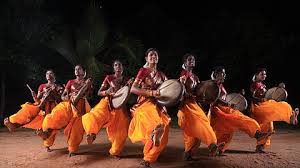
“I was rejected by village folk artistes as they didn’t believe a woman was strong enough to carry a parai and perform,” Sister Chandra remembered. It was the best of times, it was the worst of times for Dalit women to start performing Parai Attam, a traditional art form historically performed by Dalit men during funerals. Sister Chandra, the woman behind this quiet cultural revolution, had been doing community service in Dindigul when she noticed how poorly paid the men performing Parai Attam were. “I felt that people were not respecting the art or the artiste because of their social status,” she recalled. Sister Chandra also sensed the quick shift of the villagers’ interest from folk arts to community TV. “Each village has different art forms which they used to perform during festivals, but when people started enjoying television, art forms started dying,” she went on. Determined to revive the art form, Sister Chandra decided to form a troupe of her own. But being a woman, she had to also fight many gendered stereotypes around the art form, which was considered exclusively the domain of Dalit men. “I was rejected by village folk artistes as they didn’t believe a woman was strong enough to carry a parai and perform,” she remembered. At last, seeing her persistence, traditional village folk artiste Guru Ramadass taught her Parai Attam. Soon, Sister Felci and a group of village women joined, becoming the first batch of what would eventually be known as the Sakthi group. Now, Sister Felci has taken charge of it. As public perceptions changed, Sakthi’s popularity grew significantly. It began teaching more than 20 art forms including Parai Attam, Oyil Attam, and Silambam. Along with an offline batch of 20 students, two batches of online art classes were also introduced. They perform in and around several districts of Tamil Nadu and have also made their mark on the international stage. Sakthi is now flourishing. ‘Finally, you are making our girls take up Parai?’ In ancient Tamil society, parai, a hollow drum made out of a wooden frame and cow skin, was used as a percussion instrument to gather people and make announcements. Over time, it evolved into an art form predominantly performed by Dalit men. In the beginning, the idea of women performing Parai Attam was alarming to a society fed with stereotypical narratives on the art form. Concerned about their social status and perpetuating caste stereotypes, families strongly opposed the participation of their daughters. Parai artistes did not want their daughters to take up the art form as they believed their children would be discriminated against for their social status. “Initially, parents resisted sending their daughters to learn Parai Attam,” Sister Felci reminisced. They were met with questions filled with disbelief and anxiety such as ‘How can you make our girls take up Parai?’ Yet, against all odds, the team’s first performance became both a personal victory for Sister Chandra and a cultural milestone. “After that, we were invited to several villages to perform,” she said. Sakthi went on to become one of the earliest all-women Parai Attam troupes in Tamil Nadu. Sister Chandra and Sister Felci, driven by their mission to empower Dalits and women, were posted in Dindigul by their congregation, the Missionary Sisters of the Immaculate Heart of Mary, ICM. Every year, a new batch of twenty students joined Sister Chandra’s year-long residential course to learn various folk art forms such as Parai Attam, Oyil Attam, and Karagattam. The mix included young women who were school dropouts. “We encourage school dropouts to finish their studies and enroll in college. Some of them later became folk dance teachers in nearby village schools,” said Sister Chandra. Martial arts such as silambam and taekwondo are also taught by Sakthi. “This is a life-oriented program as women are also taught vocational skills such as tailoring, besides sex education and other lessons,” she said. Performances with social messages Rather than performing solely for entertainment, Sakthi’s programs are society-oriented. To spark a social dialogue and make society rethink its assumptions became the group’s goal. Sister Chandra believes that the dialogue initiated after performances has brought changes in society. She proudly spoke about how turning Parai Attam into an inclusive art form is part of such a change. “Now, women from non-Dalit communities also train for Parai Attam with the Sakthi group, which shows acceptance and how people are willing to challenge stereotypes,” she said. Sakthi’s unique style of incorporating social messages with performances made the team stand out. “Our performances raise awareness about social issues such as women empowerment, communal harmony, sexual harassment, caste, globalisation and unemployment,” said Sister Chandra. The importance of developing a reading habit is a recurring theme expressed by the team whenever it is invited for book launches and similar events. To instill confidence and capability among young talents, Sister Chandra believed that the group should be involved in choreographing, decision-making and every other aspect of their performance. This let the girls feel empowered by occupying spaces which were dominated by men, she said. ‘To build a better humanity, we have to break the chains of oppression’ is Sakthi’s motto. The group’s name reflects its goal of holding on to the female ‘energy’ and empowering women by creating a space exclusive to them. As recently as the early 2000s, women across different states were excluded from performing certain folk art forms. “For example, in Kerala, women were not allowed to perform chenda melam, an art form that involved drums. This trend is slowly changing nowadays,” said Sister Chandra. The logo of Sakthi depicts one foot of a performer bound by a chain, signifying the historical oppression, and the other foot adorned with an anklet, representing resilience and the struggle to break free from marginalisation. Taking Parai attam to the world The team of performers has kept changing over the years as many women dropped out after marriage and childbirth. However, that didn’t stop Sakthi from carrying forward its mission.
Hindu on paper, Christian at heart: What lies behind Dalit reconversions in Kerala
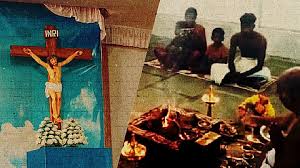
For many years now, organisations such as the Vishva Hindu Parishad have taken up the reconversion of Dalit Christians to Hinduism as ‘Ghar Wapsi’. But activists say without the reservation barrier, most Dalits would not leave Christianity, which is a core anxiety for Hindutva groups. Aneesh* read Kunju Kaaryangalude Odeythampuran, the Malayalam translation of Arundhati Roy’s The God of Small Things, when he was in college. He picked up the book prompted by a casual remark from a classmate. “He told me that there’s a character called Velutha in the novel who reminded him of me,” Aneesh recalled. “Velutha was a Dalit Christian like me, who was in love with a Syrian Christian woman,” he said, a faint, painful smile crossing his face. In the novel, Velutha is brutally tortured and killed for his ‘forbidden’ love. Though Aneesh, who belongs to the Pulaya community, has never faced physical violence like Velutha, he has encountered caste abuse, public humiliation, and social exclusion. “It was 2010. Ours was a hilly village in Kannur district. A girl from my parish and I were in a relationship. We went to the same school and attended catechism classes together. Our families were not very different financially,” he said. The relationship ended when the girl’s family came to know about it. “They publicly called me ‘Pelayan’, a casteist slur for Pulaya, ‘parassala christian’, and many other things. My skin colour, my caste, my family, everything was dragged out in public and insulted,” Aneesh said. ‘Parassala Christian’ is a derogatory term used for landless Dalit Christian families who moved from Parassala in Thiruvananthapuram to northern Kerala in search of work and land. Aneesh’s grandparents had converted to Christianity long ago. His parents had migrated to the village in Kannur nearly five decades earlier from Parassala. When the abuse began, Aneesh said there was no support from the church. “The church, the priest, no authority stood with us. It was a Syrian Christian-dominated area under the Syro Malabar Church. With that one incident, my family was casually ostracised,” he said. Unable to continue living there, Aneesh left the village and went to north India to pursue further studies. His parents eventually moved back to Thiruvananthapuram. Today, Aneesh is 40, married, and the father of two children. A few months ago, he, his wife, and their two children – both below the age of 10 – formally converted to Hinduism. The conversion, Aneesh said, was facilitated by the Vishva Hindu Parishad (VHP), a prominent right-wing Hindutva organisation. A ceremony was organised at a nearby temple. Volunteers helped him with the paperwork, to change his name through a gazette notification and obtain a caste certificate from the government. “My conversion has nothing to do with faith or spirituality,” Aneesh said. “I still go to church. I also go to the temple. But being Christian gave me nothing… no protection, no dignity, no opportunity. By converting to Hinduism, at least my children will be eligible for reservation.” Aneesh’s decision to convert was not rooted in faith but in paperwork. Like several others TNM spoke to, his move was driven by the loss of reservation benefits after generations within Christianity. This motivation runs through the data as well. Of the Dalits who converted to Hinduism in Kerala in 2024, a majority cited access to reservation in affidavits submitted to the VHP, which has been facilitating these conversions under the banner of ‘Ghar Wapsi’. Activists and church representatives argue that this is not incidental. They point out that the continued denial of Scheduled Caste status to Dalit Christians is part of a long-term political design, one that leaves families with little choice but to return to Hinduism on paper to access constitutional protections. Conversion then becomes less a matter of belief and more a survival strategy shaped by law, caste, and state policy. For several years now, organisations such as the VHP have taken up the reconversion of Dalit Christians to Hinduism as a mission. The VHP confirmed to TNM that it facilitated around 100 Dalit conversions to Hinduism in the past year. The organisation requires those seeking reconversion to submit an affidavit stating the reason for the change. According to VHP functionaries, many affidavits cite reservation as the primary reason. Anil Vilayi, VHP state president, however, says Dalit reconversions are not just about reservation. “Their ancestors may have gone to other religions due to false promises. When those promises were not fulfilled, they started returning. There is no forced conversion here. We are only helping them return to their swadharma, the faith to which they or their ancestors once belonged,” adding that they do not have any specific strategy. Anil also said that the VHP manages around 200 temples across Kerala, where the reconversions are facilitated. “Hindu communities are not economically strong. That is how Christian and Muslim organisations lure people, by offering money, housing, jobs abroad, and other material benefits,” he alleged. “Christian organisations receive foreign funding, which makes it easier for them to provide these incentives. Poor families are easily drawn in,” Anil said, invoking the common rhetoric against Christians used by the Sangh in the country. According to Anil, the VHP’s broader objective is to prevent people from leaving Hinduism. “Since the formation of the VHP, that has been our mission, in different forms,” he said. He further said that the organisation has identified around 70 taluks in Kerala – most of them in Kottayam and Thiruvananthapuram districts – where conversions from Hinduism are “rampant”. “In these regions, we are doing intensive and extensive work to prevent conversions. Across the state, we have around 100 Dharma Rakshakas who work at the ground level. They visit families and intervene,” he said. Anil also described the ritual process involved in reconversion. “There are Shuddhi Kriyas, or purification rituals, to embrace Hinduism, along with other ceremonies conducted by temple priests. In VHP-managed temples, a separate group called Aayams oversees these reconversion rituals,” he added. Another family TNM spoke to in Kottayam
Man Accused In Five Murder Cases Gets Life Term For Killing Dalit Woman In Gurugram

A man was sentenced to life by Gurugram court for kidnapping and killing a Dalit woman in 2021. He confessed to other murders. Key evidence included his recorded confession. Police said the accused was working as a security guard at a private hospital in Sector 16 in 2021 when he molested a Dalit woman. (Canva) A Gurugram court has sentenced a man, accused in five murder cases, to life imprisonment for the kidnapping and killing of a 20-year-old dalit woman in December 2021. The court found him guilty in the case and awarded the sentence after completion of the trial. According to Rekha JS Jangra, deputy district attorney, after the convict Singh Raj was arrested for the murder of the woman on January 7, 2022, he confessed to murdering three more minor girls in 2019, 2020 and 2021 for protesting to his molestation attempt. “Singh had dumped bodies of all three minors in Agra canal near Sector 7 after the murders. Trials are ongoing against him in these cases. He had also confessed to murdering his uncle and cousin in 1987 but was acquitted due to lack of evidence in those cases,” she said. Police said Raj was working as a security guard at a private hospital in Sector 16 in 2021 when he molested a Dalit woman. Officers added that Raj confessed to killing her after she allegedly tried to extort money by threatening to file a police complaint against him, Hindustan Times reported. Jangra said he asked the woman to meet him in Sector 16 on December 31, 2021, where he strangled her to death. “He then transported the body on a bicycle to dump it in the canal. Her family in Bhupani had filed a missing complaint at Old Faridabad police station on January 2, 2022. However, this time, the body was trapped in vegetation and was recovered by police on January 6, 2022,” she said. As per the investigators, on January 5, Raj rang the woman’s family and confessed to murdering her. Her family had recorded his confession on another phone and contacted the police. Sobhita Dhulipala Radiates Timeless Charm In A Traditional South Indian Look For Her Haldi Ceremony “The cell tower location of the deceased and Singh were found to be at the same location at the time of the murder. The recording of his confession along the location was the key evidence for prosecution along with 29 witnesses,” said Jangra. The court of additional sessions judge Purushottam Kumar also imposed a total fine of ₹2.1 lakh on convict Singh Raj after finding him guilty under Sections 302 (murder), 364 (kidnapping with intent to murder) and 201 (causing disappearance of evidence) of the Indian Penal Code, along with Section 3(2)(v) of the Scheduled Castes and Scheduled Tribes (Prevention of Atrocities) Act. Curated By : Aanchal Sinha Courtesy : News18 Note: This news is originally published on https:/news18.com/bha and is used purely for non-profit/non-commercial purposes, especially human rights
A Battle for Survival: Rahul Gandhi Takes Charge of Bihar Congress, Creates a 4-Point Formula for Unity

Congress damage control mission – After the disappointing results of the 2025 Bihar Assembly elections, the Congress party has now embarked on a major struggle to save its existence. Amidst growing indiscipline within the party and discussions about all six MLAs switching sides, Congress MP Rahul Gandhi and National President Mallikarjun Kharge have taken charge. Patna: The national party Congress is not only disappointed with its electoral performance in Bihar these days but is also troubled by the extreme indiscipline at the organizational level. Congress leader Rahul Gandhi is going to personally lead the campaign to revitalize the state Congress. According to Congress sources, this is Rahul Gandhi’s damage control mission. This damage control mission, organized in Delhi, will include the six MLAs and some prominent leaders. When and where will it be held? According to information received from party sources, all six MLAs of the state Congress have been called to Delhi on January 23. This meeting has been organized at Indira Bhavan in Delhi. This meeting is considered very important for the Bihar Congress. Rahul Gandhi and Mallikarjun Kharge will be present in this important meeting. This meeting has been called to strengthen the organization in Bihar and to discuss the party’s future strategy. Why was the damage control mission started? In fact, Congress leader Rahul Gandhi had high hopes from Bihar. It was the increasing attraction of the Congress’s core vote base towards the party in Bihar that led the Congress to even claim to contest the elections alone. The results of the 2025 Bihar Assembly elections were shocking. The most disturbing news was that all six Congress MLAs were joining the JDU. In such a situation, the Congress would have no representation in the Bihar Assembly. The Congress, which has been fighting for public interest in the assembly, would then become a party confined to the streets. A lesson in discipline will be taught In this meeting, Rahul Gandhi’s role is going to be crucial. The ideal situation for the Congress and its accountability towards the public in today’s date will be determined. Programs will be planned against Narendra Modi’s government. Currently, the Congress party’s intention is that: 1. The six Congress MLAs remain in the party. 2. They remain united in the upcoming Rajya Sabha and MLC elections and follow the party’s policies. 3. Changing the name of MNREGA is an insult to Mahatma Gandhi. A protest strategy will be devised for both the streets and the legislature with this in mind. 4. In the upcoming session, they should oppose the negative actions of the government along with their Mahagathbandhan (Grand Alliance) partners and ask as many questions as possible. They should corner the government on issues requiring attention. Edited by: Ravi Sinha • Reported by: Ramakant Chandan About the Author Ravi Prakash Sinha is a Senior Journalist (Principal Digital Content Producer) at Navbharat Times Online. He has 25 years of experience in current affairs, Jharkhand-Bihar politics, and ground reporting. Ravi Sinha has been working with NBT (Digital) for the last 3 years. Courtesy: Hindi News
Poor family’s house gutted by fire in Sattichaura area: Household belongings reduced to ashes, entire family forced to live under the open sky
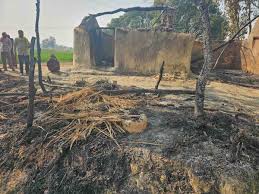
A thatched house belonging to a Dalit family in the Sattichaura area of Ayodhya caught fire on Monday afternoon. The entire household of Vijay Kumar Raidas, son of Rambaksh Raidas, a resident of Sundari Talab Haribandhanpur, was reduced to ashes, leaving the family homeless and forced to live under the open sky. The incident occurred on Monday afternoon. The elderly grandmother, Ramkala, who was present in the house with four young children, tried her best to extinguish the fire, but was unsuccessful. Upon receiving the information, PRV police arrived at the spot, and with their help, the fire was brought under control. The thatched house and all the belongings inside were completely destroyed by the fire. Approximately half a dozen family members, including young children, were forced to spend the entire night under the open sky in the biting cold. Even 24 hours after the incident, the family has not received any assistance. Satyam Singh | Ramnagar Dhaurahra (Sohawal), Courtesy: Hindi News
Coast Guard Academy project in Mangaluru triggers row as dalit colony loses only access road

Residents of Moodubalike, a small habitation located close to the academy site, claim that a kaccha road that provided the sole access to their colony was blocked around two months ago. MANGALURU: The construction of India’s first Coast Guard Academy (CGA) at Kenjar on the outskirts of Mangaluru has run into controversy, with Dalit families living in the vicinity alleging that the compound wall being built for the project has cut off the only access road to their colony, affecting their daily lives. The CGA has been allotted 159 acres of land by the Karnataka Industrial Areas Development Board (KIADB), and work is currently underway on laying the foundation for the compound wall. However, residents of Moodubalike, a small habitation located close to the academy site, claim that a kaccha road that provided the sole access to their colony was blocked around two months ago due to the construction activity. Dalit Sangharsha Samiti (DSS) district convenor Sadashiva Padubidri said that around 10 Dalit families have been living in the area for nearly 70 years and were granted title deeds under the government’s Ashraya housing scheme in 1994. Despite having legal ownership of their homes, the families are now facing isolation due to the loss of road access, he said. Padubidri explained that the colony is surrounded by private properties on three sides, leaving only a mud road adjoining Survey No. 116/7 as the lone access route. “This road has been crucial for all daily needs, including travel to workplaces, schools, markets and hospitals,” he said, adding that the problem will become more acute during the monsoon, when the entire area gets waterlogged. According to DSS leaders, repeated appeals to Member of Parliament Capt. Brijesh Chowta, MLA Umanath Kotial, the Deputy Commissioner, Coast Guard officials and the Tahsildar have failed to yield any concrete response. “The MP expressed helplessness and did not even accept our memorandum. He later asked the Tahsildar to conduct a spot inspection, but the inspection was carried out without informing the local residents,” said Raghu K. Yekkar, another DSS leader. He added that Coast Guard officials had earlier orally assured the residents that the road would not be blocked. “We have no alternative access as the remaining three sides are private lands and the owners will not permit passage. From an existing concrete road, our houses are barely 50 metres away. If the Coast Guard gives up just a few cents of land, a proper access road can be provided to our habitation,” he said. The DSS has demanded an immediate halt to the compound wall construction and urged the MP and the Deputy Commissioner to intervene and ensure an alternative access arrangement. Stating that access to a road is a fundamental right, the organisation warned that if the alleged injustice to the Scheduled Caste families is not addressed, it will be forced to launch protest demonstrations. Meanwhile, a Coast Guard official, speaking on condition of anonymity, denied the allegations and said there was no question of blocking any road, as no road is shown at the location in the panchayat records. Vincent D’ Souza Courtesy : TNIE Note: This news is originally published on https:/thenewindianexpress.com/bha and is used purely for non-profit/non-commercial purposes, especially human rights
Casteism in Himachal: Thakur girl marries Dalit man, faces ostracism from her own family; read the heartbreaking truth

Himachal News: A living example of how deeply rooted casteism still is in society has come to light. A young woman from a general category (Thakur) family married a man from a Scheduled Caste (SC) community, and she became a victim of taunts and discrimination from her own relatives and society. The woman shared her pain on social media, describing how her parents fully supported her, but after their death, all limits of discrimination were crossed. This story exposes the double standards of a society that prioritizes caste over humanity. Court marriage performed with the Constitution as witness In her post, the woman stated that she and her husband had a court marriage with the Indian Constitution as their witness. This is an inter-caste marriage. The woman belongs to a Thakur family from the general category, while her husband comes from the SC community. After the marriage, some relatives and villagers protested. They tried to instigate the woman’s parents, saying that their daughter had brought shame to the family. However, the woman’s parents and brother and sister-in-law ignored these remarks and strongly supported their daughter’s decision. The real struggle began after the parents’ death The victim said that as long as her parents were alive, no one dared to say anything in front of them. Her parents said that there was no greater happiness than their daughter finding a life partner of her choice. But after the death of her parents, the attitude of relatives and acquaintances completely changed. Those who used to speak respectfully before now started practicing untouchability and discrimination. The woman said that fed up with this behavior, she has distanced herself from her relatives. Even childhood friends and landlords discriminated against her The poison of casteism is not only spread among illiterate people but also among educated people. The woman shared a shocking incident. Her childhood friend, who had grown up with her, also started practicing untouchability towards her children. Moreover, she was asked about her caste when she was looking for rented accommodation in Rampur and Shimla. A landlady even prevented the children from putting up charts on the walls and discriminated against them. This incident shows how deeply ingrained caste-based mentality is, even in cities. A strong reply to the trolls After sharing her story on social media, a woman from Sirmaur (Rekha Sharma) tried to troll the young woman. The troll alleged that she had eloped from college and had dishonored her father. The young woman gave a strong reply, stating that she had married legally, not eloped. She clarified that she had never tarnished her family’s honor. She is very happy with her husband, who cherishes her and her children. The young woman clarified that her fight is not against the general category, but against the ‘Manuvadi’ ideology that spreads hatred in society. Poonam Sharma Courtesy: Hindi News
Kerala Assembly polls: UDF eyes Dalit thinker Sunny M. Kapikad to challenge LDF hold in Vaikom
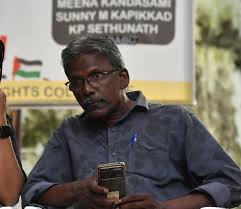
When contacted, Kapikad confirmed that informal discussions have taken place regarding his possible candidature, though he said no formal communication has been received from the UDF leadership As discussions on candidate selection gather momentum among the coalitions for the upcoming Assembly elections in Kerala, speculations are rife over the United Democratic Front (UDF) looking to field Dalit thinker Sunny M. Kapikad in the Vaikom constituency. When contacted, Mr. Kapikad confirmed that informal discussions have taken place regarding his possible candidature, though he said no formal communication has been received from the UDF leadership. “The UDF has openly acknowledged its commitment to expand its base by bringing in different sections of society. I am therefore inclined to support any proposal that aligns with the interests of the Dalit community,” he said. Vaikom, a long time stronghold of the Left Democratic Front (LDF), last witnessed a Congress victory in the 1991 Assembly elections, when K. K. Balakrishnan won by a narrow margin of 376 votes. Banking on its success in wresting the Velloor district panchayat division, which falls within the Vaikom Assembly segment, during the recent local body elections, the UDF is now keen to reclaim the constituency. The coalition is exploring whether the influence wielded by Mr. Kapikad, who is also a voter in the Assembly segment, among Dalit voters in the region, would be sufficient to secure a victory. Mr. Kapikad, a well known Dalit thinker and social critic, was among the early activists of the Adivasi Gothra Mahasabha led by C.K. Janu and M. Geethanandan and has played a key role in several Adivasi Dalit movements in the State. The UDF has already inducted the Janadhipathya Rashtriya Sabha, led by Ms. Janu, as an associate member of the coalition. Meanwhile, debates over his possible candidature has sparked a major discussion in social media. Leaders of Dalit organisations say they are receiving enthusiastic support from various parts of the state in favour of his candidature. The sitting MLA from Vaikom is CPI leader C.K. Asha, who has held the seat for two consecutive terms. In the 2016 Assembly election, she secured 61,997 votes, while Congress candidate A. Saneesh Kumar polled 37,413 votes. In 2021, Ms. Asha retained the seat with 71,388 votes, compared to 42,266 votes secured by UDF candidate P.R. Sona. Her vote share in the 2021 election stood at 55.96%. The Hindu Bureau Courtesy : The Hindu Note: This news is originally published on https:/thehindu.com/bha and is used purely for non-profit/non-commercial purposes, especially human rights