
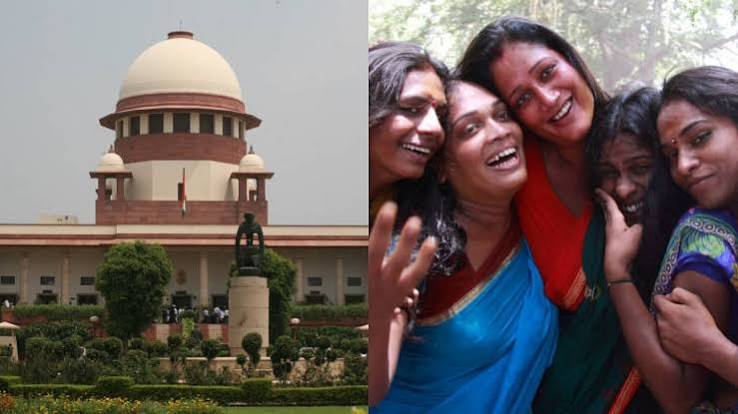
The Supreme Court on Wednesday sought the Centre’s response to a PIL by Women’s Declaration International India questioning the potential impact of the Transgender Persons (Protection of Rights) Amendment Act, 2026, on constitutional and statutory protections reserved for biological women.
Women’s Declaration International India raises concerns over women’s reservations, prison accommodation, sports participation and legal safeguards under the amended transgender rights law.
The Supreme Court on Wednesday sought the response of the Centre on a PIL filed by a women’s organisation, raising concerns over the potential impact of transgender rights legislation on constitutional and statutory protections and benefits reserved for biological women. A bench comprising Chief Justice of India Surya Kant and Justices Joymalya Bagchi and V Mohana issued notices to the Union Ministries of Social Justice and Empowerment, Law and Justice, and Health and Family Welfare on the PIL.
The plea, filed by Women’s Declaration International India, raises questions relating to women’s reservations in local bodies, accommodation of transgender persons in prisons, participation in women’s sporting competitions, and safeguards available to women during arrest, searches and criminal investigations.
The petition was tagged with the batch of cases challenging provisions of the Transgender Persons (Protection of Rights) Amendment Act, 2026, including changes concerning the recognition of transgender identity.
Senior advocate Akhil Sibal, appearing for the petitioner organisation, said the plea raised a distinct perspective because it was brought by a women’s organisation and addressed the potential implications of the legislation for women’s rights.
“Our concern is the impact on constitutional and statutory benefits exclusive to biological females. Those protections must remain and cannot be interfered with. Transgender persons must have equal rights and privileges, but the question is whether those rights can encroach upon protections reserved for biological women,” Sibal said.
The bench noted the issues were already under consideration in a batch of petitions challenging the validity of provisions of the legislation. Justice Bagchi cautioned that filing other similar petitions could delay the proceedings, particularly as the existing batch was nearly ready for hearing.
Sibal, however, maintained the petition was not a repetition of the pending challenges and raised a separate cause concerning women’s rights. The CJI said the petitioner might have a point but noted that the matter was already sub judice, adding the plea would introduce another perspective into the ongoing proceedings.
Solicitor General Tushar Mehta, appearing for the Centre, said the government was preparing its response in the connected batch of cases and would address the concerns raised in the present petition as well. During the hearing, the solicitor general highlighted questions concerning gender identity and access to sex-specific facilities and protection.
These included participation in women’s sporting events, accommodation in women’s prisons, access to women’s toilets, and statutory safeguards requiring women to be searched or have their statements recorded by women police officers in specified circumstances, the top law officer said.
He also raised a hypothetical question concerning the application of restrictions on the arrest of women after sunset where a person accused of an offence identifies as a woman. He said the issue was not the right to identify as transgender, but the implications of the legal rights and protections attached to that identification.
Sibal reiterated that the petitioner did not oppose the right to identify as transgender and said the right should be respected, with appropriate amenities provided. He also raised questions about whether transgender persons should have separate reservations or be eligible to claim seats reserved for women in panchayats.
Courtesy : DC
Note: This news is originally published on https:/deccanchronicle.com/bha and is used purely for non-profit/non-commercial purposes, especially human rights