
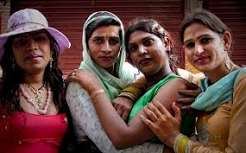
The 2011 Census gave those wishing to identify as transgender the option to choose “Other” as their gender category. In this post, Neethu Naik contends that as the country moves towards another census, the challenge is to count transgender persons more accurately, and to ensure that those counted can actually reach the institutions created for them.
In 2011, India’s Census recorded 487,803 people under the category “Other”. It was the first national enumeration to provide an “Other” gender category alongside female and male. Yet, this number was never a dedicated count of transgender persons. The government has explicitly acknowledged that the category included people who wished to record their sex as “Other”, while some transgender persons may have identified themselves as female or male (Ministry of Social Justice and Empowerment, 2019).
Fifteen years later, this raises questions that go beyond enumeration: What do we actually know about India’s transgender population? Has there been a systematic effort to understand its changing size, geographical distribution, socioeconomic conditions, and welfare needs since 2011? If the demographic profile has changed, can welfare architecture that was designed around a 15-year-old and methodologically limited benchmark adequately capture present needs?
These questions are particularly pertinent as India moves towards another Census. Since 2011, the State has developed considerably more elaborate welfare architecture. The Transgender Persons (Protection of Rights) Act, 2019 and Rules of 2020 (Ministry of Social Justice and Empowerment, 2020) established a formal legal framework; the National Portal for Transgender Persons created an online certification mechanism; and the Support for Marginalized Individuals for Livelihood and Enterprise (SMILE) scheme brought together rehabilitation, healthcare, shelter, skill development, and economic linkages for transgender persons (Department of Social Justice and Empowerment, 2020). But how far has this architecture actually reached?
From demographic visibility to administrative visibility
The National Portal for Transgender Persons was introduced to provide a relatively accessible mechanism for obtaining a transgender certificate and identity card. Certification is significant because it is not merely an instrument of identity recognition; it has become an administrative gateway to several welfare interventions under SMILE and to the Ayushman Bharat TG Plus health package. The state-wise certification data provide an interesting picture of this emerging administrative geography. My compilation of the data available on the National Portal records 48,579 applications and 40,618 certificates issued across the states and Union Territories for which figures were available (Table 1).
There is wide geographical variation, ranging from Maharashtra recording 6,924 applications and 5,817 certificates on the one hand, and Sikkim recording 42 applications and 39 certificates on the other hand. These figures are influenced by factors such as awareness, digital access, documentation, administrative support, and willingness to seek certification. Hence, these may not represent true differences in demographic prevalence.
Table 1. State/UT-wise applications received, and transgender certificates issued through the National Portal for Transgender Persons, September 2026
State/UT Applications received Certificates issued Pending
Maharashtra 6,924 5,817 240
Karnataka 6,038 5,316 186
Odisha 3,957 3,654 86
Andhra Pradesh 3,907 3,516 68
Telangana 3,370 2,800 381
West Bengal 2,813 2,279 177
Uttar Pradesh 2,749 2,055 279
Gujarat 2,540 2,280 32
Kerala 2,262 1,863 36
Delhi 2,065 1,527 161
Tamil Nadu 1,787 1,236 126
Madhya Pradesh 1,456 1,191 92
Chhattisgarh 1,294 1,179 32
Bihar 1,217 1,039 40
Haryana 1,045 771 70
Manipur 1,006 937 24
Rajasthan 942 731 64
Assam 686 508 39
Jharkhan 668 545 63
Punjab 507 370 27
Jammu & Kashmir 347 271 19
Puducherry 346 284 5
Uttarakhand 225 129 26
Tripura 197 164 15
Himachal Pradesh 117 69 5
Chandigarh 72 48 6
Sikkim 42 39 0
Meghalaya 0 0 0
Goa 0 0 0
Arunachal Pradesh 0 0 0
Nagaland 0 0 0
A & N Islands 0 0 0
Mizoram 0 0 0
Daman & Diu 0 0 0
Lakshadweep 0 0 0
Ladakh 0 0 0
Total 48,579 40,618 2,299
Source: Author’s compilation based on data displayed on the National Portal for Transgender Persons; accessed in September 2026.
Nevertheless, the variation raises an important issue: the first step towards entering the welfare system – becoming administratively visible – is itself geographically uneven.
This is significant because the legal framework is explicitly based on self-perceived gender identity. The 2020 Rules provide for certification through an affidavit and do not require medical or physical examination. The National Portal further states that neighbourhood verification to establish whether an applicant is transgender is unnecessary. The intention is therefore to reduce the burden of proving identity. Yet the individual must still negotiate a bureaucratic process involving applications, documents, and digital interfaces. The portal provides alternatives where certain documents are unavailable, but this does not eliminate the wider barriers of digital literacy, awareness, family support, and confidence in approaching State institutions. This creates a paradox; a system designed around self-identification can still be difficult to access for those who are socially least equipped to navigate the State.
What lies beyond certification?
Certification is important, but it is only the beginning of the welfare journey. SMILE is designed as an integrated intervention. Its transgender component includes medical facilities, counselling, education, skill development, livelihood and economic linkages, shelter, and rehabilitation. Healthcare illustrates the significance of this linkage. Ayushman Bharat TG Plus provides annual health coverage of up to Rs. 5 lakh per eligible beneficiary, and includes hormone therapy, gender-affirming procedures, sex-reassignment surgery, and post-operative care. However, the transgender certificate is a mandatory requirement for accessing the package. Thus, access is not a single event; it is a chain encompassing awareness, application, certification, eligibility, and service access.
The livelihood component raises an even broader question. The government has introduced skill-development and entrepreneurship interventions under SMILE, including a programme intended to train 1,800 transgender persons through entrepreneurship development. But how many people move from training to sustained employment? How many obtain independent livelihoods? How many enter formal workplaces? These are arguably more meaningful indicators of social and economic inclusion than the number who have merely participated in a programme.
Significantly, the Ministry invited an evaluation study in 2024 to assess the effectiveness of the transgender component of SMILE. Subsequently, a third-party evaluation of the overall SMILE Scheme was conducted by National Institute of Rural Development and Panchayati Raj (NIRDPR), Hyderabad, during September-October 2025. According to the Ministry, the evaluation’s major findings and recommendations were incorporated into the revised scheme guidelines for 2026-27 to 2030-31. However, the available information does not clarify whether the transgender component was assessed separately. This itself points to an important gap; programme implementation needs to be accompanied by systematic evidence on who is being reached, who is not, and what happens after beneficiaries enter the system.
When there is nowhere to go
The importance of shelter becomes clearer when welfare is considered against the everyday vulnerabilities experienced by transgender persons. In my doctoral study conducted in Mumbai in 2022, all 20 transgender women interviewed reported living away from their families; several had severed or substantially reduced family ties. For many, finding independent accommodation was itself difficult. Participants described difficulties in renting housing and experiences of discrimination and humiliation while looking for a place to live (Naik and Unisa 2023). These findings are from a small qualitative sample and cannot be generalised to the transgender population as a whole. They nevertheless point to vulnerability that welfare policy needs to take seriously: What happens when a person is excluded from the family but has not yet found a secure place within the wider society?
It is in this space that Garima Greh assumes particular significance. Established under the transgender welfare component of the SMILE scheme, Garima Grehs are intended to provide shelter, food, medical care, counselling, recreational facilities, life-skills training and skill development to transgender persons in need. For a person facing homelessness, family rejection, or an inability to secure rental accommodation because of discrimination, such a facility can represent more than temporary shelter – it can provide a point from which other forms of rehabilitation and economic independence become possible.
The government has expanded this network over time. An official parliamentary response in December 2024 reported 18 operational Garima Grehs across 15 States/Union Territories (UTs), with 414 transgender persons residing in them. Maharashtra had three Garima Grehs – the highest number among the listed States/UTs – with 72 residents; West Bengal had two, while the remaining States/UTs had one each (Table 2)
Table 2. State/UT-wise distribution of Garima Grehs and residents under the SMILE Scheme, December 2024
State/UT Number of Garima Grehs Number of residents
Delhi 1 25
Odisha 1 25
Tamil Nadu 1 20
Bihar 1 43
Maharashtra 3 72
Chhattisgarh 1 35
Gujarat 1 23
Rajasthan 1 25
West Bengal 2 27
Andhra Pradesh 1 25
Assam 1 25
Karnataka 1 26
Punjab 1 25
Madhya Pradesh 1 7
Uttar Pradesh 1 11
Total 18 414
Source: Ministry of Social Justice and Empowerment, 2024.
The distribution, however, also reveals the geographical limits of the intervention. A dedicated shelter exists in some states while many others have none. The Ministry itself has identified States/UTs where such infrastructure remains a gap.
Garima Greh can therefore be viewed as a critical safety net within the wider welfare architecture, but its value depends on whether a person in need knows that it exists, can reach it, and can actually access it. A shelter that is geographically distant may be of limited practical use to someone facing immediate housing insecurity.
The findings from my study illustrate the kinds of housing and family-related vulnerabilities that make dedicated shelter interventions relevant. The policy challenge is therefore to examine whether the existing Garima Greh network is sufficiently accessible, both geographically and administratively, to those who may need it. The more important question is how the welfare system can ensure that a transgender person facing family rejection or housing exclusion does not have to reach the point of homelessness before finding that safety net.
The population we cannot see
This brings us back to the 2011 Census. It would be methodologically incorrect to subtract the number of certificates issued from the 487,803 persons recorded under “Other” and describe the difference as the population left out. The two datasets are not directly comparable. But the contrast still leaves a fundamental policy question unanswered: Where are the people who are not appearing in the current administrative system? They may be living in cities or villages, within families or independently, in formal or informal employment, in shelters or without secure housing. Some may be unaware of the certification system. Others may not possess the necessary documentation or digital skills. Some may avoid official institutions because of stigma or previous experiences of discrimination.
The National Human Rights Commission identifies employment discrimination, barriers to healthcare, and social exclusion among the concerns affecting transgender persons, and calls for stronger measures relating to education, healthcare, employment, welfare, and data collection. This suggests that the challenge is not simply one of scheme availability. It is one of institutional reach.
If a transgender person has already experienced family rejection, educational exclusion, unemployment, or homelessness, the welfare system may encounter them only after multiple vulnerabilities have accumulated. At that stage, even a well-designed intervention may be arriving late.
This is why the question of administrative reach is ultimately a question of timing: does the welfare State reach people before exclusion becomes entrenched, or only after a crisis makes them visible?
From a reactive system to an outreach system
The policy response need not necessarily begin with another scheme. It could begin by redesigning the route through which existing schemes are accessed.
The National Portal for Transgender Persons could be developed as a genuinely user-centred, mobile-first platform with multilingual interfaces, simplified forms, audio and visual guidance, assisted applications, transparent tracking, and clearer information on alternative documentation. Such a system would reduce the administrative burden on applicants. Yet, digital reform alone would not solve the problem. Those least visible to the State may also be those least likely to find a government portal.
A stronger approach would combine digital infrastructure with district-level outreach. Designated officials or trained outreach workers, working with transgender community organisations, could identify people who need welfare, assist them with certification and connect them with health services, shelters, skill programmes, and employment opportunities. The role of the State could consequently shift from processing applications to facilitating inclusion.
Certification could become the beginning of an individual welfare pathway rather than the end of an administrative transaction. With informed consent, a certified person could receive information about nearby healthcare facilities, Garima Grehs, skill-development programmes, employment opportunities, and grievance mechanisms through the same system.
Such an approach would also generate better administrative evidence. Instead of knowing only how many certificates have been issued, the State could track – while protecting privacy – where certified persons are located, which services they access, where applications are delayed, and which geographies are lagging behind.
This is particularly important for future planning. Effective transgender welfare cannot be designed without first understanding the population that is currently being served. The 2011 Census gave India its first national statistical visibility of a gender-diverse population, albeit through a limited category. Fifteen years later, the welfare system has become considerably more sophisticated, but the evidence base needs to evolve with it. India does not need merely more programmes. It needs better information about who is being reached by those programmes, who remains outside them, and why.
As the country prepares to count again, the challenge is therefore twofold: to count transgender persons more accurately, and to ensure that those counted can actually reach the institutions created for them. Counting provides demographic visibility. Certification provides administrative recognition. But neither necessarily produces inclusion. The more consequential test is whether the State can move from waiting for vulnerable people to approach it towards actively creating pathways through which they can enter healthcare, secure livelihoods, and participate in mainstream social and economic life.
Neethu Naik
The views expressed in this post are solely those of the author and do not necessarily reflect those of the I4I Editorial Board.
Courtesy : Ideas For India
Note: This news is originally published on https:/ideasforindia.com/bha and is used purely for non-profit/non-commercial purposes, especially human rights