
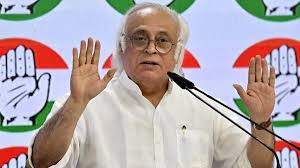
Congress party general secretary (communications) Jairam Ramesh says the press note, issued three days after Rahul Gandhi’s April 28 visit to Great Nicobar, is part of ‘damage control’
The Congress on Sunday questioned the Centre’s response on the Great Nicobar Island Development Project, saying the Government’s clarification, issued after the recent visit of Leader of the Opposition Rahul Gandhi, does not address the serious concerns raised over ecology, tribal rights, environmental clearances and financial viability.
Senior Congress leader and party general secretary (communications) Jairam Ramesh said the press note, issued three days after Rahul Gandhi’s April 28 visit to Great Nicobar, was part of “damage control” and ignored detailed objections already submitted to the Environment Ministry in 2024. He said the issues raised related to the ecological sensitivity of the island, legality of approvals and the economic assumptions behind the project.
“The Government’s press note does not address any of the serious concerns that have been raised,” Ramesh said.
The Great Nicobar Island Development Project includes a transshipment port, airport, township and tourism infrastructure in the Andaman and Nicobar Islands.
Ramesh said the claim that only 1.82 per cent of island land is being used was misleading as it ignored the ecological value of Great Nicobar as a distinct and fragile ecosystem.
He said nearly 50 new species of birds, reptiles, crabs and other fauna had been recorded from the island in recent years, underlining its biodiversity.
On Galathea Bay, the proposed site of the port, Ramesh said it fell under Coastal Regulation Zone-1A where such construction is not permitted. He said the area had over 20,000 coral colonies and was a major nesting site of the endangered Giant Leatherback turtle.
He also questioned the environmental clearance process, alleging conflict of interest involving institutions such as the Wildlife Institute of India and the Zoological Survey of India, which were part of the clearance process and later involved in monitoring roles.
Ramesh said compensatory afforestation proposed in Haryana could not replace forest loss in Nicobar. “A forest ecosystem cannot be substituted by plantation in a completely different ecological zone,” he said.
He pointed to inconsistent official figures on tree felling, saying estimates had ranged from 8.52 lakh to 9.64 lakh and now 7.11 lakh trees.
He said this raised questions over the accuracy of baseline assessments, adding that ANIIDCO had also invited tenders for enumeration and felling, indicating the absence of a final verified count.
On tribal rights, Ramesh said the Nicobarese community withdrew consent in 2022, alleging they were pressured during the clearance process. He also raised concerns over the Shompen tribe, a Particularly Vulnerable Tribal Group, saying there is no clarity on how informed consent was obtained.
He said Forest Rights Act procedures were completed in less than 20 days and without mandatory tribal representation, raising concerns over legality.
On financial viability, Ramesh said projections of 10 million passengers annually at the proposed airport appeared unrealistic compared to Port Blair’s current traffic of around 1.8 million.
He also referred to internal Government discussions that have flagged concerns over the viability of the transshipment port, which would need to compete with established regional hubs without a strong industrial base.
Ramesh said key documents related to the project, including environmental management plans and committee reports, had not been made public.
He also cited concerns raised by former Navy Chief Admiral Arun Prakash, who said security requirements should not be linked to the development project.
Ramesh said security considerations should not be used to restrict scrutiny of a project with major ecological and social implications in one of India’s most sensitive island regions.
Article_Author Shekhar Singh
Courtesy : The Tribune
Note: This news is originally published on https:/thetribune.com/bha and is used purely for non-profit/non-commercial purposes, especially human rights