
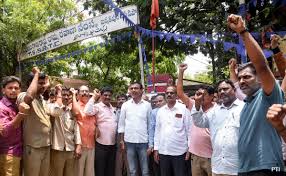
Hyderabad, Telangana RTC is facing one of its most serious crises in recent years, as an
ongoing statewide strike, repeated suicide attempts by employees, and growing controversy over
electric bus contracts have raised larger concerns about the future of public transport in the state.
More than 38,000 RTC employees are currently participating in the strike, leading to a near stand
still in bus operations across Telangana. With an estimated 60 to 70 lakh passengers relying on RTC
services every day, the disruption has created major inconvenience for commuters and highlighted
the scale of the conflict.
Justice News
The human cost of the crisis has become even more alarming. Several RTC employees have
reportedly attempted suicide during the strike period. In Narsampet, a driver sustained severe burn
injuries after a self-immolation attempt and is undergoing treatment. Another driver in Miryalaguda
was stopped by colleagues before he could carry out a similar act. Reports of comparable incidents
have also emerged from Nalgonda and Khammam, reflecting the extreme emotional and financial
distress among staff.
Employees say their frustrations have been building for the last one to two years over unresolved
wage revisions, lack of fresh recruitment, pending dues, and demands for stronger job security.
Union representatives claim that over Rs 2,500 crore in dues remain unsettled, while staff shortages
and increased workload have worsened conditions for the existing workforce.
A major flashpoint in the dispute is the introduction of electric buses under a private operating
model. Under this system, private companies procure and supply EV buses to RTC, which then runs
them under rental agreements. Around 500 such buses are already operating in Telangana, with
payments reportedly ranging from Rs 40 to Rs 60 per kilometer.
Major Points:
- Over 38,000 RTC employees are on strike, severely disrupting bus services across Telangana.
- Around 60 to 70 lakh passengers who depend on RTC daily are being affected.
- Multiple suicide attempts by RTC staff during the strike have intensified public concern.
- Employees say unresolved wage revisions, job security, and pending dues have pushed them to
the edge.
- The Central Government’s Rs 36 lakh subsidy per EV bus is allegedly benefiting private operators
instead of RTC directly.
- Around 500 electric buses are already running under private contracts at Rs 40 to Rs 60 per km.
- RTC is reportedly spending Rs 10 to Rs 12 crore on charging stations and substation facilities at
96 depots.
- Unions argue the overall model points toward gradual privatization of RTC operations.
What has sparked sharper criticism is the role of Central Government funding. Under clean mobility
initiatives, each EV bus receives a subsidy of approximately Rs 36 lakh. According to unions, this
subsidy is effectively flowing to private companies that manufacture or supply the buses, rather than
strengthening RTC’s own fleet ownership.
Employees argue that while public funds are being used to support the EV transition, the long-term
financial gains are being directed toward private operators. At the same time, RTC itself is reportedly
spending between Rs 10 and Rs 12 crore on charging stations, substations, and maintenance
infrastructure at depots.
Across 96 RTC depots in Telangana, these facilities are being established to support EV operations.
However, unions allege that private operators are not paying rent for using depot land and
infrastructure, adding to concerns that public assets are being leveraged for private business
interests.
The broader concern among employee groups is that this is not merely modernization, but a
structural shift in how public transport is managed. They believe the current model reduces RTC’s
operational control while increasing dependence on private firms, creating what they describe as a
slow but steady path toward privatization.
While the government maintains that EV adoption is part of modernization and environmental
sustainability efforts, employee unions remain unconvinced. From their perspective, the
combination of central subsidies, private contracts, and public infrastructure investment paints a
troubling picture.
Looking at the present situation, many within RTC feel that the system is moving toward indirect
privatization. Whether framed as reform or modernization, the operational model increasingly
appears to place private players at the center, while RTC bears the burden of infrastructure and
workforce challenges.