
Bizarre Indian Tradition: Why do thousands of transgender women marry Lord Aravan and then mourn the very next day?
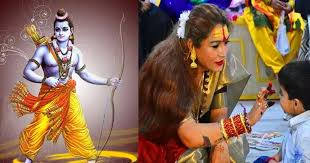
Transgender marriage tradition: Transgender people are a unique part of society, and learning about them is always interesting. They are neither completely male nor completely female. They are present in our festivals, and it is believed that their blessings are very powerful, so one should avoid their negativity or curses. However, their lives and customs are quite different from those of ordinary people, which is why ordinary people know very little about them. Today we will learn some surprising facts about the world of transgender people. The Mystery of Transgender Children A son is born from a man and a daughter from a woman, but if the balance of sperm and egg is equal, a transgender child is born. There have been different beliefs about this in society. Welcoming New Transgender Individuals When a new person joins the transgender community, there is a collective feast and singing and dancing. Several rituals are also performed; this welcome ceremony is a unique way of entering their community. Marriage to Lord Aravan A special festival is celebrated in Tamil Nadu. In this 18-day festival, transgender women (Aravani) marry Lord Koothandavar (Aravan), considering him their husband. The temple priest puts the ‘Thali’ (mangalsutra) on them, and they dress up like brides. This ritual is based on the story from the Mahabharata where Lord Krishna, in the form of Mohini, married Aravan. The Tradition of Mourning (Observing Widowhood) The day after the marriage, Lord Aravan’s sacrifice is commemorated. After his death, the Aravani women mourn like widows. They break their bangles, remove their mangalsutras, and wear white clothes to lament. This tradition brings to life Aravan’s sacrifice and Krishna’s grief in the form of Mohini. The Story of Shikhandi According to ancient beliefs, Shikhandi from the Mahabharata was also considered a transgender person. This is why Arjuna was able to defeat Bhishma in the war. This story shows that transgender people have a history and significance dating back to ancient times. Arjuna and Brihannala In the Mahabharata, when the Pandavas had to spend a year in exile in the forest, Arjuna lived as Brihannala. This story shows that the role of transgender people has been significant not only in society but also in history and epics. Beliefs about Origin According to one belief, eunuchs originated from the shadow of Lord Brahma. According to another belief, they originated from Arishta and Sage Kashyapa. These stories give a glimpse into the mystery and depth of their lives. The Importance of Blessings It is said that the blessings of eunuchs are very powerful. Therefore, it is considered auspicious to invite eunuchs on auspicious occasions such as weddings, birthdays, or housewarming ceremonies. Their presence is considered a symbol of good fortune and happiness for people. By: Shivani Singh Courtesy : Hindi News
After two years of including transgenders in OBC quota, Rajasthan jobs data shows none selected
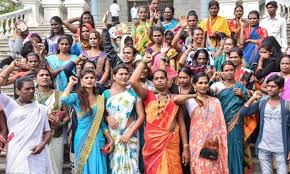
The data submitted by the State to the HC shows that out of 91 transgender applicants in these two years, the maximum of 39 belonged to the General category, 19 to Scheduled Tribes, 22 to OBCs, seven to Scheduled Castes, and four to EWS communities In an ongoing challenge to the classification of transgender persons as a separate “community” within the Other Backward Classes (OBC) list, data from the Rajasthan Government has now shown that in the two years of accommodating transgender people in the reservation matrix in this manner, none of them had been brought into government services. The State government has submitted data to a Bench of the Rajasthan High Court, which is hearing a challenge to this classification of transgender persons. The government had issued a circular adding “transgender” as an entry in its existing list of OBCs in January 2023, arguing that this satisfied the Supreme Court’s directions in the 2014 NALSA case that they should be considered for reservation. Interpreting 2014 verdict The challenge to this classification, filed by transwoman constable Ganga Kumari, argued that such an interpretation of the Supreme Court’s directions in the 2014 judgment would not be correct, stressing that this classification would never be able to account for transgender people who might not be from an OBC community, instead seeking horizontal reservation for transgenders. The data submitted by the Rajasthan government’s Social Justice and Empowerment Department this week showed that the State Public Service Commission and the Staff Selection Board had together advertised nearly 15,000 vacancies from January 2023 onward. Against these, a total of 91 transgender candidates had applied; however, only 22 of them could apply under the category created for transgender people within the vertical quota for OBCs, as only 22 belonged to OBC communities. The data further showed that transgender applicants came from various backgrounds of Scheduled Caste, Scheduled Tribe, Economically Weaker Sections, and the General category communities. Court sought dataset While hearing this case last year, a Bench of Justices Pushpendra Singh Bhati and Anuroop Singh had, in November 2025, asked the Rajasthan government to provide data on how many transgender people, who had been given the benefit of being accommodated in the OBC list, had actually been recruited into government service. In response, the government submitted the above-mentioned dataset. The dataset showed that the maximum number of transgender applicants belonged to the General category, under which 39 candidates had applied. Apart from this, 19 of the transgender applicants belonged to Scheduled Tribes, and seven were from Scheduled Castes, with four candidates falling under EWS category. Advocate Vivek Mathur, leading the representation of the petitioner in the Rajasthan case, told The Hindu, “This data goes to show that it means nothing in the scheme of quotas to include transgender people as an entry in OBC lists, precisely because, as this data showed, trans candidates ended up competing in their respective caste categories. Maybe if these 91 candidates had competed against each other, it would have been likelier for at least some to have been selected.” Ever since the 2014 NALSA judgement, a bone of contention in providing reservation for transgender people has been the direction’s interpretation. The NALSA judgement, in recognising the discrimination faced by the community, directed that they be “treated as” socially and educationally backward for the purpose of reservations. One interpretation of this has been that of Rajasthan, and in another case in Madhya Pradesh, where this was seen as creating an entry within the existing OBC list. And yet, another interpretation of this direction, as argued in courts by activists, is that it calls for treating transgender persons as a separate category on par with socially and educationally backward classes, and not within them, which has been structured as horizontal reservation. In 2023, the Supreme Court declined to entertain a petition seeking a clarification of this point specifically, leaving it open for petitioners to approach courts. But, in separate cases, both the Karnataka High Court (2021) and the Madras High Court (2024) have accepted the arguments for horizontal reservation, enabling a percentage of quotas for transgender people within each existing category of SC, ST, OBC, EWS, and General. Abhinay Lakshman Courtesy : The Hindu Note: This news is originally published on https:/thehindu.com/bha and is used purely for non-profit/non-commercial purposes, especially human rights
Transgenders in UP’s Bhadohi allege pressure for religious conversion; police order probe
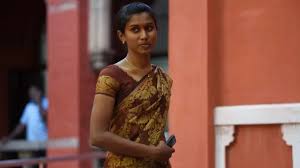
Bhadohi (UP), A group of transgender people here has alleged that members of their own community pressured them to convert to Islam, police said on Thursday. Additional Superintendent of Police Shubham Agrawal said around a dozen transgenders came to the Suriyawan Police Station Wednesday evening and accused their guru, Manju Haji, and others of forcing them to embrace Islam. Agrawal said a dispute initially arose over territorial rights to alms. On January 7, a transgender, Bijli, filed a complaint alleging that Manju Haji and another transgender, Lal Chand alias Pooja, were threatening her for seeking alms in the area assigned to her. Station House Officer Manish Dwivedi called both sides for talks on the same day, but the matter could not be resolved, the officer said. On Wednesday, Bijli submitted a fresh complaint, alleging pressure to convert, insisting she is a Hindu. Agrawal said preliminary inquiry did not find evidence of forced conversion, but the new complaint had been handed over to Circle Officer Ashok Kumar Mishra for investigation. “Forcible religious conversion is a serious offence. If the probe establishes such acts, a case will be registered, and legal action will be taken,” he said. PTI COR KIS VN VN VN This report is auto-generated from PTI news service. ThePrint holds no responsibility for its content. Courtesy : The Print Note: This news is originally published on https:/theprint.com/bha and is used purely for non-profit/non-commercial purposes, especially human rights
Transgender League Gathers Pace as Jamshedpur FC’s Inclusive Football Initiative Expands
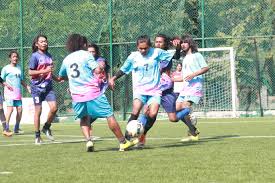
Jamshedpur: The Transgender League organised by Jamshedpur FC under its grassroots programme, the Jamshedpur Super League, continued to build momentum as the third match week concluded, highlighting growing participation, improved competitiveness, and increasing community engagement. A Platform Beyond Football For many participants, the league is more than a sporting competition. It offers visibility, dignity, and a rare opportunity to play organised football in a safe and respectful environment. Players have spoken about how the initiative has boosted confidence and encouraged members of the transgender community to step onto the field without fear or hesitation. Rising Confidence on the Pitch As the league enters its third week, teams are showing better coordination and sharper gameplay. The improvement reflects regular match exposure and a growing sense of belonging among players, many of whom are experiencing structured competitive football for the first time. Community-Driven and Inclusive The Transgender League has emerged as a strong community-led effort, supported by organisers, volunteers, and local football stakeholders. By ensuring continuity week after week, Jamshedpur FC has underlined its long-term commitment to inclusion and grassroots development. Part of a Broader Grassroots Vision Introduced within the Jamshedpur Super League framework, the Transgender League reflects the club’s wider philosophy of “football for all”. The initiative has gained recognition as one of the few dedicated football leagues for the transgender community in India, demonstrating how sport can break social barriers and foster inclusion. Teams, Players and Format The league features seven teams—Jamshedpur FT, Chaibasa FC, Chakradharpur FC, Jamshedpur Indranagar FC, Noamundi FC, Saraikela FC and Kolhan Tiger FC—comprising around 70 players from diverse backgrounds. Participants include Tata Steel employees, daily-wage labourers, small business workers and aspiring footballers. Played in a five-a-side format, the competition consists of 42 fixtures in total, with each team scheduled to play 12 matches, ensuring equal opportunity and sustained engagement throughout the season. Courtesy : The Avenue Mail Note: This news is originally published on https:/theavenuemail.com/bha and is used purely for non-profit/non-commercial purposes, especially human rights
US SC likely to uphold state bans on transgender athletes in women’s sports

The justices are evaluating claims of sex discrimination lodged by transgender people versus the need for fair competition for women and girls, the main argument made by the states The Supreme Court on Tuesday appeared ready to deal another setback to transgender people and uphold state laws barring transgender girls and women from playing on school athletic teams. The court’s conservative majority, which has repeatedly ruled against transgender Americans in the past year, signaled during more than three hours of arguments it would rule the state bans don’t violate either the Constitution or the federal law known as Title IX, which prohibits sex discrimination in education. More than two dozen Republican-led states have adopted bans on female transgender athletes. Lower courts had ruled for the transgender athletes who challenged laws in Idaho and West Virginia. The legal fight is playing out against the backdrop of a broad effort by President Donald Trump to target transgender Americans, beginning on the first day of his second term and including the ouster of transgender people from the military and declaring that gender is immutable and determined at birth. The justices are evaluating claims of sex discrimination lodged by transgender people versus the need for fair competition for women and girls, the main argument made by the states. Justice Brett Kavanaugh, who coached his daughters in girls basketball, seemed concerned about a ruling that might undo the effects of Title IX, which has produced dramatic growth in girls and women’s sports. Kavanaugh called Title IX an amazing and inspiring success. Some girls and women might lose a medal in a competition with transgender athletes, which Kavanaugh called a harm we can’t sweep aside. The three liberal justices seemed focused on trying to marshal a court majority in support of a narrow ruling that would allow the individual transgender athletes involved in the cases to prevail. A ruling for West Virginia and Idaho would effectively apply to the other two dozen Republican-led states with similar laws. But the justices soon might be asked to decide about the laws in an additional roughly two dozen states, led by Democrats, that allow transgender athletes to compete on the teams that match their gender identity. The outcome also could influence separate legal efforts by the Trump administration and others seeking to bar transgender athletes in states that have continued to allow them to compete. The transgender athletes’ cases In the Idaho case, Lindsay Hecox, 25, sued over the state’s first-in-the-nation ban for the chance to try out for the women’s track and cross-country teams at Boise State University in Idaho. She didn’t make either squad because she was too slow, her lawyer, Kathleen Hartnett, told the court Tuesday, but she competed in club-level soccer and running. Becky Pepper-Jackson, a 15-year-old high school sophomore, was in the courtroom Tuesday. She has been taking puberty-blocking medication, has publicly identified as a girl since age 8 and has been issued a West Virginia birth certificate recognizing her as female. She is the only transgender person who has sought to compete in girls sports in West Virginia. Pepper-Jackson has progressed from a back-of-the-pack cross-country runner in middle school to a statewide third-place finish in the discus in just her first year of high school. Prominent women in sports have weighed in on both sides. Tennis champion Martina Navratilova, swimmers Summer Sanders and Donna de Varona and beach volleyball player Kerri Walsh-Jennings are supporting the state bans. Soccer stars Megan Rapinoe and Becky Sauerbrunn and basketball players Sue Bird and Breanna Stewart back the transgender athletes. In 2020, the Supreme Court ruled LGBTQ people are protected by a landmark federal civil rights law that prohibits sex discrimination in the workplace, finding that sex plays an unmistakable role in employers’ decisions to punish transgender people for traits and behavior they otherwise tolerate. But last year, the six conservative justices declined to apply the same sort of analysis when they upheld state bans on gender-affirming care for transgender minors. Chief Justice John Roberts signaled Tuesday he sees differences between the 2020 case, in which he supported the claims of discrimination, and the current dispute. The states supporting the prohibitions on transgender athletes argue there is no reason to extend the ruling barring workplace discrimination to Title IX. Idaho’s law, state Solicitor General Alan Hurst, said, is necessary for fair competition because, where sports are concerned, men and women are obviously not the same. Lawyers for Pepper-Jackson argue that such distinctions generally make sense, but that their client has none of those advantages because of the unique circumstances of her early transition. In Hecox’s case, her lawyers want the court to dismiss the case because she has forsworn trying to play on women’s teams. NCAA president Charlie Baker told Congress in 2024 that he was aware of only 10 transgender athletes out of more than a half-million students on college teams. But despite the small numbers, the issue has taken on outsize importance. Baker’s NCAA and the US Olympic and Paralympic Committees banned transgender women from women’s sports after Trump, a Republican, signed an executive order aimed at barring their participation. About 2.1 million adults, or 0.8 per cent, and 724,000 people age 13 to 17, or 3.3 per cent, identify as transgender in the US, according to the Williams Institute at the UCLA School of Law. A decision is expected by early summer. (Only the headline and picture of this report may have been reworked by the Business Standard staff; the rest of the content is auto-generated from a syndicated feed.) AP Washington Courtesy : Business Standard Note: This news is originally published on https:/businessstandard.com/bha and is used purely for non-profit/non-commercial purposes, especially human rights
Telangana CM Reddy suggests co-opting transgender persons as corporators in civic bodies
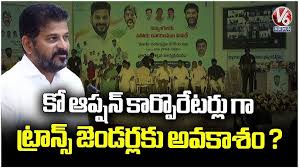
Hyderabad, Jan 12 (PTI) Telangana Chief Minister A Revanth Reddy on Monday suggested to his cabinet colleagues that transgender persons be co-opted as corporators in civic bodies in the upcoming municipal elections to ensure their representation. Speaking at an event where he inaugurated day care centres for senior citizens, Reddy also said the state would soon introduce a law to deduct 10-15 per cent of the salary of government employees who do not take care of their elderly parents. He noted that Telangana has already provided employment opportunities to transgender persons in the Hyderabad police commissionerate and other government departments. “My appeal to my cabinet colleagues is this: municipal elections are approaching. We can nominate co-opted corporators in the corporations. If a transgender person is nominated in every corporation as a corporator, they will have representation in legislative bodies,” he said. Citing the example of minorities being co-opted as members in Zilla Parishads and municipalities, he said transgender persons could raise their issues if given membership in civic bodies. Reddy suggested that a decision on the matter could be taken at the next cabinet meeting. He said the day care centres for senior citizens being set up under the ‘Pranam’ programme are being described as the first of their kind in the country. Observing that some senior citizens are neglected by their children, Reddy said the government would introduce legislation in the upcoming budget session to deduct 10-15 per cent of the salary of government employees who neglect their parents, with the amount credited to the parents’ bank accounts. “We can say that those who are not taking care of their parents are not fulfilling their responsibility towards society,” he added. The chief minister also said the government would announce a health policy during the budget session to provide medical treatment for all citizens in the state. Referring to the caste survey conducted by the Congress government in Telangana, he claimed that the Centre “bowed to pressure from it and announced a caste census as part of the national census.” Reddy also said former Union Minister S Jaipal Reddy is an inspiration for all persons with disabilities, having excelled as a parliamentarian and leader while living with a disability. The Telangana government had earlier appointed transgender persons as traffic assistants in Hyderabad. On the occasion, the chief minister distributed retrofitted motorised vehicles, battery-operated tricycles and other aids to persons with disabilities. PTI SJR SSK This report is auto-generated from PTI news service. ThePrint holds no responsibility for its content. Courtesy : The Print Note: This news is originally published on https:/theprint.com/bha and is used purely for non-profit/non-commercial purposes, especially human rights
Gender-inclusive Pongal celebration embraces transgender
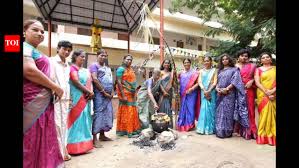
Madurai: To reaffirm gender equality and create safe, inclusive educational spaces, the Madurai Institute of Social Sciences, in association with the Transgender Resource Centre, organized a gender-inclusive Pongal celebration on Monday. More than 450 college students participated in the event, which was seen as a step towards social equality and acceptance for members of the transgender community within academic institutions, said head of social work department M Nishanth. Priya Babu, founder of the Transgender Resource Centre, said cultural celebrations provide an important platform to break social barriers and encourage meaningful interaction between students and members of the transgender community. Two transwomen — Mastani and Shreya — studying second-year economics at Madurai Kamaraj University were invited to the stage. Mastani told TOI, “Usually we would like to celebrate with our families, but it is not possible for all of us. I really enjoyed the celebrations. We played many games like uriyadi, lemon on the spoon. We had dance and music performances. Such celebrations effectively enforce inclusion, in addition to awareness programmes in colleges.” Addressing the gathering, Priya highlighted the crucial role educational institutions play in shaping young minds and supporting individuals during periods of personal transition. “Nearly a 50% of student’s time is spent in educational institutions and the remaining 50% in households. When individuals experience gender-affirming thoughts, creating a safe and supportive space within colleges, it will ensure that they do not drop out of colleges,” she said. More than 25 trans men and trans women participated in the celebrations. “Usually we keep pongal department-wise and end our celebrations. This year it is more meaningful,” Nishanth said. Priya urged other educational institutions across the state to adopt similar initiatives and celebrate festivals in a gender-inclusive manner. Such efforts, she said, would help reduce stigma and ensure that transgender students feel valued and supported in their pursuit of education. Courtesy : TOI Note: This news is originally published on https:/timesofindia.com/bha and is used purely for non-profit/non-commercial purposes, especially human rights
Civic seat for transgenders & health shield for citizens: Revanth
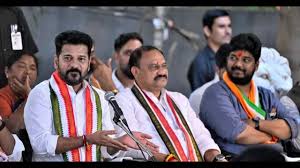
Hyderabad: Chief minister A Revanth Reddy on Monday proposed nominating a transgender person as a co-option member in every municipal corporation in Telangana, beginning with corporations likely to go to polls in Feb, to ensure their direct representation in civic bodies. Addressing a welfare programme at Praja Bhavan for children, senior citizens and specially challenged persons, the CM said the proposal would be placed before the cabinet shortly. Drawing parallels with the existing practice of co-opting minorities in local bodies, he said transgender persons too deserve institutional representation to raise community issues independently. Revanth also announced Rs 2 lakh financial assistance to specially challenged persons who marry within the community, adding that the benefit would be extended even if a non-disabled person marries a specially challenged individual. The CM said the state govt would unveil a comprehensive health policy in the upcoming budget session to ensure access to medical treatment for every citizen. Noting that rising healthcare costs are forcing families to sell assets, he said the Assembly would deliberate in detail on expanding state-supported medical care. Another key announcement was a proposed Bill to cut 10–15% of the salaries of govy employees who neglect their parents, with the deducted amount credited directly to the parents’ accounts after verification by revenue officials. The govt is also setting up senior citizen day-care centres, ‘Pranaam’, across the state. Revanth reiterated strict implementation of reservations for specially challenged persons in jobs and education, citing the appointment of a Paralympics medallist to a Group-II cadre post as an example of the government’s commitment to dignity and self-respect. The programme was attended by deputy CM Bhatti Vikramarka and ministers Adluri Laxman and D Anasuya Seethakka. Reaffirming Telangana’s social justice agenda, Revanth said the Centre was adopting the state’s caste survey model for a nationwide caste census. Courtesy : TOI Note: This news is originally published on https:/timesofindia.com/bha and is used purely for non-profit/non-commercial purposes, especially human rights
Navi Mumbai civic polls: Transgender community urges people to vote
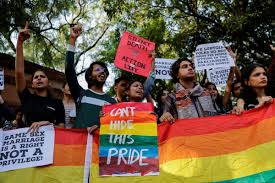
Thane, Members of the transgender community have joined the campaign to appeal to the people in Navi Mumbai to vote in the municipal corporation elections scheduled on January 15, officials said on Sunday. On Saturday, some members of transgender community distributed voter awareness brochures of the Navi Mumbai civic body’s election department, interacted with people at different places in the Vashi area, and appealed to the public to actively participate in the electoral process, they said. “We are going to vote, you should vote too,” they said in their message to the people, the officials The initiative is part of the extensive SWEEP (Systematic Voters’ Education and Electoral Participation) campaign aimed at ensuring 100 per cent voter turnout in the upcoming Navi Mumbai Municipal Corporation elections, the civic body said in a release. While voter awareness campaigns are already being conducted in schools and colleges, through women’s groups, NGOs and senior citizens’ organisations, the participation of the transgender community reflects an inclusive culture of Navi Mumbai, where every voice matters and every citizen has a role to play, it said. PTI COR GK This report is auto-generated from PTI news service. ThePrint holds no responsibility for its content. Courtesy : The Print Note: This news is originally published on https:/theprint.com/bha and is used purely for non-profit/non-commercial purposes, especially human rights
8 Quintals of Flowers Showered on Transgenders, Weighed with Fruits; People Amazed by the Unique Event
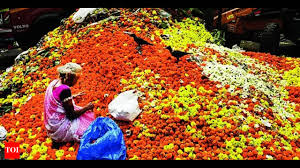
Udaipurwati Kinnar Shobhayatra: A grand procession of the transgender community, adorned with flowers and leaves, was taken out in Udaipurwati town as part of the All India Transgender Mahasammelan (Grand Conference). This event, held on such a large scale for the first time, transformed the entire town into a festive celebration. The atmosphere along the route was filled with devotion, with flower showers, fireworks, and drumbeats. The showering of 8 quintals of flowers on Jaipur Road and at the roundabout became the main attraction. The presence of transgender gurus from across the country made the event historic. Jhunjhunu: A grand and historic flower and leaf procession of the transgender community was taken out in Udaipurwati town as part of the All India Transgender Mahasammelan. This event, held on such a large scale for the first time, filled the entire town with the colors of celebration, devotion, and joy. The presence of gurus and representatives of the transgender community from across the country made the event historic. The townspeople rolled out the red carpet to welcome the procession. Flower showers, fireworks, drinking water arrangements, and warm hospitality were offered to the guests at various places along the route. At several locations, members of the transgender community were weighed against fruits as a mark of respect, further enhancing the grandeur of the event. The procession followed the designated route The flower and leaf procession started from Chowki No. 3 and passed through Jangid Mohalla, 5 Batti, Post Office, Bus Stand, Shakambhari Gate, the roundabout, and the New Vegetable Market Chowk before reaching the Mahasammelan venue. Toran gates were erected along the entire route, and the sound of drums and trumpets filled the atmosphere with a festive spirit. 8 quintals of flowers showered, becoming the main attraction During the procession, approximately 8 quintals of flowers were showered using bulldozers on Jaipur Road and in the roundabout area. This spectacle became the center of attraction for the people, and a large number of people gathered to witness this unique sight. Religious Rituals and Felicitation Ceremony During the procession, a Kalash Puja (ritualistic worship of a sacred pot) was performed at the Sanwariya Seth Temple, and a silver canopy was offered. Under the leadership of the temple’s head priest, Mahant Manish Maharaj, the organizers of the grand convention, Guru Raju Haji and Chela Sanam Bai, were honored with garlands and turbans. The townspeople gave a grand welcome to organizer Sanam Bai at various places. Religious and Social Significance and Conclusion The organizers stated that the flower and leaf procession holds special religious and social significance in the Kinnar (transgender) Mahasammelan (grand convention). A large number of people arrived to receive the blessings of the transgenders. The All India Kinnar Mahasammelan will conclude on January 10th with various religious and social programs. Reported by: KRASHAN SINGH SHEKHAWAT Written by: Jagriti Dubey Courtesy: Hindi News