
Dalit youth died by hanging: Postmortem report in Badaun reveals; family had alleged murder
The case of a Dalit youth’s death in Badaun has taken a new turn following the release of the postmortem report. The report confirmed that the youth died by hanging. However, the deceased’s family continues to allege murder. Police are currently investigating the cause of suicide. The case occurred in Narau village, located in the Ujhani Kotwali area. The body of Aman (20), son of Pintu, was found lying in the cattle shed outside his house on Monday morning. The incident caused chaos within the family. The deceased’s family filed a complaint with the police, accusing five villagers of murder. A dupatta noose found hanging from a tree Police arrived at the scene and found a dupatta hanging from a nearby tree, forming a noose. A forensic team then arrived and examined the length of the dupatta, the length of the body, and the height of the tree. Initial investigations by the police suggested the case was a suicide. Brother alleges murder The deceased’s brother, Amarpal, openly alleged murder. The family claimed the young man was murdered and then hanged. However, after the post-mortem report confirmed death by hanging, the police’s suspicions of suicide have deepened. Rumors of being upset by a physical assault There is talk in the area that the young man was assaulted a few days ago. It is alleged that the police failed to take any concrete action in the case, leading to the young man’s suicide. Currently, the police are investigating all angles and trying to find the reason behind the suicide. Courtesy: Hindi News
NCRB: Madhya Pradesh Ranks No. 1 in Atrocities Against Tribals, What’s the Reason? TM Exclusive
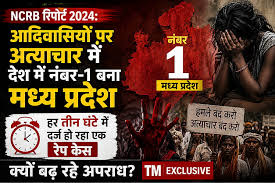
Crimes against women, children, and Dalit-tribal communities raise concerns; MP also ranks among the top states in dowry deaths, kidnappings, and POCSO cases. Bhopal. The latest NCRB data has raised serious questions about the law and order situation in Madhya Pradesh. The increasing crimes against women, tribals, children, and vulnerable groups have raised concerns about the state’s security system. Opposition parties and social organizations believe that the government’s indifferent attitude and administrative laxity are contributing to the steady rise in criminal incidents. They allege that criminals are losing their fear of the law, while victims are unable to access timely justice and protection. The “Crime in India 2024” report, released by the National Crime Records Bureau (NCRB), a nationwide crime data center, has raised serious questions about the law and order situation and social security in Madhya Pradesh. According to the report, Madhya Pradesh has reached the top spot in the country in crimes against the Scheduled Tribes (ST). The state also ranked among the top states in the country for crimes against women, dowry deaths, crimes against children, kidnapping, murder, and POCSO cases. The data revealed in the report indicates that the safety of women and vulnerable groups continues to be a challenge in the state. The NCRB released this report on May 6, 2026, and includes crime statistics for the year 2024. Normally, this report should have been released by September 2025, but this time, due to delays in data verification and matching of crime information, the report was released nearly eight months later. Rape every three hours in MP According to the report, a total of 32,832 cases against women were registered in Madhya Pradesh during 2024, ranking the state fifth in the country for the fourth consecutive year. According to the data, an average of more than 90 crimes against women were registered daily in the state. These include rape, dowry harassment, domestic violence, kidnapping, and other serious crimes. The report also states that a rape case is being registered every three hours in the state, which raises serious questions about the safety of women. The situation in Madhya Pradesh regarding dowry deaths is also extremely worrying. According to the NCRB, a total of 450 cases of dowry deaths were registered in the state in 2024. Of these, 232 cases were registered under sections of the Indian Penal Code (IPC) and 218 under sections of the Indian Penal Code (BNS). Madhya Pradesh ranked third in the country in this category. Uttar Pradesh ranked first with 2,038 cases, while Bihar ranked second. Experts believe that dowry practices and domestic violence against women remain serious social problems in both rural and urban areas. Increase in kidnapping cases The report also expressed concern about murder and kidnapping cases. Madhya Pradesh ranked fourth in the country for both murder and kidnapping. However, murder cases have seen a slight decline in the last two years. In 2022, 1,978 murder cases were reported in the state, which decreased to 1,832 in 2023 and 1,813 in 2024. This means a decrease of 173 murder cases was recorded in two years. In contrast, kidnapping cases have steadily increased. In 2022, 10,409 kidnapping cases were registered in the state, which increased to 11,768 in 2023 and 11,847 in 2024. This means that on average, 32 kidnapping cases are being reported daily in the state. Madhya Pradesh ranks fourth in kidnapping cases, after Uttar Pradesh, Maharashtra, and Rajasthan. Crimes against tribals on the rise Madhya Pradesh’s rise to first place in the country in crimes against the Scheduled Tribe (ST) category is considered a matter of great concern. According to the NCRB, 3,165 cases were registered against the ST community in the state in 2024. Madhya Pradesh ranked second in the country with 7,765 cases of crime against the Scheduled Caste (SC). Social organizations and human rights activists say that incidents of violence, land disputes, social discrimination, and harassment against tribal and Dalit communities continue to emerge, but effective measures to prevent them remain insufficient. Madhya Pradesh’s situation remains dire when it comes to crimes against children. However, it’s a matter of relief that while last year the state ranked first in the country in this category, this time it has slipped to third place. According to the NCRB report, 21,908 cases of crimes against children were registered in 2024. These include cases such as child sexual abuse, kidnapping, child marriage, child labor, and violence. 3,721 cases were also registered in the state under the Protection of Children from Sexual Offences (POCSO) Act, placing Madhya Pradesh fourth in the country. Tamil Nadu ranked first in this list with 5,320 cases, followed by Maharashtra with 4,829 cases, and Uttar Pradesh with 3,671 cases. Experts believe that this NCRB report not only reflects crime statistics but also presents a picture of social inequality, insecurity of women, oppression of vulnerable groups, and administrative challenges. The steadily increasing crime has raised questions about the functioning of the state government and police administration. Social organizations say that strict laws alone are not enough to control crime; instead, grassroots education, social awareness, sensitive policing, and a speedy justice system are also needed. Tribal Congress raises questions In a conversation with The Mooknayak, Ramu Tekam, State President of the Congress Scheduled Tribe Department, launched a scathing attack on the state government over the NCRB report. He said that the continuous increase in crimes against tribal communities in Madhya Pradesh is extremely worrying. The state’s ranking first in the country in cases of ST atrocities is proof of the complete breakdown of law and order in the state. He alleged that tribal communities are still victims of violence, exploitation, land grabbing, and social oppression, but the government has failed to take action with sensitivity. Ramu Tekam said that the government is only busy making announcements and advertisements, while the tribal community on the ground is feeling unsafe. He said that the increasing crimes against women, children, and vulnerable sections prove that criminals have
The Key to Power and the Voice of the Dalits: Find out who is Tamil Nadu’s New ‘Kingmaker’, Thol Thirumavalavan
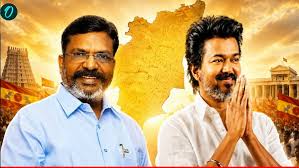
From a forensic scientist to becoming the ‘kingmaker’ of Tamil Nadu politics, learn the full story of VCK founder Thol Thirumavalavan’s struggle and success. New Delhi: Following the 2026 Tamil Nadu Assembly elections, Thol Thirumavalavan and his party, the Viduthalai Chiruthaigal Katchi (VCK), emerged as a decisive force in government formation. Respecting the public mandate and avoiding any constitutional crisis, Thirumavalavan announced unconditional support to actor Vijay’s party, the Tamil Nadu Vetri Kazhagam (TVK). Vijay’s party fell short of the magic number of a simple majority. Displaying strategic foresight, he ensured a long-term vision for the state by working with allied left parties. He also maintained his alliance with the Secular Progressive Alliance led by the Dravida Munnetra Kazhagam (DMK). By prioritizing public interest over momentary political gains, Thirumavalavan established his party as a strong ‘kingmaker’. With the support of two VCK MLAs, as well as the IUML and other allies, the VCK managed to surpass the majority of 118 seats. This move paved the way for a stable government in the state. Thirumavalavan clarified that the primary objective of his decision was to prevent President’s rule in the state and protect democratic values. Born on August 17, 1962, in Anganoor, Tamil Nadu, Thol Thirumavalavan, originally named Tolkappiyan Thirumavalavan, is one of India’s most prominent Dalit leaders, scholars, and social reformers. As the founder and president of the VCK, he is currently the Member of Parliament from the Chidambaram constituency. His outspoken advocacy for social justice has made him a prominent figure in Tamil Nadu politics for over three decades. After completing his primary education in his hometown, he graduated in Chemistry from Presidency College, Chennai. He then earned a Master’s degree in Criminology in 1988. He served as a Scientific Assistant in the Government Forensic Science Department until 1999. He later studied law at Madras Law College and completed his PhD in 2019 from Manonmaniam Sundaranar University on the subject of conversions of Dalits in Meenakshipuram. His political journey began in 1982 when he joined the Dalit Panthers Iyyakam (DPI) in Tamil Nadu. This organization was inspired by the Dalit Panthers of India and the Black Panther Party of the United States. Under the guidance of A. Malaichami, he led student protests for the Eelam Tamils and campaigned for Dalit rights. After Malaichami’s death in 1989, he became the state organizer of the DPI and later renamed the organization ‘Viduthalai Chiruthaigal’. Deeply influenced by Sri Lanka’s ethnic conflict and the struggle for Tamil identity, the organization formally transformed into a political party called the Viduthalai Chiruthaigal Katchi (VCK) in 1990. Initially, it maintained a distance from electoral politics and focused on spreading awareness against caste discrimination. In 1999, he resigned from government service and contested his first Lok Sabha election from Perambalur in alliance with the Tamil Manila Congress. Despite losing this election, he received over 2.25 lakh votes. In 2001, he won his first assembly seat from the Mangalore (now dissolved) constituency. Subsequently, in 2009, he was elected to the Lok Sabha from Chidambaram by a landslide victory, establishing the VCK as a recognized state party. Since then, he has contested several elections, winning resounding victories, establishing the VCK as a recognized state party. His party has been granted the “Matka” permanent election symbol by the Election Commission. Under Thirumavalavan’s leadership, the VCK has exemplified pragmatic politics by forming alliances with major Dravidian parties and unexpected allies like the Pattali Makkal Katchi (PMK). His slogan, coined in 1996, “Refuse to be suppressed, transcend boundaries, rise fiercely, fight back,” has always inspired generations of Dalit youth to challenge systemic oppression. Ideologically, he represents a unique amalgamation of Ambedkarite principles of social justice and Dalit empowerment, Periyar’s rationalist and anti-caste philosophy, and Marxist critiques of capitalism. The core principles of his party include the abolition of the caste system, opposition to social exclusion, protection of Tamil culture and language, women’s liberation, and support for the working class. His inspirations include Gautam Buddha, Dr. B.R. Ambedkar, Thanthai Periyar, and Velupillai Prabhakaran. Beyond politics, he has also made significant contributions to the cultural and social sphere. He has acted in Tamil films such as “Anputhozhi” and “Kalagam” and has written several books. In 2016, he launched his party’s “Velicham TV” channel. He promotes Tamil naming to eliminate caste and religious identities and led environmental initiatives such as planting one lakh palm seeds across Tamil Nadu in 2018. His political career has also been marked by controversy. He has frequently faced criticism for his comments on the Manusmriti, Hindu deities, the disabled, and LGBTQ+ issues. He faced several legal cases for his involvement in the 1999 bus burning and inflammatory speeches, though he successfully fought these charges in court. Former colleagues also accused him of accepting funds from Christian missionary organizations, a charge he has consistently denied. Despite numerous controversies, his commitment to Dalit liberation and social reform has remained unwavering. He has received numerous honors for his social and political contributions, including the 2025 Icon of Social Liberation Award, the 2019 Quaid-e-Millat Award for Integrity in Public Life, and the 2024 Best Performing Parliamentarian Award. Under his leadership, the VCK also honors social activists with the Ambedkar Sudar and Periyar Oli awards. Thirumavalavan, a lifelong bachelor, has dedicated his entire life to the upliftment of marginalized communities. His journey from a forensic scientist to becoming a kingmaker in Tamil Nadu politics is a masterful blend of social activism and political strategy. He has shaped the state’s political landscape by advocating for equality, justice, and Tamil identity. Rajan Chaudhary Courtesy: Hindi News
Tribal Harassment on IIM Bangalore Campus: Professor and Wife’s ‘Cookie’ Arrives, But Inhumane Torture! Police Haven’t Included SC/ST Act Sections in the FIR
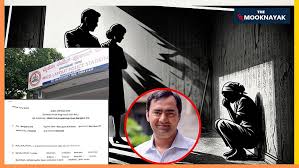
Despite five days having passed since the case was registered, the police have yet to arrest the accused couple, nor has a prestigious institute like IIM Bangalore taken any strict action against its professor despite such serious allegations. Bengaluru – The Indian Institute of Management Bangalore (IIM-B) is once again embroiled in a deep controversy. In 2024, a case was filed at the Mico Layout police station against the then Director of IIM Bangalore and seven other professors for caste discrimination against a Dalit professor, which is currently pending in the High Court. Now, a 23-year-old tribal woman from Churachandpur, Manipur, who worked as a maid in the house of another professor at the same institute, has leveled extremely serious allegations of harassment against him. In her report filed at the Mico Layout police station, the young woman stated that IIM-B professor Amar Sapra and his wife Anshu Sapra kept her hungry and thirsty, denied her adequate food, and subjected her to inhumane torture when she was unable to work due to illness. Despite more than five days having passed since the case was filed, the police have yet to arrest the accused couple, nor has the prestigious institution of IIM Bangalore taken any strict action against its professor despite such serious allegations. Amar Sapra is a faculty member in the Production and Operations Management Department at IIMB, and his wife Anshu runs a nursery school franchise on campus. The FIR lists the location of the incident as IIMB Campus, Bilekahalli. The case involves Naina (name changed), a resident of Churachandpur district in Manipur, who came to Bengaluru in 2019 through a placement agency to work as a babysitter for Professor Amar Sapra’s family. Initially, everything was normal, but gradually the atmosphere at home changed, and the campus became nothing less than a torture chamber for Naina. From 2021 onwards, the professor and his wife’s behavior deteriorated. She was forced to work from 6:30 AM until after midnight. When she fell ill, she was given no medicine or rest; she was pressured to continue working. Her mobile phone was taken away, she was forbidden from talking to her family, and she was not even allowed to leave the campus. Speaking to The Mooknayak, Naina explained that Professor Amar Sapra’s wife, Anshu, was even more brutal than his. Anshu would pull her hair, repeatedly hit her, and even slap her while she was talking to others. According to the FIR, on April 15th, at around 2:30 AM, Anshu pulled Naina’s hair and hit her several times. Naina said, “I didn’t tell anyone out of fear. They would check my phone messages and turn it off to prevent me from going out.” She last visited her home last year after her father’s death, and since then, she hasn’t been able to see her family. On May 4th, the abuse reached its peak when she suffered kidney stone pain, but instead of giving her medicine, the couple locked her in a room, starving her. Naina said she experienced severe pain due to the kidney stone. When she told Anshu, he accused her of “acting” and “creating drama.” At the time, she was on the phone with her mother. Naina said, “Anshu took my phone, my cousin called, and I asked her to speak to Madam. I don’t know what they discussed. After that, Anshu kept accusing me of lying.” Successfully saving her life, she reached the house of a professor living in the neighborhood and asked for help. Seeing Naina’s condition, he fed her, gave her shelter, and allowed her to use his phone. Naina informed her family, and in turn, informed the Kuki Students’ Organization Bangalore (KSOB). The next morning, with the help of KSOB, a complaint was filed at the Mico Layout police station. The police coordinated with the IIM-B administration, held a meeting with the institute’s board of directors, and Naina was safely evacuated. Her outstanding wages were also paid in full. After the FIR was filed on May 6, social activists and community leaders raised serious questions about the police’s actions. The police only registered the case under Section 115(2) of the Criminal Procedure Code (CrPC), i.e., voluntarily causing hurt, and Section 127(2) of the Criminal Procedure Code (CrPC), i.e., wrongful confinement. Naina reported that she was also cheated in her wages. Her contract was for ₹18,000 per month, but in April, she was paid only ₹10,000, citing that she had not worked enough days. A further ₹5,000 was claimed to have been paid to a placement agency. When Naina contacted the agency, they denied any responsibility. KSOB President Seilalmuon Haokip revealed that the agency had been quietly collecting fees from employers without Naina’s knowledge. After the FIR was filed on May 6, social activists and community leaders raised serious questions about the police’s actions. The police registered the case only under Section 115(2) of the Criminal Procedure Code (CrPC), meaning voluntarily causing hurt, and Section 127(2) of the Criminal Procedure Code (CrPC). Sections related to the Scheduled Castes and Scheduled Tribes (Prevention of Atrocities) Act (SC/ST) and harassment of women were deliberately omitted. Social organizations allege that this was not an oversight but a deliberate attempt to shield the accused from strict legal action. Police summoned the victim for spot verification On Sunday, KSOB President Haokip and Naina again went to the police station. The police informed them that a notice had been issued to the accused and that if they failed to cooperate after two notices within 10 to 15 days, they would be arrested. They also stated that a spot verification would be held on May 11th at 2 pm on the campus. Naina, the eldest of three siblings, is the sole earning member of her family and bears the responsibility of supporting her mother and younger siblings. Naina, weeping, says, “I studied until 10th grade but couldn’t take my final exams, so I don’t have a secondary certificate. I don’t know what I’ll do
After the attack on the wedding procession in Udaipur, a Dalit bride proudly took out a Bindooli procession, with the Bhim Army acting as a protective shield.
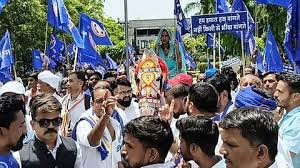
After being forced off the horse, the Dalit bride gave a befitting reply, taking out a historic Bindooli with the Bhim Army on the streets of Udaipur. Rajasthan: A Dalit bride in Udaipur has strongly challenged the casteist mindset prevalent in society. Just eight days after the attack on her wedding Bindooli (wedding procession), Pooja Meghwal proudly took out a symbolic procession. Dressed in a turquoise blue dress and riding a white horse under a red-gold umbrella, Pooja held pictures of Mahatma Jyotirao Phule and Savitribai Phule in her hands. The entire incident began on April 29, when Pooja’s Bindooli procession was being held in the Dhira Talai area of Hariav, which falls under the Dabok police station area of Udaipur. It is alleged that some women and men strongly objected to her riding a horse and leading the procession outside their house, despite being Dalit. The protest escalated to the point where the bride was pulled off the horse. According to the FIR filed by the bride’s father, Bhairulal Meghwal, the attackers used casteist slurs and threatened bloodshed if the procession was not stopped. The DJ was shut down, guests were pelted with stones, and attacked with sticks, rods, and swords. Several people were injured in the stampede, and women’s mangalsutras and other valuable jewelry and watches were looted. Following the incident, the police registered a case under several sections of the Indian Penal Code (IPC) and the SC/ST Act. The FIR was filed against Laxman Singh, Madhu Singh, Kishan Singh, Uday Singh, Arjun Singh, Takhat Singh, Fateh Singh, Vikram Singh, and Manju Kanwar. Instead of being deterred by the attack, Pooja and her supporters organized a massive and peaceful march from Udaipur’s Town Hall to the Collectorate on May 7th. This symbolic Bindoli was led by the Bhim Army and other caste organizations. Most of the participants wore white clothes and blue scarves. They carried the statue of Dr. B.R. There were blue flags bearing Ambedkar’s image, posters chanting “Jai Bhim” and demanding the rights of marginalized communities. Pooja’s father, Bhairulal, expressed his pain, saying that he simply wanted to show that he, too, is human and a resident of this country. He lamented that even after nearly 80 years of independence, the mentality of untouchability persists in society. He stated that such incidents are constantly occurring against Dalits in the Mewar region, and he has submitted a memorandum to the administration against this. Roshan Meghwal, Senior Vice President of the Udaipur Bhim Army, also strongly questioned this evil practice. He said that it is because of the struggles of great figures like Savitribai Phule that women have gained equal rights in every field today, so why are they being prevented from riding horses? He said that while the country is celebrating “Amrit Kaal,” Dalits are being dismounted from horses, which violates everyone’s right to live equally in this democratic country. The memorandum also highlighted that such incidents are common in the region. A similar incident occurred in Chittorgarh a few days ago, while last year, three Bindoli processions had to be carried out under police protection in Tadavara, Rajsamand. Activists appealed to the administration to root out this casteist mentality. In the memorandum submitted to the administration, the Bhim Army stated that only four people have been arrested so far in this case. They demanded that the Arms Act be added to the FIR, as Takhat Singh is alleged to have attacked with a sword. They also demanded that several other individuals involved in the attack be named. The march, which concludes with a memorandum, demanded an immediate end to the daily discrimination against the Dalit community in all districts of Rajasthan. This included preventing them from drawing drinking water, barbers refusing to cut their hair, barbers barring them from entering temples and public places, and even discrimination at crematoriums after death. The administration was urged to ensure strict enforcement of the law. Rajan Chaudhary Courtesy: Hindi News
UP cabinet rejig signals BJP caste reset as Yogi courts OBCs, Dalits to blunt SP’s PDA narrative

The Yogi govt expanded representation for OBCs and Dalits while rewarding loyalists & regional leaders before high-stakes Assembly battle. Three OBCs, two Dalits and a Brahmin among new ministers. Lucknow: Ahead of the upcoming Assembly elections in Uttar Pradesh, Chief Minister Yogi Adityanath has attempted to strike a caste balance through a long awaited expansion of his cabinet. At a swearing-in ceremony held at the governor’s house in Lucknow on Sunday, six leaders took oath as ministers while two leaders were promoted and assigned new responsibilities. Special emphasis was placed on maintaining social and regional balance in the cabinet expansion. The leaders who took the oath included Bhupendra Chaudhary, Manoj Pandey, Ajit Pal, Somendra Tomar, Krishna Paswan, Surendra Diler, Hansraj Vishwakarma and Kailash Rajput. Among them, Surender diler, Krishna paswan, Hansraj Vishwakarma and Kailash Rajput were inducted as Ministers of State, while the other leaders were given Cabinet and independent charge responsibilities. Another rebel SP MLA, Pooja Pal, was also expecting a call for the oath ceremony, but she was not considered in this cabinet expansion. Out of the six new ministers inducted into the cabinet, three belong to the OBC community, two are Dalits and one is a Brahmin. According to UP BJP functionaries, the party has focused on increasing the representation of OBCs and Dalits in the cabinet to counter the Samajwadi Party’s ‘PDA’ (Pichhda, Dalit, Alpsankhyak) narrative. With the latest expansion, the 60 member council of ministers now includes 25 OBC ministers, 21 from upper castes, 12 Dalits, one Sikh and one Muslim minister. By giving representation to leaders from western Uttar Pradesh, Bundelkhand, and Purvanchal, the party has tried to strike a broader social balance also. Among the new faces sworn in on Sunday were: Bhupendra Chaudhary Former Uttar Pradesh BJP president Bhupendra Chaudhary has held several organisational positions ranging from district president and regional president of western Uttar Pradesh to state BJP chief. He had also served as a minister in the Yogi government earlier and has now once again took oath as a Cabinet Minister. Manoj Pandey Rebel SP MLA Manoj Pandey represents the Unchahar Assembly seat in Rae Bareli. He previously served as a Cabinet Minister in the Samajwadi Party government. Pandey rebelled against the SP during the Rajya Sabha elections and later joined the BJP, which had promised him a ministerial berth. He has now been inducted as a Cabinet Minister. Kailash Rajput Kailash Rajput, an MLA from the Tirwa Assembly seat in Kannauj, has been made a Minister of State. Rajput, a leader from the Lodhi community, comes from the parliamentary constituency represented by Akhilesh Yadav. With his induction, Kannauj now has two ministers in the Yogi government. The move also comes after the BJP suffered setbacks among Lodhi voters in parts of central Uttar Pradesh during the 2024 Lok Sabha elections. Hansraj Vishwakarma Former Varanasi district BJP president Hansraj Vishwakarma has been inducted as a Minister of State. He belongs to the OBC Vishwakarma community and comes from Varanasi, Prime Minister Narendra Modi’s parliamentary constituency. With his induction, Varanasi now has four ministers in the state government. Surendra Diler Surendra Diler, MLA from the Khair Assembly seat in Aligarh, took oath as a Minister of State. He belongs to the Valmiki community within the Dalit social group. Through his induction, the BJP appears to be seeking to strengthen its outreach among Dalit voters. Krishna Paswan Krishna Paswan, MLA from the Khaga Assembly seat in Fatehpur district, also took oath as a Minister of State. Paswan’s induction, as a woman leader from the Dalit Pasi community, comes amid indications that a section of Pasi voters shifted towards the Samajwadi Party during the 2024 elections. Ajit Pal and Somendra Tomar Ajit Pal and Somendra Tomar have been elevated from Ministers of State to Ministers with Independent Charge. Tomar, MLA from Meerut South, currently serves as Minister of State for Energy and is considered close to Bhupendra Chaudhary. He belongs to the Gurjar community. Portfolios for the newly inducted ministers are expected to be announced later. Prashant Srivastava Courtesy : The Print Note: This news is originally published on https:/theprint.com/bha and is used purely for non-profit/non-commercial purposes, especially human rights
UP: Violence Against Dalit Families Over Land Dispute in Deoband; Bhim Army Alleges Firing, Police Lathicharge and Brutality
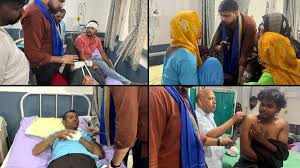
A land dispute in Lalwala village under Deoband police station limits in Uttar Pradesh’s Saharanpur district turned violent on Saturday, leaving several people injured and triggering tension in the area. According to members of the Bahujan community, the dispute concerned nearly two bighas of land that they claimed had been forcibly occupied earlier. They alleged that fresh construction work was underway on the land, prompting local Dalit-Bahujan residents to protest. During the protest, reports of firing and violent attacks allegedly emerged from the side accused of occupying the land. Several people were reportedly injured in the incident. Local media reports described the matter as an old land dispute linked to tensions between Thakur and Dalit communities, reportedly involving disagreement over the installation of a Maharana Pratap statue. Allegations of Police Lathicharge The situation reportedly worsened after police arrived at the spot. Members of the victim’s side accused the police of using force against protesters. According to locals, police carried out a lathicharge in which women, children and elderly people were also injured. Several people were reportedly seriously hurt during the police action. Following the violence, heavy police deployment was made in the village to maintain law and order, while tension continued in the area. The administration has said that police forces were deployed to prevent further clashes and maintain peace. Chandrashekhar Azad Stopped by Police On Sunday, Nagina MP and Bhim Army chief Chandrashekhar Azad was scheduled to visit Lalwala village to meet the injured and the affected families. However, he alleged that the administration stopped him at his residence in Chhutmalpur. According to reports, a large police force was deployed outside his house to prevent his movement. Calling the incident an attack on the Bahujan community, Azad strongly criticised both the alleged land encroachment and the police action. “The land of Bahujan Samaj in Lalwala, which was earlier forcibly occupied and where construction work is now being carried out, is not only an encroachment on land but also a direct attack on the constitutional rights of the Bahujan community,” Azad wrote on social media. Bhim Army Demands Action Azad further alleged that when Dalit residents protested to protect their land rights, they were attacked and fired upon. “But the most shameful thing is that the police, who are responsible for security, were seen committing atrocities. The police lathicharge was so barbaric that even women, children and elderly people were not spared,” he said. Tagging Uttar Pradesh Chief Minister Yogi Adityanath, Azad demanded immediate action against both the alleged encroachers and the policemen involved. He demanded the arrest of those accused of illegal occupation, suspension of police personnel allegedly involved in the assault, registration of a case under the SC/ST Prevention of Atrocities Act, compensation and medical treatment for the injured, and protection for affected families. “If action is not taken soon, the matter will echo from the streets to the House and the Bahujan community will be forced to fight decisively for their rights,” he warned. Police officials have not yet publicly responded to the allegations of brutality made by Bhim Army and local residents. Courtesy : TOP Note: This news is originally published on https:/theobserverpost.com/bha and is used purely for non-profit/non-commercial purposes, especially human rights
3 Held For Murder of Dalit Youth in Godavarikhani

Godavarikhani ACP M. Ramesh said the accused were identified as Naveen, Alekya and Bhaskar KARIMNAGAR: Neelam Naveen, 30, his wife Alekya, 28, and her cousin Bhaskar, 28, allegedly murdered a 31-year-old Dalit youth in Godavarikhani over alleged harassment, police said. The case was registered against the three accused after the decomposed body of Joola Vamshi, a resident of Singireddypalli village in Ramagiri mandal, was found in a forest near Gadidalagandi in Manthani mandal on Sunday morning. Vamshi had been missing since April 30. Based on a complaint from his family, the Godavarikhani Two-Town police registered a missing case and began an investigation Godavarikhani ACP M. Ramesh said the accused were identified as Naveen, Alekya and Bhaskar. During questioning, Alekya allegedly confessed that Vamshi had harassed her since she was in Class 10 and continued to do so after her marriage to Naveen. Police said the accused planned the murder to stop the alleged harassment. They allegedly lured Vamshi to a secluded place, killed him and dumped the body in the Gadidalagandi forest area to destroy evidence. ACP Ramesh said all three accused were taken into custody. The body was sent for post-mortem examination. Puli Sharath Kumar Courtesy : Deccan Chronicle Note: This news is originally published on https:/deccanchronicle.com/bha and is used purely for non-profit/non-commercial purposes, especially human rights
With 3 OBCs & 2 Dalits, Cabinet rejig signals BJP’s bid to blunt SP’s PDA push ahead of 2027 Uttar Pradesh polls
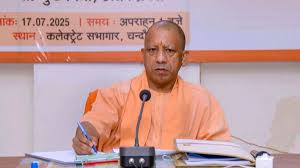
PDA is a coinage used by the Samajwadi Party (SP) for ‘Pichda’ (backwards), Dalits and ‘Alpsankhyak’ (minorities), denoting the opposition party’s overtures towards communities that hold the key to power in Uttar Pradesh. Lucknow: With three OBCs and two Dalits among the six BJP leaders who took oath as ministers in the Yogi Adityanath ministry 2.0 on Sunday, the Cabinet expansion can be seen as a move by the saffron party to blunt the Samajwadi Party’s ‘PDA’ push ahead of next year’s Assembly elections in Uttar Pradesh. PDA is a coinage used by the Samajwadi Party (SP) for ‘Pichda’ (backwards), Dalits and ‘Alpsankhyak’ (minorities), denoting the opposition party’s overtures towards communities that hold the key to power in Uttar Pradesh. The induction of three OBC and two Dalit faces into the Cabinet made the ruling party’s focus obvious, especially on non-Yadav OBCs and non-Jatav Dalits in the state. The three new OBC faces include Bhupendra Chaudhary (Jat), Kailash Rajput (Lodh) and Hansraj Vishwakarma (Lohar), while Krishna Paswan (Pasi) and Surendra Singh Daler (Valmiki) represent the Dalit communities. The sixth minister, Manoj Kumar Pandey, is a Brahmin. Additionally, two state ministers were promoted with independent charge – Ajit Pal (Pal) and Somendra Tomar (Gurjar) – both non-Yadav OBCs. The first Cabinet expansion of the Adityanath Cabinet took place on March 5, 2024, just ahead of the Lok Sabha elections, in which the BJP faced shock reverses in Uttar Pradesh with the SP-Congress alliance winning 43 of the 80 Lok Sabha seats in the state, limiting the BJP-led-NDA to 36, down from 64 in 2019. This included the stunning loss of the Ayodhya seat to SP’s Awadhesh Prasad, the first Dalit (Pasi) to win the constituency, strengthening the SP’s belief that the PDA narrative can be a bankable option in 2027. Prasad was vocal again on Sunday. “I congratulate the new ministers. However, it is obvious that the BJP is rattled by the SP’s PDA push, and that is why we are convinced that 2027 would see the BJP’s ouster from Uttar Pradesh,” Prasad told PTI over the phone. That the saffron party was working to counter the SP’s PDA card became obvious when senior ministers, including deputy chief ministers Keshav Prasad Maurya and Brajesh Pathak, as well as Finance Minister Suresh Khanna, positioned the BJP as the “real” party that cared for the PDA. “SP’s PDA talk is bogus. We are the real PDA,” Keshav Maurya said. The BJP considered that his Brahmin identity would be useful in aligning with this key upper caste group, which the opposition has consistently claimed was unhappy with the saffron party. After taking the oath, Pandey lost no time in targeting SP chief Akhilesh Yadav, his former political boss. “The SP and its leadership are frustrated by the BJP’s phenomenal election wins. As a BJP cadre, I will leave no stone unturned to carry out the tasks assigned to me by the party leadership,” Pandey, now the second BJP minister in the Cabinet from Rae Bareli after Dinesh Pratap Singh, told PTI. Varanasi and Kannauj, too, have been fortified with additional ministers each, hinting at the BJP’s carefully crafted political agenda ahead of next year’s state polls. Hansraj Vishwakarma, BJP’s Varanasi chief who took oath as a minister of state on Sunday, became the fourth minister in the Cabinet from the holy city – the other three being Labour Minister Anil Rajbhar and two ministers of state (independent charge), Ravindra Jaiswal and Daya Shankar Mishra ‘Dayalu’. Barely 25 days back, a political controversy erupted over the alleged sexual assault and murder of a teenage girl from the Lohar community in Ghazipur, just 80 km from Varanasi. Thus, the elevation of Vishwakarma, a Lohar, is also being interpreted as an effort to assuage the community. “No doubt the BJP is desperate, and this appointment, among others, shows its desperation,” SP spokesman Anurag Bhadauria said. Sunday’s Cabinet rejig also saw Kailash Rajput become the second BJP minister from Kannauj, the Lok Sabha constituency of SP chief Akhilesh Yadav, after Social Welfare Minister Asim Arun, a Dalit Courtesy : DH Note: This news is originally published on https:/deccanherald.com/bha and is used purely for non-profit/non-commercial purposes, especially human rights
A Dalit girl was raped inside her home: Incident in the Holagarh area of Prayagraj; sister beaten for protesting.
A case of rape of a Dalit girl has come to light in the Holagarh police station area of Prayagraj. It is alleged that a young man entered her home on Sunday morning and raped her. When her elder sister came to rescue her, the accused assaulted her with casteist slurs, threatened to kill her, and fled. The victim’s elder sister has filed a complaint at the police station. She stated that their parents have passed away, and the two sisters live in a mud house as laborers. On Sunday morning, while the younger sister was busy with household chores, a young man from the village entered their home. It is alleged that the young man forcibly raped her. Hearing the noise, the elder sister arrived at the scene and attempted to apprehend the accused. Upon hearing this, the accused abused her, used casteist slurs, and beat her to the ground. While fleeing, the accused threatened to kill both sisters if they told anyone about the incident. The frightened victim reported the matter to the police. Holagarh Police Station in-charge Virendra Kumar Mishra stated that he had received a complaint and the police were investigating the matter seriously. Amar Singh | Soraon Courtesy: Hindi News