
Is there a connection between caste and untouchability and malnutrition? This research by two professors will surprise you!
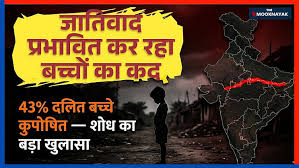
The research found that Scheduled Caste children living south of the Vindhyachal Mountains are, on average, 0.24 standard deviations taller than their counterparts living north of the Vindhyachal Mountains and have a 7 to 8 percentage point lower risk of stunting, a highly significant and statistically proven difference. Most importantly, no comparable difference was found among upper-caste Hindu children between those north and south of the Vindhyachal Mountains. New Delhi—The problem of child malnutrition in India is not limited to poverty or poor health services; it is also deeply rooted in the centuries-old caste system and social evils like untouchability. This startling finding comes from a recent study by Professor Ashwini Deshpande of Ashoka University and Professor Rajesh Ramachandran of Monash University Malaysia. This research paper was published in the prestigious international journal Journal of Economic Behavior and Organization in the year 2025. The Centre for Economic and Data Analysis at Ashoka University recently published an article on this. The researchers based their study on data from the Government of India’s National Family Health Survey (NFHS-4) 2015-16. This survey provides physical measurements and caste information for 230,898 children under the age of five. The study specifically compared 45,924 Scheduled Caste (SC) and 29,132 Upper Caste Hindu (UC-Hindu) children aged between 0 and 59 months. According to the research, stunting, i.e., extremely low height for age, is the most obvious sign of chronic malnutrition. This condition profoundly impacts a child’s brain development, educational potential, and economic opportunities in adult life. Nearly one-third of children under five in India suffer from stunting, a condition that has far-reaching and serious consequences for human capital development. Research findings clearly show that the rate of stunting among Scheduled Caste children is approximately 50 percent higher than that among upper caste Hindu children. According to the data, while the rate of stunting among SC children is 43 percent, it is only 29 percent among upper caste Hindu children. This difference is also clearly visible in the height parameter – the average height-for-age Z-score of UC-Hindu children is -1.12, while that of SC children is -1.64. This means that SC children are, on average, more than half a standard deviation shorter than their upper caste counterparts. This difference persists throughout every month of a child’s age, from 0 to 60 months. Researchers analyzed data from 585 districts across the country. Data from 467 districts for SC children and 369 districts for UC-Hindu children were studied. This analysis revealed that stunting rates among SC children were above 40 percent in 55 percent of districts, while stunting rates among UC-Hindu children were above 40 percent in only 15 percent of districts. In contrast, stunting rates among SC children were below 30 percent in only 15 percent of districts, while stunting rates among UC-Hindu children were below 30 percent in 54 percent of districts. The research found the situation to be most severe in Bihar, Chhattisgarh, Jharkhand, Madhya Pradesh, Rajasthan, and Uttar Pradesh, collectively known as the “BIMARU” region. This region accounts for 50.8 percent of the total survey sample. In 180 out of 220 districts in this region, or 82 percent of districts, stunting rates among SC children were above 40 percent. In 99 districts, or 45 percent, more than half of SC children are stunted. On the other hand, in the same region, stunting among UC-Hindu children is above 40 percent in only 20 percent of districts. The situation is relatively better in Southern India, where only 24 percent of districts have stunting among SC children above 40 percent. The Vindhyachal Mountains: A Historical and Social Divide Professor Deshpande and Professor Ramachandran made the Vindhyachal mountain range the most important and fundamental aspect of their research. According to the researchers, historically, the region north of the Vindhyachal was known as “Aryavarta,” defined in Manusmriti (2.22) as the land between the Himalayas and the Vindhyas. This region has been a cultural center of Hinduism and the caste system since the Vedic period (approximately 1500-600 BCE). The Vindhya Mountains historically served as a boundary between Aryan-influenced areas and non-Aryan areas. This is why untouchability and caste-based discrimination are more deeply rooted in the north. This historical evidence is supported by contemporary data. An analysis of the 2011-12 Indian Human Development Survey (IHDS-II) data shows that 49 percent and 40 percent of households in Central India and the North-Central Plains, respectively, admit to practicing untouchability. In contrast, only 17 percent of households in the southern states do so. A study by Shah et al. (2006) reported that Dalits were denied access to private health clinics in 74 of the 348 villages surveyed in rural India. In 30-40 percent of villages, public health workers refused to visit Dalit settlements, and in 15-20 percent of villages, Dalits were denied access to public health centers. The researchers used a well-established statistical method—Difference-in-Differences (DID)—to compare SC and UC-Hindu children living 100 kilometers north and 100 kilometers south of the Vindhyachal Mountains. This method is important because it compares within a single state, allowing the influence of economic, geographic, and administrative factors to be isolated. The results are extremely significant. SC children living within 100 kilometers of the Vindhyachal range are 21 percentage points, or approximately 70 percent, more likely to be stunted than UC-Hindu children. However, the most important finding is that SC children living south of the Vindhyachal range are approximately 8 percentage points less likely to be stunted than SC children living north of the Vindhyachal range. This difference is both statistically significant and economically significant. In terms of height, SC children living south of the Vindhyachal range are, on average, 0.24 standard deviations, or approximately 30 percent taller, than their counterparts in the north. On the other hand, for UC-Hindu children, living north or south of the Vindhyachal region makes no statistical difference. This means that the advantage of geographical location is not universal, but rather limited to SC children, suggesting that caste-based discrimination is the root cause of this difference.
Either I am CM or…: Rebel AIADMK leader claims EPS rejected Dalit CM proposal

AIADMK rebel C Ve Shanmugam claimed the DMK proposed Thol Thirumavalavan as Tamil Nadu Chief Minister. He said the move could have produced the state’s first Dalit Chief Minister, but alleged EPS refused it. A rebel leader of the AIADMK on Wednesday claimed that the DMK had proposed making VCK chief Thol Thirumavalavan the Chief Minister of Tamil Nadu, which would have made him the state’s first Dalit CM, but alleged that AIADMK general secretary Edappadi K Palaniswami rejected the proposal. Speaking after the floor test in the Tamil Nadu Assembly, rebel AIADMK leader and faction head C Ve Shanmugam said Tamil Nadu had got an “extremely rare chance” and an “unimaginable, impossible chance” for “someone from the Scheduled Caste community to become Chief Minister.” Shanmugam claimed that the DMK and Left parties proposed extending support to Thirumavalavan as Chief Minister, with ministers from both the DMK and AIADMK in the government. “We said while we can’t go with DMK, we can do it with Thiruma. But EPS said it cannot be accepted as it would become a VCK government. Either I am CM or I will act as Opposition. Those were the same words he used,” Shanmugam alleged. The rebel leader also defended the faction’s decision to support the TVK government led by actor-turned-politician C Joseph Vijay during the floor test. On Wednesday, 25 AIADMK MLAs backing Shanmugam and senior leader SP Velumani voted in favour of the government, helping the TVK government improve its tally to 144 in the 234-member Assembly. The DMK walked out of the House, the PMK abstained and the lone BJP MLA remained neutral. Twenty-one AIADMK MLAs loyal to Palaniswami, along with the AIADMK chief himself, voted against the government. Shanmugam rejected Palaniswami’s allegation that the rebel MLAs supported the TVK government in return for ministerial berths. “His claim is totally false and there is no truth in it. We supported the government since both AIADMK and TVK have the same ideology; to oppose DMK,” he said. He added that the AIADMK was founded by late chief minister MG Ramachandran to “uproot the DMK.” Questioning Palaniswami’s leadership, Shanmugam said the AIADMK should have convened a legislature party meeting before electing its leader, deputy leader and whip. “Can he show a copy of the resolution of the meeting? Can he provide information about when the legislature party meeting was held and at what time?” he asked. Shanmugam further claimed that Palaniswami visited the Puducherry resort where AIADMK MLAs were staying last week when the TVK was trying to form the government and collected signatures from legislators separately. “He said he had already spoken with the high level and the DMK would extend outside support to our party, that he will be the Chief Minister and our party would get several minister posts,” Shanmugam alleged. He also claimed that two senior DMK ministers contacted Palaniswami over the phone and congratulated him for extending support, while assuring him of a ministerial berth. “I was totally surprised and could not imagine accepting this offer. Even my family will not accept this,” he said. Shanmugam also attacked Palaniswami over the AIADMK’s electoral performance, alleging that the party had lost four consecutive elections under his leadership and that he never took responsibility for the defeats. Senior AIADMK leader SP Velumani echoed similar views and said the rebel faction’s primary objective was to defeat the DMK. “Our motive is to defeat the DMK. Our party and TVK have the same principles. Therefore, we have supported it,” Velumani said. He also denied any split in the AIADMK and called for an immediate general council meeting to decide the party’s future course. “There is no split in the party. We have to convene the party’s general council meeting immediately to decide the future success of the AIADMK,” he added. Pramod Madhav Courtesy : India Today Note: This news is originally published on https:/indiatoday.com/bha and is used purely for non-profit/non-commercial purposes, especially human rights
Andhra Pradesh: PVTG tribal women in ASR district demand safe drinking water, a challenge in New India
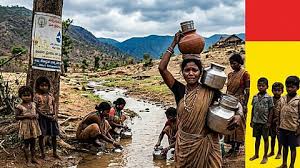
Despite the Jal Jeevan Mission, 450 tribals in Dayarthi village are forced to drink contaminated water and have threatened the administration with a violent protest. Andhra Pradesh: On Thursday, women from the Particularly Vulnerable Tribal Group (PVTG) Kondhu community in Dayarthi village, Jinabadu Panchayat, under Anantagiri Mandal in Alluri Sitarama Raju (ASR) district, appealed to the government for safe drinking water facilities. The villagers expressed their plight, stating that approximately 450 tribal residents of this hilltop settlement depend on contaminated springs for drinking water. Consuming this contaminated water frequently leads to illnesses like malaria, colds, and fevers. The villagers alleged that despite the implementation of major government schemes like the Jal Jeevan Mission and Janaman, their village has yet to receive any drinking water. Local residents say that while road connectivity to the village has improved following Deputy Chief Minister Pawan Kalyan’s recent visit, the acute drinking water problem persists. They also emphasized that patients suffering from waterborne diseases are forced to travel to Devarapalli by private vehicles for treatment. This compulsion costs them approximately 2,000 rupees on transportation alone, which is a significant financial burden for these families. Several tribal women, including Vantala Radha, Lakshmi, Kanthamma, and Devi, have strongly demanded that the administration install borewells and provide tap connections to their homes as soon as possible. Meanwhile, CPM district executive member K. Govinda Rao, along with local leaders Sridhar, Somanna, and Narasinga Rao, have urged the government to resolve the issue immediately. They have warned the administration that if concrete steps are not taken soon, they will stage a fierce protest at the ITDA office. Rajan Chaudhary Courtesy: Hindi News
Tribals struggle for water in MP | Girls go down into wells to fetch dirty water, watch the report
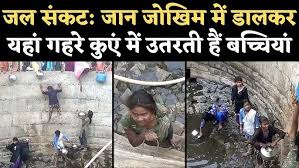
In the village panchayat of Peeparkund in the Pati development block of Barwani district in Madhya Pradesh, villagers are still struggling for clean drinking water. The Mooknayak’s ground report reveals horrific images from Kundiya Phalia and Kanjania Phalia, where people are forced to fetch dirty water from several kilometers away. Little girls go down into wells to fetch water, while women and elderly people carry water on mules and on their heads through difficult paths. Villagers allege that despite repeated appeals to the administration and public representatives, the village has not yet been provided with clean drinking water and hand pumps. This report highlights the gap between government claims and ground reality. Asif Nisar Courtesy : Hindi News
Haldwani: Dispute over drinking water from a pot at a wedding, Dalit brothers attacked and subjected to caste-based abuse

Dispute over drinking water from a pot at a wedding in Haldwani: Two Dalit brothers were attacked with lethal force, action under the SC/ST Act demanded, and the Kathgodam police are investigating. Uttarakhand: A shocking incident has come to light during a wedding ceremony in Haldwani. Two Dalit brothers were severely beaten following a dispute over drinking water from a pot. It is alleged that they were assaulted and subjected to caste-based abuse. One of the brothers has filed a police complaint regarding this incident. However, the police have not yet filed an FIR in the matter. They say they are investigating the matter thoroughly. According to the Indian Express report, complainant Umesh Tamta stated that he, his brother Shubham, and relatives Rakesh Arya and Ajay Arya had gone to a wedding in Deval Malla village on Sunday night. They had been assigned to operate the DJ system there. The dispute began when Rakesh Arya went to drink water from a pot. It is alleged that the groom’s family members targeted him. They asked Rakesh what he was doing there and then slapped him. When Rakesh told Shubham about this, Shubham went to protest. Shubham slapped a young man. In response, the young man gathered his uncle and friends. They then attacked Shubham and hurled casteist abuses at him. It is alleged that Shubham was severely kicked in the face and body. When Umesh Tamta learned of the assault, he also arrived at the scene and was attacked with a rod or sharp weapon on his head. Umesh stated that when he asked the attackers why his brother was being beaten, they replied that Shubham had hit him. Umesh’s head was bleeding, and then one of the men tried to strangle him. According to Umesh, he was begging for his life and felt like he was breathing his last. Then someone intervened and stopped the attackers. Umesh alleged that he was constantly subjected to caste-based abuse throughout the assault. According to the family, Umesh suffered a serious head injury, while Shubham suffered a spinal fracture. Both brothers have been admitted to a private hospital in the city. The complaint demands strict action under sections of attempt to murder and the SC/ST (Prevention of Atrocities) Act. Following the incident, local residents and Tamta’s family protested outside the police station, demanding the immediate arrest of those involved. On the other hand, the police say the other party has also filed a counter-complaint. This cross-complaint claims that their mother was also injured in the attack. Kathgodam police station has taken action and detained four people under Section 172 of the BNSS. Police officials say they have recorded statements from both parties. Efforts are now underway to determine the true cause of the dispute and whether the violence was truly caste-based. Rajan Chaudhary Courtesy: Hindi News
This book examines the interplay between Christianity and caste, especially for Dalit women

An excerpt from ‘Dalit Women and the Fullness of Life’, by Christina Dhanuja. Christianity’s advent in India is a hotly debated topic. But the widely held – and disputed – belief is that it started with the arrival of St Thomas the Apostle on Kerala’s Malabar coast in 52 CE. The popular claim is that the apostle converted the Namboodiri Brahmins of Kerala, giving rise to the present-day Nasranis or Syrian Christians. This was followed by the arrival of Pantaenus, a missionary from Alexandria, in 189 CE, and later, a group of Christians, led by Thomas Cana, from the Middle East in 345 CE. The Christian missions took off only with the arrival of the Portuguese missionary St Francis Xavier in 1542 and the Italian Jesuit Robert de Nobili in 1605 in Goa, followed by the German Pietists (Lutheran missionaries) Bartholomäus Ziegenbalg and Heinrich Plütschau in 1706 in Tranquebar. The Tranquebar missions were responsible for instating the printing press and the first ever print of the Tamil Bible – evidence of which one can still see at the Ziegenbalg House in Tranquebar. At the turn of the eighteenth century, the establishment of British rule in the presidencies of Bengal, Madras, and Bombay, and the subsequent amendment of the East India Company’s charter in 1813, gave way to the great expansion of the Protestant missions. Another revision of the charter in 1833 allowed for a full entry of missionaries, including those from the United States and Europe. This led to the Basel Mission in South Kanara, Gossner’s Evangelical Lutheran Mission in Bihar, the Leipzig Lutheran Mission in Tamil Nadu, the Marathi Mission in Ahmednagar and the Madura Mission in South India. Other American missions include those of the Presbyterians in Punjab, the American Baptists in Nellore and Assam, and the American Lutherans in the Northern Circars. The second half of the 19th century, post the Sepoy Mutiny of 1857, saw new missions and societies from the United States, Ireland and Canada. This in turn led to conversions within the Indian educated classes, including those who followed Hinduism, Zoroastrianism and Islam. Cyril Bruce Firth, in his comprehensive account of Indian Christian history, says that “whether by open conversion or secret discipleship, it did seem as if Christianity were making headway among people who counted.” This trend was, however, cut short by the growth of Hindu reform movements such as the Brahmo Samaj, the Prarthana Samaj, the Ramakrishna Mission and the Arya Samaj. According to Firth, this meant that, for the educated classes who became dissatisfied with orthodox Hinduism, there was now an “abundant choice of alternatives”, as opposed to Christianity. Dalits weren’t as fortunate – neither to become dissatisfied with Hinduism (they weren’t allowed to profess its mainstream versions anyway) nor to have abundant choices during that period. Thus began an unexpected, unprecedented surge of lower-caste conversions in different parts of India. Various Adivasi groups and Shudra castes also participated in these conversions. Jarrell Waskom Pickett, in his book, Christian Mass Movements in India, details that between 1875 and 1879, nearly 9000 persons became Christians in the Travancore district, and by 1900, the number rose to 63,152. This group included the Sambavars (a sub-sect of the Paraiyars) but was dominated by the Nadars, a Shudra caste. Likewise, in Punjab, by 1868, there were more than 10,000 baptised Christians, which included the Chuhras (also known as the Balmikis), the Oraons and the Mundas. Today, there are approximately 27.8 million followers of Christianity, which corresponds to 2.8% of India’s population. Most of them reside in the states of Kerala, Tamil Nadu, the Northeast, Odisha, Karnataka and Andhra Pradesh. Significant percentages also reside in Goa, the Andaman and Nicobar Islands, and Puducherry. Like the rest of the world, Christians in India belong to multiple denominations, not all of which are doctrinally different, but most of which are shaped by caste. The largest of the denominations is the Catholic Church, followed by the Assemblies of God, a relatively new charismatic tradition. The Church of South India – the church I was born into – and the Lutheran Church – the one I married into – are two of the other largest denominations in India. Apart from these, there are a number of charismatic and Pentecostal traditions. There is also a small percentage of Christians who are members of the Church of Jesus Christ of Latter-day Saints, popularly known as the Mormon church. Depending upon the region, conversion histories, and inter-state migratory patterns, each denomination and subdenomination, as well as individual pastorates and parishes, have their own caste constitutions. Owing to its incredible complexity, there is no one source that has attempted to map out the entire landscape of Christian denominations along caste. In general, it suffices to say that a large percentage of the Indian Christian population, thanks to mass conversions of the late 19th century, is made up of Dalit and Adivasi communities. And privileged castes such as the Syrian Christians of Kerala, the Nadars and Vellalars of Tamil Nadu, the Bammons and Chardos of the Konkan coast, and several other privileged minorities like them continue to hold immense power within and outside their churches. Of particular interest to me, owing to my own caste and religious location, are the conversion histories of the Paraiyars (and other Dalits), and the role they play – or fail to – in contemporary faith narratives. My motivation is not simply to justify our conversions but to become unapologetic in the face of baseless criticisms stemming from both caste Hindu and anti-caste locations. It is to reclaim the Dalit Christian identity that is consistently being denied to the likes of me, in the name of many things but mostly, the “lack of lived experience” and “the absence of radical potential”. It is to resurrect a liberative strand of faith that has the potential to offer a more empowered strategy towards fullness. Sunday schools taught me about Christian missionaries, emphasising the many sacrifices and tribulations they encountered during their
Dalit assault case: Andhra Pradesh HC seeks police explanation
The court stated that these documents substantiate claims of custodial violence at the Gudur Rural Police Station. VIJAYAWADA: The Andhra Pradesh High Court has taken serious note of allegations that police in Nellore district brutally assaulted a Dalit man after failing to apprehend his son, who was an accused in a case. The bench of Justice Y Lakshmana Rao observed that there are prima facie records — including medical reports and photographs — confirming the injuries sustained by Polayya, a daily wage worker from Manglapuram village in Chennur mandal. The court stated that these documents substantiate claims of custodial violence at the Gudur Rural Police Station. According to the petition, Polayya was taken into custody on April 18 after his son, an accused in a case, was unavailable. He was allegedly beaten severely between 4 pm and 10 pm, resulting in his hospitalisation. His counsel, advocate V Surendra Reddy, submitted medical records and newspaper reports, and requested preservation of CCTV footage from the police station. The High Court directed Nellore SP, Gudur Rural Inspector Kishore Babu, SI Tirupatiah, and constables Das and Chinnala to appear personally before the court on May 14 Courtesy : TNIE Note: This news is originally published on https:/thenewindianexpress.com/bha and is used purely for non-profit/non-commercial purposes, especially human rights
Bail Condition for Dalit and Tribal Accused to Clean Police Stations: Supreme Court Says Our Comments Are Not Against Any Judge

The Supreme Court has clarified that its previous comments should not be construed as an adverse comment against any High Court judge or judicial officer, in a case involving Odisha courts directing Dalit and Tribal accused to clean police stations as a bail condition. A division bench of Chief Justice Surya Kant and Justice Joymalya Bagchi stated that if interpreted in this way, it could demoralize judicial officers. The court made this comment while hearing a compliance report filed by the Registrar General of the Odisha High Court. The Supreme Court took up this matter suo motu after reports emerged that Odisha courts had imposed conditions such as cleaning police stations for two months while granting bail to Dalit and Tribal accused. According to reports, these orders were issued in cases related to anti-mining protests in Odisha. Eight such orders were passed between May 2025 and January 2026, seven of which were passed by courts in Rayagada district and one by the High Court. In the eight cases, six accused were from the Dalit community and two from the Adivasi community. On May 4, the Supreme Court expressed strong displeasure over these bail conditions. Calling them “obnoxious,” the court stated that they reflected caste bias in the state judiciary. The court stated that such derogatory and derogatory conditions, instead of advancing the ends of justice, attack the dignity of the accused and amount to a pre-judgment of guilt, which is completely unacceptable under the law. Declaring these bail conditions “void and illegal,” the Supreme Court directed all courts in Odisha to immediately revoke such orders. It also directed courts not to re-impose any similar conditions. The Supreme Court also directed that courts outside Odisha should not impose such “caste-based and oppressive” bail conditions in the future. The court stated that such conditions could create social tension. To this end, the Supreme Court directed that a copy of its order be sent to all High Courts to inform every judicial officer that such bail conditions should not be imposed under any circumstances. Praveen Mishra Courtesy: Hindi News
Three arrested for murder of Dalit youth in Peddapalli

Police arrested three persons in connection with the murder of Dalit youth Jula Vamshi, a private security guard who went missing on April 29. Investigators said the accused lured him to Hyderabad, killed him and dumped the body near GudulagandiCity & Local Guides Peddapalli: Godavarikhani Town-II police arrested three persons in connection with the murder of a Dalit youth, Jula Vamshi. Vamshi, a private security guard, was missing from April 29 and his decomposed body was found near Gudulagandi of Manthani on Sunday. Godavarikhani ACP Madata Ramesh said Vamshi had fallen in love with a woman during his school days. The woman, Alekya, was in love with another man, Neelam Naveen, whom she later married and was staying in Hyderabad. Vamshi and Alekya met again during an SSC batch reunion held in February 2025 and reportedly exchanged phone numbers. Later, he began messaging and calling her. He had also reportedly visited Alekya’s residence in Hyderabad on three occasions, leading to arguments between them. Unable to tolerate his harassment, Alekya and her husband Naveen allegedly decided to kill Vamshi, and hatched a plan along with one Burra Bhaskar. As part of their plan, Alekya invited Vamshi to her residence in Hyderabad. On April 30, he visited her home. Later, they went to Bhaskar’s home in Shamshabad. While consuming liquor, Bhaskar picked up an argument with Vamshi. As the argument turned serious, Bhaskar stabbed Vamshi on his chest and neck indiscriminately with a knife. The latter died on the spot with severe bleeding injuries. The accused then wrapped the body in a mat and plastic covers. Bhaskar allegedly shifted the body in his car and dumped it in a gorge near Gudulagandi. Based on a complaint by the deceased’s mother, Shankaramma, the police registered a missing case and began investigation. They traced the accused with the help of CDR and mobile call details. A car and five mobile phones were recovered from the accused. Courtesy : Telangana Today Note: This news is originally published on https:/telanganatoday.com/bha and is used purely for non-profit/non-commercial purposes, especially human rights
The Dalit clock: From Ambedkar to Thirumavalavan
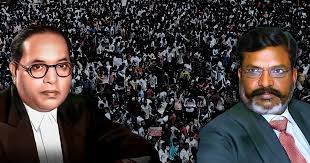
Much like Ambedkar did in his time, the VCK chief has chosen a path of principled pragmatism over moralistic traps set by those who haven’t sufficiently acknowledged his political and intellectual stature, writes V Geetha. How might one engage with the here and now of politics, without getting instrumental and cynical? How might one be productive in the present, without surrendering entirely to what it offers by way of power and self-achievement? The time of politics for India’s Dalits has been one that straddles the present as well as the future; pragmatic concerns, as well as a near-mythic yearning for a new world, and a new life, as Dr Ambedkar put it. At present these questions have come alive for at least one Dalit leader and party – Thol Thirumavalavan and the Viduthalai Chiruthaigal Katchi (VCK). They took their time to extend support to Joseph Vijay’s Tamilaga Vettri Kazhagam (TVK), which had emerged as the single largest party in the elections, but did not have the required majority. The left parties, VCK, and the Indian Union Muslim League decided to support the TVK’s claim to form the government. Meanwhile, speculation was rife as to Thirumavalavan’s intentions: was he demanding to be made deputy chief minister? Is it true that he was offered the Urban Affairs Ministry? How can Thiruma do this? All along he was with the DMK and supported them at every turn, in spite of their dubious record with respect to Dalit rights. So, how could he now endorse Vijay’s candidature? Is this, or is this not betrayal? Apart from such asides, there has been no dearth of advice thrown at him. As a Dalit leader, he was expected to continually affirm his moral credibility and agree to be baptised by the fire of other people’s righteousness. In extending their support to the TVK and Vijay, Thirumavalavan and VCK made it clear that they were doing this in the interests of democracy and in ensuring that a party elected by a majority of the people can take office. Predictably, this earned both leader and party snide asides from a small section of TVK fans who asked him to move on and let their leader take charge, and so on. At the same time, for Thirumavalavan’s constituency, the prospect of him being part of the government must have appeared enticing, considering that both the Dravidian majors have ensured that he remained a ‘junior’ partner within their respective alliances and failed to sufficiently acknowledge his political and intellectual stature. In this context, it is important to understand a dilemma that Dalit parties are forced to reckon with again and again: to respond to the present moment, to explore what it might hold for Dalits, and judge its potential for opening up options to do with rights, and due share in resources, including political power. If this requires a tactical compromise, how might one work with that? Or if it requires political co-option, is that worth risking? In the past too, Thirumavalavan has had to deal with such questions. He (and the VCK) have been responsive to a range of concerns, from the plight of Tamils in Sri Lanka to questions to do with the environment; with the subplan for Scheduled castes to the Hindu right’s affirmation of the Manusmriti and much more. In all this, he has foregrounded a point of view that is anchored in a broad vision of democracy. The challenge has been this: that even when he speaks for the greater common good, he is viewed as a Dalit leader, which he is, but he is seldom seen as one who is capable of and possesses the conceptual clarity and moral credibility to speak for all of us. Veering between being mindful of Dalit concerns and grounding his politics in a democratic vision, Thirumavalavan has found himself caught in uneasy political situations. While he and his party have remained valuable partners within any alliance, he was expected to stay within limits set by the dominant party. Thus, he has not always found it easy to voice his opinion on, say, party policy to do with Dalits, or the working of the criminal justice system when it comes to violence against them. To further understand and interrogate the social and political contexts that hedge Dalit political choices, it is useful to review the ways in which Babasaheb Dr Ambedkar engaged with the promises of the present, without losing sight of his ultimate objective – the annihilation of caste and untouchability and the making of a new social order. The architect of Dalit autonomy Throughout his political life, Ambedkar had to avail of the possibilities presaged by particular moments in time, in the full realisation that these were likely meagre. Yet he did so, responding to the historical hour in order to state and claim a denied right, or to make a case for new rights for Dalits. At the same time, whatever the demand, and however modest, he utilised the occasion to renew and re-state his transformative and imaginative vision for a just, free, fraternal and equal world. The Mahad Satyagraha was a protest against a specific expression of injustice among many others that Dalits endured. As we know, the second phase of the satyagraha did not proceed as planned because the caste Hindus had obtained a court injunction against the Dalits accessing the tank on the argument that it was a private tank. While Ambedkar was initially inclined to go against the injunction, a discussion with the Collector convinced him that to do so would pit them against the local government that was supportive of Dalit claims. This disappointed the satyagrahis, but yet they accepted his argument. On the one hand, this might appear a cautious move, but it is evident that he had made a choice: it was not possible for the Dalits to take on both the government and the caste Hindus. It was important to step back and re-arm oneself. Thus, he utilised