
Bihar: 40-year-old homes in danger! Victims demolish families’ huts; victims approach police after assault

Nearly 50 Dalit families in Nauachak village, under the Barh police station area of Patna, have accused locals of demolishing their homes, assaulting them, and harassing them. The families, who have been living on government land for 40 years, have demanded protection, rehabilitation, and action against the culprits from the police. A case of harassment of Dalit families has emerged from Nauachak village, under the Ibrahimpur Panchayat area of Patna district’s Barh police station. Nearly 50 Dalit families, who have been living on government land for nearly four decades, have accused local locals of assaulting them, demolishing their homes, and continuously harassing them. The victims have demanded protection and action against the culprits from the police. The affected families say they have been living in huts on government land for years. Recently, some people damaged their homes and assaulted them when they protested. Following the incident, a large number of people reached the Barh police station demanding justice. They built their homes on government land. According to information, these families originally hail from the Diara region. Over time, displacement and land scarcity forced them to settle in the Nauachak area. Lacking private land, they built their homes on government land and have lived there for the past 40 years. However, the owners of the surrounding agricultural land have opposed these families’ residence there, leading to a long-standing dispute. Allegations of Home Demolition and Intimidation The victims allege that they are periodically pressured to remove them from the area. Their homes were damaged several times, and they were beaten up for protesting. They say that this time too, their huts were demolished, creating a housing crisis for many families. Waiting for Land Allotment for Years Local resident Dharamveer Manjhi said that administrative officials had previously assured them of government land, but no permanent arrangement has been made. They said they were not provided with land to live in, nor were they provided with basic amenities like electricity and water. Allegations of obstruction in filling soil Victim Tilka Devi stated that whenever she attempts to level the land by filling soil at her residence, some people remove the soil and take it away. She alleged that her house was demolished several times and she was beaten up when she protested. At present, the affected families have demanded security, permanent rehabilitation, and a fair investigation from the administration. The police have begun investigating the entire matter. Courtesy: Hindi News
In Lalitpur, Uttar Pradesh, a Dalit youth was beaten to death after refusing to massage their feet at a liquor party. An accident was staged.

Unruly men in Lalitpur were rampaging, forcing a Dalit youth to massage their feet while drunk. When he refused, they beat him to death with belts and iron rods. Uttar Pradesh: A shocking and tragic incident has come to light in Lalitpur district. Three men brutally beat a 33-year-old Dalit youth to death. The sole reason for this horrific incident was that the victim had flatly refused to massage their feet while drinking. Fearing arrest after committing the murder, the accused hatched a heinous plot. They dumped the deceased’s body on the road to make it appear like a road accident. However, after a prompt and thorough police investigation, the horrific truth of the murder was revealed. According to Lalitpur’s Additional Superintendent of Police (ASP) Kalu Singh, Kotwali police received initial information about the incident on Sunday morning. Police were informed that a man was lying unconscious on the road behind Varni Jain College, located near Gurunanak Dharamshala. When police arrived at the scene and identified the man, they identified him as 33-year-old Rajkumar alias Chhannu, who belonged to the Scheduled Caste community. Police immediately rushed him to a local hospital, but doctors there declared him dead after examination. Upon further investigation, police discovered that a drinking party was taking place in the Civil Lines area on Saturday night. The party was held at the home of 38-year-old Samyak Rajnayak alias Rahi Jain, where Rajkumar was also present. 37-year-old Gajendra Narwariya alias Gajendra Singh Rajput and 25-year-old Gaurav Raikwar were also present. Police investigations have revealed that the three accused, who were intoxicated, pressured Rajkumar to massage their feet. When Rajkumar flatly refused, they became enraged. The three then attacked Rajkumar with a belt and an iron rod, resulting in his tragic death on the spot. The ASP stated that immediately after the murder, a failed attempt was made to make it look like an accident by throwing the body on the road. Acting swiftly, the police have arrested all three accused. Based on a complaint filed by the victim’s mother, they have registered a case of murder as well as under relevant sections of the Scheduled Castes and Scheduled Tribes (Prevention of Atrocities) Act. During rigorous interrogation, the arrested accused confessed to their horrific crime. The police have taken possession of the deceased’s body and sent it for post-mortem, and further legal proceedings in the case are being carried out with vigor. Rajan Chaudhary Courtesy: Hindi News
Land grabs in Mahoba: Victim appeals to DM, alleges caste-related abuse

A case of alleged illegal land grab has come to light in Mahoba. Maheshchandra Ahirwar, a resident of Fatehpur Bajaria, has filed a petition with District Magistrate Gazal Bhardwaj alleging that some individuals have forcibly occupied his land in Khata No. 151. The victim also alleges that he was threatened and abused with caste-related abuses when he protested. According to Maheshchandra Ahirwar, his land is located in Khata No. 151 in Fatehpur Bajaria. He stated that he had gone to Delhi for his wife and children’s treatment. During his absence, the land was taken advantage of. The victim alleges that when he returned and protested the grab, the individuals involved and their supporters hurled caste-related abuses and threatened him. He says that as a result, he is unable to cultivate his own land. Maheshchandra Ahirwar has demanded that the Sub-Divisional Magistrate (SDM) investigate the matter, take legal action, and free the land from illegal occupation. The victim also stated that despite the complaint, no concrete action has been taken. He has appealed to higher authorities to intervene and provide justice. Mohammad Shariq Nawaz | Kabrai (Mahoba), Mahoba Courtesy: Hindi News
Haryana: 32-year-old Dalit youth brutally murdered, head severed from body; police investigating

A heartbreaking murder has come to light in Rohtak. A young man has been beheaded and his body severed. Murder of Dalit Youth in Rohtak Rohtak: A case of the brutal murder of a Dalit youth has come to light in Rohtak, Haryana. The youth has been identified as Neeraj of Ismaila village. He was 32 years old. The incident has created a stir in the area. A Dalit youth was brutally murdered in Ismaila village, under the jurisdiction of Sampla police station in Rohtak. The youth’s head was severed from his body. No information has yet been released about the murderer. All that has been known is that someone slit his neck with a sharp-edged weapon. The youth’s body was found in the village water tank this morning. The deceased’s name was Neeraj, and he was only 32 years old. Police and FSL teams arrived at the scene to investigate. The deceased’s body was taken into custody and sent to Rohtak PGI for post-mortem. The police have registered a murder case and initiated an investigation. This incident has created a sensation in the area and created an atmosphere of fear among the people. The visuals of the incident are so terrifying that even a normal person would be shaken by them. Even the police team arriving at the scene was stunned. This incident was carried out with extreme brutality. The case is under investigation, and people say that the perpetrator of such a crime should be severely punished. At present, no information has been obtained about the accused, but the police are conducting a continuous search operation. So far, no update has been received regarding the motive behind the murder or any enmity with the deceased. Discussions are ongoing in the surrounding area, and people are hoping for justice from the police. People believe that the police will soon uncover the truth behind this brutal murder and reveal the truth to the public. It remains to be seen how long it takes the police to solve this case. Currently, this incident has sparked anger among the Dalit community. Written By: Rituraj Tripathi Report by Sunil Kumar Courtesy: Hindi News
UP Father Held for Killing Daughter at Police Station Over Marriage to Dalit Man

The incident occurred after the daughter reaffirmed her decision to remain with her Dalit husband A 19-year-old woman was fatally stabbed inside the Badausa police station in Banda district, Uttar Pradesh, on 14 June. The incident occurred shortly after she reaffirmed her decision to remain with her Dalit husband, whom she had married against her family’s wishes. The accused, her father, was immediately apprehended by police at the scene. The victim was transported to a medical facility but succumbed to her injuries during treatment. As reported by The Indian Express, the woman, identified as Shivani Chauhan, had left her home on 18 May with Lalit Verma, a neighbour, and married him in Madhya Pradesh. Her family filed a complaint after her departure, leading police to trace and recover her. She was brought to the police station for legal formalities, including recording her statement. During the proceedings, Shivani reiterated her wish to stay with her husband, stating she had left home voluntarily. Coverage revealed that her family was present at the police station for counselling when her father, Satya Kumar Chauhan, allegedly attacked her with a knife. Police personnel intervened and overpowered him, but Shivani had already sustained critical injuries. Courtesy : The Quint Note: This news is originally published on https:/thequint.com/bha and is used purely for non-profit/non-commercial purposes, especially human rights
Dalit Man Beaten to Death in UP’s Lalitpur After Refusing to Massage Coworkers’ Feet During Drinking Party

Police said a 33-year-old Dalit man was allegedly beaten to death by three co-workers in Lalitpur district, Uttar Pradesh, after he refused to massage their feet while they were drinking. The victim has been identified as Rajkumar alias Chhannu, a Scheduled Caste man. According to police, the accused allegedly attacked him with a belt and an iron rod and then dumped his body on the roadside to make the death appear like a road accident. The incident came to light on Sunday morning when police received information about an unconscious man lying behind Varni Jain College near Gurunanak Dharamshala in Lalitpur. Lalitpur Additional Superintendent of Police Kalu Singh said Rajkumar was taken to a hospital where doctors declared him dead. “The man was identified as Rajkumar alias Chhannu (33), a Scheduled Caste man. He was taken to a hospital where doctors declared him dead,” Singh said. Attack during a liquor party During the investigation, police learned that Rajkumar had attended a liquor party at the home of one of the accused, Samyak Rajnayak alias Rahi Jain, in the Civil Lines area on Saturday night. Two other associates—Gajendra Narwariya alias Gajendra Singh Rajput and Gaurav Raikwar—were also present at the meeting. According to police, the three accused, under the influence of alcohol, allegedly asked Rajkumar to massage their feet. Additional Superintendent of Police Kalu Singh said, “When he refused, the three men attacked him with a belt and an iron rod, killing him on the spot.” Police said the accused later dumped Rajkumar’s body on the road to make the death appear like a traffic accident. Accused arrested, murder case registered Police have arrested all three accused in connection with the case. Officials said they allegedly confessed to the crime during interrogation. Based on a complaint from Rajkumar’s mother, police registered a case under murder charges as well as relevant provisions of the Scheduled Castes and Scheduled Tribes (Prevention of Atrocities) Act. Police said, “The accused have been arrested and legal action is underway.” The victim’s body has been sent for post-mortem examination, while investigators continue to collect evidence in the case. Courtesy : TOP Note: This news is originally published on https:/theobserverpost.com/bha and is used purely for non-profit/non-commercial purposes, especially human rights
‘TN elections showed the way, now the government must bring about ‘true change”: Madras High Court grants bail to SI in Dalit engineer ‘honor killing’ case, makes 5 key observations on casteism

The court issued a stern warning to the state government, stating that laws like the SC/ST Act have failed to deliver the desired results. The court noted that incidents registered under this law are increasing day by day. The court directed the government to change the curriculum at the school level to change the mindset of the younger generation. Madurai – The Madurai Bench of the Madras High Court, while hearing the highly publicized case of the ‘honor killing’ of a Dalit IT engineer, strongly criticized the casteism prevalent in society by granting bail to a police sub-inspector. The High Court said that the recent Tamil Nadu assembly elections have proven that people can vote beyond caste and community barriers, and now it is time for the state to take responsibility for bringing about ‘true change’. A bench headed by Justice B. Pugalendhi made this observation while hearing the bail plea of Saravanan, a police sub-inspector. Saravanan is accused of harboring his son, who had brutally murdered a Dalit youth because he was in love with his sister, Saravanan’s daughter. What is the entire case? Kavin (the deceased) was an IT engineer and belonged to the Dalit community. The accused, Saravanan, is a sub-inspector in the Tamil Nadu Police, and his daughter attended the same school as Kavin. They were in a love relationship, which the girl’s family did not approve of. On July 27, 2025, Kavin came to Tirunelveli for his grandfather’s treatment. He informed Saravanan’s son, Surijit (accused No. 1), of his arrival. Surijit put Kavin on his bike and took him to Lakshmipuram. At around 2:17 p.m., a quarrel broke out between the two. It is alleged that Surijith poured chili powder into Kavin’s eyes and then attacked him with a sharp-edged weapon (Aruval). Kavin tried to escape but was chased and killed near Ambala Hospital. A total of 19 wounds were found on the deceased’s body. Just one minute after the murder, Surijith called his father, Saravanan, to inform him of the incident. Police say Saravanan informed his wife (Accused No. 3) about the incident and contacted relatives (Accused No. 4) to help his son hide. Saravanan himself visited the scene and falsely informed the head constable present there that the deceased belonged to a different community. It is alleged that he purchased a bike with a fake license plate for his son and conspired to destroy evidence. Saravanan and his son were arrested on August 11, 2025, and have been in judicial custody since then. Why the Court Granted Bail Saravanan claims he is innocent and was the one who provided information about his son to the police. He also stated that he surrendered his son to the police, which was reported in the newspapers. He argues that he played no active role in the murder and did not destroy any evidence. The Court decided to grant Saravanan bail for the following reasons: Saravanan had been in jail for the past 10 months (since August 11, 2025). The investigation had been completed and a charge sheet had been filed. The case is pending as SC.No. 120/2025. The Court acknowledged that “there were no calls between Saravanan and the deceased or the victim’s family before the incident.” Therefore, there was insufficient material to prove his active role in the murder. The Court stated, “If this were a simple murder case, he would have been granted bail by now.” The court also stated that it was not appropriate to keep the accused in “pre-sentence detention” for a long period. Saravanan filed a petition (Crl OP(MD) No. 995/2026) in the High Court requesting the quashing of the proceedings against him, which the court granted an interim stay on April 29, 2026. However, the court granted bail with strict conditions: Saravanan will be released on a bond of ₹1 lakh and two sureties (one lakh each). He will have to reside in Coimbatore and report to the B2 R.S. Puram police station twice a day (at 10:30 a.m. and 5:00 p.m.). He will not go near the crime scene (Tirunelveli) or attempt to influence any witnesses. If he violates any of the conditions, his bail will be revoked. The recent Tamil Nadu Assembly election results have proven that people can vote without regard to caste or community. A government has been formed by ignoring caste factors. – Madras High Court 5 key observations from the Madras High Court on casteism This decision was not limited to granting bail. Justice Pugalendhi used it as a platform to comment on the “disease of caste” prevalent in society. Some of his key observations are as follows: “Even we judges are not immune to casteism.” The court openly acknowledged that casteism is not limited to ordinary people but also affects the judiciary. The court said: “Every person, no matter how powerful or privileged, experiences casteism in some form or another. Even we judges are not immune. Our orders are often influenced by caste, even when cases are being decided on merit.” “There is no honor in honor killing; it is a shameful act.” The court described honor killing as the “extreme form of casteism,” stating that it is wrong to call it “honor.” “Honor killing is the extreme manifestation of casteism. Casteism is a curse for the nation. Nature recognizes no caste. The sun gives light to everyone, rain falls on everyone, and air is for everyone. Only when society transcends the artificial barriers of caste will it realize the truth: there is no honor in honor killing; rather, it is a shameful act.” Praising the Tamil Nadu Elections – “Voting Without Caste Is Possible” In its judgment, the Court commended the Tamil Nadu voters and the recent Assembly election results, making a landmark observation: “The recent Assembly election results in the state of Tamil Nadu have proven that people can indeed be confident in voting without considering the caste or community of the candidates. A government has been formed by largely
Uttarakhand: Dalit taxi driver humiliated by garlanding him with shoes for picking up passengers at a lower fare, video also filmed!

The accused allegedly abused, used casteist slurs, assaulted him, and demanded 50,000 rupees for charging a lower fare. When Prem Ram protested, they put a garland of shoes around his neck, snatched his mobile phone, and uploaded a video of the incident to social media. Champawat – A shameful incident involving a Dalit taxi driver has occurred in the Lohaghat area of Champawat district, Uttarakhand, following a dispute over carrying passengers at a lower fare. The victim driver was allegedly assaulted and publicly humiliated by other taxi drivers by garlanding him with shoes. After the video of the incident went viral on social media, police took immediate action and filed a case against four accused under the SC/ST Act. On June 10, Prem Ram was carrying passengers from Lohaghat to Delhi at the old fare rate when other taxi drivers stopped his vehicle near Devradi Band. The accused allegedly abused Prem Ram, used casteist slurs, assaulted him, and demanded 50,000 rupees for charging a lower fare. When he resisted, they put a garland of shoes around his neck, snatched his mobile phone, and uploaded a video of the incident on social media. The victim has filed a complaint at the Lohaghat police station. The family stated that they are deeply hurt by the incident. Prem Ram is currently in Delhi. Lohaghat police have registered a case against four accused: Sohan Singh, Harish Bohra, Virendra Singh, and Mohan Chandra. The case has been registered under various sections of the SC/ST Act, the IT Act, and the BNS, including sections 352, 351(3), 133, 126, 308(2), 309(3), 356, and 152(2). Champawat SP Rekha Yadav has personally monitored the case. CO Niharika is investigating. The search for the accused is ongoing. On June 13, the victim’s side submitted a memorandum to District Magistrate Manish Kumar. The District Magistrate assured strict action and directed the Transport Department to investigate fares on the Delhi-Dehradun route. Meanwhile, a large crowd gathered at the Lohaghat police station and demanded strict punishment for the accused. The SC community called it “inhumane.” Geetha Sunil Pillai Courtesy: Hindi News
Punjab Congress eyes Dalit-OBC consolidation ahead of 2027 polls, Channi emerges as frontrunner for party chiefPublished Date: 14-06-2026 | 7:01 pmAayush Goel
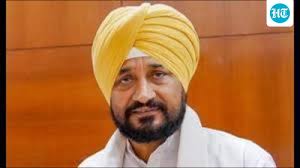
Chandigarh: With the 2027 Punjab Assembly elections now firmly on the horizon, the Congress is scrambling to resolve a leadership crisis that has simmered for months — and is increasingly pointing toward former chief minister Charanjit Singh Channi as its best bet to lead the state unit and anchor the party’s Dalit and OBC outreach. Punjab’s demographic arithmetic makes the calculus compelling. Dalits constitute approximately 32 per cent of the state’s population — the highest SC share of any state in India — while OBCs account for an estimated 15–20 per cent. Together, the two groups represent nearly half the state’s electorate, spread across communities including Mazhabi Sikhs, Ravidassias, Balmikis, Sainis, Kamboj, Ramgarhia and Gujjars. Yet despite their numbers, neither group has historically exercised political influence proportionate to their share of the vote. The Congress high command convened a meeting of top party leaders last week to finalise the shape of an organisational overhaul in Punjab. The party has also appointed senior leaders Ajay Maken, Meenakshi Natarajan and Bhajan Lal Jatav as observers for Punjab, a move seen within the organisation as part of the ongoing exercise to assess the state unit and recommend structural changes ahead of the 2027 elections. According to party sources, internal popularity surveys conducted as part of the Congress leadership’s review of the Punjab unit have shown Channi in a stronger position than incumbent PPCC chief Amrinder Singh Raja Warring — a finding that has sharpened the pressure on the high command to act. When contacted, Channi refused to confirm or deny his candidature for the post. Sources in Delhi Congress, however, said he remained the party’s most viable option given his mass appeal, Dalit identity, and ability to cut across regions. His strongest appeal lies among sections of the Dalit electorate, particularly in Doaba, with some resonance in Malwa. As Punjab’s first Dalit chief minister, his identity adds a powerful political dimension that no other contender in the race can replicate. A section of leaders has been flagging that ahead of the 2027 polls, the optics of two Jat leaders — Warring and CLP leader Partap Singh Bajwa — occupying both top positions would need to be reworked by adjusting Dalit, OBC and Hindu faces. Channi himself raised the point publicly, questioning why all key positions — PPCC chief, Leader of Opposition, and women’s wing president — were held by upper-caste leaders, despite Dalits alone constituting over 32 per cent of the population and OBCs adding a further 15–20 per cent. Others in contention for the PPCC post include Partap Singh Bajwa, former minister Pargat Singh, Fatehgarh Sahib MP Dr Amar Singh, and former MP Vijay Inder Singla. Warring’s position has weakened considerably. The pressure has intensified after the recent municipal elections, where the Congress failed to convert anti-incumbency sentiment into a statewide challenge. Out of 1,977 wards, AAP won 954, while Congress finished a distant second with 393. Independents secured 251 wards, followed by SAD with 192, BJP with 172 and BSP with seven. The results reinforced AAP’s organisational advantage at the grassroots level despite Congress leaders’ claims of growing public discontent with the Mann government. Concerns have mounted over the party’s organisational performance, particularly after setbacks in Gidderbaha — considered his traditional stronghold — where AAP swept 17 of 19 wards in municipal council elections. At the May 29 meeting in New Delhi — attended by Rahul Gandhi, Congress president Mallikarjun Kharge, Punjab in-charge Bhupesh Baghel, and senior state leaders — most state party leaders pressed for Warring’s replacement, though Baghel publicly denied any immediate proposal to do so. The party’s Punjab unit has long been dominated by Jat Sikhs, who account for roughly 25–30 per cent of the population but have held the chief ministerial post for all but a brief interlude since 1966. While Congress has made conscious efforts since 2021 to broaden its social coalition through Dalit, OBC and Hindu outreach, structural realities — land ownership, rural seats, and community mobilisation — continue to give Jat Sikhs the upper hand internally. The dilemma for the high command is acute. Replacing Warring with Channi could consolidate the Dalit-OBC bloc — collectively the state’s single largest voting constituency — that Congress desperately needs to dent AAP’s 2022 mandate of 92 seats. But any move risks deepening Jat Sikh alienation within a party already down to 15 of 117 assembly seats. The Congress top brass has so far not signalled enthusiasm for projecting Channi as a chief ministerial face, with Bhupesh Baghel recently stating the party would not declare a CM candidate ahead of the 2027 polls. That position, insiders say, is unlikely to hold. Aayush Goel Courtesy : The Financial World Note: This news is originally published on https:/thefinancialexpress.com/bha and is used purely for non-profit/non-commercial purposes, especially human rights
The khadi he wore, the Gandhi he kept: A Dalit memoir that refuses easy answers

Recently, I received a message from someone I had known since my Gandhinagar days, when I represented the Times of India from 1997 to 2012. He wanted to send me the English translation of a memoir he had written: “Homes Without Windows“. Thin, short, and darker in complexion than me, he would occasionally come down to my office in Akhbar Bhawan. His name is Chandu Maheria. Seen through a middle-class lens, Maheria had an unimpressive personality. But that didn’t concern me. I knew little about his background, except what he had told me — that he worked in the state education department, and if I am not mistaken, in its midday meal section. Whenever I met someone new, I would try to find out whether there was a story in them. Education interested me: that was my selfish reason for talking to him. Once, speaking on the phone, I asked Maheria to stop by my office on his way home to Gandhinagar, as he said he had a story. I was momentarily hesitant: he would have to arrange a drop to my office and back, since he did not drive a scooter. So I decided to meet him instead in the canteen of the Old Sachivalaya, where he had his office. Meeting him there directly, I felt, was also a better idea than going to his office, which might have exposed his closeness to a journalist. Much later, after my retirement, I discovered that he was regarded quite a buff — a respected one at that — in Dalit circles: an intellectual and a committed writer, one who could speak extensively on Dalit issues. I saw him speak at meetings at Dalit Shakti Kendra, an empowerment-cum-technical school for teenagers founded by the well-known human rights leader Martin Macwan, located off Ahmedabad. I found him very sharp. Until I received the book, all I knew about it was that it had been praised by the eminent historian of modern India, Ramachandra Guha, who called it a “truly remarkable and compellingly readable memoir” — a comment that had appeared on Facebook. With the book in hand, I began to randomly glance through it. But contrary to the anti-Gandhi views prevalent among most Dalit intellectuals across India, this is what I found him stating: “Gandhi might have been anything — call him whatever names — but one thing he was certainly not was anti-Dalit. Oh no, never. Alas!” This made me take a deeper look at the book and see what Maheria, a Dalit and a firm follower of Dr B.R. Ambedkar, thinks about Gandhi. Though a very reluctant reader, I read through its approximately 230 pages in a couple of sittings. Largely a personal account, the memoir describes how Maheria spent his early life in extreme poverty, growing up in a working-class chawl of Ahmedabad as the son of a mill worker — until he shifted to Gandhinagar on securing a government job. They lived in what he describes as “the squalid, tumble-down, cheek-by-jowl dwellings in the backstreets of the city, dubbed as the heart of the state.” Maheria describes how Dalits from different parts of Gujarat had settled in the chawls: “Our chawl was inhabited by the Rohits, people of the tanner caste, who had migrated from Charotar, a large swathe of fertile land covering districts like Kheda and Anand in central Gujarat”, and “the Vankars, people of the weaver caste, from Mehsana, a district in north Gujarat.” Belonging to different Dalit sub-castes, all of them would daily queue up for the dirty common toilet. He underlines, “A strange thing to say, but it was in these queues that I learnt my first lessons in social inequality.” According to him, “All these people were extremely beleaguered, a harried lot that had come here to escape poverty, untouchability, oppression and exploitation, and yet they saw hierarchy and hatred as natural ways of being, such that even the slightest breach in the set order resulted in exchanges of expletives and blows.” Pointing out that “all this cheek was for toilets that were no better than hellholes”, he states, “Though not untouchability in its conventional sense, these practices were rooted in direct discrimination, in an ordained difference between the high and the low, that had seeped right up to the bottom of the caste order.” Offering an example of intra-Dalit casteism, he gives the example of Neno Ma’raj, a man of the priestly Garoda caste, considered the highest among the Dalits. “A mill worker of no consequence, Ma’raj would, in a blatant exhibition of his caste pride, lay his string cot out on the footpath every evening and lounge there like a maharaja, a veritable badshah holding his royal court.” He explains, “In his exhaustive, eye-opening study of the forms of untouchability practised by non-Dalits and Dalits (among themselves) in Gujarat, my friend Martin Macwan has pegged the numbers at ninety-eight and ninety-nine, respectively.” Explaining caste discrimination and related issues through personal anecdotes, Maheria reveals why he believes a section of Dalit intellectuals’ anti-Gandhi stance has gone overboard. None of them, he feels, will admit that no other leader fought untouchability like Gandhiji. Indeed, the book’s chapter “That Fellow, Gandhido” particularly excited me. Maheria starts by stating that he likes wearing khadi as it suits his “short body and slim build”, and explains why his mother didn’t like it. The fabric was anathema to her. She would take a dig at him, saying, “You look like a ditto Gandhiyo in this pair.” An unlettered woman who had picked up the Gandhi-Ambedkar debate through household conversations, her “pet peeve was, ‘None but that fellow, Gandhiyo is responsible for erecting these caste enclosures’.” Yet Maheria graphically describes how, growing up in the working-class chawls, much of his early education happened in the suburb’s Municipal School No. 3-4, whose principal was a man called Balawantbhai Parmar. “A Dalit by birth, he was a thorough Gandhian. Clad in khadi kurta and khadi dhoti, with a topping of