
lawyer Surendra Gadling completed eight years in prison : Bhima Koregaon
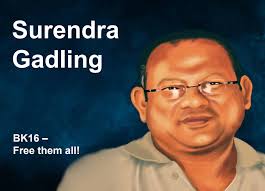
On June 6, lawyer Surendra Gadling completed eight years in prison. Arrested on this day in 2018, he was sent to the Yerawada prison in Pune, and then, in February 2020, he and other prisoners, accused in what has come to be known as the Bhima Koregaon case, were transferred to Taloja jail following the handing over of the case to the NIA. Out of the 16 accused in this case, he is the sole one still to be released. Whilst he was given bail in the Bhima Koregaon case by the Bombay High Court, he is awaiting the outcome of the plea in the Supreme Court for what has come to be known as the Surajgarh arson case. इरोनिकाल्ली, he has been held under the draconian Unlawful Activities Prevention Act (UAPA for almost a decade, considering that he is a foremost lawyer in it and other anti terror laws. He is someone whose expertise in this very field has helped secure the release of thousands of Dalits and Adivasis unfairly imprisoned as alleged Maoists. During his three decade long career before his arrest, he came to be viewed as a formidable figure in court with his ability to argue cases in TADA, POTA, UAPA, the Scheduled Caste and Scheduled Tribes (Prevention of Atrocities) Act. His legal acumen helped in the acquittal of those held under these laws. He also took up cases of fake encounters, dowry deaths and was involved in securing justice for those who protested against the barbaric Khairlanji caste murders in 2006. Among the high profile cases he had taken up, before his own arrest, were those of Dr G N Saibaba, the wheelchair bound professor, who spent about seven years in jail before acquittal. Tragically and cruelly Saibaba died just a few months after his release. Hem Mishra , the student activist, who was also arrested along with Saibaba, recalled in a social media post how Gadling is not just his lawyer but a true People’s Lawyer. He has been a tireless champion for political prisoners taking up the cases that very few dare to do so. Growing up in the humble Dalit neighbourhood of Indora in Nagpur, Gadling became influenced by the radical politics of the seventies during his college years, recalls Sudhir Dhawale, his fellow student and also co accused in the case. Both of them played an important role in the Namantar or movement to rename the Marathwada University after Bababasaheb Ambedkar and were also witness to the huge atrocities inflicted on Dalits. They drew heavily on the cultural activism fostered by the folk forms of Maharashtra where street plays and ballads have been intertwined with resistance and revolution. It is perhaps this element of performative tactics in the courtroom that made Gadling a much admired and popular lawyer. People and juniors flock to the court whenever he argues a case. I was witness to some of his passionate and humorous arguments whilst pleading for various issues related to his own case during the proceedings. But whether it was for the right to a chair, or access to medical care, Gadling’s purpose has been clear. It is to shine a light on the conditions in jail and urgent need for reform. In Pune, in the early days of the arrests, a bunch of lawyers from Punjab turned up in court to show solidarity with him. Similar shows of solidarity have come from lawyers from Delhi, Telangana, Kerala and Kolkata. When the court in Bombay did not allow visitors because of the pandemic, it was a moving sight to see a group of lawyers standing outside the building in support of their mentor. His feisty spirit and ability to deploy the cultural forms of protest that has been an intrinsic part of his journey of resistance, was demonstrated when he was released on temporary bail in 2021. The court allowed him to conduct rituals for the first anniversary of his mother’s death. He had been denied permission by the NIA Special court to attend the funeral in 2020. Donning his lawyers’s suit he headed for the Nagpur sessions court and outside he sang a song written by co accused Ramesh Gaichor, an activist of the Kabir Kala Manch. The song ingeniously weaves in the privation in prisons and denial of basic amenities. Ek duree chhe by doh seh … the area allotted to each prisoner becomes the space for satire with the comment that this is the “aish” or comforts that prisoners enjoy in popular imagination. One of the significant features of life in Taloja jail, as narrated by the Bhima Koregaon prisoners is the way they collectively demonstrated cultural activism through poetry and special song sessions at night. The various members housed in various floors of the building would take up songs and sing in unison. A poignant illustration of how though caged the spirit sings. …. A brilliant lawyer and human rights defender has spent almost a decade in jail. The trial has not even begun. The Supreme Court must act speedily to release him as urged by hundreds of civilians, legal bodies and international human rights defenders.
A Dalit family in Balrampur has been holding the Tazia for 35 years: Three generations have carried on the tradition, a unique example of communal harmony.
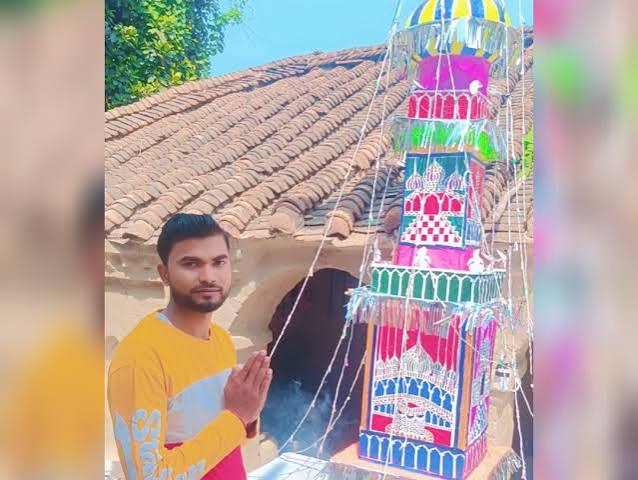
A unique example of communal harmony was witnessed during Muharram in Majra Chahtwa, Gumdi Gram Panchayat, Shriduttganj Block, Balrampur. A Dalit Hindu family has been holding the Tazia with complete faith and respect for the past 35 years. This tradition has been carried on by three generations of the family: Asharam, his son Shiv Prasad, and grandson Kamal Kanaujia. This year too, the family held the Tazia with great devotion, attracting a large number of people from the village and surrounding areas. Kamal Kanaujia explained that the family began holding the Tazia after a vow of his ancestors was fulfilled. His grandfather Asharam carried on the tradition, followed by his father Shiv Prasad, and now he himself is carrying on the responsibility. According to Asharam, the family believes that keeping the Tazia (Tajiya) maintains God’s blessings, removes troubles, and brings happiness and prosperity. Shiv Prasad also said that this tradition brings prosperity to agriculture, business progress, and family well-being. Villagers say that this tradition in Chahatwa is not merely a matter of religious faith, but a living example of social harmony, mutual trust, and Hindu-Muslim brotherhood. During Muharram, people from both communities actively participate in each other’s events, further strengthening the Ganga-Jamuni culture in the village. At a time when news of divisions in society emerges, this Dalit Hindu family in Chahatwa has been sending an important message of humanity, mutual respect, and social harmony by keeping the Tazia for three generations. Aamir Hasan Siddiqui | Shriduttganj (Balrampur), Balrampur Courtesy: Hindi News
Dalit youth dies during treatment: Violence over old rivalry in Ujramau village, special team formed

Shyamveer Pratap Singh alias Sonu (approximately 35 years old), a Dalit youth injured in an alleged assault over an old rivalry in Ujramau village, Rajepur police station area, died while undergoing treatment at Hallet Hospital in Kanpur. The village is mourning and outraged following the youth’s death. Given the seriousness of the case, the police have formed a special team to arrest the accused. According to a police complaint, the incident occurred on the night of June 18, 2026. Shyamveer Pratap Singh was at the home of Badal, a resident of the village, where he worked. It is alleged that Saurabh, a resident of the village, arrived there with two or three of his friends. An altercation ensued between them over an old rivalry. Family members allege that Shyamveer was assaulted with casteist slurs, leaving him seriously injured. The injured Shyamveer was initially taken to the Community Health Center in Rajepur. After first aid, he was referred to Dr. Ram Manohar Lohia Hospital. As his condition worsened, he was sent to Hallet Hospital in Kanpur, where he was treated for several days. He died at around 4 a.m. on June 25th. Kanpur police prepared an inquest report and conducted a post-mortem examination. Shyamveer was the third of four brothers. His untimely death has brought a great deal of grief to his family. The family is inconsolable, and there is widespread anger in the village. Rajepur police are investigating the case based on a complaint filed by the deceased’s brother, Uday Pratap Singh. Following the young man’s death, the investigation will be based on the post-mortem report, medical evidence, and other available facts. Rajepur Police Station in-charge Nagendra Singh stated that the incident has been taken seriously. A special police team has been formed to arrest the accused, and raids are being conducted at their possible hideouts. Shailendra Kumar | Rajepur (Farrukhabad), Farrukhabad Courtesy: Hindi News
AP: Human Rights organisation demands inquiry into custodial death of Dalit woman

A fact-finding team of HRF and IFTU has demanded an independent probe, alleging that police tortured Mala Gangamma to coerce a confession over her suspected role in her son’s disappearance. Human rights organisation Human Rights Forum (HRF) and the Indian Federation of Trade Unions (IFTU) have demanded an independent judicial inquiry into the death of 40-year-old Dalit woman Mala Gangamma in Andhra Pradesh’s Kurnool district, alleging that she died due to custodial torture by the Special Investigation Team (SIT) probing the disappearance of her son, Veerendra. According to the organisations, Gangamma was allegedly tortured to force a confession over her suspected role in her son’s mysterious disappearance. In a joint statement, HRF and IFTU said a three-member fact-finding team comprising HRF state vice-president UG Srinivasulu, HRF Kurnool district president K Urukundappa and IFTU district representative Narasanna visited Badinehal village, met Gangamma’s family members and local residents, and interacted with Kowthalam police before arriving at its findings. Veerendra went missing in November 2024. Gangamma later approached the Andhra Pradesh High Court, which directed the constitution of a Special Investigation Team headed by then Guntur Additional Superintendent of Police (ASP) K Supraja to investigate the case. According to the organisations, the SIT concluded that Gangamma had conspired with her partner, Malla Durgayya, to murder Veerendra, who had allegedly opposed their relationship. HRF and IFTU alleged that the SIT subjected Gangamma and Durgayya to severe custodial torture to force them to disclose the location where Veerendra’s body had been buried. Gangamma died on May 31. They claimed Gangamma died as a result of the alleged torture, while Durgayya is undergoing treatment at Kurnool Government Hospital. The organisations questioned the manner in which the investigation was conducted, alleging that the SIT relied on coercive methods. They also raised concerns over the circumstances surrounding Gangamma’s death, including her transfer to KIMS Hospital in Kurnool, the conduct of the post-mortem examination, and whether all injuries on her body were properly documented. HRF and IFTU further questioned the haste with which Gangamma’s funeral was conducted. According to them, her body was buried in her native village of Badinehal on June 1 in the presence of 20 to 30 police personnel. The organisations also disputed the police’s claim that Durgayya’s injuries were caused by a motorcycle accident, alleging that his relatives were denied access to him while he was hospitalised. While maintaining that those responsible for Veerendra’s murder should face prosecution if found guilty through due process, HRF and IFTU said custodial torture and violations of legal procedure could not be justified under any circumstances. The organisations have demanded an independent judicial or other impartial inquiry into the incident, a fresh post-mortem examination of Gangamma’s body, and the registration of criminal cases including murder charges and relevant provisions of the Scheduled Castes and Scheduled Tribes (Prevention of Atrocities) Act against police personnel found responsible. Courtesy : TNM Note: This news is originally published on https:/thenewsminute.com/bha and is used purely for non-profit/non-commercial purposes, especially human rights
Dalit Organisations Demand Suspension of ACP Reena Suvarna,Warn of Intensified Protests
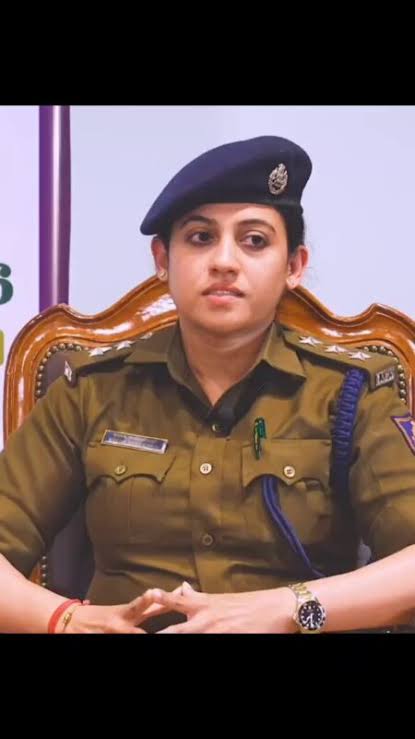
Various Dalit organisations on Friday demanded the immediate suspension of ACP Reena Suvarna,alleging serious irregularities,abuse of power and corrupt practices during her tenure. The organisations warned that they would intensify their ‘Tamate’protest if the government failed to act on their demands. Addressing a press conference,the representatives alleged that the ACP had sided with alleged rowdy elements and improperly handled cases registered under the Scheduled Castes and Scheduled Tribes (Prevention of Atrocities) Act. They claimed she extended protection to certain individuals in return for favours, allowing illegal activities, real estate dealings and other unlawful operations to continue within her jurisdiction. The organisations further alleged that her handling of a child murder case was aimed at weakening the investigation to benefit the accused. They claimed that even some junior police officials had expressed concerns over her decisions during the probe. The protestors criticised the police department for allegedly suspending junior officials instead of taking action against the ACP. They alleged that she continued to receive protection due to her links with senior officials and political figures. The organisations claimed to possess documentary evidence supporting their allegations and said the material would soon be submitted to the State Home Minister,seeking appropriate legal and departmental action. Warning of a larger agitation,the organisations said they would intensify their protests if the government failed to suspend the ACP and order an impartial inquiry into the allegations. The allegations have been made by the protesting organisations.There has been no official response from ACP Reena Suvarna or the police department at the time of publication. Sources said there are many complaints against this officer and if RTI is filed against her reply comes from the same officer against whom the RTI is filed by replying that information cannot be provided matter is under investigation a letter signed with the same officers attestation we request karnataka CM and Home Minister to order a high level probe into those complaints against this officer the activists demands. Martin Meenacherry Courtesy : Country and Politics Note: This news is originally published on https:/countryandpolitics.com/bha and is used purely for non-profit/non-commercial purposes, especially human rights
Lucknow: Caste hierarchies & contract labour exploitation among sanitation workers

Sanitation accused their supervisor of coercion, wage manipulation and caste-based abuse, alleging that workers are being pressured to surrender a recently approved ₹2,000 wage increase while being denied entitled leave. The allegations reflect the broader vulnerabilities faced by sanitation workers in Uttar Pradesh, which has recorded the highest number of sewer and septic tank deaths in India since 2017 Sanitation workers in Lucknow’s Ward 66 or Chinhat II have been protesting against their area supervisor, Avinash Rajput, alleging coercion, wage manipulation, and caste-based abuse. Under a recent directive, workers employed by the Lucknow Municipal Corporation (LMC) are entitled to an additional ₹2000 in wages and four days of leave each month. However, several workers claim that Rajput has been pressuring them to hand over the additional amount while simultaneously denying them their entitled leave. According to data presented in Lok Sabha during March, at least 622 sanitation workers died in sewers and septic tank incidents across India since 2017 with Uttar Pradesh recording the highest fatalities at 86. This highlights the structural risks and vulnerabilities faced by sanitation workers. At a press conference organised by the Dalit Adivasi Shakti Adhikar Manch (DASAM) in New Delhi in May 2026, they revealed that at least 36 sanitation workers died while cleaning sewers, septic tanks, drains and sewage chambers between March and May 2026. Referring to the data presented in Parliament, DASAM said that out of the 622 deaths, 317 occurred between 2021 and 2025. Most of the workers belonged to Valmiki communities, other historically marginalised caste groups, or migrant labour background. [1] Most sanitation workers in Ward 66 belong to the Balmiki caste, historically associated with sanitation labour and among the most marginalised Dalit communities. Many of these workers live in clustered settlements and are employed, directly or indirectly, by the Lucknow Municipal Corporation (LMC), reflecting the enduring link between caste and sanitation work. Workers further allege that Rajput used casteist slurs for the workers, even threatening termination for non-compliance. Such allegations also raise questions under the Scheduled Castes and Scheduled Tribes (Prevention of Atrocities) Act, 1989, which criminalises caste-based abuse and intimidation. Altogether, these accusations point to potential violations of legal protections against caste-based discrimination. Despite these allegations, the supervisor continues to remain in his position, raising questions about accountability and enforcement of existing laws. While sanitation workers employed by the Lucknow Municipal Corporation (LMC) are issued formal joining letters outlining the terms and conditions to their employment, access to these documents is not always guaranteed. A 25-year-old worker, who wished to remain anonymous, said he has been working with the LMC for nearly a year, yet his joining letter has been withheld. He alleges that requests for the document have been met with derogatory remarks about his caste and class, along with threats of termination. “What are we supposed to show when we get into an accident?” questioned one of the workers. The workers expressed their dissatisfaction by gathering on June 10, 2026 to protest and demand their additional Rs. 2000 and four days of holidays, while giving the authorities 3 days to act. They allege that authorities at Lucknow Swachhata Abhiyan (LSA) had stated they will be firing Avinash, but they are yet to hear back, despite three days already having passed by. The allegations against Rajput, however, are not isolated incidents but part of a broader pattern within the sanitation system in Lucknow. One where accountability is inconsistent and often remains unchecked. “The mayor, Sushma Kharakwa, had already fired him once. We are not sure why he came back,” said another worker. While ward 66 is struggling to call out the corruption and discrimination, workers say that such situations are far from unique. Across all wards, Sweepers working with LMC are expected to also clean the sewers or pick up animal carcasses if asked. Many of these workers, often in their 20s, say they are required to descend up to five feet into sewers to carry out manual cleaning. For deeper drains, the Lucknow Municipal Corporation (LMC) deploys mechanised equipment, though workers allege this is not always consistently implemented. Cost considerations often shape these decisions, with workers revealing that bringing in machinery to clean the sewer becomes expensive. The cost adds up with fuel, travel and hiring operators. This is where private contractors come in with the hopes of saving money that would otherwise be spent on the machinery. “thekedaars allegedly take Rs. 5000-6000 and give their workers 500-600. A government employed sanitation worker would get around Rs. 1000.” While law is framed to safeguard Scheduled castes, sanitation workers in Lucknow are still fighting for lawful existence. On June 6, 2026 Lalaram, a 28-year-old sanitation worker went into a manhole with only a rope as instructed by his supervisor on scene, Akash Kumar. He soon lost consciousness and was rushed to a hospital, his supervisor. Initially being taken to Ram Manohar Lohia Institute of Medical Sciences (RMLIMS), Akash diverted him to a private hospital. Lalaram died before receiving medical care and Akash Kumar fled the scene. The ward’s corporator is Arun Rai, a representative of Bharatiya Janata Party (BJP). When contacted, he refused to be interviewed on the topic. The incident drew responses from city authorities. Mayor Sushma Kharakwa and Municipal Commissioner Gaurav Kumar announced action against the contractor, including blacklisting the firm and initiating an FIR. Financial assistance was also promised to the family. Workers remain sceptical, questioning whether meaningful change will follow. Many say that the response to the incident has been driven largely by media attention and local political support, which may ensure compensation for the family. However, the larger concern around the safety of sanitation workers continues to persist. “Usually, the supervisors of these private contractors run away after such incidents, and then nothing ends up happening,” said one of the workers. With Lucknow ranking the third cleanest city in 2024-2025. The irony remains, with regular derogatory comments and a clear spatial hostility moving fluidly between the private and government employees for sanitation
Congress to build another round of ‘Constitution khatre mein hai’ narrative to take on BJP?
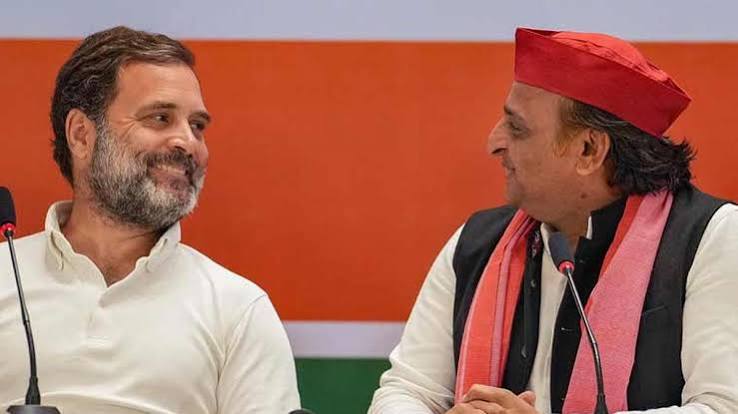
The Opposition successfully leveraged a narrative that the BJP intended to amend the Constitution, which resonated strongly with Dalit voters and significantly impacted the 2024 Lok Sabha election results. It is now being repurposed by the Congress for the upcoming 2027 assembly elections There is one narrative that worked widely for the Opposition during the Lok Sabha elections, and it is something almost every Opposition politician points to. It was how the Opposition pushed the argument that the BJP would demolish the Constitution if it came to power with a special majority. This reportedly alarmed Dalits, who moved towards the anti-BJP formation. The biggest impact of it was seen in Uttar Pradesh, where the Congress-SP alliance unexpectedly won 43 of the state’s 80 seats, reducing the BJP to a number 33 short of a 273 majority in the Lok Sabha. Dalits constitute around 18 per cent of India’s population, and the Congress has been trying to weave together a combination of Dalits, minorities and OBCs. Now, the latest revival of this narrative comes in view of the next round of assembly elections scheduled for 2027, with Uttar Pradesh, Uttarakhand, Himachal Pradesh, Punjab, Goa, Gujarat and Manipur up for grabs. Following the BJP’s aggressive posturing of breaking leaders from other parties like the TMC and Shiv Sena (UBT) and stitching these legislators into the NDA fold, the Congress has brought such activities to the fore, portraying them as part of a pursuit of a supermajority that could eventually be used to alter the Constitution. In an interview with PTI, Congress General Secretary (Communications) Jairam Ramesh said, “The single cause for this is the humiliation that the self-styled Chanakya of Indian politics suffered on the 17th of April in the Lok Sabha. He promised the prime minister that he would get the three delimitation bills passed. He could not muster more than 298 votes in the Lok Sabha.” “I think he decided to take revenge on that day for the humiliation he had been forced to suffer, and now he is busy with the ‘todh-phod ki rajniti’. He broke the TMC, he is breaking the Shiv Sena, all in his search for a two-thirds majority in the Lok Sabha — you are seeing the truth of our 2024 campaign. They were asking for ‘400 paar’ so that they can amend the Constitution to finish off the reservation,” the Congress general secretary in-charge of communications said. “That was the whole logic of ‘400 paar’, and now you are seeing why he is splitting all these parties. He is splitting up parties in his search for a two-thirds majority to amend the Constitution,” Ramesh claimed. According to political analysts, this narrative may have traction in Uttar Pradesh, as the state has around 21 per cent Dalit population, many of whom in 2024 broke away from different parties and voted for the anti-BJP formation of the SP and Congress. The Congress hopes the same could transpire again in the upcoming assembly elections. The Congress is also focusing on Muslims and Dalits in Uttar Pradesh, for which the party is considering appointing a Dalit state unit president. There have been discussions that the party may replace the current state unit president with a Dalit leader. Since the CongressSP combine would be able to attract Yadav and Muslim voters (traditional voters of the two parties contesting together), who together constitute around 33 per cent of the electorate in the state. If they can also gain the support of 21 per cent Dalits in Uttar Pradesh, especially as the decline of Mayawati has left a void in Dalit leadership, the alliance would be looking at a comfortable win. Badar Bashir Courtesy : The Week Note: This news is originally published on https:/theweek.com/bha and is used purely for non-profit/non-commercial purposes, especially human rights
MP: Dalit Youth Assaulted, Abused With Caste Slurs in Mandsaur Village Over Old Dispute, Two Arrested
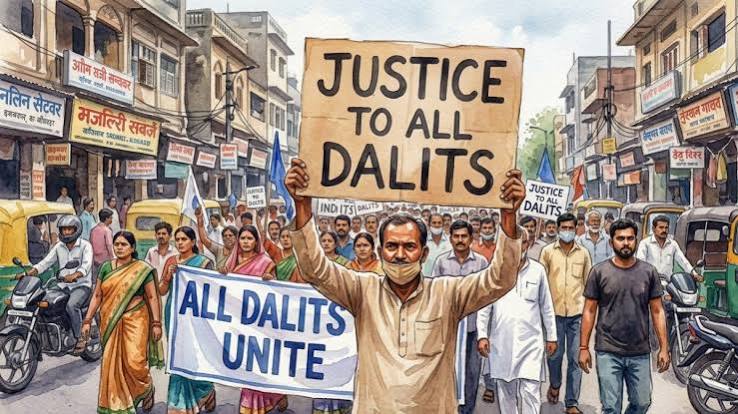
A Dalit youth was allegedly assaulted and humiliated with casteist slurs in Madhya Pradesh’s Mandsaur district. The incident took place in Dethli Khurd village under the Garoth police station limits, where police have arrested two accused. According to officials, the victim, Ramgopal Mehar, filed a complaint at Garoth police station, saying he was attacked over an old dispute related to “moram” (gravel). Year-Old Dispute Led to Assault Ramgopal told police that about a year ago, gravel was dumped near his plot. Since then, the accused — Bajrang Dhakad and Dilip Dhakad — were allegedly angry because he had not used their dumper for the work. Police said the same issue became the reason for the latest confrontation. According to the complaint, the accused surrounded Ramgopal, started arguing with him, and then allegedly abused him using casteist words before physically attacking him. Victim Suffered Serious Injuries The victim said he suffered injuries to his head, stomach, hands and legs during the assault. A woman present at the spot was also allegedly beaten during the incident. Locals who heard Ramgopal’s cries rushed to the scene and intervened, helping rescue him from the attackers. Case Registered Under SC/ST Act Balveer Singh Yadav, the station in-charge of Garoth police station, said that based on Ramgopal’s complaint, a case has been registered against both accused under various sections of the Bharatiya Nyaya Sanhita (BNS) and the Scheduled Castes and Scheduled Tribes (Prevention of Atrocities) Act. He said both accused have been taken into custody and further investigation is underway. Social Tensions Also Being Probed Local reports suggest that the victim’s family follows preacher Rampal, and there had been some social opposition in the village over this. It is also being reported that followers of Rampal were distributing books in the area, which may have contributed to tensions. Police are now investigating all angles behind the assault. Courtesy : TOP Note: This news is originally published on https:/theobserverpost.com/bha and is used purely for non-profit/non-commercial purposes, especially human rights
Police file case against Dalit youth: Victim approaches court for justice after mother and son beaten
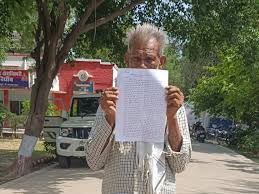
A Dalit youth and his mother were beaten in a dispute over the purchase of watermelons in the Khakhreru police station area of Fatehpur district. The victim alleges that instead of registering his complaint, the police filed a case against him. Failing to receive justice, the victim has now approached the civil court. This incident occurred in Anjana Kabir village. According to the victim, Rajkumar (20), on the evening of May 6, 2026, he had gone to Haji Baba’s field to buy watermelons. Ram Naresh and his uncle, Ram Swaroop, from the village, abused him for claiming the watermelons first. When Rajkumar protested, the accused, along with their unidentified associates, attacked his house that night. His mother, who tried to intervene, was also beaten. Rajkumar alleges that when he arrived at the police station injured after the incident, the police did not register his complaint. Instead, based on the complaint filed by the accused, a case was registered against Rajkumar and a friend under sections 115(2), 352, and 351(2) of the Indian Penal Code (IPC). Having failed to receive justice from the Superintendent of Police and the Circle Officer, the victim, Rajkumar, has now appealed to the Fatehpur Civil Court (JM Court Khaga). He has requested the court to register an FIR and conduct a fair investigation into the matter. Ayush Singh | Manjhanpur (Khaga), Fatehpur Courtesy: Hindi News
Call for stronger awareness on SC/ST Act

Several senior officials on Thursday emphasised the need of the hour was for greater awareness of the Scheduled Castes and Tribes (Prevention of Atrocities) Act-1989, citing incidents of Dalits facing untouchability, social discrimination and other problems. The statement was made at the three day training programme organised by the Dalit Bahujan Shramik Union on community vigilance monitoring for committee members. Also present were Dalit Bahujan Shramik Union’s State general secretary and advocate P. Chittibabu. speaking at the event, APEPDCL Superintending Engineer M. Lakshmana Rao said that equal respect and opportunities need to be provided to all Dalit families in accordance to the provisions of the Indian Constitution written by Dr. B.R. Ambedkar. Deputy Director of Social Welfare Department Annapurnamma said that the government was extending immediate support to Dalit victims and implementing welfare measures for all Scheduled Castes. Mission for Elimination of Poverty in Municipal Areas (MEMPA) project director G.V.Chitti Raju, assistant director of A.P., Andhra Pradesh Government Life Insurance assistant director G. Hymavathi highlighted that women and children were also victimised due to discrimination. Mr. Chittibabu urged the government to take steps for quick filing of chargesheets in the courts so that the victims would get justice quickly under the provisions of the Act. People’s Action for Rural Awakening programme coordinator K.Ch. Bangara Raju clarified the doubts of the participants in the meeting. K Srinivasa Rao Courtesy : The Hindu Note: This news is originally published on https:/thehindu.com/bha and is used purely for non-profit/non-commercial purposes, especially human rights