
DSS takes out protest rally in Kalaburagi condemning ‘purification’ ritual at Mallikarjun Kharge’s venue in Uttarakhand
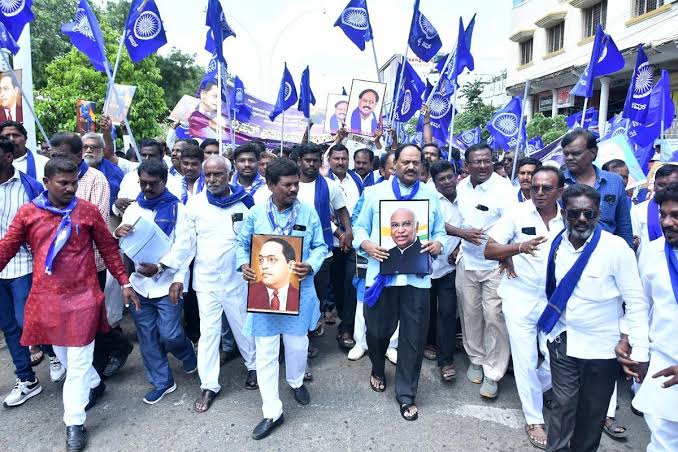
The protest was part of a State-wide agitation organised by the DSS at all district headquarters, condemning the alleged purification rituals Dalit Sangharsha Samiti State convener D.G. Sagar leading a protest rally in Kalaburagi on Friday, condemning the alleged purification rituals conducted at Ramlila Maidan in Haldwani, Uttarakhand, after AICC president Mallikarjun Kharge addressed a public meeting there. Dalit Sangharsha Samiti State convener D.G. Sagar leading a protest rally in Kalaburagi on Friday, condemning the alleged purification rituals conducted at Ramlila Maidan in Haldwani, Uttarakhand, after AICC president Mallikarjun Kharge addressed a public meeting there. | Photo Credit: ARUN KULKARNI Strongly condemning the alleged purification ritual conducted at the Ramlila Maidan in Haldwani, Uttarakhand, following a rally addressed by AICC president Mallikarjun Kharge, the Dalit Sangharsha Samiti (DSS) State convener D.G. Sagar led a protest march in Kalaburagi city on Friday. The protest was part of a State-wide agitation organised by the DSS at all district headquarters, condemning the alleged purification rituals. Dr. Sagar, along with DSS members carrying blue flags and photographs of Mr. Kharge, marched from Jagat Circle to the Deputy Commissioner’s office, raising slogans against the incident. Addressing the protesters, Dr. Sagar said the reported purification of the venue after Mr. Kharge’s visit was an affront to the dignity of the Dalit community and exposed the persistence of caste discrimination. “Purifying a public place after a Dalit leader addresses a gathering is not merely an insult to Mallikarjun Kharge; it is an insult to the entire Dalit community and a reflection of the deep-rooted caste discrimination that continues to exist in society,” he said. He said the incident showed that constitutional values of equality and social justice had not yet fully permeated society. “The Constitution has abolished untouchability and guarantees equality, but such incidents reveal that the mindset of untouchability is still alive. No place becomes impure because a Dalit leader or any member of a marginalised community visits it,” Dr. Sagar said. He urged the authorities and political leaders to condemn such practices and to take steps to ensure that incidents of caste-based discrimination do not recur. “Those who believe that a place needs to be purified after the visit of a Dalit leader must first purify their own minds of caste prejudice,” he said. The DSS members demanded stringent action against those responsible for the alleged ritual and urged the government to create greater awareness about constitutional values and the need to eradicate caste discrimination. The Hindu Bureau Courtesy : The Hindu Note: This news is originally published on https:/thehindu.com/bha and is used purely for non-profit/non-commercial purposes, especially human rights
Why don’t you want to abolish Vedic reservations?
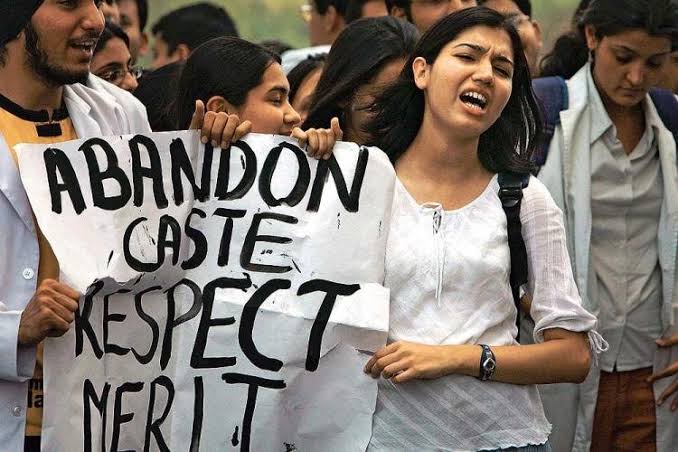
If we truly want equality, we must first take the initiative to end “Vedic reservations,” meaning caste-based socio-economic dominance. Do you want 78 years of constitutional reservations to end, while Vedic reservations, meaning the arrogance and arrogance of the caste system that has existed for thousands of years, remain intact? Why don’t you want to abolish Vedic reservations? Today, there is a strong demand from a section of “upper castes” for reservations based on economic grounds. Furthermore, misleading and insensitive comments are made on social media about constitutional concessions, the Prevention of Atrocities Act, and educational benefits available to Scheduled Castes and Scheduled Tribes. Misinformation and propaganda are being aggressively spread about all of this. There are also demands to limit Dalit reservations to just one generation—to impose restrictions like a “ceiling” or a “creamy layer.” There is a demand to provide reservations only to the poor. There is talk of abolishing the Scheduled Castes and Scheduled Tribes (Prevention of Atrocities) Act. The Scheduled Castes and Scheduled Tribes (Prevention of Atrocities) Act is a safeguard for those who still face caste-based violence and discrimination in their daily lives. Regarding the misuse of laws, all laws are misused to some extent, but courts dismiss such cases. Scheduled Castes and Scheduled Tribes are often targeted with hostility and even called “beggars.” Although some members of the Dalit community respond effectively, they are subjected to insulting taunts and intimidation. In response, incidents range from calls for rallies in front of Parliament demanding the abolition of reservations to threatening statements and derogatory slogans. On the other hand, these upper caste people fail to see or discuss the benefits of the “creamy layer” and reservations enjoyed by the children of millionaires and billionaires within their own community, or by those who have served the government for four or five generations. They only see the “creamy layer” and reservations associated with Dalits. They constantly spread false, fabricated, and one-sided narratives about Dalits. Such people fail to see the creamy layer of the sons and daughters of upper caste leaders and officials who are reaping benefits, and the Vedic reservation holders who have received degrees through donations. They fail to see the fraudulent degrees of upper caste people and the unfair benefits they receive by obtaining fake income and caste certificates. But they can see the creamy layer of Dalit leaders and officials from afar. Why is the creamy layer and ceiling of upper caste officials who have served for three or four generations not discussed and debated? Why is there no talk of imposing a ceiling on them? Why don’t they talk about giving the poor upper castes a share from their own share? Why are they resorting to tricks to get the poor upper castes a share from Dalits? Are they so malicious towards Dalits that they make such one-sided, false and fabricated accusations? Intellectuals who unilaterally question Dalits are dishonest and fraudulent. No member of the “upper castes” ever questions how their sons, daughters, and sons-in-law use their influence to get appointed to important positions—or why poor upper caste people aren’t appointed to such positions. Yet, when it comes to Dalits, all upper castes loudly and unanimously claim that the rights and positions of poor Dalits are being usurped or usurped by wealthy or influential Dalits. They constantly spread such rumors and propaganda, which reveals their evil intentions. Every affluent Dalit family is a resentment towards them. The people making such demands are upper caste people with fascist mindset, who are trying to usurp the rights of Dalits in some form or the other by raising various irrelevant issues. Some upper caste people vehemently demand the implementation of a “creamy layer” provision in Dalit reservations. They argue that wealthy Dalits take advantage of the poor. What exactly does this demand prove? Haven’t high-ranking, wealthy, and influential people like Jagjivan Ram, Ramnath Kovind, Draupadi Murmu, Jitan Ram Manjhi, and former Chief Justice Gavai faced caste discrimination—and are they still facing it? So, what justifies the demand for dividing Dalit reservations based on economic status? Is this truly a demand for their welfare, or a cunning ploy to usurp their rightful share and weaken them? It is noteworthy that reservation for Scheduled Castes and Scheduled Tribes has been an undisputed national policy to ensure social justice and participation in governance. This reservation is not a poverty alleviation program. This reservation is not a question of bread and butter. This reservation is not for providing employment and eliminating poverty. This reservation is not an economic issue. This reservation is a means to bring about a social revolution. This reservation is a matter of Dalits’ participation in governance and administration. This reservation does not provide jobs to everyone. It simply means that a fixed share and percentage of available government positions—approximately 1 to 2 percent of the total population of that reserved group—is set aside for that particular group. Its purpose is to ensure the participation of that section of society in governance and administration; it is not a solution to poverty, nor is it a plan to distribute jobs or eliminate poverty. Has anyone found out how many Dalits are unemployed? Today, Dalits are more unemployed than upper castes. The demand for reservation based on economic basis raises the question: will providing reservation based on economic basis stop the birth of Dronacharya’s children? Will providing reservation based on economic basis eliminate the poison of caste? Will providing reservation based on economic basis produce highly meritorious individuals? Obviously, no such change is going to happen. The status quo will remain. Why do upper castes talk about reservation based on economic basis only in government jobs? They neither talk about nor demand reservations based on economic status in the country’s other resources, such as land, property, and ancestral property. When this issue is discussed, they remain silent. Even in the name of abolishing caste, they become silent. When asked if they can make a poor Brahmin a Dom
The women India continues to ignore
It is 76 years into the adoption of the Indian Constitution. However, the fundamental promises of equality and dignity remain elusive for many communities – none more so than Dalit women. What is even starker is the sheer indifference of institutions towards their plight. This piece aims to highlight how the understanding of “women” does not mechanically encompass Dalit women and accentuate the underlying forces that precludes the empowerment of women from the most downtrodden sections of Indian society. The year 2024 will long be infamous for the gruesome rape and murder of a young doctor at the RG Kar Medical College in Kolkata. It rightfully sparked nationwide outrage and sustained public mobilisation. Yet around the same time a 14-year-old Dalit girl was gang raped, mutilated and murdered in Bihar’s Muzaffarpur district for refusing a marriage proposal from the prime accused. The alleged perpetrator was a 45-year old man from the dominant Yadav caste. Her story barely entered the national consciousness. The paradox is an uncomfortable reality: in India, violence against women does not evoke equal public concern. The visibility of a victim’s suffering is often mediated by caste. When there were nationwide candlelight marches and protests across the country against rape of Nirbhaya in 2014, Dalit scholars mourned the lack of similar uproar by the nation against the Khairlanji atrocity. In 2006, Surekha Bhotmange and her three children were brutally attacked and killed by dominant-caste villagers in Maharashtra’s Khairlanji village, after she resisted encroachment on her land. The dominant castes dragged Surekha, her daughter and two sons out of their home, paraded naked, raped and lynched them. Burnt charcoals were inserted into the private organs of the women. Most horrifyingly, the perpetrators included participation of Caste-Hindu women. However, it was more than a week before the Khairlanji massacre received coverage in the print media. When India’s speaks of women’s rights, it often collapses all women into a single box. In the meanwhile, it ignores the distinct and compounded forms of suppression endured by lower-caste women. The tragedy is – Dalit women are invisible not because they are women but because they sit at the intersection of caste, gender and poverty. The Nation’s selective outrage and Yashika Dutt Lower-caste women are raped in what appears to be more of an organised and systemic way. Dalit women are raped whenever they or the men of their community are seen as transgressing the caste hierarchy as evidenced by the Khairlanji rapes and murders in 2006 and the prevalent devadasi/jogini practices (temple prostitution). Dalit women experience caste violence aimed at controlling and monitoring their sexuality as their bodies are symbols of honour and caste authority and their exploitation has been justified by their lower social status. Dutt has noted – “every time a Dalit woman is assaulted, abused, raped or murdered, her caste matters. Even if she was not raped simply because she is Dalit, the conditions that lead to her assault are almost always affected by her status as lower-caste woman in an upper-caste male-dominated society”. Unfortunately, this is palpable in the context of public outrage – rapes, and murders of Dalit women rarely make headlines. This closely resonates with the mainstream media’s conspicuous apathy in covering the struggle for the most basic human rights in Manipur. The refusal of institutions to recognise the dehumanizing ordeal of Dalit women compounds psychological harm. Coverage of caste-based sexual violence is often episodic, with sustained public attention reserved for only a handful of extreme cases – the Hathras case of 2020 being one of them – where a 19-year old Dalit girl was gang raped and murdered in Uttar Pradesh’s Hathras district. The erasure of caste trauma from public discourse compels survivors to internally bear harms that are rooted in structural discrimination and require collective reckoning. The accounts and experiences of the Dalit women get obscured within the folds of the dominant narratives. The Protectors Are Perpetrators The Constitution guarantees equality, dignity and protection against caste discrimination. Yet Dalit women continue to experience sexual violence not merely because of social prejudices (to which the Indian female population is generally subjected to) but because the very foundational institution of the criminal justice system systematically fails them. As very little information or government data concerning the particular situation of Dalit women in India is available, I will rely on the commendable ground work done by the People’s Archive of Rural India (PARI) and the Swabhiman Society. Many incidents of sexual violence and rape against Dalit women that should be registered under the Scheduled Castes and Scheduled Tribes (Prevention of Atrocities) Act are not recorded as such by the Police. This has been attributed to political pressure seeking to project a decline in caste-based atrocities in order to exhibit their purported commitment to the appeasement rhetoric of cracking down on caste-based atrocities. Survivors of sexual violence, Dalit women and girls are silenced through threats by dominant castes. The constitutionally invalid Khap Panchayats often have an upper hand in refraining the victim families to report such instances. The most precarious fact about violence against lower caste women is the complicity of the administration. The police, a part of the state machinery, has been reported to decline the registration of complaints. Charges are not filed because the case is designated as false by the police. The authorities often belonging to the dominant upper caste shout caste-based slurs and sexist remarks. They take money from the financially influential accused persons and direct the evidence in their favour. In the Hathras Rape case in 2020, the girl’s brother testified that no arrest was made by the police even after 10 days of the incident was reported. A 15-year-old Dalit girl who was gang raped by security personnel in Odisha was incessantly threatened, harassed and lured by the police to say that she had not been raped by security personnel but by other local persons. When she refused to put up with the falsehood, her medical examination was re-done to obliterate any
A Dalit woman who went to the fields to defecate was raped and murdered, her body thrown into a well.
In Raichur, Karnataka, a Dalit woman was raped and murdered. She had gone out to defecate when the accused attacked her with lust. After the murder, the accused threw her body into a well. Police have detained the suspects and begun questioning them, and are awaiting the post-mortem report. A tragic and shameful incident has come to light from Raichur district, Karnataka. A Dalit woman was first raped and then brutally murdered in Hokarani village, Sirwar taluka. The deceased is said to be 21 years old. After the rape, the accused threw her body into a well. According to reports, the woman had gone out to defecate when the accused, who were lying in wait, attacked her. When she did not return home for a long time, her family began searching for her. The woman’s body was later recovered from a well in the village. Upon receiving information about the incident, local police arrived at the scene and began investigating. Acting swiftly, the police identified some suspects and took them into custody. Police are currently interrogating the arrested suspects to uncover the full truth of the incident. Awaiting the Postmortem Report A senior police officer stated, “In the case of the girl who was raped and murdered, we are still confirming whether it was rape or gang rape. The situation will become clear only after the postmortem report is received.” A Suspect Confirmed The officer further stated, “We have identified and arrested the suspects. One of them has been confirmed as the main suspect. The investigation is ongoing, so it would be inappropriate to comment further at this stage. The deceased was 21 years old, and the incident occurred when she had gone outside to relieve herself.” Sagay Raj Courtesy: Hindi News
‘Tu Sala N**ch’: Dalit Journalist Beaten In Udaipur, 2 FIRs Filed, 1 Against Him
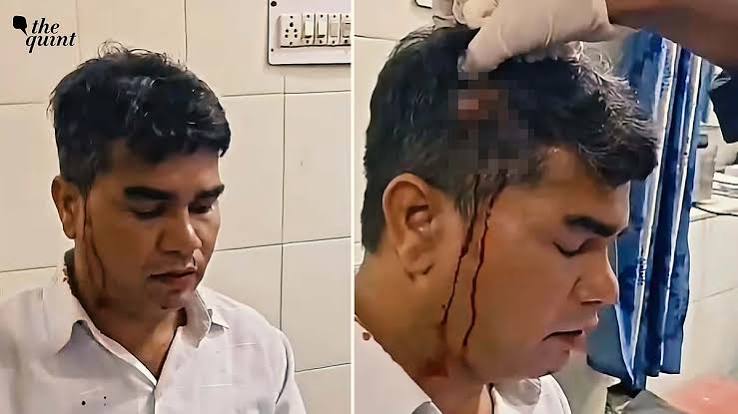
“He abused my caste and attacked me with a sharp object on my chest, neck, face and head,” alleged Lakhan Salvi. In Udaipur’s Gogunda, a Dalit journalist, Lakhan Salvi, 42, was brutally attacked in an alleged case of caste-based violence on Wednesday, 19 August. “I was called ‘neech’ right before I was beaten. I was just doing my job,” claimed Salvi. Salvi, an independent journalist was working on a story, covering people’s voices in Jaswantgarh who had come to submit a memorandum to the SDM Gogunda regarding their problems. Shortly after, as he went downstairs to talk to some people, the accused Gopal Lodha disrupted his work, said Salvi. “He abused my caste and attacked me with a sharp object on my chest, neck, face and head,” alleged Lakhan Salvi. The accused Gopal allegedly said, “Tujhe dekh loonga baad mein. After the byte was done he said, “Tu sala neech,” “Ye neech mujhe patrakarata sikha rha hain.” He called me ‘neech’ at least 15 times. He continued to abuse my caste identity and then said, “Tu sala neech Gogunda ko tu kha gaya, Gogunda ko loot rha hain, tumahra yahan kya hain?” he said, claimed Salvi. After this verbal assault, Salvi stated that Gopal punched him a couple of times and then some people separated the two of them. “He also tried to hit at my private parts but I stopped him,” noted Salvi. The Quint has seen the video of the crowd distancing them. “After 5-10 minutes, he returned. He had some sharp object in between his fingers. He punched me so hard that a part of the object cut through my lip and hit my teeth. There are injuries on my head, face, neck, arms and chest. My head was bleeding.” Lakhan Salvi to The Quint “He abused my caste and attacked me with a sharp object on my chest, neck, face and head,” alleged Lakhan Salvi. The assault did not stop there. After some locals took Salvi to a nearby hospital, the main accused, Gopal barged into the hospital with his brother, Kailash Lodha and attacked him again. “He came running and hit me on my head from behind as the nurses were tending to my injuries. CCTV footage also shows him running away,” said Salvi. The Quint has also seen the CCTV clip of the accused rushing out of the hospital. Noted activist and author Bhanwar Meghwanshi posted his video from the hospital and said, “His body was smeared with blood, and an FIR has been lodged regarding this matter at the Gogunda police station. We strongly condemn this attack on a journalist who comes from the Dalit community, and we request the administration to arrest the accused with immediate effect.” “He abused my caste and attacked me with a sharp object on my chest, neck, face and head,” alleged Lakhan Salvi. An FIR was registered under BNS sections 115(2), 126(2) and 3(5) and SC/ST sections on the day of the incident itself, however, another FIR, this time by the accused was filed against Salvi. Speaking to The Quint, the accused, Gopal had another story to tell. “Lakhan started it. He abused me first and punched me. Then I hit him and during the fight, he got hurt with my pen and ring. I did not abuse his caste. At the hospital, I did not mean to hit him, when he turned abruptly, my hand hit him,” he said. “He abused my caste and attacked me with a sharp object on my chest, neck, face and head,” alleged Lakhan Salvi. ‘Had FIR Been Filed Earlier…’ The accused, Gopal has filed an FIR against Salvi under BNS sections 115(2) – Punishment for voluntarily causing hurt and 126(2) – Punishment for wrongful restraint. Gopal works as a local stringer. Salvi alleged that he tried to disrupt his work before as well. One of his brothers is an informant to the police and the other works with Anganwadi workers. There is history that predates them. Around 4-5 years ago, Salvi has reported on a story which involved one of Gopal’s brothers. Salvi alleged, “His brother works with Angwanwadi workers, they are registered at his house. I got information that there were lapses in how many Angandwadi workers were there, who was getting food, ration or money. I reported on it and since then, Gopal has been targeting me.” Gopal has denied this and said he has not held grudges against him for any story. Meanwhile, the targeted attacks, according to Salvi progressed to social media. He posted against him in January this year as well, Salvi alleged. On 10 November 2025, Salvi field a complaint against him as Gopal had reportedly wrote slander against him on social media. Salvi said he also approached SC ST court but has not received any order yet. “Had they registered an FIR back then, he would have not done this today, abusing my caste and attacking me in broad daylight,” Salvi told The Quint. “He abused my caste and attacked me with a sharp object on my chest, neck, face and head,” alleged Lakhan Salvi. Complaint filed by Salvi but an FIR was not filed last year. “One journalist has to run here and there to get an FIR filed, to be heard. It has been almost 10 months but my complaint was not taken seriously and now there was a brutal attack. What does a journalist or a citizen have to do to be heard? asked Salvi. Aliza Noor Aliza has been a journalist for five years and is based out of Delhi and Lucknow. Primarily, she covers communalism, hate crimes, issues of human rights, social justice, gender and politics and is also involved our interactive hate tracker on our website. Topics: Rajasthan Dalit Journalist Attacked Courtesy : The Quint Note: This news is originally published on https:/thequint.com/bha and is used purely for non-profit/non-commercial purposes, especially human rights
Minorities erased, Adivasis threatened, Dalits ignored in BJP’s India
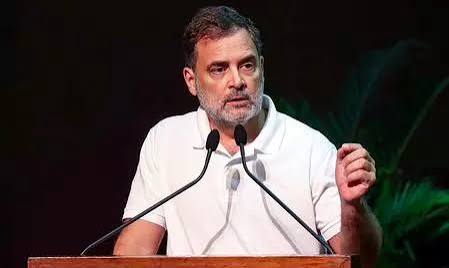
New Delhi: Leader of Opposition (LoP) in Lok Sabha Rahul Gandhi said on Thursday that the BJP tells Muslims, Christians and Sikhs that they don’t exist, Adivasis that their land will be taken, and they will be shot if they protest and Dalits that their oppression doesn’t matter, IANS reported. “The BJP tells Muslims, Christians and Sikhs that they don’t exist. BJP tells Adivasis that their land will be taken, and if they protest, they will be shot. BJP tells Dalits that their oppression doesn’t matter. This is what has been done to our country,” he said. “That needs to be reversed,” Rahul Gandhi asserted, stressing that every single person should feel a sense of belonging, love and respect in the country. He said that the nation must make every person feel that they are loved, regardless of religion, caste, age or gender. Addressing a congregation’ Hara Bhara Swaraj’ organised to commemorate former Prime Minister late Rajiv Gandhi’s 82nd birth anniversary here, the LoP lashed out at the BJP for targeting minorities, Dalits and tribals. The senior Congress leader maintained that the word ‘Swaraj’ is an Indian concept and is wrongly translated as “freedom” in English. He said Swaraj means “ruling over oneself”, adding that while one could grant freedom to another, one could not bestow Swaraj upon another. Describing an individual’s personal relationship with the world as Swaraj, Rahul Gandhi added that Mahatma Gandhi wanted every person in the country to walk this path. He said that Gandhiji considered every living being a unique entity, with his or her own path towards the truth. He added that Gandhiji’s vision cannot exist without certain fundamental things. “It cannot exist with an education system that is as expensive as it is. It cannot exist with a testing system that is as unfair as it is. It cannot exist with a financial system that is monopolised by two or three people. It cannot exist without a political system that reaches deep into the country. So that is really what you have to do,” he said. Addressing students and young people directly, Rahul Gandhi said their aspirations should be respected. The LoP added, “You want to be an engineer, a cook, or a shoemaker. Good for you, be a shoemaker. You want to be an astronaut. Good for you, be that.” He said, “It is the job of the government and the country to open the doors to your imagination and make you feel and believe. The country should help you walk on that path. That is Gandhi Ji’s vision for India, and that is the path of Swaraj.” Courtesy : Madhyamam Note: This news is originally published on https:/madhyamam.com/bha and is used purely for non-profit/non-commercial purposes, especially human rights
SP attacks BJP after Dalit MLA alleges caste bias at temple
Lucknow: Samajwadi Party has reacted sharply to allegations of caste discrimination levelled by BJP’s Dalit MLA from Mohanlalganj Jai Devi at Sheetla Temple in Lucknow’s Kakori, saying that the incident has exposed the caste bias rampant under state govt. Jai Devi has accused the temple administration of denying her due respect during a bhoomi pujan and foundation-laying ceremony for the temple’s renovation. She alleged that she was not allowed to touch a brick, light an incense stick or break the coconut as part of the ritual held on Wednesday. National general secretary of SP Baba Sahab Ambedkar Vahini, Rambabu Sudarshan, described the incident as ‘very unfortunate’. “The fact that such an incident has happened in the state capital and after 9 years of BJP govt explains the state of affairs at caste discrimination front across UP. The incident has only proven BJP’s position on caste bias. The allegations are levelled by BJP’s own sitting Dalit MLA who is the wife of two-time BJP MP and former Union minister late Kaushal Kishore. Had it been any MLA from another party, the BJP’s troll army would have painted the whole incident as politically motivated,” he said. Sudarshan said the incident not only highlights the plight of a sitting Dalit MLA but also the sentiments and emotions of crores of Dalits in the state and in the country. “BJP and RSS talk of uniting Hindus with slogans like Batenge to Katenge (divided we lose). Is this how the BJP wants to unite Hindus? Such incidents prompts one to ponder if the BJP even recognises Dalits as Hindus or not?” Sudarshan said. Courtesy : TOI Note: This news is originally published on https:/timesofindia.com/bha and is used purely for non-profit/non-commercial purposes, especially human rights
Complaints filed against DU prof over ‘Dalit remarks’ during TV debate
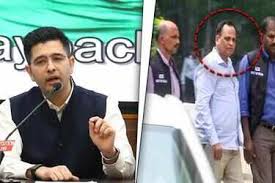
New Delhi: A complaint has been submitted to Delhi University vice-chancellor Yogesh Singh seeking disciplinary action against political science professor Sangeet Ragi over remarks he allegedly made during a television debate Tuesday. Indian National Teachers’ Congress (INTEC), which has filed the complaint, has accused Ragi of making derogatory remarks against the Dalit community and sought strict action, including his expulsion from the university. The remarks were made during the debate in which a video of Congress functionaries, including Sonia and Rahul Gandhi, and party president Mallikarjun Kharge, was played. The video allegedly showed Vande Mataram being stopped midway to arrange a chair for Kharge. Referring to this during the debate, Ragi said, “This is a mentality of slavery, this is a Dalit mentality.” Following immediate objections, Ragi said he was withdrawing the statement, while maintaining that “Dalit” was not a community-related word, but a political term. A complaint has also been filed at Parliament Street police station seeking registration of an FIR under BNS and Scheduled Castes and Scheduled Tribes (Prevention of Atrocities) Act, 1989. Aditya Goswami, former media coordinator of All India Congress Committee, alleged that Ragi’s statement equating “Dalit mentality” with “slave mentality” amounted to an “intentional insult and humiliation” of a member of the scheduled caste community and “promoted or attempted to promote disharmony and feelings of enmity, hatred or ill-will between different castes/communities on grounds of caste”. Goswami has sought that “an FIR be immediately registered”, the matter be investigated, the full video and related material be “seized/preserved” and appropriate action be taken against Ragi. INTEC has complained to the vice-chancellor that the remark was “deeply offensive and derogatory towards the Dalit community” and alleged that it “perpetuates harmful historical prejudices, promotes social division, and flies in the face of our constitutional values of equality, dignity, and social justice”. The teachers’ body demanded that DU initiate strict disciplinary action against him following applicable rules and due process. TOI reached out to the vice-chancellor, who said he had not seen the complaint and would respond after examining it. No response was received from Ragi till the time of going to press. Courtesy : TOI Note: This news is originally published on https:/timesofindia.com/bha and is used purely for non-profit/non-commercial purposes, especially human rights
Dalit girl molested and assaulted: Family reaches SP office demanding arrests

A case of molestation and assault of a Dalit girl has come to light in the Mursan police station area of Hathras. The victim’s family, accompanied by social activist Sunita Singh, reached the Superintendent of Police’s office and demanded the immediate arrest of the named accused. They allege that despite a case being registered, the police have yet to make any arrests. The girl’s mother stated that the incident occurred around 11:30 a.m. on August 14th. She was walking with her approximately 15-year-old daughter to the highway to collect fodder for animals. It is alleged that Sanjay (son of Shyam Fauji, resident of Baguli) and Arjun (resident of Turi), who were on a scooter, stopped her daughter. It is alleged that Arjun tried to grab the girl’s hand and pull her away. After she let go, the accused pulled her scarf, causing her to fall on the road. The woman alleges that the two young men then stopped the scooter, approached her daughter, and began molesting her. The teenager sustained injuries and began bleeding. When her mother raised an alarm, people nearby rushed to the scene, after which the two accused fled. They also threatened her as they left. Upon receiving information about the incident, police arrived at the scene and the injured teenager was admitted to the Mursan Community Health Center. Based on the victim’s complaint, the Mursan police station has registered a case against the named accused under relevant sections. The victim’s family alleges that despite the case being filed, the accused have not been arrested. They have demanded that higher authorities immediately arrest the two named accused and take necessary legal action so that the victim and her family can receive justice. In this regard, CO Sadabad JN Asthana stated that efforts are being made to arrest the accused. Courtesy: Hindi News
Reserved Compartment brings anti-caste English poetry showcase to Chennai
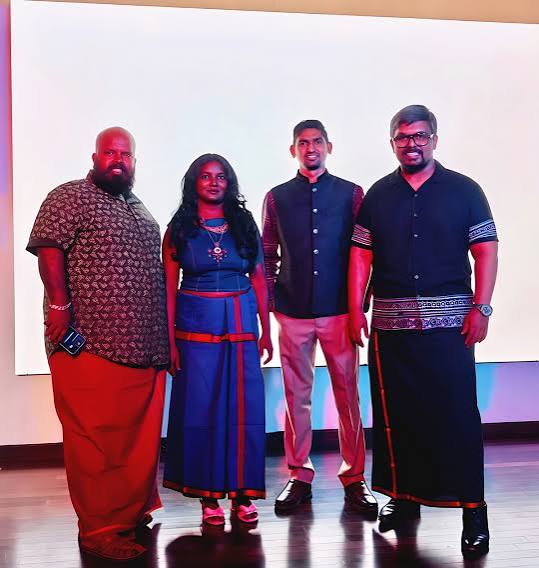
A Dalit poetry collective brings its English-language showcase to Chennai, using performance, lived experience and conversation English poetry can sometimes come with its own set of barriers: the language, the rooms where it is performed, the people who fill those rooms. For Reserved Compartment, a collective of four Dalit poets, the answer has been to walk straight into those spaces and bring their own stories with them. After initial shows in Mumbai and Banglore, this weekend, the Reserved Compartment partners with Mahad Productions, an artiste collective in Chennai, to bring its Dalit English poetry showcase to the city. The programme will be centred on protest and anti-caste poetry. The collective — Dr Abhijit Khandkar, Gautam Vegda, Daniel Sukumar, and Aleena, will be joined by Chennai poet C Nivetha for an opening performance in Tamil. Their poems will speak of caste and protest, but also of food, love, memory, and the small, ordinary details of lived experience. On stage, these personal stories will become a way of asking who gets to speak, who gets to be heard, and who gets to feel at home in a cultural space. “We are not building a show, we are building a community. After the show in Chennai, we’ll still be in touch with our audience and for the next event or workshop we do there, we want to invite them and might even have open mics in the future,” says Daniel who is based out of Bengaluru. That sense of community also extends to the spaces they choose to perform in. For Abhijit, who is based in Mumbai, the decision to take the showcase into established cultural venues is deliberate. “We try to do our shows in venues that are mainstream or the most sought-after venues in that city, because that is also our political statement. We want to open those spaces for our people, so that they can also walk into those spaces and experience how it feels,” he says. “Spoken word in India is basically run by upper-caste people who have access to fancy cafes where many people cannot just go, buy a coffee for ₹200 and sit and listen to poetry,” says Daniel. The collective also sets aside community tickets at every show, allowing those who may not be able to afford a ticket to attend. But reclaiming a space does not mean filling it with only declarations of caste. The four poets bring their identities into their work without allowing them to become its only subject. Daniel, for instance, writes about his mother’s favourite dish, and even his grandfather’s habit of collecting coconut shells. “Most of the time we feel that this is only happening to us, but when you discuss this on a larger platform, people are able to resonate with it. We have stories like this across the board from the community,” he says. While the poems are rooted in lived experience, Aleena is wary of reducing them to caste narratives alone. She points out that when an individual story travels beyond the person who lived it. “What we are doing through our poems is just telling our truths to power, and hopefully those personal truths resonate with the public. The personal becomes public and political,” she says. For Aleena, who is based in Kochi and began writing poetry in Malayalam before moving to English, the interaction with an audience is as important as the performance itself. “It’s a catharsis. You feel seen, you feel heard. We also have a separate interactive session with the audiences at the end of our show and many interesting and free-flowing conversations happen,” she says. India’s First Dalit English Poetry Showcase will be hosted by the Reserved Compartment on August 22, 6pm tp 9pm at Medai, The Stage. For tickets log on to @thereservedcompartment on Instagram. Sangita Rajan Courtesy : The Hindu Note: This news is originally published on https:/thehindu.com/bha and is used purely for non-profit/non-commercial purposes, especially human rights