
SC/ST welfare minister sees Dalit politics behind Manjhi-Chirag row
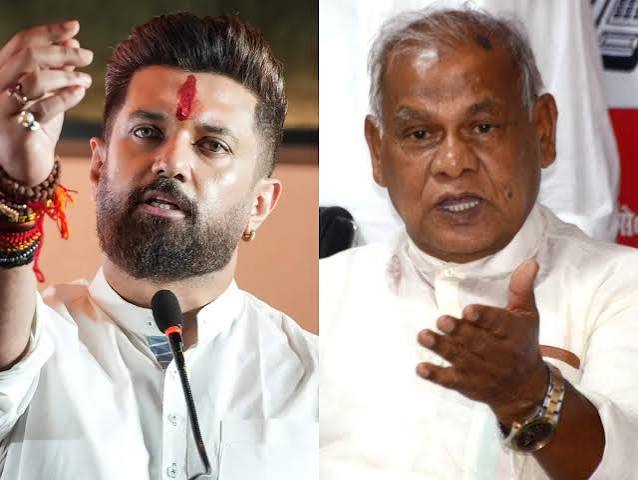
Patna: BJP neta and SC/ST welfare minister Lakhendra Kumar Raushan on Monday said the war of words between Union ministers Jitan Ram Manjhi and Chirag Paswan over the demand for a review of the SC/ST reservation system was largely aimed at establishing themselves as the principal political figures of the Dalit community in Bihar. Raushan said both Manjhi’s HAM(S) and Chirag’s LJP(RV) were part of the NDA at the Centre and in Bihar, questioning why the issue had become a source of confrontation between them. With the Supreme Court allowing sub-categorisation within Scheduled Castes and empirical data available in Bihar to identify relatively more deprived communities, Raushan said the issue should be approached sensitively and without political posturing. “Both Manjhi and Chirag are senior NDA netas. They should first honestly start giving opportunities to other people from their respective communities to contest elections from SC-reserved constituencies,” Raushan told this newspaper. He questioned how many people outside their families had been helped by the two to advance politically. Raushan, who belongs to the Paswan community, said reservation was a constitutional right and should not be treated as charity. He said as long as Narendra Modi remained Prime Minister, nobody could tamper with reservation or alter its basic framework. The minister said a war of words would not resolve the issue and termed demands for ministers’ resignations over the controversy futile. RJD state president Mangani Lal Mandal said there was nothing wrong with reviewing reservation arrangements, arguing a review did not mean its abolition. Senior BJP functionary and revenue and land reforms minister Dilip Kumar Jaiswal took a cautious stand, saying both Manjhi and Chirag were right from their respective perspectives. Former CM Nitish Kumar had created the Mahadalit category in 2007, covering 18 of Bihar’s 22 Dalit castes, to identify communities facing greater deprivation. Manjhi has sought sub-categorisation for greater benefits to the Musahar community, while Chirag fears such a move could affect the Paswan community’s political position within the larger Dalit constituency. Courtesy : TOI Note: This news is originally published on https:/timesofindia.com/bha and is used purely for non-profit/non-commercial purposes, especially human rights
The Dalit enigma: Why Mayawati is going solo in Punjab
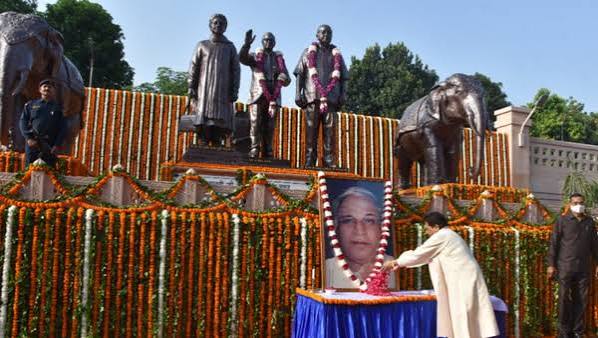
Bahujan Samaj Party (BSP) chief Mayawati has decided to go solo in the upcoming 2027 Punjab assembly election. This move has put the spotlight on a striking contradiction in the state’s politics: Punjab has India’s highest proportion of Scheduled Castes, but no political party has been able to turn that numerical strength into a durable Dalit vote bloc. On August 25, Mayawati announced that the BSP would contest the polls “alone without any alliance or compromise with anyone”, arguing that electoral tie-ups risked weakening the party’s vote share and demoralising its cadre. The decision carries particular significance in Punjab, where BSP founder Kanshi Ram began his political journey and where Scheduled Castes account for 31.94% of the population, according to the 2011 Census. Yet nearly one-third of Punjab’s population has never translated into nearly one-third of the vote for the BSP – or any other Dalit-centric political formation. Instead, the Dalit electorate has remained divided across caste, religious, regional and economic lines, allowing the Congress, AAP, SAD and BJP to each build pockets of support within it. That makes Mayawati’s 2027 gamble less about the size of Punjab’s Dalit population and more about a difficult political question: Can she turn the state’s 32% Dalit population into a coherent electoral bloc? Punjab’s number paradox The numbers explain why every major political party wants a share of the Dalit vote. Punjab had about 88.6 lakh Scheduled Castes in the 2011 Census, accounting for 31.94% of its population – the highest SC proportion among Indian states. The community is particularly concentrated in the Doaba region, which includes Jalandhar, Hoshiarpur and Nawanshahr. Eight of Doaba’s 23 assembly constituencies are reserved for SC candidates, while both Lok Sabha constituencies in the region, Jalandhar and Hoshiarpur, are reserved. Across Punjab, 34 of the 117 assembly seats are reserved for Scheduled Caste candidates. But the political influence of Dalit voters extends far beyond these constituencies. A 2021 analysis by Lokniti-CSDS professor Sanjay Kumar found that Dalits accounted for more than 30% of voters in 54 assembly constituencies and between 20% and 30% in another 45. In other words, Dalit voters can influence far more than the 34 seats formally reserved for them. But there is a crucial caveat: ‘Dalit’ is not a single political identity in Punjab. The community comprises several sub-caste and religious groups, including Ravidassias/Ad-Dharmis, Mazhabi Sikhs, Ramdasias and others. Their geographical distribution, religious affiliations, economic circumstances and political histories differ. That fragmentation has repeatedly prevented the kind of consolidated Dalit politics that emerged around the BSP in Uttar Pradesh. Punjab’s agrarian structure adds another layer. Land and economic power remain disproportionately concentrated among dominant agrarian communities, particularly Jat Sikhs. As a result, Dalit politics in the state often revolves around land rights, employment, reservation, social dignity and access to common resources, rather than caste identity alone. From Kanshi Ram’s Punjab to BSP’s high-water mark The irony is that Punjab was once among the BSP’s strongest political laboratories. Kanshi Ram, born in Punjab, built his early political movement around the mobilisation of Scheduled Castes and other marginalised communities before founding the BSP in 1984. The party’s breakthrough in Punjab came in the 1992 election. It won nine of the state’s 117 seats with 16.32% of the vote, emerging as the principal opposition party in the House. Six of those nine seats came from Doaba, underlining the region’s importance to the party’s political project. But the breakthrough proved difficult to sustain. In 1997, the BSP’s tally fell to one seat, although it still secured 7.48% of the vote. Its vote share then declined steadily — to 5.69% in 2002, 4.13% in 2007 and 4.29% in 2012. By 2017, it had fallen to 1.52%. In 2022, the BSP won just one seat with 1.77% of the vote, contesting as part of its alliance with the Shiromani Akali Dal. The steep decline in three decades captures the central problem Mayawati now faces. How 2022 exposed the paradox If the BSP’s decline showed the difficulty of sustaining Dalit-centric politics, the 2022 assembly election demonstrated how effectively mainstream parties can cut across caste identities. The AAP won 92 of Punjab’s 117 seats with 42.01% of the statewide vote, while Congress was reduced to 18 seats. The AAP’s performance was particularly striking in SC-reserved constituencies. It won 29 of the 34 reserved seats, while Congress won four and the SAD-BSP alliance one. The result also undercut the assumption that Congress’s elevation of Charanjit Singh Channi as Punjab’s first Dalit CM would automatically consolidate the Dalit vote behind the party. Channi became CM in September 2021, just months before the election. His elevation was widely viewed as an attempt to appeal to the state’s huge Dalit electorate. But in March 2022, Congress suffered a dramatic defeat. SAD and its alliance route The SAD has historically had its own Dalit support base, particularly among Sikh Dalits. Its alliance with Mayawati ahead of the 2022 election was an attempt to combine the Akali network among sections of the Sikh electorate with the BSP’s Dalit support base. The combination, however, failed to produce the revival the two parties had hoped for. The alliance won four seats – three for the SAD and one for the BSP – with a combined vote share of around 20%. BJP’s gamble: From alliance politics to going solo The BJP faces perhaps the most difficult social-coalition challenge of all. Its long-standing electoral arrangement with the SAD ended after the Akali Dal walked out of the NDA at the Centre over the farm laws. The BJP is now trying to establish itself as an independent force in a state where it historically relied heavily on the Akali alliance to provide it with a rural and Sikh social base. That means the party needs to build coalitions beyond the constituencies it traditionally relied on, while also trying to repair its relationship with farmers. Dalit voters are an obvious part of that expansion strategy. But Punjab is not Uttar Pradesh or Bihar.
Chirag Paswan Jitan Ram Manjhi: They don’t care about the entire Dalit community, Chirag and Manjhi are pursuing their own political interests.

Chirag Paswan Jitan Ram Manjhi: Bihar politics is currently witnessing a heated debate about reservation. Leaders are claiming their rights and constitutional privileges, but no one has seriously considered the welfare of the entire Dalit community. Everyone is busy pursuing their own political interests. Patna: These days, the buzzword “reservation, reservation” is echoing in Bihar’s political circles. Some are saying, “No one can abolish reservation.” Others say, “Reservation is our constitutional right.” But the sad truth is that no political party has considered the entire Dalit community’s thinking. Neither have the Dalit leaders who harp on Dalit politics and reservations suggested a formula for uplifting those at the bottom of the socio-economic ladder. One possibility was raised by Dr. Santosh Suman, National President of Hindustani Awam Morcha Secular, but he too has backed away from the campaign. When he said that the creamy layer should not be deprived of reservation, he did not mention it. What does LJP (R) National President Chirag Paswan want and what does Hindustani Awam Morcha Secular National President Dr. Santosh Suman want? Let’s expose these two leaders. What is Chhote Manjhi’s recent statement? Hindustan Awam Morcha Secular National President Dr. Santosh Suman Manjhi made it clear that he never talked about implementing a ‘creamy layer’ in SC-ST reservations or excluding anyone from reservations. I had said that his real issue was implementing a ‘quota within quota’ (sub-categorization) for the most disadvantaged and backward castes within the Scheduled Castes. He never said that the creamy layer should be deprived of reservations. Yes, I did say it, and I say it with full confidence, that there should be a sub-quota within the reservation quota. ‘Creamy layer’ and ‘sub-quota’ are two completely different concepts. Now, regarding resignations, Union Minister Jitan Ram Manjhi and I, Santosh Kumar Suman, will resign. However, we, the secular party, are a small party, while the LJP(R) is a large party. Chirag Paswan should resign his ministerial post first, and we too are ready to resign. I had said that his real issue is implementing a “quota within quota” (sub-categorization) for the most disadvantaged and backward castes within the Scheduled Castes. He has never talked about implementing a “creamy layer” within SC-ST reservations or excluding anyone from reservations. Why is Chirag Paswan in opposition? Actually, Lok Janshakti Party (Ram Vilas) National President Chirag Paswan is not concerned with Dalit politics; he is concerned with the Paswan caste. He knows that as soon as he advocates for a creamy layer or a quota within a quota, the Paswan community will become angry. And this Paswan community is the main political base of his politics. It’s a different matter that this statement exposes his Dalit politics and Dalit thinking, revealing that his overall Dalit thinking is not concerned with the development of all Dalits. Why is Chirag Paswan shying away from population share? The truth is that Paswan’s total population is just over five percent. However, he is the number one beneficiary of reservation. Regarding government jobs, the situation is such that while his population is between 5 and 6 percent, his share in government jobs, i.e., Dusadhs, is 32.7%. In such a situation, if the government adopts a quota within quota or a policy that the share depends on the population, Chirag Paswan’s political position will be in jeopardy. Accordingly, Paswan’s share in jobs will be reduced to five percent, resulting in a direct loss of 27 to 28 percent of his reputation. What is the principle of Manjhi’s politics? If we talk about central minister Jitan Ram Manjhi and his son, Dr. Santosh Suman Manjhi, a minister in the Bihar government, they play politics of approximately three percent. However, their percentage in government jobs is 0.26 percent, which is quite low. In such a situation, even if there is a quota within a quota, people of their caste will benefit. Even if we accept the existence of a creamy layer, the politics of Union Minister Jitan Ram Manjhi and Bihar Government Minister Dr. Santosh Suman will still be successful. In such a situation, the claim of 3 percent politics will increase, and so will its purpose. Written by: Ramakant Chandan • Edited by: Sunil Pandey About the Author Ramakant Chandan began his journalism career in 1988 as a freelancer with Navbharat Times and Dainik Hindustan. He formally joined Rashtriya Sahara in 1996, starting with Haatsapaksh, Noida. He became a special correspondent in 2012. In 2020, he became the local editor of Rashtriya Sahara Patna, and in 2022, he became the consulting editor of Rashtriya Sahara. Courtesy: Hindi News
Tamil Nadu Dalit Student Dies By Suicide After Alleged School Humiliation

A 16-year-old Dalit student in Class 11 has died by suicide in Usilampatti near Madurai, Tamil Nadu, following alleged caste-based discrimination and humiliation at a government school. The victim’s family alleged that the school’s headmistress, Vimala Devi, scolded and humiliated the student after she objected to her mother being forced to stand with folded hands in submission. The family claims the resulting severe mental trauma and distress led to the student taking the extreme step. A case has been registered against Headmistress Vimala Devi as the family demands legal action and her arrest, while police continue their investigation into the matter. Courtesy : India Today Note: This news is originally published on https:/indiatoday.com/bha and is used purely for non-profit/non-commercial purposes, especially human rights
Lawyers urged to ensure justice for Dalit families

SC Morcha State president Panatala Suresh said the Legal Cell had been constituted to identify the social and legal problems faced by Dalits and extend support to them Vijayawada: BJP State Organisation general secretary Nookala Madhukar urged lawyers of the SC Morcha Legal Cell to work towards ensuring justice for every Dalit family facing discrimination and social inequality. Addressing the State-level meeting of the BJP SC Morcha Legal Cell at the party’s State headquarters in Vijayawada on Sunday, Madhukar said lawyers should identify Dalits who were caught in false or illegal cases and provide them with necessary legal assistance. He said Dr BR Ambedkar had faced numerous humiliations and hardships but overcame them and gave the country a Constitution that continues to guide society. He called for creating awareness among Dalits about their constitutional rights and encouraging them to exercise and safeguard those rights. Madhukar stressed the need to bridge the gap between words and actions in the fight against caste discrimination and called for taking Ambedkar’s ideals forward in society. SC Morcha State president Panatala Suresh said the Legal Cell had been constituted to identify the social and legal problems faced by Dalits and extend support to them. He said Dr Ashok had been appointed as the State-level convener and urged district-level conveners to strengthen legal assistance mechanisms. Andhra Pradesh Bar Council member and party office in-charge Uppalapati Srinivasa Raju, State spokesperson Shaik Baji, SC Morcha State general secretary Rakesh, vice-president Vulluri Gangadhar, zonal in-charge Mekala Laxman, district president Sarvasuddhi Raju, party Legal Cell member Ch Umamaheswara Reddy and others attended the meeting. Courtesy : THI Note: This news is originally published on https:/thehansindia.com/bha and is used purely for non-profit/non-commercial purposes, especially human rights
Implement legal rights of Dalits, says VCK chief Thol Thirumavalavan

Responding to criticism over VCK general secretary Vanniarasu’s Assembly remarks that Dalit rights had been affected during the DMK regime, he said his remarks should not be distorted. TIRUCHY: VCK leader Thol Thirumavalavan on Saturday urged the state to implement all statutory rights of Dalits during the five-year tenure of the TVK-led government. “More statutory rights of Dalits remain to be implemented, and the government must take the necessary legal measures for their welfare,” he told reporters at Tiruchy airport. Thirumavalavan, who arrived in Tiruchy from Chennai to attend weddings in Perambalur said several welfare measures were being held up because officials feared that full implementation of the SC/ST Act could lead to law and order problems. “Even when the rulers are willing to act, officials sometimes create obstacles,” he said. Responding to criticism over VCK general secretary Vanniarasu’s Assembly remarks that Dalit rights had been affected during the DMK regime, he said his remarks should not be distorted. He said it was true that Dalit candidates had been fielded and elected from general constituencies, but questioned whether they were given tickets based on merit or out of sympathy. Courtesy : TNIE Note: This news is originally published on https:/thenewindianexpress.com/bha and is used purely for non-profit/non-commercial purposes, especially human rights
Dalit man dies after police detention, family alleges custodial torture

Meerut: A 28-year-old Dalit man allegedly died in police custody in Budaun, sparking controversy over the circumstances surrounding his death. Police claimed on Saturday that he fell ill at the station and subsequently died at a hospital, while his family alleged that he died due to custodial torture. A purported video showing Rajesh Kumar, who had been detained at Dataganj police station following a violent clash during a community feast that left two-three people injured, lying unconscious on the station floor surfaced on social media on Saturday. In the purported one-minute video, two policemen can be seen supporting Kumar and attempting to administer water to him. Budaun SSP Ankita Sharma said, “Rajesh was detained on Friday night. His health deteriorated after he returned from the toilet and he collapsed soon afterwards. He was taken to a community health centre and later referred to Budaun district hospital, where he died during treatment.” The SSP added, “CCTV footage showed no assault on Kumar. A medical panel conducted the postmortem and attributed his death to cardiogenic shock. An inquiry is underway.” Dr Ritesh Bhasin, a doctor at the local community health centre, said, “Rajesh was brought to the facility in a serious condition with breathing difficulties. Given his condition, he was referred to the district hospital for specialised treatment. No apparent external injuries were found on his body.” Kumar’s brother, Viresh, disputed the police account, saying Rajesh had no known history of heart disease. “Rajesh was taken to the police station and kept there overnight. He died at the station while in custody,” he alleged. Courtesy : TOI Note: This news is originally published on https:/timesofindia.com/bha and is used purely for non-profit/non-commercial purposes, especially human rights
BJP SC Morcha slams Keralam CM over remarks on dalit Christians quota
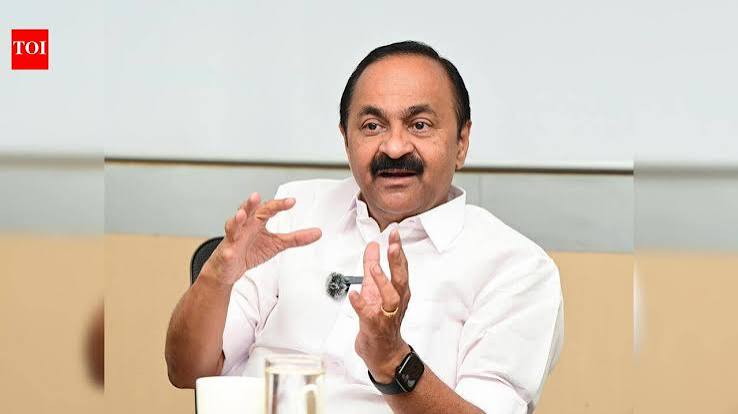
T’puram: BJP Scheduled Caste (SC) Morcha has demanded that chief minister V D Satheesan withdraw his statement regarding the state govt according top priority to providing reservation to dalit Christians. Morcha state president Shajumon Vattekkad said it was inappropriate for the CM to refer to reservation for dalit Christians in his speech while inaugurating the Mahatma Ayyankali Jayanti conference. “The CM’s policy of appeasing religious minorities has once again come to light through the statement,“ he alleged. Shajumon added that while the CM was unwilling to address the pressing issues faced by lakhs of SC community people in Keralam, he was adopting such a stand because he was “held captive by religious minority communalists”. He accused the CM of pursuing a politics of appeasement and double standards. Reservation provided to the SC community under the Constitution is not a concession granted by anyone but a right of the SCs, Shajumon said. BJP SC Morcha will mobilise the SC community in Keralam and launch a strong agitation against the govt to protect this right, he added. He also urged all SC organisations in Keralam to come out in protest against the CM’s statement. Courtesy : TOI Note: This news is originally published on https:/timesofindia.com/bha and is used purely for non-profit/non-commercial purposes, especially human rights
‘Each word she said cost my daughter her life’: TN Dalit mother on teen’s suicide

Speaking to TNM, the family of 16-year-old Dalit girl P Nishanthi solely blamed the allegedly casteist treatment she received from Vimala Devi, a government school headmistress, for her death. “I felt very hurt that she asked about my daughter’s character. I continued standing there with my hands folded, requesting them to somehow admit her,” P Thavamani (40) told TNM, recounting the incidents of the day before her 16-year-old daughter P Nishanthi died by suicide. Thavamani had taken Nishanthi to meet Vimala Devi, headmistress of the Government Model Higher Secondary School in Usilampatti, Madurai, on August 24 to apply for admission to class 11. Instead, Vimala Devi allegedly humiliated the girl for leaving her previous school, and her ‘character’ was scrutinised. “Seeing my folded hands, my daughter tapped my hand to ask me to lower it,” Thavamani continued. This triggered a sharp reaction from Vimala Devi, who allegedly asked, “Can’t you fold your hands in front of me? Are you that arrogant?” “She repeatedly shouted at my daughter, calling her arrogant and questioning what she had done at the previous school. Unable to tolerate the berating, my daughter started crying. [Vimala devi] then told her, ‘Get out. Leave the school.’ Those words affected my daughter deeply. She immediately ran out,” Thavamani recounted. Nishanthi’s family alleged that the incident caused her deep distress. Speaking to TNM four days after her death, the family solely blamed the allegedly casteist treatment she received from Vimala Devi for her death. Police have registered a case of abetment of suicide based on her mother’s complaint, naming headmistress Vimala Devi. The headmistress has denied the allegations, including any casteist remarks. ‘Character’ questioned Nishanthi hailed from Usilampatti in Tamil Nadu’s Madurai district and belonged to the Hindu Paraiyar community, which is classified under Scheduled Castes (SC). She was the second of three children born to Thavamani, a tailor in a garments factory, and Palaniswamy, a daily wage labourer. “She was very attached to us and was highly inclined towards studies. She would not even waste time enjoying festivals,” her family remembered. After completing class 10 from a government school in Thottappanayakkanur, she joined the Government Kallar Higher Secondary School (GKHSS) in Poochipatti for class 11 in June this year. Nishanthi had joined the Biology-Mathematics stream with ambitions of becoming a nurse, her sister Nikila told TNM. But when she struggled with some of the subjects, she wished to join the Commerce stream. However, the school refused to let her change the stream. “My daughter went to school unwillingly for some time. After that, she stopped going to school and stayed at home. She kept saying, ‘I don’t like it. I don’t want to go. Please put me in another school’,” Thavamani said. On August 24, Thavamani took Nishanthi to the Government Model Higher Secondary School in Usilampatti, where they met the headmistress Vimala Devi, who belongs to the Hindu Kallar community, which is classified as Other Backward Class. According to Thavamani, the headmistress questioned them over why they had come there after Nishanthi had already joined another school. “She asked, ‘What mistake did you commit there? You come here after having joined another school and we have to admit you? Don’t we have any other job?’” Vimala Devi then allegedly tried to contact the Government Kallar Higher Secondary School that Nishanthi had previously joined, in order to know about her ‘conduct’. When there was no response, she called the Thottappanayakkanur school where Nishanthi studied class 10. “She put the call on speaker phone. The teacher from Thottappanayakkanur said my daughter was a good student,” Thavamani said. Vimala Devi then allegedly asked, “How is her character?” This question about her daughter’s character hurt her deeply, Thavamani said. That was when she requested the headmistress with folded hands to admit her daughter to the school, prompting Nishanthi to gesture to her to not fold her hands. ‘She was emotionally drained’ After Vimala Devi asked her to “get out” of the school, Nishanthi walked for around five kilometres towards Nallamalpatti. When Thavamani found her, she brought her home in an autorickshaw. “When we got home, she lay down. I asked her to eat, but she refused. I don’t know whether she slept properly that night. She was emotionally exhausted,” Thavamani told TNM. The next day, August 25, Thavamani left for work, telling Nishanthi that she would return later to take her to the Kallar school to get her transfer certificate (TC). “I rarely get leave so I managed to get a 10 minute break to go get the TC,” she said. There, she was asked to wait for some more time. “I told the teacher, Manikkyan, that my daughter stopped going to school because he said she couldn’t be reassigned to the Commerce stream and told her to go to another school. He replied that they have to discipline students, and asked if that is reason enough to stop coming to school,” Thavamani alleged. “After some argument, we finally received the TC,” she said. She then returned to work, while Nishanthi went home, where she was alone. When Thavamani reached home that evening, she couldn’t initially find Nishanthi. “I searched the house, only to find her dead,” she said, breaking into tears. “While I was away, my daughter must have been thinking about everything that had happened. There was nobody at home to talk to her. I had gone to work, while she kept thinking about everything, and it caused her tremendous mental distress,” Thavamani said. ‘Each word headmistress said cost my daughter’s life’ For Thavamani, there is grief over losing her daughter, as well as anger over how Nishanthi was treated. She alleged that the headmistress Vimala Devi is solely responsible for her daughter’s death, and demanded legal action against her. “The headmistress is well educated and is in a higher position, administering a school. Wouldn’t she know how to speak to a common person like us?” she asked, adding, “Each word she said cost my daughter her life.
Dalit Mahapanchayat in Meerut today: Call for protest against beating of protesters in Lalita Gautam murder case
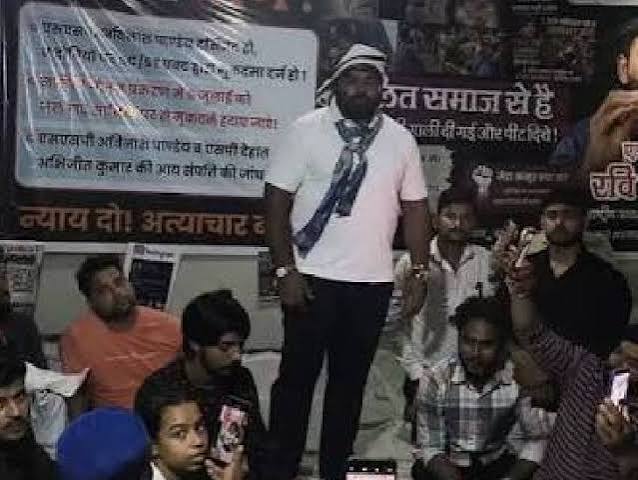
A Dalit Mahapanchayat has been called in Meerut today, Sunday. The Mahapanchayat will be held in the Commissioner’s Park. The Mahapanchayat is regarding the kidnapping and murder of Lalita Gautam, a BA student from the Scheduled Castes, resident of the Rohta police station area. On July 8th, the victim’s family, along with the National President of the Yuva Shakti Dal, Ravi Gautam, protested at the Collectorate gate. The National President of the Yuva Shakti Dal has launched a protest against the then SSP Avinash Pandey, accusing him of assaulting protesters. He has been sitting on a dharna at Chaudhary Charan Singh Park for ten days. A Mahapanchayat is being held at the Commissioner’s Park today, Sunday, regarding this matter. Meerut Police and the Intelligence Department have become active in connection with the Mahapanchayat. Barricades have been erected at the district’s borders, and security has been increased since night. On Saturday night, SSP BBGTS Murthy held a video conference with police officers to brief them on the security plan for the Mahapanchayat. Following this, ADG Bhanu Bhaskar himself addressed police officers via video conference late at night. Police teams were deployed at all district borders late at night. Police teams are continuously patrolling. All COs have been deployed in the field since last night to prevent outsiders from coming and disrupting the district’s atmosphere. Intelligence, LIU, and police teams have also been deployed around the Commissioner’s Park to ensure that the Mahapanchayat does not disrupt the district’s atmosphere and prevent political interference. The police administration is fully committed to ensuring that the Mahapanchayat does not take place. Ravi Gautam, Protesting in the Commissioner’s Park Yuva Shakti Dal National President Ravi Gautam stated that he and his family were protesting on the road outside the Collectorate on July 8th in connection with the case of a BA student from the Dalit community. It is alleged that during this time, the then SSP, Avinash Pandey, assaulted the protesters. The SSP detained the National President and slapped him. The matter escalated after a video of the incident went viral on social media. Following this, the police filed an FIR against Ravi Gautam and several others and sent them to jail. Since his release on bail, Ravi Gautam has been staging a protest at Chaudhary Charan Singh Park, demanding action against the then SSP and Rural Superintendent of Police (SP) Abhijeet Kumar. Leaders under house arrest since morning National President Ravi Gautam stated that the police are placing his colleagues attending the Mahapanchayat scheduled for Sunday under house arrest. According to him, the police are preventing his supporters from attending the Mahapanchayat in Hapur and Bulandshahr. Hunger strike and foot march to demand euthanasia Ravi Gautam stated that his fight will continue until justice is achieved. If he is denied justice, he will go on a hunger strike and will also march to Delhi, demanding euthanasia from the President. A large number of people are expected to attend the Mahapanchayat scheduled for today, Sunday. In view of this, the police and intelligence department have also begun preparations. Police officers will be monitoring the people associated with the Mahapanchayat and the expected crowd. The student’s family refused to attend the Mahapanchayat. Ahead of the Dalit Mahapanchayat, a video of the deceased’s father, Vedprakash, surfaced on social media. In the video, Vedprakash stated that politics is being played over his daughter’s murder and that he has nothing to do with the proposed Mahapanchayat. Vedprakash clarified through the video that Lalita Gautam’s murder is a serious incident for his family, but that no politics should be played in his daughter’s name. He denied any consent or involvement in the Mahapanchayat. Courtesy: Hindi News