
Madras HC orders probe into allegations of Dalit prisoners being forced to clean toilets
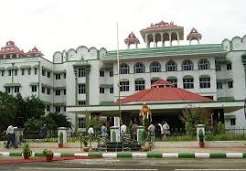
A division bench of Justices CV Karthikeyan and R Sakthivel passed the directions while hearing a Public Interest Litigation (PIL) filed by Madurai-based advocate KR Raja. The Madurai bench of the Madras High Court on Monday, August 31, directed authorities to investigate allegations of prisoners from marginalised communities being forced to clean toilets and carry out manual scavenging work in prisons in Madurai, Trichy and Tirunelveli districts. A division bench of Justices CV Karthikeyan and R Sakthivel passed the directions while hearing a Public Interest Litigation (PIL) filed by Madurai-based advocate KR Raja. Raja alleged that prisoners belonging to marginalised communities were being assigned sanitation work, including toilet cleaning and manual scavenging, at the Madurai Central Prison. He alleged that similar practices existed at the Palayamkottai Central Prison in Tirunelveli district and the Trichy Central Prison. According to the petitioner, certain blocks and barracks in the Madurai and Palayamkottai prisons had allegedly been demarcated for prisoners from marginalised communities. The prisoners in those blocks were allegedly made to clean around 150 toilets, both inside cells and outside barracks. The petitioner claimed that only two sanitary workers had been appointed for the entire prison despite overcrowding. Raja also alleged that similar practices were being followed at the Special Prison for Women in Trichy. According to him, some women prisoners had been permitted to work at the Freedom Petrol Bunk operated by the prison authorities as part of rehabilitation measures. However, the petitioner claimed that instead of working at the petrol bunk, they were made to clean toilets and other sanitary areas on the premises. The petitioner also disputed the prison authorities’ claim that municipal services alone were engaged to clean toilets. Raja, the co-founder of Global Network for Equality, India, an organisation that supports the education of children of inmates and crime victims, said he had made representations to prison authorities in 2025 seeking an end to caste discrimination and legal action against officials responsible for such practices. He also sought preservation of CCTV footage from January 16, claiming that it would help establish whether prisoners had been made to clean toilets and drainage systems. Referring to the Supreme Court’s 2024 judgement in Sukanya Shantha vs Union of India, which dealt with caste discrimination in prisons, and the prohibition of Employment as Manual Scavengers and Their Rehabilitation Act, 2013, the petitioner argued that such practices were discriminatory and violated the dignity of prisoners. The petitioner had alleged that conditions in several district prisons in southern Tamil Nadu were even worse and sought directions to prevent caste discrimination, manual scavenging and the assignment of toilet-cleaning work to prisoners from marginalised communities. However, the prison authorities denied that such practices existed. After hearing the petition, the High Court directed the Principal District Judges and the District Legal Services Authority (DLSA) secretaries of Madurai, Trichy and Tirunelveli to inspect the respective prisons and verify the allegations. The DSLAs were also directed to inquire the prisoners, examine CCTV footage and submit status reports to the court. The superintendents of the respective prisons were separately directed to file reports on the allegations. The matter has been posted for further hearing on October 4. Courtesy : TNM Note: This news is originally published on https:/thenewsminute.com/bha and is used purely for non-profit/non-commercial purposes, especially human rights
Editorial: Our casual practice of caste

India bristles when international agencies point fingers at varna-based discrimination but takes no exception to the casual practice of prejudice in real and symbolic forms in everyday politics. It is of course a coincidence that India’s two biggest political parties are engaged in a row over symbolic cleansing (shuddhi) rituals just at a time when a United Nations committee has yet again expressed concern over the country’s treatment of Dalits. India bristles when international agencies point fingers at varna-based discrimination but takes no exception to the casual practice of prejudice in real and symbolic forms in everyday politics. On August 10, two days after Congress president Mallikarjun Kharge spoke at a Ramlila ground in Haldwani, Uttarakhand, a Sangh Parivar-affiliated group carried out a purification ritual at the venue. They sprinkled ‘holy water’ around the spot where the Dalit leader had delivered his speech and performed a ‘shuddhikaran yagna’ with a ritual fire. Kharge later said in Parliament that he felt subjected to untouchability in a symbolic form. The BJP has made light of the matter, stating that it was a routine cleanup after a political event with no purport to ritual untouchability. Indeed, political parties in India perform purification rituals as a matter of course. It is common to see supporters of a political party wash the statue of a hero with water or milk after it was ‘desecrated’ by opponents. This casual practice of symbols and customs that are redolent of ritual untouchability gives the lie to the Indian state’s protestations that it has low tolerance for varna prejudice. The fact that such practices are considered a legitimate tool of politics, and are employed by the whole spectrum of parties, underscores the fact that prejudice remains lodged in our political culture and expresses itself in codified forms, which the subject of the insult perceives but its perpetrator can always deny by feigning injured innocence or righteous indignation. A fortnight after the insult to Kharge, the UN Committee on the Elimination of Racial Discrimination (CERD) issued its latest findings on India pointing out poor treatment of “ethnic and ethno-religious groups, indigenous and tribal peoples, including Scheduled Tribes, Scheduled Castes, particularly Dalits, and non-citizens”, citing racially motivated violence, excessive use of force, extrajudicial killings, detention without due process, torture, ill-treatment and sexual violence against them. India has a history with UNCERD. In 1996, the UN committee formally ruled that prejudice against Dalits satisfies the definition of descent-based discrimination. That observation strengthened efforts by international human rights groups and Dalit activists to equate varna prejudice with racial discrimination. In subsequent reviews in 2002 and 2007, CERD noted the abiding practice of ritual prejudice in India and criticised the state for trying to obfuscate data on abuse against Dalits. Typically, the Indian government’s reaction to CERD reports has tended to be vituperative. This time too, the Ministry of External Affairs spokesperson Randhir Jaiswal dismissed the findings “with the contempt they deserve”. Responses like that, and the argument that caste discrimination is an internal social issue that is adequately addressed by India’s own constitutional protections, have done nothing to ward off international scrutiny. Although India lobbied to keep caste out of the text of the 2001 UN World Conference Against Racism, the issue now figures prominently in the international agenda against discrimination. It has even made it into legislation abroad. Local laws in Seattle and California and universities like Harvard explicitly outlaw caste discrimination. So, treating caste scrutiny as bad press does not help India’s case. The only solution is to make all those constitutional protections do some real work. Courtesy : DT Next Note: This news is originally published on https:/dtnext.com/bha and is used purely for non-profit/non-commercial purposes, especially human rights
Congress and the Politics of Purification: Rahul Gandhi Is Making a Long-Term Electoral Move Against Mallikarjun Kharge’s ‘Dalit’ Pawn

The Congress party is working tirelessly to capitalize on the Haldwani purification controversy in Uttarakhand. The Congress party sees the primary focus of this issue as the Chief Minister’s seat in Punjab, a position it could hold until 2029. New Delhi: The political underpinnings of the Haldwani incident in Uttarakhand, after a long hibernation, are becoming clear. Congress President Mallikarjun Kharge dropped the alleged ‘purification’ bombshell in Parliament on the final day of the monsoon session. However, Rahul Gandhi hesitated in responding. Now, it appears the party has a strategy in place. On the last day of the monsoon session, Leader of the Opposition in the Rajya Sabha, Mallikarjun Kharge, alleged that after his rally in Haldwani, the venue was allegedly “purified” because he is a Dalit. A week later, Rahul Gandhi raised the issue in a press conference, for which elaborate preparations had been made. Now, with an FIR filed against Rahul Gandhi in this case, the Congress has made it a major part of its political campaign. Congress’s Last Hope in the Punjab Elections If we try to understand the politics behind this late raising of the issue by the Congress, it seems that it sees it as a straw to hold on to in the Punjab Assembly elections. This is because the Dalit or Scheduled Caste population in Punjab is approximately 32 percent. Speculation of a BJP-Akali alliance increases tension Some political pundits, long supporters of the Congress, saw the party as having considerable potential against the Aam Aadmi Party in Punjab. Because, apart from urban areas, the BJP has not been able to achieve much in rural areas. However, in the last few weeks, speculation about an electoral rift between the top leadership of the BJP and the Akali Dal has suddenly intensified. These speculations are pulling the rug from under the feet of Congress strategists. The Dalit CM card failed in 2022. In the 2022 Punjab Assembly elections, a large portion of the Dalit vote bank went to the Aam Aadmi Party. Its unexpected victory speaks for itself. A few months before the elections, after turning its back on Captain Amarinder Singh, the Congress tried Charanjit Singh Channi, but he proved to be a counterproductive for the party. It could not attract enough Dalit votes to Congress to put a brake on AAP. Hoping to capitalize on the ‘Constitution in Danger’ idea Charanjit Singh Channi is already said to be disgruntled in the internal politics of the state Congress. In such a situation, Congress believes that slogans like “Dalits are in danger” can keep its hopes of returning to power alive, even despite a possible BJP-Akali Dal alliance. In the 2024 Lok Sabha elections, Congress and its allies have already tasted the “Constitution is in danger” election slogan. Congress confident of repeating 2024 in UP The “Constitution is in danger” narrative worked most favorably for the India Bloc in Uttar Pradesh. Even Samajwadi Party supporters were surprised to see a large number of Jatavs abandoning the elephant and opting for the paw and cycle. Congress sees the same hope in the “Dalits are in danger” slogan. Assembly elections are also being held in UP along with Punjab, where approximately 20 percent of the population is Dalit. Challenge from BSP, ASP, and BJP However, with the BSP and Chandrashekhar Azad’s Azad Samaj Party (Kanshi Ram), it will not be easy for the Congress and SP to break into the Dalit vote bank in UP in the assembly elections. Furthermore, the BJP has also maintained a strong hold among this community through its governments’ welfare schemes, especially among non-Jatav Dalits. However, the Congress is hopeful that the “Dalits are in danger” slogan, like the “Constitution in danger,” could also work in UP this time. Congress hopes for a slogan for 2029 If leaders like Rahul Gandhi are truly thinking ahead, they may also consider this narrative for the 2029 Lok Sabha elections. The Scheduled Caste population across the country is approximately 16 percent, and the Congress believes that if this strategy works, it could prevent the BJP from achieving an absolute majority in 2024, and this time it could even come close to power. Authored by: Anjan Kumar About the Author Anjan Kumar is an Assistant Editor at Navbharat Times Online and has been a journalist for over 24 years. He joined Navbharat Times Online in April 2025 and has covered politics in digital media for the past 10 years. Courtesy: Hindi News
Dalit brothers allege custodial torture, move SC commission
Patiala: Two Dalit brothers from Kakrala village in Nabha, Patiala district, have complained to the National Commission for Scheduled Castes, alleging that personnel at Chhintanwala police post tortured them in custody over a suspected theft. The daily-wage masons alleged that they were stripped, severely beaten, verbally abused and given electric shocks before being released. They sought an independent inquiry, legal protection and action against the personnel involved. The brothers said they had been working at the house of fellow villager Baghel Singh, where a theft was reported on the night of Aug 24. They alleged they were handed over to the police without any preliminary investigation or credible evidence. In their Sept 1 petition, they urged the commission to take suo motu cognisance of the alleged human rights violation and caste-targeted abuse. They sought an investigation by a senior independent officer or agency rather than the local police. They also sought preservation of CCTV footage, DVRs, daily diary registers and custody records, an independent medico-legal examination, removal of the accused personnel from active duty and security for their family. Punjab BJP Scheduled Caste Morcha vice-president Paramjit Singh Kainth, who visited the family with community leaders, demanded a transparent, time-bound investigation. He warned that the organisation would launch a statewide agitation if officers were shielded. Chhintanwala police post in charge, sub-inspector Chamkaur Singh, rejected the torture allegations. He said the brothers had been questioned only four days earlier as part of the investigation and accused them of using pressure tactics. Chamkaur Singh claimed CCTV footage showed that a son of one of the suspects had left a small gate open, through which burglars later entered the house on the night of Aug 24 and stole gold ornaments worth Rs 10 lakh. He said a case would be registered only after the investigation and collection of evidence, including call details. Courtesy : TOI Note: This news is originally published on https:/timesofindia.com/bha and is used purely for non-profit/non-commercial purposes, especially human rights
Karnataka: BJP’s Vijayendra, Ashoka accuse Congress govt of failing farmers, Dalits

Raichur (Karnataka), State BJP President B.Y. Vijayendra and Leader of Opposition in the Assembly R. Ashoka on Tuesday launched a scathing attack on the Congress government in Karnataka, accusing it of corruption, failing farmers and Dalits, and mishandling recruitment and welfare schemes. Speaking at the launch of the BJP’s Ballari Chalo padayatra in Lingasugur, Vijayendra alleged that the government led by Chief Minister D.K. Shivakumar was a “government of the corrupt, by the corrupt and for the corrupt” and asserted that the BJP’s agitation would continue until the government was removed from power. Vijayendra said the BJP would not withdraw its agitation merely because former Minister B. Nagendra had resigned in connection with the alleged Rs 187 crore Valmiki Corporation scam. “We will continue our fight until the entire money is returned to the Valmiki Corporation, SCP/TSP funds are restored for the welfare of Dalits, justice is delivered to victims of atrocities, and justice is ensured to farmers,” he said. Questioning Shivakumar’s remarks on why the BJP was continuing the padayatra after Nagendra’s resignation, Vijayendra alleged that the Congress government was anti-poor, anti-Dalit, anti-youth and anti-women. He also accused the government of using “drama” and shedding “crocodile tears” over Dalit welfare while allegedly diverting funds meant for their development. Vijayendra said Nagendra’s resignation was the “first victory” of the BJP’s agitation and questioned why he was re-inducted into the Cabinet despite having earlier resigned following allegations linked to the Valmiki Corporation. Ashoka also said the BJP’s struggle would not end with Nagendra’s resignation and claimed that more ministers would have to quit because of the party’s protests. “BJP’s struggle will not stop merely because B. Nagendra has resigned. We are fighting on issues including drought, the KPSC scam and Bidadi Township. Because of our agitation, more ministers will have to resign,” Ashoka said. He alleged that drought conditions prevailed in 175 taluks but the government had declared drought in only 101 taluks. He demanded that all 175 taluks be declared drought-affected and sought Rs 50,000 per acre as relief for farmers. Ashoka alleged that farmers growing sunflower, jowar and tur had suffered heavy losses and claimed that the government had not provided relief despite the worsening situation. He also alleged that villagers were facing difficulties in accessing drinking water. Turning to the Valmiki Corporation case, Ashoka alleged that Rs 187 crore meant for Dalits had been diverted and claimed that the money was used during the Telangana and Ballari elections. He said Nagendra was only a “scapegoat” and demanded accountability from the wider Congress leadership. On the alleged KPSC recruitment scam, Ashoka claimed that posts were being “sold” for large sums and alleged that rates had been fixed for various government positions. He said the BJP would raise the issue in the next Assembly session and demanded that everyone involved in the alleged irregularities be arrested and punished. Ashoka also alleged that Minister Priyank Kharge’s name had surfaced in connection with exam irregularities and claimed that another minister’s resignation was imminent. He said the BJP would continue its agitation over pending pensions, ration card cancellations, alleged garbage tender irregularities, the tunnel road project and Bidadi Township, among other issues. Ashoka further demanded the resignation of Minister Basavaraj Rayareddy over his recent remarks praising Islam. He urged Shivakumar to remove Rayareddy from the Cabinet, alleging that the minister had insulted Hinduism. The Ballari Chalo padayatra was attended by several BJP leaders, including Union Minister Pralhad Joshi, former Chief Ministers B.S. Yediyurappa, Jagadish Shettar and Basavaraj Bommai, former minister B. Sriramulu, BJP leaders and legislators, and a large number of party workers. Courtesy : Social News XYZ Note: This news is originally published on https:/socialnewsxyz.com/bha and is used purely for non-profit/non-commercial purposes, especially human rights
Kerala minister’s intervention sought over alleged denial of PhD to dalit researcher

Thiruvananthapuram: A group of students and research scholars from the University of Kerala’s (KU) department of Sanskrit studies has submitted a petition to higher education minister Roji M John, seeking urgent intervention in the case of dalit researcher Vipin Vijayan, who was allegedly denied a PhD despite completing all prescribed academic stages. According to the petition, Vijayan completed the research admission process, progress assessments, synopsis presentation, periodic reviews and thesis submission. His thesis was also evaluated by external examiners. However, objections that could delay the award of the degree were raised only during the final open defence. The petitioners said claims that Vijayan lacked adequate knowledge of Sanskrit were raised at a late stage, despite several earlier opportunities to assess his academic standards and language proficiency. They alleged that the failure to raise such objections during the initial stages raised questions about the neutrality and transparency of the process. They also pointed out that the same teacher who had guided Vijayan’s MPhil research and certified its successful completion had allegedly claimed that he lacked proficiency in Sanskrit. The petitioners said the contradiction warranted a detailed inquiry. The petition stated that the delay had affected Vijayan’s mental well-being and career prospects, leaving him unable to apply for other jobs. Citing Article 46 of the Constitution, the petitioners urged govt to examine whether caste-based prejudice or personal bias had influenced the proceedings. They clarified that they were not seeking any special concession, but a fair process free from discrimination. They sought an independent inquiry into the entire PhD process and urged govt to direct the university to award the degree if no procedural impediment was found. If corrections were required, these should be communicated in writing and Vijayan should be given a reasonable opportunity to address them, they said. They also called for urgent intervention in accordance with UGC norms. Courtesy : TOI Note: This news is originally published on https:/timesofindia.com/bha and is used purely for non-profit/non-commercial purposes, especially human rights
Dalit woman alleges caste-related abuse and death threats for demanding her son’s wages
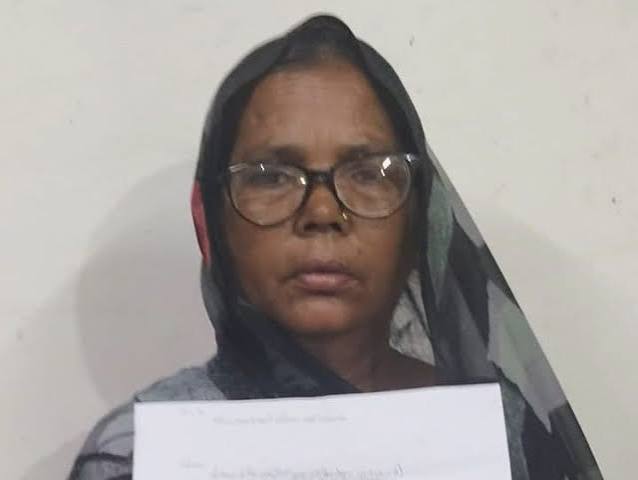
A Dalit woman in the village of Poore Khirodhar, under the Patti police station area, has alleged that she received caste-related abuse and death threats for demanding her son’s wages. The woman has filed a complaint with the Patti police. According to the complainant, Murti Devi, her son, Shivam, alias Chikki, worked as a daily wage laborer for a man in the village. When Shivam went to demand his wages, he was refused payment. It is alleged that during this time, Shivam was subjected to caste-related abuse, abuse, and threats of assault and death. Murti Devi has demanded that the police take cognizance of the matter, register a case against the accused, and take necessary legal action. She has also requested that the police ensure the safety of her and her son’s lives and property. In this regard, Station House Officer (SI) Vijay Yadav stated that he has received the application. The matter is being investigated, and further action will be taken based on the investigation. Amar Jeet Sharma | Patti, Pratapgarh Courtesy: Hindi News
Valmiki youth files FIR against Rahul Gandhi over Kharge remark:BJP eyes Dalit vote base; how the community became politically important
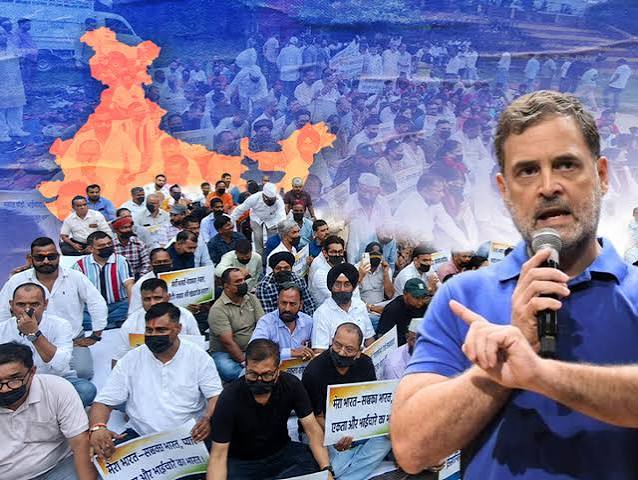
An FIR has been registered against Rahul Gandhi. It was filed on the complaint of Amit Kumar, a Scheduled Caste youth. Congress is opposing the FIR and has accused the BJP of targeting Gandhi. The fight has now moved beyond Haldwani. In Haryana too, Congress has accused the BJP of using Dalit politics to strengthen its support among Dalit communities. Why does caste still shape Indian politics nearly 80 years after Independence? And is the BJP trying to win the Dalit vote once seen as a Congress stronghold? Let’s explore … What is the Rahul Gandhi controversy about? The controversy began after Congress president Mallikarjun Kharge addressed a rally in Haldwani, Uttarakhand. The rally was held at Ramlila Maidan on 8 August. Two days later, a group performed a shuddhikaran havan, or purification ritual, at the same ground. Congress said the ritual targeted Kharge’s Dalit identity. The organisers denied this. They said the ritual was only to clean the venue. Kharge raised the issue in the Rajya Sabha on 13 August. He said he had spoken about public problems at the rally. He also said he had never asked for help by identifying himself as SC or Dalit. But he said being subjected to untouchability was humiliating. BJP president JP Nadda distanced the party from the incident. He said the BJP did not support such activities. The issue became bigger on 29 August Rahul Gandhi called the purification ritual an example of untouchability. He demanded an FIR under the SC/ST Act. Then came another twist. On 30 August, Uttarakhand Police registered an FIR against Rahul Gandhi. A Valmiki community office bearer Amit Kumar filed the complaint. He alleged that Gandhi had wrongly portrayed members of the Scheduled Caste community who took part in the ritual as caste discriminators. The FIR invokes the SC/ST Act and Sections 196 and 299 of the Bharatiya Nyaya Sanhita. Congress says the incident is a double insult: Kharge was disrespected first, and then Rahul Gandhi was booked for raising the issue. Kamal Nath said the BJP first insulted Dalits by carrying out the ritual and then filed an FIR against Gandhi when he spoke about it. A dispute over a ritual has now become a bigger political fight over caste, dignity and who gets to speak for Dalits. BJP has also been accused of strengthening its Dalit vote bank in Haryana, what is the reality? Haryana is witnessing a new phase of Dalit politics. Since 2014, the BJP has worked to expand its support among non-Jat voters and smaller Dalit communities, especially Balmikis. This strategy has continued under Chief Minister Nayab Singh Saini. This politics brings together three identities: Ambedkarite pride represented by “Jai Bhim”, Balmiki community pride, and a broader Hindu identity symbolised by Lord Ram. Political scientist Sanjay Kumar say the BJP is trying to bring smaller Dalit groups into a wider Hindu political coalition. A recent example was the protests following the killing of 25-year-old Biru Balmiki in Karnal. Demonstrators raised slogans such as “Jai Bhim, Jai Balmiki, Jai Shri Ram”. Reservation has become another battleground. After the Supreme Court’s August 2024 ruling on SC sub-classification, Haryana divided its 20% SC quota into two categories. The move could benefit smaller communities but may weaken larger groups such as Jatavs. The debate is also important in Uttar Pradesh, where parties are trying to win over different Dalit communities. The contest is no longer just over a single “Dalit vote bank”, but over representation and reservation.is no longer just over a single “Dalit vote bank”, but over representation and reservation. Are political parties focusing more on Dalit vote-bank politics again? No. Dalit politics has never gone away. It has been part of Indian politics since before Independence. Every generation has produced new leaders, new movements and new demands. B R Ambedkar himself warned in 1932 that social reform had done little to change the lives of Dalits. As he put it: “Mahatmas have come and gone, but untouchables have remained as untouchables.” After Ambedkar came leaders such as Jagjivan Ram. Later came Kanshi Ram, who founded the Bahujan Samaj Party (BSP) in 1984. His protégé Mayawati turned the BSP into one of India’s most successful Dalit-led political movements. The party reached its peak in 2007, when it won 206 of Uttar Pradesh’s 403 Assembly seats and formed the government on its own. Today, however, the BSP is much weaker. In the 2022 Uttar Pradesh Assembly election, it won only one seat and secured 12.88% of the vote. In the 2024 Lok Sabha election, it failed to win a single seat. Its decline has created space for other parties and new Dalit leaders, including figures such as Chandrashekhar Azad, who won the Nagina Lok Sabha seat in 2024. Political scientist Badri Narayan has studied this shift closely. In his book The Making of the Dalit Public in North India, he argues that Dalit political consciousness grew through grassroots movements, local struggles and everyday experiences, not just through elections. In another book, Republic of Hindutva, he explains how the Sangh Parivar expanded its reach among some Dalit communities through welfare outreach and by incorporating Dalit and OBC icons into a broader Hindu narrative. So political parties are not suddenly discovering Dalit politics. What has changed is the political space around Dalit voters. The party that once dominated much of that space has weakened, and more players are now competing to represent different sections of the Dalit community. The Making of a Dalit Public in North India looks at Dalit political consciousness, participation and mobilisation in northern India, based on extensive village-level fieldwork in eastern Uttar Pradesh. The Making of a Dalit Public in North India looks at Dalit political consciousness, participation and mobilisation in northern India, based on extensive village-level fieldwork in eastern Uttar Pradesh. How have Dalit voting patterns changed across elections? Sanjay Kumar and Vibha Attri analysed Hindu Dalit voting patterns in Lok Sabha elections from 1996 to 2024, using Lokniti-CSDS election studies.
Gujarat Police Firing Case: Father of Dalit Teen Killed in 2012 Dies by Suicide After 14-Year Fight for Justice

A 53-year-old father who had spent nearly 14 years seeking justice for his teenage son, who was killed in the 2012 Thangadh police firing in Gujarat’s Surendranagar district, has died by suicide. Amarshibhai Sumra reportedly jumped in front of the Hapa-Mumbai train near Thangadh and Lakhmanchi during the night. His 16-year-old son, Pankaj Sumra, was among three Dalit youths killed in police firing in Thangadh 14 years ago. Son Was Killed in 2012 Police Firing The incident took place in September 2012 following a clash between members of the Dalit and Bharwad communities during the Tarnetar fair in Thangadh. Police opened fire following the confrontation, killing three Dalit youths — Mehul Rathod, Pankaj Sumra and Prakash Parmar. The police action triggered widespread criticism and questions over whether the firing was justified. Following the incident, the Gujarat government constituted a Special Investigation Team (SIT) to investigate the circumstances surrounding the deaths. The SIT visited Thangadh and inspected the fairground and railway gate. It also reportedly took measurements to determine the location of the firing and recorded the sites on video. Family Says Justice Remained Elusive Despite 14 years having passed, the families of the three youths continue to demand justice. They have alleged that the investigation report has never been made public. Amarshibhai had continued to pursue the matter since his son’s death, seeking accountability for the police firing. Family members said he was particularly distressed on Raksha Bandhan after seeing his daughters grieving over their brother. He later took the extreme step near a memorial dedicated to the three youths. His death has once again brought attention to the long-pending Thangadh firing case and the demand for the SIT report to be made public. Railway Police Begin Investigation Railway police reached the spot after receiving information about Amarshibhai’s death and began an investigation. His death has also raised fresh questions over the status of the 2012 police firing investigation, including why the SIT report has remained undisclosed for so long and when the families of the deceased youths will receive justice. Courtesy : TOP Note: This news is originally published on https:/theobserverpost.com/bha and is used purely for non-profit/non-commercial purposes, especially human rights
“A joyous Dalit is the ultimate threat”: In conversation with Christina Dhanuja, author of Dalit Women and the Fullness of Life

In an interview with Ashikha N for Maktoob, writer and caste-equity strategist Christina Dhanuja discusses her book Dalit Women and the Fullness of Life, challenging reductive representations of Dalit women, the politics of joy and fullness, and the need to centre Dalit authored knowledge in conversations around caste, feminism, and social justice. What does it mean to imagine a full life for Dalit women in a society that has so often reduced their lives to stories of violence, labour, survival and resilience? Christina Dhanuja’s debut book, Dalit Women and the Fullness of Life, takes up this question by turning attention towards the less discussed dimensions of Dalit women’s lives. The book emerges from Dhanuja’s long engagement with questions of caste, gender, faith and justice, including her work as co-founder of the #DalitHistoryMonth project and as a founding member of the Global Campaign for Dalit Women. The book explores resilience, memory and liberation, while imagining what fullness means for Dalit women in a caste-bound world. Blending memoir with political and social analysis, the book explores Dalit women’s desires, contradictions, vulnerabilities, ambitions and joys and not merely as victims to systemic violence. Across ten chapters–-Identity, Movements, Work, Community, Sisterhood, Body, Desire, Trauma, Faith and Joy, the book moves from the political and collective to the intimate and interior. Dhanuja examines caste, gender, work, relationships, the body, faith and desire, gradually building towards her central idea of “fullness”: the right of Dalit women not only to dignity and survival, but to rest, pleasure, love, fragility, freedom and joy. In doing so, the book challenges the impulse to see Dalit women either as victims of oppression or symbols of resilience, making space instead for them to be seen, in Dhanuja’s words, as “wholesome human beings” entitled to the “full spectrum of possibilities that life has to offer.” In an interview with Ashikha N for Maktoob, writer and caste-equity strategist Christina Dhanuja discusses her book Dalit Women and the Fullness of Life, challenging reductive representations of Dalit women, the politics of joy and fullness, and the need to centre Dalit authored knowledge in conversations around caste, feminism, and social justice. Ashikha N: The title of the book itself is striking. What does “fullness of life” mean to you, and why did that phrase become the organizing principle of the book? Christina Dhanuja: Fullness of Life, in the way I see it, and in the way the book articulates it, is essentially the opportunity for Dalit women, at systemic, collective, and individual levels, to experience the full spectrum of possibilities that life has to offer. That needs far more than just symbolic inclusion and tokenistic representation. It is not enough that Dalit women be ‘included’ and ‘represented’ for the sake of having diversity. It is not okay for Dalit women to have only their most urgent priorities met; that is food, clothing, and shelter. Fullness demands a complete reimagination of the social, political, emotional, spiritual, and material realities under which Dalit women live and are expected to endure. It demands a revision of public and academic discourses, which, in turn, determine a host of other things: from policies to organizational dynamics to healthcare practices to how we run movements. Ashikha: The book blends memoir with social analysis. How did you decide on the structure of the book? Did you ever struggle with deciding how much of yourself to reveal? Dhanuja: My political writing has always stemmed from the personal, and, in some instances, the two are quite indistinguishable. At this point, it is more of a habit than a consciously structured process. And I pretty much wrote about everything I wanted to write about. There were a few passages that I edited out, but it was to protect the people I was writing about rather than hide parts of my story. Deciding on the structure of the book was also a pretty straightforward process. I’ve been ruminating on the theme of fullness for a few years now, and I wanted to explore that as a framework for an anti-caste, feminist praxis. So, to talk about the Political (Identity, Movements), the Professional (Work), the Social (Community, Sisterhood), and the Personal (Body, Desire, Trauma, Faith, and Joy) came easily. Ashikha: What were the most difficult narratives to challenge while writing the book? Dhanuja:There are very specific narratives I try to dismantle in each chapter, but generally speaking, this book required that I first peel away layers of existing—and limiting—popular and academic discourses before I could centre Dalit women’s rights to fullness. For example, in the Sisterhood chapter, I had to first critique the hyperfocus on Dalit–savarna relationships before I could discuss sisterhood among and between Dalit women. In the Identity chapter, I had to re-establish what intersectionality is, in the way Crenshaw intended it, and then see how we can apply it to caste contexts. I attribute much of this additional labour to the damage caused by academics, intellectuals, and writers—especially those writing from savarna locations—whose ‘expert views’ have ended up pigeonholing Dalit women Ashikha: What do you think society loses when Dalit women are only seen as symbols of oppression or resilience? Dhanuja: I think it is not just society in general but South Asian society in particular that has somehow ruined what it means to be human. Caste is our biggest fault line. Although my book centers Dalit women and their right to fullness, it also analyses how caste is extremely life-negating for all of us. Take joy, for example. Why should something as simple as joy be rationed based on one’s caste and gender? Or consider how ‘caste minds’ are sustained through so-called preferences in food and love and everything else. Caste societies have already lost so much, with or without Dalit women.. Ashikha: One of the book’s most powerful interventions is the insistence that Dalit women deserve to be understood beyond suffering. Why do you think joy remains such a radical subject when discussing Dalit lives? Dhanuja: I wonder if Dalit joy is