
SC categorisation a conspiracy to divide dalits: Chinta Mohan
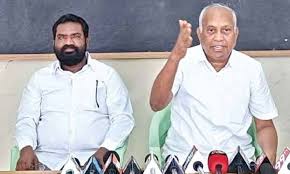
HIGHLIGHTS Former union minister and senior Congress party leader Chinta Mohan called the SC categorisation ordinance issued by the Government of Andhra Pradesh a conspiracy to divide dalits, at a press meet in Ongole on Saturday. Hyderabad nightlife Ongole: Former union minister and senior Congress party leader Chinta Mohan called the SC categorisation ordinance issued by the Government of Andhra Pradesh a conspiracy to divide dalits, at a press meet in Ongole on Saturday. Speaking to the press, Mohan said that the 11 years of Narendra Modi’s rule have disturbed the country. He said that though the prime minister is making a foreign tour once a week, he failed even to conduct a press meet to explain his achievements. Hyderabad nightlife He observed that there is economic disparity even after 75 years of independence, as the financially strong sections are getting stronger and the weaker are getting weaker day by day. He said that hunger, despair, and unemployment are dominating India, and the ruling party is calling it Viksit Bharat. He said that the Muslims, the poor, and all sections of society are worried and coming onto the roads in protest against the decisions by the union government. He said that SC, STs, who are about 25 per cent of the population in the country, are receiving only 1 per cent of the bank loans, while BCs, who are about 50 per cent population, are getting less than 2 percent of the loans. But, he said that Marwaris and Gujarathis are receiving the bank loans, and defaulting on them. Mohan said that the NDA parties want to divide dalits as they found out that dalits are nearer to achieving political power. He demanded categorisation in the contracts, mines, bank loans, social justice, etc., but not in the posts of nurses or constable jobs. The governments, he said, are distributing thousands of acres of land to corporate companies for a cheap price, but are not even giving housing plots of two cents to working journalists and others. He said that the Christian community still believes that the death of Pastor Praveen is due to murder, and the government failed to provide enough proof that it was an accident. Courtesy: The Hans India Note: This news is originally published on https://www.thehansindia.com and is for use by the non-military/non-commercial community, especially those in the human rights sector.
Why Dalit conversion to Buddhism hasn’t taken off, and how it still can
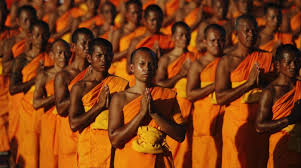
Conversion is framed as a betrayal of the nation, and Dalits who convert are labelled as traitors, tools of foreign influence, or anti-Hindu. Buddhism conversion event Consider the story of Sunita, a Dalit woman from Hathras, Uttar Pradesh. In 2020, she and her family, along with others, converted to Buddhism after facing caste-based violence from dominant-caste neighbours. They stopped being invited to village functions, lost access to the community well, and were told to stay out of the village temple permanently. “We thought we were freeing ourselves,” she said. “Instead, we became invisible.” Sunita’s experience reflects the silent resistance that confronts many who dare to leave the Hindu fold. A mass conversion event in the presence of Aam Aadmi Party leader Rajendra Pal Gautam in October 2022 snowballed into political controversy over the 22 vows, which included: “I shall have no faith in Brahma, Vishnu, and Maheshwara, nor shall I worship them. I shall have no faith in Rama and Krishna, who are believed to be the incarnation of God, nor shall I worship them.” Religious conversion is a personal struggle for freedom, and freedom comes at a cost. “I was born a Hindu, but I will not die a Hindu,” Dr BR Ambedkar once famously said. And he did not renege on his words. On 14 October 1956, Ambedkar, architect of the Indian Constitution and champion of Dalit rights, stood before a crowd of over 5 lakh Dalits in Nagpur and renounced Hinduism. In its place, he embraced Buddhism, not merely as a spiritual choice, but as a political declaration of freedom. The moment was electric. It felt like the beginning of a revolution that would unshackle millions from the age-old chains of caste. Yet, over seventy years later, the wave never became a flood. According to the 2011 Census, Buddhists account for just 0.7 per cent of India’s population. Of those, nearly 90 per cent are Ambedkarite Dalits, mostly concentrated in Maharashtra. So, why did a movement expected to liberate tens of millions stall? The answers lie in a complex web of politics, economics, culture, and identity. These can be boiled down to eight points. Leadership vacuum after Ambedkar Ambedkar’s death just weeks after his historic conversion was a blow to the fledgling movement. Without his moral and intellectual leadership, the conversion wave lost direction. Dalit politics splintered, focusing more on electoral gains and caste assertion within Hinduism than on religious transformation. While the Bahujan Samaj Party did raise Dalit consciousness, it did not champion Buddhism with the same fervour. Dalit Panther started off strong but soon died out, and the Republican Party of India is also fragmented into groups. Worse, no national leader of Ambedkar’s stature has emerged to carry forward the flame of Navayana Buddhism — his reinterpretation of Buddhism as a socially engaged, rational path for the oppressed. Economic insecurity and fear of boycott Dalits remain economically vulnerable. According to the National Sample Survey Office (NSSO), Dalits have significantly lower land ownership, literacy rates, and access to capital. For many, especially in rural India, dominant caste networks control jobs, credit, and basic survival. Conversion often means social boycott, job loss, or worse—violence. There are tons of stories about Dalits being assaulted just for being assertive—for riding a horse, keeping a “Jai Bhim” ringtone, keeping a moustache etc. If there’s no violence, there’s an all-around social boycott, against which even the authorities are powerless. It’s a high-stakes gamble for people who have little to begin with. Hinduism’s absorptive power Hinduism is remarkably adept at absorbing dissent. Over the decades, it has co-opted Buddha as an avatar of Vishnu, repositioned Ambedkar as a national hero (often stripped of his anti-caste radicalism), and incorporated Dalit deities into its pantheon. Most foot soldiers of the BJP are from marginalised communities, while the Baniya–Brahmin caste groups play the role of office bearers. Tell me — how many Brahmins demolished Babri with their own hands? How many Brahmins were directly responsible for the killings in the 2002 riots? It was all carried out by foot soldiers like Babu Bajrangi, mostly from OBC backgrounds. I have a personal anecdote to share here. My nephew heads the Shiv Sena (Shinde faction) office in Goregaon West, a suburb of Mumbai. He comes from a not-so-well-off neo-Buddhist background, but is a supporter of the Hindutva agenda. He’s been to this year’s Maha Kumbh, campaigned for the party during the 2024 state elections, and also took out a bike rally during the inauguration of the Ram Mandir at Ayodhya, supporting his larger Hindu brethren. He’s clearly doing it for political clout and to rise up the ranks. But probably the rest of the cadre see him as a workhorse, or someone they can bank on to get the Dalit votes. This leaves him in a precarious position of being “neither here, nor there” when it comes to an openly Hindu nationalist party like the Shiv Sena. And he’s not the only one. I’ve been to Dalit homes that have a big garlanded picture of Ambedkar in the living room, and Hindu gods in the kitchen. This dilution has further taken away the essence of Ambedkar’s progressive Buddhism as an answer to years of oppression. Meanwhile, reformist Hindu sects like Arya Samaj and Ramakrishna Mission offer a supposedly caste-neutral version of the religion that keeps people within the Hindu cultural fold. This co-option blunts the revolutionary edge of conversion. Lack of Buddhist infrastructure Unlike Hinduism, Buddhism in India lacks a robust ecosystem of temples, rituals, clergy, and educational institutions. Outside of Maharashtra, it’s often invisible. Dalit converts find themselves without spiritual guidance or cultural support. An example of this is the ongoing Mahabodhi temple protests, where the temple management is exclusively in Brahmin hands. Many countries with large Buddhist populations, like China, Japan, and Vietnam, have built temples in Bodh Gaya, but there’s little political support from them because their understanding of Buddhism is different from ours. Buddhism in India is more of socio-political religion, while
Dalits upset after being denied meeting with CM
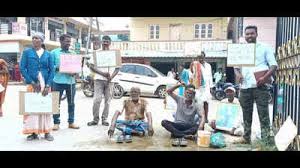
Mysuru: Dalit activists expressed disappointment over CM Siddaramaiah’s visit to Periyapatna on Saturday evening, claiming they were denied the chance to present their concerns. They decided to continue their three-year struggle for land rights. Dalit representative Doddaiah, who alongside CS Jagadish smeared themselves with cow dung slurry on Friday, stated they campaigned for three years demanding land rights for Dalits. “Dalits in the taluk are facing lot of problems especially over their land rights. Even after three years of struggle, the state govt and Mysuru district administration didn’t give us justice. So, on Friday we poured cow dung slurry on ourselves as a mark of protest. After the incident, police assured that they would facilitate a meeting with the chief minister. But they cheated us,” alleged Doddaiah. He further stated, “We were asked to stand near the gate. We were assured that we would be allowed to talk to the chief minister. But the CM did not stop. We were humiliated. We will continue our struggle till we get justice,” he affirmed. Courtesy: Times of India Note: This news is originally published on https://timesofindia.indiatimes.com and is for use by the non-military/non-commercial community, especially those in the human rights sector.
Why Dalit conversion to Buddhism hasn’t taken off, and how it still can
Conversion is framed as a betrayal of the nation, and Dalits who convert are labelled as traitors, tools of foreign influence, or anti-Hindu. Consider the story of Sunita, a Dalit woman from Hathras, Uttar Pradesh. In 2020, she and her family, along with others, converted to Buddhism after facing caste-based violence from dominant-caste neighbours. They stopped being invited to village functions, lost access to the community well, and were told to stay out of the village temple permanently. “We thought we were freeing ourselves,” she said. “Instead, we became invisible.” Sunita’s experience reflects the silent resistance that confronts many who dare to leave the Hindu fold. A mass conversion event in the presence of Aam Aadmi Party leader Rajendra Pal Gautam in October 2022 snowballed into political controversy over the 22 vows, which included: “I shall have no faith in Brahma, Vishnu, and Maheshwara, nor shall I worship them. I shall have no faith in Rama and Krishna, who are believed to be the incarnation of God, nor shall I worship them.” Religious conversion is a personal struggle for freedom, and freedom comes at a cost. “I was born a Hindu, but I will not die a Hindu,” Dr BR Ambedkar once famously said. And he did not renege on his words. On 14 October 1956, Ambedkar, architect of the Indian Constitution and champion of Dalit rights, stood before a crowd of over 5 lakh Dalits in Nagpur and renounced Hinduism. In its place, he embraced Buddhism, not merely as a spiritual choice, but as a political declaration of freedom. The moment was electric. It felt like the beginning of a revolution that would unshackle millions from the age-old chains of caste. Yet, over seventy years later, the wave never became a flood. According to the 2011 Census, Buddhists account for just 0.7 per cent of India’s population. Of those, nearly 90 per cent are Ambedkarite Dalits, mostly concentrated in Maharashtra. So, why did a movement expected to liberate tens of millions stall? The answers lie in a complex web of politics, economics, culture, and identity. These can be boiled down to eight points. Leadership vacuum after Ambedkar Ambedkar’s death just weeks after his historic conversion was a blow to the fledgling movement. Without his moral and intellectual leadership, the conversion wave lost direction. Dalit politics splintered, focusing more on electoral gains and caste assertion within Hinduism than on religious transformation. While the Bahujan Samaj Party did raise Dalit consciousness, it did not champion Buddhism with the same fervour. Dalit Panther started off strong but soon died out, and the Republican Party of India is also fragmented into groups. Worse, no national leader of Ambedkar’s stature has emerged to carry forward the flame of Navayana Buddhism — his reinterpretation of Buddhism as a socially engaged, rational path for the oppressed. Economic insecurity and fear of boycott Dalits remain economically vulnerable. According to the National Sample Survey Office (NSSO), Dalits have significantly lower land ownership, literacy rates, and access to capital. For many, especially in rural India, dominant caste networks control jobs, credit, and basic survival. Conversion often means social boycott, job loss, or worse—violence. There are tons of stories about Dalits being assaulted just for being assertive—for riding a horse, keeping a “Jai Bhim” ringtone, keeping a moustache etc. If there’s no violence, there’s an all-around social boycott, against which even the authorities are powerless. It’s a high-stakes gamble for people who have little to begin with. Hinduism’s absorptive power Hinduism is remarkably adept at absorbing dissent. Over the decades, it has co-opted Buddha as an avatar of Vishnu, repositioned Ambedkar as a national hero (often stripped of his anti-caste radicalism), and incorporated Dalit deities into its pantheon. Most foot soldiers of the BJP are from marginalised communities, while the Baniya–Brahmin caste groups play the role of office bearers. Tell me — how many Brahmins demolished Babri with their own hands? How many Brahmins were directly responsible for the killings in the 2002 riots? It was all carried out by foot soldiers like Babu Bajrangi, mostly from OBC backgrounds. I have a personal anecdote to share here. My nephew heads the Shiv Sena (Shinde faction) office in Goregaon West, a suburb of Mumbai. He comes from a not-so-well-off neo-Buddhist background, but is a supporter of the Hindutva agenda. He’s been to this year’s Maha Kumbh, campaigned for the party during the 2024 state elections, and also took out a bike rally during the inauguration of the Ram Mandir at Ayodhya, supporting his larger Hindu brethren. He’s clearly doing it for political clout and to rise up the ranks. But probably the rest of the cadre see him as a workhorse, or someone they can bank on to get the Dalit votes. This leaves him in a precarious position of being “neither here, nor there” when it comes to an openly Hindu nationalist party like the Shiv Sena. And he’s not the only one. I’ve been to Dalit homes that have a big garlanded picture of Ambedkar in the living room, and Hindu gods in the kitchen. This dilution has further taken away the essence of Ambedkar’s progressive Buddhism as an answer to years of oppression. Meanwhile, reformist Hindu sects like Arya Samaj and Ramakrishna Mission offer a supposedly caste-neutral version of the religion that keeps people within the Hindu cultural fold. This co-option blunts the revolutionary edge of conversion. Lack of Buddhist infrastructure Unlike Hinduism, Buddhism in India lacks a robust ecosystem of temples, rituals, clergy, and educational institutions. Outside of Maharashtra, it’s often invisible. Dalit converts find themselves without spiritual guidance or cultural support. An example of this is the ongoing Mahabodhi temple protests, where the temple management is exclusively in Brahmin hands. Many countries with large Buddhist populations, like China, Japan, and Vietnam, have built temples in Bodh Gaya, but there’s little political support from them because their understanding of Buddhism is different from ours. Buddhism in India is more of socio-political religion, while in many East
Rising against injustice as one: Inside India’s largest men’s rights movement pushing for gender-neutral laws
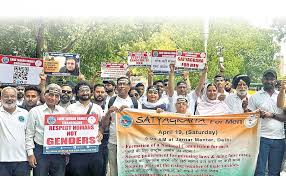
Falsely accused of seeking dowry from his wife 15 years ago, 42-year-old Rohit Dogra is now advocating ‘equality before law’ as he flags misuse and pushes for reforms in gender laws, Harpreet Bajwa writes CHANDIGARH: The death of 34-year-old techie Atul Subhash by suicide a few months back caused a massive outrage in India, as a detailed suicide note and video left behind by him accused his estranged wife, her mother and brother of sustained harassment and torture. It also sparked a conversation about the misuse of dowry law in the country and renewed calls for the reforms in gender-based laws. But not many know that the case of Subhash was not an isolated incident. Meet 42-year-old Rohit Dogra, who heads the Chandigarh Chapter of the Save Indian Family Movement (SIFM), the largest men’s rights organisation in India. Founded in 2005, it has been pushing for reforms in the dowry legislation, flagging the misuse of gender-based laws. Supported by 40 non-government organisations (NGOs), the SIFM has also called for the setting up of a national commission for men and a relook at the alimony regulations and child custody policies. Ask Dogra why he chose to be associated with the organisation, and pat comes his reply: “Back in 2010, my then in-laws filed a dowry complaint against me. A case was subsequently registered against my mother and me under Sections 498-A and 406 of the IPC.” He then fought a long legal battle to finally be acquitted in 2018. But Dogra went a step further. After being cleared of the charge, he got a case against his then wife and in-laws in Pathankot in 2020 for forgery and conspiracy. The couple finally got divorced in 2022. Dogra, who has been associated with the organisation for the past 15 years, recalls, “It was in 2010 that I called up the SIFM helpline number and got in touch with members of the local chapter. They offered me not just legal advice but also moral support.” Now, he is helping other men in distress. “In 2016, we registered another NGO, Save Indian Family-Chandigarh, under the umbrella of the SIFM, and I took over the reins of the Chandigarh Chapter as its president,” he adds. Dogra, who holds a postgraduate degree in MBA, works with a private company. But he still devotes about two to three hours every day to helping men ensnared in such fake cases or facing harassment. Other than receiving calls on the SIFM local helpline number, he also organises a weekly support meeting every Sunday. Discussing how the movement to save men, he shares, “We have some 2,500 to 3,000 members across the country. Out of them, approximately 400–500 are from Punjab, 200–300 from the Chandigarh tri-city and another 150–200 from Haryana. Over 40-odd NGOs across the country are associated with us.” Delving into the services the SIFM offers, Dogra tells us: “We offer the biggest free helpline number for men in India (08882-498-498). It is a first of its kind. We receive 4,000 to 5,000 calls every month from across the country about domestic violence against men, the misuse of dowry or rape laws, workplace harassment and depression. We are a self-supported and -funded group, and we organise free weekly meetings in 40 places on Saturdays and Sundays.” Harking back to how the movement began, Dogra mentions that the SIFM was launched in 2005 in view of how men were being targeted through gender-based laws. “Then, in 2014, we started a free helpline,” he adds. Just a few days ago, on April 19, the SIFM organised a gathering, Satyagraha for Men, at the Jantar Mantar in Delhi to push for gender-neutral laws, stricter penalties for misuse of gender laws and the establishment of a national commission for men. The purpose of this commission, according to the SIFM, should be to address the mental health issues men face, tackle the growing incidence of prostate cancer, launch a separate helpline for men, coordinate with the government to make laws gender-neutral and offer support to men in general. Besides, Dogra feels, the body can work with the authorities to introduce schemes for men in rural areas and help amend or abrogate Article 15(3) of the Constitution. Opening up about the recent Jantar Mantar gathering, Dogra says, “The protest drew men and women from across India.” Renowned men’s rights activists, legal experts and social workers from across the country addressed the gathering and raised concerns long ignored by successive governments. Wasif Ali, another member of the SIFM, says, “This satyagraha was not just a protest; it was about demanding constitutional equality.” Dogra ruefully points out, “India has commissions for women, children, animals, forests and everything else, but there is no national-level statutory body for men.” He concludes, “A national commission for men is not just a demand. It is the need of the hour.” Courtesy: New Indian Express Note: This news is originally published on https://www.newindianexpress.com/ and is for use by the non-military/non-commercial community, especially those in the human rights sector.
Nine Houses Gutted in Fire in Dalit Locality in Pratapgarh
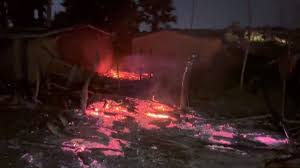
Officials say cause of fire still unknown; local administration assures relief and damage assessment A fire razed nine homes and killed livestock in Pratapgarh’s Antu area, prompting swift action from authorities. Nine houses were gutted in a fire that broke out on Friday evening in a Dalit locality here, officials said.”The cause of the fire is still unknown. However, with the help of the fire brigade and villagers, we were able to bring the flames under control after considerable effort,” Anant Pal Singh, Station House Officer (SHO) of Antu police station said. “Nine houses belonging to Rakesh Saroj, Ravindra Saroj, Sanjay Saroj, Govind Saroj, Motilal Saroj, Pradeep Saroj, Dharmdev Saroj, Radheshyam Saroj and Ram Samujh were completely gutted in the fire,” he said. According to officials, in addition to household items, several goats also perished in the fire. Upon receiving information about the incident, the Sub-Divisional Magistrate (SDM) of Sadar, Nancy Singh, visited the site along with Naib Tehsildar Dinesh Chandra Tiwari and revenue officer Anil. “I have instructed the revenue officer to conduct a thorough assessment of the damages and directed the local ration dealer to immediately provide food and essential supplies to the affected families,” SDM Nancy Singh said. “The administration is committed to extending all possible support to the victims of this unfortunate incident,” she added. Courtesy: Deccan Chronicle Note: This news is originally published on https://www.deccanchronicle.com/ and is for use by the non-military/non-commercial community, especially those in the human rights sector. Add Your Heading Text Here
Ostracized and Deprived: 70 Dalit Families in Haryana Village Pay Heavy Price for Not Supporting Upper Caste Candidate in 2024 Assembly Elections
For four months, the 70 Valmiki families have lived in inhumane conditions. Children, the elderly, and women bear the brunt of this boycott. With livelihoods snatched away, many families face economic ruin. The eviction notices have compounded their woes. Ostracized and Deprived: 70 Dalit Families in Haryana Village Pay Heavy Price for Not Supporting Upper Caste Candidate in 2024 Assembly Elections Hisar- In Madanhedi village of Haryana’s Hisar district, under Hansi tehsil, the barber refuses to cut hair, the milkman won’t deliver milk, the water supplier denies water, the grocer withholds essentials, and the flour mill owner refuses to grind wheat. This is not a fictional tale but the grim reality for 70 Dalit families of the Valmiki community, who have been enduring a brutal social boycott for the past four months in this Jat-dominated village. With around 1,500 Jat households dwarfing the 70-80 Valmiki homes, the “crime” of these families was exercising their democratic right during the September 2024 Haryana Assembly elections by voting for a candidate of their choice, rather than the one backed by the Jat community. Stripped of access to basic necessities like milk, groceries, water, and even employment, these families are forced to travel 6-7 kilometers to nearby towns like Hansi, Maham, or Saman to meet their daily needs. This is a story of caste-based discrimination, the tyranny of khap panchayats, and the relentless pressure tactics aimed at forcing these families to abandon their legal fight. Dalit rights activist and lawyer Rajat Kalsan told The Mooknayak, “The conflict stems from the Haryana Assembly elections in September 2024, when Jessi Pethwal was contesting from Narnaund. Background of the issue The roots of this conflict trace back to the Haryana Assembly elections in September 2024. Madanhedi falls under the Narnaund constituency, where Jaswinder, alias Jessi Pethwal, was a candidate. Having married a Jat girl from the village, Jessi was considered the “son-in-law” of Madanhedi, and the Jat community pressured everyone to vote for him. However, Ravindra, son of Rishiraj, a young man from the Valmiki community, defied this dictate, declaring he would vote for a candidate of his choice. Infuriated by his refusal, Mohan son of Omprakash, Ajit alias Ajay son of Ajmer, Sajjan, Rambhagat alias Kuku son of Omprakash, and Ajmer’s wife Santosh attacked Ravindra with sticks, clubs, and an axe. Ravindra filed a case at Bass police station, registered as FIR No. 275/24, under sections 115(2), 238(C), 3(5) of the Indian Penal Code and Section 3 of the Scheduled Castes and Scheduled Tribes (Prevention of Atrocities) Act. The case is currently under trial in the court of Shri G.D. Mittal in Hisar, with witness testimonies scheduled for the next hearing. The filing of the FIR sparked outrage among the Jat community. About 20 days later, in January 2025, a khap panchayat was convened at the village’s new chaupal. Attended by Sarpanch representative Pradeep Poonia, Mohan son of Omprakash, Sajjan son of Chhaju, Sajjan son of Uday, Mandeep Mor son of Deshraj, Narendra alias Bulli son of Dhupa, Ankit son of Anand, and other Jat community members, the panchayat issued a decree. Mohan, Pradeep Poonia, and Sandeep Mor announced that if the Valmiki community did not withdraw Ravindra’s case, they would face a social boycott. The entire Jat community united to enforce this, cutting off the 70 Valmiki families’ access to basic services. Local shopkeepers stopped selling groceries. Sunil, who runs a grocery store at the bus stand, refused to sell to Ravindra, Naveen son of Chanda, and Sagar son of Kuldeep, among others. Sunil’s wife cited the boycott as the reason, an exchange recorded and submitted to the police as evidence. Ajmer, a milkman from neighboring Singhwa village who supplied milk to the Valmiki locality, stopped deliveries at the behest of the named accused. Jitendra, the village’s water camper supplier, also ceased providing water to the Dalit families. Haribishan, who operates a flour mill, refused to grind wheat for Ajay son of Madanlal and other Valmiki community members. The village barber and doctor shut their services to these families. As a result, the families must travel to distant towns like Hansi, Maham, or Saman for daily necessities, with water—a basic need—requiring a 6-7 kilometer trip to Saman village. After four months of living in fear and under pressure, the Valmiki community found the courage to speak out.On April 23, 2025, FIR No. 73 was lodged at Bass police station under Section 3(1)(zc) of the Scheduled Castes and Scheduled Tribes (Prevention of Atrocities) Act, 1989, which criminalizes social boycotts. The boycott’s impact extends beyond basic services to livelihoods. Balwan Poonia refused painting work to Narendra, Abhimanyu, and Pawan. Surendra and Bhup Singh, sons of Hoshiar Singh, sacked Mahipal son of Jagdish from masonry work. For these families, the boycott has become not just a social ostracism but an economic crisis. To intensify pressure, the named accused allegedly coerced some Valmiki community members into signing or thumb-printing blank papers under threats. Narendra alias Bulli used these to draft a fake compromise document to force the withdrawal of the FIR. Yet, the Dalit families stood firm, refusing to back down, which only tightened the boycott’s grip. As the case approached the evidence stage in court, the Jat community and panchayat escalated their tactics. The Valmiki families were served notices for “encroaching” on panchayat land, ordering them to vacate their homes. Rajat Kalsan notes that these families have lived in these homes for over 100 years. Jat and other community members also reside on panchayat land with electricity, water, and paved roads, yet only the Dalit families were targeted with eviction notices to coerce them into withdrawing the case. After four months of living in fear and under pressure, the Valmiki community found the courage to speak out. On April 11, 2025, Hawa Singh son of Shishuram, Jaipal son of Jaikumar, Jagbir son of Tekram, Dharmbir son of Shobharam, Seva son of Hargyan, Ravindra son of Rishiraj, Atma son of Umed, Jagdish son of Tekram, and Madan son
UP: Dalit woman crushed to death in Bulandshahr, five injured after SUV attack by upper-caste Hindu men
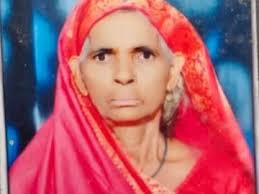
A 62-year-old Dalit woman, Sheela Devi, was crushed to death and five others seriously injured after a group of upper-caste Hindu men allegedly ran them over multiple times with an SUV in a targeted attack late Monday night in Uttar Pradesh’s Bulandshahr. The attack followed a confrontation over rash driving and was preceded by casteist slurs, according to eyewitnesses and police reports. The incident took place in Sunehra village of Bulandshahr district, where Sheela Devi was sitting outside her home when a Mahindra Thar SUV approached at high speed. A local man, Bhupendra, reportedly shouted at the driver, “Brother, drive slowly,” prompting the occupants — identified as Tapesh Singh and his son Priyanshu Singh — to exit the vehicle and hurl caste-based abuses at the residents. According to the complaint filed with the police, the father-son duo left the scene only to return about 10 minutes later with four more men — all armed. Without warning, the group allegedly drove the SUV directly into the people gathered outside their homes, then reversed and ran over them again multiple times. “The vehicle was driven forward and backward several times with the intention of killing them,” stated the complainant. Sheela Devi died on the spot. Five others, including both men and women from the same Dalit neighborhood, were rushed to the district hospital in Bulandshahr with serious injuries. The brutal nature of the assault — captured in disturbing videos circulating widely on social media — has sparked outrage across the region. The videos show the SUV mowing down people as bystanders scream, followed by the assailants fleeing the scene. Bulandshahr City Superintendent of Police Shanker Prasad confirmed, “We have registered an FIR against six men — Tapesh Kumar, his son Priyanshu, and their associates Varun Kumar, Atul Singh, Krishna Singh, and Manav Kumar — under BNS sections 103 (murder), 109 (attempt to murder), 351 (criminal intimidation), 191 (rioting), and relevant sections of the SC/ST Act. A dedicated team has been constituted to apprehend the accused, who are currently absconding.” Courtesy : Maktoob Media Note: This news was originally published on https://maktoobmedia.com/30 and has been used purely for non-profit/non-commercial purposes, especially human rights.
Once again a Dalit became the target: For Rs 6000, the goons tied him to a tree and beat him, blood came out of ears, nose and mouth, he died a painful death
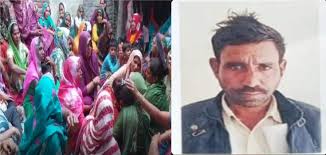
Rampur (Ravi Shankar): In Kundeshwari of Kotwali Tanda area of Rampur in UP, a Dalit laborer was tied to a tree and beaten so badly that he died during treatment over a transaction of Rs 6000. The incident took place on 16 April and the laborer died on 23 April during treatment. On the information of the brother of the victim laborer, the police had registered an FIR of assault due to money transaction. Which has been converted into sections after the death of the laborer. At the same time, the police have arrested two people in this case. Gave a painful death for Rs 6000 Kundeshwari village resident laborer Prempal had borrowed only Rs 6000 from someone, due to the dispute of this, some goons reached Prempal’s house and forcibly made him sit on a motorcycle and took him with them. They took him to the jungle and beat him brutally. Then they threw him in the jungle and left. On receiving the information, the family members admitted him to the hospital for treatment. Where due to his critical condition, he was referred to the higher center Delhi Safdarjung. Where he died on Wednesday. ‘He died the same way he killed our father’ The deceased laborer’s daughter Tanu told that our father has died. He had gone to work. When the gun was fired first, our father got scared and came back home. So he came to call him. My father did not die of fear, he came to call him on the 16th and my father was not going. Later my father said that you go, I am coming on my motorcycle. Then they made him park the motorcycle and forcibly made him sit with them and took him away. The deceased’s daughter further told that two people had taken father away, two people were present at the spot itself. Those people had killed father by hanging him on a tree. Papa was thrown in the bushes on the road. My father was bleeding from his ears, nose and mouth. We want justice and he should be hanged as soon as possible. He should die the way he killed our father. Police statement Regarding this case, Additional Superintendent of Police Atul Kumar Srivastava said that on 16.4.2025, a person named Jagdish informed that his brother Prempal was taken by Imran and his nephew on a motorcycle to drive a tractor. On the way, Prempal was beaten up for Rs 6000. He suffered serious injuries. On the basis of the information, a case was immediately registered at Tanda police station and the victim was sent to the hospital for treatment. From where he was referred to Safdarjung Delhi for further treatment. Prempal died during treatment. Courtesy: Hindi News
Uttar Pradesh: Four arrested for running over Dalit woman for objecting to rash driving

Bulandshahr: The Uttar Pradesh police have arrested four men for allegedly running their SUV over a group of Dalits, who objected to their rash driving in Bulandshahr. A woman, Sheela Devi, was killed and four others were injured in the incident, which took place this week, The Indian Express reported on Friday. According to the FIR, the Dalit family was resting outside their home when a group of men from the Thakur community drove past them. “There was no electricity that night and we had laid out charpai right outside the house. It’s not as if they were in the middle of the road,” Bhupendra Kumar, Sheela Devi’s son, was quoted as saying by TIE. Kumar recalled that he, his mother and three relatives were sitting outside their home when a car allegedly rushed past them very close. He said that he had asked the driver to drive slower. “The car barely missed our feet and a few of our animals that were on the road,” he added. The car stopped and two men who were in the vehicle allegedly made casteist remarks at Kumar and then left from the spot. According to the FIR, six armed men returned in an SUV and ran over the people gathered in the area. “They drove at full-speed; the car stopped after running over my mother and then it reversed in high-speed over her again,” alleged Bhupendra. While Sheela Devi died on the spot, Bhupendra and his relatives were relatively unharmed and were treated in the district hospital, added the report. Police have arrested Priyanshu Thakur, Atul Thakur, Manav Thakur, Krishna Thakur, and the car’s driver. Three suspects — Tapesh Thakur, Varun Singh and Ashu — remain absconding. Courtesy : Vartha Bharati Note: This news was originally published on https://varthabharati.com/30 and has been used purely for non-profit/non-commercial purposes, especially human rights.