
Internal reservation: Dalit right and left groups start awareness campaigns on choice of nomenclature
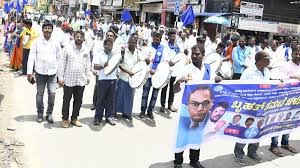
Dalit left and Dalit right groups are anxiously reaching out to their communities to ensure that their populations are enumerated accurately. File image for representation. Karnataka has been having intense discussions on the population data of castes and sub-castes after the contents of the Socio-Economic and Educational Survey (caste census) report was accepted by the State Cabinet. Simultaneously, several developments are unfolding, though more quietly, around another survey to map the Scheduled Castes (SCs) in the State and their socio-economic and education levels, which is set to get under way on May 5. In the run-up to it, Dalit ‘left’ and Dalit ‘right’ groups are anxiously reaching out to their communities to ensure that their populations are enumerated accurately. The numbers are crucial as they are set to determine the internal reservation for the caste groups within the larger reservation matrix of 24% for the SCs in Karnataka. Karnataka to hold fresh survey of Scheduled Castes within 60 days to collect empirical data for internal reservation Part of panel’s work The caste census, conducted in 2015, has pegged the total SC population in Karnataka to be 1.09 crore or about 18.2% of the total population. The survey to identify SC households and their sub-castes is part of the work of the commission headed by retired judge H.N. Nagamohan Das that has been asked by the government to recommend internal reservation. “We are urging all the castes and sub-castes in the larger Dalit right community to use the original name of their castes/sub-castes during enumeration and not use nomenclatures of Adi Karnataka (AK), Adi Dravida (AD) or Adi Andhra (AA). Teams have been formed and awareness camps are being held in all districts across Karnataka,” said D. Chandrashekaraiah, an office-bearer in the Karnataka Chalavadi Mahasabha, representing the Dalit ‘right’ group. Why the survey is being conducted The survey results will help H.N. Nagmohan Das Commission to secure empirical data and recommend internal reservation An attempt by BJP to provide internal reservation in 2022 based on recommendation of 2012 A.J. Sadashiva Commission had not fructified The Dalit left group accuse Dalit right group of cornering the reservation benefits. The Ddalit left group, based on figure arrived at by the 2012 A.J Sadashiva Commission report, claim their number to be higher than the Dalit right, which is contested. There is confusion about the usage of Adi Karnataka, Adi Dravida and Adi Andhra — pre-independence nomenclatures — coined to bring together group of castes. The caste census, conducted in 2015, has pegged the total SC population in Karnataka to be 1.09 crore or about 18.2% of the total population. The survey to identify SC households and their sub-castes is part of the work of the commission headed by retired judge H.N. Nagamohan Das that has been asked by the government to recommend internal reservation. “We are urging all the castes and sub-castes in the larger Dalit right community to use the original name of their castes/sub-castes during enumeration and not use nomenclatures of Adi Karnataka (AK), Adi Dravida (AD) or Adi Andhra (AA). Teams have been formed and awareness camps are being held in all districts across Karnataka,” said D. Chandrashekaraiah, an office-bearer in the Karnataka Chalavadi Mahasabha, representing the Dalit ‘right’ group. The issue over the slicing up of 24% reservation following the Supreme Court’s order on internal reservation comes from the fact that both Dalit ‘right’ and Dalit ‘left’ community members have AK certificates, depending on the regions. Both communities are also found to be using nomenclatures of AA, AD, and AK. The chaos of Karnataka’s caste survey Regionals variations If in Tumakuru, Ballari, Shivamogga, Davangere, Chitradurga, KGF, and Udupi, the Dalit ‘right’ identify themselves as AD and Dalit ‘left’ are identified as AK, in Chamarajanagar, Mysuru, Kodagu, Hassan, Chikkamagaluru, Mandya, Ramanagara, Kolar, Bengaluru Urban, and Bengaluru Rural districts, Dalit ‘right’ is identified as AK while Dalit ‘left’ is identified by the name Madiga. Those identifying themselves as AA are in Bengaluru Urban and Bengaluru Rural, Kolar and Chickballapur region. “Handbills and stickers are being used to create awareness on how to list themselves. In Bombay Karnataka region districts of Gadag, Haveri, Vijayapura, and Bagalkot, besides parts of Kalaburagi, people call themselves as ‘Madar’ which is serial number 21 in the notified list. However, we are asking all Dalit left communities to register themselves as ‘Madiga’, which is serial number 61 in the SC list,” said Basavaraj Kowthal of Madiga Samudaya Jagruthi Andolana. Courtesy: The Hindu Note: This news is originally published on https://www.thehindu.com and is for use by the non-military/non-commercial community, especially those in the human rights sector.
Bihar East Champaran: Massive fire in Dalit colony of Raxaul, dozens of houses destroyed
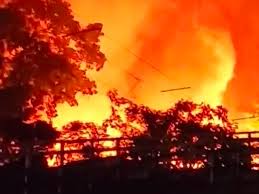
East Champaran: Dozens of houses were burnt to ashes in a massive fire in a Dalit colony in Raxaul of the district. It is being told that the fire spread so fast amid strong winds that many houses were engulfed in it in no time. Local people immediately informed the fire department about the fire. Two fire brigade vehicles reached the spot and after a lot of effort, the fire was controlled. As soon as the information about the incident was received, Raxaul police and SSB personnel also reached the spot and helped the local people in extinguishing the fire. Property worth lakhs of rupees is estimated to have been lost in this fire incident. Local resident Chandrika Malik said that preparations for weddings were going on in many houses in the colony. Clothes, jewelry and other items bought for the wedding also fell prey to the fire. He told that everyone was busy preparing for the wedding, when suddenly the fire destroyed everything. Circle Officer Shekhar Raj said that as soon as the information about the fire was received, a light employee was sent to the spot. The damage is being assessed. After which the process of providing assistance to the affected families has also been started. At present, the cause of the fire has not been ascertained. After the incident, there is an atmosphere of chaos and despair in the colony. Courtesy: Hindi News
Visibility turns a curse for Dalits when it exposes us to violence: Poet Aleena

In an interview with TNM, Aleena, a young award-winning bilingual poet from Kerala, reflects on caste, literature and her experiences of writing poetry as a Dalit Christian. On April 23, Aleena, an acclaimed young poet from Kerala, read her poems in English and Malayalam at Atta Galata in Bengaluru. The event, organised by Moonbird Creative and attended by more than 100 people, also witnessed lively discussions. Aleena, a rising star on Instagram, a platform she uses to share poetry and create anti-caste awareness also shared her lived experiences within the Dalit Christian community and the politics surrounding their survival and resistance. Aleena is the winner of the Kerala State Sahitya Akademi Kanakashree Award in 2021 for her debut poetry collection Silk Route. She writes in Malayalam and English, bringing together personal and political narratives in her poetry. Her work has sparked viral conversations around casteism, identity, and representation, or the lack thereof, in the mainstream. Speaking to TNM, Aleena discussed her foray into writing, the Dalit presence in Indian media and what she’s got lined up next. QCan you talk about your early work and what drew you to writing poetry? AAleena: I was quite the writer kid from my school days itself. So, writing was something that was with me from the beginning. Even during schooldays, I enjoyed being the writer kid. In schools, you get special attention from teachers if you are artistically inclined. Writing was the thing I latched onto.At first, I actually wanted to write fiction, but then I understood that it’s too hard for me, personally. Poetry comes a little more easily to me. It’s a more minute thing, while fiction is a bit larger. If you zoom into one thing, you get poetry, if you take a wider angle, you get fiction. So for quite a few years, I’ve been feeling like zooming in, that’s why I’m writing poetry. QHow do you see the representation of Dalit voices in contemporary literature and popular culture? AAleena: I think writing is the first artistic thing that Dalits did in modern or post-colonial India. I feel writing was and is a bit more accessible to Dalits than other forms of art, like making films or doing fine arts. You just have to learn how to write and put down your thoughts, maybe send them out to editors, publishers. Sometimes they accept it and sometimes they don’t. Then you look for other options for publishing it. But I think writing is where most of our people are. Like, in Malayalam, we have a lot of poets from the community. But there are fiction writers only in limited numbers. What we have more of are autobiographies and memoirs because the [Dalit] life itself is very much absent in popular culture, let alone their art. We rarely see our lives in popular culture. It’s still exoticised, seen as other. When someone is picking up a book by a Dalit artist or Dalit writer, they are looking for specific things that we do not get to see in Savarna literature. So, of course, we have to be represented more in terms of genres, like science fiction, fantasy, horror, and mythology. But, other than that, we have to get more into popular culture, like films, for example. What I have also felt is that writing is a one-person job, so I can do it alone. But for films and other artworks, we have to have a network. This network is lacking so much in this community. I think (Dalit) writing is there, but it’s still considered as something not marketable, or not widely read. It stays in some circles only. So that’s a problem we are facing because our society as a whole, is not quite ready to wholeheartedly accept our literature yet. I even face a lot of backlash for my poetry on Instagram. That’s because people are still not there mentally. And people can’t even ignore it, like, “let her say something, I’ll move on with my life.” No. They have to attack and say something. So it’s a bit messy. It affects our mental health, our work quality. A lot of time gets wasted. Human rights of Dalits are being violated every day, there is news of communal violence all the time. QIs that what might be stopping artists from marginalised backgrounds from pursuing their art? AAleena: I don’t feel like we quite think “how this piece is gonna be received” when we are making it. We do it because it involves a lot of pleasure when we are creating something. So nothing matters at that moment. But on putting it out there, they may begin to worry [about the response]. I started this page last year, and at first, I had like, 300 followers, only my friends and their friends. Then I wasn’t worried about anything because who’s gonna see it? I thought it would stay in our circles only, so people who don’t understand it or people who don’t quite agree with it won’t come and attack me. That’s what I thought. But it just went a little out of hand. This visibility is also a curse for a person from a marginalised community. Social media gives us the visibility that traditional media is refusing to give us, but it also exposes us to a lot of violence. QWhat prompted you to start posting content on the Internet? AAleena: It’s because I wanted to publish in English, but then I was totally lost there. I didn’t know how to do it because in the literature scene, everything happens through networks. In Malayalam, we have a lot of poets from the community. So even though they lack the kind of economical privilege or the power to make decisions, they have cultural capital. If they are saying, “oh, this poet is good,” then we are automatically seen as good. So, the growth of Dalit literature in Malayalam has actually helped a lot of young poets like me to
Will SC Rights Be Upheld? — Here’s Why AJAK Rajasthan Presses Justice Balakrishnan Commission to Block New Groups in Scheduled Caste List
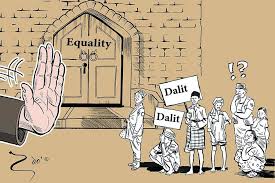
The letter strongly opposes the inclusion of new groups, such as Dalit Christians or Muslims, in the SC list, arguing that it could harm existing SC communities’ rights. Jaipur-The Dr. Ambedkar Anusuchit Jati Adhikari-Karmchari Association (AJAK Rajasthan) has taken a significant step to safeguard the interests of Scheduled Caste (SC) communities by submitting a detailed letter to the Justice K.G. Balakrishnan Commission. The letter expresses serious concerns over potential changes to the Scheduled Caste list under Article 341 of the Constitution and strongly opposes the inclusion of new groups, such as Dalit Christians or Muslims, which the organization believes could jeopardize the rights and benefits of existing SC communities. Representing SC employees’ communities, AJAK Rajasthan highlighted the daily struggles of caste-based discrimination and hardships faced by its members. The organization urged the Commission to protect the constitutional rights of existing SC communities and ensure that no amendments to the SC list are made for political reasons. The letter emphasizes preserving the sanctity of Article 341 and preventing religion-based restrictions on SC rights. Key Points Raised in the Letter The list of SC/ST citizens in India was prepared on the basis of historical facts of economic, educational and caste discrimination. The Constitution of India is the supreme law of India. Public servants posted in the legislature, judiciary and constitutional institutions take an oath to work according to the Constitution of India. According to Article 51 (a) of the Constitution of India, it is the constitutional duty of every citizen to obey the Constitution of India and behave accordingly. Thus contempt/violation of the Constitution of India falls under the category of punishable offence under Section 2 of the National Dishonour Act 1971. According to the law made by the Ministry of DOPT of the Government of India, the caste of any citizen in India is inherited from his/her father on the basis of birth. The caste of the father is inherited by the son/daughter on the basis of birth. The children of a Scheduled Caste/Scheduled Tribe father get the caste of their father i.e. Scheduled Caste. People belonging to Scheduled Caste are discriminated against on the basis of caste. Similarly, their children also face caste discrimination. Even if the citizens of Scheduled Caste/Scheduled Tribe change their religion, then on the basis of the caste acquired on the basis of birth, they continue to face discrimination on the basis of social, economic, educational and caste in other religions as well. Citizens get their caste from their father, so their caste remains with them till their death and there is always discrimination against them. To solve the social, economic, educational and caste discrimination, the Constitution of India has given the Scheduled Caste / Scheduled Tribe citizens the right to constitutional representation on the basis of caste in Articles 14, 15, 16, 335, 330, 332, 243D and 243T and has tried to reduce their social, economic, educational and caste discrimination. In India, representation in government services to SC/ST citizens in proportion to their population has been given by the Constitution of India on the basis of their social, economic and educational status. On the basis of Articles 15, 16 and 335 of the Constitution of India, the people of Scheduled Castes and Scheduled Tribes have got the constitutional right of representation in educational institutions and government services in proportion to their population. In Articles 15, 16 and 335, the constitutional right of representation has been given on the basis of caste. Neither in government services nor in politics, the constitutional right of representation has been given on the basis of religion. Therefore, the right to representation of Scheduled Castes cannot be restricted on the basis of religion. The Constitution of India does not impose any restriction on the citizens of SC/ST on the basis of religion even in Articles 15, 16 and 335. If the constitutional right of SC/ST citizens to government services and political representation is restricted on the basis of religion, then it would be a violation of Articles 14, 15, 16 and 335 of the Indian Constitution. The Constitution of India provides the SC/ST citizens the constitutional right to representation in proportion to their population in Panchayats, Municipal Bodies, Legislative Assemblies and Lok Sabha. The Constitution of India, Article 243(d) provides the Scheduled Caste and Scheduled Tribe citizens the constitutional right to representation in proportion to their population in Gram Panchayats, 243T in Municipal Bodies, 332 in Legislative Assemblies and Article 330 in Lok Sabha. None of the articles providing the constitutional right to representation imposes any restriction on the basis of religion for giving representation in proportion to their population in Gram Panchayats, Municipal Bodies, Legislative Assemblies and Lok Sabha. The right to political representation has been given to socially, economically and educationally backward castes on the basis of caste and historical facts and evidence. Neither the right to representation has been given on the basis of religion nor can any restriction be imposed on it on the basis of religion. On the basis of social, educational and economic and historical facts, the Government of India has made a law for the SC/ST citizens belonging to the castes listed in the Constitution of India that the caste of any citizen is determined by the caste of his father. The father of a citizen naturally determines his caste. The SC/ST citizens have got the constitutional right to representation in government services in proportion to their population under Articles 15, 16 and 335 of the Constitution of India. They have got the constitutional right to representation on the basis of their caste in proportion to their population through Articles 2430, 243T, 330 and 332. There is no restriction on giving representation to Scheduled Caste and Scheduled Tribe citizens on the basis of religion in any of the above articles. The right to representation of Scheduled Caste and Scheduled Tribe has been given due to historical reasons of caste discrimination. There is no discrimination on the basis of religion. It is the people
Mayawati furious over atrocities on Dalits and disrespect of idols in UP, know what she said
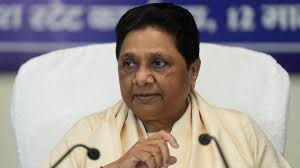
UP News: BSP Chief Mayawati also demanded that the state government take concrete and effective steps to control crime, so that the weaker sections of the society can get assurance of security. BSP Chief Mayawati furious over atrocities on Dalits and disrespect of idols in UP ANN Mayawati furious over atrocities on Dalits and disrespect of idols in UP, know what she said Lucknow News: Bahujan Samaj Party (BSP) National President and former Chief Minister Mayawati has once again raised questions on the state government regarding the atrocities on Dalits in Uttar Pradesh. On Saturday, she issued a statement in two parts on social media and termed the incidents of atrocities on Dalit community in various districts of the state, attacks on marriage processions and insult to the statues of Baba Saheb Dr. Bhimrao Ambedkar and Lord Buddha as ‘extremely worrying’. Mayawati wrote that these incidents are going to break the society and the government should take strict action against the culprits. She also demanded that the state government take concrete and effective steps to control crime, so that the weaker sections of the society can get assurance of security. In her second tweet, the BSP chief said that when there is tension on the borders of the country and internal security is being challenged by terrorist incidents, at such a time the state government should take strict action against the elements spreading casteist and communal tension within the society. She said that people with anti-social and criminal tendencies are trying to spread hatred and violence in the society, which needs to be stopped. It is worth noting that in recent times, incidents of attack on people of Dalit community, vandalism of their religious symbols and statues have come to light from many districts of Uttar Pradesh. Somewhere the processions of Dalit grooms were stopped, somewhere the statues of Baba Saheb Ambedkar were broken. There is anger in the Bahujan Samaj regarding these incidents and political parties are constantly demanding action from the government. Mayawati has surrounded the Yogi government on many occasions regarding such incidents and alleged that attacks on Dalits, backward and minorities have increased under BJP rule. Now it has to be seen what action the state government takes on this issue after this statement of Mayawati. At present, this statement of hers is very much discussed on social media and people associated with Bahujan Samaj are seeing it as a voice of their rights. Courtesy : Balram Pandey | Edited By: Ankul Kaushik , Hindi News
Mayawati furious over atrocities on Dalits and disrespect of idols in UP, know what she said
Madhya Pradesh: Dalit man stoned for riding a mare in his wedding procession

The incident is from a village in Tikamgarh district of Madhya Pradesh, where a person from the Dalit community had come out on a mare in the village on his wedding day. It is alleged that a woman from the village stopped him and abused him. After this, she along with two other persons started throwing stones at the groom. New Delhi: On Friday (April 26), in Mokhra village of Tikamgarh district of Madhya Pradesh, a person from the Dalit community was stoned when he was coming out on a mare in his wedding procession. According to the Indian Express report, the matter has gained momentum after the video of the incident surfaced. It is said that Jitendra Ahirwar, who was injured in the incident, was to get married in Sagar district. Before the wedding procession, he had come out on a mare as part of the traditional ‘Rach’ program in the village. It is alleged that a woman from the village- Bhan Kunwar Raja Parmar stopped them and using casteist abuses, questioned how a person from a ‘lower caste’ could pass through their locality on a mare. After this, she, along with two other persons- Suryapal and Drigpal, started throwing stones at the groom. Four people have been injured in this attack. Jitendra said, ‘It was my wedding day, a happy occasion for us. We were passing through a locality, when they stopped us, threw stones and asked us to get down from the mare and walk barefoot. They insulted us and even said that do not go near our houses wearing slippers.’ Jitendra and his family have lodged a complaint in Badgaon Dhasan police station, on the basis of which an FIR has been registered against Bhan Kunwar Raja Parmar, Suryapal and Drigpal under assault and caste discrimination. Badgaon Dhasan police station in-charge Narendra Verma told the newspaper, ‘The female accused has been taken into custody and the search for the other two accused is on.’ Courtesy : The Wire Note: This news is originally published on https://thewire.com and is used purely for non-profit/non-commercial purposes, especially human rights.
Elderly Dalit woman run over several times by upper caste men; FIR lodged
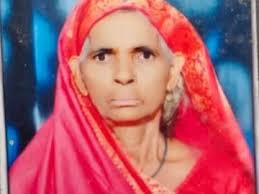
Five other Dalits were seriously injured and rushed to the district hospital. A 62-year-old Dalit woman was killed and five others were seriously injured after they were allegedly run over multiple times by a group of upper-caste Hindu men in Uttar Pradesh’s Bulandshahr. The attack happened on April 21 after a confrontation over rash driving. Eyewitnesses and police said that the attackers used casteist slurs before the assault. The incident took place in Sunehra village. Sheela Devi was sitting outside her house when a Mahindra Thar SUV came speeding towards her. MS Creative School A villager named Bhupendra shouted at the driver to slow down. In response, the men in the SUV, identified as Tapesh Singh and his son Priyanshu Singh, got out and abused the locals using caste-based slurs. According to the police complaint, the father and son left the area but returned about 10 minutes later with four armed men. Without warning, they drove the SUV directly into the group of people sitting outside their homes. They reversed and ran over the victims several times. Sheela Devi died on the spot. Five others from the Dalit community were seriously injured and rushed to the district hospital. City superintendent of police, Shanker Prasad, confirmed that an FIR has been filed against six men: Tapesh Kumar, Priyanshu Singh, Varun Kumar, Atul Singh, Krishna Singh, and Manav Kumar. They have been charged under sections of the BNS for murder, attempt to murder, criminal intimidation, rioting, and the SC/ST Act. A special police team has been formed to catch the accused, who are currently on the run. Courtesy : TSD Note: This news is originally published on https://thesiasatdaily.com and is used purely for non-profit/non-commercial purposes, especially human rights.
Land titles distributed to landless Dalit families
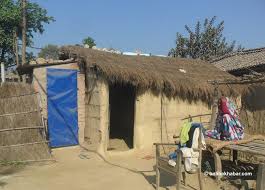
The Dharche Rural Municipality has distributed land titles to landless Dalit families on Saturday. Rural Municipality Chair Laxman Gurung said that land titles were provided to landless Dalit families through the District Committee of the Land Problem Resolution Commission. On the occasion, Mangal BK, Raju BK, Ait Singh Kami and Ram Bahadur Kami were provided land titles. More than 250 landless settlers have applied for land titles in Dharche and the necessary process has been initiated to provide them with land titles, said Gurung. Three years ago, 11 local levels of Gorkha had signed an agreement with the commission to take forward the process to provide land to landless Dalits, landless squatters and unorganised settlers. A landless Dalit family from Dharche is happy after receiving the land title certificate of the land they have been farming on for years. “I thought I would die without getting the land title in my name,” said Ait Singh, one of the landless Dalits. “The village council took the initiative and gave the title deed in my name, I am very happy.” Courtesy: Online Khabar Note: This news is originally published on https://english.onlinekhabar.com/ and is for use by the non-military/non-commercial community, especially those in the human rights sector.
Muslims, Dalits not disposed to crime, says survey report

This finding marks a departure from perceptions prevalent in other regions of the country and highlights the unique stance of the state’s law enforcement on issues of crime and community relations In a revealing survey conducted among police respondents in Punjab, a significant majority has expressed the firm belief that neither Muslims nor Dalits are naturally predisposed to criminal behaviour. As per the “Status of Policing in India Report’ (SPIR)”, done by the Common Cause and Lokniti-CSDC organisation, this finding marks a departure from perceptions prevalent in other regions of the country and highlights the unique stance of the state’s law enforcement on issues of crime and community relations. According to the survey data, an overwhelming percentage of police officers in Punjab (over 80%) contend that Muslims, Dalits and Adivasis do not have inherent tendencies towards crime. This belief was notably stronger among Punjab’s police compared to respondents from other states, indicating a profound suspicion of the stereotype that links specific communities to criminality. The survey also highlighted law enforcement’s approach to public safety issues. The Punjab Police reported the highest proportion of arrests related to loitering and public nuisance, accounting for 60% of the total arrests, significantly outpacing the other states surveyed. This reflects a proactive stance on maintaining public order, despite the low association perceived between crime and these communities. When it comes to justifying the controversial practice of torture, police respondents from Punjab displayed a relatively low tolerance. Only 15% reported a high propensity to justify such actions, while a considerable 30% indicated a low propensity and another 30% showed a very low propensity. Furthermore, Punjab has been identified as one of the states with the least justification for mob violence, especially concerning allegations of cow slaughter. A robust 62% of the respondents stated that mob violence was not at all justified, aligning with similar findings from states like Kerala and West Bengal, which also exhibited low levels of justification for such behaviour. The survey not only sheds light on the perceptions of crime among law-enforcement officials in Punjab but also reinforces the significance of community relations in upholding justice and security in the region. The findings suggest a move towards a more equitable perspective on crime with respect to community background, which could potentially influence future policing strategies and community outreach programmes. The Status of Policing in India Report (SPIR) 2025 was released on March 26 at the India International Centre by a distinguished panel of experts, including Justice S Muralidhar, former Chief Justice of the Odisha High Court, Vrinda Grover, lawyer and activist, Dr Amar Jesani, public health expert and the Editor of the Indian Journal of Medical Ethics, and Prakash Singh, IPS (retd) and a former DGP of UP, Assam and BSF. The Punjab angle of the report studied by The Tribune talks about the response of the Punjab Police respondents. Sixth in the series, the SPIR 2025 on “Police Torture and (Un)Accountability” is the only report of its kind in India to focus on police high-handedness and custodial violence at police stations across the country. 80 pc Punjab cops hold this view An overwhelming percentage of police officers in Punjab (over 80%) contend that Muslims, Dalits and Adivasis do not have inherent tendencies towards crime. This belief was notably stronger among Punjab’s police compared to respondents from other states, indicating a profound suspicion of the stereotype that links specific communities to criminality Courtesy :Jupinderjit Singh, The Tribune Note: This news is originally published on https://thetribune.com and is used purely for non-profit/non-commercial purposes, especially human rights.