
4 workers die of septic tank fumes in Jaipur, 2 critical

Jaipur, May 27 (PTI) Four men who were allegedly forced to enter a septic tank in Sitapura Industrial Area here to retrieve gold and silver particles died of toxic fumes, police on Tuesday said. The incident occurred late Monday night in a jewellery factory in G-Block of the Jewellery Zone. The deceased were identified as Sanjeev Pal, Himanshu Singh, Rohit Pal, and Arpit Yadav, police said. Two more, Ajay Chauhan and Rajpal, were rushed in a critical condition to Mahatma Gandhi Hospital, while two others, Amit Pal and Suraj Pal, were discharged after primary medical care. The workers had gone down a 10-foot-deep tank and lost consciousness. Police said initial investigation suggested that the workers had initially refused to enter the tank due to the intense heat and presence of toxic gases. However, the company management persuaded them with promise of extra money. According to police, Amit and Rohit were the first to descend into the tank. Soon, they began gasping and calling for help. The remaining six went down the tank one after another to help the first two out, but also fell unconscious. A police source said the septic tank contained a chemical sludge, believed to be carrying hold particles of gold and silver, residue from the jewellery manufacturing and cleaning processes. The sludge is periodically cleaned to extract valuable metals, a practice not uncommon in jewellery units. PTI SDA VN VN This report is auto-generated from PTI news service. ThePrint holds no responsibility for its content. Courtesy : The Print Note: This news is originally published on https://theprint.com/ and is for use by the non-military/non-commercial community, especially those in the human rights sector.
How the road to conversion to Buddhism for 80 Dalit families in Surat was made difficult
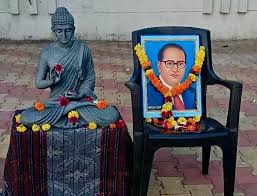
On May 14, Jahnvi Solanki, got ready for the most special day of her life. For 29-year-old Solanki, it was the day when her dream was coming true after a twoyear-long wait. Jahnvi along with her family of four converted to Buddhism along with 79 other families in Surat on the day. On the day, the 80 Dalit families from various areas of Surat gathered at Anand Buddha Vihar, a Buddhist temple in Amroli area of Surat to renounce Hinduism and embrace Buddhism. “It was an emotional ceremony for all of us. I was in tears as I chanted the Buddha Vandana and repeated the 22 vows of Baba Saheb (Baba Saheb Bhimrao Ambedkar). I felt liberated denouncing Hinduism, a religion that gave us nothing but humiliation. Now, I don’t belong to any caste or social hierarchy. We are all equals here,” says Jahnvi, who works as a teacher in a primary school in Surat. In the ceremony to convert from Hinduism to Buddhism, people are required to chant Bhudha Vandana and then denounce bais barbaadi (22 evils) and take vows devised by Baba Saheb Ambedkar when he converted to Buddhism – Possess the ability to engage in diverse social endeavours, Have the capacity to thwart all forms of antisocial inclinations, Be empowered to disseminate the compassionate and wise teachings of Buddha Be capable of affirming the principles of education, organisation and activism, Foster a cultured ethos within society Eliminate superstition from societal norms Steer society towards a humanistic ethos Safeguard any individuals self-respect Reject anti-Bahujan leadership Ensure the protection rights and interests of all Realise that where there is unity, there is power Promote a sense of brotherhood transcending caste distinctions Foster a sense of a unified and extended family, Understand that only truthful and humane communication will remove derogatory labels from Bahujans Strengthen morale through unity and foster a sense of societal resilience Achieve and implement genuine democracy Finance the construction of educational, medical and residential facilities Establish an orderly and disciplined societal framework Provide a platform for social thinkers to serve as guides Uproot injustice, inequality and oppression Eradicate Manuwad from indigenous communities Understand and practice that all humans are equal “My family and I have faced discrimination all our lives. My father moved to Surat in search of a job and has worked in the diamond industry for over 20 years. I was a child when I moved to Surat with my mother and my brother was born here. Back in our village, our home was at one end of the village in an area referred to as Valmikivaas (home for Valmiki). We were constantly subjected to discrimination and untouchability. When we moved to Surat, we thought things would change as it is a city and people are more educated. But we have faced discrimination in this city too,” she says. “I remember, when I was in class nine, the teacher gave me average grades in all subjects without checking my papers of half yearly examination. She said she can’t touch something that has been touched by a Dalit. I had to live with that as nothing much was done by school authorities despite complaints,” she adds. Fifty-seven-year-old Maheshbhai Maheriya’s family of four also embraced Buddhism on the day. “I had mentally turned a Buddhist and renounced Hinduism two years back but the formal conversion happened now,” says Maheriya who converted to Buddhism with his wife, son and daughter-in-law. “There is peace in Buddhism because everyone is alike. Buddhism teaches only peace and compassion. But most importantly it gave us a sense of joy. We are no longer looked down upon by those who think they are superior to us just because they were born to a certain caste considered higher in social hierarchy in Hinduism,” says Maheriya, who works in the Surat Municipal Corporation (SMC). Red tapism Noticeably, the journey to embrace a religion of their choice was not easy for the families. The journey began in the year 2023 when the families submitted applications to the district collector to formally adopt Buddhism as per the Gujarat Freedom of Religion Act, 2003. “Under Gujarat’s Freedom of Religion Act, conversion applications require an applicant to fill three forms – A, B and C. Form A, that has the details of the applicant with the his/her current religion and the religion he/she wants to adopt with reason. The Form A is required to be verified and approved by the district collector within one month. Then the applicant file Form B which is a testimony of certain witnesses who vouch that the conversion is not forced on the applicant. Form B is to be verified and approved within two months unless any irregularity is found. Then the applicant can finally file the Form C, the last form in the process that contains when and where he/she is going to convert and name of the person(s) or organisation who is going to oversee the ceremony. The last form is to be approved within a week to ten days,” said Dinesh Baudh, a member of Swayam Sainik Dal (SSD), a Ambedkerite organisation that helped the families with the process. “However, the process took more than two years with applications caught between red tapism and bureaucratic delays. For the first six months, we were running between offices to ensure that Form A is accepted by the office of the district collector. After almost a year, they approved the first form. Then we spent another six months running between offices to ensure that the testimony of the witnesses are not rejected. Then, after about three weeks of verifying Form B of each applicant, the issuance of approval letters was stalled as the district collector was transferred. It took another three months for the next official to resume the process,” said Baudh, who embraced Buddhism in 2019 in Nagpur. Noticeably, around 40,000 applications filed by the SSD and other Dalit rights organisations are pending in various districts. “The delay did not deter
BJP, Sena (UBT) MLAs face-off at DPC meeting over Dalit fund allocation
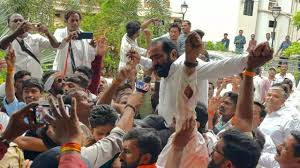
Akola: High political drama was witnessed at the Akola District Planning Committee meeting held on Thursday after a heated exchange between BJP MLA Randhir Savarkar and Shiv Sena (UBT) MLA Nitin Deshmukh. Sparks flew during discussions over the allocation of Rs36 crore meant for Dalit development, leading to verbal abuse, shouting match, and an attempt to charge at each other inside the meeting hall. The situation escalated to such a degree that guardian minister Aakash Fundkar and other MLAs had to intervene to prevent further disorder. However, the tension continued beyond the meeting room. Supporters from both political sides gathered outside the planning building near the collector’s office, where another round of verbal altercations and minor scuffles broke out. Speaking to the media, Fundkar claimed “nothing major” had occurred, but indirectly acknowledged the tension by questioning, “Should we remain silent against false accusations?” NCP MLA Amol Mitkari confirmed there was disruption inside the meeting hall. Congress MLA Sajid Khan Pathan also condemned the incident, accusing the BJP of suppressing opposition voices in the district and across the state. Political observers and local citizens have expressed concern that such public displays of political hostility could spill onto the streets and negatively impact developmental work in the district. The incident, they say, reflects a troubling trend in Maharashtra’s political climate. Courtesy : TOI Note: This news is originally published on https://timesofindia.com/ and is for use by the non-military/non-commercial community, especially those in the human rights sector.
Dalit rights and political tensions: Why is Mevani at odds with Congress leadership?
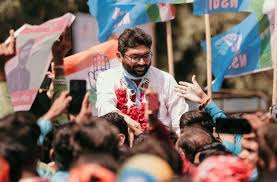
While I have known Jignesh Mevani, one of the dozen-odd Congress MLAs from Gujarat, ever since my Gandhinagar days—when he was a young activist aligned with well-known human rights lawyer Mukul Sinha’s organisation, Jan Sangharsh Manch—he became famous following the July 2016 Una Dalit atrocity, in which seven members of a family were brutally assaulted by self-proclaimed cow vigilantes while skinning a dead cow, a traditional occupation among Dalits. Also a lawyer, Mevani emerged as a prominent leader in the aftermath of the Una incident. He organized the Dalit Asmita Yatra, a protest march from Ahmedabad to Una, mobilizing thousands to demand justice and land rights for Dalits. The powerful movement, which made him famous across the country, prompted Rahul Gandhi to ensure that Mevani, unwilling to join the Congress at the time, contested as an independent MLA from Vadgam in the 2017 assembly elections. Let me recall, during my Gandhinagar stint (1997-2012), Mevani used to visit me at the *Times of India* office with detailed facts and figures on how dominant caste groups had deprived Gujarat Dalits of cultivating the land allocated to them during the heydays of land reforms. Ever since, I found that Dalit land rights were close to his heart. At that time, Mevani didn’t seem eager to enter politics—he joined the Congress only in 2021. After my retirement, I wrote a detailed article in my blog, Counterview, highlighting a book published by the Gujarat chapter of the People’s Union for Civil Liberties (PUCL) in 2014 on the organisation’s history. It controversially mentioned that RSS’ Gujarat mouthpiece, Sadhana, was a “fearless” journal, yet ironically omitted the contributions of human rights leaders Achyut Yagnik, Martin Macwan, and Gagan Sethi. On reading my blog, someone from the national PUCL called me, asking who could revive a “defunct Gujarat PUCL,” and I promptly named Jignesh Mevani. Too outspoken, a perpetual rebel, Mevani’s name wasn’t accepted, with the reason given that he was “too young” and “unpredictable.” Even after joining the Congress, Mevani, I find, hasn’t changed a bit. Despite being an MLA, his public stance suggests he remains a perpetual rebel. As before, he still believes in advocating for what he considers Gujarat’s most vulnerable populations—Muslims and Dalits—insisting that not only has the BJP failed to provide them relief, but atrocities against them have dramatically increased. Indeed, one of his passions remains standing up against atrocities, at a time when opposition parties—be it Congress or the Aam Aadmi Party—remain silent for fear of losing non-Dalit, non-Muslim votes. He not only tweets when such incidents occur but also visits affected locations and organizes demonstrations. He once told me, “Unless the Congress stands by the oppressed and fights for their rights, it won’t revive in Gujarat.” A recent incident (December 2014) involving Payal Goti, a Patel community girl from Amreli district, demonstrated how political leaders, including Congress’ Paresh Dhanani, stood by her and even organized protests when she was allegedly mistreated by police investigating a fake letter issued in the name of local MLA Kaushik Vekariya. However, when a much worse incident occurred in the same district—when a 20-year-old Dalit youth, Nilesh, was murdered simply for calling a non-Dalit boy “my son” this May—none, including Paresh Dhanani, are known to have spoken up. To quote a Dalit leader from Amreli: “There is a reason for Jignesh Mevani to feel suffocated. Congress leader Shaktisinh Gohil lent his support (both when the incident occurred and later in Parliament) to Payal Goti, which is commendable. But why has none, including Gohil, spoken out on the Dalit boy’s murder?” The frustration seemed to reach a peak when, without directly naming Congress leaders, Mevani tweeted a few days ago: “Now even the leader of the other party has said that you’re filled with dud (exploded) cartridges. Remove them—what are you waiting for? B-Team, dud cartridges, those who are making deals with the opposing camp, wedding horses—why hesitate to remove all these? If not for me, at least listen to Rahul ji!!” This led to outrage within the Congress, with a social media post by Hemant Parmar protesting how even respected alternative media outlets were suggesting Mevani might join the BJP. According to Parmar, it all started when “Mevani alleged that certain Congress leaders—those selectively chosen and those acting in favor of the BJP—as well as MLAs and MPs who won from reserved seats, have remained silent on Dalit atrocities.” Parmar laments that media outlets have twisted the narrative, implying he is “strategically benefiting the BJP.” He argues these outlets are “discussing the possibility of Mevani joining the BJP” and asks, “Who are they trying to benefit? After Mevani’s allegations against Congress leaders aiding the BJP from within, why is the effort now to turn the accusations back on him?” While sources in the BJP have told me there is “absolutely no possibility of Mevani joining us,” a Congress insider claimed that some within Shaktisinh Gohil’s circle have been planting stories suggesting he may be drifting toward the BJP. “It is the same people who secretly intend to join the BJP when the time is right,” I was told. Given ongoing speculation about who from Congress might join the BJP—especially since figures considered deeply committed to Congress ideology, like Arjun Modhwadia, have switched sides—Parmar insists: “In today’s Congress: the loudest voice against the BJP is Mevani; the strongest voice for the marginalized is Mevani; the boldest leader is Mevani; the only leader in Gujarat Congress who can directly take on the BJP is Mevani.” Courtesy : Rajiv Shah, Counterview Note: This news is originally published on https://counterview.com/ and is for use by the non-military/non-commercial community, especially those in the human rights sector.
Ex-AAP leader Rajendra Pal Gautam appointed chairman of Congress SC department
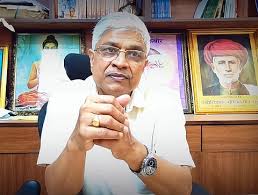
Gautam, a prominent Dalit leader from Delhi, was earlier associated with the Aam Aadmi Party (AAP) and served as the Minister for Social Welfare in the Delhi government. New Delhi- The Congress on Wednesday appointed former Delhi Minister Rajendra Pal Gautam as the new Chairman of its Scheduled Caste (SC) Department, replacing senior party leader Rajesh Lilothia. The move comes as the party looks to reinvigorate its social justice plank and deepen its connect with Dalit communities across the country. The appointment was made by Congress President Mallikarjun Kharge and announced in an official statement by Congress General Secretary (Organisation) K.C. Venugopal. “The Hon’ble Congress President has appointed Shri Rajendra Pal Gautam as the Chairman of the SC Department, AICC, with immediate effect. The party appreciates the contributions of the outgoing Chairman, Shri Rajesh Lilothia,” the statement said. His appointment came at a time when the Congress party is pushing for its social justice agenda. Gautam, a prominent Dalit leader from Delhi, was earlier associated with the Aam Aadmi Party (AAP) and served as the Minister for Social Welfare in the Delhi government. However, he resigned from AAP in September 2024. He formally joined the Congress citing disillusionment with AAP’s approach towards social justice and accusing the party of sidelining Dalit issues under pressure from the BJP. “I joined Congress because I believe it has a historic commitment to social justice and empowerment of the marginalised. My aim is to build a strong, grassroots-level Dalit movement within the party structure and fight for equality and dignity,” Gautam had said at the time of his induction. The Scheduled Caste Department of the Congress plays a key role in shaping the party’s policies on Dalit welfare and also in outreach initiatives to SC communities across states. With Gautam now at the helm, the party is expected to take a more assertive stand on issues related to Dalits, representation in government services, and access to education and healthcare.(IANS) Courtesy : The Mooknayak Note: This news is originally published on https://themooknayak.com/ and is for use by the non-military/non-commercial community, especially those in the human rights sector.
Bihar News: Chirag Paswan Slams CM Nitish Kumar Over Law & Order In Muzaffarpur Dalit Girl Gangrape-Murder Case
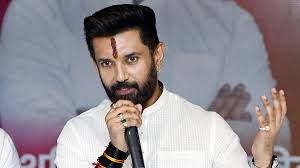
The relationship between Nitish and Chirag had soured after LJP leader, son of late Ram Vilas Paswan, fielded candidates on a number of seats against JD (U) candidates in the last assembly election, hitting latter`s chances in 36-40 seats. Patna: Union Minister Chirag Paswan has written to Bihar chief minister Nitish Kumar, raising questions on the state`s law and order situation and public health infrastructure even as LJP (RV) chief attacked the state government at a time when assembly polls are only months away. Chirag has lashed out at the Nitish government against the backdrop of a 9-year old Dalit girl losing her life following a brutal rape. The Dalit girl who was raped and brutally assaulted by the accused in Bihar`s Muzaffarpur district had succumbed to her injuries at the state-run Patna Medical College and Hospital (PMCH) on Sunday. She was allegedly being made to wait in an ambulance for hours before she was finally admitted to the state`s premier public hospital on Saturday. The hospital administration has rejected these allegations. The relationship between Nitish and Chirag had soured after LJP leader, son of late Ram Vilas Paswan, fielded candidates on a number of seats against JD (U) candidates in the last assembly election, hitting latter`s chances in 36-40 seats. However, both leaders buried the hatchet as their recent ‘bonhomie’ in public suggested. Earlier, senior leaders of RJD and Congress had lashed out at Chirag and Hindustani Awam Morcha (HAM) chief and former chief minister Jitan Ram Manjhi (both Dalit leaders) for keeping mum on the rape-murder incident. Both parties also demanded resignation of state health minister and senior BJP leader Mangal Pandey. While the accused has been arrested, a probe has been ordered into what happened at PMCH. The heart-rending incident of Dalit girl`s rape and murder exposes the failure of Bihar’s law and order, social awareness and public health, Chirag remarked, who is likely to make a formal announcement about contesting assembly election at a public rally, to be held in Ara on Sunday. He is also expected to contest assembly election from the state`s Shahabad region. Chirag in his letter pointed out that the victim had to wait for six hours before she was admitted to the hospital. He said that doctors, and administrative staff of the hospital were as guilty as the accused in the heinous crime. “They did not provide prompt treatment and lost precious time. This is not just negligence, but a crime against humanity,” he wrote. Chirag said his party’s leaders have met the victim’s family and assured them justice. “But justice will be incomplete and unacceptable unless strict and transparent action is taken against the accused at the administrative level.” He said that an inquiry should be conducted into the alleged negligence of the medical staff. “It is not simply a matter of death as it has become a symbol of the failure of our social system and a failure of our constitutional responsibility. If the administration stays silent, this silence will become the biggest crime,” he asserted Courtesy : Dheeraj Kumar, TFPJ Note: This news is originally published on https://thefreepressjournal.com/ and is for use by the non-military/non-commercial community, especially those in the human rights sector.
3 injured in attack on Dalit wedding procession in U.P.’s Amroha; caste abuse alleged
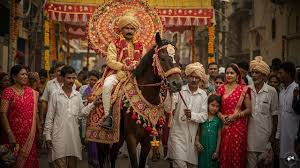
Police said they had to resort to mild force to disperse the crowd and restore order; in view of the heightened tensions, a police force has been deployed to maintain law and order At least three people were injured on Tuesday (June 3, 2025) after a wedding procession by members of a Dalit community was pelted with stones and hit with rods and sticks in Rahdra village in Amroha, Uttar Pradesh. Two daughters of Rampal, a local belonging to the Jatav (Dalit) community, were getting married. Of the two wedding processions on Monday, the first was from Hasanpur, and the other, from Moradabad, arrived later. The baraat (wedding procession) of Sonam Kumari, the older daughter, arrived from Moradabad. The incident took place during the second procession. “On June 2, a wedding procession was being carried out around 5.30 p.m. Around 15-20 people from the same village, belonging to the Yadav community, forcefully entered the wedding procession and stopped us from dancing. When we opposed it, all the above people used casteist words and attacked us with sticks, rods, knives, and sharp-edged weapons to kill us. I, too, received an open injury on my head and many other small injuries,” Kanhaiya, the complainant, and a resident of Rahdra, said. He said many in the procession received knife injuries. “The Yadavs said, ‘how can people from our [Dalit] community take out wedding processions’?” Mr. Kanhaiya, who belongs to the Jatav community, alleged. Charges have been filed under Sections 191(2) (rioting), 115(2) (voluntarily causing hurt), 109 (attempt to murder), 351(2) (criminal intimidation) of the Bharatiya Nyaya Sanhita (BNS). Police have also invoked the Scheduled Castes and Scheduled Tribes (Prevention of Atrocities) Act, 1989 (Amendment 2015). The case was registered at the Gajrala police station. A video purported to be of the chaotic scene has surfaced on social media. Police said they had to resort to mild force to disperse the crowd and restore order. In view of the heightened tensions, a police force has been deployed to maintain law and order. A senior police officer said that the incident had occurred because the road was narrow, loud music was playing in the background, and the people in the wedding procession could not provide space for the Yadav vehicles to pass. “This led to an argument, which later turned into an altercation,” the officer said. Courtesy : Samridhi Tewari, The Hindu Note: This news is originally published on https://thehindu.com/ and is for use by the non-military/non-commercial community, especially those in the human rights sector.
15 sent to jail for imposing social boycott on Dalit family

Hyderabad: A special court in Nizamabad on Tuesday sentenced 15 individuals to imprisonment in connection with a social boycott imposed on a Dalit family by members of a so-called village development committee (VDC) in Kolipaka village of Jakranpally mandal. The special judge for SCs/STs (Prevention of Atrocities) Act cases and II additional district and sessions judge pronounced the verdict, convicting eight individuals to five years in jail with a fine of ₹5,200 each, while seven others received three years’ imprisonment along with a fine of ₹4,200 each. It was in April 2020, when Errolla Hanumandlu and his family lodged a complaint with the Jakranpally police, alleging that the VDC had issued a social boycott order against them. It all began when Mekala Bablu and his family objected to Hanumandlu’s family using a tractor in front of their house. Bablu later took the matter to the VDC, which demanded a monetary fine from Hanumandlu. When the family refused to pay, the VDC allegedly enforced a social boycott. Acting on the complaint, police registered a case under section 3(1)(zc) of the SCs/STs Act, various sections of the Indian Penal Code (341, 323, 290, 506, 248 r/w 34), and section 4 of the Protection of Civil Rights Act, 1955. Those who were sentenced to five years’ imprisonment include Golla Boddu Thirupathi, Ravutla Bakkanna, Papai Gangadhar, Boddu Naveen, Kalakadi Muthenna, Bolli Ranjeeth, Wadla Srikanth and Arepalli Esthari. Among those sentenced to three years’ imprisonment were Mekala Bablu, Mekala Kavitha, Muvvala Poshanna, Mala Chinna Rajanna, Dasari Surender, and Vankayala Gangadhar. Courtesy : TOI Note: This news is originally published on https://timesofindia.com/ and is for use by the non-military/non-commercial community, especially those in the human rights sector.
‘How Dare You Join a Brahmin Wedding?’ — The Incident That Awakened Jyotiba Phule’s Revolt Against Caste
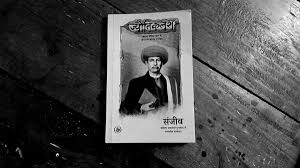
A heartbreaking childhood incident of exclusion and caste-based humiliation laid the foundation for Mahatma Jyotiba Phule’s lifelong fight against Brahminical dominance and social inequality. In the history of India, few figures stand out as courageously and selflessly committed to the cause of the oppressed as Mahatma Jyotiba Phule. One early incident from his childhood left such a deep scar on his conscience that it sparked a lifelong struggle against casteism, Brahminism, superstition, and social hypocrisy. This formative event is powerfully depicted in the book ‘Jyoti Kalash’, written by renowned Hindi author Sanjeev — editor of the iconic magazine Hans, a columnist, and recipient of the Sahitya Akademi Award. Published by Rajkamal Prakashan, the book serves as a chronological documentation of real-life events from Phule’s life. In its very first chapter, Sanjeev recounts the incident that led young Jyotiba to become fiercely committed to the cause of Dalits and backward communities. According to the book, Jyotiba receives a wedding invitation from his classmate, Paranjpe. The note ends with an affectionate threat: “If you don’t come, our friendship is over.” Excited, young Jyotiba begins to prepare himself for the grand wedding procession. Seeing his son dressed up, his father Govindrao asks, “Where are you going?” “To Paranjpe’s wedding procession,” Jyotiba replies cheerfully. Govindrao is reminded of bitter experiences of humiliation in Brahmin weddings in the past. The memories sting like thorns. Still, not wanting to dampen his son’s spirit, he says nothing. The wedding procession is in full swing, with drums, music, and fireworks. Paranjpe, the groom, is dressed regally and seated in a decorated chariot alongside his younger brother. Amidst the festive chaos, there’s a problem — the man in charge of setting off the ceremonial fireworks, Patil, is missing. People murmur anxiously, wondering who will light the fireworks now. When the boys are asked if anyone can do it, most express fear. But Jyotiba steps forward and says, “I’m not afraid.” He picks up the firework launcher and begins firing celebratory shots into the sky, leading the procession. Just then, a heavily adorned Brahmin man — wearing a tripund (sacred ash mark) on his forehead and a traditional turban — steps forward and stops Jyotiba. “You…?” the man sneers. “Aren’t you the son of Govindrao Ghonhe?” “Yes,” Jyotiba replies. With visible disdain, the Brahmin thunders, “How dare you join a Brahmin wedding procession?” “I was invited,” Jyotiba responds. “Invited, huh? What Paranjpe did was wrong, but you — how could you forget that you’re a Shudra? And this is a Brahmin wedding. Have you lost your mind? Since when did you become equal to Brahmins?” A more compassionate Brahmin steps in and tries to pacify the situation. “Let it go — he’s just a boy. He was invited by his friend. He even handled the fireworks.” “Let him stay — but only at the back,” the turbaned man declares. “With the Ramoshis and the baggage carriers.” Humiliated, Jyotiba moves to the back of the procession. A Ramoshi — a man from a lower caste — standing nearby approaches him and says, “Thrown out by the Brahmins, huh? What were you thinking? Did you forget how Brahmins treat Shudras and untouchables? Go home, child! The garlands aren’t for you. The music isn’t for you. The lights, the celebration — none of it is for you. You’re a Shudra. Thrown out, just like always.” Heartbroken, Jyotiba returns home. His father notices his downcast face. “What happened? Didn’t you go?” Jyotiba narrates the whole humiliating incident. His father listens in silence, watching his son’s darkened face. Memories of his own past humiliation come flooding back. “I wanted to stop you,” he finally says. “But I stayed quiet, fearing it would break your spirit.” After a pause, he adds, “They didn’t beat you, didn’t punish you — isn’t that mercy enough? You were wrong to go.” Tears well up in Jyotiba’s eyes. Govindrao consoles him: “No, son. We can never be equal to them. They are Brahmins, and we — we are Shudras.” A broken Jyotiba is still reeling from the incident when the Ramoshi appears again and says bitterly, “Why did you even go? I never go. It’s our fate — they were born Brahmins, you a Shudra, I a Ramoshi. What can we do?” That night passed slowly and painfully. For Jyotiba Phule, it was perhaps the first personal brush with caste-based humiliation — one that deeply shook his soul and awakened in him a resolve to challenge the unjust social order. In ‘Jyoti Kalash’, Sanjeev documents many such untold and poignant moments from Mahatma Jyotiba Phule’s life — stories he lived, witnessed, and bravely fought against. The book brings to life the emotional, social, and ideological evolution of one of India’s greatest social reformers. Courtesy Rajan Chaudhary, The Mooknayak Note: This news is originally published on https://themooknayak.com/ and is for use by the non-military/non-commercial community, especially those in the human rights sector.
Bhootgaon by Naveen Joshi: The Heartbreaking Tale of Love, Caste, and a Vanishing Village That Will Haunt You Forever
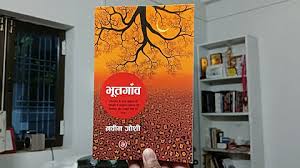
Naveen Joshi’s novel “Bhootgaon” uncovers the harsh realities of caste discrimination, emotional abandonment, and the heartbreaking fate of depopulated villages in the hills of Uttarakhand. Set against the complex backdrop of modern Uttarakhand’s history, Bhootgaon, a novel by acclaimed writer Naveen Joshi, is a deeply poignant narrative that captures the disturbing consequences of development gone wrong and the gradual desertion of hill villages. Published by Rajkamal Prakashan, this novel stands out for its heartfelt portrayal of caste-based oppression, social exclusion, and generational trauma that continues to shape the lives of rural communities. The story begins with retired army soldier Anand Singh and his loyal dog Sheru, who roam through an almost abandoned village nestled in the scenic hills of Uttarakhand. But beneath the picturesque setting lies the bitter truth of families forced to migrate to cities in search of livelihood, leaving behind hollow homes and haunted memories. The novel’s main protagonists, Virendra Singh Negi (aka V.S. Negi) and Heera (formerly Hiruli), are introduced gradually as the narrative alternates between Anand Singh’s quiet reflections and Virendra’s tumultuous life. As the chapters progress, it is revealed that Anand Singh is actually the younger brother of Virendra, adding a surprising twist that binds the multiple storylines together. Joshi masterfully uses the lens of Anand Singh’s conversations with his dog to reflect on the deserted village’s past, narrating the stories of families long gone. Eventually, he delves into his own family’s saga, drawing the reader into a powerful tale of love, caste discrimination, and social alienation. Heera, originally Hiruli, is the daughter of Charanram, a landless laborer of a lower caste. She falls in love with Virendra, the son of a Rajput (Thakur) family. Their elopement sparks a social upheaval that leads to the near destruction of both families. The couple eventually finds shelter in the home of a senior bureaucrat in Lucknow. They marry in an Arya Samaj temple, and start a new life. Virendra becomes V.S. Negi, and Hiruli becomes Heera. Living in a respectable urban household, the couple tries to adapt to city life. They become beloved to the childless bureaucrat couple they serve and are treated almost like their own children. Virendra and Heera have two children—Vinayak and Meera. For a while, life seems peaceful. However, the bureaucrats eventually renounce the world and retreat into spiritual life. Virendra secures a permanent government job, but the caste guilt begins to fester. He starts to view his marriage to Heera—a woman from a lower caste—as a mistake. His internalized caste superiority and societal pressures begin to erode the love and dignity in their relationship. Heera, trapped in an intercaste marriage, silently suffers daily indignities and emotional neglect. Her anguish becomes a central theme of the novel, portraying how deeply rooted caste prejudices can destroy personal happiness even in the modern world. In the village of Sataur, where Heera was born, the repercussions of their elopement are brutal. Her father, Charanram, is beaten half to death by upper-caste men. The villagers hurl blame and abuse at him, accusing him of failing to control his daughter. He is given an ultimatum—either bring Hiruli back by dawn or leave the village forever. Even Virendra’s own family, despite being Rajputs, faces social ostracism. No one is willing to arrange a marriage for his sister, who eventually dies by suicide due to the shame and isolation. Throughout the novel, Joshi sensitively lays bare the deep-seated caste divisions that persist despite social progress. The narrative reaches its emotional climax when Heera, emotionally wrecked by years of mental torment and social rejection, dies. Virendra dies a few years later, consumed by guilt and remorse. In the final chapters, Virendra and Heera’s children—Vinayak and Meera—return to their ancestral village, only to find it transformed into a ghost town—Bhootgaon. They meet their uncle Anand Singh, now mentally unstable after the death of his dog Sheru, who was taken by a tiger. The once-vibrant village now echoes with silence, grief, and memories. Bhootgaon is not just a story of two individuals; it is the story of a community, a region, and a social system where development, migration, and caste continue to intersect in painful and poignant ways. Naveen Joshi delivers a deeply human story that forces the reader to confront uncomfortable truths about love, identity, and belonging. Courtesy : Rajan Chaudhary, The Mooknayak Note: This news is originally published on https://themooknayak.com/ and is for use by the non-military/non-commercial community, especially those in the human rights sector.