
Standoff between Dalits, upper caste people in Mandya over temple entry
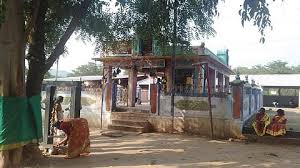
Efforts to mediate through separate peace meetings with leaders of both groups have so far failed. MANDYA: Tension gripped Elechakanahalli village in Mandya taluk after Dalits were allegedly denied entry into Maramma temple by upper caste people. As the situation escalated, heavy police deployment was made to prevent any untoward incidents. The controversy began when upper caste villagers reportedly blocked Dalits from entering Maramma temple, leading to clashes between the two communities. Taluk authorities temporarily sealed the temple and enforced tight security in the area. Later, leaders from both communities placed separate locks on the temple doors, further deepening the standoff. Efforts to mediate through separate peace meetings with leaders of both groups have so far failed. Dalit representatives have demanded equal access to the temple, while upper caste leaders have continued to oppose it. The situation worsened on the night of June 3, when miscreants vandalised a car belonging to a Dalit man, Vijaykumar, near his house. He filed a complaint against six — Shivalinga aka Papu, Dinesh, Janardhan, Chethan Kumar, Roopesh and Manu — at the Mandya Rural police station. Mandya Superintendent of Police Mallikharjuna Baladandi confirmed that security has been intensified in the village to maintain law and order. He said that a peace meeting, chaired by the deputy commissioner, will be held on June 9 in an effort to resolve the dispute. “We hope to arrive at a solution during the meeting,” he added. Courtesy : TNIE Note: This news is originally published on https://thenewindianexpress.com/ and is for use by the non-military/non-commercial community, especially those in the human rights sector.
An Anti-Caste Counterculture Is Gradually Taking Root in UK Universities
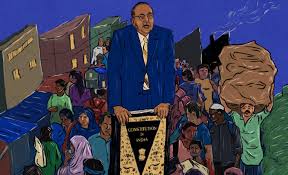
With more Dalit, Bahujan and Adivasi students going to the UK for higher education in recent years, they are creating a counterculture on campus, challenging how ‘India’ and ‘South Asia’ are understood among British and international students and faculty. In a darkened lecture theatre in the School of Oriental and African Studies (SOAS) in London, about 50 people gathered on a Sunday morning for a special screening of Court by Chaitanya Tamhane, a movie that critiques casteism in the Indian legal system. Meanwhile, 400 kms away in northwest England, a book stand in the library of Lancaster University showcased a special collection on caste and Ambedkar. And in another part of the UK, at the University of Leeds, students gathered to commemorate Ambedkar’s birth anniversary and discuss plans for the newly formed Dr Ambedkar Society. These scenes from Dalit History Month celebrations in April this year in different parts of the UK represent a quiet but growing assertion taking root in many English university campuses. With more Dalit, Bahujan and Adivasi students going to the UK for higher education in recent years, they are creating a counterculture on campus, challenging how ‘India’ and ‘South Asia’ are understood among British and international students and faculty. Through organising lectures, workshops and film screenings, and by forming anti-caste and Ambedkarite student societies on campus, marginalised students in the UK are amplifying voices from within their communities on an international platform and contributing to the global understanding of caste and resistance to it. Some are taking the effort further by trying to push for their universities to recognise caste in their policies, to help address the familiar patterns of discrimination and structural inequality marginalised students experience in the UK. Creating a new cultural presence on campus With tens of thousands of Indian students enrolling in UK universities every year, it is commonplace to find ‘India Societies’ and ‘Hindu Societies’ among the many student-run clubs on campuses across the country. In fact, societies that promote Hindu religion and culture on campus have been around in the UK since at least 1991. Through these groups, students organise a variety of events including Bollywood nights, aartis, Diwali and Garba celebrations, and discussions on Indian politics and society Dalit students who came to the UK to study did not feel represented by any of these existing societies, said Abhishek Bhosale, PhD scholar and current President of the SOAS Ambedkar Society. When the society was formed in 2018, the idea was to create a safe space where Dalit students could get together, as well as to democratise and diversify the campus by putting forward their stories and perspectives, he said. In the past year, during Abhishek’s tenure as president, the society has organised several public events including a discussion with The Wire’s Sukanya Shantha and her lawyer Disha Wadekar on their petition in the Supreme Court about caste-based discrimination in Indian prisons. The society also organised discussions on Shahu Patole’s book Dalit Kitchens of Marathwada and Anand Teltumbde’s book Iconoclast. What impact do students hope to have through these events? Abhishek explained that by telling the story of caste in a university like SOAS with an international, politically engaged student body, sensitisation about caste inequalities can reach the wider world through these students when they return to their home countries. “We want to internationalise the authentic stories of people from Dalit backgrounds. For example, if not for the SOAS Ambedkar Society, there wouldn’t be a discussion in London on Patole’s book about Dalit food,” Abhishek said. They also try to bring the academic discussions to life through cultural events such as the Anti-Caste Film Festival they organised in April this year, where the Court was screened. With support from the filmmakers who obliged without a screening fee, the students also showed Jai Bhim Comrade, Fandry, Kaala, and Dr B R Ambedkar to a diverse audience of 60-70 members in London. Poster of the Anti-caste film festival organised by the SOAS Ambedkar Society (Left). A scene from the screening (Right). Photo: Abhishek Bhosale/ SOAS Ambedkar Society. SOAS is also home to the first known Adivasi student society in the UK, the Maki Munda Indigenous Studies Society. In the 2023-24 academic year, a few students from Jharkhand who were at SOAS on various government scholarships created this society to engage with Adivasi issues on an international platform. In their public events, they make it a point to invite Adivasi scholars and grassroots activists as panelists, often joining virtually from India, to share their indigenous knowledge and first-hand experiences. During a student fair in January 2024, the society also organised an Adivasi dance from the Chotanagpur region. “People write about the poverty among Adivasis, their trauma and rights abuse but rarely do they embrace Adivasi culture. As Adivasis, we constantly battle damnation and shame in being who we are. Through the dance, we wanted to showcase our rich heritage and give it due regard in an international space,” said Madhuri Xalxo, a PhD scholar and founding member of the society. A handful of universities in the UK now have Ambedkarite or anti-caste societies formed by students. The Ambedkarite Society of Edinburgh at the University of Edinburgh was formed in January 2024 as a response to various incidents of casteism that marginalised students experienced from fellow Indian students of privileged caste backgrounds. “I was very taken aback by the lack of sensitivity among many Indians. So we formed the society to promote an anti-caste consciousness among students from India, among diaspora and among international students,” said Aniruddha Mahajan, PhD scholar and founding president of the society. At the prestigious London School of Economics and Political Science (LSE), a few Dalit students started an LSE Ambedkar Society in January 2024 to give the iconic social reformer’s ideas due regard in his alma mater. Ambedkar enrolled as a student in LSE in 1916 and completed a master’s degree and a PhD from the university. Ritu Kochar, PhD student and founding president of the society,
Rajasthan Dalit men forced to clean plates after drinking water from shop

One of the men used a metal tumbler to drink from the pot, angering the shop owner. Two Dalit men were subjected to casteist abuse, denigration, and forced to clean plates after drinking from a pot in front of a shop. The incident occurred in Kantia village in Rajasthan’s Nagaur district. The incident took place on June 1 when Omprakash Meghwal and his friend from the Dalit community stopped to drink water from a pot in front of the shop while on their way to attend a family function. Meghwal used a metal tumbler to drink from the pot, angering the shop owner, Kaluram Jat. He, along with two others, Narsiram and Omprakash, enquired about their names and caste Upon learning the men were Dalits, Kaluram, Narsiram and Omprakash hurled casteist slurs before launching a violent attack on them. They also forced them to clean the plates. After some time, Meghwal and his friend managed to run home safely. In an act of intimidation, the three men returned in a camper vehicle the same night, circling Meghwal’s predominantly Dalit neighbourhood. Locals spent the night in panic. Lakdikapul Gated CommunitySt JosephsGermanten Hospital According to local reports, Meghwal’s family allege that the police were initially reluctant to register a complaint. However, pressure mounted on them after local leaders interrupted. Based on the Dalit man’s complaint, an FIR was lodged against Kaluram, Narsiram and Omprakash. They have been booked under the Scheduled Castes and Scheduled Tribes (Prevention of Atrocities) Act and other relevant charges. On Tuesday, June 3, Azad Samaj Party chief and Nagina MP Chandrashekhar Azad flagged the incident on his X handle, calling it another example of the caste discrimination pervading India. “In Kantia village, Dalit youths were abused, humiliated, and forced to clean utensils just for drinking water. This isn’t a mere dispute—it’s a reflection of systemic, centuries-old hatred,” he said. “Does a Dalit still not have the right to drink water?” his X post read. Azad further demanded that the victims be given special protection and proper compensation. He further demanded that the state administration look into the matter and deploy forces to the village to ensure that social harmony is maintained. Courtesy : TSD Note: This news is originally published on https://thesiasatdaily.com/ and is for use by the non-military/non-commercial community, especially those in the human rights sector.
Mevani attacks BJP over atrocities on Dalits, weaker sections in Gujarat
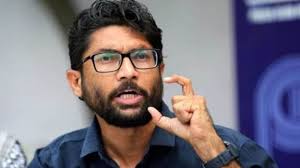
Add Your Heading Text HereCiting the low conviction rate in cases of atrocities on Dalits, Mevani said at the national level, this figure is 30-35%, but in Gujarat it is only 3-5% DalitsThe Congress leader told reporters that several incidents of Dalit atrocities have been reported from Gujarat such as the murder of a 19-year-old Dalit youth in Amreli (File) Congress’s Vadgam MLA Jignesh Mevani on Saturday questioned Prime Minister Narendra Modi and Home Minister Amit Shah’s silence on alleged incidents of atrocities against Dalits, adivasis and other weaker sections in Gujarat, and announced that the party will hit the streets to raise the issue. Addressing a press conference at the AICC headquarters in the Capital, Mevani accused the PM, the Home Minister and the RSS of “putting the values of Manusmriti above the Constitution”. Citing the low conviction rate in cases of atrocities on Dalits, Mevani said at the national level, this figure is 30-35%, but in Gujarat it is only 3-5%, which means 95% of the culprits in the state go scot-free. Story continues below this ad The Congress leader told reporters that several incidents of Dalit atrocities have been reported from Gujarat such as the murder of a 19-year-old Dalit youth in Amreli, the alleged setting ablaze of a Dalit senior citizen in Patan and the alleged gangrape of a Dalit girl in which BJP members are alleged to have been involved. “The Congress is preparing to launch a massive demonstration in August-September against atrocities being afflicted on Dalits, adivasis and those from the weakened sections in Gujarat,” he announced. Courtesy : TIE Note: This news is originally published on https://theindianexpress.com/ and is for use by the non-military/non-commercial community, especially those in the human rights sector.
Bihar sanctions compensation, pension for family of Dalit minor rape victim
11-year-old girl succumbed to injuries after being denied timely treatment; political outrage intensifies The Bihar government on Thursday (June 5, 2025) sanctioned compensation of ₹8.25 lakh under the Scheduled Castes and the Scheduled Tribes (Prevention of Atrocities) Act, 1989, to the family members of the 11-year-old Dalit girl who was raped and brutally assaulted with a knife, and later succumbed to her injuries at the Patna Medical College and Hospital (PMCH) on June 1. The State also announced a monthly pension of ₹7,700 for the victim’s family, in addition to the allotment of a house under the Mukhyamantri Awas Yojana. According to officials, the girl, who was transferred from Muzaffarpur, had to wait in an ambulance for nearly five hours before being admitted to PMCH, as a bed was not allotted promptly. Muzaffarpur District Magistrate Subrat Kumar Sen made the announcement at a press briefing at the Muzaffarpur Collectorate. “There is a provision under the SC/ST Atrocities Act that if any murder of an SC/ST person takes place, then a compensation of ₹8.25 lakh is given. Based on the FIR and post-mortem report, we have given the first instalment of ₹4,12,500 to the mother of the girl,” Mr. Sen said. The opposition, including the Rashtriya Janata Dal (RJD), Congress, Left parties, and the Vikasheel Insaan Party (VIP), has been consistently attacking the State government over the incident. On Tuesday (June 3, 2025), the RJD’s women’s wing held a protest march against Chief Minister Nitish Kumar and Health Minister Mangal Pandey in Patna, while Congress leaders staged a demonstration outside Mr. Pandey’s official residence. Congress MP Rahul Gandhi lent support to the protests, writing on X: “The brutality against a minor Dalit girl in Muzaffarpur and subsequent negligence in her treatment is extremely shameful. If she had received timely treatment, her life could have been saved. But the ‘double-engine’ government was negligent not only in providing security but in saving her life.” Mr. Sen also announced additional welfare measures. “Apart from the pension, a house under Mukhyamantri Awas Yojana has been sanctioned for the family. I have instructed the Block Development Officer to ensure the house is built. In 2011-12, the family received a house under the Indira Awas Yojana but could not construct it. In this special case, we have taken the decision to provide ₹1.20 lakh for house construction and ₹12,000 for a toilet,” he said. He added that the second instalment of ₹4,12,500 would be disbursed once the chargesheet is filed by the police. According to the police, the minor was raped and found with around 20 knife wounds on and around her neck in a pit at a brick kiln in Muzaffarpur on May 26. The accused was arrested the same evening. Union Minister and ruling party leader Chirag Paswan wrote to Chief Minister Nitish Kumar on Wednesday, calling the incident “a failure of the state’s law and order and public health infrastructure”, and demanded strict action against those responsible. Former Uttar Pradesh Chief Minister and Bahujan Samaj Party president Mayawati also criticised the State government, describing the incident as evidence of Bihar’s poor law and health systems. Amid mounting outrage, the State Health Department, on June 3, took disciplinary action against two senior medical officials of PMCH and Sri Krishna Medical College and Hospital (SKMCH), Muzaffarpur, for dereliction of duty. Courtesy : Amit Bhelari, The Hindu Note: This news is originally published on https://thehindu.com/ and is for use by the non-military/non-commercial community, especially those in the human rights sector.
Allahabad High Court order: Inter-caste marriage couple should get security, SSP will be responsible if any harm is caused
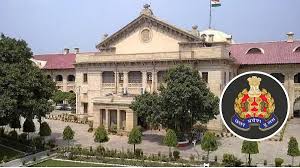
The court gave security instructions to Bulandshahr SSP, the couple had petitioned the High Court after receiving threats from the girl’s family. Uttar Pradesh— Allahabad High Court has given clear instructions to the Senior Superintendent of Police (SSP) of Bulandshahr while ordering to provide security to a newly married couple who have married inter-caste. The court said that if any kind of obstruction or harm is caused by the girl’s family, then the SSP will be held personally responsible for it. This order was given by Justice J.J. Munir while hearing the petition in which the 24-year-old girl and her 26-year-old husband had demanded cancellation of FIR and protection. The girl had also expressed apprehension in the court that her family may plot their ‘honor killing’. The case was registered in May at Khurja police station in Bulandshahr, in which the girl’s father alleged that the upper caste youth kidnapped his daughter and forcibly married her in an Arya Samaj temple. The complaint was registered under Section 87 (kidnapping) of the Indian Penal Code (BNS). However, the High Court made it clear during the hearing that an adult woman has the full right to choose her life partner. The court stayed the arrest of the youth and ordered the SSP to ensure that there is no interference in the married life of the newlywed couple in any way. Courtesy : Rajan Chaudhary, Hindi News
14-year-old Dalit Girl Repeatedly Violated; Accused Suspected to be TDP Members
A shocking incident in Ramagiri of erstwhile Anantapur district has come to light, exposing the atmosphere of fear created by the TDP government in Andhra Pradesh. A 14-year-old Dalit girl was allegedly repeatedly raped by a group of 14 people, purportedly members of the TDP, in Edugurrapalli, a village located a short distance from Venkatapuram, the hometown of former Women Empowerment Minister Paritala Sunitha. The incident came to light as the girl got pregnant. It has been learned that the gang had been committing the crime for the past six months. The Class 9 student was reportedly raped 14 times. The accused allegedly shot videos of the gruesome act and threatened the girl from complaining about the crime. Under pressure from TDP leaders, the girl and her family reportedly moved from the village. The girl’s father had died in a road accident a year ago, while her mother was mentally ill. The 14-member gang, reportedly from Perur Panchayat, took advantage of her vulnerability and committed the atrocity against her. Despite being aware of the crime, locals did not dare to speak up as they were afraid of facing consequences from the TDP government. They believed that the gang of criminals was receiving external support from Paritala Sunitha and her son. It has been learned that TDP leaders also warned the girl against complaining. Fearing the ire of political leaders, the girl has decided against approaching the police and instead plans to resolve the matter at the panchayat meeting. The accused have been identified as Badagorla Abhishek, Bhullu Rajesh, Basi Giri, Basi Karthik, Basi Rajendra, Basi Sonappa, Basi Anji, Talari Murali, Roddakampalli Mahesh, Harijan Suresh, and Harijan Hemanth. Three other suspects are yet to be identified. It has been learned that some of the accused have already fled the village. Courtesy : Sakshi Post Note: This news is originally published on https://sakshipost.com/ and is for use by the non-military/non-commercial community, especially those in the human rights sector.
Dalits, OBCs, Tribals, Intellectuals, and Religious Minorities Seek to Forge Unity
Growing concerns over the consolidation of political power and resources in the hands of a select few and the systematic exclusion of historically oppressed groups from public discourse, development, and democracy NEW DELHI – In a significant move to forge solidarity among the country’s marginalised communities, a diverse group of intellectuals, civil society activists, and representatives of Dalit, OBC, tribal, and religious minority communities met here on Friday and launched a new civil society initiative aimed at resisting the growing tide of communalism, authoritarianism, and economic marginalisation under the current BJP regime. The meeting was convened amid growing concerns over the consolidation of political power and resources in the hands of a select few and the systematic exclusion of historically oppressed groups from public discourse, development, and democracy. Speakers at the event emphasised the urgent need for unity among the 85% of India’s population—comprising Dalits, Other Backward Classes (OBCs), Adivasis, Muslims, Christians, and other marginalised groups—against what they termed “communal, Manuwadi, and fascist forces” attempting to divide the country along religious and caste lines. “This is not just a political call, but a social and moral responsibility,” said Dr Udit Raj, a prominent Dalit leader and former parliamentarian. “We have seen how the upper caste-dominated leadership has aligned itself with communal forces. We must now create our own leadership and solidarity among the marginalised to save democracy and the Constitution.” “The current regime and its ideological affiliates are not just attacking individuals—they are attacking the very idea of India as a diverse, secular, and democratic republic,” said Dr Raj. “Our Constitution guarantees equality, dignity, and justice to all. But today, only a few privileged sections are controlling resources, dictating narratives, and deciding who belongs and who doesn’t,” he added. “It is no longer just a matter of politics. It is a matter of survival for the majority of India’s population,” emphasised the former lawmaker. Challenging Economic and Institutional Capture Participants decried the increasing corporatisation of national wealth, arguing that public resources, jobs, education, and business opportunities are being systematically handed over to a small group of crony capitalists aligned with those in power. “The rampant privatisation of government assets is not just economic policy—it is social exclusion,” said Dr Syed Zafar Mahmood, former civil servant and president Zakat Foundation of India. “We must view this economic dispossession as a continuation of the social injustice we have historically faced.” “This is not merely a political crisis—it’s a moral and civilisational crisis,” said Dr Mahmood. “The socio-political contract of this country is being rewritten without the consent of its marginalised communities. The silence of the state and complicity of the media have normalised atrocities.” He warned that the privatisation of national wealth, destruction of public institutions, and unbridled media propaganda have pushed millions into joblessness and despair. “The bulldozer politics and criminalisation of dissent are all designed to silence the voices of the poor, the backward, and the minorities,” said Dr. Mahmood, who was also associated with the famed Sachar committee. The speakers argued that media, political institutions, and government bodies are now controlled by the same nexus of power, leaving no space for the marginalised to voice their concerns or participate meaningfully in the democratic process. Civil Society Must Lead Participants underlined that institutions of democracy—from Parliament to the judiciary to the media—are now largely captured by a Brahminical-capitalist nexus, which promotes majoritarianism while excluding the aspirations of the Bahujan masses. Historically, social and cultural movements in India have been led by upper caste individuals and groups, speakers noted. However, they pointed out that in the current political climate, these groups have largely aligned themselves with Hindutva ideologies, making it imperative for civil society from among the oppressed communities to assume leadership. “Dalits, minorities, backward and tribal people must take charge of their future,” said Sardar Ajmer Singh, a veteran activist. “We cannot depend on those who have always benefited from our exclusion to lead us out of oppression.” New Campaign for Social, Cultural Solidarity One of the key resolutions of the meeting was to promote inter-community bonding through practical and symbolic means, such as shared meals, joint celebrations, and collaboration in business ventures, to build trust and solidarity among diverse marginalised communities. “Social trust is our biggest weapon,” said Qayamuddin, another activist. “Only when we stand together can we resist hate and build a society based on justice and equality.” The campaign aims to become a nationwide movement, culminating in a large national gathering scheduled for June 15 at the NDMC Auditorium, Jantar Mantar in the national capital, where representatives from across the country are expected to participate and endorse the collective agenda. Questioning the EVM System Another point of concern raised at the meeting was the continued use of Electronic Voting Machines (EVMs) in elections. Several participants noted that even developed countries have phased out EVMs due to transparency issues and potential manipulation. “In a democracy, trust in the electoral system is paramount. When doubts persist, the system must be reviewed,” said Advocate Shahid Ali. “We demand a return to ballot papers to restore public faith in democratic processes.” A Moral Responsibility Speakers called upon all non-political citizens’ groups, students, professionals, and cultural collectives to come forward to defend the Constitution and democracy. “When democracy is under threat, neutrality is not an option,” declared Bhante Sumit Ratan. “History will not forgive those who stood silent while tyranny thrived.” Strong Representation, Broader Message The message was clear that India’s oppressed and marginalised communities will no longer wait for justice. They will organise, mobilise, and lead a new civil society movement to reclaim their rightful place in the democratic and constitutional framework of the country. Despite short notice, the event saw significant participation from activists, legal professionals, educators, and religious leaders. Among the prominent attendees were Syed Mahmood Akhtar, Sardar Ajmer Singh, Dr Anthony, AP Khan, Adv Shahid Ali, Bhante Sumit Ratan, Adv Satish Sansi, Irfan Baig, SM Shakeel, Naved Khan, Faiz O Hashmi, Usman Khan, Hakeem Jamaluddin, Rev Prakash
An Anti-Caste Counterculture Is Gradually Taking Root in UK Universities
In a darkened lecture theatre in the School of Oriental and African Studies (SOAS) in London, about 50 people gathered on a Sunday morning for a special screening of Court by Chaitanya Tamhane, a movie that critiques casteism in the Indian legal system. Meanwhile, 400 kms away in northwest England, a book stand in the library of Lancaster University showcased a special collection on caste and Ambedkar. And in another part of the UK, at the University of Leeds, students gathered to commemorate Ambedkar’s birth anniversary and discuss plans for the newly formed Dr Ambedkar Society. These scenes from Dalit History Month celebrations in April this year in different parts of the UK represent a quiet but growing assertion taking root in many English university campuses. With more Dalit, Bahujan and Adivasi students going to the UK for higher education in recent years, they are creating a counterculture on campus, challenging how ‘India’ and ‘South Asia’ are understood among British and international students and faculty. Through organising lectures, workshops and film screenings, and by forming anti-caste and Ambedkarite student societies on campus, marginalised students in the UK are amplifying voices from within their communities on an international platform and contributing to the global understanding of caste and resistance to it. Some are taking the effort further by trying to push for their universities to recognise caste in their policies, to help address the familiar patterns of discrimination and structural inequality marginalised students experience in the UK. Creating a new cultural presence on campus With tens of thousands of Indian students enrolling in UK universities every year, it is commonplace to find ‘India Societies’ and ‘Hindu Societies’ among the many student-run clubs on campuses across the country. In fact, societies that promote Hindu religion and culture on campus have been around in the UK since at least 1991. Through these groups, students organise a variety of events including Bollywood nights, aartis, Diwali and Garba celebrations, and discussions on Indian politics and society Dalit students who came to the UK to study did not feel represented by any of these existing societies, said Abhishek Bhosale, PhD scholar and current President of the SOAS Ambedkar Society. When the society was formed in 2018, the idea was to create a safe space where Dalit students could get together, as well as to democratise and diversify the campus by putting forward their stories and perspectives, he said. In the past year, during Abhishek’s tenure as president, the society has organised several public events including a discussion with The Wire’s Sukanya Shantha and her lawyer Disha Wadekar on their petition in the Supreme Court about caste-based discrimination in Indian prisons. The society also organised discussions on Shahu Patole’s book Dalit Kitchens of Marathwada and Anand Teltumbde’s book Iconoclast. What impact do students hope to have through these events? Abhishek explained that by telling the story of caste in a university like SOAS with an international, politically engaged student body, sensitisation about caste inequalities can reach the wider world through these students when they return to their home countries. “We want to internationalise the authentic stories of people from Dalit backgrounds. For example, if not for the SOAS Ambedkar Society, there wouldn’t be a discussion in London on Patole’s book about Dalit food,” Abhishek said. They also try to bring the academic discussions to life through cultural events such as the Anti-Caste Film Festival they organised in April this year, where the Court was screened. With support from the filmmakers who obliged without a screening fee, the students also showed Jai Bhim Comrade, Fandry, Kaala, and Dr B R Ambedkar to a diverse audience of 60-70 members in London. Poster of the Anti-caste film festival organised by the SOAS Ambedkar Society (Left). A scene from the screening (Right). Photo: Abhishek Bhosale/ SOAS Ambedkar Society. SOAS is also home to the first known Adivasi student society in the UK, the Maki Munda Indigenous Studies Society. In the 2023-24 academic year, a few students from Jharkhand who were at SOAS on various government scholarships created this society to engage with Adivasi issues on an international platform. In their public events, they make it a point to invite Adivasi scholars and grassroots activists as panelists, often joining virtually from India, to share their indigenous knowledge and first-hand experiences. During a student fair in January 2024, the society also organised an Adivasi dance from the Chotanagpur region. “People write about the poverty among Adivasis, their trauma and rights abuse but rarely do they embrace Adivasi culture. As Adivasis, we constantly battle damnation and shame in being who we are. Through the dance, we wanted to showcase our rich heritage and give it due regard in an international space,” said Madhuri Xalxo, a PhD scholar and founding member of the society. A handful of universities in the UK now have Ambedkarite or anti-caste societies formed by students. The Ambedkarite Society of Edinburgh at the University of Edinburgh was formed in January 2024 as a response to various incidents of casteism that marginalised students experienced from fellow Indian students of privileged caste backgrounds. “I was very taken aback by the lack of sensitivity among many Indians. So we formed the society to promote an anti-caste consciousness among students from India, among diaspora and among international students,” said Aniruddha Mahajan, PhD scholar and founding president of the society. At the prestigious London School of Economics and Political Science (LSE), a few Dalit students started an LSE Ambedkar Society in January 2024 to give the iconic social reformer’s ideas due regard in his alma mater. Ambedkar enrolled as a student in LSE in 1916 and completed a master’s degree and a PhD from the university. Ritu Kochar, PhD student and founding president of the society, said, “I was very proud to join the same university where Babasaheb once studied. But when I came here, I realised that even though Ambedkar is featured prominently as a notable alumni of LSE, there is hardly any engagement
BJP sought caste census during UPA rule: OBC Morcha chief

Bhopal: The BJP on Friday mounted its attack on the Congress for taking credit for the Centre’s decision to carry out a caste census, saying the main opposition party intends to “mislead people for vote politics”. “The decision taken for the caste census is a historic step. The Congress is today spreading the propaganda that the Modi govt took the decision of caste census under the pressure of Rahul Gandhi,” BJP OBC Morcha national president K Laxman said here on Friday. “I want to ask Rahul Gandhi and Congress leaders that for decades they were in power in the country and three members of the Nehru-Gandhi family were prime ministers. Why did Rahul Gandhi not demand a caste census at that time? Today, when he is in the opposition, he is talking about caste census to mislead people for vote bank politics,” he said at a massive workshop of the party’s OBC Morcha. Laxman said during the Manmohan Singh govt, BJP demanded a caste census. The workshop was also addressed by BJP state president VD Sharma, state BJP organisational general secretary Hitanand Sharma, state BJP backward classes front chief Narayan Singh Kushwaha, and cabinet minister Krishna Gaur. Laxman said caste census has been taking place in the country since the British era, but after the independence of the country, the first Prime Minister Jawaharlal Nehru stopped the practice of caste census through the Central Census Act. “Pt Nehru shelved the report of the Kaka Kalelkar Committee. OBC Commission was not formed. Later, the govt of Morarji Desai constituted the Mandal Commission. The govt of Indira Gandhi also maintained silence on it, and the govt of VP Singh implemented it,” Laxman recalled. He said in 1961, Pt Nehru wrote a letter to the chief ministers of the states and said that reservation should be done on an economic basis. Laxman claimed that the BJP never backed down from the matter of caste census. “When the Modi govt was formed in 2014, the then Union home minister Rajnath Singh said that we will do the census by adding castes, but due to the Covid crisis, it could not be possible,” he said. Courtesy : TOI Note: This news is originally published on https://timesofindia.com/ and is for use by the non-military/non-commercial community, especially those in the human rights sector.