
Kodaikanal: 26-year-old Dalit youth allegedly hacked to death; TNUEF issues condemnation

Police have registered a case under the Scheduled Castes and Scheduled Tribes (Prevention of Atrocities) Act. According to TNUEF, one accused has been arrested so far, while the remaining suspects are yet to be taken into custody. Synopsis: TNUEF alleged that Ramar was then attacked by a group of five men armed with sickles. Ramar sustained multiple cut injuries and died, while Prasanth, who accompanied him, suffered serious injuries and is undergoing treatment at Theni Government Medical College Hospital. A 26-year-old Dalit youth was allegedly hacked to death in the Kodaikanal taluk on Wednesday night, 30 July. According to a statement issued by Tamil Nadu Untouchability Eradication Front (TNUEF), the deceased, Ramar (26), and injured Prasanth (20), both from Poombarai village in Kodaikanal taluk, were engaged in transporting vegetables from the hills using horses before loading them into vehicles. The organisation alleged that on the night of July 30, Raghu, a man belonging to a dominant caste community, came to Ramar’s house claiming that their horse had grazed on his land and took him to the spot. TNUEF alleged that Ramar was then attacked by a group of five men armed with sickles. Ramar sustained multiple cut injuries and died, while Prasanth, who accompanied him, suffered serious injuries and is undergoing treatment at Theni Government Medical College Hospital. Police have registered a case under the Scheduled Castes and Scheduled Tribes (Prevention of Atrocities) Act. According to TNUEF, one accused has been arrested so far, while the remaining suspects are yet to be taken into custody. The organisation demanded the immediate arrest of all those involved, advanced medical treatment for the injured Prasanth, statutory compensation for Ramar’s family, a government job for his wife, and government support for the education of his two children. TNUEF state secretary Se. Muthurani, Dindigul district secretary K.T. Kalaichelvan, state committee member Vanaja, and CPI(M) district executive committee member Ajay Ghosh visited Ramar’s family at Dindigul Government Hospital and assured them of support in their pursuit of justice. In the statement, TNUEF state president T. Sellakkannu and general secretary P. Sugandhi strongly condemned the alleged caste-based murder and said the organisation would continue its legal and democratic struggle until justice is secured for the victim’s family. Courtesy : TSF Note: This news is originally published on https:/thesouthfirst.com/bha and is used purely for non-profit/non-commercial purposes, especially human rights
19 yrs on, 5 get life for abducting Dalit girl to stop her testifying; girl still ‘untraceable’
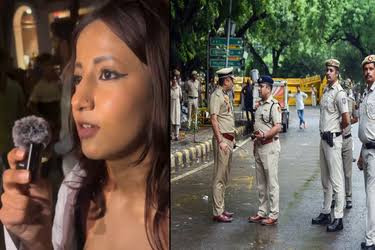
Agra: A special SC/ST court in Aligarh has sentenced five people to life imprisonment for kidnapping a 19-year-old Dalit girl in Sept 2007 to prevent her from testifying in her own rape case — a crime the UP court ruled was a “deliberate ploy to eliminate a key witness and derail the trial”. Despite almost two decades of search and investigation, she remains “untraceable”. The convicts — now aged between 40 and 50 years — were punished under IPC section 364 (kidnapping or abducting a person with the intent to murder them or put them in danger of murder) and section 3(2)(v) of SC/ST (Prevention of Atrocities) Act. Delivering the verdict, the court of special judge-II (SC/ST Act) Pratibha Saxena on Thursday observed that “the kidnapped girl has not been recovered even after 19 years” and held that “showing undue sympathy would embolden criminals and discourage victims and witnesses from coming forward”. On Sept 28, 2007, the girl’s father, filing the police complaint, claimed the accused — Amar Singh, Lekhraj, Babulal, Suresh (Hathras residents) and Usha Devi from Aligarh — armed with country-made pistols, barged into his house at a village in Aligarh district. The complaint stated: “They took away my daughter, who was a complainant in her rape case registered against some of the same accused. She was kidnapped to stop her from testifying in that case…” During trial in the kidnapping case, the prosecution examined seven witnesses and argued that the accused targeted the Dalit family to intimidate them and obstruct justice in the other case. “In the separate rape case which was being simultaneously heard before court, the accused were acquitted earlier this year. Sadly, the girl couldn’t appear and witnesses turned hostile. The kidnapping case was filed by her father six months after the rape case,” special public prosecutor Chaman Kumar Sharma said on Friday. Each convict has been awarded life sentences under IPC 364 and the SC/ST Act along with Rs 10,000 fine in each offence. Co-accused Satish Pandey was acquitted due to “lack of sufficient evidence”. Rejecting the leniency plea, the court said that “the justice system must reassure vulnerable sections of society that crimes against them, regardless of the accused’s influence, will invite stringent punishment”. Courtesy : TOI Note: This news is originally published on https:/timesofindia.com/bha and is used purely for non-profit/non-commercial purposes, especially human rights
Meerut: Attempted kidnapping of Dalit girl; police find her using drone in 3 hours; search for the accused continues

The girl’s family said they suspect the accused are from the same village, and the police are currently investigating. Meerut: A case of kidnapping of an 11th-grade Dalit girl has come to light in the district. Some unidentified youths forcibly dragged her into a field. Acting on information from local residents, police launched a search operation using drone cameras. After approximately three hours of effort, the girl was recovered safely, while the police are continuing to search for the absconding accused. SP City Vinayak Gopal Bhosale stated that the incident occurred in the Partapur police station area, where a Dalit minor girl was forcibly taken into the fields by some men. Local villagers became suspicious and informed the police. Upon receiving the information, the SSP arrived at the scene with his team and began a search using drone cameras. After approximately three hours of effort, the girl was recovered. The villagers also provided considerable support during this time. The SP stated that drone cameras are now being used to monitor the area. The accused youths will be identified and arrested soon. Efforts are also being made to interrogate the student so that the accused can be identified quickly. Meanwhile, the student’s family stated that they suspect the accused are from the village. Currently, the police are investigating from every angle. Courtesy: Hindi News
Eyewitness to Dalit youth murder case in Tehri arrested on rape charges

New Tehri, Diwakar Dimri, an eyewitness to the murder of Dalit youth Ketan Lal in Uttarakhand’s Tehri district, has been arrested on rape charges. Police announced this on Thursday. Police said Dimri was arrested on Tuesday evening on charges of raping a minor girl involved in the case. According to a police complaint filed by Dhanpal Lal, father of Ketan (18), a resident of Dewal village, at 11 pm on June 7, his son, along with his friend Dimri, arrived at the minor girl’s house in Kholgarh village at her call, where the girl’s family locked them in a room and severely beat them. The next morning, the minor girl’s father called Ketan’s family and asked them to take his son away. According to the complaint, when they reached Kholgarh, Ketan was found bleeding and died on the way to be taken for treatment. The injured Dimri was admitted to the district hospital for treatment. Now, with Dimri’s arrest, the incident that occurred last month in Kholgarh village in the Pratapnagar area has once again gained momentum, where the family members of the deceased staged a protest at the Collectorate on Thursday demanding the release of Dimri and the arrest of his alleged co-accused. However, Ketan’s family and villagers later ended the protest after District Magistrate Nitika Khandelwal assured them of a fair investigation. Earlier, the family members of the minor girl and the people of the area, who had long threatened to protest after Dimri’s arrest, postponed a planned protest and siege of the District Magistrate’s office on Wednesday. According to the police, a case of alleged rape was registered against Dimri on July 11 at the Lambgaon police station under various sections, including the Protection of Children from Sexual Offences (POCSO) Act, based on the complaint of the minor girl’s mother. During the investigation, he was arrested based on the victim’s statement and other evidence. Meanwhile, the deceased’s father, Dhanpal Lal, mother, Rukma Devi, along with other family members and villagers staged a sit-in protest at the Collectorate on Thursday, demanding the arrest of alleged co-accused in the Ketan murder case. The protesters alleged that other individuals were also involved in Ketan’s murder, against whom no action has yet been taken. They also claimed that the minor girl’s mother and others also played a role in Ketan’s beating. The protesters demanded that the case be heard in a fast-track court, all co-accused be arrested, the Forensic Science Laboratory (FSL) report be made public, and the arrest of arrested eyewitness Dimri. Investigating officer and Police Circle Officer Chandramohan Singh stated that the investigation is ongoing and four individuals have been arrested so far in connection with Ketan’s murder. He added that further action will be taken based on whatever facts and evidence emerge from the investigation. Deepti Shafiq This story has been auto-fed from Bhasha news agency. ThePrint is not responsible for its content. Courtesy: Hindi News
MP: Teacher brutally beats 8-year-old Dalit student for touching water bottle, FIR filed

A case of alleged untouchability and caste discrimination has come to light at a government school in Shivpuri district, Madhya Pradesh. The teacher allegedly beat an eight-year-old student with a stick and used casteist slurs for touching his water bottle. A shocking incident has come to light in Shivpuri district, Madhya Pradesh, raising serious questions about both the education system and society. It is alleged that an 8-year-old student studying in a government school drank water from a teacher’s water bottle. Angered by this, the teacher allegedly beat the child and used casteist slurs against him. Following the incident, the family filed a police complaint. According to an NDTV report, the incident occurred at the government primary school in Ukawal village, Kolaras tehsil, Shivpuri district. According to reports, the 8-year-old student, a Class 4 student, arrived at school as usual. While studying, he felt thirsty and drank water from the teacher’s water bottle in the classroom. It is reported that this sparked a dispute, and the teacher’s anger was directed at the innocent student. Family members and local residents allege that teacher Lokesh Sharma became angry when the student touched his water bottle. They say the teacher first scolded the student and allegedly used casteist slurs against him. It is alleged that the teacher then brutally beat the student with a stick, saying, “How dare you touch my bottle?” The child returned home crying. When the student returned home after the beating, he was terrified. He informed his family about the incident. The family was shocked to hear his story. The family says that treating a young child in this manner simply for drinking water is a very serious matter. Following this, the family decided to take legal action and filed a complaint at the police station. FIR Registered On the complaint of the victim’s family, the Lukwasa police station in the Kolaras police station area has registered a case against the accused teacher, Lokesh Sharma. The police have registered a case under sections 296(A) and 115(2) of the Indian Penal Code (IPC). They have also taken action against the accused under sections 3(1)(d), 3(1)(d), and 3(2)(v) of the Scheduled Castes and Scheduled Tribes (Prevention of Atrocities) Act. Police Engaged in Investigation According to police officials, an investigation has been initiated into the case. Further action will be taken based on the complaint, witness statements, and other available evidence. Officials say that necessary legal action will be taken as per the law after the investigation is complete. Meanwhile, there is an atmosphere of anger in the village and surrounding areas following the incident. Locals say that schools are places to impart the message of education, equality, and respect to children. In such a context, the emergence of such allegations is extremely serious and worrying. Such incidents have happened before. It should be noted that similar incidents have occurred before. In April of last year, a 15-year-old Dalit student in Agra suffered fractures to two fingers and serious injuries to his thigh, shoulder, and jaw. It was alleged that a teacher beat him for touching a water bottle. This incident occurred at a private higher secondary school in Haripur. The student told the English newspaper TOI, “I was thirsty, and when I saw a water bottle on the table, I picked it up. As soon as I touched the bottle, my teacher, Mangal Singh Shakya, became angry and said, ‘How dare you touch the bottle? It’s no longer fit to be touched. Who will drink from it?’” The boy said that Shakya locked him in a room after school and beat him severely. A similar incident also occurred in Rajasthan in July 2022. A nine-year-old Dalit student died after being allegedly beaten by a teacher for drinking water from a water pot at a private school in Jalore district, Rajasthan. The victim was a student at a private school in Surana village, Jalore district. He was beaten on July 20 and later died at a hospital in Ahmedabad, Gujarat. Courtesy: Hindi News
Life imprisonment for raping a Dalit girl: POCSO court in Ambedkar Nagar also imposed a fine of 40,000 rupees, ruling in a 6-year-old case.

In the case of rape of a Dalit girl in the Jaitpur area of Ambedkar Nagar, Special Judge under the POCSO Act, Mohan Kumar, convicted the accused, Anand Singh alias Jhinak Singh, and sentenced him to life imprisonment. The court also imposed a fine of 40,000 rupees. According to the prosecution, the incident occurred on September 11, 2020. The accused, Anand Singh alias Jhinak Singh, a resident of Bhitaura South, gagged a Dalit girl who was outside her house, dragged her into the bushes, and raped her. When she resisted, the accused beat her and threatened to kill her. Charge sheet filed after investigation Following the incident, the police registered a case based on the complaint of the victim’s family. After the investigation was completed, the charge sheet was filed in the court. During the hearing, statements and evidence from the victim and other witnesses were presented before the court. The court delivered its verdict based on the evidence. The prosecution demanded a harsh punishment for the accused. Despite the defense’s arguments, the court deemed the available evidence and witness statements sufficient and convicted the accused. Sentence under the SC-ST Act and rape sections The special judge sentenced the accused to life imprisonment and a fine of ₹10,000 under the SC-ST Act. He also imposed various sentences under other sections, including 20 years of rigorous imprisonment for the crime of rape. The court also ordered a copy of the verdict be sent to the District Legal Services Authority to provide compensation to the victim. Arunesh Pratap Singh | Ambedkar Nagar Courtesy: Hindi News
Samajwadi Party’s ‘PDA’ Strategy On General Seats: Akhilesh Yadav To Field Over 100 Dalit Candidates In UP Assembly Polls
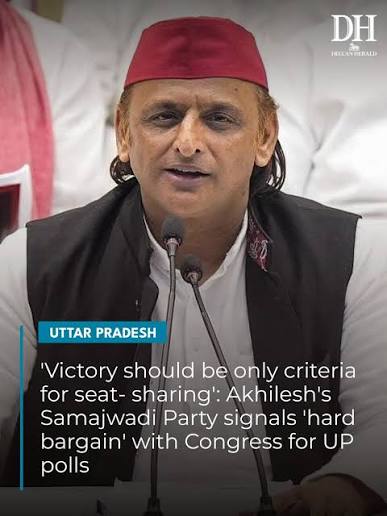
UP Assembly Election: Samajwadi Party is expanding its ‘PDA’ strategy for the 2027 UP Assembly elections, with Akhilesh Yadav planning to field over 100 Dalit candidates, including on general seats. This move aims to broaden SP’s voter base and challenge BJP’s social engineering in the state. Strategy aims to challenge BJP’s social engineering in UP. Jagran Correspondent, Lucknow: With just a few months remaining in the much-awaited Uttar Pradesh Assembly election, the Akhilesh Yadav-led Samajwadi Party (SP) has begun preparing its strategy. It is planning to expand the formula of “PDA” (Backward, Dalit, and Minority), the strategy that helped the Samajwadi Party in the 2024 Lok Sabha election as it emerged as the single largest party in the state. SP To Expand PDA Strategy As per the reports, along with seeking votes on the PDA formula, the socialist party is also planning to field candidates on this formula to target a larger voter base. Akhilesh Yadav is preparing a “2.0” version of the PDA formula, in which the “D” (Dalit) category of the PDA will also be assured a greater share. The reports suggest that along with the reserved seats, Akhilesh Yadav is in favor of fielding Dalit candidates on general seats as well. As per the experts, the effort is likely to increase the party’s acceptance among Dalit and non-Yadav backward voters while also challenging the BJP’s social engineering. More Dalit Candidates Likely Earlier in the 2022 assembly elections, the Samajwadi Party fielded Dalit candidates on only three general seats, in addition to the reserved seats. However, it is considering fielding Dalit and tribal candidates on over 100 seats, including 15 to 20 general seats in the 2027 polls, reported Jagran, citing sources. The party reportedly believes that fielding Dalit candidates on general seats will lead to political polarization in those seats, as well as in surrounding regions. The strategy could help the Akhilesh Yadav-led party in Western Uttar Pradesh and other regions where Dalits are in significant numbers. With this move, the SP also aims to weaken the BJP’s non-Yadav backward class and non-Jatav Dalit alliance. This equation has benefitted the saffron party for the past decade; however, the Samajwadi Party managed to make a dent in the last Lok Sabha elections. By Aditya Jha Courtesy : The Daily Jagran Note: This news is originally published on https:/thedailyjagran.com/bha and is used purely for non-profit/non-commercial purposes, especially human rights
Rape of Dalit girl in Nasirabad… Accused still absconding: Lok Janshakti Party and villagers protest, Samajwadi Party threatens agitation.
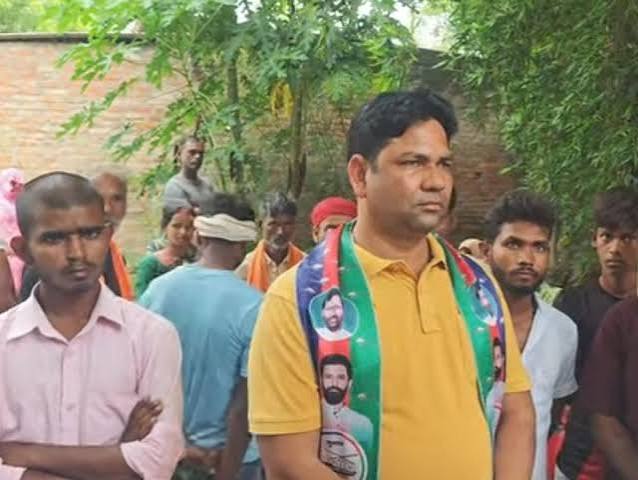
Lok Janshakti Party (LJP) workers and villagers protested on Thursday against the non-arrest of the absconding accused in the rape case of a Dalit girl in the Nasirabad police station area of Rae Bareli. Meanwhile, a delegation of the Samajwadi Party (SP) also met with the victim’s family and demanded immediate action. The incident dates back to last Tuesday, when a case was registered under sections of the rape and SC/ST Act for the rape of a Dalit girl. Police have arrested Prem Sagar Tiwari, but the other four accused are still reported to be absconding. Lok Janshakti Party, Amethi District President, Dharmraj Paswan, visited the victim’s family. The family alleged that the arrest of the remaining accused was being delayed and they were receiving constant threats. Following this, party workers and villagers protested in the village and demanded the immediate arrest of all the absconding accused. Assurances given to protesters Upon receiving information about the protest, Paraiya Namaksar outpost in-charge Atul Kumar Tripathi arrived at the scene with police force. During this, there was a minor altercation between the protesters and the police regarding the arrest of the accused. The police assured the protesters that continuous efforts were being made to arrest the absconding accused and that action would be taken soon. Following this, the protest ended. Demand for fair and strict action Meanwhile, a delegation from the Samajwadi Party also met with the victim’s family. SP leader Chaudhary Suresh Nirmal warned that if the absconding accused were not arrested within 24 hours, the party would launch a major agitation regarding the matter. He demanded fair and strict action from the police administration. LJP’s Chhavilal Pasi, Rakesh, Pushpendra, Ramesh and several other villagers were present on the occasion. Ashar Fapur (Salon), Rae Bareli Courtesy: Hindi News
32% Dalit Vote In Play: Why Every Party In Punjab Is Racing To Own Guru Ravidas Jayanti

Since the Jayanti is on February 20, it will fall right in the middle of the election campaign, making it a major event for all the parties Ahead of the Punjab Assembly elections, Guru Ravidas Jayanti has become more than just a religious occasion. With the Ravidasia community wielding considerable electoral influence, particularly in the Doaba region, every major party is using the celebrations to reinforce its outreach to Dalit voters. Guru Ravidas was a revered 14th-15th-century Bhakti movement saint, poet, and social reformer. He has a massive following among Scheduled Castes in Punjab. Punjab has the highest Dalit population in the country at around 32%, according to the 2011 Census. The community plays a decisive role in the electoral outcome of several assembly constituencies, making it a key political constituency for all major parties. Since the Jayanti is on February 20, it will fall right in the middle of the election campaign, making it a major event for all political stakeholders in the state. The Centre’s launch of a special train for Guru Ravidas Jayanti is also likely to add a political dimension to the festivities. The BJP is projecting the launch of the special train as part of the Narendra Modi government’s efforts to facilitate pilgrimage and honour the legacy of Guru Ravidas. The party is showcasing the initiative alongside its outreach to Ravidasia deras and religious institutions, seeking to strengthen its connect with SC voters. The BJP is also using the occasion to expand its social base beyond its traditional urban support. The BJP has already kickstarted seven-month-long celebrations from UP to Punjab under the banner of ‘Samrasta Sankalp Abhiyan’, coinciding with the 650th birth anniversary of Guru Ravidas. The ruling AAP government is highlighting the measures it has taken to mark Guru Ravidas Jayanti, including declaring it a public holiday, organising state-supported celebrations and facilitating devotees travelling to places associated with Guru Ravidas. The party is expected to present these initiatives as part of its broader commitment to respecting all faiths, while combining them with welfare and governance measures targeted at disadvantaged communities. The celebrations are likely to be used to reinforce AAP’s outreach to Dalit voters, who form a key pillar of its electoral support in Punjab. The Congress is expected to leverage its traditional support base among the Ravidasia community, particularly in the Doaba belt, by increasing the visibility of its senior Dalit leaders during the celebrations. The party is likely to argue that while symbolic gestures have their place, the place in Sikhism, with his hymns enshrined in the Guru Granth Sahib, while projecting itself as a party rooted in Punjab’s religious and social ethos. The Akali Dal is also likely to step up its engagement with Ravidasia organisations as it seeks to rebuild its support base before the 2027 polls. Reported by: Gurpreet Singh Chhina Edited by: Mohd Asim Courtesy : NDTV Note: This news is originally published on https:/ndtv.com/bha and is used purely for non-profit/non-commercial purposes, especially human rights
Shravasti News: LJP to hold Dalit Chaupal on August 1
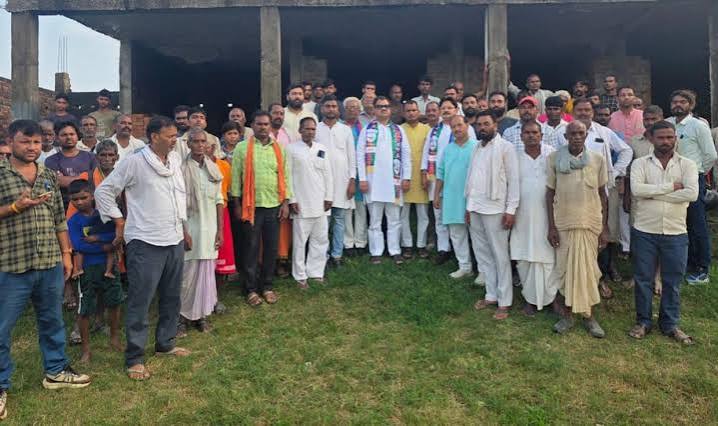
Shravasti. The Lok Janshakti Party (Ram Vilas) will organize a Dalit Chaupal program on August 1 in Sangampurwa village of Jamunaha tehsil. The chief guest at the program will be MP and Uttar Pradesh in-charge Arun Bharti. A divisional review meeting was held on Wednesday regarding the preparations for the program, chaired by District President Rahul Paswan. Program coordinator and State Vice President Manoj Pathak stated that the Chaupal is being organized to strengthen the party’s hold among Dalits. Officials from all districts of the division attended the meeting, and the program outline was prepared. Devipatan divisional president Jatashankar Valmiki, Ashwani Srivastava, Balrampur district president Gaurav Singh, and Bahraich district president Yunus Parvez, among others, were present. Courtesy: Hindi News