
Dalit woman demands action against Jangaon Collector, others under SC/ST Act
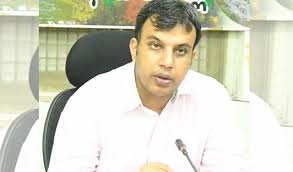
A Dalit woman in Jangaon has sought action under the SC/ST Act against the district Collector and officials, alleging harassment, casteist remarks and attempts to remove her tea stall, leading to financial loss and distress. Jangaon: A Dalit woman has lodged a complaint with the Jangaon police seeking registration of a case under the SC/ST (Prevention of Atrocities) Act against district Collector Sandeep Kumar Jha. In the complaint submitted to Jangaon Inspector of Police Satyanarayana Reddy, she also sought registration of a case against DRDO N Vasantha, Municipal Commissioner Maheshwar Reddy, Jangaon town revenue inspector Venkateshwarlu and staff under the Act. The woman, Palamakula Chinna Manjula of Erragollapahad village of Jangaon mandal, in her complaint on March 16, stated that a Vanitha tea stall was sanctioned to her under the Indira Mahila Shakti Scheme by allotting a site at a corner outside the district collectorate. The previous district Collector, Rizwan Basha Shaik, had provided a kiosk, power and water connection and inaugurated the tea stall on March 6, 2025, along with DRDO and district officials. However, Municipal Commissioner Maheshwar Reddy, tahsildar Mosim, RI Venkateshwarlu and staff tried to remove the tea stall with an earthmover and crane on March 11, stating that it was on the orders of the Collector, Sandeep Kumar Jha. When she pleaded with them not to damage the tea stall, they went back. The next day, they returned to remove the stall while making casteist remarks, saying that she had no right to run the stall there and would face serious consequences if the place was not vacated. On the other hand, the electricity department disconnected the tea stall’s power connection. As a result, she incurred a loss of Rs 10,000 as milk and other items in the fridge were damaged, Manjula lamented. The woman said that she had taken private loans worth Rs 3 lakh to develop the tea stall while repaying instalments of a Rs 3 lakh loan provided to her under the scheme. She sought legal action against the above officials for causing her financial loss and mental trauma. The police were yet to act on her complaint. It may be recalled that Sandeep Kumar Jha, when he was Sircilla Collector in February this year, faced severe criticism as he reportedly ordered the closure of a tea stall in Sircilla town because its owner Bathula Srinivas displayed a photo of BRS working president KT Rama Rao. Courtesy : Telangana Today Note: This news is originally published on https:/telanganatoday.com/bha and is used purely for non-profit/non-commercial purposes, especially human rights
2016 Una flogging case: Five convicts sentenced to five years in prison
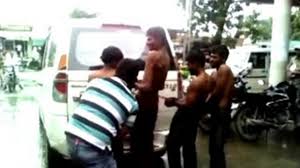
A special court on Tuesday (March 17, 2026) sentenced five convicts in the 2016 Una flogging case in which four Dalit men were thrashed when they were trying to skin the carcass of a cow to imprisonment of five years and imposed a fine of ₹ 5,000 on each of them. A day earlier, the special court in Veraval convicted five persons and acquitted 35 others in the flogging case, while the case against a policeman was abated due to his death. The trial against a juvenile is pending. Una Dalit victims to convert to Buddhism The incident, which occurred in Mota Samadhiyala village, had triggered massive protests across the country after videos of the attack went viral. On Tuesday, the court of special SC/ST atrocities cases judge JJ Pandya sentenced the five accused to a five-year jail term under the provisions of the SC/ST (Prevention of Atrocities) Act. Gujarat has history of atrocities and discrimination against Dalits Apart from a maximum jail term of five years, the court also sentenced them to three-year imprisonment under sections 323 and 324 of the Indian Penal Code, one-year imprisonment under section 342, and a jail term of two years under section 504. All the sentences will run concurrently. Defence lawyer Vijay Kumar said that four out of these five convicts have already served more than six years in jail, while another one has been in jail for the last four years and two months, and will be required to undergo the remaining jail term. The convicts are identified as Ramesh Jadhav, Rakesh Joshi, Nagji Vaniya, Pramodgiri Goswami, and Balwatgiri Goswami. while the trial against a juvenile is pending. The court had examined 260 witnesses during the course of the trial. The incident occurred at Mota Samadhiyala village near Una town of Gir-Somnath district on July 11, 2016, when four Dalit youths, as part of their traditional profession, were skinning the carcass of a cow that had died earlier in some other village. The accused, self-proclaimed cow vigilantes, flogged the youths, who were then illegally put in the lockup and thrashed by police personnel as well. It was alleged that the four Dalits were thrashed for almost 4-5 hours. Police allegedly connived with the perpetrators and forged some FIR-related documents to help them. Villagers from nearby areas had attempted to rescue the Dalit youths, but were threatened by the accused. The villagers then called the police control rooms in Gandhinagar and Ahmedabad. Courtesy : The Hindu Note: This news is originally published on https:/thehindu.com/bha and is used purely for non-profit/non-commercial purposes, especially human rights
Barbers community launches campaign against untouchability

Caption: Akhila Karnataka Sri Shivasharana Hadapad Appanna Samaj Seva Sangha has launched ‘Kshourikara Nade Dalitara Keriya Kade’ (Barbers’ move towards Dalits’ colonies) campaign to sensitise barbers not to follow untouchability while offering hair cutting services Hubballi: Repeated instances of denying hair-cutting services for Dalits are often reported. Members of the barbers’ community are helplessly following untouchability, yielding to indirect pressure from upper castes. Now, community heads and seers are launching a state-wide awareness campaign against untouchability. They are holding meetings at taluk level and explaining the legal and social aspects of untouchability. They are also warning that if someone observes untouchability, the community will not come to their help, and it requests the authorities to initiate action against such salons. Annadana Bharati Appanna Mahaswamiji, Sukshetra Hadapad Appanna Peetha, Tangadagi, said that a campaign titled ‘Kshourikara Nade Dalitara Keriya Kade’ (barbers move towards Dalit colonies) was launched recently. “We started the campaign from our mutt in Tangadagi, and two programmes—one in Karjagi, Haveri district, and another in Chikkenakoppa in Koppal district—have been held already. We first hold a meeting of the barbers’ community and sensitise them about social equality propagated by Basavanna and other Sharanas of the 12th century. Later, we hold an open programme at a Dalit colony, where we invite barbers, Dalits, upper-caste people of the village, and elected representatives of the area. We also educate barbers about legal consequences if untouchability is observed. We are getting a good response from both communities. Many people of upper castes are also joining the campaign,” he explained. He further said, “We have a plan to take up this campaign across the state, and we do it whenever possible, since we have limited resources.” Devu Hadapad, state president, Akhila Karnataka Sri Shivasharana Hadapad Appanna Samaj Seva Sangha, Bengaluru, said that barbers are facing indirect pressure and blackmail techniques from upper-caste people in rural areas. “We observe that the Dalit population is 25% while the upper caste is 75% in villages. If we offer our services to Dalits, upper-caste people deny and boycott our services, citing untouchability. This trend is forcing barbers to follow untouchability painfully. A few Barbers were victims of untouchability cases. To put an end to this menace, we launched the campaign ‘Kshourikara nade Dalitara keriya kade’ to build confidence among barbers, Dalits, and all other communities,” he stated. Krishna Hadapad from Gadag District Savita Samaj said that offering services to everyone, without seeing their social or financial status, is the tradition of Savita Samaj. “If some salons observe untouchability, we will condemn their unconstitutional move. We will invite Savita Samaj’s state functionaries to Gadag and convene a meeting with Dalit and progressive activists to build confidence between barbers and Dalits soon,” he asserted. Courtesy : TOI Note: This news is originally published on https:/timesofindia.com/bha and is used purely for non-profit/non-commercial purposes, especially human rights
Congress MLA’s PA arrested for cheating dalit woman in Bhupalpally

Chityal police arrested and remanded the personal assistant of Bhupalpally MLA Gandra Satyanarayana Rao for allegedly cheating a Dalit woman by promising marriage. The accused was also booked under provisions of the SC/ST (Prevention of Atrocities) Act Bhupalpally: Chityal Police in the district arrested and remanded Gandra Satyanarayana Rao’s personal assistant, Ch Srinivas, for allegedly cheating a Dalit woman. Srinivas was accused of physically exploiting the woman, promising to marry her while making arrangements to marry another woman. When the Dalit woman confronted him about the matter, he verbally abused her using her caste identity. When a panchayat was held in the presence of family elders, he refused to marry the Dalit woman. Based on a complaint by her parents, Srinivas was booked under the provisions of the Scheduled Castes and Scheduled Tribes (Prevention of Atrocities) Act besides Sections 69 (false promise of marriage), 296(b) (uttering obscene words) and 351(2) (criminal intimidation), informed CI Mallesh Yadav. Courtesy : Telangana Today Note: This news is originally published on https:/telanganatoday.com/bha and is used purely for non-profit/non-commercial purposes, especially human rights
Mayawati Lashes Out at Rahul Gandhi: Asks—How Can the Very Congress Against Which the BSP Was Formed Now Propose to Award Kanshi Ram the Bharat Ratna?

BSP Supremo Mayawati has lashed out at Congress leader Rahul Gandhi. Speaking on Saturday, she stated: “The very Congress—whose anti-Dalit mindset led to the formation of the BSP, and which failed to declare a period of national mourning upon Kanshi Ram’s passing—is now talking about awarding him the Bharat Ratna. Therefore, one must remain vigilant against the Congress.” Notably, on Friday, the Congress party organized an event in Lucknow to mark Kanshi Ram’s birth anniversary—a first for the party. During the event, a resolution was passed demanding that Kanshi Ram be conferred with the Bharat Ratna. It was decided that this demand would be raised in Parliament through Rahul Gandhi. Speaking at the event, Rahul Gandhi remarked: “Kanshi Ram advocated for equality within society. Had Jawaharlal Nehru been alive today, Kanshi Ram would have served as a Congress Chief Minister. However, the BJP has now divided society into two segments: the ’15 percent’ and the ’85 percent.’ Only the 15 percent are reaping the benefits, while the remaining 50 percent have been marginalized and isolated.” Key Points Raised by Mayawati… 1. The Congress Never Honored Babasaheb:** Writing on ‘X’ (formerly Twitter), Mayawati stated: “It is a well-known fact that the Congress party held power at the Centre for a prolonged period; yet, it never accorded due respect to the ‘Messiah of Dalits’ and the ‘Architect of the Indian Constitution,’ Babasaheb Dr. Bhimrao Ambedkar. Nor did it ever confer upon him the Bharat Ratna. Given this history, the pertinent question arises: How can the very same Congress party now propose to award the Bharat Ratna to Kanshi Ram?” 2. Congress Failed to Declare National Mourning Upon Kanshi Ram’s Demise:** The former Chief Minister observed: “Upon Kanshi Ram’s passing, the Congress government failed to declare even a single day of national mourning. At that time, the Samajwadi Party (SP) was in power in Uttar Pradesh, and it, too, failed to declare any state mourning. Similarly, numerous Dalit organizations and political parties—formed under the influence of other political factions—have consistently sought to merely exploit his name for their own political gain.” 3. Parties Employing Tactics to Weaken the BSP: Mayawati stated, “Today, various parties are engaged in weakening the BSP by employing a multitude of tactics. Therefore, our followers and supporters need to remain vigilant.” 4. Need to Be Wary of the Congress Party: The BSP Supremo remarked, “We need to be wary of the Congress party, as it was precisely due to its anti-Dalit mindset that the BSP had to be formed. I appeal to our party workers to ensure the success of the programs organized on March 15, 2026—the birth anniversary of Kanshi Ram—across the entire country, including Uttar Pradesh.” Mayawati also issued a press release. Here is what she said: The BSP Supremo stated, “Kanshi Ram carried forward the ideals of Dr. Bhimrao Ambedkar. By organizing the Dalit community, he empowered them politically. Today, the Congress and the SP are invoking Kanshi Ram’s memory solely for their own political gain. This is sheer opportunism.” “The reality is that casteist thinking and the politics of discrimination persist to this day. The reservation norms established for Dalits and Backward Classes are being diluted. Consequently, the system of exploitation is being further entrenched. In such a scenario, the crucial question remains: how can the Bahujan Samaj place its trust in these parties and their leaders?” “Therefore, listen to what everyone has to say, but under no circumstances allow your unity—and the power of your vote—to fall into the hands of self-serving leaders. This would be the truest tribute to the struggles of Baba Saheb and Kanshi Ram.” At JNU, Prof. Vivek Kumar observed that the Congress party remained in power in this country for over 70 years, yet during that entire period, it never once thought of the Dalits. Now that they have been ousted from power, they are merely feigning respect for prominent Dalit icons. “Why did the Congress never promote a Dalit leader to a prominent position within the party? Why was Dr. Ambedkar compelled to leave the Congress? Ultimately, why did the condition of Dalits fail to improve during their rule? Why did Kanshi Ram find it necessary to form a separate political party specifically for Dalits?” “Furthermore, in the states where the Congress currently holds power, why are they not appointing Dalits to key, high-ranking administrative positions?” The truth is that, for them, Dalits are merely a vote bank. The Congress party may use Dalits as a stepping stone to ascend to power, but it will never seat them upon the throne of power itself. **Understanding the Power of Dalit Voters in UP** Dalits constitute 21% of the electorate in Uttar Pradesh. Out of the state’s 403 Legislative Assembly seats, 84 are reserved for Scheduled Castes (SCs). Furthermore, there are 40 to 50 additional seats where Dalits make up between 20% and 30% of the voting population. In essence, Dalits hold a decisive influence over 130 seats across the state. In the 2022 Assembly elections, the BJP and its allies secured victory in 63 of the 84 reserved seats. In contrast, the Samajwadi Party (SP) achieved success in 20 seats, while one seat went to Raja Bhaiya’s party, the Jansatta Dal Loktantrik. In Lucknow, Rahul Gandhi spoke for 35 minutes in an effort to woo the Dalit vote. The occasion was the birth anniversary of Kanshi Ram; however, the Modi government was the primary target of Rahul’s address. Speaking before the Dalit audience, Rahul invoked the name of Narendra Modi far more frequently than that of Kanshi Ram. He asserted, “Narendra Modi does not subscribe to the ideology enshrined in the country’s Constitution. Go to Apollo Hospital sometime and look at the doctors’ nameplates; nowhere will you find the 85% [Dalits and Backward Classes] represented. You will not find Dalits or members of Backward Classes among the CEOs of major corporations.” Courtesy: Hindi News
Kanshi Ram Becomes Indispensable to All Parties; Fierce Race to Woo the Dalit Vote Bank Intensifies

These days, a visible competition is unfolding among all political parties to commemorate BSP founder Kanshi Ram. These days, a visible competition is unfolding among all political parties to commemorate BSP founder Kanshi Ram. This is not merely a gesture of symbolic respect; rather, it is driven by the underlying power of the Dalit vote bank. This is precisely why, alongside the BSP, the Samajwadi Party and the Congress are also actively involved in celebrating Kanshi Ram’s birth anniversary, whereas the BJP appears relatively subdued in this regard. **The SP’s Strategy** BSP founder Kanshi Ram’s birth anniversary falls on March 15. Ahead of this date, all major parties have already announced various commemorative programs. The BSP is organizing a public rally in Lucknow, while special events are also being held in other states. The Samajwadi Party has announced that it will celebrate Kanshi Ram’s birth anniversary across all districts. The Congress, for its part, organized a birth anniversary ceremony and a ‘Dalit Dialogue’ session on Friday. Speaking at the event, Rahul Gandhi—the Leader of the Opposition in the Lok Sabha—drew a lifelike sketch of Kanshi Ram using his pen and asserted that Kanshi Ram should be conferred with the Bharat Ratna. Rahul Gandhi further remarked that had Jawaharlal Nehru been alive, Kanshi Ram would have become a Chief Minister. **Electoral Calculus and the Significance of the Dalit Vote** According to analysts, the sudden surge of affection for Kanshi Ram among various parties is merely a component of their political strategy. In Uttar Pradesh, the Dalit population stands at approximately 21%, and 85 of the state’s Assembly seats are reserved for Scheduled Castes (Dalits). Furthermore, even in the remaining constituencies, the Dalit vote bank possesses the potential to significantly influence electoral outcomes. Ramakant Shukla Courtesy: Hindi News
Brutal Attack on Dalit Family by Local Bullies in Chhatarpur; Mother and Daughter Injured

Chhatarpur: In the Chhatarpur district of the Bundelkhand region, the reign of terror unleashed by local bullies against Dalits shows no signs of abating, even today. A recent incident has come to light in which a young Dalit man was beaten with shoes simply for using his mobile phone while standing at a shop; when the women of his family rushed to his rescue, they too were attacked with axes and sticks. The injured victims have been admitted to a hospital by the police, where they are currently undergoing treatment. Dalit Family Beaten with Shoes Over a Trivial Dispute The dominance of local bullies in Maharajganj village—located within the jurisdiction of the Civil Lines Police Station in Chhatarpur district—was starkly demonstrated when a Dalit family was publicly beaten with shoes over a trivial matter. The young Dalit man’s only transgression was that he was standing at a village shop and using his mobile phone. The victim, Virendra Ahirwar, stated, “The bullies first beat me with their shoes and hurled caste-based slurs at me; subsequently, they attacked us with sticks and axes, injuring four members of my family.” Specifically, the victim, Virendra Ahirwar—a resident of Maharajganj village under the Civil Lines Police Station area—recounted, “On Friday night, I went to the village shop to purchase some supplies. During this time, Bharat Lal Patel, G. Lal Patel, and another local bully from the same village began verbally abusing me and physically assaulting me.” When Virendra’s father, Bhagirath Ahirwar; his mother, Habbu Bai Ahirwar; and his sister, Naina Ahirwar, arrived to intervene, the accused attacked them as well—using shoes, sticks, and an axe—while continuously hurling caste-based slurs. **Four Members of Dalit Family Injured** Four members of the family sustained severe injuries during the incident. Upon receiving information about the matter, the Civil Lines police reached the scene and transported all the injured individuals to the District Hospital, where they are currently undergoing treatment. Meanwhile, the police have registered a case against the accused in connection with the incident and have initiated an investigation. **The Victim’s Allegations** Speaking on the matter, the victim, Virendra Ahirwar, stated, “I had gone to the village shop to purchase some supplies. I started using my mobile phone while at the shop; this led to me being beaten with shoes initially, and subsequently, my family members—who had come to my rescue—were also assaulted. However, we are not satisfied with the police’s actions; the specific legal sections that should have been invoked in this case have not been applied.” **The Police’s Response** Regarding the incident, Civil Lines TI (Town Inspector) Satish Singh stated, “An FIR has been registered against the accused in this matter. The injured individuals have been admitted to the hospital, and a search for the accused is currently underway.” Courtesy: Hindi News
Dalit and Adivasi food on the menu, stigma on the plate. ‘I was told it is fed to cattle’

At a Heritage Dialogues talk, author Shahu Patole and food entrepreneur Aruna Tirkey discussed Dalit and Adivasi food traditions and why many still hide or disown what they eat. Dalit and Adivasi food traditions, long stigmatized, are now appearing in mainstream menus and books. Writer Shahu Patole and entrepreneur Aruna Tirkey are documenting and reviving these cuisines, promoting cultural pride and sustainable livelihoods. Tirkey’s restaurant, Ajam Emba, champions Adivasi ingredients like millet, combating historical prejudice and internalized stigma surrounding these vital foods. New Delhi: A millet that farmers grow for their cattle. Sausages made with animal blood. A kheer sweetened with mahua flowers foraged from the forest floor. Foods that Dalit and Adivasi families have eaten for generations, out of necessity, and usually behind closed doors, are now appearing in restaurant menus and books. At Humayun’s Tomb Museum, Dalit writer Shahu Patole and Adivasi food entrepreneur Aruna Tirkey spoke about how culinary traditions and recipes from their communities are disappearing, and their initiatives to document them— even as the internalised stigma around these foods lingers. The talk, held on 27 February as part of the public lecture series The Heritage Dialogues, was titled ‘Pride and Prejudice on the Indian Plate: What We Can Learn from Dalit and Adivasi Cultures Today’. For Patole, author of The Dalit Kitchens of Marathwada, culinary practices such as meat drying or eating the carcasses of certain animals have long been obscured by caste taboos and politics. “Adivasis and Dalits are never vegetarian,” said Patole. “Dalit food is about survival. Whatever my grandparents ate to survive is why I am still alive. My simple objective was to find what my community ate, not to criticise other communities or castes.” Tirkey’s efforts to revive the food traditions of her Oraon community are hands-on. In Ranchi, she runs Ajam Emba, a restaurant and training centre specialising in Adivasi ingredients and cooking traditions. It’s part of a movement to champion slowly disappearing Adivasi food practices. For anyone living in an Indian city, the menu would seem exotic, with ingredients such as mahua flowers, jirhul flowers, roselle, and dozens of local leafy greens. Seasonal offerings include dishes like madua (finger millet) momos, rice tea, and desi chicken bhaat. Over the course of two hours, the discussion ranged from identity and discrimination to sustainability and food supply chains. A new life for gondli One of the accomplishments Tirkey is most proud of is reviving gondli, a type of millet, through her restaurant. The grain, which was once seen as unfit for human consumption, now appears in dishes such as gondli kheer and millet momos at her restaurant. “When I went to buy gondli in the local market years ago, I was told it is fed to cattle,” said Tirkey. That encounter gave Tirkey the idea for Ajam Emba. She realised she wanted to bring back heirloom grains rooted in local food traditions while also creating livelihoods. The restaurant was launched in 2017, well before fancy millet preparations became a staple of state banquets for foreign dignitaries. “Now with the millet revival, its prices have soared, and it’s become a delicacy,” she added. “These ingredients have a low carbon footprint, require little or no inputs, and include a wide variety of uncultivated foods.” At the restaurant, food is served in reusable earthen pots and plates, as well as biodegradable leaf plates. Takeaways are packed in raw green sal leaves. Everything is sourced from local growers, and the kitchen is managed entirely by tribal women and girls. “Our approach is to link indigenous food revival with female entrepreneurship and employment, making it a sustainable business model,” said Tirkey. Her endeavour is also to instil pride in local food traditions, and create awareness about hyperlocal ingredients and cooking practices — something Patole’s book also attempts. A glossary of Dalit food In 2015, Patole’s book was published as Anna He Apoorna Brahma (‘food is an incomplete creation’). The title plays on the popular Marathi proverb Anna he poornabrahma, which means food encompasses all of creation. The book was later translated into English by Bhushan Koragaonkar as The Dalit Kitchens of Marathwada in 2024. “I wrote my book in Marathi, and no one cared. But when it came out in English translation, everyone called it a great literary work,” said Patole. The recipes in the book are foods everyone in his community would recognise, according to him. Many even asked why he needed to write about them. But for Patole, it was about creating a glossary that no one else had bothered to compile. “I looked at Hindu mythological texts where the four varnas have been mentioned, along with what each should eat. We come under tamasic, perhaps even below that,” Patole said. “A common proverb in these texts says you become what you eat. But most people do not have a choice in what they eat, and yet certain qualities are attached to each food group. I have tried to bring together these different ideas in my book.” One chapter describes hunting rabbits and ghorpads (monitor lizards) for their meat at the start of the monsoon, as well as eating the eggs of pigeons, quails, ducks, and peahens when they could be found. Preparation methods and cultural meanings are described in sensory detail. Through Savarna eyes Dalits often look at themselves through the eyes of the upper castes, according to Patole. Many disavow the community’s traditional practices. “Everyone wants to hide, and say things like ‘We don’t eat all that’. There is an aspiration to be like the upper castes. Eating their food will not make us them. As long as there is a caste system, no matter what you eat, you cannot change your caste,” said Patole. Tirkey agreed. “Since gondli has been associated with poverty, local people will grow and sell it, but they will still not eat it,” she said. At the same time, some of these foods are getting new traction. Many even romanticise the ‘forbidden’ foods of Dalits, Patole
Dalit Family Beaten, Woman Dragged by Hair and Threatened With Gun at Wedding in Lakhimpur Kheri; FIR Not Filed for Two Days
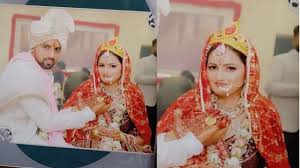
Victim’s family releases video threatening suicide if case not registered; Bhim Army warns of protest at SP office; accused allegedly linked to Bajrang Dal.Middle East news A Dalit family in Lakhimpur Kheri threatened to end their lives on social media after police refused to register an FIR two days after a brutal caste attack. A deeply disturbing incident of caste-based violence that took place on March 10 in the Tikunia police station area of Lakhimpur Kheri district, Uttar Pradesh, has come to light after the victim’s family released a video on social media threatening to end their lives if an FIR was not registered within 24 hours. Two days after lodging a complaint, no case had been registered, and the accused remained free. According to the victim’s family, during a marriage ceremony, a group of around 40 people from the Awasthi family forcibly pulled family members off the road, locked them inside a room and subjected them to brutal physical assault. The attackers allegedly hurled casteist abuses throughout the attack. A woman in the family had her hair pulled, was crushed underfoot and was threatened with being shot. The victim also alleged in her complaint that her son’s clothes were smelling of urine, suggesting he too was subjected to humiliation during the assault. Police arrived at the scene and managed to extract the victims from the locked room, but no arrests were made, and no FIR was registered despite the seriousness of the incident. Station In-Charge Accused of Pressuring Family to Compromise What has drawn equal outrage is the alleged conduct of the Tikunia police station in-charge after the incident. The victim’s family and Bhim Army State Coordinator Dr Kuldeep Bhargava alleged that instead of registering a case, the station in-charge was pressuring the family to reach a compromise with the accused and was actively working to protect them. The accused are said to be officials associated with the Bajrang Dal, which the family and activists say explains the alleged police reluctance to act. The victim’s family released a video on social media detailing the attack and warning that if the FIR was not registered within one day, they would take their own lives. The video quickly went viral, with large numbers of users tagging UP Police and the Director General of Police demanding immediate action. Bhim Army Warns of Protest, Demands SC/ST Act Case Bhim Army District General Secretary Advocate Deepak Jatav warned that if the victim’s family continued to face pressure and was denied justice, the Bhim Army would march to the SP office in Lakhimpur and stage a protest. The organisation demanded the immediate registration of an FIR under the SC/ST Prevention of Atrocities Act and other applicable sections, an impartial investigation and security for the affected family. Dr Bhargava said the incident was a clear case of upper-caste aggression against a Dalit family. “In Tikunia police station area of Lakhimpur Kheri district, some upper caste bullies forcibly pulled two members of the family from the road, locked them in a room and brutally beat them,” he said, adding that the failure to register an FIR amounted to a grave injustice. Amid the mounting social media pressure, Kheri Police responded on the platform, saying that the Tikunia in-charge inspector had been directed to take necessary action in the case. Whether a formal FIR has since been registered and arrests made remains to be confirmed. Courtesy : TOP Note: This news is originally published on https:/theobserverpost.com/bha and is used purely for non-profit/non-commercial purposes, especially human rights
‘Deadly Game’ at Private Hospital Ahead of CM’s Visit; Dalit Woman Loses Life

In Sheikhpura, a pregnant Dalit woman died due to medical malpractice at an illegally operating private hospital, just prior to the Chief Minister’s scheduled visit. Trapped in the clutches of touts, the woman’s family was extorted of ₹51,000; yet, her life could not be saved. Sheikhpura – A shocking incident that puts humanity to shame has come to light at ‘Ananya Hospital,’ located on Bhojdih Road in Sheikhpura district. Soni Devi, a resident of Kashichak in the neighboring Nawada district, was admitted to this facility through an ASHA worker after she went into labor. Her family alleges that the hospital administration extorted a hefty sum of ₹51,000 under the pretext of performing a surgical operation. Contrary to official government claims, touts active at the grassroots level deceived this impoverished family, effectively pushing them into a “well of death”—the very place masquerading as a hospital. **A Farce of Treatment and the ‘Referral Game’** As soon as the surgical procedure began, the hospital management—in a desperate attempt to conceal their incompetence—sent the family scrambling to procure two units of blood. By the time the family returned with the blood, the patient’s condition had already deteriorated critically. To save their own skins, the hospital authorities hastily referred the patient to Bihar Sharif. Tragically, the woman succumbed to excessive bleeding while being transported in the ambulance. This was, unequivocally, a fatal outcome resulting from gross medical negligence and a severe lack of necessary medical resources. **Old Peddlers of Death, New Address** Alarmingly, the hospital where this tragedy occurred is reportedly linked to the ‘Maa Savitri Hospital,’ a facility that had previously been sealed by the authorities. Locals allege that whenever the administration shuts down a hospital, the very same individuals simply put up a new signboard and resume their deadly trade under a different name. The names of the establishments change, but the operators—and their horrific modus operandi—remain exactly the same. From Patel Chowk to Bhojdih Road, numerous such clinics continue to flourish without any valid medical licenses. Doctors and Staff Flee Amidst Uproar As news of the woman’s death spread, the fury of her family members erupted. A massive commotion ensued outside Ananya Hospital, accompanied by loud demands for justice. Perceiving that the situation was spiraling out of control, the doctors and the entire hospital staff locked up the premises and fled the scene. This hasty escape, in itself, speaks volumes about their complicity and fear. The crowd gathered at the site raised vociferous slogans against the administration, creating an atmosphere of palpable tension in the area. Questions Raised Over the Administration and Health Department Occurring just prior to Chief Minister Nitish Kumar’s arrival in the district, this incident has placed the functioning of the Health Department squarely in the dock. The pertinent question remains: if the administration is aware that illegal clinics are operating in the region, why is no concrete action taken against them? Are authorities waiting for yet another poor person to lose their life? It now remains to be seen what action the district administration will take against these “white-collar criminals”—or whether the matter will once again end up buried within bureaucratic files. Report – Umesh | Edited By: Anubh Suman | Courtesy: Hindi News