
Rahul Gandhi claims PM Modi ‘most anti-youth PM India has seen’
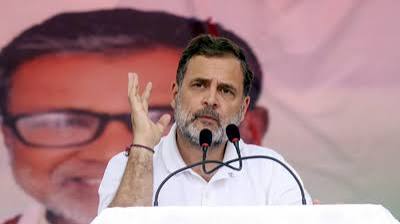
NEW DELHI: Congress’s Rahul Gandhi slammed PM Narendra Modi as the “most anti-youth PM India has ever had” as opposition jointly condemned BJP for crackdown on the “paper leak” protest march to Parliament Monday. Rahul said the young protesters are not criminals and Modi should accept their legitimate demands. “It is disgusting what govt and police are doing. Tear-gassing and lathi-charging students is not India’s way… all they believe in is ‘asatya’ and ‘hinsa’, which are anti-Indian principles,” he said in a video statement, adding, “Modi disrespects all the young people of this country.” He said there is general outrage against RSS having captured the education system. With state action against students coupled with viral visuals dominating the headlines, Shiv Sena’s Sanjay Raut said “paper leak” and “donation scam” will dominate Parliament in the coming days. Samajwadi Party president Akhilesh Yadav said the large youth turnout proves the failure of BJP regime in conducting NEET and other exams. Congress MP Priyanka Gandhi, rebuking govt for police action, said, “It’s ridiculous… They are the future of the country. This Parliament belongs to them. It’s no one’s personal fiefdom.” DMK MP Kanimozhi dubbed the protest the most democratic form of expressing people’s opinion. Courtesy : TOI Note: This news is originally published on https:/timesofindia.com/bha and is used purely for non-profit/non-commercial purposes, especially human rights
Another Mumbai Local Train Shocker: Transgenders Brutally Assault Passenger; Video Goes Viral
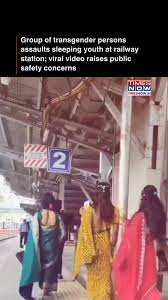
A series of violent incidents in Mumbai local trains has raised concerns over commuter safety, security measures, and growing fear among daily travellers. In the incident, a passenger and transgender persons were reportedly involved in a physical altercation inside a local train. Mumbai’s suburban local trains have once again come under scrutiny after a video showing a violent clash inside a late-night local train went viral on social media. In the incident, a passenger and transgender persons were reportedly involved in a physical altercation inside a local train. The viral footage shows two transgender passengers allegedly assaulting a passenger during the confrontation. The reason behind the fight remains unclear. ALSO READ: School Holiday: Are Schools & Colleges Closed In Mumbai, Thane And Palghar As Heavy Rains Continue? The video has triggered discussions about passenger safety and security in Mumbai’s suburban railway network, which witnesses heavy daily footfall. Railway authorities have taken note of the incident and are investigating the circumstances surrounding the clash. Officials are investigating the video to determine what led to the confrontation. The incident comes days after two separate cases of violence on Mumbai locals, including the attack on two youths and another video showing a fight between two groups, sparked concerns among passengers. Previously, a video showing a violent clash between passengers in a Churchgate-Virar local train went viral on social media. The incident reportedly took place inside a crowded men’s compartment, creating panic among fellow commuters for some time. The video shows passengers involved in a heated argument, which soon escalated into a physical fight involving kicks and assault. While the exact reason behind the dispute is unclear, it is suspected that the argument may have started over limited standing space or accidental pushing in the crowded compartment. Other passengers were seen attempting to intervene and calm the situation. The repeated incidents of violence inside local trains have raised questions about maintaining security and preventing such conflicts during journeys. Author: Aishwarya Singh Courtesy : NDTV Note: This news is originally published on https:/ndtv.com/bha and is used purely for non-profit/non-commercial purposes, especially human rights
Ahead of Monsoon Session, Opposition targets Centre over Ram Temple donation scam, delimitation
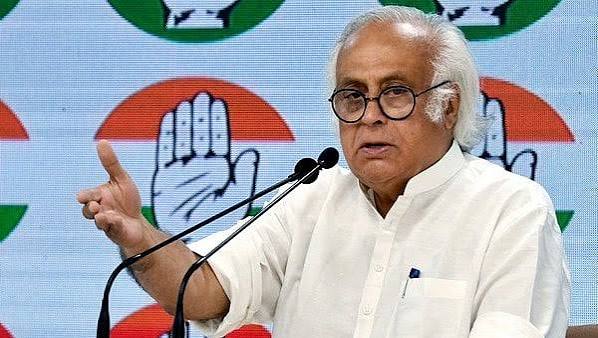
Congress leader Jairam Ramesh shared Rahul Gandhi and Mallikarjun Kharge’s joint letter to PM Modi, saying it was “only appropriate” they sought answers on the Ram Temple donations row. NEW DELHI: A day ahead of the Monsoon Session of Parliament, the Congress intensified its attack on the Narendra Modi government over alleged financial irregularities in the Shri Ram Janmabhoomi Teerth Kshetra Trust, urging the Prime Minister to respond to allegations of fund misappropriation and order an independent probe. Separately, the Trinamool Congress (TMC) sought an all-party meeting on the government’s proposed delimitation exercise and amendments to the Foreign Contribution (Regulation) Act (FCRA). Congress general secretary Jairam Ramesh shared a joint letter written by Leader of Opposition in the Lok Sabha Rahul Gandhi and Leader of Opposition in the Rajya Sabha Mallikarjun Kharge to Prime Minister Modi, saying it was “only appropriate” that the two Opposition leaders had sought answers on what the party described as “chanda chori, aastha se dhokha” (donation theft, betrayal of faith). Ramesh also invoked Modi’s statement in Parliament on February 5, 2020, announcing the formation of the Shri Ram Janmabhoomi Teerth Kshetra Trust following the Supreme Court’s Ayodhya verdict. “In one of his rare token appearances in the Lok Sabha on February 5, 2020, the PM had taken full credit while announcing the establishment of this Trust, which has betrayed the faith and devotion of crores of devotees across the country. Pradhan Mantri Chuppi Todo!” Ramesh said in a post on X. In their July 18 letter, Gandhi and Kharge alleged that devotees who contributed to the construction of the Ram Temple had been let down by the alleged diversion of funds. “You are aware of the theft of thousands of crores in the Shri Ram Janmabhoomi Teerth Kshetra Trust. Lakhs of devotees who donated their hard-earned money with faith, devotion and trust are feeling betrayed,” the letter read. The two leaders noted that while the Supreme Court had directed the creation of the Trust, its members were appointed by the government. Alleging that several trustees were associated with the Rashtriya Swayamsevak Sangh (RSS), the Vishva Hindu Parishad (VHP) and affiliated organisations, they argued that the Centre was accountable for ensuring transparency and proper oversight. Describing the Prime Minister’s silence as “unacceptable”, Gandhi and Kharge called for an independent and comprehensive investigation into the Trust’s finances, including donations received in cash, gold and silver. They also demanded that the Trust’s accounts and the findings of the inquiry be made public, saying devotees had a right to know how their contributions had been used. The Congress is expected to raise the issue during the Monsoon Session, which begins on Monday. In a separate development, TMC MP Derek O’Brien wrote to the Prime Minister on July 19 seeking an all-party meeting before the government proceeds with proposed legislation on delimitation and amendments to the Foreign Contribution (Regulation) Act. He noted that while the parliamentary bulletin for the Monsoon Session does not currently list a Bill on delimitation, the Opposition remained apprehensive because of what he termed the government’s “dubious record” of introducing significant legislation without adequate notice. Referring to the Jammu and Kashmir Reorganisation Bill, 2019, O’Brien alleged that the legislation had been introduced in the Rajya Sabha before the supplementary list of business was circulated to MPs. He urged the government not to adopt similar “cloak and dagger tactics” on an issue as significant as delimitation. On the proposed Foreign Contribution (Regulation) Amendment Bill, 2026, O’Brien said the legislation, listed for consideration and passage during the Monsoon Session, would weaken institutions working among the country’s poorest and most marginalised communities. He alleged that the amendments would adversely affect thousands of educational institutions run by the Christian community, as well as internationally reputed charitable organisations, by giving the executive excessive control over their functioning. Mukesh Ranjan Courtesy : TNIE Note: This news is originally published on https:/thenewindianexpress.com/bha and is used purely for non-profit/non-commercial purposes, especially human rights
CM DK Shivakumar insists on ground report from officials
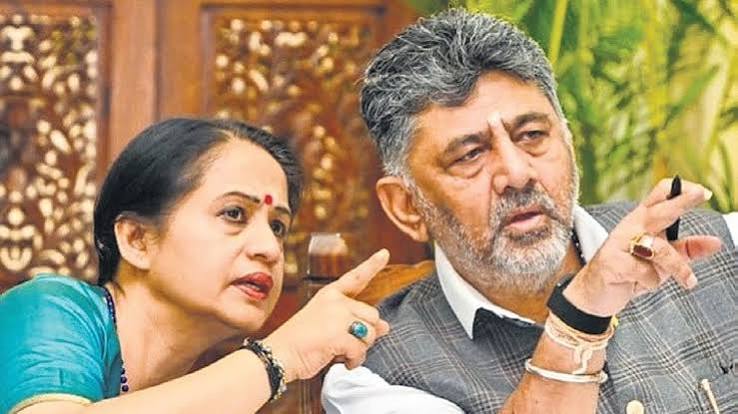
“I have to submit a report on the drought situation to the Central government. When the Centre’s team visits for an assessment, BENGALURU: Chief Minister DK Shivakumar on Sunday said his government will ensure that a comprehensive and authentic ground report on the drought situation reaches the Centre before the central team arrives for its own assessment. He said officials were asked to visit fields before filing their reports. “I have told officials I don’t want only paper reports. Your own eyes should be your evidence. Every official must visit farms in their respective taluks and submit reports based on the actual ground conditions within the next 15 days,” he said. “I have to submit a report on the drought situation to the Central government. When the Centre’s team visits for an assessment, we should have all the necessary information ready, and provide accurate data,” he told the media after the cabinet meeting. “I have already requested the Prime Minister to send a Central team to assess the drought situation. Parliament will also begin shortly, and I will brief our Members of Parliament about the ground reality,” he added. He claimed to have held a four-hour special meeting to review the drought situation, and directed officials to remain in their headquarters. The government plans to utilize alternative schemes to keep villagers employed during this period. He appealed to farmers not to sow crops, assuming that water will be released later. “Hydropower reservoirs have 23 per cent storage. In the Cauvery basin, storage levels are also low, while the Krishna basin reservoirs stand at around 48 per cent. Of 3,817 minor irrigation tanks, 3,235 have less than 50 per cent storage,” he said. Start VB-G work to stop migration: DCM Bengaluru: Deputy Chief Minister Dr G Parameshwara expressed concern over the slow implementation of the Viksit Bharat Guarantee for Rozgar and Ajeevika Mission (Gramin) (VB-G RAM G), stating that work has not begun in most parts of Karnataka despite worsening drought conditions. Reviewing the drought situation, Parameshwara, who also holds the revenue portfolio, said 2,443 of the state’s nearly 5,000 gram panchayats are yet to start work under the employment scheme, with only four or five districts making progress. He directed all Zilla Panchayat CEOs to immediately commence the work to curb distress migration from districts such as Ballari, Kalaburagi, Raichur, Yadgir and Vijayanagara. Parameshwara said Karnataka has recorded a 68 per cent rainfall deficit, while groundwater levels have fallen by around four metres in 88 taluks. Reservoir levels are declining rapidly and the number of villages dependent on tanker water supply is increasing. Document all VB-G work: CM Chief Minister DK Shivakumar said amid the state’s continuing agitation against the Centre’s VB-G RAM G, the state has prepared to bear 40 per cent of its share. “The Centre has approved several schemes and informed us about works that can be taken up. As far as possible, we should focus on community development, infrastructure works and certain individual beneficiary schemes. Every work must be properly documented with all supporting records. Officials should be extremely careful and leave no loopholes,” he warned. He stressed that the state’s priority is to ensure that people do not migrate to other states in search of work. “They should be provided employment locally,” Shivakumar said. ENS Rahul Gandhi to visit soon The CM said LoP in Lok Sabha Rahul Gandhi is likely to visit Karnataka soon and address students, besides performing the bhoomi puja (foundation stone laying) for the new Congress office in Bengaluru. Courtesy : TNIE Note: This news is originally published on https:/thenewindianexpress.com/bha and is used purely for non-profit/non-commercial purposes, especially human rights
CM Revanth Reddy to Congress leaders: Stay off Gandhi Bhavan, hit the field for SIR

Revanth warned Congress leaders against skipping SIR form campaign work, saying inactive leaders would lose chances for nominated posts. HYDERABAD: In a blunt ultimatum to underperforming party workers, Chief Minister A Revanth Reddy directed Congress leaders to stay away from Gandhi Bhavan and take to the field during the Special Intensive Revision of electoral rolls, warning that those who remained inactive would not be considered for nominated posts. In a no-holds-barred Zoom meeting on Sunday, Revanth told party leaders not to visit the state Congress headquarters until the August 3 deadline for submitting SIR Enumeration Forms. Expressing dissatisfaction over the lack of field-level participation, he said chairmanships and other nominated posts would not be given to leaders who remained inactive during the campaign. He also announced that the 100 best-performing BLAs would be given an opportunity to click a photograph with Rahul Gandhi. Revanth directed the in-charge ministers to supervise the SIR exercise and said a constituency-wise review would be held on July 30. He warned MPs appointed as SIR in-charges that strict action would be taken if they failed to discharge their responsibilities. With the deadline extended to August 3, he said the additional time should be used to intensify outreach. A separate review with the 10 in-charge ministers will be held on Monday, while MPs have been asked to conduct periodic reviews even during the ongoing session. Revanth said the Congress had organised 489 SIR meetings across the 119 Assembly segments but stressed that attention was needed in the weakest-performing ones. He told MLAs, constituency in-charges and corporation chairpersons to scrutinise reports submitted by BLAs instead of relying solely on BLO reports. Stating that the presence of party leaders in the field was mandatory, he directed ministers, MLAs, corporation chairpersons, constituency in-charges and SIR coordinators to tour their respective areas over the next 10 days. Courtesy : TNIE Note: This news is originally published on https:/thenewindianexpress.com/bha and is used purely for non-profit/non-commercial purposes, especially human rights
How did the opposition’s plan fail? A single move by Asim Arun quelled the Meerut Dalit student Lalita Gautam murder case.

The BJP quelled the Meerut Dalit student murder case as quickly as the opposition had raised it. Minister Asim Arun was behind this thorough planning. The opposition was constantly cornering the government The victim’s family met with CM Yogi Asim Arun kept an eye on the entire case Shadab Rizvi, Meerut: The atmosphere created by the opposition against the government and police regarding the murder of Lalita, a Dalit student in Meerut, Uttar Pradesh, has cooled just as quickly. Lalita’s family’s anger has suddenly subsided. This was made possible by the strategy of Asim Arun, a former bureaucrat and minister to the UP CM. Asim Arun’s sympathy maneuver, arranging a meeting with the CM and securing help, defeated all the opposition politicians who had appeared aggressive on the issue. A Look at the Opposition’s Strategy The family of Lalita Gautam, the student, wanted strict action against the murderer. The family was upset with the delay in arresting the accused. The police’s handling of the situation had angered the district police as well as the government. Dalit leaders from opposition parties and organizations called a Mahapanchayat to address Lalita’s family’s anguish. Everyone expressed their displeasure with the government and police. The situation escalated to a confrontation. Police and protesters clashed. FIRs were filed, and arrests were made. The issue became a topic of discussion across the country. BSP chief Mayawati, Congress President Mallikarjun Kharge, opposition leader Rahul Gandhi, AAP leader Sanjay Singh, SP chief Akhilesh Yadav, Azad Samaj Party President Chandrashekhar, and numerous other leaders attacked the government and police. Leaders from several parties, including Chandrashekhar Azad and Congress state in-charge Rajendra Pal Gautam, attempted to visit the village and meet the victim’s family. SP President Akhilesh Yadav met the victim’s family in Delhi and provided assistance of two lakh rupees. This move and assistance from the opposition unnerved the ruling BJP. Aseem made his move and made things easier. Aseem Arun, Minister of Independent Charge in the UP government, is also the Minister in charge of Meerut. He is pursuing politics after resigning from the post of ADG in the police department. His father, Shriram Arun, was the former DGP of Uttar Pradesh. At the time when Meerut was in turmoil over the Lalita incident, with people demanding the summoning of the minister in charge, Minister Aseem Arun was constantly having three BJP leaders send every media report on the incident to Lucknow. He is working on a strategy to ensure that the anti-Dalit atmosphere does not harm the BJP. According to a BJP leader close to Aseem Arun, the minister had asked everyone not to issue statements, to remain calm, and to monitor every activity. By demanding a report from the Meerut police on the very first day, he sent a message to the public that he was active. To appease the family, he issued a statement alleging a lapse on the part of the Meerut police. He also sent a message to the family through Dalit leaders associated with the party in Meerut that the government would soon help them and provide justice. He did not fall for anyone’s deception. The script for meeting and helping the CM was written like this: According to a state BJP official, Aseen Arun spoke with the CM and arranged a meeting with the victim’s family in Lucknow. However, due to the CM’s frequent visits to West UP districts like Bijnor, Shamli, Ghaziabad, Bulandshahr, Amroha, and Sambhal, the family’s trip to Lucknow was postponed. It was decided to arrange a meeting in a district closer to Meerut. Before the Bijnor-Shamli visit, Minister-in-Charge Aseem Arun arrived in Meerut. He spoke with officials about the Lalita case, met with BJP Dalit leaders, assured the victim’s family of justice, and convinced them to meet the CM. Initially, a meeting in Shamli was discussed, but after Shamli, the CM had to travel to Bijnor. Due to his busy schedule, it was decided that the CM would stay in Ghaziabad and arrange the meeting there before heading to Bulandshahr for a public meeting. This is exactly what happened. In Ghaziabad, the victim’s family met with the CM along with Aseen Arun. The CM approved Aseem’s plan. On Aseem Arun’s recommendation for financial assistance, the CM ordered a grant of five lakh rupees, which was disbursed within a few hours. The student’s uncle and father were promised a house under the Prime Minister’s Housing Scheme, and two private sector jobs for the family. The CM also allayed their grievances with the police by promising strict punishment for the culprits. After arranging a meeting with the CM and providing financial assistance, the victim’s family was given a statement in the media, conveying that they no longer have any complaints and are satisfied. Political analysts believe that this move by Yogi’s former bureaucrat minister has thwarted the campaign launched by opposition parties and organizations against the government. Edited by: Vivek Mishra About the Author Vivek Kumar Mishra is a Senior Digital Content Producer at Navbharat Times Online (NBT.Com). He monitors the political developments in Uttar Pradesh. He provides UP political analysis and tracks events in Uttar Pradesh. Courtesy: Hindi News
CPI(M) accuses governments of neglecting dalits, warns of protests for house site pattas

Communist Party of India (Marxist) State secretariat member Ch. Babu Rao on Sunday (July 19, 2026) accused the Union and State governments of neglecting the welfare of Dalits, tribals, and economically weaker sections. He said that the party would intensify its agitation for the allotment of house site pattas and implementation of welfare schemes. Mr. Babu Rao visited Devineni Gandhipuram in Payakapuram under Vijayawada’s 61st Division, where he and other CPI(M) leaders interacted with residents and reviewed civic and welfare issues. According to a press release by the CPI(M), the residents alleged that successive governments had failed to issue house site pattas despite repeated assurances. They also claimed that the allotment of TIDCO houses and house sites for the poor had remained confined to announcements. The residents further alleged that the scheme providing up to 200 units of free electricity to Dalit and tribal households was not being implemented effectively and complained of delays in extending welfare schemes, loans, and other benefits meant for Scheduled Castes and Scheduled Tribes. Later, addressing the gathering, Mr. Babu Rao alleged that while the government was allocating vast tracts of land to corporate entities, it had failed to confer ownership rights on poor families who had been living in the colonies for decades. He accused public representatives and officials of delaying the issuance of pattas on one pretext or another. He also criticised the Vijayawada Municipal Corporation for focusing on the beautification of major roads while neglecting civic infrastructure and basic amenities in peripheral localities inhabited by the poor. Government and municipal lands were allegedly being encroached upon even as landless families continued to await house sites, he alleged. CPI(M) central city secretary Bhupathi Ramana Rao, committee member Ch. Srinivas and local leaders Melika Srinivas, Venkateswara Rao and Suribabu were among those present. G V R Subba Rao G.V.R. Subba Rao Courtesy : The Hindu Note: This news is originally published on https:/thehindu.com/bha and is used purely for non-profit/non-commercial purposes, especially human rights
YSRCP extends Rs 10 lakh aid to Dalit youth’s family
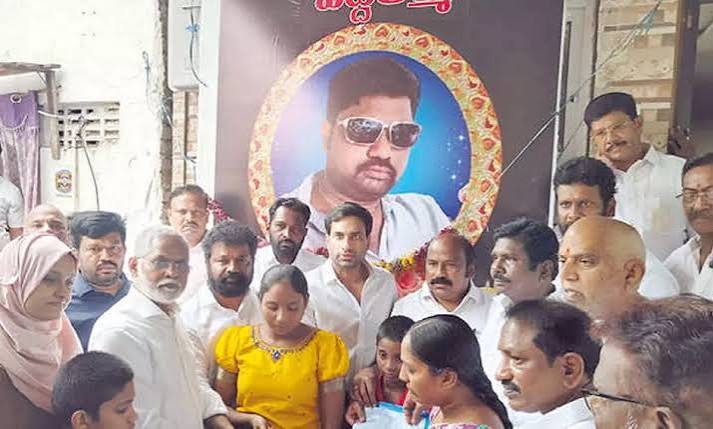
Vijayawada: The YSRCP on Sunday extended financial and humanitarian assistance to the family of Dalit youth Kranthi Kumar, who allegedly died by suicide following police harassment in Krishnalanka. Acting on the directions of YSRCP president YS Jagan Mohan Reddy, senior party leaders handed over Rs 10 lakh in financial assistance to the bereaved family. The assistance was handed over by YSRCP NTR district president Devineni Avinash, former MLAs Malladi Vishnu, Monditoka Jagan Mohana Rao and TJR Sudhakar Babu, former MP Nandigam Suresh, and SC Cell State working president Kommuri Kanaka Rao. The party also announced that it would bear the educational expenses of Kranthi Kumar’s three children. Of the total assistance, Rs 5 lakh was deposited in the name of his daughter, while Rs 2.5 lakh each was deposited in the names of his two sons. YSRCP further assured free medical treatment for Kranti Kumar’s son, who is reportedly suffering from a spinal tumour and has been shifted to a hospital in Hyderabad. Addressing the media, YSRCP leaders alleged that the coalition government had failed to ensure justice for the victim’s family and attempted to suppress the case initially. They claimed that the case was booked under the SC/ST (Prevention of Atrocities) Act only after the intervention of YS Jagan Mohan Reddy. The leaders further alleged that the government had failed to provide statutory benefits, including compensation, employment to the victim’s wife and other welfare assistance. They demanded the immediate arrest of Circle Inspector Nagaraju, who has been named in the case, and asserted that the party would continue to support the family and pursue justice until those responsible are brought to book. Courtesy : THI Note: This news is originally published on https:/thehansindia.com/bha and is used purely for non-profit/non-commercial purposes, especially human rights
Tamil Nadu prepares to establish a separate police station for SC/ST cases, identifying areas affected by untouchability | TM Special

On the instructions of the National Commission for Scheduled Castes, the state government has sought a report from the DGP. Chennai – The Tamil Nadu government has taken a significant administrative step in matters related to the Scheduled Castes and Scheduled Tribes (Prevention of Atrocities) Act and has initiated the process of identifying and establishing special SC/ST police stations in areas where incidents of untouchability-related atrocities are high. This action was initiated following a directive from the National Commission for Scheduled Castes. Currently, five states in the country have a total of 145 special police stations for the speedy and effective investigation of cases under the Scheduled Castes and Scheduled Tribes (Prevention of Atrocities) Act. Madhya Pradesh leads with 51 special police stations. The case relates to a petition filed by S. Venkatesan, a resident of Sunnambedu in Chengalpattu district and associated with the Neelam Cultural Centre. In his complaint to the National Commission for Scheduled Castes on June 13, 2025, Venkatesan demanded that the state government officially designate areas where such incidents are most frequent as “Areas Prone to Untouchability Atrocities.” He also demanded the immediate establishment of dedicated SC/ST police stations in these areas. Speaking to The Mooknayak, Venkatesan stated that the situation of caste-based atrocities in Tamil Nadu is complex and concerning at all three levels: social, legal, and political. Although the state is known for its progressive politics and Dravidian movements, caste discrimination and violence remain a serious challenge at the grassroots level. Taking cognizance of this complaint, the National Commission for Scheduled Castes issued a letter dated June 23, numbered APCR/OL/TN/2025/304819, directing the Tamil Nadu government to take necessary action. Following this, the Tamil Nadu Home Department issued letter number 12738/Police.15/2026-1 on July 7, 2026. This letter was issued by Deputy Secretary (Home Department), M. Srinan, and addressed to the Director General of Police, Chennai, and the Inspector General of Police, Social Justice and Human Rights Wing. The letter attached a copy of the complaint received from the National Commission for Scheduled Castes, urging the concerned officials to take necessary action in the matter. The Home Department directed that a detailed report of the action taken on the complaint be sent directly to the National Commission for Scheduled Castes, Chennai, and a copy be provided to the complainant, S. Venkatesan, and the state government. The letter also categorized the matter as “urgent,” directing that action be taken with special priority and that the Commission be promptly provided with an appropriate response. It is noteworthy that the main request of Venkatesan’s petition was that areas where incidents of untouchability and caste-based atrocities are frequently reported should be designated as a separate category and that special SC/ST police stations should be established there to ensure effective investigation and prompt action in cases related to the Scheduled Castes and Scheduled Tribes (Prevention of Atrocities) Act. What do NCRB data say? According to data presented in Parliament by the Ministry of Home Affairs and NCRB, Tamil Nadu has seen a steady increase in cases registered under the SC/ST (Prevention of Atrocities) Act. From approximately 1,274 cases registered in 2020, this number increased to over 1,700 to 1,800 by 2022-2023. Compared to the national level, the conviction rate for caste-based crimes in Tamil Nadu has been quite low (approximately 8% to 13%), while the pendency of cases remains over 80%. Major Forms of Caste Crimes Honor Killings: Violence against inter-caste marriages or love relationships (especially between non-Dalit women and Dalit men) is a major issue in Tamil Nadu. Such incidents are frequently reported in districts such as Tirunelveli, Madurai, Thanjavur, and Krishnagiri. Social Exclusion and Untouchability: Social barriers such as the “two-cup system” (separate cups for Dalits and non-Dalits at tea shops), restrictions on access to cremation grounds, temple entry bans, and the prohibition of Dalit sarpanches from performing administrative functions still persist in many rural areas of the state. Inhumane Harassment: Polluting water tanks (such as the Vengaivayal case), contaminating public drinking water sources, and social boycott of settlements have emerged as inhumane methods of demonstrating caste dominance. Caste Tension at the School/Educational Level: Reports of students wearing different-colored caste bands and violent clashes within schools in the southern districts of the state (such as Tirunelveli and Thoothukudi) have also become a matter of concern. The Social Justice and Human Rights (SJ&HR) wing under the Tamil Nadu Police Department is active, identifying and monitoring vulnerable areas prone to caste tensions. Highlighted Caste Crime Cases in Recent Years Prominent cases of atrocities and honor killings against the Scheduled Caste (SC/ST) community in Tamil Nadu in recent years include the Kavin Selvaganesh case in Tirunelveli (July 2025), where a 27-year-old Dalit software engineer was murdered in broad daylight for his love affair with an upper-caste woman. The Praveen murder case in Pallikaranai, Chennai (February 2024), in which a 26-year-old Dalit man was murdered by his inter-caste wife’s brother and associates. The Aishwarya murder case in Thanjavur (January 2024), where a 19-year-old woman was honor-killed by her own family for marrying a Dalit man, Naveen. The Uthangarai case in Krishnagiri (2023), in which a father (Dandapani) brutally murdered his own son, Sabash, for marrying an inter-caste Dalit woman, Anusuya. The Vengaivayal case (2023) in Pudukkottai, where the inhumane and serious caste crime of harassing an entire community by mixing human excreta into a water tank that supplied drinking water to a Dalit settlement, was exposed. Special Police Stations Exist Only in These States According to the latest data from the Union Ministry of Home Affairs and the Ministry of Social Justice and Empowerment, a total of 145 Special Police Stations have been established in five states across the country for the speedy and effective investigation of cases under the Scheduled Castes and Scheduled Tribes (Prevention of Atrocities) Act. Madhya Pradesh leads the network of these special police stations with 51, followed by Bihar with 40, Chhattisgarh with 27, Jharkhand with 24, and Kerala with three. Geetha Sunil Pillai Courtesy: Hindi News
Chirag Paswan’s LJP(R) To Contest Punjab Assembly Elections In 2027; Eyes Dalit Votes

Patna: Union Minister of Food Processing Industries and Lok Janshakti Party (Ram Vilas) president Chirag Paswan has announced that his party will contest the Punjab Assembly elections expected to be held early next year. Wearing a kesariya (saffron) colour Sikh turban, the Union Minister made this announcement on Sunday evening after paying obeisance at the Golden Temple in Amritsar. “Our party will enter the Punjab Assembly polls with full preparations to register its strong presence. We have launched the election preparation at the pious land of Punjab after taking blessings at the Golden Temple. We have taken a vow to serve the people of the state and strengthen our organisation,” Chirag, accompanied by his mother Reena Paswan, said. The Union Minister asserted that the LJP(R) would expedite the expansion of its network across the northern state, increase the activity of its workers and intensify its mass public contact programme. He added that all preparations for the polls would be completed at a swift pace. “We will go to the people with the issues of public service, development, and social justice. The LJP(R) will carve out a strong identity with the help of the people of Punjab and the hardwork of the party workers,” he added. The LJP(R) is a part of the National Democratic Alliance (NDA) governments at the Centre and in Bihar. It has a strong support base among the Scheduled Castes (SC) in the eastern state. Its founder, former Union minister Ram Vilas Paswan, was an eminent Dalit leader and the party has excelled as a progressive organisation under the leadership of his son Chirag Paswan. Chirag also visited the Jallianwala Bagh to pay floral tributes to the martyrs’ memorial there, Dera Sachkhand Ballan, which is a Ravidasia or Ramdasia Dera, Bhagwan Valmiki memorial and Babasaheb Bhimrao Ambedkar at Jalandhar. While travelling from Amritsar to Jalandhar, the LJP(R) chief stopped his convoy after noticing an injured young woman lying on the roadside near Dera Sachkhand Ballan. He immediately instructed his team to shift the injured woman to a hospital in his vehicle and ensured that she received prompt medical attention. The LJP(R) president’s visits indicate that he is seeking to woo the SC voters in Punjab. The state has around 32 percent Dalit population, the highest proportion among all the states in the country. Punjab has 39 Dalit castes, among which the Mazhabi Sikhs, Ravidasias or Ramdasias, Ad-Dharmis, and Valmikis account for about 84 percent. A majority of the SC population in the state is predominantly rural. Its highest concentration is in the Doaba region – the land between the Beas and Sutlej rivers. Incidentally, Chirag has strong personal links also with Punjab. His mother Reena (maiden name Reena Sharma) hails from Amritsar. Then an airhostess, Reena married Ram Vilas in 1982 as his second wife. Chirag Paswan is also known to have several relatives and friends in Punjab. His personal security detail includes several bodyguards from there. By Dev Raj Courtesy : ETV Bharat Note: This news is originally published on https:/etvbharat.com/bha and is used purely for non-profit/non-commercial purposes, especially human rights