
Can’t stop Dalits from joining BJP-RSS, says Siddaramaiah
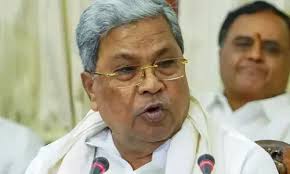
Bengaluru: Chief Minister Siddaramaiah said on Wednesday that Congress cannot stop Dalits from joining the BJP or the RSS, asserting that people from mostly backward communities die in the name of religion. “What can we say if the backward classes and Dalits, who consider the BJP-RSS-ABVP as their adversaries, still join them? Despite knowing that the BJP-RSS ideology is hostile to the backward classes, they still go there. What can we do about it?” he said while addressing the inauguration of the ‘L.G. Havanur Report Golden Jubilee’, organised by the Karnataka State Backward Classes Federation at the Jnanajyothi Auditorium in Bengaluru. Siddaramaiah said that those dying in the name of god and religion are mostly from backward communities, adding that out of self-interest, they join the BJP-RSS and speak more aggressively than even original RSS leaders like Hedgewar. He highlighted that late CM D. Devaraja Urs had called the Havanur Report the “Bible for backward classes” and noted that even the Supreme Court has highly appreciated the report. Siddaramaiah recounted the life of Havanur, born into a common village Scheduled Caste family, adding that Havanur had the habit of protesting even as a student and became the first lawyer from his community. The Chief Minister also recalled a newspaper comment from when he was Finance Minister: “Will this Siddaramaiah be able to count 100 sheep in the budget?” He said he took it as a challenge and presented 16 budgets and is now presenting the 17th. He stressed that it is the opportunity that enables action, and for marginalised communities, access is crucial.He noted that Havanur, born in the Beda caste, showcased his abilities. “Talent belongs to no one; it emerges when given opportunity,” Siddaramaiah said. The Chief Minister also recalled contesting the 1991 Lok Sabha elections and losing. Havanur had supported him in a legal dispute related to the elections, which strengthened their personal bond. Siddaramaiah invoked B.R. Ambedkar, saying that as long as the caste system exists, reservations should exist. “Even though we have 68 per cent of backward communities, the caste system is still deeply entrenched. Those who benefit from the caste system only strengthen it. Many backward communities have not yet shed the mindset of servitude. Calling the upper caste poor in plural and the lower caste rich in singular is a sign of servitude,” he said. He said that even educated individuals from backward communities tend to cling to superstition, believing poverty is fate. “Similarly, educated members of marginalised groups still hold superstitions,” he said. The Chief Minister said that he added that Buddha, Basavanna, and Ambedkar fought against the caste system. “When they fought, it seemed the system loosened, but it later tightened again. The caste system is not disappearing,” he said. Siddaramaiah said his government is ready to implement the reservation based on economic, social, and educational reports and is interested in increasing the reservation limit to 70–75 per cent. Siddaramaiah said that Rahul Gandhi exerted pressure on the central government to conduct a caste census due to his ideological commitment. During his speech, Siddaramaiah also read verses from the Manusmriti that discriminate against the Shudra community. Courtesy : THI Note: This news is originally published on https:/thehansindia.com/bha and is used purely for non-profit/non-commercial purposes, especially human rights
India reaffirms commitment to transgender rights and inclusion
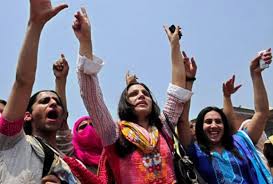
New Delhi, The Indian government has reiterated its commitment to ensuring dignity, autonomy, and equal opportunity for transgender persons, highlighting the strides made in legal, policy, and social reforms over the past decade. According to the 2011 census, around 4.87 lakh individuals in India identified as “other” in the gender category, representing the country’s non-binary population. Historically marginalized, this community has benefited from a series of reforms aimed at recognition, protection, and empowerment. “India has made significant progress in addressing historical marginalisation of the transgender community through legal protections, welfare schemes, and digital accessibility,” the government said in an official statement. “Ensuring that transgender persons live with dignity, autonomy, and opportunity remains central to India’s democratic and human rights commitments.” Key milestones include the 2014 Supreme Court ruling that recognized transgender individuals as a “third gender,” affirming their right to self-identify and directing the government to ensure equality and non-discrimination. This was followed by the Transgender Persons (Protection of Rights) Act, 2019, and the subsequent rules for its implementation in 2020. A National Council for Transgender Persons was established to advise on policies, legislation, and programs, alongside the launch of the National Portal for Transgender Persons in November 2020. Government initiatives have focused on systemic support and empowerment. The SMILE Scheme, introduced in February 2022, provides livelihood support, skill training, shelter through Garima Greh centres, and healthcare coverage under Ayushman Bharat TG Plus. Additionally, the Department of Social Justice & Empowerment issued the “Equal Opportunities Policy for Transgender Persons” to ensure equitable access to employment and other opportunities. “These measures collectively promote inclusion, dignity, and equal opportunities for transgender citizens, fostering a society where they can thrive with full rights and participation,” the government added. Courtesy : Daijiworld Note: This news is originally published on https:/daijiworld.com/bha and is used purely for non-profit/non-commercial purposes, especially human rights
What can Rahul Gandhi do alone? The public will have to take to the streets. Ashok Gehlot launches a major attack on the Election Commission.
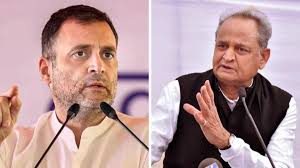
Ashok Gehlot News: Former Rajasthan Chief Minister Ashok Gehlot has leveled serious allegations against the Election Commission over the SIR controversy. Gehlot also questioned what Rahul Gandhi can do alone. Read what else Gehlot said here… Former Rajasthan Chief Minister Ashok Gehlot has leveled serious allegations against the Election Commission over the SIR controversy. Gehlot also questioned what Rahul Gandhi can do alone. Jaipur: Former Chief Minister Ashok Gehlot has criticized the Election Commission over the growing controversy across the country regarding the Special Intensive Revision (SIR). Speaking to the media after paying tribute to Indira Gandhi at the state Congress headquarters on her birth anniversary, Gehlot said that the Election Commission is solely responsible for the situation surrounding the SIR. ‘Controversies have arisen due to the Election Commission’s stupidity’ Gehlot alleged that controversies are arising across the country regarding the SIR process and this is due to the Commission’s “serious negligence.” He said the Commission implemented this process in a hurry, without taking political parties into confidence. Gehlot said, “If the Commission had called all parties and stated that the voter list would be prepared in a transparent manner, that no fake names would be added, and that no genuine voter’s name would be removed, this situation would not have arisen.” He said that initiating the process just before the Bihar elections was itself a step that raised doubts. “What can Rahul Gandhi do alone? The public will have to come forward.” During the conversation, Gehlot stated that a democratic fight cannot be fought solely by political leaders. He said, “Rahul Gandhi is the leader of the opposition; he is playing his role. But the public will also have to come forward. Our path is non-violence, while these people believe in violence. Such a fight can only be fought with the support of the public.” Referring to the Bihar elections, he said that money power was openly used there, and ₹10,000 each was deposited into women’s accounts mid-election, but the Election Commission took no action. Authored by: Sambrat Chaturvedi About the Author Sambrat Chaturvedi is an Assistant News Editor at Navbharat Times Digital. He has over 20 years of experience in journalism. He covers politics, crime, education, arts, and culture in Rajasthan. He has been with NBT (Digital) for the past five years. Courtesy: Hindi News
How Congress has been shrinking state after state! Every move by Rahul Gandhi failed, all political experiments failed, why?
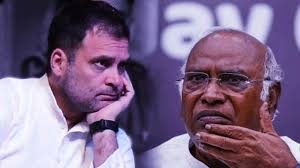
Rahul Gandhi: The Grand Alliance suffered a crushing defeat in the Bihar Assembly elections. Similarly, if we look at the history of other states, Congress has been steadily declining. Bihar, Maharashtra, Haryana, and Gujarat. In these states, Congress’s position has been shrinking. What is the reason for Congress’s continued electoral defeat? Let’s examine the reasons. Congress defeat in four states Patna: In the Bihar Assembly elections, the ruling NDA returned to power by winning 202 out of 243 seats, while the opposition Grand Alliance was reduced to just 35. The BJP led the NDA’s victory, securing 89 seats, followed by Chief Minister Nitish Kumar’s JDU (JDU) with 85 and Chirag Paswan’s LJP (RLD) with 19. The RJD, the dominant party in the Grand Alliance, saw its tally drop to 25, while the Congress managed only six. In the 2024 Lok Sabha elections in Bihar, the NDA won 30 of the 40 seats, with the BJP and JDU winning 12 each. The LJP (RLD) won five seats, while the HAM (S) won one. The Grand Alliance won nine seats, with the RJD winning four, the Congress three, and the CPI (ML) L two. The remaining one was won by an independent. Bihar Situation In addition to Bihar, the BJP has won resounding victories in several elections in recent years, whether alone or with the NDA alliance, defeating the opposition in several states. Let’s take a look at some of these states. In the November 2024 elections for the 288-member Maharashtra Legislative Assembly, the Mahayuti, or NDA, won a landslide victory, winning 232 seats. The BJP topped the polls with 132, followed by the Eknath Shinde-led Shiv Sena with 57 and the Ajit Pawar-led NCP with 41. The opposition Maha Vikas Aghadi (MVA) won only 46 seats, with the Uddhav Thackeray-led Shiv Sena (UBT) winning 20, the Sharad Pawar-led NCP (SP) winning 10, and the Congress winning 16. However, in the Lok Sabha elections held six months before the Assembly elections, the Mahayuti had won only 17 seats (9 from the BJP, 7 from the Shiv Sena, and 1 from the NCP), while the MVA had won 30 seats (13 from the Congress, 9 from the Shiv Sena-UBT, and 8 from the NCP-SP). Odisha Situation In the 2024 Odisha Assembly elections, the BJP came to power in the state on its own for the first time, ending the five-term rule of BJD chief Naveen Patnaik. The BJP won 78 of the state’s 147 seats, while the BJD won 51 and the Congress won 14. In the simultaneous Lok Sabha elections in Odisha, the BJP won 20 of the 21 seats, while the Congress won one. The BJD failed to open its account in this election. In the 2019 Assembly elections, the BJD returned to power in Odisha with a landslide victory, winning 112 seats compared to the BJP’s 23. Andhra Pradesh Situation Andhra Pradesh also held simultaneous Lok Sabha and Assembly elections in 2024. The NDA, which includes the N. Chandrababu Naidu-led TDP and the Pawan Kalyan-led Jana Sena Party (JSP), along with the BJP, won 21 out of 25 seats in the Lok Sabha elections, defeating the ruling BJP. The YSRCP led by Y.S. Jagan Mohan Reddy won 4 seats. Among NDA allies, the TDP won 16, the BJP 3, and the JSP 2. In the Assembly elections, the NDA secured 164 out of 175 seats. The TDP contested 135 of the 144 seats it contested. The JSP won all 21 seats, while the BJP contested 10, winning 8. The YSRCP won only 11 seats. The Congress failed to even open its account. Madhya Pradesh Situation In the November 2023 elections for the 230-member Madhya Pradesh Assembly, the incumbent BJP returned to power by winning 163 seats. The opposition Congress failed to stage a comeback, winning only 66 seats. In the 2024 Lok Sabha elections, the BJP swept the state again, winning all 29 seats. In the Gujarat Assembly elections held in December 2022, the ruling BJP returned to power by winning 156 out of 182 seats. This was the highest number achieved by any party in the state’s electoral history. The Congress suffered its worst defeat, winning only 17 seats, while the Aam Aadmi Party (AAP) won five. In the 2024 Lok Sabha elections, the BJP will win 24 out of 25 seats, while the Congress will win only one. Edited by: Ashutosh Kumar Pandey About the Author Ashutosh Kumar Pandey works for Navbharat Times Online. He has been active in digital, print, and electronic journalism for over 22 years. He specializes in uncovering untold stories from the past, digging into the pages of politics. Presents political stories in a witty manner. Courtesy: Hindi News
‘Venomous rhetoric’: 272 eminent citizens pen letter against Rahul Gandhi; accuse Congress of making unsubstantiated claims
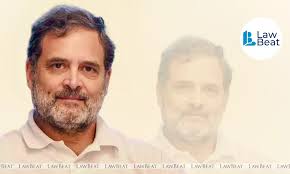
NEW DELHI: A group of 272 eminent citizens, including 16 judges, 123 retired bureaucrats, 14 former ambassadors and 133 retired armed forces officers, issued an open letter accusing leader of opposition Rahul Gandhi and the Congress of trying to erode public faith in the Election Commission and other constitutional institutions. The letter, titled “Assault on National Constitutional Authorities,” alleged that opposition leaders were attempting to manufacture a sense of institutional breakdown through what it described as “venomous rhetoric” and “provocative but unsubstantiated accusations.” The letter said: “Some political leaders, instead of offering genuine policy alternative, resort to provocative but unsubstantiated accusations in their theatrical political strategy. After their attempts to tarnish the Indian Armed Forces by questioning their valour and accomplishments, and the Judiciary by questioning its fairness, Parliament, and its constitutional functionaries, now it is the turn of Election Commission of India to face systematic and conspiratorial attacks on its integrity and reputation.” The signatories singled out Rahul Gandhi for repeatedly alleging vote theft while, they said, failing to file a formal complaint or sworn affidavit to back his claims. They pointed to his assertions that he had “100 per cent proof” and an “atom bomb” against the Commission, alongside accusations of “treason,” and argued that such remarks came “without the prescribed sworn affidavit” required for accountability. The letter also noted that similar accusations had been amplified by Congress leaders, opposition parties and allied NGOs, including claims that the Election Commission had acted like the “B-team of the BJP.” It argued these assertions collapsed under scrutiny, pointing to the ECI’s public release of its methodology and verification done under court oversight. It said, “Moreover, several senior figures of Congress and other political parties, leftist NGOs, ideologically opinionated scholars, and a few attention seekers in other walks of life, have joined in with similarly blistering rhetoric against SIR, even declaring that the Commission has descended into complete shamelessness by acting like the ‘B-team of the BJP.’ Such fiery rhetoric may be emotionally powerful but it collapses under scrutiny, because the ECI has publicly shared its SIR methodology, overseen verification by court-sanctioned means, removed ineligible names in a compliant manner, and added new eligible voters.” The signatories described this pattern of criticism as “impotent rage,” stating that leaders who faced electoral setbacks “lash out at institutions instead of rebuilding their credibility.” The letter said, “This pattern of behaviour reflects what might be called ‘impotent rage’ deep anger born of repeated electoral failure and frustration, without a concrete plan to reconnect with the people. When political leaders lose touch with the aspirations of ordinary citizens, they lash out at institutions instead of rebuilding their credibility. Theatrics replace analysis. Public spectacle takes the place of public service.” Invoking the legacy of former chief election commissioners TN Seshan and N Gopalaswami, the letter said, “Today, thinking of ECI, the country also remembers the likes of TN Seshan and N Gopalaswami, whose unyielding leadership transformed the Election Commission into a formidable constitutional sentinel. They did not court popularity. They did not chase headlines. They enforced the rules fearlessly, impartially, relentlessly.” Calling for transparency, legal accountability and respectful political conduct, the letter concluded by saying, “We call upon the Election Commission to continue its path of transparency and rigour. Publish complete data, defend itself through legal channels when necessary, and reject politics dressed up as victimhood. We call upon political leaders to respect the constitutional process, to compete not through baseless accusation but through policy articulation, and to accept democratic verdicts with grace.” Courtesy : TOI Note: This news is originally published on https:/timesofindia.com/bha and is used purely for non-profit/non-commercial purposes, especially human rights
“You’re a Dalit, you can’t marry”: Karnataka HC denies bail to constable accused of having a relationship with a woman on the pretext of marriage, calling it a clear caste atrocity…
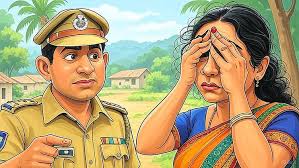
The High Court said, “According to the victim, the accused married her in front of a photo of Sai Baba and had physical relations with her several times, but refused to accept her as his wife. When she insisted, he deceived her using caste as an excuse.” Bengaluru – The Karnataka High Court has rejected the anticipatory bail plea of a police constable accused in a case where a Dalit woman was deceived in the name of love. The accused had physical relations with the woman after promising marriage, but later broke off the relationship and even assaulted her, citing her Scheduled Caste (SC) identity. In his judgment delivered on November 3, High Court Justice S. Rachaiah clearly stated that this is a serious offense under the SC/ST (Prevention of Atrocities) Act, and bail is strictly prohibited under Section 18A. The court stated, “It is clear from the allegations in the complaint that the accused refused to accept her as his wife because she belonged to a Scheduled Caste. The essential elements of the crime are established. Therefore, he is not entitled to anticipatory bail under Section 18A of the said Act.” Learn about the entire case The case relates to the Amrutur police station in Tumkur district, where both the accused constable and the victim were posted as colleagues. According to the prosecution, the incident began on February 14, 2023, when the accused arrived at the victim’s official residence. There, he expressed his desire to marry her and performed a simple wedding ceremony in front of a picture of Sai Baba. The accused assured the victim that the marriage would be kept secret until the caste dispute was resolved. Following this, the accused had physical relations with the victim several times, but did not allow her to wear a mangalsutra, fearing it would cause problems for both of them. The victim, trusting him, remained silent. However, when she demanded that the marriage be made public, the accused flatly refused. His excuse was that the victim belonged to a Scheduled Caste, while he himself belonged to a different caste. Not only did he refuse, but when she insisted on marriage, the accused also assaulted her. Hurt and betrayed, the victim finally filed a complaint, based on which the Amritsar police registered Crime No. 81/2025. Legal provisions applied in the case The accused has been charged under sections 318(2) (cheating), 352 (assault), 115(2) (criminal conspiracy), 351(2) (criminal intimidation), 54 (concealment of an offence), and 74 (abetment of an offence) of the Indian Penal Code (IPC), 2023, as well as section 3(5). Additionally, sections 3(1)(r) (insult on grounds of caste), 3(1)(s) (cheating on grounds of caste), 3(1)(w)(i) (caste-based offences), and 3(2)(va) (group offences on grounds of caste) of the SC/ST (Prevention of Atrocities) Act, 1989 (Amendment 2015) have also been added. The case is pending in the court of the Additional District and Sessions Judge, Tumkur. The trial court had rejected the accused’s bail plea (CRL.Miss.761/2025) on June 9, against which the accused filed an appeal under Section 14(A)(2) of the SC/ST Act. This appeal was filed in the Karnataka High Court as CRL.A No. 1363/2025, where the SPP appeared for the State and the lawyer appeared for the victim. The accused said the victim had proposed marriage. The appeal hearing took place on September 26th, where the accused’s lawyer, Dayanand Hiramath, presented a powerful argument. He claimed that the entire case was fabricated and that the victim had proposed marriage. When the accused refused, false allegations were made as revenge. The lawyer stated that there was no concrete evidence that the accused had married or physically abused her. He also refuted the caste-based denial, stating that mere allegations do not prove a crime. The lawyer also emphasized the accused’s personal hardship. The accused is a police constable and the sole earning member of the family. He is a permanent resident of Manapura village in Sindgi taluk, Vijayapura district. Failure to grant bail would cause financial hardship to the entire family. The lawyer requested that anticipatory bail be granted with strict conditions, stating that the accused is willing to comply with the court’s conditions. On the other hand, High Court government lawyer Waheeda M.M., representing the state, strongly objected. Citing the facts of the complaint, she argued that the accused deliberately lured the victim into a love affair. He engaged in physical relations with her repeatedly under the false promise of marriage, but when it came to granting her wifely status, he used caste as an excuse. She stated that the accused refused to recognize the victim as his wife and assaulted her. This constituted clear caste-based atrocity under the SC/ST Act. The lawyer cited Section 18A, which prohibits bail in such cases, and demanded that the appeal be dismissed so as not to hamper the investigation. The High Court rejected the bail plea for this reason. After hearing arguments from both parties, the High Court thoroughly reviewed the complaint record. Justice Rachaiah reiterated the facts in the judgment. He wrote that both the accused and the victim worked as constables at the Amritur police station. They grew close, leading to a decision to marry. According to the victim, the accused married her in front of a photo of Sai Baba at her home and began living as husband and wife. They had physical relations several times, but he avoided making a public announcement. When the victim insisted, the accused deceived her by citing caste. The court stated, “According to the victim, the accused married her in front of a photo of Sai Baba and engaged in physical relations several times, but refused to accept her as his wife. When she insisted, he deceived her by citing caste.” The court held that the allegations in the complaint attracted elements of the offense under the SC/ST Act. Therefore, bail cannot be granted due to the prohibition of Section 18A. The appeal was dismissed, and the accused will have to face trial. Geetha
Himachal: Organizations took to the streets in Nahan against Dalit oppression, submitted a 12-point memorandum to the Chief Minister.

The 12-point demands, including the investigation of pending cases under the SC/ST Act, the arrest of the culprits, and the formation of a clean-up commission, were submitted to the Chief Minister. Nahan (Sirmaur). Dalit organizations held a strong protest in Nahan on Monday against the increasing atrocities, discrimination, and rights violations against the Dalit community in Himachal Pradesh. Representatives from more than eight organizations, united under the banner of the “Dalit Shoshan Mukti Manch,” held a protest rally and presented their demands to the state government. The protest began at the Hindu Ashram in Nahan and passed through various parts of the city, culminating at the Deputy Commissioner’s (DC) office. Here, the protesters, led by the forum’s state convener, Ashish Kumar, submitted a 12-point memorandum of demands to the Chief Minister through the Deputy Commissioner. Anger over recent incidents Prior to the rally, a joint convention of various Dalit organizations was held at the Hindu Ashram. Ashish Kumar inaugurated the convention, while Satpal Mann moderated the forum. In his address, Ashish Kumar stated that incidents of atrocities against Dalits have increased in the state in recent times. He specifically mentioned the suspicious death of Dalit student Sikandar in Rohru and the fatal attack and death of a Dalit woman in Sainj, Kullu. He stated that these incidents have created deep resentment within the Dalit community across the state. Formation of a New Committee During the convention, a 31-member committee was also formed to formulate future strategies and strengthen the organization. Rajesh Tomar was unanimously elected as the convener, and Vijay Chauriya, Prasan Tomar, and Praveen Sodha were elected co-conveners. Key Demands Included in the Memorandum The memorandum sent to the Chief Minister includes several important demands related to the safety and rights of the Dalit community. The forum’s key demands are: Justice and Law: Pending cases registered under the SC/ST (Prevention of Atrocities) Act should be investigated in a timely and impartial manner, and the culprits should be immediately arrested. Reservation and Funds: An SC/ST Development Fund Act should be enacted in the state, modeled after Telangana, and the 85th Constitutional Amendment should be fully implemented. The reservation roster should be strictly followed in new recruitments. Victim Relief: Immediate financial assistance should be provided to families affected by harassment. Education: Timely payment of scholarships to Dalit students should be ensured. Monitoring: A state-level monitoring committee should be formed to investigate discrimination in government and educational institutions. Budget: The budget allocated for SC/ST welfare schemes should be utilized 100%, and a public report should be released. Sanitation Workers: Sanitation workers should be regularized in the state, the contract system should be abolished, and a ‘Sanitation Commission’ should be established in Himachal Pradesh, modeled after Delhi, Punjab, and Karnataka. Rajan Chaudhary Courtesy: Hindi News
CPI alleges increase in atrocities against Dalits, adivasi
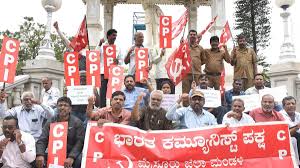
Members of the Communist Party of India (CPI) staged a demonstration in the city on Tuesday against what it called increase in atrocities against Dalits, adivasis, women, and minorities in the country. The protesters attributed the atrocities to the prevailing mindset in the society, which, it said, was shaped by caste discrimination encouraged by the Manusmirti. They regretted that such atrocities continue to take place in the society in the present times long after the country has become democractic. Instead of a reduction in such crime, the atrocities are on the rise, the CPI alleged. Citing statistics from the National Crimes Record Bureau, the CPI said that there were 57,000 recorded cases of atrocities against the Dalits in 2023 while there were 2,835 rape cases in which Dalit women were victims. They said these were only the registered cases while the actual numbers could be much higher. The rise in crime was also attributed to rise in communalism in the country and called for greater unity among the people to fight the scourge. The Hindu Bureau Courtesy : The Hindu Note: This news is originally published on https:/thehindu.com/bha and is used purely for non-profit/non-commercial purposes, especially human rights
CPI stages protest against attacks on dalits, minorities
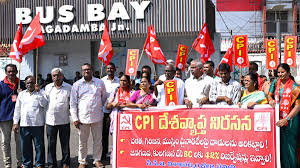
Leaders and activists of the Communist Party of India (CPI), staged a protest on Tuesday, following a call given by the party’s national council, demanding an end to the attacks on dalits, tribals and minorities. They also sought a caste survey and provision of 42% reservation for Backward Classes Addressing the gathering, CPI district secretary Sk. Rahaman alleged that the attacks on dalits and minorities had increased after Narendra Modi became the Prime Minister. He condemned the attacks on dalits, minorities and tribal people in Uttar Pradesh, Manipur, West Bengal and other States. He also deplored the alleged attempts of the Modi government to replace the secular character of the Constitution with ‘Manuvada’. Rahaman said that the ethnic clashes in Manipur had drawn flak from nations across the globe but the Centre and the State government had failed to condemn the attacks. He alleged that the natural resources of the forests were being destroyed and that the tribals were being deprived of their livelihood to benefit corporate companies. He called upon the people to oppose the move of the Centre to exploit the natural resources of the forest areas. Additionally, he condemned the attitude of the TDP-led Alliance government in Andhra Pradesh for failing to initiate action against the police officers responsible for the attack on dalit and minority youth in Tenali, and against the perpetrators of rape of a minor girl and women. He demanded that the Centre and State government put an end to attacks on dalits and minorities failing which the people would teach them a lesson in the next elections. CPI district assistant secretary P. Chandrasekhar, executive members M. Pydiraju, M. Manmadha Rao, CN Kshetrapal Reddy, N. Nagabushanam, MA Begam and K. Satyanjaneya were among those who participated in the protest. Madhu Gopal Courtesy : The Hindu Note: This news is originally published on https:/thehindu.com/bha and is used purely for non-profit/non-commercial purposes, especially human rights
UP: Dalit Vegetable Vendor Beaten, Forced to Call Attacker ‘Father’; Main Accused Arrested After Video Goes Viral

A Dalit vegetable vendor was beaten in Shahjahanpur district of Uttar Pradesh, leading to quick police action after a video of the assault went viral on social media. The incident happened in Paina Buzurg village under Sidhouli police station, where a local strongman attacked the vendor with sticks. In the video, the accused is seen hitting the man again and again and forcing him to call the attacker “father”. The disturbing footage caused widespread anger online, which pushed the police to step in without delay. The victim has been identified as Achal Kumar, a resident of nearby Paina Khurd. Officials said Achal had an ongoing legal dispute with some upper caste men in the area. On Sunday, he accidentally entered Paina Buzurg while selling vegetables. He was then surrounded by Chutakke Singh and his group, who assaulted him. A local resident filmed the attack and posted it online, which created more tension in the village. Achal later filed a complaint with the police. A case has been registered under the appropriate sections. Sidhouli Circle Officer Praveen Malik said, “We have arrested the main accused and the investigation is continuing.” He also said that the violence appeared to be a result of an old rivalry between the two sides. “The victim has been medically examined and the situation is under control,” he added. Courtesy : TOP Note: This news is originally published on https:/theobserverpost.com/bha and is used purely for non-profit/non-commercial purposes, especially human rights