
Dalit student dies ten days after attempted suicide following alleged caste assault in TN
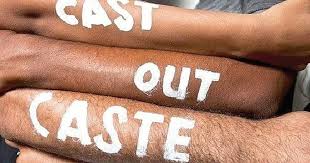
Villupuram, Tamil Nadu: Ten days after he attempted to take his own life following an alleged caste-based assault, an 18-year-old Dalit student from Vikravandi in Tamil Nadu died of his injuries on Tuesday. The student, S. Gajini of Vadakuchipalayam, was in his first year of a History course at Government Arignar Anna Arts College. The Observer Post reported that the chain of events began on November 6, when Gajini was returning home from a hotel. According to police and local sources, three men from the Vanniyar community, allegedly drunk and riding triple on a motorbike, collided with his two-wheeler and a confrontation followed. When the men learnt that Gajini belonged to a Dalit locality, they allegedly assaulted him and hurled caste slurs before fleeing as his father arrived at the spot. On November 9, Gajini attempted suicide at home. His family immediately took him to the Government Medical College and Hospital in Mundiyambakkam. He was admitted to a local intensive critical care unit, where he received treatment for ten days and died early Tuesday morning. Villupuram taluk police have filed a case under the SC/ST (Prevention of Atrocities) Act against three unnamed men. According to authorities, the investigation has been obstructed by Gajini’s inability to accurately identify his attackers, despite his family’s claims that he recognised at least one of them. Gajini’s father, P. Semmaneri, said “The police are not investigating properly because my son is already dead. Authorities should examine mobile tower data from the location. We want justice,” he told The New Indian Express, adding that Dalit residents who use the same stretch of road need assured safety. The district Adi Dravidar welfare department has announced a compensation of ₹6 lakh for the family. Courtesy : Vartha Bharati Note: This news is originally published on https:/varthabharati.com/bha and is used purely for non-profit/non-commercial purposes, especially human rights
Trans National Guard member sues Trump administration over bathroom restrictions

A transgender Illinois National Guard member filed a class action lawsuit challenging a Trump-Vance restroom policy for transgender and intersex federal workers. A civilian employee of the Illinois National Guard has filed a federal class action lawsuit challenging a Trump-Vance administration policy that bars transgender and intersex federal employees from using restrooms consistent with their gender. The complaint, filed on behalf of LeAnne Withrow, is backed by the American Civil Liberties Union, the ACLU of D.C., the ACLU of Illinois, and Democracy Forward. Withrow, of Springfield, Illinois, is a lead military and family readiness specialist and longtime National Guard employee. A former staff sergeant, she has earned multiple commendations, including the Illinois National Guard Abraham Lincoln Medal of Freedom. After President Trump issued a January 20 executive order directing federal agencies to require restroom use strictly according to “biological sex,” the Office of Personnel Management, the Department of Defense, and the National Guard Bureau issued compliance notices to employees nationwide. Shortly afterward, Withrow’s supervisors informed her she was no longer permitted to use women’s restrooms at work. Withrow first filed complaints with the Army National Guard Bureau Equal Opportunity Office and later with the US Equal Employment Opportunity Commission, but neither process resolved the issue, prompting her to seek relief in federal court. The lawsuit argues the policy violates Title VII of the Civil Rights Act of 1964, citing the Supreme Court’s 2020 ruling that protections against sex discrimination include transgender employees. It also alleges violations of the Administrative Procedure Act. Withrow said she hopes the court will restore dignity for transgender federal workers. Attorneys for the ACLU and Democracy Forward condemned the policy as discriminatory, harmful, and part of a broader effort by the Trump administration to target transgender people in federal service. Courtesy : India Today Note: This news is originally published on https:/indiatoday.com/bha and is used purely for non-profit/non-commercial purposes, especially human rights
First the BJP, and now this… Congress leader angered by the letter against Rahul Gandhi, asking this question
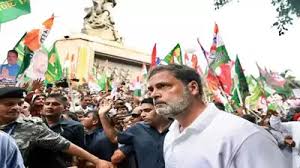
Criticizing the letter against Rahul Gandhi, Congress leader Pawan Khera questioned what was wrong with asking questions. The Congress leader said that democracy is not strengthened by keeping one’s eyes, ears, or mouths shut. Khera said that asking questions does not mean attacking; this mentality has been instilled in this country by the Prime Minister. New Delhi: Congress leader Pawan Khera on Thursday criticized a letter written by former bureaucrats and judges condemning Rahul Gandhi’s repeated allegations against the Election Commission and other state bodies. In a letter, more than 272 respected citizens, including 16 judges, 123 retired bureaucrats, 14 ambassadors, and 133 retired armed forces officers, condemned the repeated attacks on national constitutional authorities by Rahul Gandhi, the Leader of the Opposition in the Lok Sabha. Speaking to news agency ANI, Kheda said that first the BJP and then retired officials came to the defense of the current Chief Election Commissioner, Gyanesh Kumar. Criticizing this move, he said that questions strengthen democracy. The Congress leader said, “We saw their signatures. The issue is that if the functioning of the Election Commission is being questioned, and the entire opposition is doing so, first the BJP comes to the defense of a serving Election Commissioner, and then retired officials come to the defense.” Taking aim at Prime Minister Narendra Modi, Kheda said that the Prime Minister is promoting a mentality where asking questions is tantamount to attacking someone. Aren’t questions necessary to keep democracy alive? Do these people want to see democracy die in their lifetime? Asking questions doesn’t mean attacking; this mentality has been instilled in this country by the Prime Minister… Questions strengthen democracy. He said, “Closing eyes, closing ears, or keeping quiet doesn’t strengthen democracy.” The letter stated that instead of presenting real policy options, Congress leaders are resorting to baseless allegations. Condemning the alleged repeated attacks on institutions, such as questioning the valor of the armed forces and the impartiality of the judiciary, the letter states that this time the Election Commission is facing systematic and conspiratorial attacks on its integrity and reputation. Curated by: Pankaj Singh About the Author Pankaj Singh is an Assistant Editor at Navbharat Times Digital. He has been associated with journalism for over 18 years. He has extensive experience in current affairs, politics, and ground reporting. During this time, he has covered political news, including the Delhi Assembly elections, the Railways elections, and the Lok Sabha elections. Courtesy: Hindi News
Power tussle intensifies in Karnataka, 10 DK-supporting MLAs camp in Delhi, Siddaramaiah cancels visit
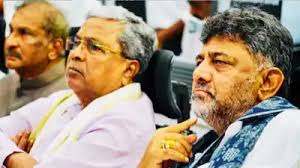
Siddaramaiah vs DK Shivakumar: After the Congress’s humiliating performance in the Bihar elections, its effects are being felt in Karnataka. With the Congress government completing half its term, demands for a leadership change in the state have intensified. The question arises: will Siddaramaiah lose his position? MLAs supporting DK Shivakumar have become vocal in demanding his appointment as CM in Karnataka. Bengaluru: The power struggle among Congress party leaders has intensified in Karnataka. After DK Shivakumar hinted at resigning as state president, 10 party MLAs have demanded his appointment as CM from the central leadership. Congress MLAs loyal to DK Shivakumar will meet party leaders in Delhi today and demand the fulfillment of the promise of power sharing in 2023. Consequently, the Siddaramaiah vs DK battle in Karnataka has reached Delhi. The Siddaramaiah-led Congress government in Karnataka is completing 2.5 years in office. 10 DK Pro-DK MLAs Arrive in Delhi More than 10 MLAs, including a minister from the Shivakumar camp, arrived in Delhi on Thursday. Several more are expected to arrive on Friday. The MLAs are planning to meet Congress President Mallikarjun Kharge and General Secretary KC Venugopal to press their demand for the party to implement the internal power-sharing arrangement agreed upon in 2023. The MLAs’ arrival in Delhi coincides with Congress National President Kharge’s arrival from Bengaluru. Siddaramaiah Cancels His Tour Amid the rapidly evolving situation in the state, Chief Minister Siddaramaiah abruptly canceled his two-day tour of Mysore and Chamarajanagar scheduled for Friday and Saturday and is returning to Bengaluru. Among those arriving in Delhi on Thursday are Minister N Chaluvarayaswami and MLAs Kabal Hussain, HC Balakrishna, and SR Srinivas. Earlier on Tuesday, MLAs Ravi Ganiga, Gubbi Vasu, Dinesh Gooligowda, and other MLAs had already reached Delhi to raise the issue with the party leadership. Sources said that MLAs Anekal Shivanna, Nelamangala Srinivas, Kunigal Ranganath, Sivaganga Basavaraju, and Balakrishna are also expected to reach the capital on Friday. This move by Shivakumar loyalists comes a day after Chief Minister Siddaramaiah completed two and a half years in office. Curated by: Achalendra Katiyar About the Author Achalendra Kumar Katiyar works for Navbharat Times Online. He began his career with DLA newspaper in 2008. During his 17-year career, he has worked for iNext, Aaj Samaj, and Dainik Hindustan. He keeps an eye on every development in western states, including Gujarat and Maharashtra. He has a strong understanding of politics. Courtesy: Hindi News
Rahul Gandhi’s vote theft charge against EC exposes a threat to democracy: Sapkal
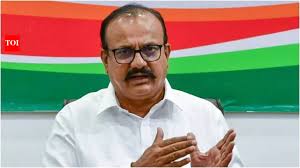
Nagpur: Maharashtra Congress chief Harshawardhan Sapkal on Thursday firmed up the party’s allegations about electoral manipulation, asserting that Leader of Opposition in Lok Sabha, Rahul Gandhi “exposed a major vote theft scandal with evidence” and urged citizens to join what he called a “broader fight to protect democratic institutions”. “People now understand what is happening,” he told the media in Nagpur, insisting the issue “is not just about Congress but about every citizen and the media”. The MPCC chief spent the day campaigning across Vidarbha, addressing rallies in Chandur Railway in Amravati district before travelling to Anjangaon Surji, Akot and Balapur in Akola district to support Congress candidates in the upcoming local body elections. Sapkal criticised the Mahayuti govt in the state, claiming Maharashtra’s autonomy has been compromised. He alleged that the state was being “mortgaged to Gujarat,” adding, “Devendra Fadnavis is the shadow chief minister, and all decisions are taken by Union home minister Amit Shah.” According to Sapkal, the frequent Delhi visits by the state leaders reflect “deep internal rifts within the triple-engine govt.” On recent meetings between Shah and deputy chief ministers Eknath Shinde and Ajit Pawar, Sapkal noted that Pawar’s meeting was followed by a “clean chit” to his son Parth in the Pune land case. On alliance talks, Sapkal said no proposal was received from the Maharashtra Navnirman Sena and that decisions on poll partnerships were delegated to local units. He emphasised that Congress workers in Mumbai want the party to contest the municipal elections independently. “Any party outside the INDIA bloc must first send a proposal, which will then be decided at the national level,” he said, adding that Shiv Sena “is free to choose its allies.” Responding to MNS stand on Marathi pride, Sapkal asserted that Congress needed no lessons on Maharashtra’s cultural identity. He described Marathi pride as “not merely a linguistic issue but Maharashtra dharma,” recalling that Congress was the first to oppose the proposal to make Hindi compulsory from Class 1. Courtesy : TOI Note: This news is originally published on https:/timesofindia.com/bha and is used purely for non-profit/non-commercial purposes, especially human rights
Crimes against dalits up in Tamil Nadu: VCK MP cites data

Chennai: VCK general secretary D Ravikumar on Wednesday said the conviction rate in caste-based crimes in Tamil Nadu was poor. In a statement, he said cases filed by dalits under the SC/ST (Prevention of Atrocities) Act are frequently dismissed as “false”. He alleged that this was due to poor handling of the cases by the law enforcing agencies. Citing the NCRB report for the year 2023, the Villupuram MP said atrocities against dalits in TN were on the rise. He said the state witnessed 1,921 crimes committed against SCs in 2023 as against 1,377 such crimes in 2021. “Unlike neighbouring states such as Andhra Pradesh, Telangana, and Karnataka, where crimes against SCs declined in 2023, TN has recorded an increase,” he added. Ravikumar said as of 2023, there were 6,410 cases being heard in the courts, while 1,502 new cases were added that year, bringing the total pending cases to 7,912. “In 2023, convictions occurred in only 115 cases, while 830 cases resulted in acquittal,” he said, blaming the police and govt’s approach towards caste-based crimes for the poor conviction rate of 12% compared to the national average of 32%. Courtesy : TOI Note: This news is originally published on https:/timesofindia.com/bha and is used purely for non-profit/non-commercial purposes, especially human rights
Dalit MLA denies he was forced to sit on floor during SIR inspection
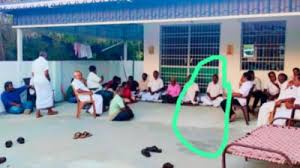
DHARMAPURI: AIADMK legislator V Sampath Kumar on Wednesday refuted allegations that he had been forced to sit on the floor during a special intensive revision (SIR) inspection in Harur assembly constituency in Dharmapuri district on Tuesday. The MLA said he had chosen to sit on the floor to speak on equal terms with senior members of the public. The allegation emerged after Sampath Kumar, who belongs to a dalit community, attended an SIR inspection at the Harur town panchayat office on Tuesday. He was seen sitting on the floor. A few people who witnessed this alleged that a party functionary had compelled him to sit there. Complaints against Harur AIADMK union secretary Pasupathi went viral in social media on Wednesday, prompting accusations of caste discrimination within the party. Political leaders and social activists said the episode revealed caste bias in AIADMK and alleged that dalit members were being sidelined. Sampath Kumar clarified on his X account that: “On Tuesday, during an inspection visit to the town panchayat office, a chair was given to me. However, since senior members of the public were sitting on the floor due to lack of chairs, I chose to sit on the floor among them to speak with them on equal terms. Despite having leg pain, I completed the SIR inspection sitting there. I request everyone not to misunderstand my action or spread false information about it. Please do not circulate any misleading news that could harm my reputation.” Courtesy : TOI Note: This news is originally published on https:/timesofindia.com/bha and is used purely for non-profit/non-commercial purposes, especially human rights
Why Dalits love Mahatma Macaulay
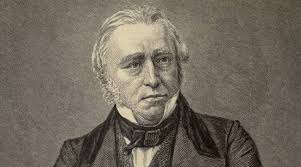
Robert Clive defeated India and didn’t question caste. Mahatma Macaulay envisioned India as a free nation and critiqued caste. That explains why Indians hate one more than the other. For some years now, I have been hosting a Lord Macaulay party at my home for fellow Dalit activists, writers, and intellectuals. Noted scholar D Shyam Babu even gave him the moniker Mahatma Macaulay. Now, this would obviously rile up many Indians who support the decolonisation project India has embarked upon in recent years. PM Narendra Modi said this week that he wants to uproot Lord Macaulay’s influence from Indian education and reverse the colonial mindset. To the British colonialists, the Battle of Plassey may have been a cakewalk, but ruling the colony called India was not. The caste phenomenon turned out to be their biggest headache in ruling this newfound territory. If you study the disruptive force that Macaulay unleashed upon Indian society, you will understand why Dalits want to call him a Mahatma. Before coming to India, Mahatma Macaulay had some idea of caste. In his 10 July 1833 speech in the House of Commons, he was worried: “The worst of all systems was surely that of having a mild code for the Brahmins who sprang from the head of the Creator, while there was a severe code for the Sudras, who sprang from his feet. India has suffered enough already from the distinction of castes.” However unintended it may have been, the colonialists saw caste-based prejudices and discrimination as inappropriate to the civilised world. The campaign that Mahatma Macaulay unleashed on caste was sustained by future British administrators. The colonialist empathy to the Dalit cause that was on display during the Round Table Conferences in the early 1930s was the outcome of what he had sown. BR Ambedkar’s inclusion in Viceroy’s Council as a labour minister mirrored that civilising project of the colonial masters that Lord Mahatma Macaulay had begun. Lord Macaulay’s efforts of seeding sciences and European morals for India bore fruits with Charles Woods’ despatch in 1854. Macaulay’s English education was finally implemented in India, but the monster of caste kept nagging the rulers. “The low castes are still far behind the main body of Hindus in the matter of education…there was formerly a deep-seated prejudice against the admission of low caste children in public schools,” notes Progress of Education in India. The British rulers encountered yet another mutiny-like situation by the caste-ridden Indian society in the form of a violent resistance to the entry of Dalit children into the newly evolving English education system. Still ruled by the East India Company, the education department issued a circular on 20 May 1857 stating that no boy should be refused admission to a government college or school merely on the ground of caste. The Hunter Commission noted that the insistence on the inclusion of low caste children was repeated by the Secretary of State in 1860. After Wood’s Despatch, a battle unfolded between caste and colonialists. In the Kairana district of the Bombay Presidency, six Dalits villages were burned down. Elsewhere, Dalits’ crops were attacked, and children chased away. Fearing social pollution, many schools were shut as privileged caste-children withdrew from schools. The Hunter Commission, set up in 1982, asked the British administration this: “Establishment of special schools or classes for children of low castes be liberally encouraged.” In his report, WW Hunter expressed his government’s inability to enforce the inclusion of depressed class children. That’s when the idea of separate schools came. The Commission had already identified the existence of separate 16 schools in Bombay Presidency and four in Central Provinces. Much against the wishes of the upper caste-nationalists, the British colonialists established separate schools for Dalits all over India. A school was set up in my native village in Azamgarh in Uttar Pradesh too. I am a product of the same school, although this Harjan Bal Vidyalaya admitted students from all castes. Today, the English education that the British introduced in India is unfairly treated as just a language project. It wasn’t. Mahatma Macaulay’s Minutes on Education (1935) is a living testimony of all that he advocated—focus on sciences and Western philosophy. India is the greatest beneficiary of that colonial project. Think of Indians’ superiority in IT and excellence in sciences without Mahatma Macaulay’s Minutes on Education. Think of India’s legal ecosystem without IPC, CrPC, district courts, collectorates, educational institutions, railways, and communication connectivity. Macaulay imagined a free India After my JNU, I have often wondered why Indians hate Mahatma Macaulay more than they hate Lord Clive. After all, Lord Clive sported wartime headgear, held a sword in one hand, gun in the other. There was guile in his eyes. He stared at Indians, fired at them; won an empire for England in the battle of Plassey in the year 1757. Lord Macaulay on the other hand, came to India with two fountain pens and an ink pot. He dressed like royals, sported a gentleman’s hat, and walked in grace. Did Mahatma Macaulay have contempt for India? Look at what he said in his Government of India speech in the House of Commons on 10 July 1833: It would be, on the most selfish view of the case, far better for us that the people of India were well governed and independent of us, than ill governed and subject to us; that they were ruled by their own kings, but wearing our broadcloth, and working with our cutlery, than that they were performing their salams to English collectors and English magistrates, but were too ignorant to value, or too poor to buy, English manufactures. To trade with civilised men is infinitely more profitable than to govern savages. “I allude to that wise, that benevolent, that noble clause which enacts that no native of our Indian empire shall, by reason of his colour, his descent, or his religion, be incapable of holding office,” he said elsewhere in the speech. Did the Lord demean India with
Dalit student dies 10 days after suicide attempt following alleged casteist assault in Villupuram
Family alleges police inaction; case filed under SC/ST Act against unidentified trio VILLUPURAM: Ten days after he attempted to die by suicide over alleged caste discrimination, an 18-year-old Dalit boy from Vikravandi in Villupuram succumbed to injuries on Tuesday. The deceased, S Gajini of Vadakuchipalayam, was a first-year History student at Government Arignar Anna Arts College. According to sources, Gajini was returning home from a hotel on November 6 when three men from Vanniyar community, riding triples on a bike in an inebriated state, rammed his two-wheeler. A scuffle broke out and upon learning that Gajini was from a Dalit locality, the three men allegedly hurled caste slurs and physically assaulted him. The trio fled the spot when the boy’s father intervened, sources said. Three days later, Gajini attempted to die by suicide at his home. His family rescued him and admitted him to the Government Medical College and Hospital in Mundiyambakkam, where he remained in the intensive critical care unit for 10 days before succumbing to injuries in the early hours of Tuesday. Based on a complaint, the Villupuram taluk police have registered a case under the SC/ST Act against three unidentified men. Police sources said the boy could not confirm their identities, making it difficult to trace the suspects, but the family insisted he had identified at least one of the assailants. “How difficult it is to track mobile tower signals at the spot of the incident? The police are not investigating properly because my son is already dead. We want justice,” Gajini’s father, P Semmaneri, told TNIE. He also sought safety for Dalit residents using the route to reach the bus stop. Meanwhile, the district Adi Dravidar welfare department has sanctioned `6 lakh compensation to the bereaved family. (Assistance for those having suicidal thoughts is available on Tamil Nadu’s health helpline 104 and Sneha’s suicide prevention helpline 044-24640050) Krithika Srinivasan Courtesy : TNIE Note: This news is originally published on https:/thenewindianexpress.com/bha and is used purely for non-profit/non-commercial purposes, especially human rights
Dalit youth dragged by hair, assaulted near police station

Bhopal: A Dalit youth was allegedly assaulted by five men at the Makhannagar High School ground in Narmadapuram district. Shockingly, the incident took place in full public view on Monday, barely 500 metres from the police station. A video of the attack surfaced on Wednesday, purportedly showing the youth being dragged by his hair, abused, and beaten with sticks and rods. His friend tried to rescue him, but he, too, was attacked by the accused. According to the complainant, Pawan Sharma, he and his friend Pradeep Ahirwar were in Makhannagar on November 17 to visit local temples. Around 3 pm, while returning after tea near the Tehsil Ground, two locals stopped them and began abusing Pradeep. As the duo objected to being abused, they allegedly launched an attack. Three more men soon joined and the group unleashed a brutal assault on Pradeep repeatedly with sticks. Passersby rushed to intervene, after which the accused fled, threatening the victims. Pradeep sustained serious injuries on his head, back and limbs. Pawan took him to the police station, from where he was referred to Narmadapuram district hospital after receiving first-aid at a local government facility. Makhannagar police have detained one accused in connection with the incident, while a case has been registered under multiple sections including the SC/ST Act. Courtesy : TOI Note: This news is originally published on https:/timesofindia.com/bha and is used purely for non-profit/non-commercial purposes, especially human rights