
A day before Rahul’s visit, Patwari meets ex-LS speaker Mahajan over Indore deaths

Bhopal: A day before Lok Sabha LOP Rahul Gandhi’s visit to Indore, state Congress president Jitu Patwari created political tremors when he met former Lok Sabha speaker Sumitra Mahajan at her residence on Friday morning. Everyone wondered why the state Congress chief went to meet the BJP’s former MP from the city. After the meeting, Sumitra Mahajan said, “Jitu Patwari works well. He comes to meet me occasionally and he came today also.” Mahajan said that Jitu Patwari asked for her guidance about the present water contamination crisis in the city. Rahul Gandhi is scheduled to reach Indore on Saturday and meet families of the deceased victims of the Bhagirathpura water contamination tragedy. The Congress had applied for permission for a public meeting which was refused by the state administration. Jitu Patwari had also asked for a meeting with all corporators’ of the Indore Municipal Corporation which has also been disallowed. Sumitra Mahajan said, “He (Patwari) said that the Congress being in the opposition will protest. But the solution must come rising above party lines. We must work together to find a solution, he told me,” Sumitra Mahajan explained. “I said yes, in a democracy, the opposition must also do its work. We were also in the opposition and protested on various issues,” she recollected. The former Speaker of the Lok Sabha said that she reminded Patwari that there are institutions like the IIT, IIM and GSITS (Shri Govindram Seksaria Institute of Technology and Sciences) where they have technical experts. “I said there are many institutions in Indore where technically qualified people can help. In fact, the govt should be doing this. I said that the Congress can sit together, make a list of recommendations and send it to the govt. I did not give any wrong advise,” Mahajan quipped. Asked if Rahul Gandhi will be coming to meet her during his visit on Saturday, Sumitra Mahajan said, “No. There was no discussion about that. But if anyone wants to come and meet me, I am here.” Patwari told reporters, “We discussed the situation of water supply in Indore. Now the NGT has also said that 70% of water in MP is contaminated and undrinkable. We must rise above party and politics to ensure that a glass of safe drinking water reaches the people of this city. There should be no politics over water. The dialogue with former Lok Sabha speaker was very positive.” Courtesy : TOI Note: This news is originally published on https:/timesofindia.com/bha and is used purely for non-profit/non-commercial purposes, especially human rights
Meerut Dalit Woman’s Killing: Family Says Police, BJP Helping Prime Accused Claim Minority to Escape Punishment
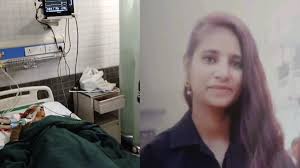
The family of a Dalit woman who was brutally killed in Meerut, allegedly by a group of upper-caste men, has accused the Uttar Pradesh police and the BJP of shielding the main accused and cutting them off from the outside world. Speaking to reporters outside his village on Wednesday, the eldest brother of the abducted woman said the police were deliberately protecting Paras Som, the prime accused in the case. “In Uttar Pradesh, criminals are killed in encounters, but Paras Som was not even touched. Everyone in the village knows he killed my mother and abducted my sister. Putting him in jail is just an eyewash,” he said. He alleged that a conspiracy was underway to help the accused escape strict punishment. “While being taken to court, he was allowed to speak to the media and claim that he is a minor. This is a planned attempt to save him, even though the whole village knows he is around 25 years old,” the brother said. The family also alleged that heavy police presence around their house was not meant for protection but to isolate them. “Paramilitary forces have been deployed outside our home. All entry points to the village have been blocked and six CCTV cameras have been installed around our house. At first we thought it was for our safety, but now it feels like they want to stop us from talking to anyone,” he said. According to the family, the incident took place on the morning of January 8 when Paras Som and his associates attacked the woman with axes as she was going to her fields with her daughter. The woman was killed on the spot and her daughter was abducted. Another brother of the abducted woman said eyewitnesses had named four people in the crime. “Paras Som, his friend Sunil Som and two others were involved. The police arrested Paras and Sunil but have done nothing to catch the other two accused. Now Paras is playing the age card on the advice of politicians,” he alleged. The police arrested Paras Som from Haridwar and rescued the woman on the night of January 10. After her statement was recorded before a magistrate, she was sent back home. While being produced in court, Paras Som told reporters, “I am a minor and I have documents to prove it. My Aadhaar card and school certificate will show this.” Meerut jail superintendent Viresh Raj Sharma said the accused had claimed to be a minor. “He has said he should be sent to a child remand home. We have asked him to present these claims before the court,” he said. Circle Officer Ashutosh Kumar said security forces were deployed only to maintain law and order. “The main accused has not submitted any proof of being a minor so far,” he said. The case has triggered political reactions across the state. Samajwadi Party chief Akhilesh Yadav said his party was closely monitoring the situation. “We are with the victim’s family at every step,” he said. Yadav had earlier sent Rs three lakh as financial assistance to the family. The killing sparked protests by Dalit groups and opposition parties, with demands for the immediate arrest of all accused and action against their properties. Bahujan Samaj Party chief Mayawati called the incident “extremely heartbreaking and shameful” and urged the government to take crimes against women seriously. The incident has also led to clashes between opposition leaders and the administration after several political delegations were stopped from visiting the victim’s village, even as BJP leaders were allowed access. Courtesy : TOP Note: This news is originally published on https:/theobserverpost.com/bha and is used purely for non-profit/non-commercial purposes, especially human rights
‘What’s in a name?’: Rohith Vemula and the enduring caste discrimination in Indian universities
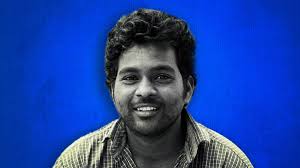
What makes caste discrimination in higher education particularly insidious is that it’s rarely spectacular. Dalit students aren’t always abused openly; more often, they’re quietly diminished. If Rohith Vemula were alive in 2026, he would be around thirty-six years old. One can imagine him as a teacher, a public intellectual, perhaps a scientist or a writer, someone still questioning power, still dreaming, and still believing that knowledge could be a tool for justice. It was ten years ago, on January 17, 2016 that Rohith Vemula was institutionally murdered. His death exposed something far more unsettling: that universities, institutions often celebrated as spaces of reason and modernity, are deeply structured by caste. It underlined that rather than merely reflecting social inequalities beyond their boundaries, universities actively perpetuate them within their classrooms, hostels, evaluation systems, and daily academic activities. Rohith’s death forced into public consciousness what Dalit students had long experienced in silence: that institutions can kill without ever touching the body. When academia mirrors social hierarchies Rohith Vemula’s experience at the University of Hyderabad made visible how institutional failure operates in caste terms. He questioned authority, challenged Brahmanical dominance, and insisted that equality was a right, not a favor. The response was swift and disciplinary: suspension, social boycott, withdrawal of material support, and administrative indifference. The university did not engage with his ideas; it sought to silence his presence. His fellowship was stopped, his access to basic resources denied, and his social world deliberately narrowed. The institution did not pull the trigger, but it created the conditions in which life became unbearable. Rohith’s death thus raised a question that still haunts Indian higher education: what happens when institutions meant to nurture minds instead systematically break them? What makes caste discrimination in higher education particularly insidious is that it is rarely spectacular. Dalit students are not always abused openly; more often, they are quietly diminished. Their ideas are ignored in seminars until echoed by Savarna peers. Their academic labor goes unrecognised, while others receive praise for similar work. They are marked lower in vivas and interviews without explanation and told they lack “clarity,” “rigor,” or “confidence.” Even discrimination has learned to speak the language of civility. The interview and viva systems, far from being neutral instruments of assessment, are structured through deeply embedded biases. They operate on unspoken assumptions about how intelligence should sound, appear, and be performed. Fluency in dominant language registers, familiarity with elite academic culture and specific styles of self-presentation are regarded as indicators of merit, while alternative intellectual expressions are marginalised. In this way, interviews do not merely evaluate candidates; they actively regulate who is deemed academically legitimate, reproducing exclusion through procedure rather than through openly articulated discrimination. Marginalised students, particularly first-generation learners, enter these spaces already marked as out of place. Failure is then framed as individual weakness, never as institutional bias. The myth of merit and the reality of privilege Merit in higher education is commonly framed as a neutral, objective, and caste-free measure of individual ability. This assumption, however, obscures the social conditions under which merit is produced, recognised, and rewarded. Far from being an autonomous attribute, merit is a socially mediated construct that reflects the unequal distribution of social and cultural capital structured by caste hierarchies. According to French sociologist Pierre Bourdieu, intergenerational accumulation of cultural capital, linguistic competence, academic disposition, confidence, and familiarity with institutional norms aligns with dominant caste practices. In the Indian context, this capital is explicitly caste-structured: Savarna students enter educational institutions already equipped with embodied dispositions that institutions mistake for intelligence and competence. Dalit students, often first-generation learners, encounter the university as a culturally alien space where evaluative norms are implicit yet rigid, producing systematic misrecognition rather than neutral assessment. Meritocratic evaluations also erase the role of social capital, including access to mentorship, academic networks, and informal guidance. These resources significantly shape academic performance and institutional navigation but remain invisible within formal assessment frameworks. By ignoring such structural advantages, merit discourse converts inherited privilege into individual achievement and structural exclusion into personal failure. Merit thus functions ideologically by naturalising inequality and moralising hierarchy. Success appears deserved, while exclusion is attributed to lack of effort or ability, absolving institutions of responsibility and delegitimising claims for structural redress. In this sense, merit operates as a technology through which caste privilege reproduces itself under the guise of fairness and modernity. This sustained misrecognition constitutes a form of institutional violence. When exclusion is repeatedly framed as individual inadequacy, humiliation becomes normalised and structural discrimination rendered invisible. Merit, in this formulation, is not the absence of caste but one of its most effective contemporary languages, reproducing hierarchy while disavowing it. From embodiment to institutional murder Institutional murder is not an isolated act of individual cruelty; it is the terminal effect of a prolonged regime of humiliation embedded within institutional life. This regime operates through the everyday normalisation of Brahmanical embodiment and the systematic disembodiment of Dalit students in higher education. Brahmanical embodiment structures the university as a space where savarna aesthetics, taste, comportment, and affect are treated as neutral standards of merit and professionalism. These embodied norms confer automatic legitimacy on Savarna bodies while rendering Dalit bodies culturally and epistemically misaligned with the institution. As a result, Dalit students encounter the university not as a space of recognition but as a site of constant correction, surveillance, and disciplining. This process produces institutional humiliation. Humiliation here is not episodic or interpersonal; it is cumulative and structural. It is enacted through repeated questioning of competence, the delegitimisation of lived experience as knowledge, aesthetic policing of language, dress, and emotion, and the persistent marking of Dalit students as “quota,” “beneficiaries,” or disruptions to academic order. Each instance may appear minor or deniable, but together they constitute a continuous assault on dignity. Institutional humiliation functions through disembodiment. Dalit students are compelled to suppress their histories, affects, and cultural presence to survive academically. Their bodies are present but unrecognised; their voices are audible but unauthoritative. This forced erasure generates
Harihar MLA booked for abusing Dalit farmer with casteist slurs
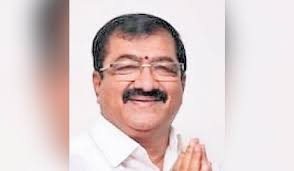
In his complaint, the farmer sought legal action against the MLA, his son and his PA for verbally abusing and threatening him. DAVANAGERE: The Davanagere police have registered an FIR against Harihar MLA BP Harish on charges of abusing a Dalit farmer with casteist slurs. Based on a complaint by Kantaraj of Kadajji village in Davangere taluk, the police booked the MLA under the SC/ST (Prevention of Atrocities) Act, 1989. Harish had gone to the village on January 12 to check on reports of illegal silt removal from a lake for use in agriculture. In the complaint, Kantaraj claimed that the MLA’s car blocked his tractor when he was transporting silt from the lake. “I got down from the tractor and went to the car and saw MLA Harish in it. When I asked why you blocked my tractor, the MLA, his son and his PA got down from the car and asked me on what basis I was lifting the silt. They also reprimanded me rudely,” the complainant said. When Kantaraj made repeated requests to let go, they started to abuse him. The MLA too kept shouting at him, the complaint stated. “Then some people from our village came and even though the MLA, his son and his PA joined them and told them not to lift the soil, they reprimanded me again and abused my caste. Following this, the people near the lake came and formed a group. Then other villagers and elders pacified everyone and sent them away,” Kantaraj said. In his complaint, the farmer sought legal action against the MLA, his son and his PA for verbally abusing and threatening him. A case has been registered against the trio under sections 352 351 (2), 126 (2) of the SC/ST Prevention of Atrocities Act 1986. Recently, a case was registered against Harish on charges of insulting and abusing Davangere SP Uma Prashanth. Courtesy : TNIE Note: This news is originally published on https:/thenewindianexpress.com/bha and is used purely for non-profit/non-commercial purposes, especially human rights
Meira Kumar: How A Dalit Woman Reshaped Indian Politics From The Speaker’s Chair
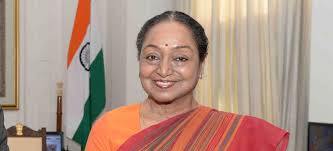
Meira Kumar is a politician and Speaker of the 15th Lok Sabha, who has left her mark on the field of Indian politics. What does it mean to shatter the ceiling when the floor that you stand on has always been irregular? Meira Kumar, India’s first woman Speaker in the Lok Sabha, has shattered political ceilings but also brought her identity of being a Dalit woman as a powerful instrument of advocacy to the heart of politics. Meira Kumar’s life is an adventurous answer to the challenge of representation in justice that can transform the moral geography of the nation. Family background and early years Meira Kumar is a politician and Speaker of the 15th Lok Sabha, who has left her mark on the field of Indian politics. Born in a politically active family with many Dalit leaders and social activists, Meira Kumar’s father Babu Jagjivan Ram was not only a well-known freedom fighter but also Deputy Prime Minister. Her mother, Indrani Devi, was a social worker. Kumar holds B.A. and M.A. in English Literature with LL.B. from the University of Delhi. It is because of Kumar’s parents, particularly her mother’s influence, that she chose to follow the path to justice for everyone. Meira Kumar has been an active social worker since her youth and was associated with various social movements for reforms and human rights. During the famine in the state of Bihar in the year 1967, she was appointed as the Chairperson of National Drought Relief Committee constituted by the Congress and she had also worked towards the establishment of the Family Adoption Scheme, through which drought-affected families would get help from voluntarily contributing households. Through all this, she had gained a good base in the provision of relief before venturing into politics. Career and entry into politics Before entering Politics, Meira Kumar served the Indian Foreign Service for more than a decade, where she was stationed in Spain and the United Kingdom. This job taught her how to negotiate, build bridges between different groups and represent India’s diverse culture to the world. However, she felt a strong pull to work directly on the social issues she cared about at home. She left diplomacy to join politics in 1985, encouraged by her father and by Rajiv Gandhi, the then prime minister of India. She ran in a by-election for a seat in the Lok Sabha from a constituency in Uttar Pradesh state defeating two other Dalit candidates. Being close to the politically powerful Gandhi family and representing the oppressed castes, Kumar’s political career progressed steadily within the Indian National Congress (INC) and she quickly made a name for herself as a strong advocate for human rights and the abolition of the caste system. Meira Kumar is a highly accomplished politician who has been a member of numerous decision-making bodies within the INC, serving twice as its General Secretary. Meira Kumar is a highly accomplished politician who has been a member of numerous decision-making bodies within the INC, serving twice as its General Secretary. She became a member of the Congress Working Committee, the organisation’s highest decision-making body in 1990 and continued it for a decade till 2000. She resigned from the Congress Party in 2000, citing differences with the party leadership but rejoined it after a gap of two years. In 2004 and 2009 she contested and won the Lok Sabha seat from Sasaram in Bihar state, the constituency once represented by her father. Advocacy for social justice During her political career, she has served on various committees, including the Public Accounts Committee and the Joint Committee on the Empowerment of Women as a Member of Parliament. Additionally, she also served as Minister of Social Justice and Empowerment (2004-2009) which deepened her activism against caste exclusion. She challenged private sector reservation opposition and said sustainable growth needs ending Dalit and tribal marginalisation. Her focus shifted from handouts to true empowerment. Appointed as the Minister of Water Resources in the 14th Lok Sabha shortly after her victory in the elections of 2009, in June of the same year, she achieved a tremendous historical feat as the first woman Lok Sabha Speaker. This moment symbolically meant a lot to women in the state of India. During her role as the Speaker, Meira Kumar achieved many milestones to bring gender equality to the politics of India. She started the gender-neutral rules in the House, replacing gendered terms with gender-neutral expressions in the rules of the House. This action brought a remarkable revolution in the setting of the Parliament to be friendly to all its members irrespective of gender. During her term as the Speaker, in 2011, Kumar reduced paper usage by 30% in the Lok Sabha with tablets and also expressed her support to the increasing nationwide protests against violence on women in the nation. She also announced the formation of a Parliamentary Friendship Group to improve relations with the nation of Bhutan. In speeches, Meira Kumar calls for ‘zero tolerance on prejudice‘ and the end of the caste system. In the 2017 presidential election, Kumar secured the United Progressive Alliance’s nomination as their joint candidate for President of India. This was a testament to her widespread respect as a symbol of social justice, secularism and constitutional values as she said, ‘Democratic values, social justice, transparency, freedom of speech, inclusiveness, destruction of caste system, end of poverty — these are part of the ideology which is close to my heart. For this very reason, on the plank of this ideology I will compete.‘ Thus, her 2017 presidential bid stressed destruction of caste barriers and inclusion. ‘Democratic values, social justice, transparency, freedom of speech, inclusiveness, destruction of caste system, end of poverty — these are part of the ideology which is close to my heart. For this very reason, on the plank of this ideology I will compete.‘ – Meira Kumar At her first press conference after being selected as joint candidate for President, with BJP’s Ram Nath Kovind, whose Dalit
Dalit Class 9 Student Found Dead on Railway Track in Saharanpur, Police Probe Alleged Honour Killing
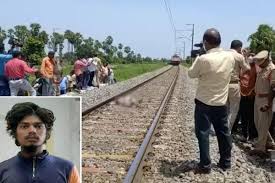
An alleged honour killing of a Dalit teenager has come to light in the Deoband police station area of Saharanpur district in Uttar Pradesh, after the body of a Class 9 student was found on a railway track. Police said they received information on Thursday about a sack lying on the railway track. A police team rushed to the spot, took the body into custody and sent it for post mortem. Locals at the site later identified the deceased as Mayank, a 14-year-old resident of Alipura or Meghrajpur village. Superintendent of Police Rural Sagar Jain said the boy had been missing since January 12. “The deceased has been identified as Mayank, son of Roopchand, a resident of Alipura village under Deoband police station. A case has been registered based on the complaint given by the family, and the investigation is underway from all angles,” he said. According to the family, Mayank received a phone call from someone in the village on the afternoon of January 12 and was asked to come out immediately. His parents did not stop him as they believed the caller was known to them. When he did not return home, the family searched for him but found no trace until his body was discovered on the railway track. The father has alleged that Mayank was first assaulted and then stabbed to death. He claimed that the accused put the body in a sack and dumped it on the railway track to make the murder look like a train accident or suicide. The plan failed after the loco pilot spotted the sack in time and stopped the train, alerting the police. During the inquiry, Roopchand told police that his son was friends with a minor girl from the village and alleged that her family members were opposed to the relationship. He has named five people, including the girl’s parents, as accused in the case. “The family has accused five people of murdering the boy. We are examining CCTV footage and other technical evidence. Several suspects have been detained and are being questioned,” SP Jain said, adding that strict action will be taken against those found guilty. Police also said that the girl belonged to the same community as Mayank, but opposition from her family over the friendship may have led to the crime. However, officials stressed that the exact motive will be clear only after the post mortem report and completion of the investigation. Courtesy : TOP Note: This news is originally published on https:/theobserverpost.com/bha and is used purely for non-profit/non-commercial purposes, especially human rights
UP BJP president meets Dalit veteran to bolster outreach
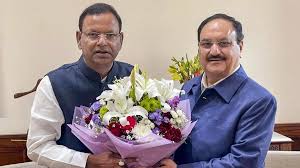
Lucknow: UP BJP chief Pankaj Chaudhary met party’s former national general secretary of Scheduled Caste wing Diwakar Seth on Makar Sankranti as part of his ongoing outreach to BJP old guards for seeking organisational support. Seth, a Jatav Dalit, was associated with many senior BJP leaders, including former President Ram Nath Kovind and former PM Atal Behari Vajpayee. Seth has stayed away from party activities for the past few years due to ill health. Sources said the idea for the meeting was mooted by BJP’s SC wing functionaries amid the party’s bid to consolidate Dalits support. “The party will always be grateful to the workers who nurtured it during difficult times by dedicating their energy, time, and resources to the organisation. BJP not only remembers its workers but also stands by them like a family in their joys and sorrows,” Chaudhary said. Analysts said that by meeting Seth—a veteran Dalit leader with deep ideological roots in BJP—Chaudhary has signalled his continuity with the party’s long-standing Dalit outreach narrative. The meeting was significant in the wake of BJP’s focus on strengthening Dalit-OBC social coalition to counter the opposition’s PDA (Picchda–Dalit–Alpsankhyak) pitch which dented the party in the 2024 Lok Sabha polls. Analysts said Seth’s Jatav identity will lend resonance to BJP’s Dalit outreach. Reason: Jatavs were traditionally seen as a core support base of the BSP. Any engagement, however symbolic, with influential Jatav leaders will allow the BJP to project inclusivity and historical association with the Dalit community, which accounts for around 21% of the total voters in UP. Soon after taking charge as UP BJP president last month, Chaudhary has been meeting party veterans. He visited Ayodhya and Mirzapur to meet former UP BJP presidents Vinay Katiyar and OP Singh, respectively. Both Katiyar and Singh come from the Kurmi community like Chaudhary. Courtesy : TOI Note: This news is originally published on https:/timesofindia.com/bha and is used purely for non-profit/non-commercial purposes, especially human rights
Transgenders in UP’s Bhadohi allege pressure for religious conversion; police order probe
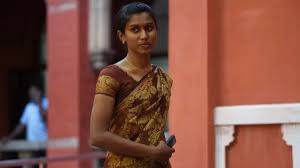
Bhadohi (UP), A group of transgender people here has alleged that members of their own community pressured them to convert to Islam, police said on Thursday. Additional Superintendent of Police Shubham Agrawal said around a dozen transgenders came to the Suriyawan Police Station Wednesday evening and accused their guru, Manju Haji, and others of forcing them to embrace Islam. Agrawal said a dispute initially arose over territorial rights to alms. On January 7, a transgender, Bijli, filed a complaint alleging that Manju Haji and another transgender, Lal Chand alias Pooja, were threatening her for seeking alms in the area assigned to her. Station House Officer Manish Dwivedi called both sides for talks on the same day, but the matter could not be resolved, the officer said. On Wednesday, Bijli submitted a fresh complaint, alleging pressure to convert, insisting she is a Hindu. Agrawal said preliminary inquiry did not find evidence of forced conversion, but the new complaint had been handed over to Circle Officer Ashok Kumar Mishra for investigation. “Forcible religious conversion is a serious offence. If the probe establishes such acts, a case will be registered, and legal action will be taken,” he said. PTI COR KIS VN VN VN This report is auto-generated from PTI news service. ThePrint holds no responsibility for its content. Courtesy : The Print Note: This news is originally published on https:/theprint.com/bha and is used purely for non-profit/non-commercial purposes, especially human rights
Maharashtra civic polls: Rahul Gandhi accuses EC of ‘gaslighting citizens’; BJP takes ‘khandani chor’ jibe
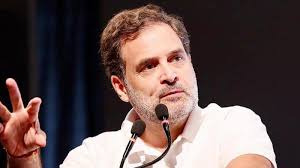
NEW DELHI: Congress leader Rahul Gandhi on Friday accused the Election Commission of “gaslighting citizens” after claims surfaced that marker pens were used to ink voters’ fingers during Maharashtra civic polls, including the Brihanmumbai Municipal Corporation (BMC) election. “Election commission gaslighting citizens is how trust has collapsed in our democracy. Vote Chori is an anti-national act,” Rahul Gandhi said in a post on X. The issue triggered a political row after opposition parties alleged the ink could be wiped off easily, raising concerns about the integrity of the polling process. State Election Commissioner Dinesh Waghmare rejected the allegations, saying marker pens have been used for local self-government elections in the state since 2011 and that the ink is indelible. The BJP slammed Rahul’s attack on poll body and asked if he ‘accepting defeat’ before the counting of votes ends. “Bahana brigade back! Accepting defeat before counting ends? Rahul Back to doing what he does best. Discredit , distort & disinform. Khandani chor now regurgitating claims of Thackerays. By the way what came out of allegations Rahul made on Bihar elections vote chori?” BJP national spokesperson Shehzad Poonawalla said in a post on X. The BMC election, held after an eight-year gap, recorded a voter turnout of 52.94%, according to figures released by the SEC on Friday. Polling concluded on Thursday. The election for India’s richest municipal corporation was marked by allegations from the Shiv Sena (UBT)-MNS alliance, which were later denied by the SEC. The previous BMC polls were held in 2017, and the term of the last elected mayor, Kishori Pednekar, ended in March 2022. The new election is expected to pave the way for Mumbai to get a mayor after nearly four years. According to the SEC, 54,76,043 voters cast their ballots out of 1,03,44,315 registered voters. The turnout included 29,23,433 men, 25,52,359 women, and 251 transgender voters across 277 wards. In absolute numbers, about 3.7 lakh more men voted than women. Maharashtra deputy chief minister Devendra Fadnavis dismissed the controversy, alleging the opposition was preparing excuses for an expected defeat. “The Election Commission has used marker pens several times in the past. I feel some people are preparing to blame something for the result tomorrow,” he said. Courtesy : TOI Note: This news is originally published on https:/timesofindia.com/bha and is used purely for non-profit/non-commercial purposes, especially human rights
Dalit’s Land Encroached Upon by Thugs in Jalalabad: Victim Files Complaint with CO, Investigation Ordered
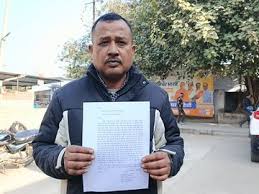
In the Jalalabad tehsil area of Shahjahanpur, a Dalit man’s land has allegedly been forcibly occupied by local strongmen. The victim has filed a complaint with the Circle Officer (CO), who has ordered an investigation into the matter. Rohit Kumar Valmiki, a resident of Barua village in the Madnapur police station area, stated in his application to CO Ajay Kumar Rai that he had purchased 0.401 hectares of land out of a total of 0.535 hectares in plot number 964 in Barua village through a sale deed and was in possession of it. He alleges that a man named Dhirendra Singh, son of Satyapal, fraudulently registered his name on the land. Attempted Forcible Occupation According to Rohit Kumar, recently Dhirendra Singh, along with several accomplices, arrived at his land with a bulldozer and illegal weapons and attempted to forcibly occupy it. When Rohit Kumar and his sons reached the spot and tried to stop them, Dhirendra Singh and his associates allegedly launched a life-threatening attack on them. They also hurled caste-based abuses and threatened to kill them. The victim, Rohit Kumar Valmiki, has appealed to the Circle Officer for justice. Considering the seriousness of the matter, Circle Officer Ajay Kumar Rai has directed the concerned police station to investigate and take necessary action. Ram Niwas Sharma | Jalalabad Courtesy: Hindi News