
‘Cannot disclose, time will answer’: DK Shivakumar after meets Rahul Gandhi, Mallikarjun Kharge in Delhi amid power tussle speculation
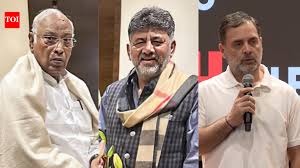
NEW DELHI: Karnataka Deputy chief minister DK Shivakumar attended a meeting as an observer for the Assam elections at 10 Rajaji Marg, the residence of Congress President Mallikarjun Kharge, while refraining from commenting on his discussion with the party high command. Leader of the Opposition Rahul Gandhi was also present at the meeting on Friday. Amid speculation over a power tussle in Karnataka, Rahul Gandhi and DK Shivakumar were face-to-face for the first three hours of the meeting. Afterward, Shivakumar went back to meet Mallikarjun Kharge, according to news agency ANI. Speaking to reporters today, he declined to discuss his meeting with the Congress high command. Shivakumar, who is in New Delhi after canceling his scheduled visit to Davos for the World Economic Forum 2026, asked the media “not make a big deal” out of his visit, stating he came to the national capital for government and party work. Maintaining that he would not disclose anything regarding the meeting, he said, “I cannot disclose it. Time will answer everything… We are all politicians; politicians do whatever politics they want. There is nothing wrong with that. We have met. Why do you make a big deal out of it? We come here for government work, for party work. We come here for politics.” His visit to Delhi comes amid speculation over a possible leadership change in Karnataka. As the state government crossed the halfway mark of its tenure in November 2025, a speculated tussle for the CM post began, with CM Siddaramaiah, Deputy CM Shivakumar, and Home Minister G Parameshwara in the fray. Earlier today, the Deputy CM said that he prefers not to speak even when there is “good news.” “When there is good news, we don’t talk about it. It’s Sunday, a good day. We are people who work for the people and wish well for them. We do not disclose or discuss anything related to such matters, including leadership change,” Shivakumar said. Courtesy : TOI Note: This news is originally published on https:/timesofindia.com/bha and is used purely for non-profit/non-commercial purposes, especially human rights
Raping Dalit woman is…: Congress MLA’s bizarre theory sparks row, BJP reacts
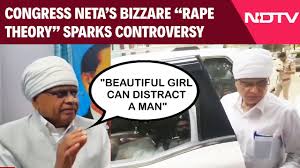
A political controversy has erupted in Madhya Pradesh after Congress MLA Phool Singh Baraiya’s remarks linking rape with religious scriptures sparked widespread outrage. The incident has led to demands for his suspension and expulsion from the party amid sharp criticism from BJP and state leaders. A political storm has erupted in Madhya Pradesh after a video surfaced allegedly showing Congress MLA Phool Singh Baraiya making remarks that appear to link rape with religious scriptures, triggering sharp reactions from across the political spectrum and demands for his suspension and expulsion from the party. The video, which emerged from an interview circulating on social media platforms, shows Baraiya, the Congress legislator from the Bhander Assembly seat, making claims that religious texts offer “spiritual rewards” for sexual violence against women from Scheduled Caste, Scheduled Tribe and Other Backward Class communities. The clip was shared online by the Bharatiya Janata Party, drawing widespread condemnation. In the clip, he is heard saying, “In India, the maximum number of rape cases are among Scheduled Castes, Scheduled Tribes and most OBCs. The theory of rape is that when a man, whatever his state of mind, sees a very beautiful woman while walking on the road, his brain can get disturbed and rape can happen. But among tribals, where are such beautiful women? Among SCs, where are such beautiful women? Among most OBCs, are there such beautiful women? Why does rape happen? Because religious scriptures give such instructions.” He then goes on to invoke religious texts to justify his argument, saying, “I do not want to say anything specific about Hindu religious scriptures, but what I mean is that it is written that when a person does this act, he gets the reward of a pilgrimage. It is written that by having relations with women of certain castes, one gets the spiritual reward of visiting places like Kashi, Prayagraj or Ayodhya. If someone cannot go on a pilgrimage, an option is given to stay at home and get the same reward by forcing himself on their women.” In the same video, Baraiya makes disturbing remarks while referring to sexual violence against infants. “Listen to why rape happens even with four-month-old, ten-month-old or one-year-old babies. Are their organs ready for sex? It happens because it is written that if I rape a girl of this caste, I will get a spiritual reward,” he says. BJP ATTACKS CONGRESS, CALLS REMARKS CRIMINAL The BJP reacted strongly, calling the remarks misogynistic, casteist and criminal. Madhya Pradesh BJP media in-charge Ashish Agrawal shared the video on X and wrote that Baraiya’s words were “not a slip of the tongue but a public display of a sick, perverted and criminal mindset”. “Measuring women on the scale of ‘beauty’ and describing rape of SC-ST women as a ‘pilgrimage reward’ is not a statement, it is an admission of a criminal mentality,” Agrawal said, adding that the comments were an attack on women, Dalits and humanity itself. He demanded immediate action from the Congress leadership, asking whether the party would suspend or expel the MLA or “accept that it stands with an anti-women and anti-Dalit mindset”. CHIEF MINISTER SEEKS EXPULSION Madhya Pradesh Chief Minister Mohan Yadav also condemned the remarks, accusing Baraiya of spreading social hatred. “Phool Singh Baraiya has worked to spread poison in society. Such an MLA should be suspended and expelled from the party so that it is clear he has respect for other sections of society,” Yadav said, adding that he strongly condemned the comments. The Chief Minister urged the Congress leadership to act decisively, especially as senior party leaders were visiting the state. “People of the country want to know what action will be taken,” he said. NATIONAL BJP LEADERS WEIGH IN Senior BJP leader Sambit Patra described the remarks as an insult not only to Sanatan Dharma but to humanity. “He is an MLA holding a constitutional position. Senior Congress leaders were present, yet no one stopped him,” Patra said. He added that the comments hurt the legacy of B R Ambedkar and demanded a response from the Congress leadership. “By evening, the country expects a clear statement and action,” he said. CONGRESS YET TO RESPOND As of Saturday, the Congress had not issued an official response or clarified its stand on the controversy. Baraiya, who has often courted controversy for his statements in the past, has also not publicly addressed the backlash over the video. Ravish Pal Singh Edited By: Sonali Verma Courtesy : India Today Note: This news is originally published on https:/indiatoday.com/bha and is used purely for non-profit/non-commercial purposes, especially human rights
Caste Still Biggest Admission Form In India, Need Anti-Discrimination Law: Rahul
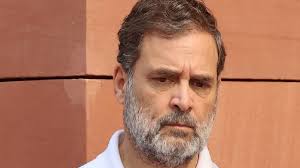
Rahul Gandhi urged Dalit youth to raise their voices and demand implementation of the Rohit Vemula Act. New Delhi: On the 10th death anniversary of Dalit student Rohith Vemula on Saturday, Congress leader Rahul Gandhi said the reality for youngsters from the community has not changed on campuses and stressed the need for an anti-discrimination law. Vemula, a 26-year-old Dalit student of the University of Hyderabad, died by suicide on January 17, 2016, following alleged harassment. In a post in Hindi on X, Gandhi said, “Today marks 10 years since Rohith Vemula’s passing. But Rohith’s question still resonates in our hearts: Does everyone in this country have an equal right to dream?” “Rohith wanted to study; he wanted to write. He wanted to understand science, society and humanity to make this country a better place. But this system could not tolerate a Dalit’s progress,” the leader of the opposition in the Lok Sabha said. Institutionalised casteism, social exclusion, daily humiliation, language that reminded him of his “place” and inhumane treatment — “this was the poison that pushed a promising young man to a point where his dignity was stripped away, and he was left alone”, Gandhi said. “And today? Has the reality for Dalit youth changed? The same contempt on campus, the same isolation in hostels, the same feeling of inferiority in classrooms, the same violence — and sometimes, the same death. Because caste is still the biggest admission form in this country,” he added. That is why the Rohit Vemula Act is not just a slogan but a necessity, the Congress leader asserted. “So that caste-based discrimination in educational institutions becomes a crime, strict action is taken against the perpetrators and the freedom to break, silence and exclude any student on the basis of their caste is ended,” he said. This fight is not just in Parliament, it is a fight of the youngsters on campuses and “it is our fight”, Gandhi said. “Dalit youth — raise your voices, organise yourselves, stand with each other. Demand: Implement the Rohit Vemula Act now. We need an anti-discrimination law now,” he stressed. The Congress governments in Karnataka and Telangana are in the process of implementing the law as soon as possible, he said. “We want an India that is just, humane and equal — where no Dalit student has to pay for their dreams with their life. Rohith, your fight is our responsibility,” Gandhi said. The death of the 26-year-old Dalit student on January 17, 2016, triggered a nationwide agitation against casteism in institutions of higher learning. Gandhi had joined the student protests over Vemula’s suicide. Courtesy : ETV Bharat Note: This news is originally published on https:/etvbharat.com/bha and is used purely for non-profit/non-commercial purposes, especially human rights
Life term till last breath for tantrik who raped, blackmailed minor Dalit girl

Agra: A 30-year-old tantrik has been sentenced to rigorous life imprisonment until his last breath by an Aligarh court for raping and blackmailing a 16-year-old Dalit girl for over two years. He used obscene videos he had recorded of the minor to blackmail her and threatened to kill her family members. In a complaint filed in Sept 2024, the girl’s father said the tantrik frequently visited their home to treat his ill son and exploited this access to repeatedly rape his daughter for nearly two years. “One day, my daughter told me that the tantrik molested her. He had physical relations with her and made a video, which he used to blackmail her,” he said. The father added that on Sept 11, the tantrik came to their house and “threatened to take away my daughter, set the entire house on fire, and would not leave anyone alive”. He also alleged that the tantrik took the girl to hotels and raped her there. “My family is living in fear and terror,” he wrote in his complaint. Based on the complaint, a case was registered under BNS sections 64 (rape) and 351-1 (criminal intimidation), along with provisions of the Pocso Act and the SC/ST Act. The man was arrested shortly thereafter and has remained in judicial custody. A chargesheet was filed weeks later. After hearing both sides, additional district and sessions judge (Pocso court) Abhishek Kumar Bagaria on Friday sentenced the convict to life imprisonment until his last breath, said additional district govt counsel (ADGC) Mahesh Singh. The court also imposed a fine of Rs 65,000. Courtesy : TOI Note: This news is originally published on https:/timesofindia.com/bha and is used purely for non-profit/non-commercial purposes, especially human rights
YSRCP stages protests over activist’s murder
Several speakers stated that hundreds of Dalit families were driven out of Pinnelli, Salman’s last rites were initially blocked, and law and order worsened after the elections. VIJAYAWADA: YSR Congress Party (YSRCP) workers staged statewide protests at Dr BR Ambedkar statues across all district headquarters, condemning the brutal murder of Dalit YSRCP activist Manda Salman of Pinnelli village in Gurazala constituency, following a call given by party president and former Chief Minister YS Jagan Mohan Reddy. Party leaders and SC Cell representatives held dharnas in Srikakulam, Vizianagaram, Eluru, Krishna, NTR, Guntur, Palnadu (Narasaraopet), Kurnool, Tirupati (combined Chittoor), YSR Kadapa, and Anantapur districts, stating that constitutional governance has collapsed in Andhra Pradesh and that political killings and attacks on YSRCP workers have become routine. Leaders said Salman’s murder is a direct consequence of the prevailing ‘Red Book rule’ going on in the State and the police collusion and demanded immediate arrests, suspension of responsible officers, and strict action under the SC/ST Atrocities Act. Several speakers stated that hundreds of Dalit families have been driven out of Pinnelli village, that even Salman’s last rites were initially obstructed, and that law and order have deteriorated gravely after the elections. Courtesy : TNIE Note: This news is originally published on https:/thenewindianexpress.com/bha and is used purely for non-profit/non-commercial purposes, especially human rights
Indore water contamination: Rahul Gandhi visits families of deceased

NEW DELHI/INDORE: The Leader of the Opposition in the Lok Sabha, Rahul Gandhi, today met the families of the victims who died due to the consumption of contaminated drinking water in Indore and also those who are undergoing treatment in hospital. Gandhi accused the BJP government in Madhya Pradesh of criminal negligence over the deaths and illnesses caused by contaminated drinking water in the Bhagirathpura area of Indore, saying the government must take responsibility and ensure compensation and assistance to the affected families. After meeting the victims and their families, Gandhi said access to clean drinking water remains a serious issue in the country even today. He alleged that the failure to provide safe drinking water and control pollution reflected the government’s inability to discharge its basic responsibilities. Several people have died and many others have fallen ill after consuming contaminated water in the area, he noted, adding that such incidents were a direct consequence of administrative negligence. “The affected families must be given proper compensation and support,” he demanded. Quoting local residents, the Congress leader said there was still no assured supply of clean drinking water in Bhagirathpura, and that alternative arrangements were temporary and largely symbolic. He warned that once public attention faded, the situation could revert to its earlier state. Residents, he said, were demanding a permanent and systematic solution, which was fully justified. Gandhi said that as Leader of the Opposition, it was his duty to raise the concerns of the affected families and stand with them in their struggle for basic civic amenities. He also questioned the implementation of the Smart City scheme, remarking that this appeared to be the new model of a “Smart City” where citizens did not even have access to clean drinking water. The problem, he said, was not limited to Indore but was prevalent in many cities across the country. Later, in a post on X, Gandhi alleged that the BJP’s “double-engine government” model was marked by poisoned water, air, medicine and land, and that when questions were raised, bulldozers were deployed instead of accountability. He said no one was held responsible for the deaths of the poor, and demanded punishment for those responsible, along with proper treatment and immediate compensation for the victims. Courtesy : TOI Note: This news is originally published on https:/timesofindia.com/bha and is used purely for non-profit/non-commercial purposes, especially human rights
‘Your fight is our responsibility’: Rahul Gandhi calls for pan-India Rohit Vemula Act; Dalit scholar died by suicide in Jan 2016
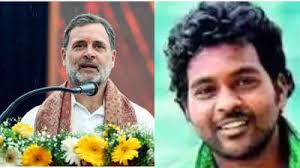
NEW DELHI: Congress leader Rahul Gandhi on Saturday called for a pan-India Rohit Vemula Act to tackle incidents of discrimination against the Dalit community. Vemula, a 26-year-old Dalit student at the University of Hyderabad, died by suicide on January 17, 2016, following alleged caste-based harassment. In a post in Hindi on X, Gandhi wrote, “Today marks 10 years since Rohith Vemula’s passing. But Rohith’s question still resonates in our hearts: Does everyone in this country have an equal right to dream? Rohith wanted to study, he wanted to write. He wanted to understand science, society and humanity to make this country a better place. But this system could not tolerate a Dalit’s progress.””Institutionalised casteism, social exclusion, daily humiliation, language that reminded him (Vemula) of his ‘place’ and inhumane treatment — this was the poison that pushed a promising young man to a point where his dignity was stripped away and he was left alone,” he added. The leader of opposition in the Lok Sabha further alleged that the reality for Dalit students on campuses has not changed, arguing that this is what makes the Rohit Vemula Act “not just a slogan, but a necessity.” “So that caste-based discrimination in educational institutions becomes a crime, strict action is taken against the perpetrators, and the freedom to break, silence and exclude any student on the basis of caste is ended. This fight is not just in Parliament, it is a fight of the youngsters on campuses — it is our fight,” Gandhi said. The Rae Bareli MP called on Dalit youth to raise their voices and demand the Rohit Vemula Act as an anti-discrimination law. “Dalit youth — raise your voices, organise yourselves, stand with each other. Demand: Implement the Rohit Vemula Act now. We need an anti-discrimination law now. The Congress governments in Karnataka and Telangana are in the process of implementing the law as soon as possible. We want an India that is just, humane and equal — where no Dalit student has to pay for their dreams with their life. Rohith, your fight is our responsibility,” Gandhi posted. Vemula’s death had sparked nationwide protests against casteism in institutions of higher learning, accompanied by demands for the resignation of the then Union HRD minister, Smriti Irani. Gandhi had also joined the student protests following Vemula’s death. Courtesy : TOI Note: This news is originally published on https:/timesofindia.com/bha and is used purely for non-profit/non-commercial purposes, especially human rights
DK Shivakumar skips Davos event aftermeeting Rahul Gandhi, triggers fresh buzz
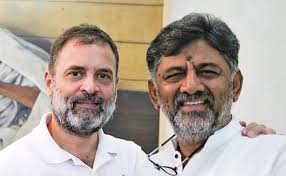
Bengaluru: A day after meeting senior Congress leader Rahul Gandhi, Karnataka deputy chief minister DK Shivakumar has cancelled his scheduled visit to the World Economic Forum (WEF) in Davos, Switzerland, citing official engagements in New Delhi and Bengaluru. In a statement issued Saturday, Shivakumar’s office said the DCM has a series of meetings lined up with AICC functionaries in connection with the Assam assembly elections. It also said he is spearheading the Congress campaign against the Union govt over MGNREGA, due to which a five-day special session of the Karnataka assembly is scheduled to begin on Jan 22. The World Economic Forum will hold its 56th annual meeting in Davos from Jan 19 to Jan 23, bringing together nearly 3,000 leaders from more than 130 countries amid heightened geopolitical tensions, economic uncertainty and rapid technological change. The summit, themed “A spirit of dialogue”, aims to provide a platform for leaders from govt, business and civil society to rebuild trust and explore collaborative solutions to global challenges. Shivakumar was in New Delhi to attend a preparatory meeting related to the Assam elections when he briefly met Rahul, triggering speculation in political circles in Karnataka. His decision to skip the Davos event comes amid talk of a CM change in Karnataka. This was the second meeting between Shivakumar and Rahul in a week. Earlier, both Shivakumar and chief minister Siddaramaiah had met Rahul at the Mysuru airport. There were also reports that Rahul had asked Shivakumar to meet him in Delhi for discussions. Earlier in the day, home minister G Parameshwara said Shivakumar’s Delhi visit was purely organisational in nature. “He has gone to Delhi on the instructions of the AICC president. He has been given the responsibility for the Assam elections, and he has gone there for discussions related to that. Besides this, I am not aware of any other matter,” Parameshwara said. Before meeting Rahul, Shivakumar had said, “How can I disclose (what is discussed)? It is not a public issue to be discussed. It is between me, my party high command, and my chief minister.” Courtesy : TOI Note: This news is originally published on https:/timesofindia.com/bha and is used purely for non-profit/non-commercial purposes, especially human rights
TNCC unanimously entrusts Kharge, Rahul to take decisions
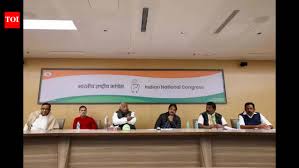
New Delhi/Chennai: A meeting of TNCC functionaries and elected representatives in New Delhi on Saturday “unanimously” entrusted AICC president Mallikarjun Kharge and leader of the opposition in the Lok Sabha Rahul Gandhi to take decisions pertaining to alliance and seat sharing with DMK for the upcoming assembly election in Tamil Nadu. “With regard to election strategy, the party high command will take an appropriate decision in due course, keeping in mind the larger interest of party and people of TN,” AICC general secretary (organisation) K C Venugopal told reporters in New Delhi. Kharge chaired the meeting that lasted more than three hours, and attended by Rahul Gandhi, Venugopal, TNCC chief K Selvaperunthagai, MPs P Chidambaram, Manickam Tagore, Karti Chidambaram, and Professionals’ Congress chief Praveen Chakravarty, among others. Later, Kharge, Rahul and Venugopal, joined by AICC in charge for TN Girish Chodankar, held one-on-one meetings with functionaries and obtained views on alliance. The Congress top brass gave clear directions to functionaries to maintain discipline and refrain from making public statements on alliance matters and advised them to speak in one voice in line with party decisions. The meeting held at the party’s Indira Bhawan headquarters came amid two different viewpoints over alliance with DMK — one pitching for power-sharing arrangement if the alliance wins to form govt and another being that the party should explore an alliance with actor Vijay’s TVK looking at the larger prospects of the Congress in states such as Kerala, which too goes to polls along with TN. Sources said some functionaries informed the leadership about “immature” actions of colleagues reportedly causing a rift in the Congress-DMK alliance, while a few raised concerns about disrespect allegedly shown by DMK partymen, besides not being taken care of in the appointments in boards and trusts. “The predominant view is to continue the alliance with DMK and get a share in power by getting more seats this election,” said a senior leader, privy to the meeting. Venugopal told reporters, the leadership had a detailed and very fruitful discussion with functionaries. “The leadership patiently listened to all opinions and leaders were given full opportunity to express their views. The discussion was constructive and focussed on strengthening the party and its future strategy in TN,” he said, reading out a statement. Asked about what the party’s stand was on the view within Congress on seeking a power-sharing arrangement with DMK, Venugopal reiterated his statement, adding that “concerns of the 40-plus leaders present at the meeting were heard individually and collectively. There are different views and we have heard them and certainly in due course whatever discussion held today will be the guideline for future decisions.” Sharing a video clip from the meeting held at the AICC headquarters on X, Kharge said, “We are confident that people of TN would choose equality, social justice, empowerment and good governance over bigotry, sectarianism, anti-federal and discriminatory politics of the RSS-BJP.” He added, “Congress party is determined to play an important role in fulfilling the aspirations of the people of the state.” Selvaperunthagai told reporters, the TNCC would follow the decision of AICC. The leadership was upset about functionaries speaking about the alliance in public, he added. Courtesy : TOI Note: This news is originally published on https:/timesofindia.com/bha and is used purely for non-profit/non-commercial purposes, especially human rights
Who is Emily Suski, the law dean hire University of Arkansas dropped within days? The transgender issue that made the offer vanish

Less than a week after announcing a new dean for its law school, the University of Arkansas reversed course. The offer made to Emily Suski, a legal scholar with a focus on health, poverty and education law, was withdrawn after objections from state politicians over her views on transgender student athletes. The decision has become a fresh example of how political pressure is shaping faculty hiring and leadership choices at public universities. A dean appointment that unravelled quickly On January 9, the University of Arkansas announced that Emily Suski, an associate dean and professor at the University of South Carolina, had been selected as the next dean of its law school after a public and extended search. The university’s provost, Indrajeet Chaubey, praised her scholarship and highlighted her work on medical and legal partnerships that support low-income children. The position came with a five-year contract and annual compensation of $350,000, according to documents reviewed by The New York Times. Within days, however, the appointment collapsed. On Wednesday, the university said it was withdrawing the offer, citing “feedback from key external stakeholders.” By Thursday, it added that it had no further statement. The amicus brief at the centre of the backlash State legislators soon made clear what the concerns were about. According to The New York Times, Suski had signed an amicus brief filed with the Supreme Court last year in support of transgender student athletes. The brief, signed by Suski and 16 other legal scholars, addressed a narrow legal question: whether sex assigned at birth should be the sole factor in determining which sports teams students may join. It argued that the case before the Supreme Court should be sent back to lower courts for further review. Arkansas State Senator Dan Sullivan said the views expressed in the brief conflicted with state law. “If you look at some of her opinions to the Supreme Court and amicus briefs, I think she has not reflected the laws of the state of Arkansas,” Sullivan, a Republican from Jonesboro, told The New York Times. Arkansas was the first state to ban gender-affirming medical care for minors, a policy backdrop that has intensified scrutiny of issues related to gender identity. Political pressure and funding concerns The withdrawal of the offer did not happen in isolation. Nicole Clowney, a Democratic state representative who teaches at the law school, told The New York Times that a small number of legislators and one executive branch official threatened the university’s funding after learning about Suski’s involvement in the brief. Clowney said she viewed the episode as a free speech issue and described Suski as highly qualified for the role. The Speaker of the Arkansas House of Representatives, Brian Evans, a Republican, said in a statement that his office was not involved in the decision. Governor’s support for the reversal Arkansas Governor Sarah Huckabee Sanders publicly supported the university’s move. Her spokesperson, Sam Dubke, said in a statement quoted by The New York Times, “Governor Sanders appreciates the University of Arkansas, Fayetteville, for reaching the common sense decision on this matter in the best interest of students.” The case before the Supreme Court that prompted the amicus brief was argued this week, keeping the issue in national focus even as the university moved on from its decision. Suski’s response Suski issued a written statement on Thursday expressing disappointment at the reversal. “I have been informed that the decision was not in any way a reflection of my qualifications to serve as dean,” she wrote, according to The New York Times, “but rather the result of influence from external individuals.” Her academic work has centred on health, poverty and education law, including Title IX, the federal civil rights law that prohibits sex-based discrimination in education programmes. Before entering academia, she worked as a staff attorney at the Legal Aid Justice Center in Charlottesville, Virginia. A trend in higher education? The episode fits into a wider pattern. In recent months, conservative leaders have accused universities of drifting leftward, and institutions have disciplined or dismissed faculty members over speech related to gender and race. Political influence has also affected leadership choices elsewhere, including at the University of Florida, where the selection of a president was overturned by a statewide board of political appointees. At Arkansas, the law school search had been conducted publicly, with four finalists giving open presentations. The abrupt end to Suski’s appointment has prompted questions about whether universities will increasingly shield hiring processes from public view to avoid similar outcomes. For now, the University of Arkansas has said it has “decided to go in a different direction,” while the controversy around Emily Suski’s brief tenure as a dean-designate continues to ripple through debates on academic freedom, political oversight and the boundaries of university autonomy. Courtesy : TOI Note: This news is originally published on https:/timesofindia.com/bha and is used purely for non-profit/non-commercial purposes, especially human rights