
Shops shut during soldier’s funeral; untouchability suspected
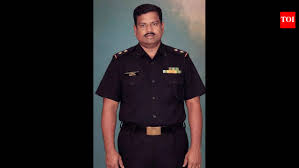
Pic: Hanamantappa Harijan, 55, an ex-serviceman Bagalkot: It seems the practice of untouchability affected the funeral of a soldier from Dalit community — who served the country for 20 years — at Chinnapur village of Ilkal taluk in Bagalkot district. The incident reportedly happened on Thursday. Sources in the Ilkal taluk administration told TOI that Hanamantappa Harijan, 55, died due to health issues. “Expecting that his relatives, belonging to the Dalit community, would attend his funeral, hotels and shops belonging to certain communities were shut down. As soon as the information was received, tahsildar Amaresh Pammar, officials from police, social welfare, and other departments visited the village and convened a peace meeting of all communities. Upper caste people said that they went to their fields and they normally shut their eateries in the afternoon. After officials’ warning, they opened their shops,” they added. Deceased Hanamantappa’s relatives, who had come from other villages, said that they observed all shops were shut and only one was open. “We drank some juice there but the shopkeeper insisted on paying via mobile apps saying they will not touch cash from Dalits as a Dalit man had died in the village. He also told us that all shops are shut just because of the death of Dalit. Forgetting that he was a soldier, villagers were practising untouchability. Hence we called the police on 112,” they added. Tahsildar Amaresh neither answered calls nor responded to messages. According to videos doing the rounds on social media, a group of ex-servicemen offered their last respects to the departed soul. Police sources said that another peace meeting will be held on March 2. Courtesy : TOI Note: This news is originally published on https:/timesofindia.com/bha and is used purely for non-profit/non-commercial purposes, especially human rights
IndiaActivists push for better counting of transgender Indians in 2026 Census
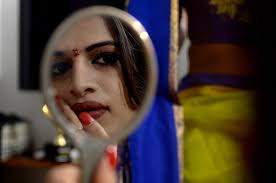
2011 count noted 488,000 trans people in country India is preparing to conduct a nationwide Census in April, the first since 2011. Interim projections based on the previous Census placed India ahead of China as the world’s most populous country. A Technical Group on Population Projections projection in July 2020, chaired by the Registrar General of India, estimated the country’s population in 2023 was 1.388 billion. Transgender Indians are now raising concerns about the data collectors and their sensitization. Activists have raised concerns about whether data collectors are adequately sensitive to the community ahead of the Census. Government training material emphasizes household engagement, data privacy and sensitivity while asking personal questions, but publicly available flyers do not outline specific guidance or training related to recording trans identity during enumeration. Concerns around the counting of trans people in India are not new. The 2011 Census recorded around 488,000 trans people, a figure activists and researchers have described as a likely undercount due to stigma, misclassification, and a reluctance to self-identify. Subsequent surveys and field reports have pointed to inconsistencies in how gender identity is recorded and the absence of uniform sensitivity among Census data collectors. Rights groups and policy researchers have also warned that gaps in official data affect access to welfare schemes, legal recognition, and targeted public policy, making accurate counting central to future Census exercises. A decade after the 2011 Census formally recorded trans people as a distinct category, multiple studies have continued to document entrenched socio-economic disparities. Research has pointed to lower literacy rates, limited workforce participation and barriers to healthcare access within the community. A National Human Rights Commission-supported study cited in subsequent reporting found a significant proportion of trans respondents reported employment discrimination, underscoring the gap between formal recognition and lived economic inclusion. Educational exclusion has remained a persistent concern within the trans community. Studies have documented higher dropout rates, lower literacy levels and barriers to continuing education, often linked to stigma, discrimination and limited institutional support. Policy researchers note that despite formal recognition in official data after 2011, targeted interventions addressing school retention and access for trans people have remained uneven. Access to housing schemes has reflected similar gaps. The Washington Blade in December reported only a small number of trans people have benefited from India’s flagship low-income housing program, despite its nationwide rollout and eligibility provisions. The findings underscored continuing barriers to inclusion in welfare delivery systems. The Social Justice and Empowerment Ministry and the Office of the Registrar General and Census Commissioner did not respond to the Blade’s multiple requests for comment regarding sensitization measures for Census data collectors and the recording of trans identity in the upcoming Census. Karnataka state in southern India last September conducted its first statewide baseline survey of gender minorities. The Department of Women and Child Development, in collaboration with the Karnataka State Women’s Development Corporation, launched the initiative to document the lives of trans people across 31 administrative districts. When the results were released, the survey identified 10,365 trans people. The country’s 2011 Census, by comparison, recorded 20,266 trans people in Karnataka, nearly double the 2025 figure. The discrepancy raised questions about how the state’s recorded trans population appeared to decline over 14 years. The discrepancy in Karnataka’s survey has intensified scrutiny over how gender minorities are counted. Reports questioned the methodology used in the 2025 exercise, which was conducted over 45 days beginning in mid-September. Instead of door-to-door enumeration, trans people were required to report to designated registration sites — primarily district-level public hospitals and sub-district government health facilities. The approach presented barriers for potential participants, particularly those in rural areas, those without reliable transportation, those wary of institutional settings due to prior discrimination, or those who did not know about the count, raising the possibility of exclusion. Bihar state in eastern India in January 2023 conducted a caste-based survey that included trans respondents. The final report identified 825 trans people in the state, compared with 40,827 recorded in the 2011 Census. Activists disputed the figure, calling it inaccurate and pointing to community estimates that suggested higher numbers, including in Patna, the state capital, raising concerns about significant undercounting. The 2011 Census marked the first attempt to enumerate trans people at the national level, but researchers and activists have described the exercise as limited in scope. It recorded 487,803 people under the “other” category, a classification used for respondents who did not identify as male or female. Analysts have argued that the figure likely underestimated the community’s size. The Census questionnaire provided three sex categories — “male,” “female,” and “other” — a framework that critics said did not fully capture the diversity of gender identity and may have affected how some respondents chose to identify. During the 2011 Census, enumeration practices varied across regions. In states such as Tamil Nadu, local reporting indicated estimates were at times derived from existing administrative records, including state-issued trans identity cards, rather than solely through door-to-door identification. Such approaches risked excluding individuals who did not possess identity documentation or were not registered with welfare boards, raising concerns about gaps in coverage. Official data from the Social Justice and Empowerment Ministry shows only a few hundred trans people as of early 2025 have been issued identity cards through the national portal, despite nearly 2,000 applications being submitted. Many are still pending or have been rejected. Critics of the 2011 Census said many Census data collectors were not adequately trained or sensitized to engage with gender identity beyond traditional binary classifications. Similar, detailed guidelines specific to trans sensitization have not been publicly made available for the 2026 Census, according to an examination of training materials and official circulars. Akkai Padmashali, a trans rights activist, told the Blade that Census data collectors in earlier exercises were often not sensitized and lacked awareness of intersex people and gender-diverse communities. She said trans people and other gender and sexual minorities continue to face social exclusion and require careful handling during door-to-door data collection. Padmashali
‘Did Robert Vadra, Rahul Gandhi go to jail?’ Kejriwal hits back as Congress questions relief in liquor policy case
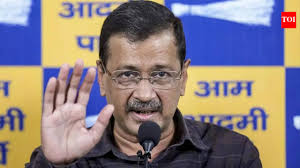
NEW DELHI: The political tremors from the Delhi excise policy verdict rippled beyond the courtroom on Friday as the Congress lashed out at the ruling BJP, alleging that Arvind Kejriwal’s discharge was timed against the backdrop of the Gujarat and Punjab elections. Kejriwal, who had briefly allied with the Congress ahead of the 2024 general elections, hit back at his former ally, accusing it of having “no shame” and drawing a contrast between AAP leaders going to jail and the Congress high command remaining out of legal clutch. Soon after a Delhi court granted relief to Kejriwal in the alleged liquor scam case, Congress spokesperson Pawan Khera attacked the BJP, likening it to an “Icchadhari Naag” (shape-shifting serpent). In a post on X, he alleged that the BJP was deploying central agencies as “campaign tools” with key state elections approaching, calling it “vendetta as governance.” Khera argued that the BJP’s ideological positions were secondary to its “obsessive goal”: the realisation of a “Congress-Mukt Bharat.” He cited what he described as the party’s “fluctuating relationship” with the Trinamool Congress (TMC) as evidence of political opportunism. “The BJP is not a political party. It is a shape-shifter, a wishful serpent – Icchadhari Naag. It will stoop to any level for one obsessive goal: defeat Congress – Congress Mukt Bharat. For 12 years they spewed venom at the TMC. And now? Narendra Modi himself is showering it with praise – not out of respect, but to land a cheap blow at Congress,” Khera’s post read. Khera also predicted that cases against Congress leaders would intensify as elections draw closer, citing senior leader P Chidambaram as an example. “Elections are coming. So the script is predictable. Cases against Congress leaders will suddenly accelerate – @PChidambaram_IN has already been dragged back into the spotlight because Tamil Nadu is going for polls,” he wrote in the post. The Enforcement Directorate (ED) recently granted prosecution sanction against Chidambaram in the Aircel Maxis Deal and INX Media cases. “Meanwhile, proceedings against their “convenient allies” in the AAP and others will quietly vanish in light of the Gujarat and Punjab elections,” he wrote on X. Describing the developments as part of the “BJP playbook,” Khera alleged that the ruling party uses central agencies as “campaign tools”. “This is the BJP playbook: vendetta as governance and agencies as campaign tools,” he said. Kejriwal hits back with ‘Congress has no shame’ remark Responding to the Congress’ remarks, Kejriwal targeted Pawan Khera, who suggested that the narrative was being pushed to politically corner the Congress ahead of the Punjab and Gujarat elections. Questioning how many Congress leaders had gone to jail, the AAP supremo said the party had “no shame.” “I want to ask the Congress – Kejriwal went to jail. Did Robert Vadra go to jail? Sanjay Singh went to jail. Did Rahul Gandhi go to jail? Sanjay Singh went to jail. Did Sonia Gandhi ji went to jail? What is Congress saying? Does it have no shame?” Kejriwal asked. The political exchange followed a detailed order from a Special Court in Delhi, which held that the prosecution had failed to disclose “even the threshold of a prima facie suspicion, far less the grave suspicion” required for framing of charges in the CBI case linked to the Delhi Excise Policy 2021-22. In a strongly worded ruling, Special Judge (PC Act) Jitender Singh of the Rouse Avenue Court said the prosecution’s case was “legally infirm, unsustainable, and unfit to proceed any further in law”. The court further observed that when the material collected by the agency was tested on admissibility, relevance and probative value, “the appearance of a coherent conspiracy dissolves,” exposing the allegations as being founded on inadmissible material and post-facto reconstruction. Among those discharged are Arvind Kejriwal, and former deputy chief minister Manish Sisodia and 21 others. The court was also critical of the Central Bureau of Investigation’s (CBI) reliance on approver statements, cautioning that granting pardon to an accused and then using his testimony to fill gaps in the prosecution’s case or implicate additional accused would undermine constitutional safeguards. The FIR in the case was registered in August 2022 following a complaint by Delhi Lieutenant Governor VK Saxena, alleging that the now-scrapped excise policy was designed to favour select liquor licensees by reducing licence fees and fixing profit margins, leading to kickbacks and losses to the exchequer. Courtesy : TOI Note: This news is originally published on https:/timesofindia.com/bha and is used purely for non-profit/non-commercial purposes, especially human rights
The Blistered Hands No One Talks About: Reading Dalit Women’s Labour Through Literature And Data
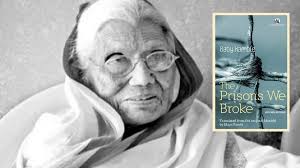
Scholarly work needs to centre Dalit women as narrators of their own labour—like Kamble, Pawar and Bama—whose literary testimonies document care work as political resistance. Dear reader, this article is free to read and it will remain free – but it isn’t free to produce. If you want to support the work that goes behind publishing high-quality feminist media content, please donate to FII and keep us paywall free. Thank you! » Editors Note: #MoodOfTheMonth for February 2026 is Gender and Literature. We are inviting submissions on this theme throughout February 2026. If you would like to contribute, please refer to our submission guidelines and email your pitches to info@@feminisminindia.com. When Babytai Kamble penned The Prisons We Broke, the first published autobiography by a Dalit woman in Marathi, she did more than just narrate a life; she exposed the architecture of caste-determined care. “We clean the filth others create, then are called filthy ourselves,” wrote Kamble, naming an untouchable reality that Indian literature has long rendered invisible. While mainstream narratives celebrate the housewife’s domestic sacrifice, they systematically erase the Dalit and Bahujan women whose blistered hands scrub floors before dawn, wash vessels others have dirtied, and absorb the household’s emotional dumping, only to disappear from the stories when the time comes. Their labour is what sustains the upper-caste domesticity, yet remains the silent infrastructure of comfort: foundational, uncredited, unnamed. Literary Testimonies of Embodied Labour Kamble’s testimony resonates powerfully across Dalit feminist literature. Bama’s seminal Tamil autobiography Karukku (1992) documents how Paraiyar Christian women scrubbed floors on their knees while being denied dignity by upper-caste nuns who “would not even drink water touched by our hands.” Similarly, Shantabai Kamble’s Majya Jalmachi Chittarkatha (The Kaleidoscope Story of My Life) traces how Mahar women’s bodies became sites of caste-allocated sanitation work, writing, “Our hands were meant only for sweeping, scrubbing, and serving.” Dalit feminist scholar Urmila Pawar writes in The Weave of My Life, “My mother used to weave aaydans,” the Marathi generic term for all things made from bamboo. “I find that her act of weaving and my act of writing are organically linked. The weave is similar. It is the weave of pain, suffering, and agony that links us.” This metaphor transcends poetry: her mother’s bamboo weaving, like the Dalit domestic worker’s scrubbing, was never “just labour”. It was an unacknowledged infrastructure of survival, transformed into literary resistance. Interestingly, however, Pawar has analysed the differences between Brahman and Dalit women, arguing that the Dalit woman, in contrast to the Brahman woman, was not bound by customs such as sati, child marriage, among others. Pawar further exploded some myths regarding the gender question in relation to the Dalit movement, such as the wide gap between Dalit and Brahman women on economic, social and educational levels. Pawar continues, “A myth is harboured that unlike the brahman woman the dalit woman is free from bondage and stifling restrictions. The pain of the devadasi, the deserted woman and the murali is ignored in this stand. In fact the woman in the household is yet to get recognition as a full and equal human being (ibid: 94).” On similar lines, Joanna Liddle and Rama Joshi, in their work entitled Daughters of Independence, write about the non-sexual and the sexual divisions of labour. Although economically deprived, Dalit women lead more sexually liberated lives than upper-caste women. Lower caste women, by contrast, experience far fewer controls over their physical freedom. “The economic benefits and the social constraints of seclusion are unknown to them. Sati was never demanded of them, widowhood was no curse, divorce was allowed in many lower caste communities and widows and divorced people could re-marry without disgrace (Liddle and Joshi 1986: 95-69 and 91).” In Aayda: Mahila Adivasi Jivan Katha (edited by Pawar and Meenakshi Moon), oral histories of Adivasi and Dalit women reframe domestic work not as a naturalised duty but as caste-determined exploitation. Oxfam’s data confirms this structural truth: urban Indian women spend 312 minutes daily on unpaid care work, compared with men’s 29 minutes; rural women spend 291 minutes, compared with men’s 32 minutes. What The Data Says? The rate of this invisibility is concerning. Oxfam’s 2020 report, Time to Care, along with an India-focused supplement, demonstrates how our sexist economies are acting as a catalyst for the inequality crisis. “Women and girls are among those who benefit least from today’s economic system. They spend billions of hours cooking, cleaning and caring for children and the elderly. Unpaid care work is the ‘hidden engine’ that keeps the wheels of our economies, businesses and societies moving. It is driven by women who often have little time to get an education, earn a decent living or have a say in how our societies are run, and who are therefore trapped at the bottom of the economy,” stated former Oxfam India CEO Amitabh Behar. Furthermore, the report suggests that women make up two-thirds of the paid ‘care workforce’. Jobs such as nursery workers, domestic workers, and care assistants are often poorly paid, provide scant benefits, impose irregular hours, and can take a physical and emotional toll. Thus, pressure on carers, whether unpaid or paid, is set to grow over the coming decade as the global population ages. Climate change could worsen the looming global care crisis —by 2025, up to 2.4 billion people will live in areas without enough water, and women and girls will have to walk even longer distances to fetch it. 80% of indigenous people live in Asia and the Pacific, a region vulnerable to climate change. “Governments must prioritise care as being as important as all other sectors in order to build more human economies that work for everyone, not just a fortunate few,” said Behar. In the Periodic Labour Force Survey (2017–18) report, it is seen that in rural areas, the share of helper in household enterprises was nearly 17 per cent among male self-employed workers whereas 67 per cent among female self-employed workers while in urban areas, the
Social Media Amplifies Caste Inequality in India, Dalits Remain Marginalised: University of Bath Study
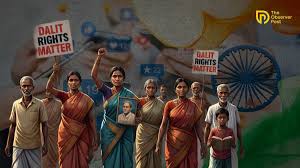
A University of Bath study finds social media amplifies caste-based discrimination, silencing Dalits and limiting their online participation. A new study by the University of Bath School of Management reveals that social media, often celebrated as a tool for giving everyone a voice, can actually reinforce inequality and deepen the marginalisation of communities such as Dalits in India.Cultural exchange programs Dalits, formerly called “untouchables” and legally recognised as Scheduled Castes, make up over 200 million of India’s 1.47 billion population. Historically subjected to social and economic oppression, Dalits were confined to tasks considered “polluting,” including leatherwork and animal slaughter. Despite progress in employment across public services, banking, railways, and private industries, discrimination and violence remain widespread. “Progress is painfully slow. Discrimination and violence against Dalits continue, and while the Dalit middle class is growing, social media has unfortunately amplified these problems instead of reducing them,” said Dr Pardeep Attri, lead researcher of the study. How Social Media Excludes Dalits The research, titled “You Belong to Gutters, Not Facebook or Twitter: Recovering Dalit Histories from the Shadows of Social Media”, highlights how online platforms shape, restrict, and sometimes erase the experiences of marginalized communities. The study identifies three major ways Dalits face exclusion online: being unseen, unheard, and unspoken. Dalit histories and contributions are often invisible due to biased algorithms. Platform reporting systems frequently fail to protect them from harassment, leaving many unable to raise concerns meaningfully. Constant trolling, abuse, and discrimination force several users into silence or withdrawal. Dr Attri explained, “There is an urgent need for moderators who understand the Dalit community and can address trolling effectively. Much of mainstream media and online moderation comes from dominant caste perspectives, which worsens the exclusion.” Digital Visibility Brings Risks The study found that simply being visible online does not guarantee empowerment. On the contrary, a higher online presence often exposes Dalits to greater harassment and attempts to discredit or erase their narratives. Many users feel they have little control over how their histories and contributions are represented. “Economic barriers also limit participation. Many Dalits cannot afford devices or internet access, further restricting their online engagement,” Dr Attri added. Despite these challenges, Dalits are building resistance. They are creating alternative archives, forming supportive online communities, and using digital activism, such as hashtags like #DalitLivesMatter, to reclaim their history and counter misinformation. A University of Bath study finds social media amplifies caste-based discrimination, silencing Dalits and limiting their online participation. “But this effort risks reinforcing exclusion,” Dr Attri warned. “Social media platforms and policymakers must act to address caste-based discrimination with clearer policies, effective moderation, and technology that reduces harmful content without silencing marginalized voices.” Subtle and Online Harassment The research details how hashtags like #AmbedkarJayanti are hijacked by trolls promoting Hindutva ideology, which distorts Ambedkar’s legacy and offends Dalits. Suman, a study participant, said, “[Dominant caste members] quickly take over discussions and shift the narrative, leaving us invisible.” Caste discrimination online is often subtle, with trolls using coded language, abbreviations, or “Hinglish” to bypass detection. Terms like “Bhimte” mock followers of Dr B.R. Ambedkar, while slurs such as “Bhangi” and “hijde” target Dalit women and gender-nonconforming individuals, reflecting intersectional oppression. Many posts, including sexualized abuse, remain unmoderated, reinforcing feelings of invisibility and exclusion. Social media narratives also reduce Dalits’ lived experiences to stereotypes, glorifying broom work as cultural pride while ignoring its historical link to caste-based oppression. Dalit perspectives are often labeled “unverified” or divisive, unlike those of dominant caste users, and their stories are frequently dismissed as exaggerated or agenda-driven. The Need for Structural Change The researchers emphasise that online platforms must do more than provide visibility. They should ensure that marginalized communities can speak, be heard, and shape their histories online without fear of harassment or erasure. The study team includes Dr Pardeep Attri, Professors Sarah Glozer and Vivek Soundararajan from the University of Bath, and Dr Ramya Sakthivel from Jönköping University, Sweden. “Reducing inequality is not just about participation; it’s about giving all communities control over their narratives and protecting them from abuse,” Dr Attri concluded. Courtesy : TOP Note: This news is originally published on https:/theobserverpost.com/bha and is used purely for non-profit/non-commercial purposes, especially human rights
Karnataka Cabinet approves Rohith Vemula Bill draft, set to go for next round of approval
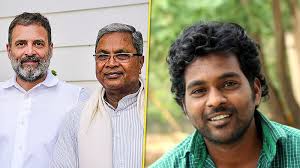
The draft law is a civil law, unlike the Scheduled Castes and Scheduled Tribes (Prevention of Atrocities Act). If passed, it will be the first official acknowledgement that Rohith Vemula was a Dalit and that he died because of caste discrimination. The Karnataka Cabinet on Thursday, February 26, approved the current version the draft Rohith Bill, a law to protect Dalit and Adivasi students from caste discrimination. During the Cabinet meeting, Home Minister G Parameshwara suggested that the draft bill should go to the Directorate of Civil Rights Enforcement (DCRE) for its suggestions. A minister present during the meeting told TNM that once the DCRE adds it suggestions, the draft will be presented in the next cabinet meeting, which is likely to be on March 5. Another minister said that the government hoped to table the draft Rohith Act during the budget session, which is to be held between March 6 and 27. Both ministers confirmed that everyone in the cabinet okayed the draft Rohith Bill. Named after Rohith Vemula, a PhD scholar at the University of Hyderabad who died by suicide on January 17, 2016, the Rohith Act is aimed at addressing caste-based discrimination and harassment against Dalits and Adivasis in higher education institutions. TNM had reported that the draft law emerged through months of intense debates and discussions between the government and campaigners pushing for the anti-caste law in the state. Unlike the Scheduled Castes and Scheduled Tribes (Prevention of Atrocities) Act, the Rohith Act is a civil law which aims to resolve cases of caste discrimination within the campus and, as far as possible, outside courts and police stations. Higher education institutions would have to set up internal committees against caste harassment, similar to the Gender Sensitisation Committee Against Sexual Harassment (GSCASH). TNM had previously reported that if passed, the law will be the first official acknowledgement that Rohith Vemula was a Dalit and that he died because of caste discrimination. A decade after Rohith’s death, the investigation into his death has gone nowhere. For most part of the last decade, during which the BRS was in power in Telangana, the state government and police took an openly hostile position against the campaigners seeking justice for Rohith, while the BJP has consistently denied that Rohith was a Dalit. But things did not improve even after the Congress came to power two years ago. The police cases against students haven’t been withdrawn by the state government yet. Courtesy : TNM Note: This news is originally published on https:/thenewsminute.com/bha and is used purely for non-profit/non-commercial purposes, especially human rights
KTR kicks up a storm over lockup death of Dalit youth
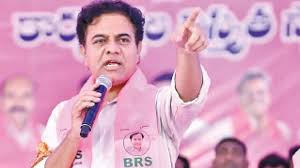
BRS working president KT Rama Rao on Thursday said that his party would corner the Congress government over the lockup death of Dalit youth Karla Rajesh. The BRS Working President visited the family of Dalit youth Karla Rajesh, who died in a police lockup death recently in Kodad, Suryapet district, and assured them of confronting the government. Speaking to the media, Rao alleged that Dalit youth Rajesh was tortured and unjustly murdered. He stated that Rajesh lost his life due to political pressure. He demanded an answer from the Congress leaders, local MLA and Minister Uttam Kumar Reddy on this incident. KTR demanded that the DSP, SI and CI responsible for this lockup death be dismissed immediately. He reminded that when his government was in power, in the case of the death of a Dalit woman named Mariamma at Addagudur police station, they gave an ex-gratia of Rs 35 lakh, provided a job to the family and dismissed the responsible police officers. He criticised the current Congress government for protecting those responsible. He questioned how unfair it was to promote the DSP named Sridhar Reddy, who was responsible for this incident. KTR emotionally said that no one could alleviate the suffering of Rajesh’s mother. He said that he would raise this issue in the Assembly as well and challenge the government, and that if necessary, he would continue the struggle till Delhi. He announced that the BRS party would provide financial assistance of Rs 5 lakh to Rajesh’s family. He assured the family that he would support them in every way and would continue the fight until complete justice was done. He commended MRPS leader Manda Krishna for his fight against this incident and thanked him. Courtesy : THI Note: This news is originally published on https:/thehansindia.com/bha and is used purely for non-profit/non-commercial purposes, especially human rights
Bhopal News: Transgender Feel Social Prejudice In Accessing Healthcare Services; Study
The study also emphasized that sensitivity, cultural understanding, and a respectful approach in the behavior of healthcare workers are extremely important. It further highlighted that policy-level reforms, training of healthcare professionals, and the creation of a safe environment are necessary to ensure equal and respectful healthcare services for the transgender community. Bhopal (Madhya Pradesh): AIIMS research revealed that transgender people feel social prejudice and discriminated in accessing health care services. Nursing student of AIIMS Komal Kathale presented research paper titled, A study to explore the expectations and experiences related to healthcare services among the transgender population in a tertiary care hospital: A qualitative study.” The study attempted to understand the real-life experiences of transgender individuals. The findings revealed that while accessing healthcare services, they face several challenges such as social prejudice, discrimination, communication gaps, and the lack of gender-sensitive services. The study also emphasized that sensitivity, cultural understanding, and a respectful approach in the behaviour of healthcare workers are extremely important. It further highlighted that policy-level reforms, training of healthcare professionals, and the creation of a safe environment are necessary to ensure equal and respectful healthcare services for the transgender community. Komal Kathale, a 2nd year MSc nursing student of the College of Nursing, AIIMS Bhopal, secured first position in the postgraduate category at National Scientific Paper Presentation 2026. The conference was organised by Symbiosis College of Nursing, Symbiosis International University, Pune, in which participants from across the country took part. Courtesy : TFPJ Note: This news is originally published on https:/thefreepressjournal.com/bha and is used purely for non-profit/non-commercial purposes, especially human rights
‘This is not North Korea, it is India’: Rahul Gandhi targets PM Modi amid row over ‘shirtless’ protest
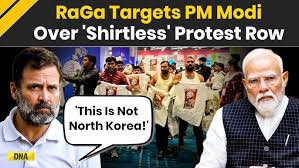
NEW DELHI: Leader of opposition Rahul Gandhi targeted Prime Minister Narendra Modi amid the row over the arrest of Youth Congress members following the controversial ‘shirtless’ protest at the India AI Impact Summit, accusing the Centre of suppressing peaceful dissent. “The world’s largest democracy is being slowly pushed in a direction where dissent is branded as treason and asking questions is called a conspiracy. Think about it – no matter the issue, if you raise your voice against those in power through constitutional means, then batons, lawsuits, and jail are almost a certainty,” Rahul said in a post. “”Peaceful protest is not a crime – it is the soul of democracy. Asking questions is not democracy’s weakness, it is its strength,” he added. Referring to the arrest of Youth Congress workers, Gandhi said those protesting against the government were being branded anti-national and jailed. “When the Youth Congress peacefully protested against a US Trade deal harmful to the country, they were branded ‘anti-national’ and arrested,” he said. The remarks came after Indian Youth Congress (IYC) president Uday Bhanu Chib and several party workers were arrested in connection with the “shirtless” protest held at Bharat Mandapam during the AI summit in New Delhi. During the protest, a group of Youth Congress workers entered the venue wearing T-shirts concealed under winter clothing and later removed their shirts while raising slogans against the Prime Minister. Police described Chib as the alleged “mastermind” behind the demonstration and took him into custody, bringing the total number of arrests in the case to eight. Backing the arrested workers earlier, Gandhi had described them as “Babbar Sher comrades” and expressed solidarity with the youth wing. “I am proud of my Babbar Sher colleagues in the Youth Congress, who have fearlessly raised their voices in the interest of the country against the ‘COMPROMISED PM’,” he had said. He added that peaceful protest was a democratic right and that raising questions against the government should not be treated as a crime. The arrests triggered a political controversy, with the Congress calling the police action politically motivated while the BJP accused the party of attempting to embarrass the country during an international event. Courtesy : TOI Note: This news is originally published on https:/timesofindia.com/bha and is used purely for non-profit/non-commercial purposes, especially human rights
DMK MP Kanimozhi may meet Rahul Gandhi again to iron out differences over seat-sharing
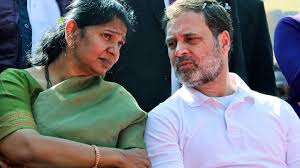
Chennai: Seat-sharing talks between DMK and Congress have hit a roadblock, with Congress refusing to settle for the numbers offered by the principal ally. DMK MP Kanimozhi is likely to meet Congress leaders in Delhi on Friday as leaders of the two parties kept talking in different voices over the allocation of a Rajya Sabha seat, too. “Kanimozhi has sought an appointment with Rahul Gandhi after her parliamentary committee meeting on Friday morning. She will explain the reasons for DMK’s inability to fulfil the demands of Congress,” said a source. DMK has been citing the inclusion of more partners in the alliance as a reason for its inability to give more seats to allies. During her talks with AICC member Girish Chodankar on Feb 23, Kanimozhi had requested Congress to settle for 27 seats. Chodankar conveyed the message to the Congress leadership, and the Congress high command was not happy with the numbers, sources said. “We started with the offer of 25 seats and raised it by two, but they don’t seem to be happy with it,” said a DMK source. The stalemate triggered rumours that Congress has reopened channels of communication with TVK. Seeking to end speculations, TNCC president K Selvaperunthagai said the Congress-DMK alliance remains strong. “A Congress candidate will file a nomination for a Rajya Sabha seat in a couple of days under the DMK alliance,” he said. However, DMK sources said Kanimozhi had communicated to Chodankar that Congress can be given a Rajya Sabha seat only in 2028. Courtesy : TOI Note: This news is originally published on https:/timesofindia.com/bha and is used purely for non-profit/non-commercial purposes, especially human rights