
Karnataka Village Gets Government-Funded Salon After Barbers Refuse Services To Dalits
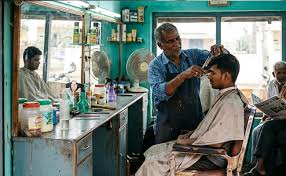
A salon in Singatalur village in Gadag district has been opened after Hadapada families (barbers) in the village denied haircuts to Dalits over the years Bengaluru: The Karnataka government has opened a salon in Singatalur village in Gadag district after the local barber shop refused service to customers from Dalit communities. The salon, believed to be the state’s first government-funded facility, was set up near the bus stop on government property in the presence of officials from the social welfare department and the gram panchayat. While the social welfare department has provided the shop made of tin sheets and the equipment required for a salon, the barber was brought from Mundaragi town. The government was forced to open a salon after Hadapada families (barbers) in the village denied haircuts to Dalits over the years, citing a religious tradition. “Hadapada families are devotees of the village deity Veerabhadreshwara. Every year, the deity visits their houses during a particular time. The barbers claimed that they cannot serve Dalits during that period,” according to the officials. The lone barber shop in the village recently shut down after Dalit youths started insisting on their right to service at the salon. They argued that it was illegal on the part of the barbers to deny service to people from a particular community, while taking the matter to the district administration. As the matter escalated, the district administration reached out to the villagers and held several rounds of meetings to persuade barbers to open the shop and offer services to all communities. When they did not relent, notices were issued warning of legal action. Even notices fail to deter them. Left with no option, officials decided to open a barber shop, spending Rs 1.2 lakh from the social welfare department and appointing a barber from outside. Following a request by the administration, Devu Hadapad, state president of Hadapada Annappa Samaja, agreed to send his brother, who is also a barber, to run the shop. After which, the shop was set up. “It is unfortunate that an unhealthy mindset of looking down upon backward communities still exists in society. But we have extended full cooperation to the government to eliminate such practices. This shop is now open for all communities,” says Devu Hadapada. Vishwanath Hosamani, Executive Officer, Mundaragi Taluk Panchayat, said the issue related barber services had existed in the village for the past two years. “Now with the coordinated efforts of all departments concerned, we are able to find an amicable solution to this,” he added. People of the villagers also expressed happiness over the development. “This (development) has instilled a hope in us that the practice of untouchability will be stopped once and for all,” says Mariyajja, a villager. Courtesy : ETV Bharat Note: This news is originally published on https:/etvbharat.com/bha and is used purely for non-profit/non-commercial purposes, especially human rights
Dalit leaders allege fake signatures of MCC officials used in loan scam

Mangaluru: Dalit leaders filed a complaint with the Mangaluru City police, alleging that fake signatures of the Mangaluru City Corporation (MCC) commissioner and health officer, along with fake salary slips, seals, and documents, were used to fraudulently obtain loans from a cooperative bank in the name of civic workers. Dalit leader Anil Kumar raised the issue during a monthly meeting for Scheduled Castes and Scheduled Tribes, chaired by DCP (law and order) Mithun HN on Saturday. Anil Kumar said that when some genuine pourakarmikas applied for bank loans, it was discovered that loans were already taken out in the names of many other civic workers. Following this, Dalit leader Vishu Kumar gathered records under the RTI Act, which revealed fraudulent activity. Through fake documents, loans were facilitated in the names of some municipal staff and non-staff individuals, with commissions ranging from about Rs 20,000 to Rs 50,000 taken as part of the fraud, he said. The cooperative bank manager requested salary verification for the loan applications submitted by the civic workers. However, the documents provided to the bank were fake, and the MCC commissioner clarified that such individuals were not employed as civic workers, he alleged. Vishu Kumar said that in a previous complaint to the police, it was reported that about 30 people took loans from various cooperative bank branches using the signatures of the MCC commissioner and health officer, claiming to be civic workers. “New records have now surfaced, showing that loans were taken in the names of 66 more individuals using similar fake documents. There is suspicion that loans were obtained using fake documents in the names of even more people,” he said. A Dalit leader alleged that the principal of a private ITI in Konaje took a loan from a bank using a lecturer’s salary certificate, causing harassment. DCP Mithun instructed a proper investigation. Ambedkar Circle issue: DSS warns protest DSS activist Anil Kumar said that despite the foundation stone being laid, the demand for a circle with Ambedkar’ statue at the Ambedkar Circle in the city was not fulfilled. Another activist, SP Anand, said that despite funds being allocated, the work did not commence, citing traffic issues. “If a circle can be constructed at Pumpwell, why not at Ambedkar Circle? If the demand is not met by April 14, the birth anniversary of BR Ambedkar, a protest will be inevitable,” said Anand. Courtesy : TOI Note: This news is originally published on https:/timesofindia.com/bha and is used purely for non-profit/non-commercial purposes, especially human rights
Transgender found hanging in West Champaran

Bettiah: A 30-year-old transgender was found hanging inside a rented room under suspicious circumstances in Dumwaliya locality of Bagaha town in West Champaran district on Saturday morning. The deceased was identified as Renu Devi, a native of Maharajganj district. She had been living alone in rented accommodation for the past 2 to 3 months. According to locals, the door of the room remained closed for a long time on Saturday morning. Despite repeated knocks and calls by neighbours, there was no response from inside. Suspecting something amiss, they alerted Dial 112. A police team arrived at the spot and informed Patkhauli police station. Patkhauli SHO Hridayanand Singh said that upon receiving the information, a police team rushed to the spot. “The room was locked from inside. When the door was forced open, the body was found hanging,” he said. Senior officials, including Superintendent of Police Ramanand Kumar Kaushal, were informed immediately. A forensic science laboratory (FSL) team later visited the site and collected evidence. The body was sent to the subdivisional hospital for post-mortem examination. Police said preliminary investigation suggests that the deceased was originally from Maharajganj district of Uttar Pradesh and had been staying in the house of a local resident. Another transgender person, identified as Laila, lives in a nearby room and is being questioned as part of the investigation. Police have taken the house owner into custody for questioning. While the case appears to be one of suicide at first glance, police said the exact cause of death would be ascertained only after the post-mortem report is received. Further investigation is under way, considering all possible angles. Meanwhile, Bablu Kinnar, associated with a local transgender group, said that the deceased was not affiliated with their community. Our group members live in their own houses under the guidance of our guru Hemlata. Courtesy : TOI Note: This news is originally published on https:/timesofindia.com/bha and is used purely for non-profit/non-commercial purposes, especially human rights
Jakhar mocks Rahul Gandhi’s Barnala rally call for unity in Punjab Cong
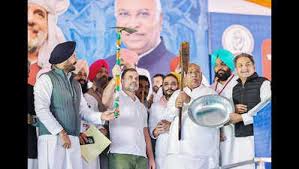
Chandigarh: Following Rahul Gandhi’s call for unity in the faction-ridden Punjab Congress at a rally in Barnala, Punjab BJP president Sunil Jakhar on Saturday mocked the Congress leadership, claiming the event was aimed at reprimanding the party’s state leaders rather than addressing public issues. The remarks came in response to Gandhi’s address at the Barnala rally, where he stressed the need for unity among Punjab Congress leaders and warned that factionalism within the party would not be tolerated. Referring to Gandhi’s remark, “No matter how big you are, be a team player; otherwise, Kharge ji and I will set you right,” Jakhar said the statement itself summed up the purpose of the rally. In a post on social media, Jakhar alleged that the Congress gathering had neither an agenda for Punjab nor any discussion on issues concerning farmers and labourers. Instead, he said, it appeared to be “a desperate attempt” by Gandhi, on behalf of the Congress high command, to publicly reprimand the party’s divided state leadership and compel them to unite through what he described as a warning. He further claimed that, in doing so, Gandhi exposed the internal divisions within the Punjab Congress before the public and, at the same time, raised questions about his own leadership ability. Jakhar also targeted the Congress leadership at the Centre, including party president Mallikarjun Kharge, alleging that the high command failed to provide direction to the party in Punjab. Courtesy : TOI Note: This news is originally published on https:/timesofindia.com/bha and is used purely for non-profit/non-commercial purposes, especially human rights
‘Death warrant for farmers’: Rahul Gandhi attacks PM Modi at Punjab rally; questions Indo-US trade deal
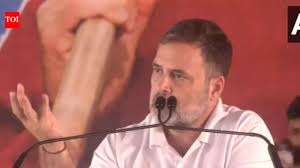
NEW DELHI: Congress leader Rahul Gandhi on Saturday questioned Prime Minister Narendra Modi over the timing of the Indo-US interim trade deal. Addressing the Mazdoor Kissan Maha Rally in Barnala, Punjab, Rahul said the deal had been stalled for four months due to disagreements over opening the agriculture sector. “So the question arises, the work which PM did not do for four months, why did he do it within 15 minutes?” he asked. “What was the pressure that the prime minister of India signed a death warrant for our country there. He signed a death warrant for our farmers. He gave away our data. He signed a death warrant for our small and medium industries,” he alleged. Rahul further said that the prime minister gave a guarantee to US president Donald Trump that India would buy US products worth Rs 9 lakh crore every year. He said opening the agricultural sector would allow American goods to enter the Indian market and harm farmers in Himachal Pradesh, Punjab, Haryana, Madhya Pradesh, Maharashtra, Rajasthan, Chhattisgarh and Odisha. “Narendra Modi has opened the door of the agricultural sector. American goods will flow in, and our farmers will be ruined,” he said. “No prime minister of India, whether from the Congress Party, the BJP, or any other party, can open the agricultural sector. No prime minister can.” Rahul further claimed he was not allowed to speak in the Lok Sabha after the president’s address because he wanted to refer to an unpublished book by former army chief general Manoj Naravane (retd). He alleged that the memoir described a lack of response from the political leadership during Chinese troop movements near the border. “Only the prime minister of the country can give the order to fire upon the Chinese army. Neither the army chief nor the defence minister can give it. Naravane ji asked the prime minister whether we can fire and stop them. There was no response for 2 hours. After that, Naravane ji gets the order to do whatever he deems appropriate,” he said. Courtesy : TOI Note: This news is originally published on https:/timesofindia.com/bha and is used purely for non-profit/non-commercial purposes, especially human rights
‘No matter how powerful…’: Rahul cracks whip on Punjab Cong rifts
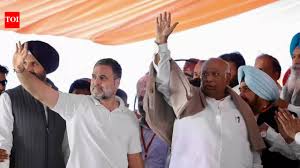
Barnala: Rahul Gandhi on Tuesday warned senior leaders of the faction-ridden Punjab Congress that even the most powerful among them would be sidelined if they failed to unite and work as a team. Gandhi, who was at the Barnala grain market as part of the Congress’s MGNREGA Bachao Sangram, also urged senior leaders to respect party workers, describing them as the real strength of the organisation. “Whatever is achieved can only be done through teamwork. No single person can ensure victory. We have a complete team, become a team player or you will be put among the reserve players and be benched. No matter how senior a leader is, he cannot be bigger than the party. If you do not mend your ways, Kharge ji and I will set you right. Our workers are our real strength, and decisions should be taken with their consent and by keeping them in the loop,” Gandhi said to loud applause from party workers at the fag end of his address. The Lok Sabha leader of opposition’s remarks come amid rising complaints of factionalism in the Congress. Even expelled Congress functionary Navjot Kaur Sidhu, wife of former Punjab Congress chief Navjot Singh Sidhu, had taken a dig at the rifts within the unit late last year, claiming the party had “five to six CM faces”. In Barnala, Gandhi also hailed the people of Punjab. “Punjab is our strength, the protector and foundation of India. We love Punjab. Politics is fine, but I love the people of Punjab. The Congress wants to safeguard the future of Punjab, its farmers and youth, who need to succeed,” he said, appearing to show more concern for the audience than for the leaders sharing the dais. The state unit has struggled to present a united face, which has reflected in the bypolls held since the 2024 Lok Sabha elections. While the Congress won seven of the state’s 13 Lok Sabha seats, it has managed to win only one of the six assembly bypolls held thereafter, Barnala in 2024. Courtesy : TOI Note: This news is originally published on https:/timesofindia.com/bha and is used purely for non-profit/non-commercial purposes, especially human rights
Telangana Education Policy suggests law against caste, gender discrimination of students
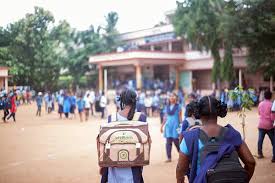
The Telangana Education Commission has recommended major reforms from pre-primary to higher education, including scrapping college entrance tests, merging intermediate with school education, and increasing the minimum pass percentages. The Telangana Education Commission has recommended some major reforms to the state government, including a three-language policy from Class 1, a push for cancelling NEET, scrapping EAPCET, merging intermediate education (class 11 and 12) with school education, gender education in secondary schools, and a legislation to prevent discrimination against students from marginalised communities and minority groups. In its proposed Telangana Education Policy, submitted to Chief Minister Revanth Reddy on February 26, the Commission also recommends allocating at least 18% of the state budget to the education sector, of which 5% should be allocated to higher education. It also proposes increasing the pass percentage for intermediate (Classes 11 and 12) students from 35% to 40% to improve academic standards. The policy suggests increasing the minimum pass percentage to 50% across all undergraduate programmes “on the lines of international practice.” School reforms The Commission has proposed that Telangana Public Schools (TPS) offer high-quality, integrated education from pre-primary through Class 12 at a single institution. The TPS model is proposed as a flagship structural reform to provide high-quality, credible education in government schools. Members of the Commission, including chairperson Akunuri Murali, briefed CM Revanth about the policy at their meeting. At the meeting, CM Revanth also announced that Telangana Public Schools of this model would be opened as a pilot project in 100 constituencies across the state, outside Hyderabad, from the coming academic year. These schools will be equipped with sports grounds, transport facilities, and other high-quality infrastructure. He also announced that from the coming academic year, students in all government schools will be provided breakfast along with milk, from Classes 1 to 12. The Commission recommended English as the medium of instruction across all levels of education from nursery to postgraduate studies. It proposed a three-language policy, with English and Telugu taught from nursery to Class 10, and either Hindi or Urdu as an option from Class 1. The policy said that Sanskrit is usually encouraged by private schools as students can score more marks. “There is no use of Sanskrit in the society as it is spoken by less than 20000 people in the whole country. Hence Sanskrit should be discouraged in general,” it said. The Commission has suggested stricter regulation of private schools, particularly with regard to fees, noting that some schools were charging as much as Rs 16 lakh in annual fees. During the meeting on February 26, the Telangana Private Schools Fee Regulatory Monitoring Commission submitted its report to CM Revanth, who instructed district collectors and district education officers to conduct a visit at the district level and submit a report on fees. At the state level, a committee with a retired judge or retired chief secretary would take final decisions on fee structure, the Chief Minister’s Office announced. The CM also suggested that the draft should be kept in the public domain to seek the opinions of students’ parents, intellectuals and social workers on the fee structure. The policy also suggests merging the different government-run residential schools for SCs, STs, BCs and minorities under a single administration. “The existing fragmented landscape…has evidently led to the hardening of caste lines and unnecessary politicisation of educational resources. By integrating these separate entities into a singular Telangana State Residential Education Society, the state will foster a truly inclusive and equitable learning ecosystem,” the policy says. Intermediate education The policy proposes bringing pre-primary schools into primary schools. It also suggests merging the SSC Board, which governs education up to Class 10, and the Board of Intermediate Education, which oversees the equivalent of Classes 11 and 12 taught in junior colleges. These are currently considered separate from the school education system. “A common board for Classes 10 and 12 will also eliminate the duplicity in terms of parallel administrative, academic, examination and data systems. Most education systems globally also have Classes 11 and 12 as part of the schooling system,” the policy says. It also recommends scrapping the EAPCET, the state-level common entrance test for admission into undergraduate colleges in the streams of engineering, agriculture and pharmacy. Instead, the Commission recommends admissions to colleges on the basis of Intermediate Public Examinations (IPE), the present equivalent of Class 12 board exams in the state. For this, IPE exams will have to be strengthened and designed to test foundational aspects and in-depth understanding of concepts covered in the curriculum, the policy says. It also recommends discontinuing public exams for intermediate first year or the equivalent of Class 11, as they cause “significant stress” to students. The policy says that instead of exam preparation, during the first year, teachers must be allowed to focus on learning gaps. Along with scrapping EAPCET, the policy says that even admissions for medical courses should be based on the Class 12 marks. “The Telangana government should strongly advocate with the Government of India for the cancellation of NEET,” it says. It also recommends a new law to regulate private coaching centres for competitive exams such as IIT-JEE, NEET, CLAT etc., allowing oversight on fees, infrastructure, timings, faculty, curriculum, student mental health, and misleading advertisements. “The government must regulate the fees charged for intermediate education, including fees charged for entrance exam coaching to ensure there is no profiteering,” the policy says. Teacher education The policy also proposes a separate cadre of teachers for teaching students of Classes 9 to 12. Junior lecturers already working in the government system for intermediate education may be considered. It also proposes restructuring B Ed programmes into stage-specific degrees (primary and secondary). The policy says automatic promotions for teachers and headmasters must be discontinued. Instead, it suggests promotion policies aligned with outcomes and performance, and clearing departmental exams. At the meeting on February 26, CM Revanth also announced short-term training for teachers and lecturers on Artificial Intelligence (AI). Further, the CM asked officials to take
Karnataka opens government-run barber shop after Dalits denied haircuts
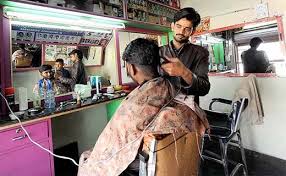
A government-run barber shop was opened in Gadag’s Singatalur village after local barbers repeatedly refused haircuts to Dalits, citing a religious tradition. In Karnataka’s Gadag district, officials on Thursday, February 26, inaugurated a barber shop for Dalit residents of Singatalur village after local barbers repeatedly denied them haircuts. The facility, opened by the Social Welfare Department, is believed to be the state’s first government-run barber shop. Local residents said tensions began a few weeks ago when a village barber refused to cut a Dalit youth’s hair. Officials said the barbers justified the discrimination on religious grounds. “Every year, the deity visits the homes of the Hadapada community, and the barbers claimed they could not serve Dalits during this period,” a Taluk official told Indian Express. As the situation escalated, local administration officials held peace meetings with barbers and community members. Despite repeated warnings and meetings with the tehsildar, the barbers continued to refuse service to Dalit residents, prompting the administration to issue a notice to the shop and order its closure. Following this, many barbers closed their shops. After barbers continued to refuse service, the administration worked with the Social Welfare Department, Taluk Administration, Taluk Panchayat, Police Department, Dalit Pro-Sangha Tane Kooka and Shivsharan Hadapada Appana Samaj to establish the new shop that Dalits and other residents can freely access. A barber from the Hadapada Appana Samaj agreed to operate it, with authorities arranging the equipment. Courtesy : TNM Note: This news is originally published on https:/thenewsminute.com/bha and is used purely for non-profit/non-commercial purposes, especially human rights
Man gets 20-years rigorous imprisonment for raping Dalit girl in UP’s Sonbhadra in 2018
Sonbhadra (UP), A court here on Friday sentenced a man to 20 years’ rigorous imprisonment after he was convicted of raping a Dalit girl seven years ago, the prosecution said. Government Advocate Dinesh Prasad Agrahari said on October 25, 2018, a woman submitted a written complaint at Robertsganj police station stating that her 16-year-old daughter was lured by her former acquaintance, Raj Mishra, into a forest near Churk and raped. The plaintiff told the police that after the rape, the accused assaulted her daughter and abused her with casteist slurs. Based on the complaint, police registered a case under provisions of the Protection of Children from Sexual Offences (POCSO) Act and the accused — Raj Mishra, a resident of Rajdhan under Chopan police station area — was arrested. Following investigation and collection of sufficient evidence against the accused, a chargesheet was filed in court. Agrahari said Additional District Judge (POCSO Act) Amit Veer Singh held Raj Mishra guilty on Friday and sentenced him to 20 years of rigorous imprisonment, also imposing a fine of Rs 56,000. Failure to pay the fine will result in an additional two months’ imprisonment. The court ordered that Rs 40,000 from the fine amount be given to the survivor. PTI COR NAV ARB ARB This report is auto-generated from PTI news service. ThePrint holds no responsibility for its content. Courtesy : The Print Note: This news is originally published on https:/theprint.com/bha and is used purely for non-profit/non-commercial purposes, especially human rights
Black history month and Dalit history month: Memory, resistance and recognition

While Black History Month has decades of institutional recognition, Dalit History Month is a grassroots initiative—yet its theoretical and political importance is equally profound… The observance of Black History Month is not merely ceremonial. It is a recognition, it is epistemic. It is an intervention in memory. The observance of Black History Month is not merely ceremonial. It is a recognition, it is epistemic. It is an intervention in memory. Photo | AP Every February, the United States observes Black History Month, a commemoration dedicated to remembering the struggles, contributions, and intellectual traditions of African Americans. What began in 1926 as “Negro History Week” under the initiative of Carter G Woodson and the Association for the Study Negro life and History and later expanded into a month-long observance and was formally recognised by the US federal government in 1986. Since then, presidential proclamations have reaffirmed its significance, acknowledging that Black history is not peripheral to the American story, it is foundational to it. The observance of Black History Month is not merely ceremonial. It is a recognition, it is epistemic. It is an intervention in memory. It challenges the structure of historical narration itself by insisting that a people long excluded from official archives must be placed at the centre of national consciousness. Across the globe, another community continues a parallel struggle for historical recognition—Dalits in South Asia. Activists initiated Dalit History Month in 2015, marking April as a month to document, celebrate, and assert Dalit histories, intellectual traditions, resistance movements, and cultural contributions. While Black History Month has decades of institutional recognition, Dalit History Month is a grassroots initiative—yet its theoretical and political importance is equally profound. History as a site of power History is never neutral. It is shaped by those who hold power, political, economic, and cultural. For centuries, dominant groups controlled the archive, the curriculum, and the narrative. In the United States, slavery and segregation were not only economic systems but epistemic regimes: they denied Black people authorship over their own history. Similarly, in the caste-based social order of South Asia, Dalits were excluded not only from land and literacy but from the production of knowledge itself. To be denied history is to be denied humanity. The sociological insight of WEB Du Bois remains relevant here. Du Bois wrote about “double consciousness”, the experience of seeing oneself through the eyes of a society structured by racial prejudice. This tension arises when dominant narratives attempt to fix identity within limiting definitions. Yet double consciousness is not simply a fractured state; it is a heightened awareness, an ability to perceive both the imposed gaze and one’s own autonomous self-understanding. In caste-structured contexts, a comparable dynamic has operated. Social hierarchies have historically sought to define worth and status in inherited terms, but communities positioned at the margins have not passively absorbed these definitions. Instead, they have cultivated counter-traditions of dignity, intellectual critique, and collective assertion. Through movements of self-respect, constitutional struggle, and cultural production, they have transformed imposed categories into platforms for democratic re-articulation. What emerges, therefore, is not internalised hierarchy, but an evolving political consciousness that refuses to let inherited structures determine selfhood. Black History Month and Dalit History Month disrupt this imposed gaze. They assert that oppressed communities are not subjects of oppression but producers of thought, culture, and transformation. Structural racism and structural casteism: Parallel logics Though racism and casteism arise from different historical trajectories, their structural logic is comparable. Both systems institutionalise graded inequality. Both naturalise hierarchy. Both regulate access to education, labour, dignity, and spatial belonging. In the United States, the history of slavery, Jim Crow laws, and racial segregation created enduring socio-economic disparities. The civil rights movement challenged these systems, but their legacies remain embedded in institutions. In South Asia, caste operates as a deeply entrenched system of social stratification, historically justifying untouchability, exclusion from temples and wells, segregation in housing, and violent enforcement of occupational roles. Despite constitutional guarantees of equality, caste-based discrimination persists in subtle and overt forms. The intellectual interventions of Dr BR Ambedkar are crucial in this context. Dr Ambedkar not only fought for the abolition of untouchability but analysed caste as a system of “graded inequality” where oppression is normalised and internalised through religious and social codes. His insistence on education, agitation, and organisation echoes the emancipatory tradition of Black intellectual resistance. Both Black and Dalit struggles reveal that oppression operates not only through overt violence but through the management of memory and meaning. Black History Month’s institutionalisation in 1986 signalled an acknowledgment by the US state that historical omission itself is a form of injustice. Presidential proclamations do not erase centuries of suffering, but they symbolically affirm the legitimacy of Black historical experience. Dalit History Month seeks a similar recognition—though it has yet to achieve equivalent global institutional status. April holds symbolic weight because it includes the birth anniversaries of icons Jyotiba Phule and Dr Ambedkar, whose life represents intellectual rebellion against caste oppression. The month becomes a pedagogical space where Dalit literature, art, scholarship, and activism are highlighted. Recognition is not merely symbolic; it redistributes dignity. Philosopher Charles Taylor argued that misrecognition can inflict harm by imprisoning someone in a false, distorted image. In caste and racial systems, this distortion is structural. Therefore, commemorative months function as corrective narratives, rewriting distorted histories with truth and pride. Memory as resistance Memory, when consciously reclaimed, becomes an act of resistance. It refuses erasure, challenges selective histories, and asserts dignity in the face of structural silencing. Black History Month and Dalit History Month are not merely commemorative observances; they are intellectual and political interventions that reposition marginalised histories at the centre of democratic imagination. Black History Month foregrounds the narratives of civil rights mobilisations, cultural renaissance, and institutional transformation. From the philosophical interventions of Du Bois to the moral leadership of Martin Luther King Jr., and from the literary brilliance of Toni Morrison to the scientific excellence of Katherine Johnson, the month celebrates creativity and achievement that flourished