
Basic principles of law appears to have not been followed in Baramati plane crash probe: Rahul Gandhi
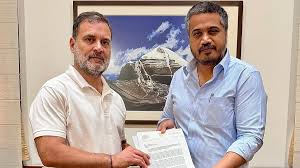
Pune: The leader of opposition in Lok Sabha, Rahul Gandhi, on Thursday alleged that basic principles of law had not been followed in the investigation into the Baramati plane crash that claimed the life of former Maharashtra deputy chief minister Ajit Pawar and said no FIR had been registered despite the seriousness of the case. Rahul shared a photo of him with NCP (SP) MLA Rohit Pawar on his ‘X’ handle after their meeting in Delhi and demanded a transparent investigation into the crash. “The incident warrants a fair, transparent and impartial investigation,” Rahul posted on X. Rohit, Ajit Pawar’s nephew, appealed to Rahul during their meeting in the national capital to raise the issue of his uncle’s death in the plane crash in the ongoing session of Parliament. The NCP (SP) MLA thanked Rahul for his support while interacting with reporters later, and criticised the central and Maharashtragovts for not registering an FIR in connection with the Jan 28 plane crash in which Ajit Pawar was killed with four others. “It has been nearly one-and-a-half months since the plane crash, but still no FIR has been registered. The proposal of the state govt to the CBI should have been accepted and the central agency should have started the investigation of the case. The issue should have been discussed in the ongoing Parliament session. It is quite shocking that ‘some people’ are busy only in protecting VSR Venture and its owner,” Rohit said. Apart from Rahul, Rohit met some members of the INDIA bloc, including Congress president Mallikarjun Kharge, DMK MP Kanimozhi and former Delhi chief minister Arvind Kejriwal, in the past few days in Delhi. He urged all of them to raise the issue of the Baramati plane crash in Parliament. Courtesy : TOI Note: This news is originally published on https:/timesofindia.com/bha and is used purely for non-profit/non-commercial purposes, especially human rights
Rahul Gandhi’s speech sparks row in Lok Sabha
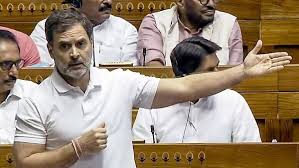
NEW DELHI: The Lok Sabha on Thursday witnessed a ruckus after Rahul Gandhi was interrupted during his speech on the energy crisis when he took a jibe at oil and gas minister Hardeep Puri for his name allegedly appearing in the files of an American sex-offender. He also attacked the govt over the US waiver to India to buy crude from Russia. “It has been a very puzzling fact why a nation the size of India would allow any other nation… the President of another nation to give us permission to buy Russian oil… I have figured the puzzle out. And the puzzle is about compromise,” he said and referred to Puri’s alleged link. This led to interruptions in the House, forcing Speaker Om Birla to intervene, saying the member cannot raise this issue, even as Gandhi insisted that he was speaking on energy and economic security. Later, opposition members entered the well of the House and Puri had to read out his statement amid sloganeering. Courtesy : TOI Note: This news is originally published on https:/timesofindia.com/bha and is used purely for non-profit/non-commercial purposes, especially human rights
Dalit Man Claims He Was Assaulted In Custody By Cops, Dies Later At Hospital

A document detailing the alleged torture of a 26-year-old Dalit man in police custody in Tamil Nadu’s Sivaganga district has come under sharp focus after it was presented before the Madurai Bench of the Madras High Court. Akash, a 26-year-old Dalit, who claimed he was brutally assaulted in police custody in SivagangaChennai: A document detailing the alleged torture of a 26-year-old Dalit man in police custody in Tamil Nadu’s Sivaganga district has come under sharp focus after it was presented before the Madurai Bench of the Madras High Court. The document – a remand order recorded by a judicial magistrate based on the victim’s statement – has now effectively become a dying declaration, as the man later died while undergoing treatment at a hospital in Madurai. The victim, identified as Aakash, had described in detail the alleged torture he faced in police custody. According to the statement recorded by the magistrate, Aakash alleged that he was blindfolded and brutally assaulted by police personnel after being taken into custody. He claimed that officers placed stones below and above his right leg, covered it with a wet gunny bag and repeatedly beat it with an iron rod. The assault, he said, broke his leg and caused severe bleeding. Aakash further alleged that police threatened him and instructed him to tell doctors at the Manamadurai Government Hospital that he had sustained the injuries after falling from the Melapasalai bridge. In his statement, he also told the magistrate that around 10 cops in plain clothes first picked him up along with his co-accused, Guna, on the evening of March 6. Later that evening, four uniformed policemen took them away, he said, adding that he was placed in a separate vehicle and blindfolded. Human rights defender Henri Tiphagne, Executive Director of People’s Watch, told NDTV that the document is a crucial piece of evidence. “This is the first document that establishes police torture in Sivaganga,” Mr Tiphagne said, adding that although the case has been transferred to the CB-CID, no police personnel have been arrested or suspended so far. Aakash, a graduate, had been arrested after a clash with two men a day earlier and was charged for attempt to murder. He had sustained injuries and was initially admitted to the Sivaganga Government Hospital before being shifted to the Government Rajaji Hospital in Madurai, where he died the following morning. Police officials had earlier said the 26-year-old developed breathing complications while undergoing treatment. His family, however, has consistently alleged custodial torture. Tiphagne earlier told NDTV that Aakash had informed his parents in the hospital that police had placed his leg between stones and beaten him. The state had denied allegations of torture and argued he fell from a bridge. A senior police officer told NDTV that a magisterial inquiry has been ordered and that the law will take its course. On the allegations of torture, the officer said the investigation is underway and declined further comment. The incident comes less than a year after the custodial death of Ajith Kumar in the same district following alleged police torture that was reportedly caught on camera. The case is currently being probed by the CBI, with five police personnel arrested and ten officers named in the case. Meanwhile, the Madurai Bench of the Madras High Court has also directed the registration of a case under the SC/ST (Prevention of Atrocities) Act in connection with Aakash’s death. Reported by: J Sam Daniel Stalin Courtesy : NDTV Note: This news is originally published on https:/ndtv.com/bha and is used purely for non-profit/non-commercial purposes, especially human rights
Probe MP Dalit woman’s death, SC instructs CBI

NEW DELHI: Supreme Court on Wednesday directed CBI to conduct a preliminary inquiry into the circumstances surrounding the death of a 20-year-old Dalit woman in MP’s Sagar district in 2024. It rejected the plea of the state that the case was politically motivated, and said the truth must come out. A bench of Justices M M Sundresh and N Kotiswar Singh said its conscience did not allow it to accept state govt’s plea, and ordered an inquiry by the central agency. The court left it to CBI to take a call on registering an FIR. SC had last year issued notice on a petition by the woman’s mother, who was seeking a CBI or SIT probe into the dea-ths of three family members. “We direct CBI to conduct a preliminary inquiry on the ci-rcumstances surrounding the death of the girl,” SC said. Courtesy : TOI Note: This news is originally published on https:/timesofindia.com/bha and is used purely for non-profit/non-commercial purposes, especially human rights
Dalit family forced to flee village after caste attack in India
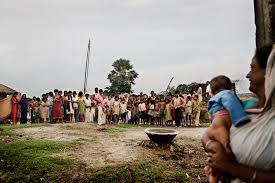
Dalit family in northern India says violence, threats and caste abuse forced them to consider fleeing village despite police case NEW DELHI, India (MNTV) — A Dalit family in northern India says it has been forced to consider leaving its village after an alleged caste-based attack and continuing threats from local residents, highlighting persistent violence faced by marginalized communities in rural areas. The incident took place in Karaunda village in Uttar Pradesh’s Shahjahanpur district, where members of a Dalit household say a group of men entered their home and assaulted them while hurling caste slurs. According to local reports, the attackers allegedly beat the head of the family, Ramlal, with sticks and vandalized property inside the house. Dalits — historically known as “untouchables” in India’s traditional caste hierarchy — remain among the country’s most marginalized communities despite constitutional protections and laws aimed at preventing caste-based discrimination. Ramlal told police that the attack occurred on the evening of March 3 when several men from the village allegedly forced their way into the family’s home. He sustained serious head injuries during the assault and was later taken to a government hospital for treatment. The attackers also allegedly broke the door of the house, damaged a motorcycle parked in the courtyard and destroyed belongings inside the residence, according to the complaint submitted to authorities. Police responded to the incident after an emergency call and registered a case against some of the suspects. However, the family says the situation has remained tense since the assault. According to Ramlal’s complaint to district authorities, the accused individuals have continued pressuring the family to withdraw the police case and reach a compromise. The family says they were warned they would not be allowed to remain in the village if they pursued legal action. Facing what they describe as ongoing intimidation and fear of further violence, Ramlal’s family says they are now preparing to leave the village for their safety. He has asked district police officials to provide protection and assistance so the family can safely collect their belongings before relocating to another place. Local police authorities say the case is under investigation and have assured that appropriate legal action will be taken. Human rights advocates say such incidents reflect a broader pattern of caste-based intimidation in parts of rural India, where Dalit families often face pressure and threats when they attempt to pursue justice through official channels. Courtesy : Muslim Network TV Note: This news is originally published on https:/muslimnetworktv.com/bha and is used purely for non-profit/non-commercial purposes, especially human rights
Census 2027 to collect data on transgender heads of Households bookmark_border text_fields
The Census will be conducted in two phases, with the houselisting stage recording the sex of the head of each household as male, female or transgender, the government told the Rajya Sabha. New Delhi: The upcoming Census 2027 will collect data on the sex of the head of households under three categories — male, female and transgender — the Rajya Sabha was informed on Wednesday. Minister of State for Home Affairs Nityanand Rai, in a written reply, said the Census will be conducted in two phases. The questions for the first phase, which covers the Houselisting and Housing Census, have already been notified During this phase, information related to housing conditions, household particulars including the name and sex of the head of the household, amenities available and assets possessed by the household will be collected. Rai said the sex of the head of the household will be recorded under three categories — male, female and transgender. He added that the questions for the second phase, known as Population Enumeration, where information about each individual will be collected, will be notified later. Rai said enumerators will carry out house-to-house visits across all enumeration areas to collect Census data and ensure that no one is excluded on any ground. He explained that the provision for self-enumeration will be offered as an additional facility for respondents to submit their information. However, enumerators will verify the self-enumerated data before final submission. The minister said the self-enumeration portal will include frequently asked questions, tool tips and validation checks to ensure the accuracy of the data provided by respondents. He further stated that several measures have been put in place to ensure data security while collecting information on mobile devices, during data transmission and at the server level. According to Rai, adequate training is being provided to all field officials involved in the Census, including enumerators and supervisors. Validation rules have been built into the mobile application to ensure data consistency and accuracy, while supervisors will monitor and verify the data collected by enumerators. The Union Cabinet has approved Rs 11,718 crore for conducting the Census of India 2027, which will also include caste enumeration for the first time. The exercise will be the 16th Census conducted since Independence and will be a fully digital process, offering citizens the option of self-enumeration. The decadal Census, originally scheduled for 2021, was postponed due to the COVID-19 pandemic. Courtesy : Madhyamam Note: This news is originally published on https:/madhyamam.com/bha and is used purely for non-profit/non-commercial purposes, especially human rights
India Moves To Broaden Legal Definition Of Transgender Persons. What Does It Mean?
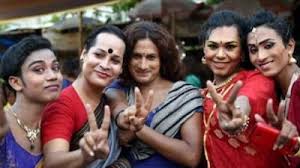
The amendment is also expected to spell out clearer criteria for identifying transgender persons, which the government says will help prevent misuse of the law’s provisions. The Union Cabinet on Tuesday approved a proposal to amend the Transgender Persons (Protection of Rights) Act, 2019, in a bid aimed at expanding the definition of transgender individuals in the country. As per reports, the proposed changes are intended to make the law more inclusive so that a broader range of individuals can access the rights, protections and welfare measures provided under the legislation. The amendment is also expected to spell out clearer criteria for identifying transgender persons, which the government says will help prevent misuse of the law’s provisions. Community leaders have consistently raised concerns regarding the implementation of the law, prompting ongoing discussions around its effectiveness. The Supreme Court has also voiced concerns regarding delays in implementing the law provisions. While the Cabinet has approved the proposal, detailed provisions of the amendment have not yet been made public. The Transgender Persons (Protection of Rights) Act, 2019, which came into force on January 10, 2020, provides legal recognition to transgender individuals, prohibits discrimination and mandates welfare measures for the community. The rules for implementing the law were notified in September 2020. Under the current law, a transgender person is defined as someone whose gender identity does not match the gender assigned at birth. Section 2 of the Act provides crucial definitions regarding who qualifies as a transgender person. The definition includes trans men and trans women, persons with intersex variations, gender queer individuals, hijra and others. The law applies regardless of whether a person has undergone sex reassignment surgery or hormone therapy. It also requires transgender persons to go through a district magistrate and district screening committee to get certified as a trans person. According to the 2011 census there are more than 4.80 lakh transgenders in the country. As per the reports, the proposed amendment aims to bring greater clarity to the definition and ensure that genuine beneficiaries receive the protections and benefits provided under the law. Curated By : Shobhit Gupta Courtesy : News18 Note: This news is originally published on https:/news18.com/bha and is used purely for non-profit/non-commercial purposes, especially human rights
Rahul Gandhi behind speaker’s decision on turncoat MLAs, alleges BRS working president KT Rama Rao
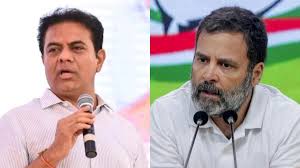
Hyderabad: Condemning assembly speaker G Prasad Kumar’s decision to dismiss disqualification petitions against defected MLAs, BRS working president KT Rama Rao has called it undemocratic and shocking. He alleged that the decision was taken under tremendous pressure from Congress leader Rahul Gandhi and accused the party leadership of orchestrating the entire episode. Speaking to the media at Telangana Bhavan after the speaker’s verdict on Wednesday, KTR said the speaker had virtually no independence in the matter. He said the decision represented a direct assault on democracy and the Constitution, and that the principal architect behind this unethical move was Rahul Gandhi. KTR also questioned how an MLA who won on a BRS B-Form could contest as a Congress candidate in the Lok Sabha elections without resigning from the assembly, yet still escape disqualification. “An MLA who won on one party’s B-Form contests as an MP candidate on another party’s B-Form without resigning. Despite such clear evidence, the speaker refused to disqualify him. This is nothing short of political manipulation,” he said. “All the evidence is already in the public domain. The Election Commission records clearly show which B-Form the MLA used to contest the assembly election and on which B-Form he contested for Parliament. What further inquiry is needed?” he asked. KTR questioned the moral authority of Rahul Gandhi and Congress to speak about defections. “Rahul Gandhi and Congress have absolutely no moral right to lecture anyone about political defections,” he said. “The main perpetrator and the criminal mind behind this decision is Rahul Gandhi. He is the real culprit. Without his permission and approval, the speaker would never have dared to take such a shocking decision,” KTR stated. Criticising what he described as hypocrisy in Rahul Gandhi’s political stance, KTR said that the Congress leader claimed to be the defender of the Constitution while simultaneously encouraging defections. “On one hand Rahul Gandhi carries the Constitution in his hand and claims to be its protector. On the other hand, his party is enabling defections and protecting defectors,” he added. KTR further criticised Rahul Gandhi for speaking about automatic disqualification in cases of defection during his speeches in Telangana and for promoting the ‘Nyay Patra’, while allowing the Congress govt to protect defectors. Courtesy : TOI Note: This news is originally published on https:/timesofindia.com/bha and is used purely for non-profit/non-commercial purposes, especially human rights
Nashik court disposes of defamation case against Rahul Gandhi

Nashik: The court of additional chief judicial magistrate Rupali Narwadiya has disposed of the defamation case filed against leader of opposition in Lok Sabha Rahul Gandhi. The case was initiated by Devendra Bhutada, president of the Nashik-based Nirbhaya Foundation, who alleged that Gandhi made defamatory remarks about Hindutva ideologue and freedom fighter VD Savarkar during ‘Bharat Jodo Yatra’ rallies held in Hingoli and Akole on June 15 and 16, 2022. Bhutada approached the court shortly after learning of the comments. Following the complaint, a case was registered under sections 499 (defamation) and 504 (intentional insult) of IPC, and the court issued summons to Gandhi in Sept 2024. Last July, the additional chief judicial magistrate granted Gandhi bail, allowing him to attend hearings virtually, during which he pleaded not guilty. Defence lawyer Gajendra Sanap said the court had ordered an inquiry under Section 202 of the CrPC, and after police submitted their investigation report, the complainant sought to withdraw the case. Mohan Pingale, representing Bhutada, said the withdrawal application was filed because Bhutada’s daughter had recently moved abroad, making it difficult for him to attend frequent hearings. He said the four-year-old case had led to summons and warrants against Gandhi, requiring him to secure bail and participate in virtual proceedings. Pingale said the Supreme Court mandated priority handling of cases involving MPs and MLAs. “In view of the circumstances, we applied to withdraw the case, and the court accepted the request, thereby disposing of the matter,” he said. Courtesy : TOI Note: This news is originally published on https:/timesofindia.com/bha and is used purely for non-profit/non-commercial purposes, especially human rights
Dalit Family in Sidhauli Forced to Flee Home: Allegations of Assault and Threats Against Local Bullies; Appeal Made to SP
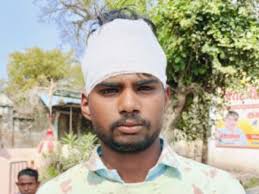
In Karaunda village, located within the Nigohi police station area of Shahjahanpur, a Dalit family has alleged that local bullies (known as *dabangs*) forcibly entered their home, physically assaulted them, hurled caste-based slurs, and damaged their property. The victimized family states that they are receiving continuous threats, compelling them to abandon their village. They have appealed to the Superintendent of Police (SP) for justice and protection. Ramlal, a resident of Karaunda, stated in a written application submitted to the Superintendent of Police that on the evening of March 3, around 7:30 PM, several local bullies forcibly barged into his home. It is alleged that the accused subjected him to caste-based verbal abuse and assaulted him using sticks and clubs. During this attack, Ramlal sustained severe head injuries and was left bleeding profusely. In addition to breaking down the front door, the accused also damaged a motorcycle parked in the courtyard and a storage chest kept inside the house. Immediately following the incident, the victim alerted the police via the ‘Dial 112’ emergency service. Upon arriving at the scene, the police arranged for Ramlal’s medical examination. He initially received treatment at the Primary Health Centre in Nigohi, followed by further treatment at the District Hospital. A case has also been registered against some of the accused individuals in connection with this matter. Ramlal alleges that since the incident occurred, the accused have been continuously pressuring him to reach a compromise. He is being threatened that if he does not agree to a settlement, he will not be allowed to continue living in the village. Terrified of the accused, Ramlal and his family are living in constant fear and are contemplating leaving the village. On Tuesday, Ramlal appealed to the Superintendent of Police, requesting that he and his family be provided with police protection. He also pleaded for arrangements to be made—under police supervision—to retrieve his household belongings from his home, so that he and his family may relocate to a safe location. In this regard, Shahjahanpur Superintendent of Police Rajesh Trivedi has assured that an investigation will be conducted and appropriate action taken. Viresh Kumar | Mishripur (Sidhauli), Courtesy : Hindi News