
Transgender board: NHRC seeks report

Patna: The National Human Rights Commission (NHRC) has taken cognisance of a complaint alleging systemic discrimination by the Bihar govt against the transgender community following the state’s failure to operationalise the Bihar State Transgender Welfare Board. Acting vice chairperson of the board Rajan Singh said, “Despite the board’s formation six months ago, the body remains non-functional and leaves the community without administrative representation.” According to the NHRC case file, “The complainant alleges that the Bihar government formed the Bihar State Transgender Welfare Board on Aug 8, 2025, but since then, members have not been given office space and their post has been declared ‘without salary’, leading to discrimination.” The file further notes that as a result of these conditions, “many transgender community complaints remain unregistered” and police protection and support during district-level public hearings are also not provided. “The NHRC informed the Bihar State Human Rights Commission regarding this issue,” Singh said. “Additionally, the Bihar govt and the principal secretary of the social welfare department were asked to give a report to the NHRC on the matter within six weeks,” he added. The transgender community in Bihar, which has an estimated population of over two lakh, remains largely unregistered. Singh accused the govt of forming the board prior to elections to secure the support of the vote bank. “The state govt is discriminating against us,” Singh said. “The social welfare department declared our positions unpaid. If we aren’t provided with a salary or an office, how are we expected to work? This is unconstitutional,” he added. Courtesy : TOI Note: This news is originally published on https:/timesofindia.com/bha and is used purely for non-profit/non-commercial purposes, especially human rights
Trans bill drops ‘self-perceived identity’ clause
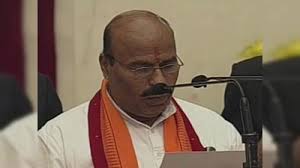
NEW DELHI: The Transgender Persons (Protection of Rights) Amendment Bill has proposed to omit the clause that allowed “self-perceived gender identity” to be the basis for determination and for obtaining a transgender certificate, reports Ambika Pandit. “The existing vague definition of the expression ‘transgender person’ makes it impossible to identify the genuine oppressed persons to whom the benefits of the Act are intended to reach,” the bill introduced by social justice and empowerment minister Virendra Kumar in Lok Sabha on Friday explained. ‘Aim of bill is to protect a specified class of persons’ It underlines that a trans person “shall not include, nor shall ever have been so included, persons with different sexual orientations and self-perceived sexual identities”. “The protection and benefits that are provided under the Act are vast in nature, and therefore, care has to be taken that such identification cannot be extended on the basis of any acquirable characteristics or personal choice or claimed self-perceived identity of an individual,” it added. “The purpose of the Act was to protect a specified class of persons socially and culturally known as transgender people who face societal discrimination of an extreme and oppressive nature,” says the statement of objects of the bill. “The purpose was and is not to protect each and every class of persons with various gender identities, selfperceived sex, gender identities or gender fluidities,” it added. The bill also proposes to create specific offences with graded punishments that reflect the gravity of the harm, the irreversibility of the injury, and the particular vulnerability of child victims. A medical board headed by chief medical officer has been introduced in the bill, and if passed in the current form, the district magistrate will, going forward, issue a certificate of transgender identity, after examining the recommendation of the medical board cited as “authority” to be constituted by the central or state govts. The bill defines a trans person as the one “having such socio-cultural identities as ‘kinner’, ‘hijra’, ‘aravani’ and ‘jogta’, or eunuch, or a person with intersex variations or a person who, at birth, has a congenital variation in one or more sex characteristics as compared to male or female development: primary sexual characteristics; external genitalia, chromosomal patterns, gonadal development endogenous hormone production or response.” The bill said that the current law also prohibits discrimination and abuse against transpersons but its penal provision address only general wrongs and criminal offences and prescribes a maximum of two years’ imprisonment. The proposed amendments make room for stricter penalties and punishments. “Also, any person or child who has been, by force, allurement, inducement, deceit or undue influence, either with or without consent, compelled to assume, adopt, or outwardly present a transgender identity, by mutilation, emasculation, castration, amputation, or any surgical, chemical, or hormonal procedure or otherwise will be included in the definition.” If a trans person is kidnaped and suffers mutilation, castration or any surgical, chemical, or hormonal procedure; or permanent or severe injury with the intent of compelling the person to adopt or outwardly present a trans person’s identity against their will, the offence shall be punishable with 10 years to life imprisonment. In addition, a fine not be less than Rs 2 lakh will be levied. For same crime involving a child the punishment will be life imprisonment and a fine of Rs 5 lakh. Courtesy : TOI Note: This news is originally published on https:/timesofindia.com/bha and is used purely for non-profit/non-commercial purposes, especially human rights
Senior ranks of RSS lack representation of all sections: Rahul
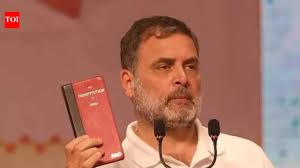
Lucknow: Congress Rae Bareli MP Rahul Gandhi on Friday sharpened his criticism of the RSS and the BJP, while framing the political battle around social justice and the Constitution, and said senior ranks of the Sangh lack representation from OBCs, Dalits and Adivasis. “A review of the organisation’s top structure and senior functionaries would show the absence of these communities and argued that this reflected a wider imbalance in the country’s power structure. The contest in Indian politics is now clearly between those seeking broader inclusion and those preserving concentration of power,” he said. He was addressing party workers at the Samvidhan Sammelan in Lucknow, where he remembered the contribution of Dalit leader Kanshi Ram on his birth anniversary.Rahul said the late leader’s struggle, vision and impact on Indian politics continued to hold relevance. “Kanshi Ram’s politics was rooted in the idea that progress should benefit not just a small section of society but the overwhelming majority, including the most marginalised. India’s major institutions still do not reflect the country’s social composition,” he said. He referred to the judiciary, bureaucracy, cabinet, education system and corporate sector, claiming that large sections of the population, especially Dalits, Adivasis, backward classes, extremely backward groups and minorities, remain underrepresented in positions of power and decision-making. Rahul presented the Congress as an ideological party that drew strength from the legacies of Mahatma Gandhi, BR Ambedkar and Jyotiba Phule. He said, “Such a party cannot be defeated if it stays committed to its path and values.” The Rae Bareli MP told party workers that slogans alone could not bring change and urged workers to focus on ideological commitment and sustained political struggle. Referring to Ambedkar and Kanshi Ram, he said both the leaders remained committed to their principles and did not compromise on their core beliefs. Gandhi also described the Constitution as more than a legal text drafted after Independence. “It embodied the voices and values of reformers and thinkers such as Ambedkar, Mahatma Gandhi, Narayana Guru, Basavanna and Gautam Buddha. The document reflects their values and not those of ideologues like VD Savarkar or Nathuram Godse,” he said. “The Congress party had decided to push for caste enumeration and for greater inclusion of Dalits, Adivasis, backward classes, extremely backward classes and minorities in India’s power structure. The issue would remain central to the Congress campaign,” he said. Gandhi also launched broader political attacks on Prime Minister Narendra Modi, alleging that the PM had compromised on several national issues, including energy security, economic policy and the concentration of financial influence. The event concluded with a proposal from participants seeking Bharat Ratna for Kanshi Ram posthumously. The proposal received support in the gathering, with workers saying the late Dalit leader deserved the honour when Rahul Gandhi becomes Prime Minister of India. Courtesy : TOI Note: This news is originally published on https:/timesofindia.com/bha and is used purely for non-profit/non-commercial purposes, especially human rights
US deal harming India’s energy & economic interests, claims Rahul
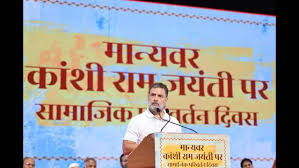
Lucknow: Congress MP and leader of the opposition in Lok Sabha, Rahul Gandhi, on Friday accused Prime Minister Narendra Modi of “compromising India’s economic, digital and energy security in trade deal with the United States”. Gandhi also raised concerns over India’s energy policy, alleging that the govt had ceded decision-making authority to Washington. “India had agreed to follow US instructions on whether to buy oil and gas from countries like Russia, Iran or Iraq. The recent closure of the Strait of Hormuz threatened India’s energy stability, because of these policy changes,” he added. The LoP made the remarks while addressing Congress workers at the Samvidhan Sammelan in Lucknow, where he continued his criticism of what he called “unfair terms” in India-US trade and data arrangements. Gandhi alleged that India had surrendered strategic leverage by allowing the US access to Indian data. “The PM handed over all the data of the people of India to the American govt and companies, permitting them to store it anywhere and granting a 20-year tax holiday. This change left India unable to monitor or regulate how the data of its citizens is used,” claimed Gandhi. “The govt has agreed to purchase goods worth Rs 9 lakh crore annually from the US, a move that will severely harm Indian businesses,” Gandhi said. Listing agricultural products such as cotton, soybeans, pulses, fruits and nuts, he said imports from large, mechanized American farms would undercut small Indian farmers operating on two to five acres of land. According to Gandhi, India received nothing in return from these decisions, asserting that taxes had increased and domestic producers were left vulnerable. He alleged that the prime minister was “compromised and has surrendered”, referencing financial and international controversies by name while claiming they weakened India’s negotiating position. Courtesy : TOI Note: This news is originally published on https:/timesofindia.com/bha and is used purely for non-profit/non-commercial purposes, especially human rights
Congress Alleges Dalit Atrocities at Peak Under BJP, Cites Bhadohi Case
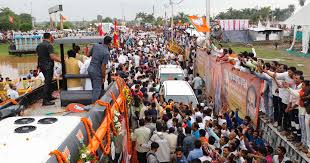
UP Congress chief Ajay Rai says state government wants to eliminate the poor; party to celebrate March 13 as Social Change Day.Newspapers The Congress party on Wednesday alleged that Dalits are facing their worst period under the BJP government, with atrocities against the community having reached a peak, and pointed to a recent incident in Uttar Pradesh’s Bhadohi district as fresh evidence of the worsening situation. Addressing a press conference in Lucknow, Uttar Pradesh Congress Committee president Ajay Rai said crimes against Dalits had risen sharply under the Yogi Adityanath government. “Two days ago, an attempt was made to set Jaslal Saroj ablaze in Bhadohi. The state government wants to eliminate not poverty but the poor, but the Congress is committed to the security of Dalits,” he said. Congress Leaders Raise Wider Concerns Rajendra Pal Gautam, chairman of the All India Congress Committee Scheduled Castes Department, spoke about the broader failures he attributed to the current dispensation. He said millions had sacrificed their lives for India’s independence but had never imagined an India where children are forced to abandon their studies due to poverty and people die for lack of medical treatment. He also raised the question of India’s foreign policy independence, asking why the country should need to seek permission from the United States to purchase oil. Manoj Yadav, chairman of the Uttar Pradesh Congress OBC Department, said the fight for social justice initiated by Kanshi Ram was now being carried forward by Rahul Gandhi. Grand Event Planned for Kanshi Ram’s Birth Anniversary Anil Jai Hind, chairman of the All India Congress Committee Backward Classes Department, announced that the Congress would observe Kanshi Ram’s birth anniversary on March 13 as Social Change Day. “A grand event will be organised on March 13 to carry forward his ideas and build the India of his dreams,” he said. Congress leaders confirmed that Rahul Gandhi will attend the Samajik Parivartan Diwas programme dedicated to Kanshi Ram on March 13. The event is being positioned by the party as a demonstration of its commitment to Dalit and backward class communities ahead of the 2027 Uttar Pradesh Assembly elections. The Congress party on Wednesday alleged that Dalits are facing their worst period under the BJP government, with atrocities against the community having reached a peak, and pointed to a recent incident in Uttar Pradesh’s Bhadohi district as fresh evidence of the worsening situation. Addressing a press conference in Lucknow, Uttar Pradesh Congress Committee president Ajay Rai said crimes against Dalits had risen sharply under the Yogi Adityanath government. “Two days ago, an attempt was made to set Jaslal Saroj ablaze in Bhadohi. The state government wants to eliminate not poverty but the poor, but the Congress is committed to the security of Dalits,” he said. Congress Leaders Raise Wider Concerns Rajendra Pal Gautam, chairman of the All India Congress Committee Scheduled Castes Department, spoke about the broader failures he attributed to the current dispensation. He said millions had sacrificed their lives for India’s independence but had never imagined an India where children are forced to abandon their studies due to poverty and people die for lack of medical treatment. He also raised the question of India’s foreign policy independence, asking why the country should need to seek permission from the United States to purchase oil.India travel guide Manoj Yadav, chairman of the Uttar Pradesh Congress OBC Department, said the fight for social justice initiated by Kanshi Ram was now being carried forward by Rahul Gandhi. Grand Event Planned for Kanshi Ram’s Birth Anniversary Anil Jai Hind, chairman of the All India Congress Committee Backward Classes Department, announced that the Congress would observe Kanshi Ram’s birth anniversary on March 13 as Social Change Day. “A grand event will be organised on March 13 to carry forward his ideas and build the India of his dreams,” he said. Congress leaders confirmed that Rahul Gandhi will attend the Samajik Parivartan Diwas programme dedicated to Kanshi Ram on March 13. The event is being positioned by the party as a demonstration of its commitment to Dalit and backward class communities ahead of the 2027 Uttar Pradesh Assembly elections. Courtesy : TOP Note: This news is originally published on https:/theobserverpost.com/bha and is used purely for non-profit/non-commercial purposes, especially human rights
The Impact of the Partition of India on Dalits: An Ambedkarite Perspective in South Asia
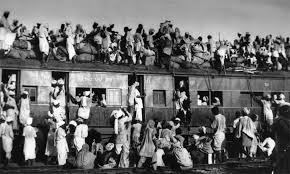
The Partition of the Indian subcontinent in 1947 is widely regarded as one of the most traumatic events in modern history. The division of British India into the independent states of India and Pakistan triggered massive communal violence, widespread displacement, and one of the largest migrations in human history. Historical narratives of Partition generally focus on the conflict between Hindus and Muslims and the political rivalry between leaders such as Jawaharlal Nehru and Muhammad Ali Jinnah. While these perspectives illuminate important political developments, they often overlook the experiences of marginalized communities, particularly Dalits. From an Ambedkarite historiographical standpoint, the Partition of India cannot be fully understood without examining how caste structures shaped both the violence and the aftermath of the event. The ideas of B. R. Ambedkar provide a critical framework for analyzing these issues. Ambedkar repeatedly argued that Indian society was fundamentally divided by caste hierarchies and that political independence without social transformation would not produce genuine equality. The experiences of Dalits during Partition illustrate the continuing power of caste in shaping social and political realities. Dalits were affected by violence, displacement, and economic loss, but their suffering remained largely invisible in mainstream narratives. In many cases, they faced not only communal violence but also discrimination within their own religious communities. Consequently, the impact of Partition on Dalits reveals the intersection of religion, caste, and power in South Asian history. This essay examines the impact of Partition on Dalits from an Ambedkarite perspective, highlighting the ways in which caste shaped displacement, political representation, and post-independence social structures. Dalits as the Invisible Victims of Partition One of the most striking features of Partition historiography is the relative absence of Dalit experiences. Historical accounts usually describe violence in terms of religious communities—Hindus, Muslims, and Sikhs—without recognizing the internal stratification within these groups. Dalits, who occupied the lowest positions in the caste hierarchy, were frequently marginalized in both historical narratives and relief efforts. Many Dalits were victims of violence during Partition, but their suffering often went unrecorded because they lacked political representation and social visibility. Unlike dominant castes, Dalit communities rarely had access to leadership networks or institutional support that could document their experiences. From an Ambedkarite perspective, this invisibility reflects a broader problem within Indian society: the tendency to treat caste inequality as secondary to other political issues. Partition therefore reinforced an existing pattern in which Dalit voices were excluded from national narratives. Displacement and Refugee Experiences Partition triggered the displacement of approximately fifteen million people across the newly created borders of India and Pakistan. Among these refugees were large numbers of Dalits, particularly in regions such as Punjab and Bengal. In eastern India, the Namasudra community—a major Dalit group in Bengal—was severely affected. Many Namasudra peasants initially remained in East Pakistan after 1947, hoping to continue their lives without migrating. However, continuing insecurity and communal tensions forced many of them to migrate to India in subsequent years. When Dalit refugees arrived in India, they often faced harsh conditions in refugee camps. Unlike many upper-caste refugees who were able to secure land or employment through social networks, Dalits frequently lacked the resources needed to rebuild their lives. As a result, many Dalit refugees were relocated to remote areas such as the Dandakaranya region, where they were expected to cultivate previously undeveloped land. These resettlement policies reflected the persistence of caste-based inequalities even within state rehabilitation programs. Double Marginalization: Religion and Caste Dalits experienced a form of double marginalization during Partition. On one hand, they were affected by communal violence directed at their religious communities. On the other hand, they continued to face caste discrimination from members of their own religious groups. In refugee camps across northern India, upper-caste refugees often maintained social distance from Dalits. Dalits were sometimes assigned menial tasks such as sanitation work and were excluded from community decision-making processes. Relief distribution and rehabilitation opportunities were also influenced by caste hierarchies. This situation demonstrates that the violence of Partition did not erase caste distinctions. Instead, caste continued to shape social relations even in the context of humanitarian crisis. Forced Conversions and Vulnerability During the chaotic violence of Partition, Dalits were particularly vulnerable to coercion and forced conversion. In several regions, competing religious groups sought to increase their numbers by converting marginalized communities. Dalits sometimes faced pressure to adopt a different religious identity in order to secure protection or access resources. Because they lacked strong political representation and social power, they were often unable to resist such pressures. These experiences highlight the precarious position of Dalits during Partition. While dominant castes could mobilize resources and networks to protect their communities, Dalits were often left to navigate the crisis with minimal support. The Political Dilemma of Dalit Leadership The political challenges faced by Dalits during Partition are illustrated by the career of Jogendra Nath Mandal, a prominent Dalit leader from Bengal. Mandal believed that an alliance between Muslims and Dalits could counterbalance the dominance of upper-caste Hindus in Indian politics. On this basis, he supported the creation of Pakistan and became the country’s first law and labour minister. However, Mandal’s expectations were soon disappointed. Reports of violence and discrimination against Dalits in Pakistan led him to resign from his position and return to India in 1950. His experience revealed the difficulty of finding a political arrangement that would genuinely protect marginalized communities. Mandal’s story illustrates the complex choices faced by Dalit leaders during the final years of colonial rule. They had to navigate between competing nationalisms while seeking to safeguard the interests of their communities. The Disruption of Dalit Political Movements Before independence, Dalit political movements had begun to develop significant momentum. Organizations representing the Depressed Classes advocated political rights, social reform, and greater representation in government. However, the upheaval of Partition disrupted many of these movements. In regions such as Bengal and Punjab, the displacement of populations weakened the social networks that sustained Dalit political activism. As a result, many Dalits who had previously engaged in organized political activity
Dalit girl death: Witnesses fear attack, seek protection
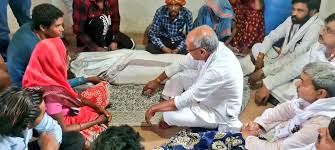
Bhopal: Day after the Supreme Court rejected the plea of MP govt and ordered a CBI investigation into the controversial death of Dalit girl, Anjana, 20, in Barodia Naunagir village of Madhya Pradesh’s Sagar district, fresh concerns emerged over the safety of witnesses. A key petitioner and brother of the deceased Dalit girl, sought police protection claiming that his elderly parents reportedly left their home for an undisclosed location. A bench of Justice M M Sundresh and Justice N K Singh on Wednesday rejected the investigation theory of the MP Police and ordered a CBI probe in the case. Vishnu Ahirwar, nephew of murdered witness Rajendra Ahirwar and a co-petitioner in the SC case, wrote to the director general of police (DGP), MP, seeking security for himself and his mother, citing threats and intimidation linked to the case. He told TOI that he requires ‘immediate security arrangements’. “Rajendra’s parents have not been seen since yesterday. I am scared too. My applications for security to DGP and other officers remain unattended” Vishnu said. The case relates to a sexual assault case filed by the survivor and her kin dating to 2019 against some influential people in the region. When the complainants refused to bow to pressure, her brother Nitin alias Lalu was assaulted on June 24, 2023 leading to his death. Rajendra Ahirwar, uncle of Nitin was a witness to the killing. Anjana and her family meanwhile moved the police including SP, IG and director general of police demanding a fair probe into the deaths and feared for their lives. The witness Rajendra Ahirwar died in a suspicious condition after an assault a year later in June 2024 while he was returning to Sagar. A day later while Anjana was accompanying the body of Rajendra she died under mysterious circumstances after falling off the hearse. Her brother Vishnu and family have since been demanding a fair probe into the deaths, alleging that influential people were behind the murders. In the application, Vishnu told the DGP that he fears for the lives of himself, his mother and other family members, alleging that they could be attacked or killed like his brother Nitin alias Lalu, his relative Rajendra Ahirwar and his sister Anjana. He requested that security be provided to him and his family and that legal action be initiated against those allegedly threatening witnesses. Courtesy : TOI Note: This news is originally published on https:/timesofindia.com/bha and is used purely for non-profit/non-commercial purposes, especially human rights
Karnataka Shocker: Dalit Youth Beaten to Death in Savalagi for Allegedly Pelting a Stone
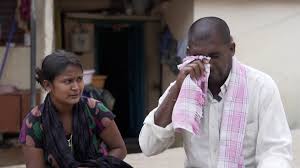
Savalagi: A shocking incident has come to light from Savalagi village in Bagalkote district’s Jamkhandi taluk. On Wednesday night, a Dalit youth was brutally beaten to death, all because he was accused of throwing a small stone during a school function. The victim has been identified as 19-year-old Sudeep Basappa Pange. Police have filed a murder case against Raju Bhimappa Mali, Vijay Ramachandra Savalagi, and Mallikarjuna Ningappa Mali. All three accused have been arrested. What Exactly Happened? The Government Kannada Girls’ School was holding its annual day celebrations, and children were performing on stage. While the villagers were watching the programme, someone from a group of youths sitting on the roof of the panchayat building threw a small pebble at the crowd below. This angered the accused. Instead of finding out who actually threw the stone, they cornered Sudeep. They started a fight with him, saying, “You threw the stone!” They then hurled casteist slurs at him, used abusive language, and beat him up mercilessly. Sudeep was seriously injured in the attack. He was immediately rushed to a hospital in Jamkhandi, but sadly, he passed away during treatment. A complaint has been registered at the Savalagi police station. Courtesy : Asianet News Note: This news is originally published on https:/asianetnews.com/bha and is used purely for non-profit/non-commercial purposes, especially human rights
Rahul Gandhi’s ‘Dalit Gambit’ in Lucknow Today! Congress Unveils Major Strategy with 15,000 Workers at Indira Gandhi Pratishthan on Kanshi Ram’s Birth Anniversary
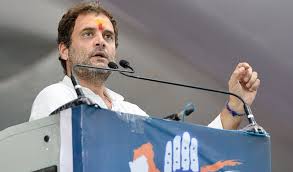
Lucknow, Amrit Vichar: With the rumblings of the upcoming assembly elections growing louder, the Congress party has initiated a concerted effort to woo the Dalit community. As part of this initiative, senior Congress leader and Leader of the Opposition in the Lok Sabha, Rahul Gandhi, will address an event organized on Friday to mark the birth anniversary of BSP founder Kanshi Ram, in a bid to bring the Dalit vote bank into the Congress fold. While the BSP asserts that it holds the primary claim to Dalit votes, leaders from the Samajwadi Party and the Bharatiya Janata Party are also actively engaged—each employing their own distinct strategies—to win over the Dalit electorate. Joining this fray, the Congress party has now also entered the arena. The birth anniversary of BSP founder Kanshi Ram falls on March 15; however, in a strategic move to gain the upper hand, the Congress has announced that it will celebrate his birth anniversary on Friday, March 13. The party is observing this occasion as ‘Social Transformation Day’ (Samajik Parivartan Diwas). The event is scheduled to take place at the Indira Gandhi Pratishthan, located in the state capital, Lucknow. Congress spokesperson Anshu Awasthi stated that Rahul Gandhi is expected to arrive in Lucknow by air at 2:00 PM on Friday. Approximately 15,000 party workers from across the state are expected to attend the event. Prominent leaders—including State In-charge and National General Secretary Avinash Pandey, State President Ajay Rai, National Chairman of the Congress Scheduled Caste Department Dr. Rajendra Pal Gautam, and Chairman of the Backward Classes Department Dr. Anil Jaihind—are slated to address the gathering. Courtesy: Hindi News
Blood Donation Ban On Gays, Transgender Persons & Sex Workers Retained After Review : Centre Tells Supreme Court
The Union Government informed the Supreme Court on Thursday that it has decided to retain the ban on blood donations by transgender persons, gay men, sex workers, after the experts revisited the earlier decision following a prodding by the Court. Additional Solicitor General of India Aishwarya Bhati informed the Court that the experts have reiterated that the ban was essential in the larger public interest. A bench comprising Chief Justice of India Surya Kant, Justice Joymalya Bagchi and Justice Vipula Pancholi was hearing a bunch of writ petitions which challenge the “Guidelines on Blood Donor Selection and Blood Donor Referral, 2017″issued by the National Blood Transfusion Council and the National Aids Control Organisation under the aegis of the Central Health Ministry. Clauses 12 and 51 of the said guidelines consider transgender persons, gay men and female sex workers as belonging to high-risk HIV/AIDS category and prohibit them from donating blood. Last year, the Court had asked the Centre to reconsider the ban. ASG Bhati stated today, “The experts have reconsidered, and there is a reconsidered opinion that, if this ban is diluted, it will be injurious to the recipients.” Senior Advocate Jayna Kothari, for the petitioners, argued that the reasoning of the committee has not been placed on record. She submitted that the decision was targeting a person merely on the grounds of sexuality and gender identity. CJI however expressed disinclination to interfere with the Centre’s decision. “Tell us one good reason that we should issue a direction. After all, there are millions and millions of poor people, who take free blood facilities. They cannot afford private hospitals. It is the poor strata of the people who are sustaining on this blood. Why this poor people should be…even if there is a one percent chance of any infection, why they should be affected?” Kothari replied that the one per cent chance of infection should not be for anybody. “The core issue is, once blood is donated by anybody, the blood donated has to be tested and then only used. In fact, after every blood donation is done, HIV testing is done. NAT testing is done,” Kothari said. Pointing out that donation and receiving of blood is voluntary, CJI said, “Whosoever wants your blood, and you are willing to donate, they will accept it.” Kothari replied, “Today, if a heterosexual married person wants to donate blood, that person is not asked a question when was your last unprotected sex. The risky behaviour is the unprotected sexual act. Not my identity. There can be a heterosexual person who may have had a risky act. Would that person’s blood not be risky?” Another counsel submitted that if NAT test is made mandatory, the risks can be addressed. CJI, terming it a “luxury litigation”, ultimately agreed to list the matter for hearing. There are 3 petitions pending before the Court, all filed by members of the LGBTQ+ community viz. Sharif D Rangnekar (author and former journalist), Thangjam Santa Singh (activist) and Harish Iyer (activist). In one of the cases (Thangjam Santa Singh), the Centre filed an affidavit in 2023 stating that there is substantial evidence to demonstrate that ‘transgender persons, men having sex with men and female sex workers are at risk for HIV, Hepatitis B or C infections’. It further claims that the determination of the population group that is to be precluded from being blood donors is prescribed by the NBTC (a body comprising medical and scientific experts) and is based on scientific evidence. The affidavit also avers that the issues raised fall within the ambit of the executive and are required to be considered from a public health perspective rather than an individual rights perspective. On the other hand, as per the petitioners, the 2017 guidelines infringe on the fundamental rights to equality, dignity, and life of members of the LGBTQ+ community as well as female sex workers. It is asserted that exclusion of the above class of persons, solely on the basis of their gender identities/ sexual orientation, is not only unreasonable but also unscientific. The petitioners aver that many countries, including the United States, United Kingdom and Canada have changed their rules to allow gay men to donate blood. The ban is based on outdated and biased views from the 1980s, following which medical technology has greatly improved, especially in blood screening, the petitioners state. In one of the petitions (Sharif D Rangnekar), a prayer has also been made for new guidelines that would allow gay men to donate blood, with some reasonable restrictions. It suggests public campaigns to inform society about risky behaviors and the updated guidelines. The petitioner also seeks changes in the syllabus of medical students in order to sensitize that gay men can donate blood. Courtesy : Live Law Note: This news is originally published on https:/livelaw.com/bha and is used purely for non-profit/non-commercial purposes, especially human rights