
2016 Una flogging case: Five convicts sentenced to five years in prison
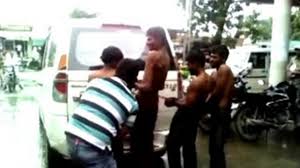
A special court on Tuesday (March 17, 2026) sentenced five convicts in the 2016 Una flogging case in which four Dalit men were thrashed when they were trying to skin the carcass of a cow to imprisonment of five years and imposed a fine of ₹ 5,000 on each of them. A day earlier, the special court in Veraval convicted five persons and acquitted 35 others in the flogging case, while the case against a policeman was abated due to his death. The trial against a juvenile is pending. Una Dalit victims to convert to Buddhism The incident, which occurred in Mota Samadhiyala village, had triggered massive protests across the country after videos of the attack went viral. On Tuesday, the court of special SC/ST atrocities cases judge JJ Pandya sentenced the five accused to a five-year jail term under the provisions of the SC/ST (Prevention of Atrocities) Act. Gujarat has history of atrocities and discrimination against Dalits Apart from a maximum jail term of five years, the court also sentenced them to three-year imprisonment under sections 323 and 324 of the Indian Penal Code, one-year imprisonment under section 342, and a jail term of two years under section 504. All the sentences will run concurrently. Defence lawyer Vijay Kumar said that four out of these five convicts have already served more than six years in jail, while another one has been in jail for the last four years and two months, and will be required to undergo the remaining jail term. The convicts are identified as Ramesh Jadhav, Rakesh Joshi, Nagji Vaniya, Pramodgiri Goswami, and Balwatgiri Goswami. while the trial against a juvenile is pending. The court had examined 260 witnesses during the course of the trial. The incident occurred at Mota Samadhiyala village near Una town of Gir-Somnath district on July 11, 2016, when four Dalit youths, as part of their traditional profession, were skinning the carcass of a cow that had died earlier in some other village. The accused, self-proclaimed cow vigilantes, flogged the youths, who were then illegally put in the lockup and thrashed by police personnel as well. It was alleged that the four Dalits were thrashed for almost 4-5 hours. Police allegedly connived with the perpetrators and forged some FIR-related documents to help them. Villagers from nearby areas had attempted to rescue the Dalit youths, but were threatened by the accused. The villagers then called the police control rooms in Gandhinagar and Ahmedabad. Courtesy : The Hindu Note: This news is originally published on https:/thehindu.com/bha and is used purely for non-profit/non-commercial purposes, especially human rights
Free bus ride for transgender persons as Delhi govt extends ‘Pink Card’ for community
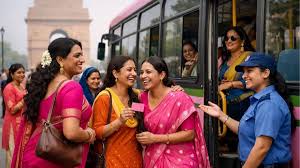
In a bid to enhance inclusiveness, the Delhi government on Monday announced that members of the transgender community living in the city will now be able to travel free of cost on all buses operated by the Delhi Transport Corporation (DTC) and the Transport Department’s cluster bus network. The decision was approved during a Cabinet meeting chaired by Chief Minister Rekha Gupta at the Delhi Secretariat on Monday. The Cabinet has cleared a proposal to include transgender passengers in the existing free bus travel scheme across all DTC and cluster bus routes. The facility will be implemented in the same manner as the free travel scheme currently available for women in Delhi’s buses, the CM says. Under the plan, eligible transgender residents of Delhi will be able to avail themselves of free travel in DTC and cluster buses. To qualify, beneficiaries must be residents of Delhi and possess a valid certificate of identity issued by the District Magistrate (DM) concerned. This certificate is issued under Sections 5 and 6 of the Transgender Persons (Protection of Rights) Act, 2019. Calling the decision an important step, the CM said the initiative aimed to make public transport more accessible, safe and respectful for the community. She notes that true inclusive governance is achieved when the government recognizes every community with dignity and ensures equal access to public services. “This initiative will help connect the transgender community more strongly with the mainstream and reduce the practical challenges they face in their daily lives,” she said. The Chief Minister expressed confidence that the initiative will make it easier for members of the transgender community to travel for employment, education, healthcare and other essential needs. At the same time, she added, the decision would also send a strong message of sensitivity and equality within society. The government will continue to promote policies and initiatives that strengthen social justice, equal opportunity and human dignity. BHow transgender persons will get the Pink CardB Under the scheme, members of the community will first need to obtain a transgender identity certificate from the District Magistrate. Once they receive this certificate, they can apply for the Pink Card at around 50 designated centres, including offices of District Magistrates, Sub-Divisional Magistrates (SDMs), and selected DTC centres. The card will be issued based on minimal documentation and will be linked to the beneficiary’s mobile number and Aadhaar. Aadhaar verification will be used to confirm the applicant’s age (above five years) and Delhi residency, ensuring eligibility and preventing duplication. After receiving the Pink Card, transgender individuals will be able to travel free of cost in DTC buses, similar to the facility available to women. The same smart card can also be used to pay fares while travelling on the Delhi Metro, RRTS and other public transport services. Courtesy : The Tribune Note: This news is originally published on https:/thetribune.com/bha and is used purely for non-profit/non-commercial purposes, especially human rights
Transgender communities across India demand withdrawal of Bill to redefine trans people
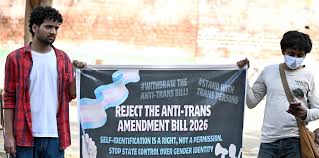
Add Your Heading Text HereThe Centre’s action led to protests and public meetings within the transgender community across cities such as New Delhi, Pune, Hyderabad and Kolkata, calling for protecting the right to self-perceived gender identity The Union government’s proposed legislation to withdraw transgender people’s right to “self-perceived gender identity” and redefine who a “transgender person” is, has led to student protests and public meetings within the transgender community across cities such as New Delhi, Pune, Hyderabad and Kolkata, calling for the government to withdraw the Bill and protect the right to self-perceived gender identity. This has come even as spontaneously formed coalitions of civil society groups, lawyers, doctors, activists, and other professionals in cities such as Guwahati, Chennai, Varanasi, Bengaluru, and several others are planning campaigns to write to MPs, organising awareness and support group meetings, and strategising over how to register their opposition to the proposed legislation. A public petition has also been initiated online, calling for the withdrawal of the Bill, gathering over 13,000 signatures as on Monday evening. Karnataka transgender coalition writes open letter to Prime Minister opposing Amendment Bill On Friday, Social Justice Minister Virendra Kumar introduced the Transgender Persons (Protection of Rights) Amendment Bill, 2026, proposing widespread amendments to the law enacted in 2019. At the Indian Women’s Press Corps in New Delhi, a similar coalition of people from the transgender community, lawyers, activists, and rights-based organisations came together for a press conference, calling the amendments “discriminatory and unjust”, arguing that the government was “snatching back” a right recognised in 2014, and that this is not “how a democracy functions”. In the 2014 NALSA judgement, the Supreme Court had laid down the law that the right to self-identification of gender fell under the ambit of personal liberty, a fundamental right guaranteed under Article 21 of the Constitution. ‘Trans rights being pushed back by a decade’: Community members oppose proposed transgender law changes Devansh, a transman who was on the panel for the coalition, said, “After a long fight, in 2014, the government gave us recognition. With that recognition, we moved ahead with our lives, took very important decisions, such as starting the process of gender-affirming surgery, and getting transgender cards made. We came out to the world that we are transgender. After 12 years and all these important decisions, you stop recognising us. Where are we supposed to go now?” Open letter to PM In Karnataka, people from the transgender community came together under the banner of the Karnataka State Gender and Sexuality Minorities Coalition for a press conference in Bengaluru. This coalition also issued an open letter to Prime Minister Narendra Modi on Monday, saying, “Passing this amendment will put in jeopardy the rights of thousands and millions of persons who are currently recognised as transgender.” They added that instead of expanding the rights of trans people, the proposed legislation “contracts it”. Grace Banu, a community leader based in Chennai, said a press conference was being held at the Chennai Press Club on Tuesday to register the community’s opposition to the proposed amendments, while community leaders in cities like Varanasi said similar strategies were being planned in their cities. Transgender activists in Guwahati also said they were currently holding discussions within the community on how to organise against this proposed legislation. Akkai Padmashali of the Karnataka coalition said, “We are also organising protests and public meetings in Bengaluru against these proposed amendments.” On Saturday, the Mumbai Queer Pride issued a statement opposing the proposed amendments, calling the shift in the government’s approach a “regressive step that undermines established constitutional protections and reverses the progress made toward inclusive citizenship”. “Reject Trans Bill 2026”, another coalition of civil society, human rights activists, lawyers, and other professionals that came up during the weekend, put out a collective statement condemning the Bill as well. Meanwhile, a Students’ Federation of India-led protest against the amendment Bill in New Delhi also submitted a memorandum to Mr. Virendra Kumar, seeking the Bill’s withdrawal. At the Delhi presser, Krishanu, a transwoman and queer activist, spoke of the Section on offences against transgender people that criminalised “compelling” children to “outwardly present a transgender identity”. She explained that such words give the impression that a transgender adult or child is not exercising consent while expressing their gender. “This then criminalises anyone who is helping them transition, or with identification, or expression,” she said. She added that the amendment Bill “misconstrues the ideas of what transgender and intersex bodies look like, by conflating them into one.” The panelists also spoke about how the amendments suggest they had to be part of gharanas and communities to be considered transgender, referring to the recognition of “socio-cultural identities as hijra, kinner, aravani, jogta, and eunuch” in the proposed definition. Ritu, a transwoman, said, “I don’t have to be part of a gharana or community to be trans. These structures were built because society had no other place for us.” Elaborating on this, Raghavi, a transwoman and a lawyer, said, “Essentially, you are saying that trans persons stay within that fold, and do not go beyond.” The panelists argued that gharanas have their own challenges, and that these communities are usually associated with transwomen, further invisiblising transmen. Fiza Sultana, a Muslim transwoman, who was among the audience, shared that a few transgender persons have started an organisation to address issues this amendment poses for Muslim and Dalit trans people. “A lot of the identities mentioned here are from Savarna Hindu cultures. Other socio-linguistic categories exist, too.” Ashna Butani,Abhinay Lakshman Courtesy : The Hindu Note: This news is originally published on https:/thehindu.com/bha and is used purely for non-profit/non-commercial purposes, especially human rights
Barbers community launches campaign against untouchability

Caption: Akhila Karnataka Sri Shivasharana Hadapad Appanna Samaj Seva Sangha has launched ‘Kshourikara Nade Dalitara Keriya Kade’ (Barbers’ move towards Dalits’ colonies) campaign to sensitise barbers not to follow untouchability while offering hair cutting services Hubballi: Repeated instances of denying hair-cutting services for Dalits are often reported. Members of the barbers’ community are helplessly following untouchability, yielding to indirect pressure from upper castes. Now, community heads and seers are launching a state-wide awareness campaign against untouchability. They are holding meetings at taluk level and explaining the legal and social aspects of untouchability. They are also warning that if someone observes untouchability, the community will not come to their help, and it requests the authorities to initiate action against such salons. Annadana Bharati Appanna Mahaswamiji, Sukshetra Hadapad Appanna Peetha, Tangadagi, said that a campaign titled ‘Kshourikara Nade Dalitara Keriya Kade’ (barbers move towards Dalit colonies) was launched recently. “We started the campaign from our mutt in Tangadagi, and two programmes—one in Karjagi, Haveri district, and another in Chikkenakoppa in Koppal district—have been held already. We first hold a meeting of the barbers’ community and sensitise them about social equality propagated by Basavanna and other Sharanas of the 12th century. Later, we hold an open programme at a Dalit colony, where we invite barbers, Dalits, upper-caste people of the village, and elected representatives of the area. We also educate barbers about legal consequences if untouchability is observed. We are getting a good response from both communities. Many people of upper castes are also joining the campaign,” he explained. He further said, “We have a plan to take up this campaign across the state, and we do it whenever possible, since we have limited resources.” Devu Hadapad, state president, Akhila Karnataka Sri Shivasharana Hadapad Appanna Samaj Seva Sangha, Bengaluru, said that barbers are facing indirect pressure and blackmail techniques from upper-caste people in rural areas. “We observe that the Dalit population is 25% while the upper caste is 75% in villages. If we offer our services to Dalits, upper-caste people deny and boycott our services, citing untouchability. This trend is forcing barbers to follow untouchability painfully. A few Barbers were victims of untouchability cases. To put an end to this menace, we launched the campaign ‘Kshourikara nade Dalitara keriya kade’ to build confidence among barbers, Dalits, and all other communities,” he stated. Krishna Hadapad from Gadag District Savita Samaj said that offering services to everyone, without seeing their social or financial status, is the tradition of Savita Samaj. “If some salons observe untouchability, we will condemn their unconstitutional move. We will invite Savita Samaj’s state functionaries to Gadag and convene a meeting with Dalit and progressive activists to build confidence between barbers and Dalits soon,” he asserted. Courtesy : TOI Note: This news is originally published on https:/timesofindia.com/bha and is used purely for non-profit/non-commercial purposes, especially human rights
‘Trans rights being pushed back by a decade’: Community members oppose proposed transgender law changes

Proposed amendments to the Transgender Persons (Protection of Rights) Act, 2019 could push transgender rights in India back by nearly a decade by diluting the principle of gender self-identification as recognised by the Supreme Court in the landmark National Legal Services Authority v. Union of India, activists have warned. The amendment, recently introduced in Parliament, proposes changes to how transgender identity is defined and recognised under the law. According to the proposal, recognition of transgender identity may require verification through official procedures, including possible medical scrutiny, before authorities issue a certificate of identity. Activists argue that this shift towards medical or administrative verification undermines the principle of self-determination laid down by the Supreme Court in the NALSA judgment. Jayanth, founder of Queer Nilayam, said several groups have begun coordinating responses to the proposed changes: “This feels like we are being pushed back by a decade. These people are already going through a lot of trauma while exploring their identity. When something like this comes up, the question many people are asking is: where will they go?” Students at the University of Hyderabad held a protest on March 14 condemning the proposed changes. They expressed concern that the creation of a government-appointed medical board to determine gender identity would amount to an invasion of privacy and could lead to increased policing of transgender bodies. Patruni Sastry, a Hyderabad-based activist who identifies as non-binary, said the proposal has created anxiety within the community. “We never ask a cisgender man or a cisgender woman to get a medical certification to prove who they are. Trans identity is not only physical. It is psychological and based on lived experiences and community acceptance. Sastry also raised concerns about the preparedness of the medical system to handle such verification processes. He asked, “How many trans-friendly clinics are there in India?” Activists have also raised concerns about the narrowing of the definition of transgender persons. Gayathri, a Hyderabad-based community member, said the proposed changes could make an already restrictive legal framework more exclusionary. Prachii Rathore, one of the first transgender doctors in the country, who served as the medical officer of Osmania General Hospital in Hyderabad, says such a process is neither scientifically sound nor ethically justified. “As a doctor, I can say that medically proving whether someone is transgender is not possible. Transgender persons are not patients and they are not suffering from a disease that can be diagnosed through tests,” she added. Siddharth Kumar Singh Courtesy : The Hindu Note: This news is originally published on https:/thehindu.com/bha and is used purely for non-profit/non-commercial purposes, especially human rights
Rahul Gandhi demands Bharat Ratna for BSP founder Kanshi Ram; writes to PM Modi

NEW DELHI: Congress MP and Leader of Opposition Rahul Gandhi on Sunday wrote a letter to Prime Minister Narendra Modi demanding that the Bharat Ratna be conferred posthumously on Bahujan Samaj Party founder Kanshi Ram. In a post on X, he wrote, “I demand that the Government of India honor the great warrior of social justice and the guiding light of Bahujan consciousness, the esteemed Shri Kanshi Ram Ji, with the Bharat Ratna. This highest national honor will be a tribute to Shri Kanshi Ram Ji and the entire movement that showed millions of Bahujans the path to rights, participation, and self-respect.” In his letter to PM Modi, Gandhi highlighted Kanshi Ram’s transformative role in Indian politics. He also pointed out that calls from Dalit intellectuals and leaders for the Bharat Ratna have been consistent and deeply felt. “Recently, I attended a programme in Lucknow where this demand was reiterated strongly by the leaders and participants present, reflecting a widespread sentiment. Conferring the Bharat Ratna on him posthumously would recognise his immense contribution to our nation. It would honour the aspirations of millions of people who continue to view him as a symbol of empowerment and hope.” Earlier Congress leader paid tribute to Kanshi Ram on his birth anniversary. In a post on X, he wrote: “On the birth anniversary of the Bahujan hero, the respected Manyavar Kanshi Ram Ji, I pay my humble respects. His tireless struggle and dedication for the rights of the poor, Dalits, and the deprived is an inspiration for all of us.” Kanshi Ram founded BSP in 1984 with the aim of uniting Scheduled Castes, Scheduled Tribes, Other Backward Classes and religious minorities into a formidable political force. He dedicated his life to the upliftment and empowerment of the marginalised and to carrying forward the ideas of Dr BR Ambedkar. BSP chief Mayawati paying tributes to the founder in a post on X wrote, “On the occasion of the birth anniversary of the founder and architect of the Bahujan Samaj Party (B.S.P.), the revered Shri Kanshi Ram Ji, I, along with my leadership, offer a hundred salutations and boundless tributes of reverence from his followers across Uttar Pradesh and the entire country.” Yesterday, Mayawati questioned the Congress over its proposal to confer the Bharat Ratna on BSP founder Kanshi Ram if it comes to power at the Centre, pointing out that the party never honoured BR Ambedkar while in power. In a post on X, she wrote: “The Congress never gave due honour to Babasaheb Dr Bhimrao Ambedkar — the messiah of Dalits and the principal architect of the Constitution — nor did they ever confer upon him the title of Bharat Ratna… How can the same party now honour Kanshi Ram,” she said in her post.” Courtesy : TOI Note: This news is originally published on https:/timesofindia.com/bha and is used purely for non-profit/non-commercial purposes, especially human rights
Cong banks on Kerala to end its long season of electoral upsets
NEW DELHI: Congress’s fortunes post-2014 have followed a familiar pattern: rout in the national elections and then a long wait for assembly wins. It was an extended barren patch of three and a half years before Congress won a state poll (Himachal) after being routed in the Pulwama-dictated 2019 Lok Sabha contest. This time, Congress is hoping that the wait – which should have ended immediately after the 2024 LS polls with wins in Haryana and then Maharashtra – will finally be over through a win in Kerala. The polls in four states and one UT are an opportunity for Congress to get back into the reckoning, which the party prematurely hoped that the creditable performance in the difficult 2024 polls would ensure. If Kerala-2026 is the essence of Congress’s stakes in the coming battles, the principal opposition party is aiming to score significant political points in Assam, TN and Bengal, given that arch-rival BJP has positioned itself as a player across the national geography. After all, in the years since the Modi-led party turned into a political juggernaut, the Rahul Gandhi-run Congress has chosen to define itself ideologically and in sole opposition to BJP – a process which has also led to greater convergence among foes within the secular camp. For once, Congress ended the longstanding dichotomy of being an ally of CPM at the national level and in Bengal, while being a rival in Kerala – which provided BJP with an easy line of attack. It decided early to go solo in Bengal. Like many of the ‘Congress vs BJP’ fields, Assam has turned barren for the former with back-to-back defeats. Communal polarisation, marginalisation via defections and Assam-specific delimitation have made its political task a challenge. Congress belatedly plumped for Gaurav Gogoi, a young face with socio-political pedigree, as its flag-bearer. By all indications, Congress is hoping for a respectable performance that can debunk the growing perception of Assam becoming a one-party turf and keep the party alive in the state. After an unexpected public squabbling with DMK, Congress settled for a minor seat share for the polls. Given that BJP has inserted itself in the AIADMK-led bloc, and speculations are rife that TVK of Tamil superstar, Vijay, can be “influenced” by BJP after elections, Congress is eager that DMK sails through. The post-Jayalalithaa landscape in the state has proved easier for DMK, as witnessed in the 2024 LS polls, but TVK’s emergence and the prospect of a three-way split of votes have created uncertainty. Reduced to less than a fringe player in Mamata Banerjee’s fief, Bengal Congress is moving with a two-fold target in its solo run. The party believes it cannot go below 2021’s pathetic result of zero seats and 3% votes. AICC state in-charge Ghulam Ahmad Mir said the party’s vote share should move upwards of 15%. Courtesy : TOI Note: This news is originally published on https:/timesofindia.com/bha and is used purely for non-profit/non-commercial purposes, especially human rights
Under fire for no-show, Rahul plans four rallies by month-end
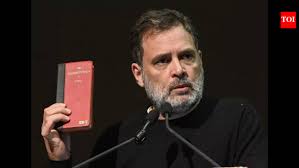
Chennai: Amid criticism from opposition parties over Rahul Gandhi not holding any campaign visits to Tamil Nadu even after the completion of seat-sharing talks, Tamil Nadu Congress Committee said the Congress leader would tour the state later this month and address four rallies in different parts of the state. As per the tentative plan, Rahul would address the campaign meetings over a period of two to three days. The exact dates and venue would be announced once the plan is finalised, said TNCC president K Selvaperunthagai. Opposition parties, however, questioned the delay. BJP state vice-president N Jayaprakash said Prime Minister Narendra Modi visited Tamil Nadu three times this year so far. “The prime minister visits the state frequently because he is concerned about the welfare of Tamil people,” he said, asking why Gandhi visited Kerala and Telangana but chose not to visit TN. BJP leader Vinoj P Selvam said the only time Rahul came to Tamil Nadu this year was to visit a school in Gudalur, close to his Wayanad constituency. AIADMK functionaries alleged that Rahul’s absence from campaign activity was a sign of friction in DMK–Congress alliance. “Forget campaigning, Rahul did not even post a congratulatory message on the finalising of seat-sharing talks,” he said. Though Congress was demanding 35 seats and a share in power, DMK turned down both demands, leaving the Congress to settle for 28 seats. During the campaign for the 2021 assembly election in the state, Rahul had made multiple visits to the state, including a three-day tour in Jan during which he held roadshows and addressed public meetings. Selvaperunthagai denied the charges, attributing the delay in Rahul’s visit to the standard operating procedures (SOP) governing political meetings in the state. Under the existing rules, applications for major rallies by parties have to be submitted two to four weeks in advance, he said. Courtesy : TOI Note: This news is originally published on https:/timesofindia.com/bha and is used purely for non-profit/non-commercial purposes, especially human rights
Congress MLA’s PA arrested for cheating dalit woman in Bhupalpally

Chityal police arrested and remanded the personal assistant of Bhupalpally MLA Gandra Satyanarayana Rao for allegedly cheating a Dalit woman by promising marriage. The accused was also booked under provisions of the SC/ST (Prevention of Atrocities) Act Bhupalpally: Chityal Police in the district arrested and remanded Gandra Satyanarayana Rao’s personal assistant, Ch Srinivas, for allegedly cheating a Dalit woman. Srinivas was accused of physically exploiting the woman, promising to marry her while making arrangements to marry another woman. When the Dalit woman confronted him about the matter, he verbally abused her using her caste identity. When a panchayat was held in the presence of family elders, he refused to marry the Dalit woman. Based on a complaint by her parents, Srinivas was booked under the provisions of the Scheduled Castes and Scheduled Tribes (Prevention of Atrocities) Act besides Sections 69 (false promise of marriage), 296(b) (uttering obscene words) and 351(2) (criminal intimidation), informed CI Mallesh Yadav. Courtesy : Telangana Today Note: This news is originally published on https:/telanganatoday.com/bha and is used purely for non-profit/non-commercial purposes, especially human rights
Mayawati Lashes Out at Rahul Gandhi: Asks—How Can the Very Congress Against Which the BSP Was Formed Now Propose to Award Kanshi Ram the Bharat Ratna?

BSP Supremo Mayawati has lashed out at Congress leader Rahul Gandhi. Speaking on Saturday, she stated: “The very Congress—whose anti-Dalit mindset led to the formation of the BSP, and which failed to declare a period of national mourning upon Kanshi Ram’s passing—is now talking about awarding him the Bharat Ratna. Therefore, one must remain vigilant against the Congress.” Notably, on Friday, the Congress party organized an event in Lucknow to mark Kanshi Ram’s birth anniversary—a first for the party. During the event, a resolution was passed demanding that Kanshi Ram be conferred with the Bharat Ratna. It was decided that this demand would be raised in Parliament through Rahul Gandhi. Speaking at the event, Rahul Gandhi remarked: “Kanshi Ram advocated for equality within society. Had Jawaharlal Nehru been alive today, Kanshi Ram would have served as a Congress Chief Minister. However, the BJP has now divided society into two segments: the ’15 percent’ and the ’85 percent.’ Only the 15 percent are reaping the benefits, while the remaining 50 percent have been marginalized and isolated.” Key Points Raised by Mayawati… 1. The Congress Never Honored Babasaheb:** Writing on ‘X’ (formerly Twitter), Mayawati stated: “It is a well-known fact that the Congress party held power at the Centre for a prolonged period; yet, it never accorded due respect to the ‘Messiah of Dalits’ and the ‘Architect of the Indian Constitution,’ Babasaheb Dr. Bhimrao Ambedkar. Nor did it ever confer upon him the Bharat Ratna. Given this history, the pertinent question arises: How can the very same Congress party now propose to award the Bharat Ratna to Kanshi Ram?” 2. Congress Failed to Declare National Mourning Upon Kanshi Ram’s Demise:** The former Chief Minister observed: “Upon Kanshi Ram’s passing, the Congress government failed to declare even a single day of national mourning. At that time, the Samajwadi Party (SP) was in power in Uttar Pradesh, and it, too, failed to declare any state mourning. Similarly, numerous Dalit organizations and political parties—formed under the influence of other political factions—have consistently sought to merely exploit his name for their own political gain.” 3. Parties Employing Tactics to Weaken the BSP: Mayawati stated, “Today, various parties are engaged in weakening the BSP by employing a multitude of tactics. Therefore, our followers and supporters need to remain vigilant.” 4. Need to Be Wary of the Congress Party: The BSP Supremo remarked, “We need to be wary of the Congress party, as it was precisely due to its anti-Dalit mindset that the BSP had to be formed. I appeal to our party workers to ensure the success of the programs organized on March 15, 2026—the birth anniversary of Kanshi Ram—across the entire country, including Uttar Pradesh.” Mayawati also issued a press release. Here is what she said: The BSP Supremo stated, “Kanshi Ram carried forward the ideals of Dr. Bhimrao Ambedkar. By organizing the Dalit community, he empowered them politically. Today, the Congress and the SP are invoking Kanshi Ram’s memory solely for their own political gain. This is sheer opportunism.” “The reality is that casteist thinking and the politics of discrimination persist to this day. The reservation norms established for Dalits and Backward Classes are being diluted. Consequently, the system of exploitation is being further entrenched. In such a scenario, the crucial question remains: how can the Bahujan Samaj place its trust in these parties and their leaders?” “Therefore, listen to what everyone has to say, but under no circumstances allow your unity—and the power of your vote—to fall into the hands of self-serving leaders. This would be the truest tribute to the struggles of Baba Saheb and Kanshi Ram.” At JNU, Prof. Vivek Kumar observed that the Congress party remained in power in this country for over 70 years, yet during that entire period, it never once thought of the Dalits. Now that they have been ousted from power, they are merely feigning respect for prominent Dalit icons. “Why did the Congress never promote a Dalit leader to a prominent position within the party? Why was Dr. Ambedkar compelled to leave the Congress? Ultimately, why did the condition of Dalits fail to improve during their rule? Why did Kanshi Ram find it necessary to form a separate political party specifically for Dalits?” “Furthermore, in the states where the Congress currently holds power, why are they not appointing Dalits to key, high-ranking administrative positions?” The truth is that, for them, Dalits are merely a vote bank. The Congress party may use Dalits as a stepping stone to ascend to power, but it will never seat them upon the throne of power itself. **Understanding the Power of Dalit Voters in UP** Dalits constitute 21% of the electorate in Uttar Pradesh. Out of the state’s 403 Legislative Assembly seats, 84 are reserved for Scheduled Castes (SCs). Furthermore, there are 40 to 50 additional seats where Dalits make up between 20% and 30% of the voting population. In essence, Dalits hold a decisive influence over 130 seats across the state. In the 2022 Assembly elections, the BJP and its allies secured victory in 63 of the 84 reserved seats. In contrast, the Samajwadi Party (SP) achieved success in 20 seats, while one seat went to Raja Bhaiya’s party, the Jansatta Dal Loktantrik. In Lucknow, Rahul Gandhi spoke for 35 minutes in an effort to woo the Dalit vote. The occasion was the birth anniversary of Kanshi Ram; however, the Modi government was the primary target of Rahul’s address. Speaking before the Dalit audience, Rahul invoked the name of Narendra Modi far more frequently than that of Kanshi Ram. He asserted, “Narendra Modi does not subscribe to the ideology enshrined in the country’s Constitution. Go to Apollo Hospital sometime and look at the doctors’ nameplates; nowhere will you find the 85% [Dalits and Backward Classes] represented. You will not find Dalits or members of Backward Classes among the CEOs of major corporations.” Courtesy: Hindi News