
A Decade After Una’s Shame, Justice Is Served But Its Taste Turns Bitter As Convicts Walk Free On Time Served
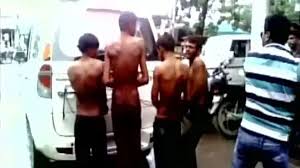
Ten years after the shocking 2016 Una flogging of Dalit youths in Mota Samadhiyala, Gujarat, the Veraval Sessions Court convicted five men. Each received five years under the Atrocities Act, with additional IPC sentences. However, concurrent sentencing and time served mean they are likely to be released soon, sparking debate over justice and accountability for caste-based violence. A decade after the shocking public flogging of Dalit youths in Gujarat’s Una sent shockwaves across the nation, a local court has finally delivered its verdict—closing a painful chapter, but opening fresh debate on justice and accountability. | Veraval: A decade after the shocking public flogging of Dalit youths in Gujarat’s Una sent shockwaves across the nation, a local court has finally delivered its verdict—closing a painful chapter, but opening fresh debate on justice and accountability. Five Convicted in Landmark Case The Veraval Sessions Court in Gir Somnath on Monday convicted five men for their role in the brutal 2016 assault that saw Dalit youths stripped and beaten in public in Mota Samadhiyala village. The incident, widely referred to as the Una flogging case, had become a flashpoint for Dalit rights movements across India. Pronouncing a detailed 340-page judgment, Sessions Judge Pandya held the accused—Ramesh Jadav, Rakesh Joshi, Pramod Goswami, Nagji Daya and Balwant Goswami—guilty of a premeditated attack and acts of torture. Five-Year Term Under Atrocities Act The court sentenced all five convicts to five years’ imprisonment under the Scheduled Castes and Scheduled Tribes (Prevention of Atrocities) Act. Additional sentences include three years under IPC Sections 523 and 524, and two years under Sections 342 and 504, along with a fine of ₹5,000 each. However, in a twist that has triggered mixed reactions, the court ordered that all sentences run concurrently. As the convicts have already spent over six years in jail during trial, they are deemed to have completed their sentence—effectively clearing the way for their release after due legal procedures. “This verdict is historic in terms of conviction, but the effective release of the accused raises serious questions,” said a social activist familiar with the case. “For the victims, justice feels incomplete.” The Incident That Shook the Nation The 2016 incident had drawn nationwide outrage after videos surfaced showing Dalit youths being tied to a vehicle, stripped and flogged for allegedly skinning a dead cow—an act they said was part of their traditional occupation. The case had become a symbol of caste-based violence and triggered widespread protests, including a massive Dalit uprising across Gujarat. Legal experts noted that while the conviction under the Atrocities Act is significant, the concurrent sentencing structure has diluted the punitive impact. “It underscores the gap between legal justice and societal expectations,” one lawyer commented. Security was tightened in and around the court premises and sensitive areas of the district to prevent any law and order issues following the verdict. Authorities remained on alert amid concerns over potential unrest. For the victims and their families, the judgment brings closure—but not necessarily solace. “We waited ten years for this day,” a relative of one victim said. “But seeing the accused walk free so soon is painful.” Courtesy : TFPJ Note: This news is originally published on https:/thefreepressjournal.com/bha and is used purely for non-profit/non-commercial purposes, especially human rights
‘Anti-Ambedkar’ BJP used money power, deployed ‘agent RO’ to defeat dalit activist in Haryana Rajya Sabha: Congress
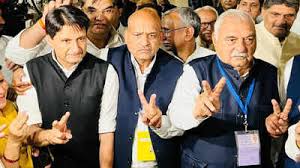
NEW DELHI: Congress on Tuesday said the governing BJP employed “money power, threats and misuse of returning officer” to win the Haryana Rajya Sabha election at any cost, as it slammed the rival for again “exposing its anti-Ambedkar character” by trying to steal the parliament membership of grassroots Dalit activist Karamvir Boudh. After scraping a victory in the Haryana RS polls, despite cross voting by five Congress MLAs and four of its votes declared invalid, Congress MP Deepender Hooda said BJP had appointed Gujarat deputy CM as the observer for the polls which showed that the BJP leadership wanted to win the election irrespective of the tactic used. “BJP tried to murder democracy in the dark of night. All the four votes declared as invalid were completely valid. They had even been put in the tray of valid votes by an official. But this was done by a blatantly partisan RO (returning officer) to contrive the numbers in favour of BJP,” he told a press conference with Congress’s scheduled castes department chairman Rajendra Pal Gautam. Deepender said Congress will take strong action against the MLAs who cross voted and betrayed the party, adding that people will not forgive the legislators who betrayed their mandate. He said BJP wanted to engineer cross-voting by nine or seven Congress legislators while securing two votes of INLD. He said INLD, “which is B-team of BJP”, declared its decision to abstain from polling barely half an hour before the voting ended, because it was sure that Congress was winning the election. He said when BJP’s “game of pressure and money” failed, BJP employed its third strategy of fixing the play through RO. “RO worked as a BJP agent,” he added. Courtesy : TOI Note: This news is originally published on https:/timesofindia.com/bha and is used purely for non-profit/non-commercial purposes, especially human rights
Una Dalit flogging case: 5 sent to 5 years in jail; 35 acquitted

All five convicted individuals, who are currently out on bail, have already spent over five years in jail, meaning they may not have to serve the sentence. Ahmedabad: A special court on Tuesday sentenced five individuals to five years in prison and imposed a fine of Rs 5,000 each in the Una Dalit flogging case, a day after finding them guilty even as it acquitted 35 other suspects All five convicted individuals, who are currently out on bail, have already spent over five years in jail, meaning they may not have to serve the sentence. The court of additional sessions judge Jignesh Pandya pronounced the quantum of sentence after finding them guilty under the charges of voluntarily causing hurt using dangerous weapons (IPC 324), wrongful confinement (IPC 342) and intentional insult with intent to provoke a breach of the peace (IPC 504) and charges under section of the scheduled castes and scheduled tribes (prevention) act. Those who have been sentenced are Ramesh Jadav, Rakesh Joshi, Pramod Giri Goswami, Nagji Daya, and Balwant Goswami. The court didn’t find evidence to prosecute them under charges of attempt to murder, unlawful assembly and conspiracy, the stringent sections which have provision of life sentence. They were beaten up for skinning a dead cow. Vasram, Ramesh, Ashok and Becher were caught by the accused and were paraded in public while they were tied to an SUV. Investigation revealed that the family was skinning a dead cow, which had been killed by an Asiatic lioness. The court found that the prosecution failed to prove the charges with sufficient evidence. The order states that nothing came on record to show that the cow was actually killed by the lioness, as there was no detail of any compensation given to the owner of the cow. Meanwhile, Vasram Sarvaiya told DH that they were “sad” with the judgment. He said that “the fight would continue as he will challenge the judgment.” Similarly, Dalit leader and Congress MLA Jignesh Mevani also expressed “shock” over the judgment. Noting that the provision for awarding compensation lies with the district magistrate, the court has directed the District Legal Service Authority to provide free copies of Mahatma Gandhi’s book, My Experiment with Truth, to the victims to “support their mental well-being and help them endure the wrongs they have faced within the limits of the law.” The judge further stated that a similar directive could have been issued for the accused persons also, but there is no provision in the law to do so. The court directed the government to look into cow slaughter offences thoroughly. Courtesy : DH Note: This news is originally published on https:/deccanherald.com/bha and is used purely for non-profit/non-commercial purposes, especially human rights
UP’s caste cauldron simmers as parties vie for Dalit vote pie
Lucknow: With state assembly elections round the corner, Dalit politics is back in reckoning. The remarks made by Congress MP and the leader of the opposition Rahul Gandhi on Kanshi Ram during an event to mark the Dalit leader’s birth anniversary drew a sharp response from BSP president Mayawati. Rahul said that had the Congress party not made mistakes, BSP founder Kanshi Ram would not have become a Dalit messiah. “Had Jawaharlal Nehru been alive, he would have made Kanshi Ram a chief minister from the Congress,” he said. Reacting to the statement, Mayawati said in a social media post that when Congress did not respect BR Ambedkar and did not mourn the death of Kanshi Ram even for a day, even though he was in the govt at the Centre, how could one expect the Congress to honour Dalits. “It was the anti-Dalit policies of the Congress which forced late Kanshi Ram to establish BSP,” she said. Later, Rahul Gandhi wrote to the PM seeking Bharat Ratna for Kanshi Ram. A similar demand was made by Samajwadi Party president Akhilesh Yadav earlier. The BSP chief did not spare Akhilesh too and said that even the then Samajwadi Party govt did not announce mourning for even a day when Kanshi Ram passed away. According to political observers, more than honouring Kanshi Ram, parties are vying for Dalit votes as assembly election is scheduled early next year. They believe that be the sense of insecurity surrounding BSP chief Mayawati, or the BJP’s aggressive Hindutva plank, the BSP’s march has slowed down, and the party is losing its grip on Dalit voters, including Jatavs. The opposition, however, has been claiming that Mayawati acts under the pressure of the BJP. The BSP could get only 9.88% vote share in the 2024 Lok Sabha elections and had lost all the seats in UP. It won 10 Lok Sabha seats in the 2019 polls with a vote share of over 19%. With BSP’s gradual downfall, the Congress, the Samajwadi Party, and the BJP are seeing it as an opportunity. More so when the poor performance by the BSP and the BJP resulted in the Congress-SP alliance winning 43 seats (37 by SP, the biggest win since the party was born, and 6 by Congress). The result boosted the morale of the SP-Congress combine. With elections due next year, both the parties are separately trying to prove themselves as the genuine claimant of Dalit votes. According to political observers, the reason is obvious. Even though the result has been in favour of the Congress-SP alliance, there has been a debate if the slight shift in Dalit votes towards the alliance was because of the Congress or the Samajwadi Party. Both the parties continue to take credit for the shift. Be it the Congress or the SP, whichever party proves its worth before the Dalits, it will be in a better position to negotiate on seats if they both decide to contest assembly elections hand in hand. Dalits are about 21% in Uttar Pradesh. Staking a claim on such a big chunk will be advantageous in the assembly polls. Wary of the Congress and SP tactics, Mayawati is leaving no chance to scuttle their moves by coming up with counterclaims. Just like Congress, which is struggling for its revival in UP since 1989, the BSP is also striving to make a comeback. BSP is also trying hard to attract the youth. While the older generation continues to be loyal to the BSP, young voters are seeing hope in Azad Party chief Chandrashekhar Azad. It is for this reason that Mayawati has presented her nephew Akash Anand as her alternative. However, Mayawati’s “blow hot and cold policy” towards Akash has failed to mobilise youths as expected. Even as the SP, Congress and the BSP try to prove themselves as the right party for Dalits, the BJP’s concern is to keep intact non-Jatav Dalits in party fold and ensure that Jatavs don’t shift towards the Congress or SP. The BJP is better placed if Jatavs remain loyal to the BSP as this will only allow Mayawati to win a few seats. However, if Jatavs shift towards Congress-SP alliance, the combination of Muslims and Jatavs could become lethal for the BJP, especially in west UP. Caste politics once again expected to take centrestage in the assembly polls. Courtesy : TOI Note: This news is originally published on https:/timesofindia.com/bha and is used purely for non-profit/non-commercial purposes, especially human rights
Murder triggers protests by Dalit community in city
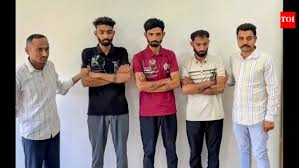
Rajkot: The murder of 32-year-old Bhavesh Vanvi led to a tense law and order situation in the city on Monday night, as members of the Dalit community protested outside Civil Hospital. Bhavesh Vanvi was allegedly kidnapped in a car near Dream City in the Raiyadhar area on Sunday night and was later dumped near Sheetal Park. He was rushed to Civil Hospital in a critical condition and died in the early hours of Monday. News of his death led to large protests, with members of the Dalit community gathering at the hospital and refusing to accept the body for last rites. Demonstrators blocked the hospital square, raised slogans and demanded the immediate arrest of those responsible. Police intervened to control the situation and detained 20 individuals, including some community leaders, for rioting and obstructing public servants. A case was registered at A Division police station. During the protest, assistant sub-inspector Sanjay Dafda of Rajkot city crime branch was allegedly pushed and assaulted while on duty, prompting another complaint. Meanwhile, police arrested three persons — Ravi Jogarana (33), Sagar Jogarana (26) and Gopal Jogarana (22) — for their alleged role in the murder. According to investigating officer Chintan Patel, the prime accused, Hamir Jogarana, remains absconding, along with others identified as Dev Karan, Vikram and Bhuro. The preliminary inquiry suggests the crime stemmed from a personal dispute. Police said Vanvi was in a relationship with a woman and tensions escalated after he allegedly discovered her communication with the prime accused, Hamir, on Instagram. The dispute had led to prior complaints from both sides. Police sources said Hamir had earlier filed an application alleging that Vanvi, the woman and others were trying to blackmail him with threats of filing false cases for molestation and rape. Both the deceased and prime accused have criminal records. Vanvi was earlier booked in cases related to prohibition, assault and rioting, while Hamir has a previous case under the Arms Act. Police said efforts are underway to apprehend the absconding accused and maintain law and order in the area. Courtesy : TOI Note: This news is originally published on https:/timesofindia.com/bha and is used purely for non-profit/non-commercial purposes, especially human rights
The dangerous logic of the Transgender Persons Amendment Bill 2026
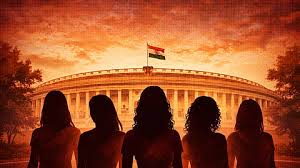
Considering these multitudes of historical contexts, the current Amendment Bill, if incorporated into an Act, will prove detrimental and disastrous to the quality of life, housing, healthcare, and employment of thousands of transgender people. In 2014, the Supreme Court of India ruled in favour of the transgender community in NALSA vs. Union of India, the landmark judgment which granted official recognition to all the citizens of the country who identified out of their assigned sex at birth, to lead dignified lives under the gender marker of their choice: transgender, female, or male. In retrospect, this was the most and only dignified recognition the community ever received in this country, because what followed later was no less than a nightmare. Soon after, without consulting the transgender community, Transgender Persons (Protection of Rights) Bill 2016 was introduced, which was met with nationwide protests. Then an amended version of the same Bill was presented and later passed as an Act in 2019. This, after further community interference, was followed by the Transgender Persons (Protection of Rights) Rules in 2020. As the rules were drafted in consultation with the community, they preserved the SC granted right to self-identify, which, after a decade, has now come under attack by the so-called “protective” Amendment Bill of 2026. The current set of amendments, while appearing “ambitious” to eradicate “unauthentic” or “fake transgenders,” is attempting to formalise categories that didn’t come into existence as a result of a systemic nomenclature. Rather, all these communities in their regions came into being as a result of the rejection of transgender individuals by their natal families and subsequent ostracisation from the rest of society. On the surface, it may look like the transgender community, once segregated under the Criminal Tribes Act of 1817 under the British Raj, especially the Hijras, Kwajasiras, and Kinnars, is being promised a restoration of their “glorious past.” But in reality, this Amendment Bill betrays them in its criminalisation clauses. The Bill, in vague language, penalises “coercion into sex change”, which, if found guilty, is to be met with life imprisonment and Rs 1.2 lakh fine. This clause can be easily misinterpreted and even weaponised — by natal family members who reject their wards’ gender identity and decision to transition or join a Hijra Gharana — against the very same members whom the Bill claims to protect. So even the Hijras are not guaranteed absolute immunity; rather, what awaits them would be life imprisonment in a country where corrective facilities still lack transgender cells. This Bill limits access to the “Transgender” marker on official documents, and to associated policies and social benefits to members of North-Indian socio-ethnic transgender communities like the Hijras and Kinnars. Alongside the self-proclaimed protection of socio-ethnic trans groups, the Bill also forces intersex individuals into the “Transgender” category, even those who do not wish to be identified as transgender or prefer to be known as a male or female. The inclusion of just two other regional communities, Aravanis and Jogta, is, at best, a performative failure. There is no provision for an exhaustive schedule for all the regional communities, such as Thirunangai, Thirunambi, Thirunar, etc., from Tamil Nadu, or the Nupi Maanbis of Manipur. There is also consideration for southern states like Keralam, where transgender individuals are at risk of a lexically induced social erasure as a result of this Bill, because identitarian labels are absent in their native language, Malayalam, making them rely on English equivalent labels to be seen as members of the society. This Bill can lead to a translational and linguistic catastrophe, as it rests state validation on the backs of select community labels, largely founded in Hindi/Sanskrit-majoritarianism. Moreover, for the transgender community in the Southern States of India, this is concerning on an additional note of the 2026 Delimitation, as it puts their stakes in state-gender representation nexus in the Rajya Sabha at a double-fold risk. So the power we have now to oppose the Bill might not be there after it is incorporated into the Act. There is also a lesser-known community awareness that sometimes former members of the Gharana system, after experiencing power struggles and casteism, often escape the violent, unequal structure just as they escaped their natal family violence, and they all exist in our country as non-hijra transpeople, which this bill refuses to shelter. Then there are transmen and non-binary citizens who don’t have a historically recognised, socio-cultural representation, yet they survive the same natal violence, which is well documented in “Apnon ka Bohot Lagta Hai: Our Own Hurt Us the Most,” as testimonials from an open court hearing held in 2023. The “think tanks” (if any were involved) could have deduced the amendment’s dangerous impact from the first 20 pages of this report. Furthermore, neither the members of the National Transgender Welfare Board nor their state-level committees were consulted before drafting the Bill, which is evident in its regressive stance. This Bill clearly directs towards a monopoly of religious, regional, and gender biases in legislative, policy-making, and political decisions — all of which are unconstitutional. Considering these multitudes of historical contexts, the current Amendment Bill, if incorporated into an Act, will prove detrimental and disastrous to the quality of life, housing, healthcare, and employment of thousands of transgender people. Transgender is an umbrella term; let’s not break its spine, and let decades of hard work, care, and resilience wash down the drain. Finally, following lazy American and British anti-trans scripts should be recognised, shamed, and retaliated against with awareness, pride, and freedom. In a country whose freedom was fought for, let the transgender people be free of colonial aftertaste, live as they choose to live, love, and be. Written by:Anasuith P Pridhvish Anasuith is a Sahitya Akademi-published Scholar of Language and Gender, and works as an Associate Education Consultant in New Delhi. She graduated from Ashoka University with a PG Diploma in Liberal Studies and an MA in English, and writes on transgender experience, the partition, and translation. Views expressed are the
Hyderabad: Activists condemn Transgender Persons Amendment Bill 2026
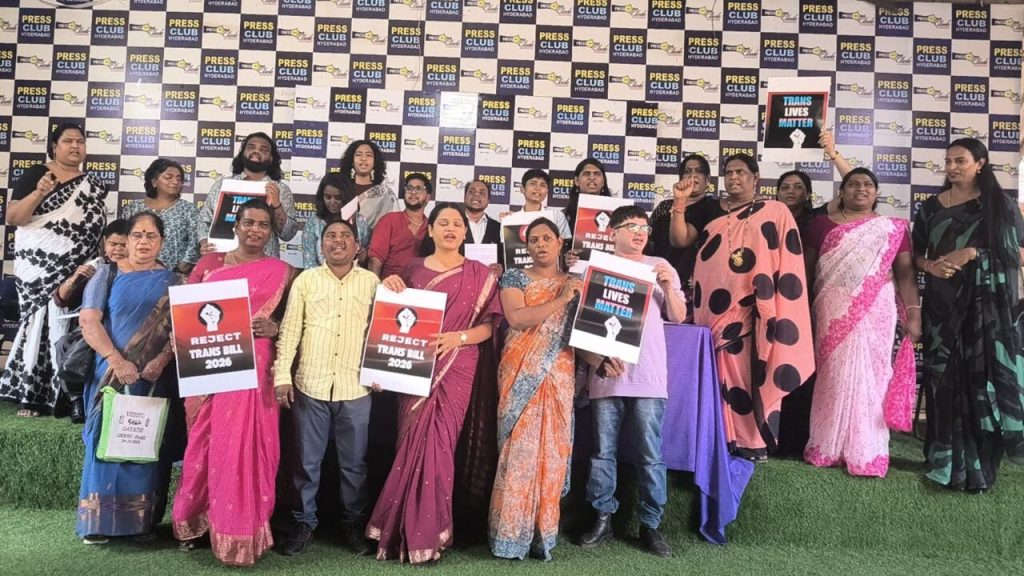
They also pointed out the “alarming” criminal provision in the bill under Section 18 that allows imprisonment of up to five years for “alluring” or “forcing” someone to become transgender. Hyderabad: Transgender, intersex, gender nonconforming, queer individuals, collectives, and allies in Hyderabad formally opposed and condemned the Transgender Persons (Protection of Rights) Amendment Bill, 2026, that was introduced in the Lok Sabha on March 13 by Union Minister for Social Justice and Empowerment Dr. Virendra Kumar. The Hyderabad community of activists called on lawmakers to withdraw the Transgender Persons (Protection of Rights) Amendment Bill, 2026 immediately and “without condition”. “Any future amendment must retain the definition of “transgender person” as established in the 2019 Act, uphold the right to self-identification as affirmed by NALSA (2014) vs Union of India, and K. S. Puttaswamy (Retd) and Anr. vs Union of India (2017) judgements, and be developed only through meaningful, democratic consultation with transgender communities across India,” they said. At a press confere in Hyderabad on Tuesday, MArch 17, the community said that the bill threatens to undo over a decade of hard-won legal protections. Stating that it is a step backwards for constitutional rights, transgender, intersex, gender nonconforming, and queer communities in Hyderabad unequivocally stated that it erases entire identities, mandates invasive medical procedures, criminalises community support networks, and creates a two-tier citizenship where legal existence depends on access to surgery. “It is not a reform. It is a reversal of the Supreme Court’s NALSA judgment, of the 2019 Act, and of decades of hard-won constitutional protections. The amendment proposes to replace self-identification with mandatory medical certification by a government-appointed District Medical Officer, with no defined criteria, no transparency, and no accountability. Medically, there is no biological marker that confirms or denies transgender identity,” said a statement from the activists. Community members and activists said that the current bill also introduces a provision under which a person undergoing gender-affirming surgery has to report it to the District Magistrate, which violates the constitutionally provided fundamental right of privacy. “Forcing individuals through physical examinations to “prove” their gender is not only scientifically baseless but also deeply traumatic and unconstitutional,” added the statement. They pointed out that the bill is “particularly” alarming because it erases entirely the identities of people, and restricts the definition of “transgender person” to a narrow set of socio-cultural identities and intersex variations. Activists added that the bill excludes trans men, trans women who are not part of socio-cultural communities, non-binary individuals, genderqueer people, and gender-diverse persons across India. At the press briefing, activists also said that trans men will be “rendered entirely invisible as they will have no socio-cultural framework recognised by the bill. “They face deep marginalisation already because they are assigned female at birth and carry the burden of presenting as a woman compulsorily and cannot safely come out in many contexts. This bill worsens each of those realities,” added their statement. The bill gives offers legal recognition only via medical intervention, which forces individuals toward surgeries they may not want, cannot access, or are medically unable to undergo, said the activists. ‘Criminalisation Is Not Protection’ The activists from Hyderabad also pointed out an alarming criminal provision in the Transgender Persons Amendment Bill 2026, under Section 18 that allows imprisonment of up to five years for “alluring” or “forcing” someone to become transgender. “There is no credible evidence that such conduct exists as a social pattern. What does exist and what this provision threatens is the vast community support network that transgender persons rely on: fundraisers, temporary housing, help escaping abusive households, access to therapy, and gender-affirming healthcare,” they stated. The statement said that providers of gender-affirming care, supportive parents, and community members who have historically protected and nurtured transgender individuals now face the risk of criminalisation. “This echoes the legacy of colonial-era laws such as the Criminal Tribes Act of 1871 and the Telangana Eunuchs Act of 1919 which are laws that treated gender-diverse communities as inherently devious and criminal,” it added. Yunus Lasania Courtesy : TSD Note: This news is originally published on https:/thesiasatdaily.com/bha and is used purely for non-profit/non-commercial purposes, especially human rights
‘Rahul Gandhi must apologise to the nation’: 204 retired officers, Army veterans and advocates slam LOP in open letter on Parliament conduct
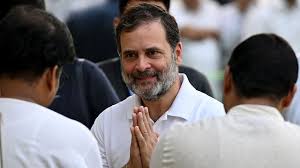
In an open letter addressed to citizens on Tuesday, 204 retired officers, including veterans of the Armed Forces, former bureaucrats, and senior advocates, expressed serious concerns over the conduct of Leader of the Opposition Rahul Gandhi and other Opposition MPs during a protest on March 12 within Parliament premises. The signatories argued in the letter that the dignity of Parliament was “an essential element of the constitutional ethos” and that Members must uphold the highest standards of propriety and respect within all areas of the parliamentary precincts, including stairs, corridors, and lobbies. According to the letter, the events of March 12 were “deeply concerning.” The retired officers said that despite explicit instructions from the Speaker prohibiting demonstrations or protests within Parliament, Rahul Gandhi and several other MPs defied the directive. They described this as “a conscious disregard for parliamentary authority” and accused the Opposition of placing “personal political theatrics above the dignity of a constitutional institution.” They noted that Rahul Gandhi and other MPs were observed “sitting on the steps of Parliament having tea and biscuits in a manner that was wholly unbecoming of members of the nation’s highest legislative body.” The retired officers asserted that the steps of Parliament were “not a venue for spectacle or political theatre” and said such behaviour showed “arrogance and entitlement” as well as a lack of respect for Parliament. The signatories further contended that Rahul Gandhi had contributed to “lowering the level of public discourse and decorum” through repeated theatrics, suggesting a pattern of conduct motivated by “a sense of personal privilege” rather than respect for democratic institutions. They added that such actions disrupted parliamentary proceedings and wasted “valuable public time and resources,” further stating that “Shri Rahul Gandhi must apologise to the nation for this behaviour and introspect on the attitude that produced it.” The retired officers warned that the Leader of the Opposition’s conduct risked “damaging the reputation of our country and our democracy” and urged him to uphold the solemnity and authority of Parliament. Highlighting the symbolic importance of Members’ conduct, the letter warned that the behaviour of the Leader of the Opposition risked “damaging the reputation of our country and our democracy.” The retired officers urged Rahul Gandhi to apologise to the nation and reflect on his actions to ensure that “the solemnity, authority and institutional sanctity of Parliament remain fully preserved.” The letter concluded with a call from the retired officers to preserve and strengthen India’s democratic institutions, emphasizing that the “temple of democracy” must n Courtesy : TOI Note: This news is originally published on https:/timesofindia.com/bha and is used purely for non-profit/non-commercial purposes, especially human rights
Retired officials demand Rahul Gandhi’s apology over Parliament protest
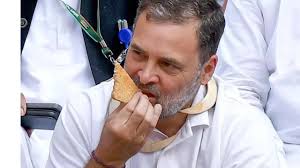
NEW DELHI: Over 200 retired armed forces officers, former civil servants, diplomats and lawyers Tuesday accused leader of opposition in Lok Sabha Rahul Gandhi of violating parliamentary decorum during the opposition’s protest and demanded his apology. “Rahul Gandhi, along with several MPs, was seen sitting on the steps of Parliament having tea and biscuits in a manner that was wholly unbecoming of members of the nation’s highest legislative body. The steps of Parliament are not a venue for spectacle or political theatre,” they said in an open letter endorsed by 204 signatories. They alleged that Rahul’s action within the Parliament complex amounted to a deliberate defiance of the chair and showed disregard for parliamentary authority. “It shows an attitude of arrogance and entitlement,” they added. They said Speaker Om Birla had issued an explicit instruction against demonstrations or protests within Parliament premises but the opposition, led by Rahul, disregarded the directive. “Rahul must apologise to the nation for this behaviour and introspect the attitude that produced it, so that the solemnity, authority and institutional sanctity of the Parliament remain preserved,” they said. Courtesy : TOI Note: This news is originally published on https:/timesofindia.com/bha and is used purely for non-profit/non-commercial purposes, especially human rights
Dalit woman demands action against Jangaon Collector, others under SC/ST Act
A Dalit woman in Jangaon has sought action under the SC/ST Act against the district Collector and officials, alleging harassment, casteist remarks and attempts to remove her tea stall, leading to financial loss and distress. Jangaon: A Dalit woman has lodged a complaint with the Jangaon police seeking registration of a case under the SC/ST (Prevention of Atrocities) Act against district Collector Sandeep Kumar Jha. In the complaint submitted to Jangaon Inspector of Police Satyanarayana Reddy, she also sought registration of a case against DRDO N Vasantha, Municipal Commissioner Maheshwar Reddy, Jangaon town revenue inspector Venkateshwarlu and staff under the Act. The woman, Palamakula Chinna Manjula of Erragollapahad village of Jangaon mandal, in her complaint on March 16, stated that a Vanitha tea stall was sanctioned to her under the Indira Mahila Shakti Scheme by allotting a site at a corner outside the district collectorate. The previous district Collector, Rizwan Basha Shaik, had provided a kiosk, power and water connection and inaugurated the tea stall on March 6, 2025, along with DRDO and district officials. However, Municipal Commissioner Maheshwar Reddy, tahsildar Mosim, RI Venkateshwarlu and staff tried to remove the tea stall with an earthmover and crane on March 11, stating that it was on the orders of the Collector, Sandeep Kumar Jha. When she pleaded with them not to damage the tea stall, they went back. The next day, they returned to remove the stall while making casteist remarks, saying that she had no right to run the stall there and would face serious consequences if the place was not vacated. On the other hand, the electricity department disconnected the tea stall’s power connection. As a result, she incurred a loss of Rs 10,000 as milk and other items in the fridge were damaged, Manjula lamented. The woman said that she had taken private loans worth Rs 3 lakh to develop the tea stall while repaying instalments of a Rs 3 lakh loan provided to her under the scheme. She sought legal action against the above officials for causing her financial loss and mental trauma. The police were yet to act on her complaint. It may be recalled that Sandeep Kumar Jha, when he was Sircilla Collector in February this year, faced severe criticism as he reportedly ordered the closure of a tea stall in Sircilla town because its owner Bathula Srinivas displayed a photo of BRS working president KT Rama Rao. Courtesy : Telangana Today Note: This news is originally published on https:/telanganatoday.com/bha and is used purely for non-profit/non-commercial purposes, especially human rights