
UP Elections 2027: Akhilesh Yadav’s rally will heat up Dalit politics, sounding the bugle from Agra
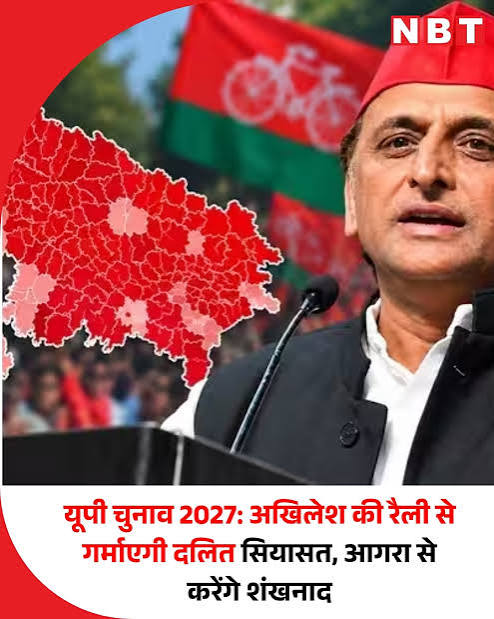
The Samajwadi Party, which is preparing for the UP Assembly elections, will hold a Dalit Mahapanchayat to increase its grassroots reach among Dalit voters. Akhilesh Yadav will launch the rally in Agra on November 15th. Lucknow: The Samajwadi Party, which is preparing for the 2027 Assembly elections, is making efforts to expand its Dalit vote bank. Along with honoring Dalit saints, promising social justice through the PDA, and increasing the use of Ambedkarite symbols in party programs and social media campaigns, the SP will now hold a Dalit Mahapanchayat to increase its grassroots reach among Dalit voters. The rally will be launched on November 15th by party national president Akhilesh Yadav in Agra. SP Rajya Sabha MP and Dalit leader Ramji Lal Suman has been given the reins of this campaign. This will be SP chief Akhilesh Yadav’s first rally for the 2027 Assembly elections. What will be the main issue of the Mahapanchayat? According to a senior party official, the main issue of this Mahapanchayat will be saving the Constitution and reservation. The SP and Congress also raised this issue in the 2024 Lok Sabha elections, which yielded political benefits for the party. Why did the SP choose Agra? Agra is considered a major Dalit center in western Uttar Pradesh. With a large Jatav community population, the region has been a strong base for BSP politics. Therefore, holding the Dalit Mahasammelan in Agra is not just an organizational event, but also a political message to establish its presence at the center of Dalit politics. The biggest reason for the SP’s strategy is the changing political landscape. The Dalit vote, which once stood strongly with the BSP, now appears to be divided among various parties. Objective: Challenge the BJP’s equation According to political analysts, the SP’s goal is not only to garner Dalit votes but also to challenge the BJP’s social equation. In view of the 2027 assembly elections and the political struggle that will follow, the Samajwadi Party (SP) is launching a campaign to expand its social base. The Agra Mahasammelan is part of this broader strategy. The Samajwadi Party has been making continuous efforts to engage Dalits for the past few years. Dalit leaders have been given significant responsibilities in organizational and electoral politics. Several prominent BSP leaders have joined the party. In addition, in the 2024 Lok Sabha elections, Dalit candidates have been fielded on general seats, in addition to reserved seats. The party is preparing to conduct a similar experiment in the assembly elections. Reported by: Anand Tripathi •Edited by: Prashant Singh About the Author Anand Tripathi has been active in journalism for 18 years. After Zee News, he has been part of the NBT Lucknow team for the past 12 years. He specializes in electricity, secretariat administration, bureaucracy, industry, infrastructure, and political news. He holds a postgraduate degree in journalism and mass communication from Makhanlal Chaturvedi Journalism University. Courtesy: Hindi News
Why the Indian Left still struggles with Dalit political autonomy
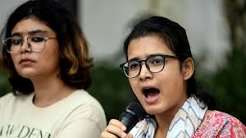
The Left has stood with Dalits many times. It has found it much harder to let them stand on their own. All India Students’ Association (AISA) National President Neha Bora addresses a press conference at the CPI(ML) Liberation Parliamentary Office | ANI Photo/Amit Last month, AISA president Neha Bora was at the epicentre of the anti-SIR protests. Besides the dramatic moments at Jantar Mantar, Bora generated controversy when a clip from an interview went viral and touched a major nerve. In it, she questioned whether established anti-caste parties had actually helped marginalised communities. The clash between her supporters and Dalit activists who called out her privileged consciousness highlights a long-standing question: who really gets to lead the fight for Dalit rights? It also points to a deeper question that has dogged the Left for nearly a hundred years: why does the Left, and its politics, find it so hard to accept Dalit political assertion on its own terms? Ambedkar vs the communists Ambedkar grasped something that much of the Indian Left was slow to accept — that caste was not merely another form of economic exploitation that would vanish once the economy changed. Caste and its machinations decided multiple things: dignity, who could touch whom, who could enter which institution, and who could hold and exercise power. He learned his lessons via harsh political experiences in Bombay. During the great textile strike of 1928, Dalit workers were barred from the better-paid weaving section because they belonged to an untouchable caste. Ambedkar asked the communist-led Girni Kamgar Union to take up this issue. They blatantly refused and only relented after he threatened to keep Dalit workers out of the strike. Ten years later, at a conference of Dalit railway workers in Manmad, Ambedkar put it plainly. He said that India’s workers had two enemies: Brahmanism and capitalism. You could not defeat one and ignore the other. His quarrel with the communists was not a side issue. It was about who would speak for the oppressed and on whose terms. Hyphenated solidarity This does not mean the two could never work together. On 7 November 1938, Ambedkar’s Independent Labour Party and the communists together led a one-day strike in Bombay against the Industrial Disputes Bill. Then, in the Samyukta Maharashtra movement of 1956 to 1960, his Scheduled Castes Federation (SCF) joined communists and socialists on a common front. Lokshahir Annabhau Sathe, a Dalit writer and lifelong communist, gave the movement its songs and played an important role in it. What needs to be understood is that these alliances worked because Dalit politics emerged in its own right, with its own party and its own leader. And once the goal was won, they broke. The chief reason was that the harder question of power sharing between them had never been settled. That is why independent Dalit politics keeps being reborn, as is evident in post-independence India. First came the Republican Party of India in 1957, originally conceptualised by Ambedkar, who did not live to see it established. The Dalit Panthers were formed in 1972, in response to disenchantment with post-independence mainstream politics and political processes. Later came Manywar Kanshi Ram’s BAMCEF, DS-4, and, in 1984, the Bahujan Samaj Party (BSP). Each grew from the same lesson: emancipation could not depend on the goodwill or orthodox piety of other parties. In his mammoth text, The Chamcha Age, Kanshi Ram warned that parties prefer Dalit faces who owe their place to the party rather than to their people. These movements had their failures, but their insistence on representation changed Indian democracy. Hard truths Parts of the Left still have not made peace with this Dalit assertion and their quest for sovereign politics on their own terms. One example is the CPI(M), which was founded in 1964. The first Dalit member of its Politburo, the party’s highest body, was elected only in 2022. The old reflex is most evident on educational campuses, where young people first learn what solidarity means. In 2014, Dalit, Adivasi, and backward-caste students at JNU, long a Left stronghold, formed the Birsa Ambedkar Phule Students’ Association (BAPSA). They set out to break the “hegemony of both the Left and Right.” They wanted to set their own sovereign agenda rather than merely swell the crowds. The same blame-gaming and mud-slinging was seen then too. Sections of the student Left reacted to this sovereign Dalit assertion by accusing them of splitting the progressive vote and helping the Right. The same charge is heard on campus after campus whenever Ambedkarite students contest on their own. This finger-pointing has ramifications for Indian politics at large. When Dalits ask for their own voices to be heard, they are accused of breaking unity. But unity that works only when Dalits stay in the second row is not unity. It is management. A student movement, or indeed a political movement, that cannot share leadership with Dalits at the age of twenty will struggle to share power with them at forty. Today, the Opposition wants to stand together against a powerful ruling party. It speaks of social justice, holds up the Constitution at rallies, and puts Ambedkar’s photograph on its stage. Can it afford to overlook the political history of the very people in whose name it speaks? Dalit voters are sharp; they immediately notice who sits on the stage and who makes the decisions. Many have drifted away from parties that claimed to speak for them, some even to the BJP, which has been quicker to give Dalit leaders visible positions. Of course, critics rightly question how much real power those positions carry. Meeting as equals None of the above means that the Left has contributed nothing to the fight against caste. Its cadres have stood with landless labourers and faced jail and violence for it. Nor is Ambedkarite politics, or politics in the name of Ambedkar’s blood or lineage, beyond criticism. It has had its own splits, compromises, and catastrophic failures. But the lesson from Bombay is
Dalit organizations in Karnataka protest: Cases filed against victims, police take to the streets to protest their actions

An attack on Dalits in Dharwad and the police filing cross-cases against the victims themselves have angered organizations, who protested at the Superintendent of Police’s (SP) office and demanded the suspension of the guilty policemen. Atrocities against the Dalit community and alleged police negligence in Dharwad, Karnataka, have sparked widespread outrage. On November 3rd, various Dalit organizations united and organized a massive march from Kala Bhavan to the Superintendent of Police (SP) office. These organizations allege that instead of providing justice to the victims, the police are filing cases against their families. The protests focused primarily on three separate cases of assault, intimidation, and sexual harassment in the district. Protesters allege that in all these incidents, the police significantly delayed filing complaints. The situation reached its peak when, instead of taking strict action against the accused, cross-cases were filed against the victims’ families, further exacerbating their suffering. The first case is from Mishrikoti village in Kalghatgi taluk. A young man named Abhishek, also known as Pirappa Chalavadi, was fatally attacked with a knife by some people. Seriously injured, Abhishek is currently undergoing treatment at KMC Hospital in Hubli. Organizations have raised serious questions about the police’s actions, asking why a counter-case was filed against the injured man’s family. The second incident involves Shrikant Ramappa Chalavadi, a resident of Kogilageri village in Alnavar taluk. He was brutally attacked with weapons while selling fruits on the Dharwad-Alnavar road. Shrikant suffered serious head injuries in the attack. It is alleged that the police filed an FIR three days after the incident. Furthermore, they imposed a counter-case against three members of Shrikant’s family. The third and most sensitive case is from Honnapur village in Alnavar taluk. Here, a 42-year-old man allegedly sexually assaulted a 15-year-old girl. It is alleged that mediation was used to hush up this heinous crime, and the victim was subjected to constant threats. Outraged by these incidents, organizations have demanded an impartial investigation into the false cross-cases filed against the victims. They have appealed for immediate action against the accused, security for the victim’s families, and a speedy investigation into the minor’s rape case. In addition, a strong demand has been made to suspend the police officers who were negligent in their duties and conduct a high-level investigation into the entire matter. During the march, protesters clearly stated that their movement was solely against injustice and oppression. Its purpose was not to oppose any particular caste or religion, but to ensure justice for the victims. Rajan Chaudhary Courtesy: Hindi News
‘RSS chief can be judge’: Rahul Gandhi dares PM Modi to debate ‘foreign links’
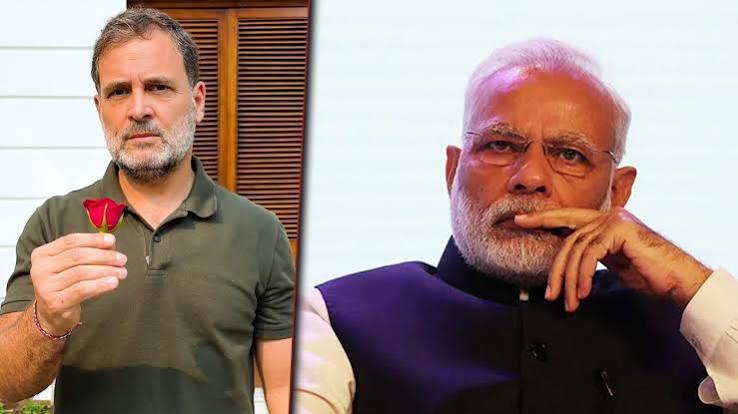
Rahul had earlier accused Modi of becoming PM and remaining in office with the help of foreign forces. A day after challenging PM Narendra Modi to an open debate on alleged foreign links, Leader of Opposition in Lok Sabha Rahul Gandhi on Tuesday returned with a fresh message. “Daro mat (don’t be afraid),” said the leader. Rahul said 24 hours had passed since he issued the challenge and asked Modi to pick the venue, date and even the person who would judge the debate. He suggested that RSS chief Mohan Bhagwat could be appointed as the judge, with the media and young people present as both leaders sat across a table. “You say the Opposition is anti-national. Choose any stage, any venue and debate me. Who is anti-national? Who has connections with foreign forces? And what is the nature of those connections?” Rahul said in a video posted on X. The challenge comes amid a war of words between the Congress and the BJP over allegations of foreign influence. Rahul had earlier accused Modi of becoming PM and remaining in office with the help of foreign forces. Modi, during his visit to Gujarat on Saturday, had hit back without naming Rahul, accusing forces within the country of spreading lies and rumours to create instability. Rahul has now sought to put these allegations on the table, listing a series of issues he wants discussed. These include the country’s financial system, the circumstances in which the US deal was negotiated, why it was concluded in haste and why the Cabinet was not informed. He also questioned the closure of the Adani case and raised the Epstein issue. “Both of us will be there. The media will be there. The youth of this country will be there. You sit on one side, I will sit on the other,” he said. Shekhar Singh Courtesy : The Tribune Note: This news is originally published on https:/thetribune.com/bha and is used purely for non-profit/non-commercial purposes, especially human rights
Why Rahul Gandhi has chosen Sangrur to launch Punjab’s 2027 election mission
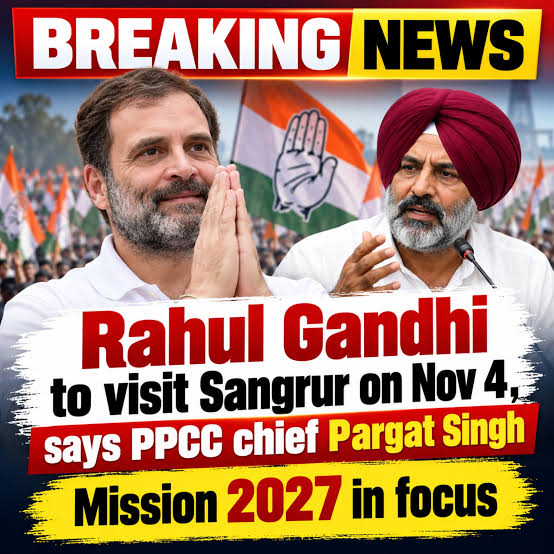
For the Congress to do well in Punjab, or for any other party, Malwa holds the key When Leader of Opposition in Lok Sabha Rahul Gandhi chose Sangrur to kickstart the party’s mission for 2027 ahead of the Punjab Vidhan Sabha elections, the message was clear to his political rivals. He means business. The Congress (read Gandhi) is not only trying to take on the AAP’s power centre in Punjab’s heartland of Malwa which had given the latter a solid lead in the past election, in addition to its CM Bhagwant Mann, but it is also eyeing a reclaiming of the 66 seats that the AAP won that year.. Also, at the heart of recent controversies, Sangrur has been on the boil recently. The alleged suicide of Gulzar Singh, a resident of Toor Banjara village in Dirba, is one of the burning issues. The incident hogged media limelight as he had publicly questioned a Punjab Minister over the availability of drugs in his village and his son’s addiction. Another incident in Sangrur that hogged limelight was related to Mohanjit Singh Sheron, a resident of Sheron village in Sangrur district. Mohanjit claims he was peacefully protesting from a distance showing a black flag and raising the drug menace issue when the police rounded him up and allegedly tortured him. The twin issues are another reason why Rahul Gandhi might have shortlisted Sangrur as he sounds the Congress poll bugle for the 2027 poll. For the Congress to do well in Punjab, or for any other party, Malwa holds the key. On Wednesday as Rahul Gandhi will speak at the “Insaaf Rally” in Sangrur, the political equation is surely weighing in his mind too. The Panthic Malwa belt, comprising 69 Assembly seats and often seen as the region that holds the key to power in Punjab, lived up to its reputation, with the party securing the maximum seats here going on to form the government. In 2022, the Aam Aadmi Party (AAP) made deep inroads into this southern belt by winning 66 seats. The party’s previous tally stood at 18. The Congress won two seats of Gidderbaha and Abohar, while the SAD won in Dakha. AAP had a clean sweep in districts of Ferozepur, Patiala, Sangrur, Fatehgarh Sahib, Barnala, Faridkot, Ropar, Khanna and Ludhiana (barring Dakha). Article_Author Aman Sood Courtesy : The Tribune Note: This news is originally published on https:/thetribune.com/bha and is used purely for non-profit/non-commercial purposes, especially human rights
Punjab Congress targets 1 lakh turnout at Rahul Gandhi’s Sangrur rally
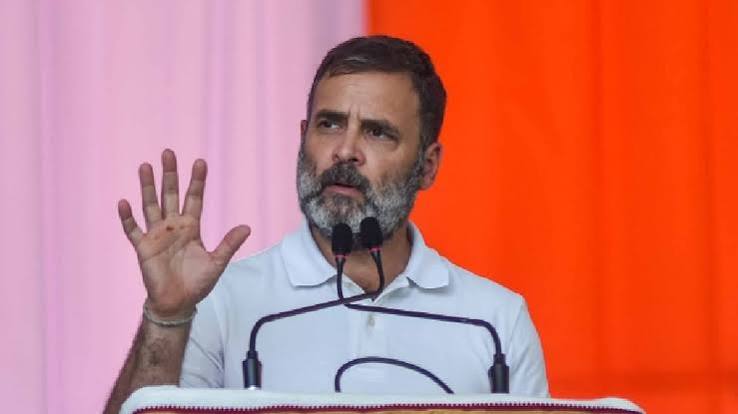
The rally will be the first major state-level event for Pargat Singh since he took over as Punjab Pradesh Congress Committee (PPCC) president earlier this month. CHANDIGARH: With the 2027 Punjab Assembly elections less than four months away, the Congress is gearing up for its ‘Insaaf Rally’ in Sangrur on Wednesday, targeting a turnout of one lakh people. Party leaders and aspiring candidates from the state’s 117 constituencies are arranging buses and private vehicles and holding meetings to mobilise supporters. The rally, to be addressed by Leader of the Opposition in the Lok Sabha Rahul Gandhi and Congress president Mallikarjun Kharge, is expected to give the state unit a fresh political push, bring leaders and workers together and build momentum against the Aam Aadmi Party (AAP) government. The rally will be the first major state-level event for Pargat Singh since he took over as Punjab Pradesh Congress Committee (PPCC) president earlier this month. Party sources said constituency in-charges and senior leaders had been asked to bring at least 1,000 people each. Observers will be deployed along the route to monitor participation and record the number of people mobilised from each constituency. Leaders have also been asked to provide details of the buses and private vehicles arranged to ferry supporters to Sangrur. “At least 20 private buses and 30 other vehicles are being arranged from each rural constituency and all halka in-charges are making every effort to ensure maximum participation and make the rally a major success. Observers will be stationed along the route to keep track of participation from every constituency. After all, ticket allocation by the high command will also depend on performance and the ability to demonstrate strength,” a Congress leader said on condition of anonymity. For Pargat Singh, the rally will also be a test amid recent differences within the state’s senior leadership that led to the replacement of former PPCC chief Amrinder Singh Raja Warring. Senior leaders, including members of the party high command, are overseeing the arrangements. AICC general secretary Sachin Pilot has been visiting the rally venue at Phaguwala village in Sangrur along with senior leader Vijay Inder Singla and local politicians. Pilot inspected the preparations ahead of Rahul Gandhi’s scheduled visit to the village on November 4. Pargat Singh has also visited the venue. Rahul Gandhi is likely to target the AAP government over its performance and caution Punjabis against voting for the BJP and the Shiromani Akali Dal (SAD). Sangrur holds political significance for the AAP as it is the home district of Chief Minister Bhagwant Mann, three state Cabinet ministers and state party chief Aman Arora. Vijay Inder Singla said Rahul Gandhi would raise Punjab’s concerns over drugs, law and order, unemployment and governance. “This rally would mark the beginning of the Congress’s campaign for the 2027 Assembly elections,” he said, adding that people from across Punjab would attend. He said restoring public confidence, protecting citizens and addressing their concerns must remain central to the state’s political agenda. Harpreet Bajwa Courtesy : TNIE Note: This news is originally published on https:/thenewindianexpress.com/bha and is used purely for non-profit/non-commercial purposes, especially human rights
SP’s election campaign begins in the Dalit capital: Dalit convention to be held in Agra, Akhilesh Yadav to roar in BSP’s stronghold
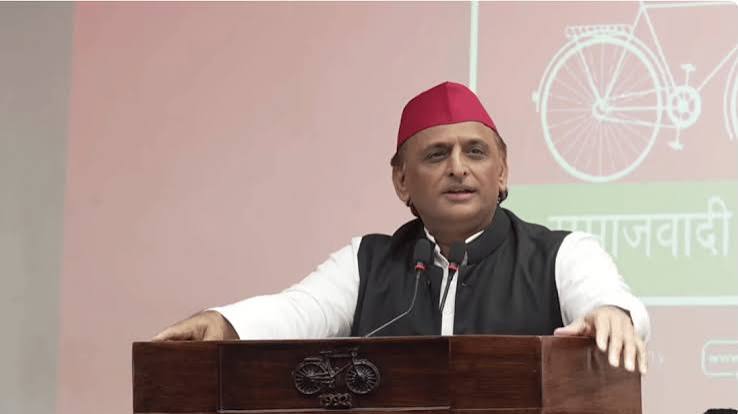
The Samajwadi Party has begun preparations for the Uttar Pradesh Assembly elections. This time, the SP will launch its election campaign from Agra. To this end, the party is organizing a Dalit convention, in which SP chief Akhilesh Yadav will participate. Riding on the banner of the Backward, Dalit, and Minority (PDA) coalition, the Samajwadi Party, dreaming of returning to power in the 2027 Assembly elections, will launch its election campaign from the Dalit capital. Akhilesh Yadav will visit Agra on November 15th. A Dalit convention will be held at the GIC grounds, and preparations for the convention are in full swing. The Samajwadi Party has chosen Agra to align with the PDA’s “D” (D) constituency. The D’s role is crucial in the state’s political trajectory. Therefore, to prepare for the Assembly elections, the SP has devised a strategy to penetrate the strongest bastion of Bahujan politics. Dalit Sammelan convener and National General Secretary MP Ramji Lal Suman stated that workers from the districts of Agra, Aligarh, and Meerut divisions will participate in this conference. Contact has been made with all districts and the meeting venue has been visited. All preparations are in the final stages. He stated that Agra is the capital of Dalits. The city has over five lakh Scheduled Caste voters. City President Shabbir Abbas stated that through this conference, the SP will implement its PDA formula. To convey a message to the BSP’s traditional cadre and voters associated with Ambedkarite ideology, SP workers and Chhatra Sabha members will be dressed in blue. Buoyed by its success in the MLC elections, the SP is making efforts to woo the Bahujan Samaj by making the issues of Dalit rights, reservation, permanent jobs, and social security a key agenda in western Uttar Pradesh. Published by: Arun Parashar Courtesy: Hindi News
Union Minister Ramdas Athawale’s role in Sahil’s death called into question: AIISCA asks, “Who are you with?”
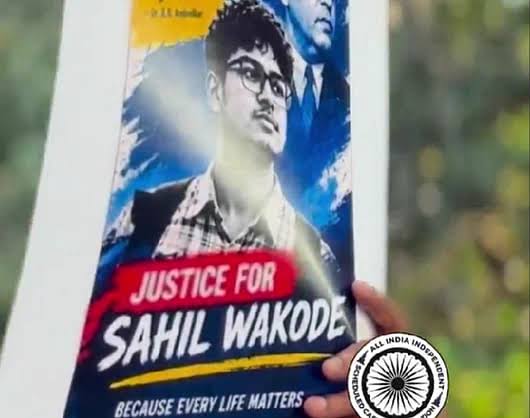
AIISCA condemns Ramdas Athawale, who was seen standing with IIT Bombay Director Kedare in Sahil’s death case. Find out what questions and demands the organization raised. Mumbai – The All India Independent Scheduled Castes Association (AIISCA) has strongly condemned Union Minister Ramdas Athawale’s role in the Sahil Wakode case. The organization alleges that Athawale is protecting IIT Bombay Director Professor Shirish B. Kedare. A statement issued by AIISCA on November 2nd stated that Athawale met with the IIT Bombay Director on September 20th, more than a month ago. The organization says that after the meeting, Athawale posed smilingly and posed for a photo with Kedare, who has been named in the allegations related to Sahil’s death. The organization questioned whether Athawale, who calls himself “Panther” and holds the position of Union Minister, had the courage to demand direct answers from the institute’s director and question the institutional failures that led to Sahil’s death. According to the organization, Athawale could have made the following demands to the Ministry of Education and the relevant competent authorities under due legal process: Temporary suspension of Kedare and Professor Suryanarayan Dulla until an impartial investigation is completed Publicization of the institute’s internal committee report Establishing institutional accountability A timely and impartial investigation AIISCA said that instead, only assurances of meetings, follow-up talks, and an appeal to trust the judicial process were seen. The organization alleges that in an interview after his visit to IIT Bombay, Athawale repeated the narrative espoused by Kedare and Dulla. According to that narrative, Sahil had cheated and was gently advised not to repeat the same mistake, yet he still committed suicide. AIISCA questioned how this was supposed to view a student’s suicide against the backdrop of caste discrimination and institutional harassment. According to the organization, instead of repeating the version of those accused by the victim’s family, it was their responsibility to question the institution’s caste environment and institutional failures. AIISCA also questioned whether Athawale was unaware of the extensive research on caste discrimination, exclusion, and humiliation faced by Dalit students in higher education institutions, and why a serious institutional problem was being cloaked in politically convenient language like “caste discrimination is likely to occur.” The organization questioned why, even after Athawale’s meeting, IIT Bombay students and AIISCA activists agitating for Sahil faced harsh police action and arrests. It asked what the real outcome of these meetings was. What concrete action was taken to hold the institution accountable? Why, even after more than a month, there has been no clear public decision on the demand for a CID investigation? Why has the internal committee report not been made public? AIISCA acknowledged that as a Union Minister, Athawale may not have the personal authority to directly suspend employees. However, according to the organization, he certainly possesses the political and administrative power to demand action from the Ministry of Education and competent authorities, exert pressure on them, and ensure institutional accountability. The statement said that ministerial positions cannot be limited to visiting institutions, posing for photographs, issuing statements, and returning without concrete action. The organization said that it does not want another assurance of standing with Sahil’s parents; it wants to see how Athawale will actually use the powers of his position. According to AIISCA, the role of Ambedkarite politics is to demand answers from institutional casteism, not to compromise with it. The statement concludes with the question: If, despite being a Union Minister, he cannot use his position to ensure institutional accountability, then what is the use of holding this ministerial position in the name of Ambedkarite politics? Geetha Sunil Pillai Courtesy: Hindi News
KC man in contention as Congress Keralam head; call this month
The shift in discussions occurred following the recent disagreements within the Congress over appointments to the Administrative Reforms Commission and the state’s representative in Delhi. THIRUVANANTHAPURAM: In a surprise development, the Congress leadership is toying with the idea of having Revenue Minister A P Anil Kumar, part of the K C Venugopal camp in the party, as the KPCC president, as it looks for greater control in running the Congress-led UDF government as well as strengthening Dalit representation in its ranks. Anil Kumar, a six-time MLA and one of three KPCC working presidents, has emerged as the frontrunner amid growing differences between the party and the state government over Chief Minister V D Satheesan’s style of functioning. The move would also effectively be a checkmate for senior leader Kodikunnil Suresh, another Dalit leader whose name has been doing the rounds for the post. A final decision is likely only after Diwali (November 8). “Anil has the support of K C Venugopal. His appointment would address the question of Dalit representation and give the leadership greater control over the government’s functioning,” a source said. If selected, Anil will have to step down as minister. The shift in discussions occurred following the recent disagreements within the Congress over appointments to the Administrative Reforms Commission and the state’s representative in Delhi. A Congress insider said the KPCC president post used to be as much powerful, if not more, than that of the chief minister in the party. “Major policy initiatives and political issues are discussed between the CM and KPCC president, and the latter communicates the decisions to the leadership and party workers. The KPCC president should have independent opinions and must not be subordinate to the CM,” he said. Sources said the leadership believes Anil’s elevation could help establish an organisational role in the government, while ensuring better coordination with the AICC. Sources said the appointment is likely to be finalised only after Diwali (November 8). The delay has been attributed to the AICC’s ‘Vote Chori’ protests in Delhi. “The AICC has prioritised the agitation. The state leadership has been informed that the new president will be announced in November itself,” said a party insider. Anna Jose Courtesy : TNIE Note: This news is originally published on https:/thenewindianexpress.com/bha and is used purely for non-profit/non-commercial purposes, especially human rights
Sananth reveals how Karthik Subbaraj’s trust helped him play transgender role in ‘Dorothy’; says, ‘I just wanted people to accept it with all its beauty’
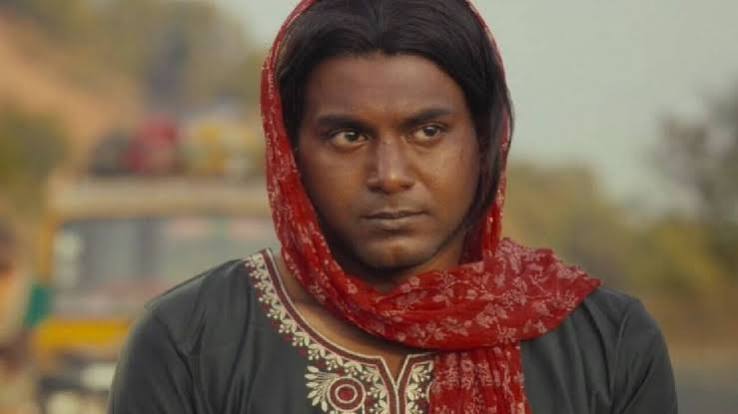
Actor Sananth has spent nearly 15 years finding his place in Tamil cinema, but his role in ‘Dorothy’ has brought him a new level of recognition. Known for choosing different roles, the actor has won attention for playing Subbu, a transgender character in the film. The response has also marked an important moment in his acting journey, which began with short films before he moved on to feature films. Sananth has now become an actor that filmmakers looking for fresh performances are keen to work with. His journey reflects the value of patience and the importance of waiting for roles that challenge an actor. Sananth reveals how he prepared for his transgender role in ‘Dorothy’ Speaking about his experience of playing Subbu in ‘Dorothy’ with Cinema Vikatan, Sananth said the role came with a great deal of responsibility. He was selected after an audition alongside Rishikanth and wanted to live up to director Karthik Subbaraj’s trust in him. “Honestly, this character was a great blessing for me. I just wanted people to accept my transgender character with all its beauty,” Sananth said. He added that he felt nervous while performing the role and described the experience as something that went beyond his own efforts. He also said he approached Subbu with a calm, meditative mindset. The actor was particularly concerned about how audiences would receive the character, making their acceptance deeply meaningful to him. ‘Dorothy’ audience response leaves Sananth emotional during first-day screening Sananth watched ‘Dorothy’ with audiences on its first day, first show, hoping they would connect with his performance. Their response turned into an emotional moment for the actor, who recalled people hugging him, shaking his hands and expressing their feelings. “If you ask me, the best tears in the world are the tears that fall on my hands and shoulders when people recognise my work,” he said. He was especially moved by the emotional reactions from male viewers. For Sananth, the response was more than appreciation for a performance; it was a sign that audiences had connected with the character. The experience gave him a sense of fulfilment after years of waiting for a role that could make a difference to his career. Sananth reflects on his 15-year journey Sananth’s interest in cinema began when he was in Class 10. At first, he studied mechanical engineering, but after that he changed and started visual communication along with filmmaking. His short film ‘Madhu’ brought him attention and opened the door to films like ‘Demonte Colony,’ ‘Jil Jung Juk,’ ‘Mercury,’ ‘Petta,’ and ‘Mahaan.’ Despite working with established filmmakers and actors, he continued to wait for roles that offered something new. “I have no regrets about waiting all these years. Patience is what takes you to a place where you belong,” he said. Looking ahead, Sananth hopes to explore more genres, including action and comedy, while continuing to discover new sides of himself as an actor. Courtesy : TOI Note: This news is originally published on https:/timesofindia.com/bha and is used purely for non-profit/non-commercial purposes, especially human rights