
Haryana: 32-year-old Dalit youth brutally murdered, head severed from body; police investigating

A heartbreaking murder has come to light in Rohtak. A young man has been beheaded and his body severed. Murder of Dalit Youth in Rohtak Rohtak: A case of the brutal murder of a Dalit youth has come to light in Rohtak, Haryana. The youth has been identified as Neeraj of Ismaila village. He was 32 years old. The incident has created a stir in the area. A Dalit youth was brutally murdered in Ismaila village, under the jurisdiction of Sampla police station in Rohtak. The youth’s head was severed from his body. No information has yet been released about the murderer. All that has been known is that someone slit his neck with a sharp-edged weapon. The youth’s body was found in the village water tank this morning. The deceased’s name was Neeraj, and he was only 32 years old. Police and FSL teams arrived at the scene to investigate. The deceased’s body was taken into custody and sent to Rohtak PGI for post-mortem. The police have registered a murder case and initiated an investigation. This incident has created a sensation in the area and created an atmosphere of fear among the people. The visuals of the incident are so terrifying that even a normal person would be shaken by them. Even the police team arriving at the scene was stunned. This incident was carried out with extreme brutality. The case is under investigation, and people say that the perpetrator of such a crime should be severely punished. At present, no information has been obtained about the accused, but the police are conducting a continuous search operation. So far, no update has been received regarding the motive behind the murder or any enmity with the deceased. Discussions are ongoing in the surrounding area, and people are hoping for justice from the police. People believe that the police will soon uncover the truth behind this brutal murder and reveal the truth to the public. It remains to be seen how long it takes the police to solve this case. Currently, this incident has sparked anger among the Dalit community. Written By: Rituraj Tripathi Report by Sunil Kumar Courtesy: Hindi News
UP Father Held for Killing Daughter at Police Station Over Marriage to Dalit Man

The incident occurred after the daughter reaffirmed her decision to remain with her Dalit husband A 19-year-old woman was fatally stabbed inside the Badausa police station in Banda district, Uttar Pradesh, on 14 June. The incident occurred shortly after she reaffirmed her decision to remain with her Dalit husband, whom she had married against her family’s wishes. The accused, her father, was immediately apprehended by police at the scene. The victim was transported to a medical facility but succumbed to her injuries during treatment. As reported by The Indian Express, the woman, identified as Shivani Chauhan, had left her home on 18 May with Lalit Verma, a neighbour, and married him in Madhya Pradesh. Her family filed a complaint after her departure, leading police to trace and recover her. She was brought to the police station for legal formalities, including recording her statement. During the proceedings, Shivani reiterated her wish to stay with her husband, stating she had left home voluntarily. Coverage revealed that her family was present at the police station for counselling when her father, Satya Kumar Chauhan, allegedly attacked her with a knife. Police personnel intervened and overpowered him, but Shivani had already sustained critical injuries. Courtesy : The Quint Note: This news is originally published on https:/thequint.com/bha and is used purely for non-profit/non-commercial purposes, especially human rights
Dalit Man Beaten to Death in UP’s Lalitpur After Refusing to Massage Coworkers’ Feet During Drinking Party

Police said a 33-year-old Dalit man was allegedly beaten to death by three co-workers in Lalitpur district, Uttar Pradesh, after he refused to massage their feet while they were drinking. The victim has been identified as Rajkumar alias Chhannu, a Scheduled Caste man. According to police, the accused allegedly attacked him with a belt and an iron rod and then dumped his body on the roadside to make the death appear like a road accident. The incident came to light on Sunday morning when police received information about an unconscious man lying behind Varni Jain College near Gurunanak Dharamshala in Lalitpur. Lalitpur Additional Superintendent of Police Kalu Singh said Rajkumar was taken to a hospital where doctors declared him dead. “The man was identified as Rajkumar alias Chhannu (33), a Scheduled Caste man. He was taken to a hospital where doctors declared him dead,” Singh said. Attack during a liquor party During the investigation, police learned that Rajkumar had attended a liquor party at the home of one of the accused, Samyak Rajnayak alias Rahi Jain, in the Civil Lines area on Saturday night. Two other associates—Gajendra Narwariya alias Gajendra Singh Rajput and Gaurav Raikwar—were also present at the meeting. According to police, the three accused, under the influence of alcohol, allegedly asked Rajkumar to massage their feet. Additional Superintendent of Police Kalu Singh said, “When he refused, the three men attacked him with a belt and an iron rod, killing him on the spot.” Police said the accused later dumped Rajkumar’s body on the road to make the death appear like a traffic accident. Accused arrested, murder case registered Police have arrested all three accused in connection with the case. Officials said they allegedly confessed to the crime during interrogation. Based on a complaint from Rajkumar’s mother, police registered a case under murder charges as well as relevant provisions of the Scheduled Castes and Scheduled Tribes (Prevention of Atrocities) Act. Police said, “The accused have been arrested and legal action is underway.” The victim’s body has been sent for post-mortem examination, while investigators continue to collect evidence in the case. Courtesy : TOP Note: This news is originally published on https:/theobserverpost.com/bha and is used purely for non-profit/non-commercial purposes, especially human rights
Rahul Gandhi to launch youth outreach in Prayagraj against paper leaks
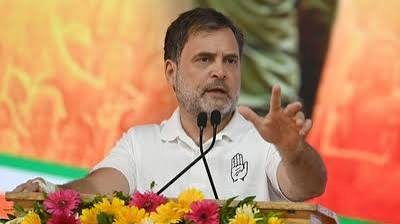
Lucknow: Congress MP and the leader of the opposition in Lok Sabha Rahul Gandhi will visit Prayagraj on July 10 as part of the party’s nationwide campaign against paper leaks, irregularities in examinations and rising unemployment.The programme in Prayagraj is among the first-phase events announced by the Congress to highlight what it described as a growing crisis confronting India’s youth. According to AICC general secretary KC Venugopal, the campaign seeks to bring together students, job aspirants, youth organisations, educators and those affected by examination scandals and recruitment irregularities. The Prayagraj convention will be held between similar outreach events scheduled in Kota on June 17, Patna on July 11, and Delhi on July 14. The party plans extensive mobilisation through the National Students’ Union of India (NSUI), Youth Congress and local organisational units. Outreach activities will include campus visits, interactions at coaching centres, universities and schools, as well as digital campaigns aimed at engaging students and job aspirants. Rahul Gandhi is likely to reiterate demands including decentralisation of NEET, abolition of examination fee, stringent action against those involved in paper leak rackets and greater accountability in the education system. The party has also sought a comprehensive discussion in Parliament on issues affecting students and unemployed youth. While the visit is centred around youth-related concerns, it also carries political significance as Uttar Pradesh gears up for Assembly elections. Gandhi has maintained a steady presence in the state over the past several months. Between Jan 20 and 21, the Rae Bareli MP visited his parliamentary constituency and addressed an MGNREGA Chaupal. He was again in Uttar Pradesh on March 13 to participate in a ‘Samvidhan Sammelan’ in Lucknow, where he paid tribute to Dalit leader Kanshi Ram on his birth anniversary. Most recently, on May 19 and 20, Gandhi visited Rae Bareli and Amethi, where he inaugurated development projects, addressed public meetings, interacted with women and party workers, and laid the groundwork for the Congress’ “Mission UP” campaign ahead of the Assembly polls. Courtesy : TOI Note: This news is originally published on https:/timesofindia.com/bha and is used purely for non-profit/non-commercial purposes, especially human rights
Will Modi take up sailor deaths with Trump, asks Congress

NEW DELHI: Leader of the opposition in Lok Sabha Rahul Gandhi Sunday called PM Narendra Modi an “obedient servant” of foreign forces that kill Indians. Congress asked whether the PM would raise the killing of Indian seafarers and the “threatening language” of secretary of state Marco Rubio with the Indian the foreign minister in his upcoming meeting in Paris with US President Donald Trump. Tagging a video of workers and the captain of MT Celestial ship, Rahul said, “Just days after three Indian sailors were killed in American attacks, there is neither regret nor apology. On the contrary, the US continues to issue orders. A sovereign nation would never tolerate such language. But our ‘compromised PM’? Silent. He listens like an obedient servant and complies with the orders.” Congress said India should put off the upcoming visit of US trade representatives in view of the killings of seafarers and Rubio’s “threatening language” with Jaishankar. Party president Mallikarjun Kharge slammed the PM for his “silence” over the killings. “And you have the audacity to sugarcoat it with the ‘Vishwaguru’ narrative. India used to be a ‘Vishwaguru’ when it maintained its strategic autonomy and followed the policy of non-alignment. The world listened to us when all previous govts followed this consistent policy of not surrendering,” he said. Courtesy : TOI Note: This news is originally published on https:/timesofindia.com/bha and is used purely for non-profit/non-commercial purposes, especially human rights
Free Travel For Women And Transgender Persons Begins In Kerala From June 15; Here’s The Full List Of Eligible
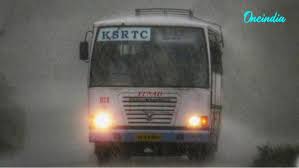
In a major welfare initiative aimed at improving women’s mobility and reducing travel expenses, the Kerala government will roll out free bus travel for women and transgender persons from June 15 under the Priyadarshini Scheme. Ahead of the launch, the Kerala State Road Transport Corporation (KSRTC) has released the list of bus categories where the concession will be available. The scheme, one of the key election promises of the ruling government, is expected to benefit lakhs of daily commuters across the state by making public transport more accessible and affordable. 15/06/2026, 02:00 Free Travel for Women and Transgender Persons Begins in Kerala From June 15; Here’s the Full List of Eligible KSRTC Services … What Is the Priyadarshini Scheme? The Priyadarshini Scheme provides free travel on select KSRTC bus services for women of all age groups and for transgender persons, regardless of their income or financial background. The initiative has been introduced to encourage greater participation of women in education, employment, and social activities by reducing the burden of transportation costs. The state government believes that easier access to public transport can play an important role in strengthening economic independence and social inclusion. The scheme will be formally inaugurated on June 15 in Thiruvananthapuram. Which KSRTC Buses Are Covered? According to the KSRTC notification, free travel will initially be available on seven categories of ordinary bus services operated by the corporation. These include: Ordinary City Ordinary Limited Stop Ordinary Fair-Stage Ordinary Town-to-Town Services Point-to-Point Services Gramavandi Services Officials said special stickers will be displayed on eligible buses to help passengers easily identify the services covered under the Priyadarshini Scheme. Who Can Avail the Free Travel Benefit? The Kerala government has clarified that the concession will be available to: Women of all age groups Transgender persons Commuters from all social and economic backgrounds Unlike some welfare schemes that are based on income criteria, the Priyadarshini Scheme will be universal in nature, ensuring that every eligible passenger can benefit without restrictions linked to earnings or financial status. Government to Bear the Cost Chief Minister V D Satheesan recently announced that the state government will fully compensate KSRTC for the financial burden created by the scheme. According to government estimates, the first phase of the initiative will cost around ₹60 crore every month, amounting to nearly ₹800 crore annually. This will be in addition to the approximately ₹1,500 crore that the state already provides each year to support KSRTC’s salary and pension obligations. The Chief Minister said the government is committed to ensuring that the welfare measure does not negatively impact the functioning of the state transport corporation. Only the First Phase of the Project The government has described the June 15 rollout as the first phase of a larger initiative. Over the next six months, KSRTC has been asked to focus on improving its revenue generation and operational efficiency. The state plans to introduce measures such as: Purchasing additional buses, Launching more services, Expanding connectivity in underserved regions, Improving the financial health of KSRTC. Officials said that once the corporation’s revenue improves, the government will examine the possibility of expanding the scope of the free travel scheme. Monthly Review and Future Expansion The state government has also announced that the implementation of the Priyadarshini Scheme will be reviewed every month. Authorities will monitor factors such as: Passenger usage patterns, Demand for ordinary bus services, Availability of KSRTC buses in regions like Malabar, Financial impact on the transport corporation. Part of the Government’s Welfare Guarantees Free bus travel for women was one of the flagship promises made during the assembly election campaign. The Priyadarshini Scheme forms part of a broader package of welfare initiatives announced by the government, which also includes: A monthly stipend of ₹1,000 for college-going girls, An increase in welfare pensions to ₹3,000, Health insurance coverage of up to ₹25 lakh per household, Interest-free loans of up to ₹5 lakh for young entrepreneurs. The launch of the scheme marks a significant step in Kerala’s efforts to make public transport more inclusive while supporting women and transgender commuters through direct financial relief. Courtesy : Oneindia Note: This news is originally published on https:/oneindia.com/bha and is used purely for non-profit/non-commercial purposes, especially human rights
KVs make one Sanskrit section mandatory in Classes 6 and 9 from 2026

The Kendriya Vidyalaya Sangathan has made a key change in its language policy for the 2026-27 academic session. All KV schools will now be required to maintain at least one Sanskrit section in Classes 6 and 9 under the third-language framework. Transgender students number rises in India CBSE 3 language rule: Kendriya Vidyalayas make Sanskrit section mandatory in Classes 6, 9 The Kendriya Vidyalaya Sangathan (Kendriya Vidyalaya Sangathan) has made it compulsory for all its schools to maintain at least one Sanskrit section in Classes 6 and 9. The decision will be implemented from the 2026-27 academic session under the third-language framework (R3), as outlined in an official circular issued on May 29. HOW THE LANGUAGE RULE WORKS According to the circular, the third language for students must be either Sanskrit or a regional or state language from the list of scheduled languages. This will be in addition to R1 (Hindi) and R2 (English). A senior official explained, “Students can opt for either Sanskrit or the regional language based on their preference. The requirement is only that there should be at least one Sanskrit section in every school to facilitate the children of transferable employees.” The KVS has also directed schools to complete the process of collecting language preferences from students and parents for the R3 framework. DATA, PORTALS AND CLASSROOM STRUCTURE Schools have been asked to upload student preferences for Sanskrit and regional languages separately on the Samagam portal. This data will be used to reassess staffing and section requirements at the school level. The circular further states, “Students opting for the same R3 language must be kept in same section for the smooth conduct of classes.” Section formation will depend on enrolment: Single section schools may split Sanskrit and regional language batches if at least 15 students opt in Two-section schools may have one Sanskrit and one regional-language section Three-section schools will decide distribution based on demand Every school must still ensure at least one Sanskrit section per class ALIGNING WITH NEP 2020 The move aligns with broader reforms under the National Education Policy (National Education Policy 2020) and the National Curriculum Framework for School Education 2023. The Central Board of Secondary Education (Central Board of Secondary Education) has also introduced parallel changes, making three languages compulsory for Class 9 students from July 1, including at least two Indian languages. Foreign languages can be chosen only as an additional option, and no board exam will be conducted for the third language at Class 10 level. Till dedicated textbooks are introduced, Class 9 students will continue using Class 8 R3 textbooks for the 2026-27 session. Courtesy : India Today Note: This news is originally published on https:/indiatoday.com/bha and is used purely for non-profit/non-commercial purposes, especially human rights
‘TN elections showed the way, now the government must bring about ‘true change”: Madras High Court grants bail to SI in Dalit engineer ‘honor killing’ case, makes 5 key observations on casteism

The court issued a stern warning to the state government, stating that laws like the SC/ST Act have failed to deliver the desired results. The court noted that incidents registered under this law are increasing day by day. The court directed the government to change the curriculum at the school level to change the mindset of the younger generation. Madurai – The Madurai Bench of the Madras High Court, while hearing the highly publicized case of the ‘honor killing’ of a Dalit IT engineer, strongly criticized the casteism prevalent in society by granting bail to a police sub-inspector. The High Court said that the recent Tamil Nadu assembly elections have proven that people can vote beyond caste and community barriers, and now it is time for the state to take responsibility for bringing about ‘true change’. A bench headed by Justice B. Pugalendhi made this observation while hearing the bail plea of Saravanan, a police sub-inspector. Saravanan is accused of harboring his son, who had brutally murdered a Dalit youth because he was in love with his sister, Saravanan’s daughter. What is the entire case? Kavin (the deceased) was an IT engineer and belonged to the Dalit community. The accused, Saravanan, is a sub-inspector in the Tamil Nadu Police, and his daughter attended the same school as Kavin. They were in a love relationship, which the girl’s family did not approve of. On July 27, 2025, Kavin came to Tirunelveli for his grandfather’s treatment. He informed Saravanan’s son, Surijit (accused No. 1), of his arrival. Surijit put Kavin on his bike and took him to Lakshmipuram. At around 2:17 p.m., a quarrel broke out between the two. It is alleged that Surijith poured chili powder into Kavin’s eyes and then attacked him with a sharp-edged weapon (Aruval). Kavin tried to escape but was chased and killed near Ambala Hospital. A total of 19 wounds were found on the deceased’s body. Just one minute after the murder, Surijith called his father, Saravanan, to inform him of the incident. Police say Saravanan informed his wife (Accused No. 3) about the incident and contacted relatives (Accused No. 4) to help his son hide. Saravanan himself visited the scene and falsely informed the head constable present there that the deceased belonged to a different community. It is alleged that he purchased a bike with a fake license plate for his son and conspired to destroy evidence. Saravanan and his son were arrested on August 11, 2025, and have been in judicial custody since then. Why the Court Granted Bail Saravanan claims he is innocent and was the one who provided information about his son to the police. He also stated that he surrendered his son to the police, which was reported in the newspapers. He argues that he played no active role in the murder and did not destroy any evidence. The Court decided to grant Saravanan bail for the following reasons: Saravanan had been in jail for the past 10 months (since August 11, 2025). The investigation had been completed and a charge sheet had been filed. The case is pending as SC.No. 120/2025. The Court acknowledged that “there were no calls between Saravanan and the deceased or the victim’s family before the incident.” Therefore, there was insufficient material to prove his active role in the murder. The Court stated, “If this were a simple murder case, he would have been granted bail by now.” The court also stated that it was not appropriate to keep the accused in “pre-sentence detention” for a long period. Saravanan filed a petition (Crl OP(MD) No. 995/2026) in the High Court requesting the quashing of the proceedings against him, which the court granted an interim stay on April 29, 2026. However, the court granted bail with strict conditions: Saravanan will be released on a bond of ₹1 lakh and two sureties (one lakh each). He will have to reside in Coimbatore and report to the B2 R.S. Puram police station twice a day (at 10:30 a.m. and 5:00 p.m.). He will not go near the crime scene (Tirunelveli) or attempt to influence any witnesses. If he violates any of the conditions, his bail will be revoked. The recent Tamil Nadu Assembly election results have proven that people can vote without regard to caste or community. A government has been formed by ignoring caste factors. – Madras High Court 5 key observations from the Madras High Court on casteism This decision was not limited to granting bail. Justice Pugalendhi used it as a platform to comment on the “disease of caste” prevalent in society. Some of his key observations are as follows: “Even we judges are not immune to casteism.” The court openly acknowledged that casteism is not limited to ordinary people but also affects the judiciary. The court said: “Every person, no matter how powerful or privileged, experiences casteism in some form or another. Even we judges are not immune. Our orders are often influenced by caste, even when cases are being decided on merit.” “There is no honor in honor killing; it is a shameful act.” The court described honor killing as the “extreme form of casteism,” stating that it is wrong to call it “honor.” “Honor killing is the extreme manifestation of casteism. Casteism is a curse for the nation. Nature recognizes no caste. The sun gives light to everyone, rain falls on everyone, and air is for everyone. Only when society transcends the artificial barriers of caste will it realize the truth: there is no honor in honor killing; rather, it is a shameful act.” Praising the Tamil Nadu Elections – “Voting Without Caste Is Possible” In its judgment, the Court commended the Tamil Nadu voters and the recent Assembly election results, making a landmark observation: “The recent Assembly election results in the state of Tamil Nadu have proven that people can indeed be confident in voting without considering the caste or community of the candidates. A government has been formed by largely
Uttarakhand: Dalit taxi driver humiliated by garlanding him with shoes for picking up passengers at a lower fare, video also filmed!

The accused allegedly abused, used casteist slurs, assaulted him, and demanded 50,000 rupees for charging a lower fare. When Prem Ram protested, they put a garland of shoes around his neck, snatched his mobile phone, and uploaded a video of the incident to social media. Champawat – A shameful incident involving a Dalit taxi driver has occurred in the Lohaghat area of Champawat district, Uttarakhand, following a dispute over carrying passengers at a lower fare. The victim driver was allegedly assaulted and publicly humiliated by other taxi drivers by garlanding him with shoes. After the video of the incident went viral on social media, police took immediate action and filed a case against four accused under the SC/ST Act. On June 10, Prem Ram was carrying passengers from Lohaghat to Delhi at the old fare rate when other taxi drivers stopped his vehicle near Devradi Band. The accused allegedly abused Prem Ram, used casteist slurs, assaulted him, and demanded 50,000 rupees for charging a lower fare. When he resisted, they put a garland of shoes around his neck, snatched his mobile phone, and uploaded a video of the incident on social media. The victim has filed a complaint at the Lohaghat police station. The family stated that they are deeply hurt by the incident. Prem Ram is currently in Delhi. Lohaghat police have registered a case against four accused: Sohan Singh, Harish Bohra, Virendra Singh, and Mohan Chandra. The case has been registered under various sections of the SC/ST Act, the IT Act, and the BNS, including sections 352, 351(3), 133, 126, 308(2), 309(3), 356, and 152(2). Champawat SP Rekha Yadav has personally monitored the case. CO Niharika is investigating. The search for the accused is ongoing. On June 13, the victim’s side submitted a memorandum to District Magistrate Manish Kumar. The District Magistrate assured strict action and directed the Transport Department to investigate fares on the Delhi-Dehradun route. Meanwhile, a large crowd gathered at the Lohaghat police station and demanded strict punishment for the accused. The SC community called it “inhumane.” Geetha Sunil Pillai Courtesy: Hindi News
Punjab Congress eyes Dalit-OBC consolidation ahead of 2027 polls, Channi emerges as frontrunner for party chiefPublished Date: 14-06-2026 | 7:01 pmAayush Goel
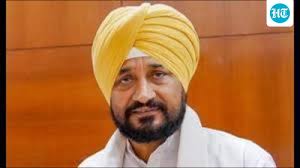
Chandigarh: With the 2027 Punjab Assembly elections now firmly on the horizon, the Congress is scrambling to resolve a leadership crisis that has simmered for months — and is increasingly pointing toward former chief minister Charanjit Singh Channi as its best bet to lead the state unit and anchor the party’s Dalit and OBC outreach. Punjab’s demographic arithmetic makes the calculus compelling. Dalits constitute approximately 32 per cent of the state’s population — the highest SC share of any state in India — while OBCs account for an estimated 15–20 per cent. Together, the two groups represent nearly half the state’s electorate, spread across communities including Mazhabi Sikhs, Ravidassias, Balmikis, Sainis, Kamboj, Ramgarhia and Gujjars. Yet despite their numbers, neither group has historically exercised political influence proportionate to their share of the vote. The Congress high command convened a meeting of top party leaders last week to finalise the shape of an organisational overhaul in Punjab. The party has also appointed senior leaders Ajay Maken, Meenakshi Natarajan and Bhajan Lal Jatav as observers for Punjab, a move seen within the organisation as part of the ongoing exercise to assess the state unit and recommend structural changes ahead of the 2027 elections. According to party sources, internal popularity surveys conducted as part of the Congress leadership’s review of the Punjab unit have shown Channi in a stronger position than incumbent PPCC chief Amrinder Singh Raja Warring — a finding that has sharpened the pressure on the high command to act. When contacted, Channi refused to confirm or deny his candidature for the post. Sources in Delhi Congress, however, said he remained the party’s most viable option given his mass appeal, Dalit identity, and ability to cut across regions. His strongest appeal lies among sections of the Dalit electorate, particularly in Doaba, with some resonance in Malwa. As Punjab’s first Dalit chief minister, his identity adds a powerful political dimension that no other contender in the race can replicate. A section of leaders has been flagging that ahead of the 2027 polls, the optics of two Jat leaders — Warring and CLP leader Partap Singh Bajwa — occupying both top positions would need to be reworked by adjusting Dalit, OBC and Hindu faces. Channi himself raised the point publicly, questioning why all key positions — PPCC chief, Leader of Opposition, and women’s wing president — were held by upper-caste leaders, despite Dalits alone constituting over 32 per cent of the population and OBCs adding a further 15–20 per cent. Others in contention for the PPCC post include Partap Singh Bajwa, former minister Pargat Singh, Fatehgarh Sahib MP Dr Amar Singh, and former MP Vijay Inder Singla. Warring’s position has weakened considerably. The pressure has intensified after the recent municipal elections, where the Congress failed to convert anti-incumbency sentiment into a statewide challenge. Out of 1,977 wards, AAP won 954, while Congress finished a distant second with 393. Independents secured 251 wards, followed by SAD with 192, BJP with 172 and BSP with seven. The results reinforced AAP’s organisational advantage at the grassroots level despite Congress leaders’ claims of growing public discontent with the Mann government. Concerns have mounted over the party’s organisational performance, particularly after setbacks in Gidderbaha — considered his traditional stronghold — where AAP swept 17 of 19 wards in municipal council elections. At the May 29 meeting in New Delhi — attended by Rahul Gandhi, Congress president Mallikarjun Kharge, Punjab in-charge Bhupesh Baghel, and senior state leaders — most state party leaders pressed for Warring’s replacement, though Baghel publicly denied any immediate proposal to do so. The party’s Punjab unit has long been dominated by Jat Sikhs, who account for roughly 25–30 per cent of the population but have held the chief ministerial post for all but a brief interlude since 1966. While Congress has made conscious efforts since 2021 to broaden its social coalition through Dalit, OBC and Hindu outreach, structural realities — land ownership, rural seats, and community mobilisation — continue to give Jat Sikhs the upper hand internally. The dilemma for the high command is acute. Replacing Warring with Channi could consolidate the Dalit-OBC bloc — collectively the state’s single largest voting constituency — that Congress desperately needs to dent AAP’s 2022 mandate of 92 seats. But any move risks deepening Jat Sikh alienation within a party already down to 15 of 117 assembly seats. The Congress top brass has so far not signalled enthusiasm for projecting Channi as a chief ministerial face, with Bhupesh Baghel recently stating the party would not declare a CM candidate ahead of the 2027 polls. That position, insiders say, is unlikely to hold. Aayush Goel Courtesy : The Financial World Note: This news is originally published on https:/thefinancialexpress.com/bha and is used purely for non-profit/non-commercial purposes, especially human rights