
Firozabad News: Two criminals arrested for snatching a gold pendant from a transgender person

Tundla. Police from Nagla Singhi police station arrested two criminals during checking on Saturday evening on the dirt road leading from Bhekanpur Bajhera Road to Nagla Kale. Sonia, a transgender resident of Suryanagar, Tundla, was returning from Fatehabad, Agra, on a bike with a young man on May 28th when two bike-borne criminals snatched the gold pendant from her neck near Bajhera village. Following the victim’s complaint, police registered an FIR and were searching for the criminals. Station in-charge Parul Mishra stated that, based on a tip-off, the accused, Ramdhan and Sheelesh (residents of Nagla Kale, Nagla Singhi police station), were arrested. Police recovered the stolen gold pendant, the bike used in the crime, and white plastic beads from the accused. Both accused were sent to jail after being produced in court. Courtesy: Hindi News
Now, Congress may focus on Telangana Cabinet rejig

According to party sources, three to four MLAs are expected to be considered for induction into the Cabinet. HYDERABAD: After successfully overseeing the formation of its government in Kerala and managing a leadership transition in Karnataka, the Congress high command is now likely to focus on the long-awaited Cabinet reshuffle in Telangana. According to party sources, three to four MLAs are expected to be considered for induction into the Cabinet. The names being widely discussed include Assembly Speaker Gaddam Prasad Kumar, Munugode MLA Komatireddy Rajagopal Reddy, Vemulawada MLA Aadi Srinivas, Deverakonda MLA Balu Naik, and Dornakal MLA Ram Chander Naik. Political discussions intensified after the Speaker reportedly met senior Congress leaders Rahul Gandhi and Mallikarjun Kharge. Party leaders believe these interactions have further strengthened speculation regarding his possible inclusion in the Cabinet. Similarly, Rajagopal Reddy is optimistic that the party leadership may honour commitments made to him during his return to Congress from the BJP ahead of the Assembly elections. Sources also suggest that two to three ministers may be dropped from the Cabinet and assigned organisational responsibilities either at the state or national level. Currently, there are two vacant Cabinet positions, and the leadership is reportedly considering a broader reshuffle involving both vacant and outgoing roles. There is also discussion within Telangana Congress circles over who could become the next Assembly Speaker if Gaddam Prasad Kumar is inducted into the Cabinet. Sources indicate that the party leadership may prefer an MLA or a Cabinet minister from the SC community for the post as part of its social representation strategy. Chief Minister A Revanth Reddy is also believed to favour retaining the position within the same community. Adluri likely choice for Speaker post Among the names being discussed, minister Adluri Laxman Kumar is said to be emerging as a strong choice of the party for the Speaker’s post. Sources suggest that his candidature is also being viewed in the context of concerns raised by a section of party leaders over the concentration of Cabinet representation from the Peddapalli parliamentary constituency, from which three ministers currently hail. While Dornakal MLA Ram Chander Naik was previously considered for the Deputy Speaker role, sources indicate that he may be more interested in a Cabinet berth. If that happens, the party might consider appointing a woman legislator, with Kodad MLA N Padmavathi Reddy among the candidates being discussed. In addition to Cabinet appointments, several senior MLAs are believed to be under consideration for chairperson positions in key government corporations. Party leaders are reportedly weighing options to accommodate aspirants who may not secure ministerial roles. The Chief Whip position, which carries Cabinet rank, has also emerged as a significant role garnering considerable interest. According to sources, second-term MLAs from either forward or backward communities could be considered for this position. Discussions are also reportedly underway regarding a possible reshuffle of portfolios, including Home, Education, Finance, Revenue, Power, Civil Supplies, Forest, Endowments, Transport, and Excise. Sources suggest that any decision on Cabinet restructuring is likely to be taken after consultations between the Telangana leadership and the Congress high command. Senior leaders, including Chief Minister Revanth Reddy, TPCC chief Mahesh Kumar Goud, AICC leaders, and other key ministers, are expected to hold discussions in Delhi before any final announcement is made. Reshuffle of portfolios also likely Discussions are also reportedly underway regarding a possible reshuffle of portfolios, including Home, Education, Finance, Revenue, Power, Civil Supplies, Forest, Endowments, Transport, and Excise. The chief whip position, which carries Cabinet rank, has also emerged as a significant role garnering considerable interest. Ireddy Srinivas Reddy Courtesy : TNIE Note: This news is originally published on https:/thenewindianexpress.com/bha and is used purely for non-profit/non-commercial purposes, especially human rights
DK Shivakumar, Siddaramaiah to meet Congress high command in Delhi, bat for cabinet berths for loyalists

Though it is not confirmed yet, some 15-20 are likely to be sworn in and veterans who were part of the Siddaramaiah cabinet are keeping their fingers crossed. BENGALURU: Chief Minister-designate DK Shivakumar and caretaker CM Siddaramaiah will be in Delhi on Monday to finalise the list of council of ministers with the Congress high command, including Leader of Opposition in the Lok Sabha Rahul Gandhi. Though the power transition went off smoothly, the two leaders are likely to butt heads over the induction of their loyalists into the cabinet and prove their sway over the high command. They are expected to present their own list of legislators to take oath along with Shivakumar at Lok Bhavan’s glass house at 4.05 pm on Wednesday. Though it is not confirmed yet, some 15-20 are likely to be sworn in and veterans who were part of the Siddaramaiah cabinet are keeping their fingers crossed. They include Dr G Parameshwara, HK Patil, KH Muniyappa, MB Patil, Eshwar Khandre, Ramalinga Reddy, Priyank Kharge, Krishna Byre Gowda, Santhosh Lad, Zameer Ahmed Khan, K Venkatesh, Shivaraj Tangadagi and Dr HC Mahadevappa. The names of a few new faces, including AS Ponnanna, Saleem Ahmed, Speaker UT Khader, NA Haris, BK Hariprasad, TB Jayachandra, Basavaraj Rayareddy and Puttaranga are doing the rounds. “I met CM-designate Shivakumar. I interacted with him on a few issues. It was cordial … I came here to congratulate him and wish him all the best. The cabinet formation will be done after the chief minister goes, discusses with the high command and key leaders,” former law minister HK Patil told reporters after meeting Shivakumar. MB Patil, Bangarpet MLA SN Narayanaswamy, Malavalli MLA PM Narendra Swamy and former chief whip in the Assembly Ashok Pattan also met Shivakumar. After the swearing-in, a partial cabinet will be in place and the remaining vacancies are likely to be filled after the June 18 polls to four Rajya Sabha and seven MLC seats, sources said. On Sunday, scores of ministerial berth aspirants, including former ministers identified with the Siddaramaiah camp, like Santhosh Lad and Mahadevappa, met Shivakumar. First-time MLAs Basavaraj Shivaganga from Channagiri and Darshan Dhruvanarayana from Nanjangud also met their mentor. Asked who would take oath as ministers along with him on Wednesday, Shivakumar said, “I don’t know that. The party high command will decide. I will not comment on it.” Yathindra meets Shivakumar Siddaramaiah’s MLC-son Dr Yathindra, who is most likely to be sworn in as minister in the Shivakumar cabinet, called on Shivakumar at the Kumara Krupa Guest House on Sunday evening. “I am a ministerial aspirant. The high command has also assured me that I will be made a minister. I am waiting in anticipation. First, let the high command decide on inducting me as minister. I am ready to handle whichever portfolio assigned to me,” he told reporters. “I had only met Shivakumar at Vidhana Soudha and somewhere on the way. I wasn’t able to come to his office or home to congratulate him. So, I came to convey my wishes. No (major) discussions happened. Just a little talk about SIR and our Mysuru district politics,” he added. Devaraj B Hirehalli Courtesy : TNIE Note: This news is originally published on https:/thenewindianexpress.com/bha and is used purely for non-profit/non-commercial purposes, especially human rights
‘Sitting inside CBSE’: Rahul Gandhi’s ‘beware of pickpockets’ warning amid OSM row; flags re-evaluation fees
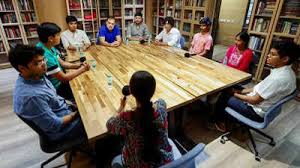
NEW DELHI: Lok Sabha leader of opposition Rahul Gandhi Monday targeted the CBSE for charging students a range of fees for re-evaluation, even when discrepancies stem from the board’s own errors. Targeting the entire process of charging the students, the Congress leader said: “When education is turned from a service into a business, mistakes aren’t corrected. They’re multiplied. And our children are paying the steepest price for it.” “Beware of pickpockets – today they’re sitting inside CBSE. If marks come out wrong due to CBSE’s mistake, what do you get? A bill: Digital scan copy: Rs 100/subjec, Re-totalling: Rs 100/paper, Re-evaluation: Rs 25/question. A child might have to shell out up to Rs 2000 just to get their own answer sheet properly checked,” he wrote on X. He futher wrote: “Think about it: when 4 lakh kids have filed such applications, how much is CBSE raking in. When scanning was done with a phone, wrong marking is a given. And the child is footing the bill to get it fixed. The mistake is CBSE’s. The punishment is the child’s. The earnings are the government’s. When education is turned from a service into a business, mistakes aren’t corrected. They’re multiplied. And our children are paying the steepest price for it – with their time, their self-confidence, and their future.” Gandhi on Sunday stepped up his attack on Prime Minister Narendra Modi over the CBSE OSM controversy, accusing him of ignoring the concerns of 18.5 lakh students allegedly affected by irregularities in the board’s answer-sheet scanning process. In a post on X, he said the Prime Minister found time to speak on a range of issues during his monthly Mann Ki Baat address, but not about students whose answer sheets were allegedly not assessed properly. “This morning, the Prime Minister had time to speak about mangoes. He has not had time to speak about 18.5 lakh children whose answer sheets were scanned with phones. Dharmendra Pradhan ji still sits in office. Modi ji’s silence is no longer indifference. It is complicity,” Gandhi wrote. Sharpening his criticism of the government, Gandhi also shared a video of his interaction with a group of students and praised them for raising questions about the controversy. “Vedant and his friends are brilliant, brave young Indians who asked CBSE and the Modi govt simple questions – but got insults instead of answers,” he said. The row began after Vedant, a Class 12 student, claimed in a post on X that the Physics answer sheet uploaded by the CBSE under its copy-scanning process did not belong to him. The allegation quickly gained traction online, with several other students making similar claims on social media. Meanwhile, Congress general secretary Jairam Ramesh alleged that CBSE Class 12 answer sheets had been exposed in the public domain, describing it as a serious breach of student privacy. Claiming that the data of millions of students could be at risk, Ramesh said, “this is a data breach of monumental proportions and it compromises the privacy of 2 million students.” Courtesy : TOI Note: This news is originally published on https:/timesofindia.com/bha and is used purely for non-profit/non-commercial purposes, especially human rights
In another blow to Mamata Banerjee, 9 TMC councillors quit, Diamond Harbour municipal board dissolved
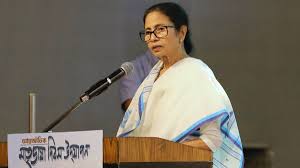
KOLKATA: In yet another setback for the Trinamool Congress (TMC) following its rout in the recent Bengal assembly elections, the board of Diamond Harbour municipality was dissolved on Sunday. This came after nine of the party’s councillors resigned, leading to the municipality going under administrative control. Diamond Harbour sub-divisional officer (SDO) Ayan Dattagupta has taken over as administrator of the civic body. It is the parliamentary constituency of Trinamool national general secretary Abhishek Banrejee. Eight of the nine councillors of the 16-ward municipality had sent in their resignations on May 25, while the ninth resigned on Sunday, leading to the dissolution of the board. They cited financial irregularities within the civic body, police harassment and intimidation as reasons for resigning. Administrative sources said municipal chairman Pranab Das forwarded the resignations to the state urban development and municipal affairs department, which then ordered the dissolution of the board. Courtesy : TOI Note: This news is originally published on https:/timesofindia.com/bha and is used purely for non-profit/non-commercial purposes, especially human rights
Dalit Youth ‘Stripped, Assaulted and Dragged by Tractor’ in Rajasthan; Main Accused Arrested
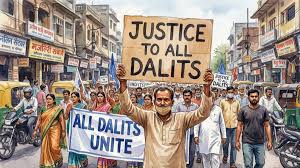
A Dalit youth was allegedly subjected to inhuman treatment and assaulted in Rajasthan’s Jhunjhunu district, following which police arrested the main accused, officials said. The incident took place in Jhajhadiya Ki Dhani in Khinwasar village under the Gudhagaurji police station area. Police have identified the accused as Rakesh Dadiya, who was arrested after the victim filed a complaint. According to police, the victim, Pawan Meghwal, a resident of Jhajhadiya Ki Dhani, lodged an FIR alleging that he was forcibly taken away and assaulted by the accused. Victim Alleges He Was Taken to Isolated Spot and Assaulted In his complaint, Pawan said he was sitting at a local shop in the village on Monday evening around 8:30 pm when Rakesh arrived and allegedly forced him onto a tractor. The accused reportedly took him to a deserted location where he allegedly stripped him, forced him to consume alcohol, and assaulted him. “The accused took me to an isolated place, removed my clothes and beat me badly,” the victim alleged in his police complaint. Gold Chain and Cash Also Allegedly Stolen The complaint further stated that the accused allegedly snatched Pawan’s gold chain and took money from his pocket during the incident. The victim also accused the man of tying him to a tractor and dragging him, causing serious physical injuries. After the assault, Pawan somehow managed to contact his family members, who later informed the police. Police Say Accused Confessed During Questioning Taking the matter seriously, police launched an immediate operation and arrested Rakesh Dadiya from Khinwasar village. A police official said the accused was questioned after his detention and allegedly admitted involvement in the incident. “Considering the seriousness of the matter, immediate action was taken and the accused was arrested. Further investigation is ongoing,” police said. Authorities have not yet shared details about the charges filed, but the investigation into the case is continuing. Courtesy : TOP Note: This news is originally published on https:/theobserverpost.com/bha and is used purely for non-profit/non-commercial purposes, especially human rights
Demand for “the greater the number, the greater the share”: Reservation, caste census, reservation in promotions, and strict laws against mob lynching; Memorandum submitted to ADM
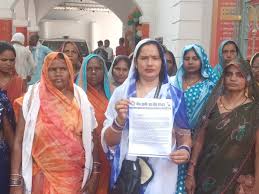
The Bhim Army Jai Bhim organization submitted a memorandum to the Additional Magistrate on Monday regarding various demands. The organization demanded the implementation of reservation in all pillars of democracy to improve the economic and social status of Dalit, backward, minority, and tribal communities. The memorandum was led by District President Kanchan Rao. District President Kanchan Rao stated that Constitution-maker Dr. Bhimrao Ambedkar had established reservation for the upliftment of the exploited, oppressed, and deprived classes, but even after 75 years of independence, the conditions of these classes have not improved as expected. He said that Dalit, backward, minority, and tribal communities have still not fully integrated into the mainstream. Demand for Reservation in Government and Private Sectors In the memorandum, the organization demanded the implementation of reservation in government and private industries based on the principle of “the greater the number, the greater the share.” Demands were also raised to restore reservation in promotions and fill all backlog vacancies. Demand for Proportional Reservation in NEET, JEE, and UPSC In the field of education, the organization demanded reservation for Scheduled Castes, Scheduled Tribes, Other Backward Classes, and minorities in competitive examinations like NEET, JEE, and UPSC, in proportion to their population. Furthermore, demands were made for the continuation of the “zero-balance” admission system in schools, colleges, and universities under Article 15 of the Constitution and for the full implementation of University Grants Commission (UGC) regulations. Demand for a Law to Prevent Mob Lynching The Bhim Army expressed concern over incidents of mob lynching against Dalits, Muslims, backward classes, minorities, and tribal communities. The organization demanded strict laws to prevent such incidents. The memorandum also included a demand for a CBI investigation into alleged false cases of cow slaughter and fake encounters. The organization also demanded that the cow be declared the national animal. Questions were also raised regarding the caste census and lateral entry. The organization demanded that the central and state governments conduct a caste census. They stated that this would reveal the actual population of various communities and ensure appropriate participation based on that. The organization also demanded a complete abolition of the lateral entry system into government services. Several organization officials and workers were present during the memorandum submission. Ankit Srivastava | Jaunpur Courtesy: Hindi News
Dalit family in Amla threatened with eviction from village: Family files police complaint, case under investigation
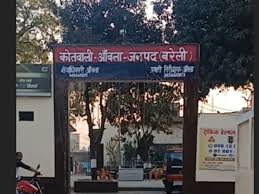
A case of harassment and expulsion of a Dalit family from the village has come to light in Daulatpur village, within the Amla police station area of Bareilly. The victim’s family has accused the miscreants of breaking into their home, vandalizing it, and threatening to kill them. A named complaint was filed at the police station on Monday, demanding legal action. In the complaint filed with the police, the victim stated that a villager owns a farm behind his house, to which he has provided access. It is alleged that the accused now wants to take advantage of his helplessness and take over the house. On the afternoon of May 26th, the accused, along with his two sons, entered the victim’s house armed with sticks and rods. They hurled casteist slurs and threw out household items. The miscreants also threatened to kill the victim’s family if they did not vacate the house within a week. The victim has appealed to the police to ensure his safety and take appropriate legal action by filing a report against the accused. Aonla Inspector Binu Singh, providing information on the matter, stated that the police are investigating the case based on the complaint received. If found guilty in the investigation, appropriate action will be taken against the individuals involved as per the law. Pradeep Kumar | Aonla Courtesy: Hindi News
‘Karnataka has never had a Dalit CM so far’: Congress leader SR Patil
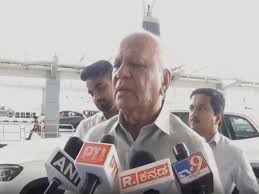
BENGALURU: Senior Congress leader SR Patil said it is natural for people from the “downtrodden and marginalised communities” to hope that someone from their fold becomes the Karnataka Chief Minister. Patil noted that Karnataka has never had a Dalit Chief Minister so far. He also said that Dalit leader G Parameshwara has been given due respect. Speaking to reporters, he said, “The downtrodden people are protesting. It is quite natural for anyone to aspire to become the Chief Minister. Karnataka has never had a Dalit Chief Minister so far. Therefore, it is natural for people from the downtrodden and marginalised communities to hope that someone from their community becomes the Chief Minister and to express that aspiration through protests. I do not agree with the view that G Parameshwara has not been given importance. He is a senior leader of the Congress party and has been given due respect and an appropriate position both in the party and in the government. I am very proud of the government. The government is functioning well, and I am proud of its achievements”.. Karnataka Chief Minister-designate DK Shivakumar will meet the party high command in New Delhi on Monday to discuss cabinet berths and other key political developments, Congress sources stated. Earlier on Sunday, DK Shivakumar said that he does not know how many leaders will be inducted into his cabinet and will take oath with him on June 3. When asked if other leaders would be sworn in with him, he told reporters in Bengaluru, “I don’t know. Whatever the party high command decides will happen.” Shivakumar, after his three-year stint as the Deputy Chief Minister, is set to assume the office as the Karnataka CM. The swearing-in ceremony is scheduled for June 3 at Lok Bhavan in Bengaluru. DK Shivakumar formally submitted a letter to Karnataka Governor Thawarchand Gehlot informing him about his unanimous election as CLP leader. This came after the voluntary resignation of former Chief Minister Siddaramaiah on May 28. The Governor dissolved the previous Council of Ministers immediately, but asked Siddaramaiah to continue until the new government is sworn in. Courtesy : Public TV English Note: This news is originally published on https:/publictvenglish.com/bha and is used purely for non-profit/non-commercial purposes, especially human rights
The Dalit body on screen: Stereotypes, sacrifice, and subjugation in Hindi films
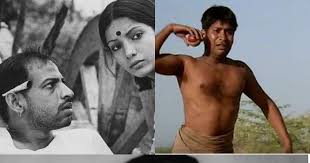
Despite centuries of reformist efforts, from Gandhi and Ambedkar to contemporary activists, the caste system remains deeply embedded in the Indian psyche. One of the primary reasons for this persistence is the religious sanction provided by Brahminical scriptures, which have shaped not only social structures but also cultural and artistic expressions. This long history of acceptance has nurtured a mindset that affects not just upper-caste Hindus but often leads to self-doubt among Dalits themselves. The oppression, therefore, is not merely material but deeply cultural. Consequently, Dalits have faced systematic exclusion from social spaces, property rights, and access to knowledge. Their identity, from a dominant perspective, is inseparably linked to their bodies, which are traditionally viewed as impure and untouchable. This prejudice has been so pervasive that meaningful Dalit participation in the Indian film industry has been notably absent, making cinema a powerful mirror of, and participant in, this cultural violence. In Indian cinema, the Dalit body has historically been presented in stark, stereotypical contrast to that of upper-caste Hindus. Male Dalits are frequently depicted as physically untidy, emotionally weak, intellectually hollow, and abhorrent due to their low birth. In a disturbing double standard, the young Dalit woman’s body is often represented as sexually attractive and desirable, positioning her as an object to be used and subjugated by the upper castes. While this pattern is common across most Indian-language films, the treatment of the Dalit body is not static; it has evolved according to socio-political developments and varies significantly based on whether the film is set in a rural or urban location. Franz Osten’s landmark film “Achhut Kanya” (1936) offers an early nuanced portrayal. Set in a village, it tells the tragic love story between Kasturi, a Dalit girl, and Pratap, a Brahmin boy. The film introduces stereotypical markers: Dalit males like Kasturi’s father Dukhiya are dark-skinned, lean yet healthy, and humble but not grovelling. However, Kasturi herself defies certain norms—she is fair, confident, argumentative, and unafraid. The film notably avoids themes of sexual exploitation; instead, it focuses on deep-rooted social segregation. Kasturi’s ultimate sacrifice—giving her life to save Pratap and her husband—elevates her to a martyr, building a memorial that proclaims she was “born untouchable but a goddess by deed.” This early work reflects the idealism of the freedom movement, influenced by Gandhi and Ambedkar, focusing more on tragic romance and moral purity than on gritty realities. Bimal Roy’s “Sujata” (1959) deepens this exploration by shifting the setting to an urban, middle-class environment. The film follows an untouchable girl adopted into a Brahmin family. Roy masterfully demonstrates that untouchability is a cultural construct, not a divine mandate. The adult Sujata becomes painfully conscious of her own body as a curse. When Adhir, the upper-caste man she loves, touches her, she recoils in terror—not only for herself but for the impurity she might bring upon him. Her body becomes a source of imposed guilt and degradation. Unlike the rural setting, her urban foster home provides some social security, yet the psychological tyranny remains. Roy contrasts Sujata’s quiet, introverted existence with the joyful life of her foster sister, Rama, showing how discrimination warps the self. In a powerful conclusion, Sujata donates blood to save her foster mother, proving the biological fallacy of caste purity. The film transcends reformist simplicity by showing that even the progressive Upendranath must gradually overcome his inner conditioning, while his wife never fully does. In the contemporary phase, Ashutosh Gowariker’s “Lagaan” (2001) introduces Kachra, an untouchable whose talent for leg-spin bowling becomes crucial for the village cricket team. However, his portrayal is deeply stereotypical: dark-skinned, untidy, submissive, and seemingly incapable of pleasure or contemplation. He is depicted as brute flesh suitable only for labour. Crucially, Kachra is “used” by the upper-caste villagers to achieve victory. He is noticed only when his talent proves useful, and while his teammates embrace him enthusiastically as wickets fall, he is conspicuously absent from the final victory celebration. The film raises an uncomfortable question: did the camaraderie reflect genuine change of heart or merely the smell of success? Gowariker’s “Swadesh” (2004) similarly fails to offer meaningful representation. Dalit characters like Birsa are shown as dark, dirty, and mentally incapable, reinforcing old stereotypes. The film’s neo-liberal, America-centric development model leaves no room to address the truth that even with economic empowerment, the Dalit body often remains untouchable to the twice-born society. Another Dalit character, Mela Ram, runs a roadside eatery and dreams of opening one on an American freeway—his confidence comes only from embracing the film’s prescribed entrepreneurial solution. Perhaps the most brutal contemporary depiction appears in Rajkumar Santoshi’s “Lajja” (2001). Here, Ramdulari, a Dalit midwife, is initially portrayed as bold, assertive, and confident. Her role as a dai—present at every birth in the village—gives her a sense of power. But this confidence shatters when her educated son falls in love with an upper-caste feudal lord’s daughter. Ramdulari is reduced to a helpless, doubly jeopardized body: a woman and a Dalit. As punishment for her son’s defiance, she is gang-raped and burned alive. This horrific sequence exposes the intersection of caste and gender, showing that no amount of personal confidence can protect a Dalit woman from the collective, violent assertion of upper-caste patriarchy. Beyond these films, other notable works have engaged with the issue. Shyam Benegal’s “Ankur” (1974) and “Manthan” (1976), Govind Nihalani’s “Aakrosh” (1980), Satyajit Ray’s “Sadgati” (1981), and Prakash Jha’s “Damul” (1985) all make serious attempts to expose the socio-economic and sexual exploitation of Dalits, particularly Dalit women. These art films interlink sexuality and gender with caste in ways that popular cinema often avoids. Yet, the divide between popular and art cinema has only widened since the mid-1970s. The great filmmaker-artists of the 1940s to 1960s—Satyajit Ray, Ritwik Ghatak, Bimal Roy, V. Shantaram, and Guru Dutt—produced works that balanced entertainment with aesthetic depth. In contrast, most contemporary mainstream directors are showmen with an eye on the ticket window. Ultimately, popular Hindi cinema has largely failed to move beyond melodramatic and instrumental