
No SC status for Dalit Christians under existing constitutional framework, asserts BJP leader
Any claims suggesting otherwise are contrary to established legal provisions, says Devanand, accusing the YSRCP of attempting to incite Dalit Christians on the issue for political gain Individuals who have converted from Hinduism to other religions are not eligible for Scheduled Castes (SC) reservations under the existing constitutional framework, and Dalit Christians currently do not enjoy SC status in India, according to BJP State vice-president G. Devanand. The courts across the country had repeatedly clarified the legal position regarding SC reservations and the eligibility criteria prescribed under the Constitution, Mr. Devanand said in a statement on Sunday. “Any claims suggesting otherwise are contrary to established legal and constitutional provisions,” the BJP leader said. Criticising certain political parties for demanding SC status for Dalit Christians, Mr. Devanand alleged that such campaigns were misleading the public and creating unrealistic expectations among members of the community. He said it was inappropriate to encourage demands that run contrary to judicial pronouncements and constitutional provisions. The BJP leader specifically accused the YSR Congress Party (YSRCP) of attempting to incite Dalit Christians on the issue for political gain. He described the use of sensitive social issues for electoral purposes as irresponsible. Mr. Devanand stressed that respecting the Constitution and the judgments delivered by courts was the responsibility of every citizen, and urged the government to take appropriate action against those who were spreading misinformation and creating misunderstandings or tensions among different sections of society. He further stated that discussions and demands concerning reservation policies should be pursued only within the framework prescribed by the Constitution and the judiciary. Calling for social harmony, Mr. Devanand appealed to the public to remain vigilant against attempts that could disturb peace and communal amity in society. G.V.R. SUBBA RAO Courtesy : The Hindu Note: This news is originally published on https:/thehindu.com/bha and is used purely for non-profit/non-commercial purposes, especially human rights
VCK panel lauds Thirumavalavan for backing TVK, hails CM Vijay for inducting 8 Dalit minister
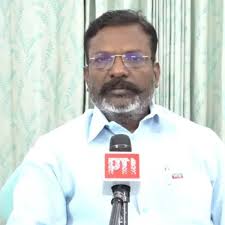
The committee also passed a resolution expressing appreciation to Chief Minister C Joseph Vijay for appointing eight Dalit ministers to key portfolios in the State Cabinet. CHENGALPATTU: The Chengalpattu district executive committee of the Viduthalai Chiruthaigal Katchi (VCK) passed a resolution congratulating party president Thol Thirumavalavan for extending support to the Tamilaga Vettri Kazhagam (TVK) to form a government despite the party not securing a majority on its own. The committee also passed a resolution expressing appreciation to Chief Minister C Joseph Vijay for appointing eight Dalit ministers to key portfolios in the State Cabinet. The resolutions were adopted at the district executive committee meeting held at a private marriage hall near Singaperumal Koil on Saturday. The meeting, held under the direction of Thirumavalavan, was chaired by district secretary Kethu alias Thennavan. VCK headquarters secretary Thagadur Tamizhchelvan attended as a special invitee and addressed party functionaries. Another resolution urged party functionaries from the district to participate in large numbers in the VCK awards function and conference scheduled to be held in Chennai on June 14. The meeting further resolved to intensify publicity efforts for the conference through wall posters, banners and grassroots mobilisation, with a target of bringing more than 5,000 participants from the district. The district executive committee also urged the Tamil Nadu government to install a 125-foot statue of Dr BR Ambedkar in the State, similar to those established in Andhra Pradesh and Telangana. Courtesy : DT Next Note: This news is originally published on https:dtnext.com/bha and is used purely for non-profit/non-commercial purposes, especially human rights
Telangana CM warns SIR could affect Dalits, Adivasis, and migrant workers’ voter registration
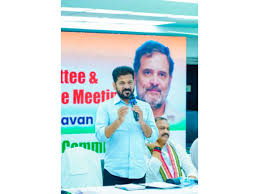
Telangana Chief Minister A Revanth Reddy has raised concerns regarding the Special Intensive Revision (SIR) of the voter list, set to begin in Telangana in June 2026. He highlighted potential risks for vulnerable groups, particularly Dalits, Minorities, Adivasis, Tribals, and migrant workers, whose names might be removed during the revision process. During a Congress Political Affairs Committee meeting, the Chief Minister cautioned that the SIR could pose significant challenges for Lambada, Adivasi, and migrant workers. He said, “In several constituencies, a significant number of people have migrated elsewhere. The possibility of the omission of votes of Dalits, minorities, and women was also not ruled out in the SIR.” Conversely, Telangana BJP President N Ramchander Rao stated that the SIR has no political motives and is a routine task carried out by the Election Commission of India (ECI). Speaking to ANI, he explained that the objective of the SIR is to improve the accuracy of voter rolls by removing discrepancies, similar to exercises conducted in West Bengal and other states. He added, “Like in Bengal and other places, where the fake voters and illegal immigrants are there, they will be deleted. And what Bengal has done, or what the SIR has done, is detect, delete, and deport. So this is what a voter list has to see–whether the voter list contains the real names, whether there are any fake voters in there, whether there are any dead voters, or whether there are any transferred and shifted voters. So SIR has no political overtones in it. It is a regular exercise done by the Election Commission of India.” The Telangana Congress has called for the SIR process to be conducted with transparency. A delegation of state Congress leaders has met with the State Chief Electoral Officer, urging that the revision be carried out transparently and extended over a sufficient period, noting no major elections are scheduled in the state. On May 14, 2026, the Election Commission of India announced the Phase-III Special Intensive Revision of electoral rolls across 16 States and three Union Territories, covering over 360 million electors, including Telangana. The Commission said the revision would be coordinated with the ongoing house listing component of the Census to ensure efficient use of resources. For Telangana and Punjab, the qualifying date is October 1, 2026. The schedule includes a preparation phase from June 15 to June 24, 2026; Booth Level Officer visits from June 25 to July 24, 2026; and rationalisation completed by July 24, 2026. The draft electoral roll will be published on July 31, 2026, with claims and objections open between July 31 and August 30, 2026. The notice phase and disposal will continue from July 31 to September 28, 2026, and the final roll will be published on October 1, 2026. Courtesy : TNM Note: This news is originally published on https:/thenewsmill.com/bha and is used purely for non-profit/non-commercial purposes, especially human rights
Delhi Govt to issue Pink Saheli Smart Cards free of cost to women andtransgenders; how to get your card and which documents are required, explained
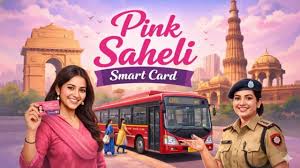
The Delhi government recently announced that the old paper Pink Tickets will be completely phased out by the end of July this year. New Delhi: There is great news for the women of Delhi. They will no longer need to stand in long queues or brave crowds to obtain their DTC bus ‘Pink Passes.’ The Delhi government is now transitioning from paper tickets to a ‘Pink Card’ system. Furthermore, starting in August, paper tickets will be completely discontinued. To ensure women do not face hardship when purchasing these Pink Cards, the Rekha Gupta-led Delhi government is set to organise special camps across most of the city’s neighbourhoods and streets. What is Pink Saheli Smart Card? The Pink Saheli Smart Card is a digital initiative launched by the Delhi government on March 2, 2026. With this card, you will no longer need to obtain paper-based pink tickets from the bus conductor repeatedly. The Pink Saheli Smart Card functions as a type of National Common Mobility Card (NCMC); you simply need to ‘tap’ it upon boarding the bus, and your free journey will be automatically registered digitally. Old Paper Tickets to be Discontinued from July If you are still relying on the old paper-based Pink Tickets for your commute, they will be discontinued from July. The Delhi government recently announced that the old paper Pink Tickets will be completely phased out by the end of July this year. Consequently, starting in August, only those possessing a Pink Saheli Smart Card will be eligible to travel for free on DTC buses. When and Where Will Special Camps Be Held? To spare women from having to stand in long queues at SDM offices or DTC depots amidst hot and humid weather, the government is organizing these special camps. Acting under the directives of Delhi Chief Minister Rekha Gupta, the government—in collaboration with Resident Welfare Associations (RWAs)—will set up these camps right within your own neighbourhoods. This initiative is set to launch on Sunday in Central Delhi’s Nabi Karim area and will gradually be expanded to cover all other parts of Delhi as well. Who Is Eligible, And What Are The Criteria? The Pink Digital Smart Card scheme is designed primarily for all women and transgender citizens residing in Delhi. Any woman or girl living in Delhi who is over the age of 12 can obtain her card under this scheme free of cost. This card will not only enable free bus travel but can also be topped up with funds to be used like a standard smart card on the Delhi Metro, Namo Bharat, and other public transport services. Which Documents Are Required For The Pass? To obtain the Pink Digital Smart Card, applicants must possess and produce an Aadhaar card with a Delhi address, an active mobile number, and two passport-sized photographs. Government officials present at the camps will verify these documents, and your Digital Pink Saheli Smart Card will be issued to you on the spot. Written by: Tahir Qureshi Edited by: Tahir Qureshi Courtesy : India.com Note: This news is originally published on https:/india.com/bha and is used purely for non-profit/non-commercial purposes, especially human rights
YSRCP MP urges Justice Balakrishnan Commission to grant SC status to Dalit Christians
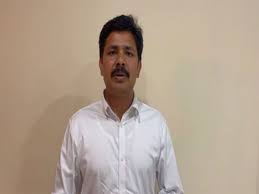
The Yuvajana Sramika Rythu Congress Party (YSRCP) MP Maddila Gurumoorthy has written to the Chairperson of the Justice Balakrishnan Commission requesting the inclusion of Dalit Christians under the Constitution (Scheduled Castes) Order, 1950, to secure constitutional equality, social justice, and statutory protection. A YSRCP delegation led by Gurumoorthy met the commission’s Chairperson in New Delhi on Saturday, submitting a representation that seeks to extend Scheduled Caste status to Dalit Christians. In the letter, Gurumoorthy stated, “I most respectfully submit this representation before the Hon’ble Justice Balakrishnan Commission seeking inclusion of Christians of Scheduled Caste origin within the ambit of the Constitution (Scheduled Castes) Order, 1950, in furtherance of the constitutional principles of equality, secularism, social justice, and substantive non-discrimination.” The MP cited a unanimous resolution passed by the Andhra Pradesh Legislative Assembly on March 24, 2023, in which former Chief Minister YS Jagan Mohan Reddy and the YSR Congress Party acknowledged that Dalit Christians remain socially and economically backward, and recommended their inclusion in the Scheduled Castes list. Gurumoorthy wrote, “It is pertinent to submit that the former Chief Minister, Shri Y. S. Jagan Mohan Reddy, on behalf of the YSR Congress Party, through a unanimous resolution adopted by the Andhra Pradesh Legislative Assembly on 24 March 2023, categorically resolved that Dalit Christians continue to remain socially, educationally, and economically backward to the same extent as Scheduled Castes professing Hinduism, Sikhism, and Buddhism, and accordingly supported their inclusion in the Scheduled Castes list.” He alleged that Dalit Christians face social, educational, and economic disadvantages similar to other Scheduled Castes despite exclusion based on religion. He noted that conversion to Christianity does not erase caste identity or the historical discrimination experienced by the community. Gurumoorthy argued, “The continued exclusion of Dalit Christians constitutes an arbitrary religion-based classification lacking any rational nexus with the constitutional object of protective discrimination. Conversion to Christianity has neither extinguished caste identity nor eliminated the historical and continuing social disabilities attached to their caste origin. Despite exercising freedom of religion under Article 25 of the Constitution, Dalit Christians continue to face caste-based exclusion, social segregation, economic deprivation, and institutional discrimination.” He further stated that this exclusion undermines the constitutional mandate under Article 46, which obliges the State to protect weaker sections from social injustice and exploitation. He claimed that Dalit Christians suffer caste-based disadvantages identical to other Scheduled Castes but remain outside the scope of the Scheduled Castes and Scheduled Tribes (Prevention of Atrocities) Act, 1989, resulting in a legal and statutory gap. Gurumoorthy asserted, “The present legal position also frustrates the constitutional vision under Article 46, which obligates the State to protect weaker sections from social injustice and exploitation. Despite suffering identical caste-based vulnerabilities, Dalit Christians remain excluded from protection under the Scheduled Castes and Scheduled Tribes (Prevention of Atrocities) Act, 1989 solely on account of religion, thereby creating a serious constitutional and statutory vacuum.” The MP emphasised that Article 341(2) empowers Parliament to include communities in the Scheduled Castes list, and urged that this authority be exercised in accordance with current social realities and constitutional principles. He concluded, “It is respectfully submitted that Article 341(2) expressly empowers Parliament to include communities within the Scheduled Castes list by law. The constitutional power vested therein must now be exercised in consonance with contemporary social realities and constitutional morality.” Courtesy : TNM Note: This news is originally published on https:/thenewsmill.com/bha and is used purely for non-profit/non-commercial purposes, especially human rights
5,423 SC/ST Act cases in Madhya Pradesh have been pending for more than five years, with the highest pendency in these districts.
The Directorate of Public Prosecution has issued strict instructions, and a special drive will be launched to resolve old cases. Bhopal. The pending status of cases registered under the Scheduled Castes and Scheduled Tribes (Prevention of Atrocities) Act, 1989, in Madhya Pradesh is becoming a matter of concern. A total of 5,423 cases related to this Act have been pending in various courts across the state for more than five years. The highest number of pending cases is registered in Jabalpur district, where 909 cases have been awaiting justice for years. Followed by Sagar with 842 cases and Rewa with 417 cases. These figures highlight the slow pace of the judicial process and the lack of timely justice for victims. In light of the ever-increasing pendency, the Madhya Pradesh government and the Public Prosecution Department have become active. Recently, the Directorate of Public Prosecution, Bhopal, issued instructions to all district prosecution officers to expedite the disposal of old cases on a priority basis. Hundreds of cases pending for years in many districts According to state data, in addition to Jabalpur, Sagar, and Rewa, districts like Chhatarpur, Gwalior, Guna, Morena, and Ujjain also have a large number of cases pending in courts for years. In these districts, victims have been waiting for justice for a long time. On the other hand, the situation appears relatively better in some districts. In Katni, Tikamgarh, Neemuch, Mandsaur, Dindori, and Dhar districts, the number of cases pending for more than five years is reported to be less than five. In Narmadapuram, Khandwa, and Harda, only one case each is pending for more than five years. The data on pending cases under the SC/ST (Prevention of Atrocities) Act, 1989, in Madhya Pradesh reflects the increasing burden on the judicial system. The highest number of 909 cases are pending in Jabalpur, followed by 842 in Sagar, 417 in Rewa, 390 in Chhatarpur and 383 in Gwalior. Besides, 303 cases are pending in Guna, 247 in Morena, 234 in Ujjain, 212 in Shivpuri, 200 in Damoh, 167 in Vidisha, 143 in Chhindwara, 112 in Dewas, 85 in Shahdol, and 81 each in Indore and Raisen. On the other hand, 77 cases are pending in Ashoknagar, 71 in Balaghat, 69 each in Bhopal and Umaria, 62 each in Khargone and Seoni, 33 in Panna, 28 in Satna, 24 in Ratlam, 21 in Bhind, 19 in Mandla, 15 in Agar, 11 in Shajapur and 10 each in Betul and Singrauli. The least number of pending cases have been registered in Sidhi district, where only 9 cases are pending. There are 9 districts where less than five cases are pending for more than five years. Four cases in Katni, two each in Tikamgarh, Neemuch, Mandsaur, Dindori and Dhar and one each in Narmadapuram, Khandwa and Harda have been reported to be pending for more than five years. Most notably, in eight districts of the state: Alirajpur, Anuppur, Barwani, Burhanpur, Datia, Jhabua, Sehore, and Sheopur, not a single case related to the SC/ST Act is pending for more than five years. This is believed to be the result of improved coordination at the judicial and prosecution levels. Special drive to begin for old cases Following directives issued by the Directorate of Public Prosecution, a special campaign will now be launched across the state to resolve old pending cases. Prosecution department officials have been instructed to regularly monitor such cases and make efforts to expedite the trial process in the courts. Special emphasis will be placed on ensuring the timely appearance of witnesses, providing necessary documents, completing pending evidence, and effective advocacy in the courts. In cases where legally feasible, efforts may also be made towards peaceful resolution and settlement with the consent of both parties. Questions are being raised about the slow pace of the judicial process. Cases filed under the SC/ST Act fall under the category of serious crimes involving social discrimination, violence, and harassment. The delay in delivering verdicts in such cases for years raises questions about the constitutional rights of victims and the justice system. Social organizations and rights activists say that many victim families face mental, financial, and social pressure due to the lengthy judicial process. Experts believe that to expedite these cases, there is a need to increase the number of special courts, fix accountability of prosecuting officers, and ensure timely trials. Strengthening witness protection and digital case monitoring systems is also considered essential. Speaking to The Mooknayak, Pradeep Ahirwar, former member of the State Scheduled Caste Commission and State President of the SC Congress, said that the years-long pendency of SC/ST Atrocities Prevention Act cases is extremely worrying. He said that victims from Dalit and tribal communities approach the courts with the hope of justice, but the long pending cases undermine their trust in the justice system. Ahirwar alleged that the government and administration are not serious about resolving these cases quickly, despite the law’s provision for special courts and speedy trials. He demanded that a special campaign be launched to expedite the pending cases and ensure timely justice for victims. Action will be monitored by the government. According to sources, old cases will now be reviewed regularly at the district level. The prosecution department will prepare a list of pending cases in the courts and prioritize them for hearing. The government’s goal is to expedite the disposal of cases pending for years, ensuring timely justice for victims. Speaking to The Mooknayak, legal expert and advocate Mayank Singh said that the SC/ST (Prevention of Atrocities) Act, 1989, is an important law related to social justice, aimed at protecting Dalit and tribal communities from oppression and discrimination. He said that the long-standing pendency of cases under this Act is a serious concern for the justice system, as “justice delayed is justice denied.” Mayank Singh said that reducing the backlog will not be possible without the appointment of adequate judges in special courts, regular hearings, and an effective investigation system. What is the SC/ST Act? The Scheduled
Three minors among eight held for attack spree in Nellai, Tenkasi
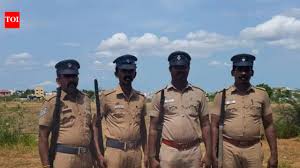
On Friday evening, the same gang, with some different members, carried out its third attack at Mathakovil street in Nettur village where Dalit Christians reside. TENKASI/TIRUNELVELI: In a joint operation, Tenkasi and Tirunelveli police on Saturday apprehended eight persons, including three juveniles, in connection with a two-day sickle-attack spree which left 10 people — most of them Dalits — injured in four villages across the two districts. Police are searching for five more suspects. The attacks began on Thursday in Brahmadesam village under Ambasamudram limits in Tirunelveli district when a gang of youngsters on two-wheelers attacked Manikandan, a 29-year-old SC man, injuring his left hand, police sources said. “The gang had attempted to extort money from Manikandan. Then they visited a sculpture workshop belonging to one Selva Ganesan at Vaagaikulam village with the intention of getting money from him. Unable to find him, they left the area, inflicting minor injuries on a pedestrian on their way,” sources said. On Friday evening, the same gang, with some different members, carried out its third attack at Mathakovil street in Nettur village where Dalit Christians reside. Suspects not revealed, Dalits threaten to strike Sources said nine youngsters, with their faces covered, attacked six persons, most of whom are Dalit Christians, with sickles. After the attack in Nettur that falls under Tenkasi’s Alangulam police limits, the gang attempted to escape via Therkupatti under Manur police limits in Tirunelveli. When two passersby, identified as Mubarak (30) and Abdul Rahman (36), questioned their reckless driving, the gang injured the duo. Police said three different FIRs were filed against the gang in connection with the four attacks. “During the search carried out by Tirunelveli and Tenkasi police, eight suspects were arrested. Search is on to nab remaining accused,” police sources added. Meanwhile, Dalit women from Nettur were upset that the police had not revealed the identity of the suspects and threatened to resume their blockade of the Alangulam-Reddiarpatti Road. They had withdrawn the protest on Friday night after police promised action. CPM state secretary P Shanmugam and PMK president Anbumani Ramadoss condemned the attacks, while TMMK leader John Pandian visited the village and consoled the victims’ families. Courtesy : TNIE Note: This news is originally published on https:/thenewindianexpress.com/bha and is used purely for non-profit/non-commercial purposes, especially human rights
Dalit girl in Etah accused of molestation: Accused threatens to kill victim, police register FIR

A Dalit girl in the Jalesar area of Etah district has accused a young man from the same village of molesting, attempting to strangle her, and threatening to kill her. Police have registered an FIR against the accused and initiated an investigation. In her complaint to the police, the girl stated that she was returning home from her farm at around 7:30 pm on Saturday evening when Sanju, son of Mahipal, a resident of the village, stopped her on the way and molested her. According to the victim, when she resisted, the accused Sanju attempted to strangle her and threatened to kill her. When the girl screamed, the accused fled the scene. The victim also alleged that she is being continuously harassed by the accused, leaving her and her family in fear. The girl has also expressed concern for her safety. The Kotwali police have registered an FIR against the accused Sanju under relevant sections based on the victim’s complaint. Police say the case is being thoroughly investigated and the search for the accused is ongoing. Nand Kumar | Etah Courtesy: Hindi News
LJP launches ‘Towards the Villages’ campaign in Bhadohi: Dalit Chaupal in Tulapur, emphasis on social justice and organizational expansion
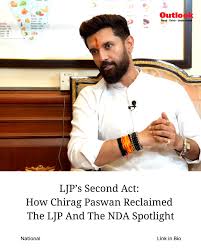
The Lok Janshakti Party (Ram Vilas) organized a Dalit Chaupal and rural public dialogue program in Tulapur village of the Gyanpur assembly constituency in Bhadohi district, aimed at promoting social justice, constitutional rights, and organizational expansion. This program marked the launch of the party’s ambitious campaign, “LJP Goes to the Villages,” in Bhadohi district. A large number of people from the Pasi community, Dalits, backward classes, and all sections of society participated in this program. On this occasion, party leaders pledged to go from village to village, strengthening the organization and spreading the party’s policies and ideology to the last person in society. In his address, Advocate Rajiv Pasi, the chief guest and former President of the Lok Janshakti Party (Ram Vilas), highlighted the contributions of the party’s founder and former Union Minister, the late Ram Vilas Paswan, to social justice and Dalit upliftment. He said that throughout his political career, the late Paswan strongly raised the voice of the poor, the exploited, the deprived, and the Dalit community on the national stage. Postage Stamps Released Pasi stated that due to the efforts of the late Ram Vilas Paswan, postage stamps were issued in honor of Maharaja Bijli Pasi and the brave woman Uda Devi Pasi. He also played a key role in installing the portrait of Bharat Ratna Baba Saheb Dr. Bhimrao Ambedkar in the Parliament House. He said that today the party is reaching out to every village with those same ideals and thoughts. Bhadohi in-charge and State General Secretary Kamal Tiwari said that the party has launched a comprehensive campaign of village-level meetings in Bhadohi district. He expressed confidence that in the future, the Lok Janshakti Party (Ram Vilas) will play an important and decisive role in Bhadohi politics. Addressing the workers, Tiwari said that organizational expansion will be given priority. The target has been set to add 10,000 new workers to the party within the next month. To this end, village-wide gatherings, membership drives, and outreach programs will be organized. Satyam Pandey | Bhadohi (Sant Ravidas Nagar) Courtesy: Hindi News
2027 Assembly Polls: UP Cabinet Expansion Reveals BJP’s Electoral Vulnerabilities
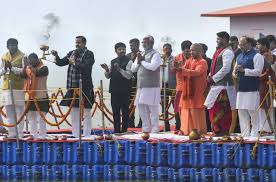
By trying to concede more space to OBCs and Dalits, the BJP has acknowledged the Opposition’s improved caste arithmetic as well as the hard bargaining potential of these communities. Uttar Pradesh Chief Minister Yogi Adityanath with cabinet ministers performs ‘Ganga Pujan’ during a visit to review preparations for the ‘Magh Mela 2026’, at Sangam, in Prayagraj, Saturday, Nov. 22, 2025. Photo: PTI New Delhi: Whether driven by social engineering, compulsions of transactional coalition politics or a defensive response to electoral reverses in 2022 and 2024, there is a jump in Other Backward Classes (OBC) and Dalit castes in Uttar Pradesh chief minister Yogi Adityanath’s council of ministers. Adityanath is serving his second term as chief minister in Uttar Pradesh and faces a tough assembly election next year. An analysis by The Wire of ministerial berths assigned since Adityanath came to power in 2017 makes this shift in their caste composition more visible. In comparison to his first tenure, Adityanath’s current stint has allocated significantly more space to OBCs and Dalits at the direct expense of the traditional ‘upper castes’ (UCs). However, notwithstanding the gradual increase in representation of the marginalised and backward Hindu communities, UCs, in particular Brahmins and Thakurs, continue to enjoy ministerial berths disproportionately higher than their population in the Bharatiya Janata Party’s (BJP’s) rule. Brahmins and Thakurs are the single biggest beneficiaries of ministerial posts under Adityanath 2.0 with a combined strength of 15, which is 25% of the total berths. In comparison, Dalits, who make up 21.5% of the state’s population, have only 18% representation in the council of ministers. This is only marginally better than the 15% representation they enjoyed during the tail-end of Adityanath’s first government. Looking ahead With the assembly elections less than a year away, the BJP has started the process of adjusting its caste arithmetic. After capturing vast swathes of the electoral field in India’s largest and most politically significant state in the 2014 and 2017 elections, the saffron party has been constantly losing ground. This makes the 2027 assembly election the first one the BJP would fight since 2014 on the heels of a popular defeat in the state in the 2024 parliamentary polls. The BJP’s gameplan in UP has primarily hinged on projecting the unity and representation of Hindus, cutting across caste lines. Last week, Adityanath expanded his council of ministers to its maximum allowed strength (60). Six new ministers, including two cabinet ministers, were inducted into Adityanath’s team, while two existing ministers were promoted with independent portfolios. Of these six new ministers, five hail from backward and Dalit Hindu castes. The cabinet expansion and induction of ministers from these communities is part of a considered narrative to project caste balance among different Hindu ‘jatis’. The BJP’s caste realignment also appears to be a direct defensive reaction to a resurgent Opposition led by Samajwadi Party (SP) chief Akhilesh Yadav. The SP chief has made concerted efforts to shift from a rigid ‘Muslim-Yadav’ image, pivoting towards a broader caste rainbow under the banner of PDA (Pichda-Dalit-Alpsankhyak). This reinvention of Mandal politics through a Kanshi Ram-esque formula of ‘proportional representation’ has significantly altered the caste game in the state. The ruling party’s cabinet provides a clear window into the broader socio-political dynamics of its rule. The Wire extracted the caste background of every minister in UP under the two governments of Adityanath and compared them at their peak strength – September 2021 for the first term and May 2026 for the second term. During his first tenure (2017-2022), Adityanath’s council of ministers had a higher percentage of UCs. Out of the 60 ministers, 27 (45%) were UC, while 23 (38.3%) were OBC and nine (15%) were Dalits. The government also had a single token Muslim minister. In comparison, in his second term, the share of OBC and Dalit representation has increased. The number of UC ministers has fallen: of the 60 ministers, 26 (43.3%) are OBC, 22 (36.7%) are UC and 11 (18.3%) are Dalits. The number of Muslims remains the same – one. The second Adityanath government has three more OBCs, two additional Dalits and five fewer UCs than during the first term. It is important to point out that OBCs are the single largest bloc in the state, estimated to be between 40 to 45%, or perhaps even higher. Dalits make up 21.5% of the population while Muslims are 19.5%. UCs such as Brahmins, Tyagis, Bhumihars, Thakurs, Baniyas, Kayasthas and Khatris make up the rest. The redistribution of power becomes even more pronounced while examining the representation of cabinet ministers, the most powerful tier of the three ministerial categories. During his first term, Adityanath had 24 cabinet ministers, including himself. An overwhelming 16 (66.7%) berths belonged to UCs. OBCs lagged far behind with just seven (29.2%) cabinet ministers while Dalits had a solitary representative (4.1%). In comparison, today the 23-member cabinet presents a vastly different social profile. OBCs have leaped ahead to hold 11 berths (47.82%), while UC have dropped to 10 (43.47%) and Dalits hold two (8.69%). The Adityanath 2.0 cabinet, the core team of senior ministers, comprises four Brahmins, three Kurmis, two each from the Thakur, Rajbhar, Bhumihar, Jat and Jatav communities, and one each from the Baniya, Noniya Chauhan, Maurya-Kushwaha, Khatri, Nishad and Lodhi Rajput castes. Adityanath is himself a Kshatriya or ‘Thakur’. This increased representation of OBCs in the cabinet can partly be attributed to the BJP’s increasing dependence on smaller OBC allies. Out of the 23 cabinet ministers, four (three OBCs and one Dalit) belong to BJP’s allies. These are the Suheldev Bharatiya Samaj Party (SBSP), Apna Dal (Soneylal), Nishad Party and the Rashtriya Lok Dal (RLD). Upper castes overrepresented at the cost of Muslims But there is another side to this reality. UCs still continue to be overrepresented under the BJP because the BJP does not field Muslim candidates in elections. With no need to make Muslims ministers, the party can make more OBCs and Dalits ministers, while keeping the UCs overrepresented