
Slipper thrown at Pappu Yadav over Ram temple skit; MP alleges bid on life
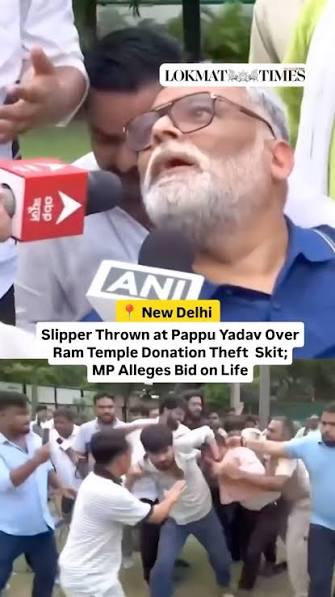
Yadav was addressing the media amid the controversy over the protest staged on Friday, which has led to an FIR being registered in Varanasi against him for allegedly hurting religious sentiments. Independent MP Pappu Yadav was targeted with a slipper during a press conference at his residence on Sunday after he defended his skit inside the Parliament House complex on the alleged theft of donations at the Ram temple. The incident triggered a scuffle between his supporters and the alleged attacker. Yadav was addressing the media amid the controversy over the protest staged on Friday, which has led to an FIR being registered in Varanasi against him, Leader of Opposition in the Lok Sabha Rahul Gandhi and Samajwadi Party MP from Faizabad (Ayodhya) Awadhesh Prasad for allegedly hurting religious sentiments. During the press conference, a man interrupted Yadav, questioned his actions and accused him of insulting Lord Ram before hurling a slipper at the MP. Yadav’s supporters immediately overpowered the man, leading to a brief scuffle. Yadav later alleged that it was an attempt on his life. According to police sources, the alleged attacker has been identified as 34-year-old Sumit, a native of Bulandshahr in Uttar Pradesh who works in an iron fabrication business in Ghaziabad. Police said he has no previous criminal record. Police also said another man, identified as Happy, was waiting in an SUV parked outside Yadav’s residence when the incident took place. Investigators are verifying their claims and probing the motive behind the attack. The controversy stems from a protest staged by Rajesh Ranjan alias Pappu Yadav inside the Parliament House complex on Friday. Dressed in saffron attire, Yadav, along with other Opposition MPs, performed a skit near the Makar Dwar to protest the alleged embezzlement of donations at the Ram temple in Ayodhya. As part of the demonstration, MPs, including Rahul Gandhi, placed money into donation boxes while Yadav slipped cash into his pockets to symbolise the alleged theft of donations at the temple. The BJP on Sunday accused Gandhi and Yadav of hurting Hindu sentiments and demanded that they publicly apologise. However, a defiant Yadav said they were protesting to protect Sanatan and will not be cowed down by any number of FIRs. His remarks came a day after an FIR was registered in Varanasi on a complaint by seers against him, Gandhi and Awadhesh Prasad. Separately, BJP MP Bansuri Swaraj and other party leaders lodged a police complaint in Delhi. The RSS affiliate Vishva Hindu Parishad (VHP) also criticised Gandhi and Yadav, alleging that the two leaders insulted Sanatan Dharma through the protest staged in the Parliament complex. Courtesy : TNIE Note: This news is originally published on https:/thenewindianexpress.com/bha and is used purely for non-profit/non-commercial purposes, especially human rights
Can BJP crack Punjab? Inside its strategy to challenge AAP and Congress in 2027
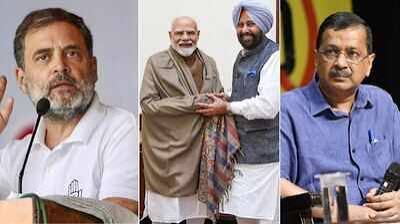
NEW DELHI: When it comes to BJP’s election playbook, there is always a method to the madness. Punjab, which votes early next year, appears to be following the same script. All these headlines, when looked at in isolation, appear to be one-off political developments separated in time. But one look at them together in the context of a wider long-term objective, they appear not just connected but also planned with a purpose. This is a perfect example of the BJP election playbook in action. The BJP, which over the years played second fiddle to the Akalis in Punjab, contested the 2022 elections alone after snapping ties with the Shiromani Akali Dal (SAD). However, it could win only 2 seats with a vote share of 6.6%. Even the 2024 Lok Sabha elections were a huge disappointment. The BJP polled 18.65% of votes but could not win any seat. However, the BJP appears determined not to let the past numbers dictate its future strategy. And that explains the aggression with which the party has gone for the kill in Punjab. Punjab, which over the years alternated between the Congress and the Akalis, broke the duopoly in 2022 when it overwhelmingly voted for Arvind Kejriwal’s AAP. And that perhaps gives BJP its biggest hope as it marshals its resources. Now, let’s analyze all these headlines as a part of one story to understand how the BJP is gearing up to add another state to its ever-expanding kitty. The Ravidassia outreach When Prime Minister Narendra Modi visited Punjab on February 1 this year, the BJP’s election playbook was already in action. The visit was part of a well thought-out and planned outreach that could increase the party’s base and presence in the state. The occasion was the 649th Birth Anniversary of Sant Guru Ravidas Ji. The Ravidassia community form an important electoral bloc of Punjab’s Scheduled Caste population, especially in the Doaba region. A slew of announcements were made, including renaming of Adampur Airport after Guru Ravidas and the launch of the Shri Guru Ravidas Ji Maharaj Express between Jalandhar and Varanasi. It was the start of a planned outreach. That outreach has continued with the Punjab BJP launching the statewide implementation of the ‘Samrasta Sankalp Abhiyan’ from July 29, the auspicious occasion of Guru Purnima, to commemorate the 650th birth anniversary year of Guru Ravidas Maharaj. Punjab BJP chief Kewal Singh Dhillon said the nationwide campaign will continue till February 20 (Magha Purnima) under the guidance of the BJP national leadership and aims to spread Guru Ravidas’s timeless message of equality, dignity, social harmony and social justice across Punjab. Targeted political acquisition The BJP, enriched by its experience from victories in states like West Bengal and Odisha, perhaps knows the importance of organisational strength in winning states. So in Punjab, after breaking its alliance with the Akalis, the BJP has been on an overdrive to build a strong local leadership. After the 2022 elections, several prominent Congress leaders had joined the BJP. And now in the run up to the 2027 electoral battle, seven AAP members of Rajya Sabha from the state are already a part of the party. And this acquisition includes Raghav Chaddha, once the most trusted associate of AAP chief Arvind Kejriwal. Chadha has a good understanding of the electoral thinking of AAP that rules Punjab now and can help the BJP capitalise on its weaknesses. As the elections approach, we could see Raghav Chaddha play a greater role in crafting and implementing BJP’s Punjab campaign. The ‘Dhillon’ signal When the BJP replaced one Congress export Sunil Jakhar with another Kewal Singh Dhillon as its state chief, the change was aimed to send across a message. Dhillon, who is a seasoned politician and a prominent industrialist, became the first Jat Sikh to head the BJP in the state. The purpose was clear: outreach among Sikh voters to help increase the acceptability of the party after its Akali alliance ended. The BJP would hope that Dhillon could help the party expand its rural footprint. Besides Dhillon’s political base is in Barnala, which falls in the Sangrur-Malwa region. This region is considered a stronghold of Punjab chief minister Bhagwant Mann and the Aam Aadmi Party. Ravneet Singh Bittu and Punjab focus Ravneet Singh Bittu, who joined the BJP in March 2024 ahead of the general elections after ending his long association with the Congress, seems to have an important role in the saffron party’s blueprint for Punjab. During the 2024 campaign, Bittu was projected as an important Sikh face for the BJP by none other than Amit Shah. For those who remember, the entire BJP had rallied in support of Bittu after Rahul Gandhi had referred to him as “traitor”. The BJP made Bittu a minister in the Modi government and a member of Rajya Sabha despite his Lok Sabha election loss from Ludhiana in 2024 to showcase his importance. But after his RS tenure ended in June this year, he quit as minister amid hints that he will play a key role in BJP’s Punjab plans. According to reports, in June, Bittu had expressed his desire to work for Punjab in the Vidhan Sabha after spending nearly 17 years in Parliament. Bittu had then said that the BJP made him the minister even though he had lost the 2024 parliamentary elections. “People of Punjab are fed up (with other parties). People are very much aware of development and progress taking place in other (BJP-ruled) states and they want prosperity in Punjab as well,” Bittu had then said. Ravneet Singh Bittu is the grandson of former Punjab chief minister Beant Singh, who was assassinated in 1995. During his political career in the Congress, he was elected MP thrice and also served as the grand-old-party’s leader in the Lok Sabha and as its whip in the Lower House. PM Modi’s ‘double-engine’ promise When Prime Minister Narendra Modi visited Punjab for the second time on July 17, his focus was on development, youth
A rollback of rights, or an imperfect step forward? India amends transgender rights act.
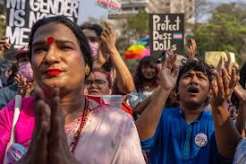
Activists and members of the transgender community shout slogans during a protest against a transgender rights amendment bill passed in the lower house of Parliament, in Mumbai, India, March 25, 2026. On a hot evening at Jawaharlal Nehru University in south Delhi, students sit painting protest banners beneath rainbow flags. Verses of the Urdu poets Faiz Ahmed Faiz and Habib Jalib – long associated with protest movements across South Asia – play from a speaker nearby. They have gathered to oppose a new law that has ignited a debate that echoes in many parts of the world: Who has the authority to determine a person’s gender identity? The individual, a doctor, or the state? Since 2014, India has granted transgender people legal recognition by grounding their self-identification in constitutional rights. That changed in March when the Parliament passed the Transgender Persons (Protection of Rights) Amendment Act, which requires medical evaluation and state certification of gender. Why We Wrote This India has changed the process for how individuals identify their gender, sparking protests and court challenges. The government says this amendment is about ensuring that benefits reach the right people, while LGBTQ+ rights activists call the law regressive. India’s new law comes in the context of wider debates about identity in India under the leadership of Prime Minister Narendra Modi. Supporters say the change is necessary to prevent misuse of welfare programs intended for transgender individuals. Critics say it reverses a decade of legal gains. The amendment is currently being challenged at the Supreme Court, where trans rights advocates are arguing that it violates Indians’ constitutional rights. “There is nothing wrong with a simple verification process,” says Arvind Sharma, a master’s student, outside the Jawaharlal Nehru University protest. “This law will help the actual transgender community and expose the fake ones.” Despite its strength, US military faces a reputational crisis over Iran Students gather beneath rainbow flags during a protest against India’s Transgender Persons (Protection of Rights) Amendment Act at Jawaharlal Nehru University in New Delhi, April 11, 2026. Supporters of the law say it creates a more accountable system for legal recognition, while critics argue it rolls back transgender rights. Aakash Hassan The debate is deeply personal for Bhumi, a transgender undergraduate from Lucknow in northern India who, like many in India, uses a single name. Raised as a girl and recognized as such in her official documents, she worries the new law could place her identity under state scrutiny. “I don’t want someone else deciding whether I am transgender enough,” she says. “That feels invasive and humiliating.” Get the Monitor Stories you care about delivered to your inbox. Your e-mail address Sign up By signing up, you agree to our Privacy Policy. “I hope the courts will intervene,” she adds. How this fits into the history of trans rights in India South Asia has a long, unique history of gender diversity. For centuries before modern LGBTQ+ rights movements emerged, the region recognized there were communities that existed outside biological designations of gender. Most famous are the hijras, who traditionally attended weddings, births, and religious ceremonies across the subcontinent, offering blessings and receiving gifts or alms in return. In southern India, two other groups, the Aravanis and jogtas, uphold local Hindu traditions. America’s debt is skyrocketing. Why isn’t Congress doing anything about it? Visibility has not translated into social acceptance. The term hijra has long carried social stigma, and transgender Indians face high levels of discrimination, family rejection, and economic exclusion. Yet the existence of these third-gender communities has helped shape the LGBTQ+ rights movement in India. While Western countries debated whether trans people existed, in India, that was a widely accepted fact. It made it harder to argue that LGBTQ+ rights are a foreign import. On the contrary, activists in India say that anti-LGBTQ+ discrimination is a colonial holdover. But this history brings unique challenges, too. For years, terms like “transgender” and “third gender” were largely treated as synonymous with belonging to one of these traditional communities, which left many Indians in a legal gray area. That changed in 2014, when India’s Supreme Court recognized transgender people and affirmed their right to determine their own legal gender markers – no government or medical sign-off required. Nazariya Kutty gets ready in a parlor to participate in the Koovagam transgender festival in Villupuram, in the southern Indian state of Tamil Nadu, April 28, 2026. Mahesh Kumar A./AP The unanimous ruling was seen by supporters of self-identification as a watershed moment, pushing India ahead of much of South Asia on transgender rights. Yet the ruling itself did little to outline how benefits and protections would be delivered to India’s trans population, which researchers estimate is between 2 million and 6 million people. (India’s 2011 census recorded 487,803 transgender people, but that is broadly considered a vast undercount due to a reluctance to self-report.) A 2019 law called the Transgender Persons (Protection of Rights) Act prohibited discrimination against trans Indians, retained a broad definition of transgender identity, and outlined a process for trans Indians to obtain official recognition through district authorities. Many LGBTQ+ activists criticized the 2019 act for creating bureaucratic barriers, but welcomed the reaffirmation of the right to self-identification. The new law signed in March “erases all of that,” says Arundhati Katju, a senior advocate challenging the amendment before the Supreme Court. The new law narrows the definition of transgender people to recognized sociocultural communities or those meeting specific biological criteria, and grants the state the authority to determine who qualifies. The debate today Medha Vishram Kulkarni, a member of Parliament from the ruling Bharatiya Janata Party (BJP) and a primary supporter of the new act, says the government has “no intention of undermining” Indians’ constitutional rights. “Self-identification is central to an individual’s dignity and lived experience,” she says, in a written interview with the Monitor. “However, where legal entitlements, welfare benefits, or official records are involved, the State also has a responsibility to ensure transparency, consistency, and accountability.” When
UP horror: 9-year-old dalit girl ‘gang-raped’ by 5 minors near school ground
SHAHJAHANPUR: Five minors have been booked for allegedly gang-raping a nine-year-old dalit girl in a village in Uttar Pradesh’s Shahjahanpur, police said on Saturday. Circle officer (Tilhar) Vidush Saxena told PTI that the incident occurred on Friday evening when the girl was playing with other children at a school ground. The accused minors, aged between 10 and 14 years, allegedly took her to a nearby field. Citing the FIR, Saxena said the girl’s family alleged that the accused minors gang-raped her in the field and fled after being spotted by the field owner. The girl later returned home and informed her mother about the incident, following which a complaint was filed and a case was registered late on Friday night, the officer said. Police have booked the accused under relevant sections of the Bharatiya Nyaya Sanhita (BNS), the Protection of Children from Sexual Offences (POCSO) Act and the Scheduled Castes and the Scheduled Tribes (Prevention of Atrocities) Act. The accused minors are being questioned in the presence of their guardians, while the survivor has been sent for a medical examination, police said. (The victim’s identity has not been revealed to protect her privacy as per Supreme court directives on cases related to sexual assault) Courtesy : TOI Note: This news is originally published on https:/timesofindia.com/bha and is used purely for non-profit/non-commercial purposes, especially human rights
Karnataka: Dalits prevented from entering temple, allowed entry in presence of police and administration
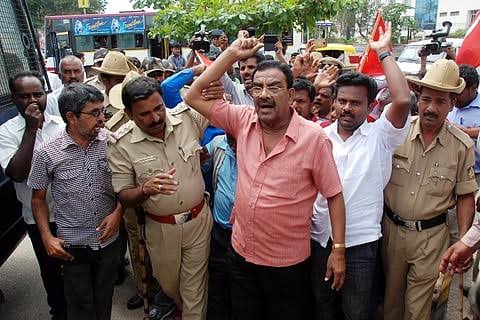
Allegations of attack on Dalits entering temple. Complaint filed against 42 people. Entry into temple led by officials. Davanagere (Karnataka): An allegation of Dalits being prevented from entering a temple has surfaced in Davanagere, Karnataka. The incident reportedly occurred in the Channagiri taluk of the district on Friday night. Three Dalits filed a complaint at the Basavapatna police station, alleging that a group of 20 people attacked them while they were entering the temple. As soon as the incident came to light, Tehsildar Nagaraj, AC Dr. Channappa, SP H.T. Shekhar, and police force visited Malalakere village. They inspected the area and escorted the Dalits inside the temple. Following this, they held a meeting with leaders of both communities in the village and instructed them to live in harmony. According to the police, the victims told them that the ‘Ajji Habba’ festival was being celebrated on Friday. While returning from the festival, they were attacked by 20 people on their way to the temple. They were not allowed inside. Meanwhile, a leader from the other community denied these allegations. He said, “They were trying to enter the temple after consuming alcohol, so they were stopped.” PSI Imtiaz of Basavapatna police station said, “Last night, there was a minor clash between two groups. Dalits alleged that they were not allowed to enter the temple, while the other group claimed they were drunk. A peace meeting was held in the presence of members of both groups and officials.” A complaint has been filed against a total of 42 people at the Basavapatna police station. Channagiri Assistant Commissioner (AC) Channappa said, “A case of SC-ST atrocities has been registered at the Basavapatna police station. We will take action against the culprits.” He further said that the youths who were attacked are being treated at the Chigateri District Hospital. Channappa said, “The police are investigating the matter. The truth will emerge only after the investigation. No one should take the law into their own hands. We have resolved this dispute by allowing the Dalits to enter the temple and perform puja.” Courtesy: Hindi News
Explainer: Why Dalits are marginalized in Punjab despite having the largest population, marginalized in politics
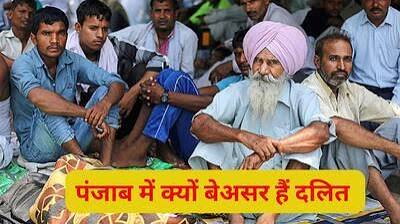
Despite constituting a third of Punjab’s population, why is Dalit politics weak? Let’s explore the reasons… In states like Uttar Pradesh and Bihar, Dalit politics has always held sway. Whether it’s previous generation leaders like Kanshi Ram, Ram Vilas Paswan, and Mayawati, or newer leaders like Chandrashekhar Azad and Chirag Paswan, these leaders have a strong appeal, and this has led to significant Dalit votes in Bihar. However, this is not the case in Punjab, one of the country’s leading states in terms of Dalit population. It has been a matter of curiosity for people across the country as to why this community is not at the center of politics in a state with a 32 percent Dalit population. Not only this, Dalits are also in a weak position in terms of education, social influence, and economic status. Their participation in the Punjab government’s cabinet has also been low. 96.6 percent of Dalits in Punjab do not own any agricultural land. Nearly 60 percent of these people follow the Sikh faith, yet they are considered untouchables and face discrimination. The state has a total of 117 assembly seats, and 34 of these seats are reserved for Dalits. The number of Dalit MLAs in the assembly is crucial for any government. Yet, they have never ruled Punjab. This is because their population is divided among various castes, and there is also a divide between Hindus and Sikhs. While Dalit votes are divided, Jat Sikhs have a strong hold on the social system in Punjab. This is because they control most of the agricultural land. They also have a strong hold on various institutions and rural systems, including gurdwaras. Bhagwant Mann’s cabinet includes five Dalit leaders: Harpal Singh Cheema, Dr. Baljit Kaur, Lalchand Kataruchak, Ravjot Singh, and Mohinder Bhagat. This figure represents 27 percent of the total 18 ministers in the cabinet. The previous Congress government had three ministers. However, it is also a fact that Charanjit Singh Channi was made the Chief Minister, becoming the state’s first Dalit Chief Minister. The Akali-BJP government that lasted until 2017 also had three Dalit ministers. Channi was subsequently appointed Chief Minister by the Congress in 2022, but this failed to significantly bolster the Dalit vote. He received only 31 percent of Dalit votes, while the AAP secured 38 percent. Punjab lost the Congress under the leadership of Charanjit Singh Channi, the only Dalit Chief Minister, and even now, he is in no position to be considered the leader of the Punjab Congress in the upcoming elections. While the Jat community constitutes only 22 percent of the population in Punjab, they have a significant representation. Interestingly, the BSP originated in Punjab, and Kanshi Ram was also a native of the state. However, the BSP has never been very strong in Punjab. Dalits here have primarily voted for different parties. These include the Congress, the Akali Dal, and now the Aam Aadmi Party. The BSP received less than 2% of the vote here in 2022. Why Dalits lack political dominance despite constituting 32% of the population? Although the Dalit population in Punjab is 32%, they own only 3.5% of the total land. According to the Punjab Village Common Land Act of 1964, one-third of the land belonging to the village community is reserved for Dalits. However, this provision remains only on paper and has not been properly implemented on the ground. Due to landlessness, the development of Dalits has been hampered. 73% of Dalits living in villages are landless. Furthermore, due to lack of land, their income is low, and unlike other communities, their children are not able to go abroad. This is because they have limited means of earning. It is also true that while the Sikh faith advocates equality, casteism is a reality here as well. They are denied entry into Gurudwaras established by Jat Sikhs or other upper castes. According to a study, Dalits who converted to Sikhism have established 10,000 Gurudwaras and Ravidas Deras. This is to ensure autonomy, at least in religious matters. Furthermore, a large number of Dalits are also converting to Christianity. Dalits in Doaba are a different story, with children also migrating abroad. While the situation of Dalits is weak in most parts of Punjab, the situation in the Doaba region is different. There are many villages here where the Dalit population ranges from 40 to 65 percent. Exposure to urban life and employment have strengthened their position. Furthermore, a significant number of Dalits from here have migrated abroad. This has allowed them to maintain a strong position despite the decline in farming. However, this has little impact on electoral politics, as the Dalit community is divided along caste and religion lines. Courtesy: Hindi News
Karnataka Cabinet expansion, KCV to arrive with final list
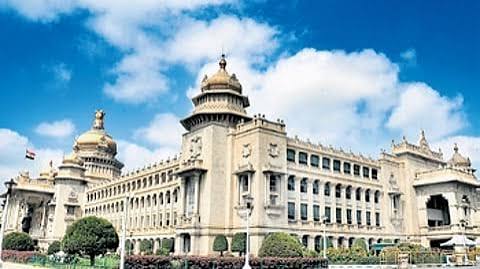
The names of PM Narendraswamy, Basavanthappa, Sharath Bachegowda, Kaneez Fathima Zameer Ahmed and Tanvir Sait too are doing the rounds. BENGALURU: AS cabinet expansion is most likely on Monday, AICC General Secretary KC Venugopal is expected to arrive here from Kerala on Sunday evening with the list of twenty legislators to be inducted as ministers. The swearing-in ceremony at Lok Bhavan is likely at 4 pm. Ministerial aspirants made last-ditch efforts by meeting former CM Siddaramaiah at his Cauvery residence on Saturday. MLAs Yashwant Rayagouda Patil, Appaji Nadagouda, Rizwan Arshad, Vijayananda Kashappanavar, AS Ponnanna, Yasir Ahmed Khan Pathan, Appaji C S Nadagouda, Yashwant Rayagouda Patil and Ashok S Pattan were among them. Transport Minister Byrathi Suresh also met Siddaramaiah. The list of probable include, Ajay Dharam Singh – Kalaburagi (Rajput), Yashwantrayagouda Patil – Indi (Lingayat), T Raghumurthy – Challakere (Valmiki), B Nagendra – Bellary Rural (Valmiki), Shivaraj Tangadagi – Kanakagiri (Bovi Dalit), Salim Ahmed – MLC (Muslim), NS Bosa Raju – MLC (Raju Kshatriya), Santosh Lad – Kalaghatagi (Maratha), SS Mallikarjun – Davanagere (Lingayat), Vijayanand Kashappanavar – Bagalkot (Lingayat), Puttaranga Shetty – Chamarajanagar (Uppara), AS Ponnanna – Virajpet (Kodava), N Cheluvarayaswamy – Nagamangala (Vokkaliga), Shivalingegowda – Arasikere (Vokkaliga), Basavaraj Shivannavar – Byadagi (Kuruba), Laxman Savadi(Lingayat), Laxmi Hebbalkar (Lingayat), Dr Arathi Krishna (Vokkaliga), Annapoorna E Tukaram (ST), and Anekal Shivanna (SC). The names of PM Narendraswamy, Basavanthappa, Sharath Bachegowda, Kaneez Fathima Zameer Ahmed and Tanvir Sait too are doing the rounds. Courtesy : TNIE Note: This news is originally published on https:/thenewindianexpress.com/bha and is used purely for non-profit/non-commercial purposes, especially human rights
Ram Temple skit row: Rahul Gandhi, Pappu Yadav, Awadhesh Prasad booked for ‘insulting Sanatan Dharma’
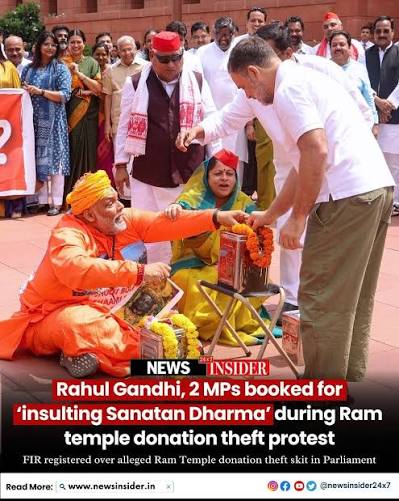
NEW DELHI: Varanasi Police on Saturday registered a case against leader of opposition in the Lok Sabha Rahul Gandhi and two other MPs for allegedly “insulting Sanatan Dharma” and “hurting religious sentiments” during an opposition protest in Parliament, an official said. Rahul Gandhi, independent MP Rajesh Ranjan alias Pappu Yadav, Samajwadi Party’s (SP) Awadhesh Prasad, and several other opposition parliamentarians had on Friday enacted a skit depicting the alleged theft of offerings from the Ram Temple in Ayodhya. Pappu Yadav and Awadhesh Prasad have also been named in the FIR. While Pappu Yadav, dressed in saffron robes, portrayed a temple priest who “stole” the offerings, Awadhesh Prasad represents the Faizabad constituency, which includes Ayodhya.According to Gaurav Banswal, Deputy Commissioner of Police, Kashi Zone, an FIR was registered based on a formal complaint submitted at Kotwali police station by some seers, who alleged that the trio had “insulted” Sanatan Dharma in Parliament. Seer Jagatguru Balak Das described Pappu Yadav’s conduct as “unforgivable”. “No follower of Sanatan Dharma can forget this act. It has hurt our religious sentiments. So we have demanded that a case be registered,” PTI quoted him as saying. On Friday, MPs of the Congress-led opposition INDIA bloc held a protest over the alleged Ram Temple donation theft and police action against student agitators during their July 20 Parliament march. The opposition leaders staged a skit to highlight the alleged temple donation theft. As part of the protest, they placed donation boxes near the stairs leading to the Makar Dwar of Parliament. MPs, including Rahul Gandhi, put money into the boxes, while Pappu Yadav, who sat nearby, was shown slipping it into his pockets. Congress MP Priyanka Gandhi Vadra, SP’s Dharmendra Yadav, and Jharkhand Mukti Morcha’s Mahua Maji were among those who participated in the protest. The SP is aggressively highlighting the issue ahead of the Uttar Pradesh assembly elections scheduled for February-March 2027. The Akhilesh Yadav-led party has been out of power since March 2017. Courtesy : TOI Note: This news is originally published on https:/timesofindia.com/bha and is used purely for non-profit/non-commercial purposes, especially human rights
India’s students do not need PM Modi’s forgiveness, they are owed his apology: Rahul Gandhi
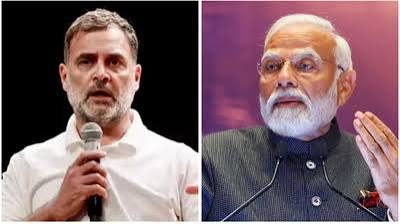
NEW DELHI: Reacting sharply to Prime Minister Narendra Modi’s late night Instagram video on Friday, Leader of Opposition in Lok Sabha Rahul Gandhi while citing leaked papers, cancelled exams and years of hard work of students destroyed in the process, lashed out at the PM for having the “audacity” to speak of “forgiving” students. “India’s students do not need his forgiveness. They are owed his apology,” Gandhi said. In an Instagram video posted on Friday night PM said that he will forgive young protesters accused of abusing him and his late mother, saying they are misguided children and it is “our job to show them the right way”. “Nothing is more painful than seeing a parent grieve their child. Behind every young life lost is a family carrying pain that will never leave them – and serious questions about a broken education system,” Gandhi said in a post on X where he also shared images of his interaction with parents and students. “Leaked papers. Cancelled exams. Years of preparation destroyed overnight. Our students are told to work honestly in a system that is not honest with them. And the Prime Minister has the audacity to speak of “forgiving” students,” Gandhi added. Alleging that the PM has not met a single grieving parent and has not sat with a single student whose future was stolen by a leaked paper, Gandhi said that the students don’t need Modi’s forgiveness rather “they are owed his apology”. Reacting sharply to the PM”s video, Congress general secretary Jairam Ramesh said in a post on X that the “PM enjoys playing the victim card” and added that Modi’s “InstaGram Sabhas are fooling no one”. “Late last night, in an act of supreme self-obsession, the PM said that he forgave our youth. This is an insult to the nation and to our youth which has suffered under his govt and is legitimately demanding an apology from him,” Ramesh said. The Congress leader went on to accuse the PM of using “vile vitriol against his predecessors and political opponents”. “He very frequently peddles lies to defame them, not just in his public speeches but in Parliament itself. He unleashes an army of foul-mouthed abusers both in Parliament and outside and gives them full protection,” Ramesh alleged. The Congress leader said that “the entire nation is wanting the PM to apologise for the trauma suffered by the youth due to paper leaks and the brutality unleashed on student protesters. Ramesh also raised the donation theft by Ram Temple Trust in Ayodhya. “The entire nation is waiting for the PM to apologise for the ‘Chanda Chori Astha Dhoka’ by the Ram Mandir Trust, an establishment which he had grandly announced in the Lok Sabha on February 5, 2020,” he added. Ramesh further said that “the entire nation is still expecting his apology for his Tughlakian decision of Nov 8 2016 that destroyed crores of livelihoods and shuttered lakhs if MSMEs. The list is endless.” Courtesy : TOI Note: This news is originally published on https:/timesofindia.com/bha and is used purely for non-profit/non-commercial purposes, especially human rights
‘Disappointed with PM Modi’: Shehzad Poonawalla’s sarcastic ‘dictator’ jibe at oppn after quitting BJP
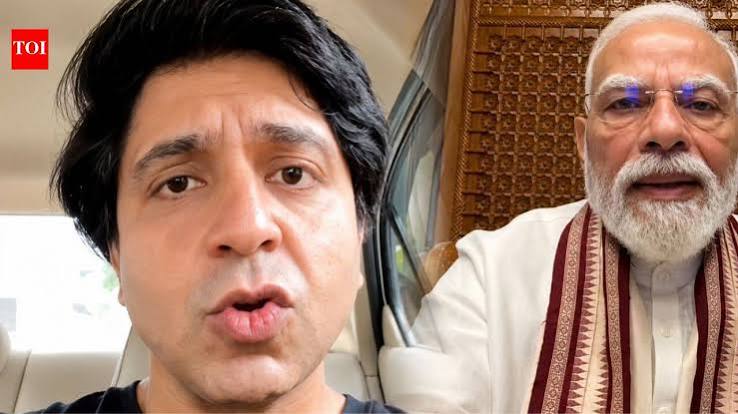
NEW DELHI: A day after resigning from the party, former BJP national spokesperson Shehzad Poonawalla on Saturday released an Instagram video saying he was “disappointed” with Prime Minister Narendra Modi. In a sarcastic jibe at the Congress and its most prominent face, leader of opposition in the Lok Sabha Rahul Gandhi, Poonawalla said that unlike Congress prime ministers, PM Modi, despite being in office for 12 years, was still to become a “dictator.” Poonawalla’s remarks came after PM Modi, in his fifth Instagram video since the recent student protests in Delhi, said he had “forgiven” protesters who allegedly abused him and his late mother during the agitation. Several people, mostly youngsters, were booked for allegedly abusing the PM and his mother, after the protests ended with the resignation of Dharmendra Pradhan as Union education minister on July 25. “I am completely disappointed with Prime Minister Narendra Modi. It has been 12 years and he has still not learnt how to be a dictator,” Poonawalla said in his Hindi video, adding that instead of becoming a dictator, the prime minister appealed for those who abused him to be forgiven. He urged the prime minister to learn “real dictatorship” from former prime ministers Indira Gandhi and Jawaharlal Nehru, Rahul Gandhi’s grandmother and great-grandfather, respectively. Poonawalla, a former Congress member, also referred to cases filed against students in Congress-ruled Karnataka and Kerala. He further referred to the alleged curbing of free speech during Nehru’s tenure and invoked the Emergency imposed by Indira Gandhi in 1975. “Who got all parliamentarians put in jail? Indira Gandhi. Who ordered police to fire at seers? Indira Gandhi,” Poonawalla remarked. The second incident he referred to appeared to be a reference to the 1966 police firing on protesters outside Parliament during a demonstration demanding a nationwide ban on cow slaughter. The former BJP spokesperson also referred to several protest movements that he alleged were “crushed” by Congress governments at the Centre and in various states. “We saw during the 2011 Anna Hazare agitation that 1,200-1,300 people were arrested. Anna Hazare himself was arrested. Rajbala lost her life,” he remarked, referring to the anti-corruption movement led by activist Anna Hazare that had put the then Congress-led UPA government under pressure. Rajbala was a woman protester who died following a Delhi Police crackdown at Ramlila Ground during the agitation. “Come on, Modi ji. It has been 12 years and you have still not become a dictator. You have poured water on the hopes of the Left-liberals,” Poonawalla concluded. PM Modi’s Instagram videos have been described as an attempt by the prime minister to reach out to “Gen Z” — the demographic with the largest participation in the recent student protests. Courtesy : TOI Note: This news is originally published on https:/timesofindia.com/bha and is used purely for non-profit/non-commercial purposes, especially human rights