
‘Pellet injury shattered my Delhi Police dream’: Youth whose FIR came after Rahul’s protest

Jhajjar: The young man for whom Lok Sabha LoP Rahul Gandhi staged a protest at a Delhi police station on Friday had once dreamt of joining the Delhi Police. Jhajjar resident Sahil Lochab says that dream came crashing down on July 20, when he was allegedly hit by pellets during a protest at Jantar Mantar and lost vision in his right eye. Sahil, from Bhupania village, drove a taxi alongside his studies to support his family and was preparing for Delhi Police recruitment. He had enrolled in a graduation programme through Delhi University’s School of Open Learning to balance his studies with work. Sahil’s family moved to Najafgarh around 10 years ago. His father Deepak has been disabled since childhood and had worked occasionally as a private taxi driver. Sahil says he began driving at a young age, contributing to household expenses and helping fund his younger brother’s education. Recounting the Jantar Mantar incident, Sahil said he suddenly felt pellets strike his chest, arm and right eye. “When I turned around, I saw a person in a blue uniform carrying a large firearm, from which several pellets were fired,” he alleged. His face, hand, chest and eye began bleeding and he lost vision in the right eye, he said. He was initially taken to a nearby hospital before being referred to Safdarjung Hospital and subsequently AIIMS. Sahil alleged that paramilitary personnel used pellet guns during the protest and he had sought an impartial investigation to establish who fired the pellets and under what circumstances. During his treatment at AIIMS, Sahil said, a team associated with Rahul Gandhi contacted him and helped arrange treatment and assistance for his family. He said Rahul Gandhi met him twice, once during a press conference and later at Parliament Street police station on Friday, when the FIR was registered. Sahil alleged that he approached Connaught Place and Parliament Street police stations several times seeking action but was sent back without the response he expected. He claimed that after Rahul Gandhi reached the Parliament Street police station, an FIR against unidentified persons was registered about six hours later. For Sahil, the injury has put his career plans and his family’s finances at risk. “I used to drive a taxi alongside my studies to support my family. I had dreamed of joining the Delhi Police. After losing the sight in my eye, it feels as if everything is over,” Sahil said. Courtesy : TOI Note: This news is originally published on https:/timesofindia.com/bha and is used purely for non-profit/non-commercial purposes, especially human rights
Parliament monsoon session yet to be prorogued, BJP, Congress face off over women’s bill
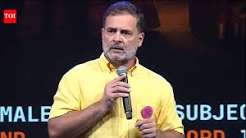
NEW DELHI: BJP on Sunday sought to play back to Rahul Gandhi his pitch for women’s empowerment, by questioning his strident opposition to govt’s push for an early implementation of quota for them in Lok Sabha and assemblies. “He does not want to give rights to women. His words don’t match his actions,” Maharashtra CM Devendra Fadnavis said. BJP’s framing its attack on Rahul around the women’s quota coupled with the fact that monsoon session is yet to be prorogued gave another indication of the possibility of govt summoning the two Houses at short notice to take up its Constitution amendment bill for implementation of quota from 2029 with a nearly 50% rise in Lok Sabha seats. “What explains the abnormal delay now? Is the Union home minister still in search of his super-tainted 2/3rd majority to get the constitutional amendment bill on delimitation passed in a special session,” Congress’s Jairam Ramesh asked. Congress, too, was mindful of the possibility of a short upcoming session and claimed that BJP is still searching for “super tainted” majority in Lok Sabha, in what was a swipe at govt’s alleged attempts to split opposition parties to reach the two-thirds majority in the House needed for the bill’s passage. Ramesh said the gap between Parliament’s adjournment and its prorogation is generally two to four days. But the monsoon session, which ended on Aug 13, has not been prorogued yet. When a session is prorogued, govt has to go through the protocol for calling a new session that conventionally requires a gap of 15 to 20 days. Stepping up BJP’s attack on Rahul Gandhi, Fadnavis said he spoke about women’s empowerment from a public platform but has opposed the most revolutionary step to give women their due. BJP’s Smriti Irani said Rahul should positively respond to PM Modi’s appeal to political parties to support the implementation of women’s quota. On the Vande Mataram row, she said Congress should allow rendition of the song’s full version. While speculation has swirled over the revival of the bill to amend women’s quota law, which was defeated in April, govt has officially remained non-committal over any such move except acknowledging that it had sought Rahul’s view. The LoP in Lok Sabha reiterated his stand against it. Congress and its allies have said Lok Sabha’s strength should be frozen at its existing number and the quota should be executed within it. Courtesy : TOI Note: This news is originally published on https:/timesofindia.com/bha and is used purely for non-profit/non-commercial purposes, especially human rights
Parliament passes Transgender Persons Amendment Bill, 2026 with Rajya Sabha approving it today
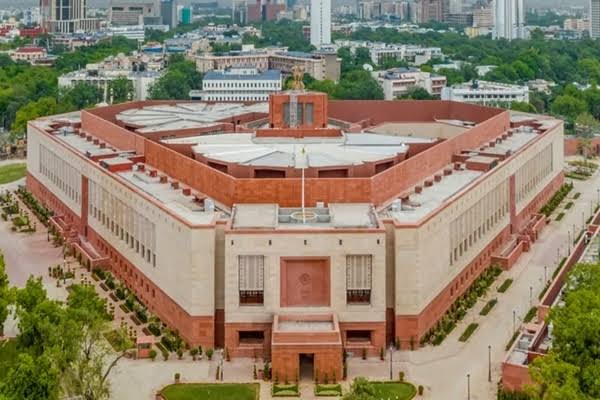
Parliament has passed the Transgender Persons (Protection of Rights) Amendment Bill, 2026, with the Rajya Sabha approving it today. The bill was passed by the Lok Sabha yesterday by a voice vote amid an Opposition-led walkout. The bill seeks to redefine the category of transgender, removes the provision of self-perceived gender identity and excludes several socio-cultural identities as well as transmasculine individuals from its ambit. It also further defines transgender persons within a biological framework, based on intersex variations and differences in sexual development. Replying to the discussion on the Bill in the Rajya Sabha, Social Justice and Empowerment Minister Dr Virendra Kumar said the government is compassionate towards the well-being of the transgender community. He said the Bill has provisions to empower the transgenders and give them dignity. The Minister said that the NDA government has taken several initiatives to bring transgender people to the mainstream and stop discrimination against them. Starting the discussion in the Upper House, Congress MP Renuka Chowdhury said this bill dilutes the privacy of an individual provided under the Constitution. Opposing the Bill, Ms Chowdhury said self-identification cannot be taken away through bureaucratic certification. Criticizing the government, she said that the proposed bill undermines the fundamental rights and dignity of transgender persons. Calling such a move wrong and illegal, she argued that forcing transgender persons to provide their identity through official certificates is against the spirit of equality and dignity guaranteed by the constitution. She also questioned the government’s approach for not properly consulting with the transgender community before bringing the Bill. She also referred to the Supreme Court’s landmark NALSA judgement of 2014, which recognized the right of transgender persons to self-identify their gender. Ms Chowdhury said the proposed Bill violates the principles laid down in that judgement and fails to respect an already established legal framework. DMK MP Tiruchi Shiva also opposed the Bill, saying that even if the Bill is passed in Parliament with a majority, it will be struck down by the Supreme Court. He further added that the Bill violates Articles 14, 15, 19 and 21 of the Constitution and it deprives the community of the right to freedom, dignity and self-determination. Supporting the Bill, BJP MP Medha Vishram Kulkarni said, ” This Bill ensures justice, dignity, protection from criminalisation and legal safeguards for transgender persons. She also thanked Prime Minister Narendra Modi for bringing this bill with certain amendments in order to ensure that the benefits reach the deserving people in a proper manner. She said there is a need for a law that brings justice to real transgender individuals and punishes fake ones. Mrs Kulkarni said the benefits should be extended to those who are transgender by birth. She said that the amendment to extend punishment will bring down the rate of crime and forced identities. TMC’s Saket Gokhale said that 31% of Transgender people in India have attempted suicide because of the discrimination that they are facing. He alleged that now the government is going to start discriminating against them as though social discrimination were not enough. He called it unacceptable. Mr Gokhale expressed concern that gender is going to be decided by the Chief Medical Officer and a District Magistrate, and the bill does not prescribe any qualifications for the Chief Medical Officer. Sanjay Singh of AAP said the Bill is a big let-down for the transgender community. He accused the government of not doing anything for the community. RJD’s Manoj Kr Jha said that prejudices against transgender people should stop, and they should be able to live with dignity. He added that self-determination of gender should not be taken away. CPI(M)’s John Brittas said it is a black-letter day and the Bill is taking India a century back. He pleaded with the government to either withdraw the Bill or refer it to a Select Committee. Jaya Bachchan of the Samajwadi Party also questioned the government over the legislation. She sought to know what the urgency was in bringing the Bill, without examining it with the depth and care that it deserved. Courtesy : NOA Note: This news is originally published on https:/newsonair.com/bha and is used purely for non-profit/non-commercial purposes, especially human rights
22-year-old Dalit man shot dead, friend injured in Roorkee

Roorkee: A 22-year-old Dalit man was shot dead and his friend injured after two unidentified bike-borne assailants opened fire at them in Dhandera, Roorkee, late Friday night, police said. The victim, Aman Kumar, a liquor canteen operator and Dhandera resident, was returning home with his friend Prashant after closing the canteen when the assailants intercepted them and opened fire. Aman sustained a bullet injury to his abdomen and collapsed on the road, while Prashant was shot in the foot. The assailants fled the spot on their motorcycle immediately after the shooting, which took place around 11:30pm. Hearing the gunshots, residents rushed to the spot and alerted police. The two men were taken to a hospital, where doctors declared Aman dead. Prashant was admitted for treatment and is stated to be out of danger. Aman’s father lodged a complaint against the unidentified assailants, following which police registered a case under BNS section 103 (murder). “Aman belonged to a Dalit family in our locality. His father runs a small motorcycle repair shop in Roorkee. Aman and his family were known to be very decent and peaceful people,” said Anil Pundir, a Dhandera resident. Police teams are examining CCTV footage from the area and questioning people who may have witnessed the incident. Preliminary investigation suggests that the killing could be linked to an old enmity stemming from a possible love angle, though police said the exact motive was yet to be established. “We have questioned several people in connection with the case and efforts are underway to identify the attackers. We will crack the case soon,” said SP (rural) Shekhar Chandra Suyal. Courtesy : TOI Note: This news is originally published on https:/timesofindia.com/bha and is used purely for non-profit/non-commercial purposes, especially human rights
The inherited burden in Dalitality
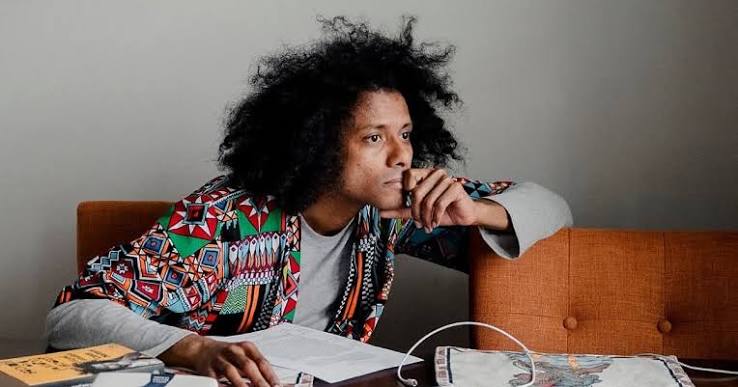
In 1969, John Fogerty of Creedence Clearwater Revival wrote Fortunate Son as an indictment of inherited advantage: some are born protected, others are born exposed. “Some folks are born silver spoon in hand/ Lord, don’t they help themselves” Suraj Yengde’s Caste: A Global Story reasserts the same indictment, but with a different ethnographic ground and a wider comparative reach. Ranked inequality of a caste-like kind appears in many places, even if India’s version carries what Amartya Sen, in his foreword to the book, calls a “shameful uniqueness”. Yengde’s narrative follows that ranking system as it moves across oceans, archives, and generations. “It ain’t me, it ain’t me I ain’t no senator’s son/ It ain’t me, it ain’t me I ain’t no fortunate one” Readers of Yengde’s earlier Caste Matters will recognise the same auto-ethnographic impulse. That earlier book was driven by the lived experience of what he calls ‘Dalitality’ – a term he uses to name the accumulated weight on the being of those born into the lowest rung of the caste ladder. The new book keeps the personal current but then travels with it. The introduction and Chapter 1, ‘Colonial Dalitality’, examine how the British census and official reports first gave administrative shape to Dalit groups by recording their subjection, occupations, and socio-spiritual separateness. Yengde insists that Dalits were never merely passive subjects in these classifications; they also claimed, refused, or reworked the labels imposed upon them. Chapters 2 and 4 stage the book’s central claim: that caste is not a fixed Indian inheritance but a system of ranking that crosses borders and takes new forms. In Chapter 2, ‘Affairs of Letters: Dalit Responses to Black Literature’, Yengde shows that the conversation between Dalits and Black Americans did not begin with the Dalit Panthers or in the 1970s. Ambedkar himself was the first major Dalit thinker to engage African American experience systematically, notably in his reply to Lala Lajpat Rai’s comparison of untouchability and American slavery. Later, M N Wankhede, principal of Milind College and founder of the journal Asmita, became the central mediator, introducing Black literature to a generation of Marathi Dalit writers. Janardhan Waghmare, writing from rural Marathwada, pushed the comparison further, treating slave narratives as directly analogous to Dalit conditions and reading the American Dream against Malcolm X’s American nightmare. What Yengde captures well is both the depth of this one-directional literary solidarity and its limits: after the 1960s, the Black American side remained largely unaware of Dalit developments, language barriers slowed translation, and the relationship stayed more inspirational than reciprocal. The chapter is innovative precisely because it refuses easy romance; it documents a real intellectual genealogy while remaining honest about its asymmetries. “It ain’t me, it ain’t me I ain’t no millionaire’s son/ It ain’t me, it ain’t me I ain’t no fortunate one” Chapter 4, ‘The Dalit Republic of Diaspora: A Case Study of Trinidad’, is the book’s most vivid demonstration that caste does not simply dissolve when it crosses the ocean. Drawing on earlier ethnographers and his own fieldwork, Yengde shows that while many lower-caste indentured labourers arrived in Trinidad, hierarchy reasserted itself in new forms. Colin Clarke’s 1964 survey found that only a small fraction of Hindus still knew their caste by name, yet Brahmanical prestige had actually increased rather than faded. Outcastes were still marked – food served on a leaf instead of a plate, subtle exclusions at religious gatherings. Caste survived as a code of identity, prestige, ritual, and endogamy. It underwent what Yengde calls a kind of creolisation: mixed with other groups, reshaped across generations, and kept alive inside Hindu organisations such as the Sanatan Dharma Maha Sabha, where pandit superiority could still surface in the order of the food line. The chapter makes Yengde’s global claim concrete: caste moves, mutates, and finds new institutional homes rather than dissolving. The book concludes by returning to the author’s notes as archivist and activist. The result is a more ambitious book than Caste Matters. It demonstrates the same urgency of voice, but now, it’s stretched across a larger map. “Some folks inherit star-spangled eyes/ Ooh, they send you down to war/ And when you ask them, ‘How much should we give?’/ Ooh, they only answer, ‘More, more, more’” This song still cuts because the structure it named has not disappeared. Yengde’s book demonstrates this on a larger map. In the conclusion, he turns the question back onto the dominant castes themselves: it is we, more than the caste-oppressed, who need to confront the social and religious creeds that cannot tolerate human equality. Some are born protected by the system; others inherit its weight. Yengde, like Fogerty, asks who gets to remain the fortunate one, and at whose expense the protection is maintained. The writer, as Dr Jekyll, is a Professor of Philosophy, Politics and Law, author and editor of over 20 books and counting, and as Mr Hyde, one of India’s top-ranking Ironman triathletes. Aakash Singh Rathore (Disclaimer: The views expressed above are the author’s own. They do not necessarily reflect the views of DH). Courtesy : DH Note: This news is originally published on https:/deccanherald.com/bha and is used purely for non-profit/non-commercial purposes, especially human rights
Anti-Reservation Protest: What Is The Stand Of Dalit Leaders In NDA?
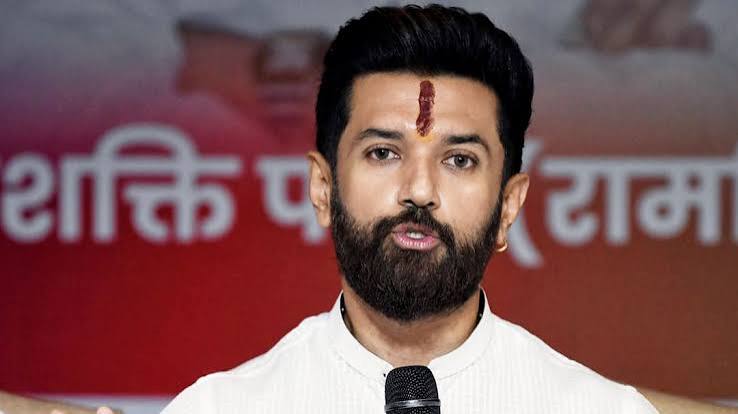
The protesters are demanding that economic criteria, rather than caste, should be given priority in determining eligibility for government assistance and reservation. Paswan said any misunderstanding over reservation could create resentment among a large section of the country’s population. Union Minister Chirag Paswan on Saturday said the government would engage with protesters opposing reservation if their demands were presented in a systematic manner. Union Minister Ramdas Athawale, meanwhile, said reservation is a constitutional right and termed the demand to abolish it unconstitutional. The protesters are demanding that economic criteria, rather than caste, should be given priority in determining eligibility for government assistance and reservation. Speaking to reporters in Patna, Paswan said any misunderstanding over reservation could create resentment among a large section of the country’s population. On the demand for reservation based on economic criteria, he pointed out that the NDA government has already implemented 10 per cent reservation for Economically Weaker Sections (EWS). What Paswan Said About Tejashwi Yadav Asked about RJD leader Tejashwi Yadav extending support to the students’ protest in Patna, Paswan said it was a good thing and was in line with his responsibility as the Leader of the Opposition in the Bihar Assembly. “It would have been better if Tejashwi Yadav had also been present during the proceedings of the House and raised these issues there,” he said. Paswan said that although belatedly, Yadav was fulfilling his responsibilities as the Leader of the Opposition, which was a positive development. He added that despite being part of the government, he had tried to act as a bridge to ensure that people’s voices reached the government and no one remained unheard. Athawale Says Reservation Cannot Be Abolished At a press conference on Saturday, Union Minister Ramdas Athawale said some people were demanding the abolition of reservation, while others were running social media campaigns calling for its removal. He said reservation could not be abolished as it is a constitutional right. Referring to the extension of reservation from Scheduled Castes (SCs) and Scheduled Tribes (STs) to Economically Weaker Sections (EWS), Athawale said there was no merit in demands to scrap the system as it benefits various groups in need. He noted that while untouchability has been prohibited under Article 17 of the Constitution, caste-based discrimination and atrocities against SC communities continue in rural India. “Our stand is very clear. Those who want to abolish reservation should first ensure that the caste system is abolished,” he said. Demand Over Bodh Gaya Temple Management Committee Athawale also demanded that the Bodh Gaya Temple Management Committee should have eight Buddhist trustees instead of the existing arrangement of four Hindus and four Buddhists, with the Gaya district magistrate serving as its ex-officio chairman. The committee functions under the Bodh Gaya Temple Act, 1949, which predates the Constitution of India. “We are not against Hindus or any other religious community, but our demand is that Buddhist places of worship should be managed by Buddhists themselves,” he said. Athawale said he had sought time from Bihar Chief Minister Samrat Choudhary to discuss the issue and would also meet the governor over the matter. Several Buddhist monks present at the press conference announced that they would observe a five-day hunger strike in Patna’s Gardanibagh area to press for their demands. Courtesy : ABP Live News Note: This news is originally published on https:/abplivenews.com/bha and is used purely for non-profit/non-commercial purposes, especially human rights
Four arrested in Rajasthan for lifting Dalits from chairs; villagers, angered by police action, have socially boycotted the victim families.
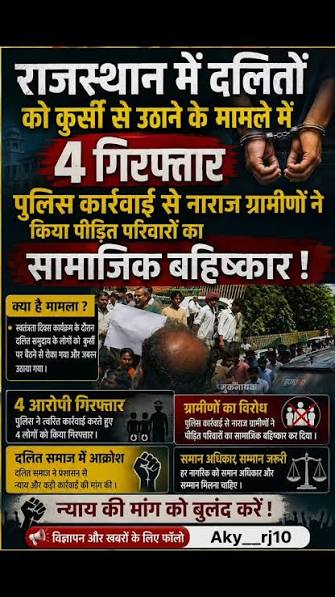
The community says that merely filing an FIR and arresting the accused is not enough. The administration also has a responsibility to ensure normal social interaction with the victim families in the village and prevent any kind of pressure or intimidation. Bhilwara: Police have arrested four of the five named accused in the case of allegedly lifting members of the Dalit community from chairs, using casteist slurs, and threatening them during Independence Day celebrations at a government school in Bhakliya village, Bhilwara. One accused, Narayan Jat, is still pending arrest. The case is being investigated under FIR number 131/2026 registered at the Bagor police station and is being investigated by Deputy Superintendent of Police Rahul Joshi. Meanwhile, the victim families have alleged that they are being socially boycotted and isolated in the village following the incident. The community claims that the families face the threat of potential attacks from the accused and their supporters. In response, a large number of people held a protest rally on Tuesday under the banner of the Dr. Ambedkar Memorial Welfare Society, Bhilwara district, and submitted a memorandum to the administration, demanding the arrest of the accused and protection of the victim families. Four accused arrested, search underway for one On August 15th, a case of alleged caste-based abuse against two Dalit community members, Rameshwarlal Bairwa and Gopilal Bairwa, surfaced during the Independence Day celebrations at the government school in Bhakalia village. Based on the victims’ complaint, the police named five individuals, including Balu Vaishnav, Hiralal Sharma, Narayan Jat, and Prakash Jat. Another named accused, Narayan, is still pending arrest. According to the community, the arrested accused are scheduled to appear in court around 4 pm on Wednesday. The community is also pressuring the police to expedite action to arrest the remaining accused. Police, led by Deputy Superintendent of Police Rahul Joshi, who is investigating the case, have moved forward with the investigation. Badrilal Bairwa, a young man who recorded the video of the incident, told The Mooknayak that the police have recorded the statements of the victims. A police team has also visited the scene and conducted an investigation, recording the statements of two witnesses, including his. Digital evidence of the mobile recording of the incident has also been provided to the police. According to Badrilal, the community is now pushing for the arrest of the remaining accused. The Mooknayak first reported on the incident on August 16th. Following the report, the victims’ families received widespread support from members of the Dalit and Bahujan communities. According to Badrilal Bairwa, a community meeting was held on Sunday evening after the news was published. The nearly two-hour meeting discussed whether the matter should be dismissed as a village dispute or whether legal action should be taken. Some elders at the meeting advocated for a village-level resolution. However, most community members expressed the view that silence would be inappropriate, given the years of alleged caste-based humiliation and discrimination. Following this, a decision was made to file a police complaint, and an FIR was registered late Sunday night. Even after the FIR was filed and the accused were arrested, the matter did not end there. On Tuesday, the community held a protest rally under the banner of the Dr. Ambedkar Memorial Welfare Society, Bhilwara district. A large number of community members participated in the rally. The protesters submitted a memorandum to the administration demanding the arrest of all named accused in the case, protection for the victim families, and an end to the alleged social boycott. The memorandum alleged social boycott of the victim families and demanded immediate intervention from the administration. The community alleged that the victim families were being isolated in the village following the incident. The memorandum also stated that the victim families feared a possible deadly attack by the accused and their supporters. The protesters’ key demands are: All accused named in FIR No. 131/2026 should be arrested and sent to judicial custody. Adequate police protection should be provided to the victim families in Bhakalia village immediately. The administration should take necessary steps to end the alleged social boycott of the victim families. Ensure prompt and fair action in the case. If strict action is not taken against the accused and the victim families are not provided security, the community will be forced to launch a democratic movement. The memorandum warns that if such a situation arises, the police and administration will be responsible. Sohanlal Regar, District President of Dr. Ambedkar Memorial Welfare Society, said that along with the arrest of the accused, the safety of the victim families should also be the primary responsibility of the administration. The community says that simply filing an FIR and arresting the accused is not enough. It is also the administration’s responsibility to ensure normal social interaction with the victim families in the village and prevent any form of pressure or intimidation. A dispute that began over a chair has now become a question of social justice. The dispute that began over two Dalit members sitting on chairs during the August 15th ceremony has now become a question of social equality, respect, and security. The Dalit community alleges that caste discrimination and untouchability have long existed in the village. They say that maintaining silence in such cases perpetuates this system of discrimination. The police investigation is progressing in this case. Statements from victims and witnesses have been recorded, and the scene has also been inspected. The actual circumstances of the case and the substantiation of the allegations will become clear after examining the available video recordings and other evidence. Currently, four named accused are in police custody, while one is still under arrest. The community’s next priority is ensuring the safety of the victim families and ending the alleged social boycott. Geetha Sunil Pillai Courtesy: Hindi News
Lucknow: Rapido lifts 100-year ban on Dalit cab driver, Ankit Kumar says, “The world bows down…”
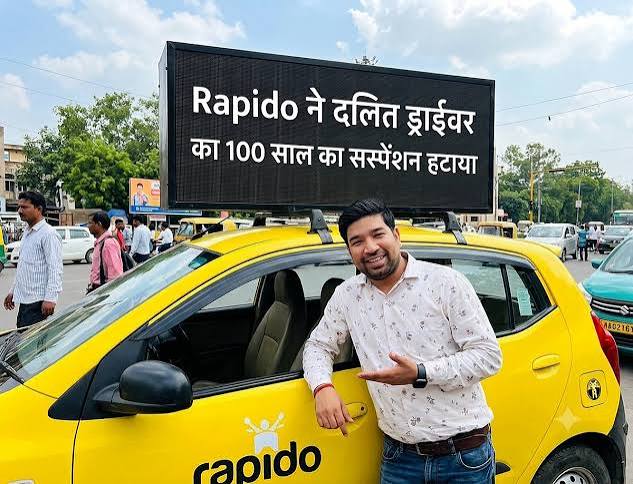
Ankit had allegedly reprimanded passengers in his cab for using casteist slurs against his officer. After the argument escalated, he stopped the cab near Telibagh Market and made all four of them get off. Following a complaint from passengers, his account was suspended for life. Lucknow – Ankit Kumar, a Dalit cab driver who was suspended from Rapido for nearly 100 years after protesting against caste-based insults in Lucknow, the capital of Uttar Pradesh, has now been reinstated by the company. Ankit released a video announcing this. Previously, his Rapido account showed a suspension of 99 years and 11 months, which was stated to last until July 19, 2026. This matter sparked a sharp reaction on social media. People associated with the Bahujan community and civil society organizations questioned Rapido’s action, and the #BoycottRapido campaign also trended on social media. Following this, reports emerged of increased pressure on the company’s decision. In this entire controversy, BSP National Coordinator Akash Anand also strongly supported Ankit. He questioned companies like Rapido, saying that they exhibit the same mentality that the Bahujan Samaj has long struggled against. The dispute began in the Telibagh area of Lucknow. 30-year-old Ankit Kumar had picked up four passengers from Uttarhatiya Railway Station and was headed to Charbagh Railway Station. According to Ankit, the four passengers were Indian Railways employees and were discussing a senior officer during the journey. Ankit alleges that the conversation gradually escalated into caste-based remarks, and the passengers began using derogatory and casteist slurs, linking the officer’s abilities to his caste. Ankit said that initially he did not intervene, but when the alleged caste-based remarks continued, he objected. Ankit reportedly told the passengers that if they questioned someone’s abilities, they should speak by name, and why was an entire caste being insulted. When the passengers allegedly refused to change their language, Ankit stopped the vehicle near Telibagh Market and asked the four to disembark. After disembarking, an argument broke out between Ankit and the passengers. People gathered at the scene. Ankit alleges that he was verbally abused. A video of the incident went viral on social media. What happened after the video went viral? After the video went viral, Ankit alleged that he began receiving abusive and threatening messages on social media. He said people were questioning why he dropped passengers off the vehicle. Meanwhile, following complaints from passengers, Rapido took action on Ankit’s driver account. The screenshot Ankit shared showed his account suspended for 99 years and 11 months, with the last date being July 19, 2026. The reason cited by the company was “abusive/double-meaning/use of abusive language.” Ankit claimed that the company didn’t even attempt to hear his side of the story before taking action. He said they should have at least asked him what happened. Ankit holds a diploma in mechanical engineering. He couldn’t find a government job commensurate with his qualifications, so he drives a cab to support his family. His father is a daily wage laborer and his mother is a homemaker. Therefore, a nearly 100-year suspension was like permanently closing his employment opportunities. For this reason, this case not only raised the issue of caste discrimination, but also sparked debate about the livelihoods of gig workers and the accountability of app-based companies. Legal experts have highlighted two distinct aspects of this matter. On the one hand, under the platform’s terms of service, the company has the right to take action against its driver upon any complaint. On the other hand, a suspension of nearly 100 years is extremely harsh and practically amounts to a permanent ban. Legal experts also questioned whether the driver’s side should have been heard before taking such drastic action. Unilateral action taken without notice or an opportunity for explanation could raise questions regarding the principles of natural justice. What did Akash Anand say? BSP National Coordinator Akash Anand gave a detailed response to this matter on August 17. He said that Ankit’s viral video raises serious questions about India’s social system. According to him, Ankit had only protested against the alleged casteist comments to protect his and his community’s dignity, but Rapido instead suspended his account for 99 years and 11 months. Akash Anand said: “Companies like Rapido suffer from the same mentality that we have been fighting to eradicate for a century.” Aakash Anand also said that Ankit’s suspension was tantamount to snatching away the livelihood of a person who stood up for his honor and the dignity of his community. He also linked this incident to the broader debate on reservation and social change. He stated that even nearly eight decades after independence, casteist mentality remains deeply rooted in society. According to him, reservation is not only a means of economic empowerment but also a means of social change. Aakash Anand also referred to RSS chief Mohan Bhagwat’s views on reservation and asked him to answer the questions of millions of Dalits like Ankit. He quoted Mayawati as saying that respect for the Constitution and the ideas of Babasaheb Dr. Bhimrao Ambedkar. Geetha Sunil Pillai Courtesy: Hindi News
“Giving up casteism is the greatest patriotism”: Mayawati rejects Jantar Mantar’s demand for economic reservation, targets Congress
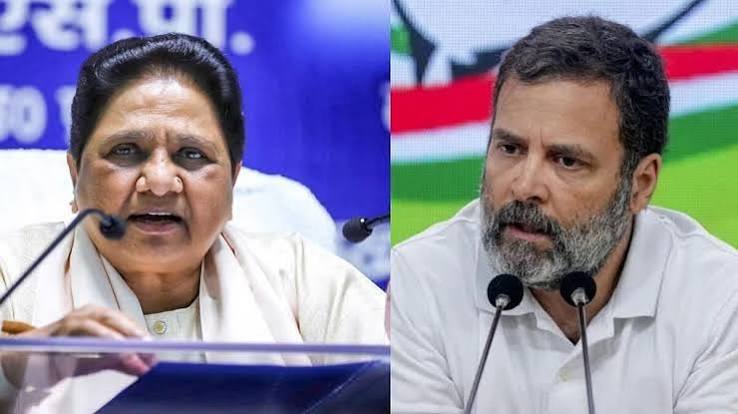
Mayawati says, “Governments should not protect those opposing reservations. Why did Rahul Gandhi remain silent?” Delhi – Bahujan Samaj Party (BSP) national president Mayawati has sharply reacted to the recent protest at Jantar Mantar in Delhi. In a statement issued on Sunday, she said that the demand for implementing reservations based on economic grounds, contrary to the reservations provided to SC, ST, and OBC communities in the Constitution, is completely unjustified and in the national interest. Discrimination and Identity Relationship Mayawati wrote in a post on X, “This new demand for implementing reservation based on economic status, raised by some people who recently gathered at Jantar Mantar in Delhi, in protest against the reservations provided to SC, ST, and OBC communities in the Constitution, is not at all justified or in the national interest. They should not do anything regarding reservation that would undermine the constitutional mandate of building an egalitarian society, a developed, and respected country.” As for providing reservation based on economic status, the central and state governments spend significant public funds every year on not just one but numerous poverty alleviation programs. However, if the people of the country do not receive the full benefits due to rampant corruption, then this is a direct fault of the government system. – Mayawati Quoting Babasaheb Dr. Bhimrao Ambedkar, she said that Babasaheb’s clear opinion regarding the Constitution’s reservation system for SC, ST, and OBC communities, who have been victims of the inhumanity of casteism, was that “renunciation of casteism is the greatest patriotism.” Therefore, people should demonstrate true patriotism. People and Society Questioning the demand for reservation based on economic basis, Mayawati said that the central and state governments spend huge public funds every year on various poverty alleviation programs, but due to corruption, its true benefits do not reach the people. This is a direct fault of the government system. She reminded that the system of reservation based on economic basis is already in place in the country, but even poor families of upper castes are not getting its full benefits and there is a lot of deception in it. Mayawati alleged that the corrupt and casteist government system never allowed the constitutional provision of reservation to be properly implemented on the ground. As a result, even after so long since independence, people from SC, ST, and OBC communities continue to suffer the brunt of poverty, caste hatred, exploitation, oppression, and the poison of casteism every day. She appealed to all governments to deny shelter and protection to anti-reservation elements. This would be in the larger national and public interest. She also requested people not to indulge in cheap politics on an important and sensitive issue like reservation, nor allow it to be. Mayawati also targeted the Congress party and Rahul Gandhi. She said that on the same day, Rahul Gandhi sat on a sit-in for several hours outside the Parliament Police Station to demand the registration of an FIR in the case of a victim, to which the party has no objection. However, next door, at Jantar Mantar, a protest was underway to end the caste-based reservation system for Dalits and the oppressed. Neither he nor any of his Congress colleagues went there to explain. This clearly reflects the Congress party’s anti-reservation mentality towards these classes. Discrimination and Identity Relations It is noteworthy that on Friday, a demonstration was held at Jantar Mantar under the banner of the “Reservation Hatao Andolan,” in which the primary demand was for reservation based on economic status rather than caste-based reservation. On the same day, Rahul Gandhi sat on a dharna outside the Parliament Street police station to demand the registration of an FIR for 19-year-old Sahil Lochab, who was injured in the CJP protest. Mayawati’s statement has once again underscored the Ambedkarite approach to protecting the constitutional right to reservation and against casteism. Geetha Sunil Pillai Courtesy: Hindi News
‘You don’t belong to anyone else, but yourself’: Rahul Gandhi’s message to young women
NEW DELHI: The fourth event of Lok Sabha leader of opposition Rahul Gandhi’s ‘Chhatron Ki Goonj’ programme kicked off in Pune on Saturday. The Congress leader is set to address a large women’s rally at the AISSMS College Ground in Pune, Maharashtra. In his address, he invoked a verse from the Manusmriti and contrasted it with his call for the empowerment and autonomy of women. Referring to the verse, he highlighted the notion that, “A woman in her childhood belongs to her father, after marriage belongs to her husband and in her old age belongs to her son.” Rejecting this idea, he asserted that a woman belongs to no one but herself. While acknowledging that the relationships in a woman’s life are important, he stressed that they do not determine her identity or ownership, which, he said, rests exclusively with her. However, the event follows a political storm and clashes between student organisations. The programme was preceded by a midnight clash between the NSUI and ABVP at the COEP Technological University hostel. It happened after ABVP claimed that female students were being forced to attend the event. Meanwhile, Congress leaders countered the claims, saying two female students, who had earlier expressed their support for the event, were threatened and confined inside the hostel. BJP has also accused Congress of paying influencers and manufacturing crowds for the event. Meanwhile, Congress has alleged that the ruling establishment was attempting to disrupt Rahul Gandhi’s student outreach. NSUI-ABVP clash erupts at COEP hostel Tensions escalated on Friday night when NSUI and ABVP members clashed at the COEP hostel campus ahead of the LoP’s interaction. Police resorted to a lathi charge to control the situation, while several injured activists were taken to Sancheti Hospital. According to police sources cited in the material, the Shivajinagar Police registered cases against 50 to 60 people, including six named NSUI and Youth Congress activists, following a complaint by an ABVP member. The confrontation reportedly centred on student participation in LoP Rahul Gandhi’s programme. NSUI activists said they were responding to distress calls from female students, while ABVP alleged that Congress-linked workers were forcibly encouraging hostellers to register for the event. Congress alleges female students were intimidated Congress leaders accused ABVP workers of entering the girls’ hostel and intimidating students who had expressed support for the event. Congress spokesperson Atul Londhe alleged that a female student was cornered and forced to apologise on camera. NSUI state president Sagar Salunke claimed that students had called the organisation for help and alleged that CCTV cameras had been switched off before NSUI members arrived. Salunke also alleged that students, including orphaned students, had been pressured to record videos praising the college administration. The case registered by police followed a complaint from 21-year-old student Malhar Nilesh Patil, who alleged that a student’s video statement had been recorded under pressure at the hostel. Pawan Khera alleges conspiracy to disrupt event Congress leader Pawan Khera alleged that there had been a conspiracy to disrupt LoP’s Pune programme, claiming that the response among young people had rattled those in power. Khera linked the controversy to the issues female students were expected to raise with Rahul, including alleged diversion of scholarship funds. He accused ABVP workers of intimidating students and said the incident reflected an attempt to keep women away from public decision-making. He also invoked Pune’s history as the city where Savitribai Phule pioneered women’s education, arguing that the theme of the event was particularly relevant to the city. BJP calls event ‘Paise Ki Goonj’ The BJP launched a separate attack on the programme, accusing the Congress of paying influencers to mobilise attendance and promote Rahul Gandhi’s event on social media. BJP Maharashtra spokesperson Navnath Ban alleged that influencers were being offered Rs 30,000 to Rs 35,000 each, along with travel expenses, and claimed that the overall expenditure could reach Rs 9 crore to Rs 10 crore if around 3,000 people were paid. Ban dubbed the programme ‘Paise Ki Goonj’ instead of ‘Chhatron Ki Goonj’ and demanded an investigation into the source of the alleged funds. BJP leader Keshav Upadhyay separately accused Rahul Gandhi of using student issues as a political platform. Congress hits back, says BJP ‘rattled’ by youth response The Congress rejected the BJP’s allegations and accused it of trying to create obstacles to LoP Rahul Gandhi’s programme because of his growing support among young people. Maharashtra Congress spokesperson Sachin Sawant claimed that the BJP was particularly apprehensive about Rahul’s appeal among Gen Z and alleged that authorities and ABVP members had attempted to disrupt the programme. NCP (SP) leader Mahesh Tapase also criticised the BJP, saying there was no reason to oppose a programme focused on issues affecting students and young people. What is ‘Chhatron Ki Goonj’ about? Rahul’s Pune interaction with female students is centred on student and youth concerns, with issues such as paper leaks, unemployment and the education system expected to feature in the programme. The Congress has sought to position the initiative as a platform for students to directly raise their concerns, while the BJP has characterised it as a political campaign by the Leader of the Opposition. The Pune event, therefore, has begun against the backdrop of an escalating political battle over who controls the narrative around student and youth concerns. Courtesy : TOI Note: This news is originally published on https:/timesofindia.com/bha and is used purely for non-profit/non-commercial purposes, especially human rights